It’s a New Year and we already have a seismic shift in Scottish legal practice.
On 1st January 2026, the not proven verdict (one of three previously possible verdicts in a Scottish criminal trial) was abolished. This verdict was often used to emphasise the unique nature of the Scottish legal system. If we look at our nearest neighbours in England and Wales, Northern Ireland and the Republic of Ireland, the not proven verdict is strikingly absent. Judges and jurors in these neighbouring jurisdictions have a pretty stark choice: to determine whether the Accused was guilty or not guilty.
In Scotland, we had three possible verdicts – the not guilty and not proven verdicts being acquittal verdicts. In Scottish legal parlance, the Accused had tholed his or her assize (trial) and the Crown had failed to convince either a judge or a jury of their guilt. In other words, the standard of proof placed on the prosecutor i.e. to demonstrate guilt beyond reasonable doubt had not been satisfied.
A guilty verdict, of course, is self-explanatory: the prosecution has proved beyond reasonable doubt that the Accused has committed the crime(s).
Now, Scottish judges (in summary trials) and jurors (in solemn trials) will have the same choice as their counterparts in other parts of the British and Irish Isles.
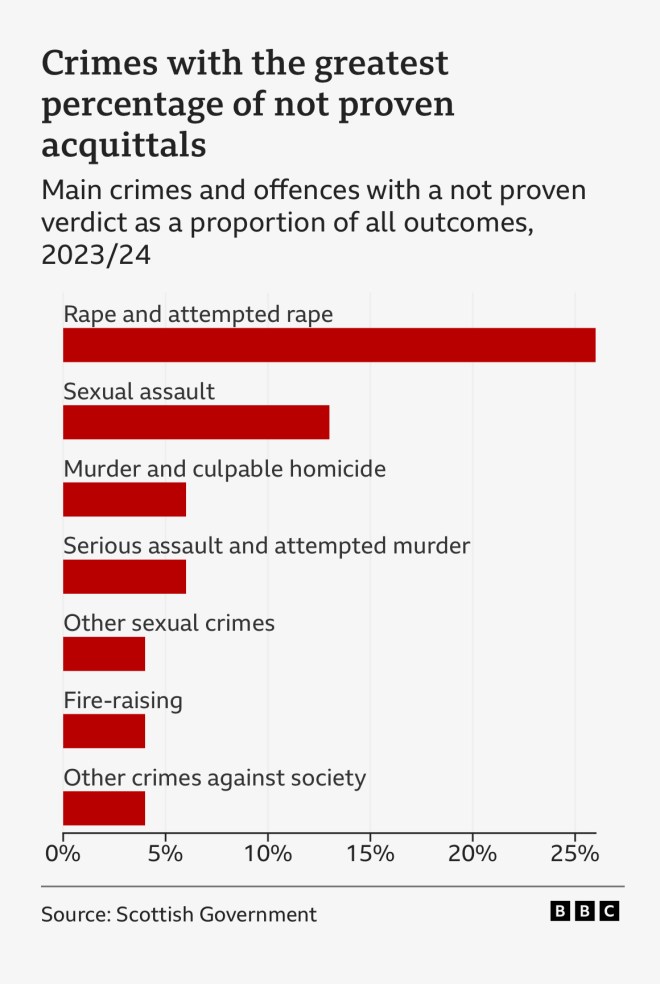
BBC Scotland, in its reporting of this historic event, obtained figures from the Scottish Government for 2023-24 which provide a breakdown of the use of the not proven verdict in criminal cases in the Scottish courts (please see diagram below):
That bastard verdict?
Sir Walter Scott (1771-1832), the famous Scottish novelist and Depute Sheriff of Selkirkshire referred to the not proven verdict as “that bastard verdict” suggesting that it was alien to Scottish legal tradition. This wasn’t quite true as Professor Douglas J Cusine, another well known Scottish writer and former Sheriff points out. Professor Cusine states that the not proven verdict was recorded as being in use in Scottish criminal courts from as early as 1732. If anything, the not guilty verdict may (possibly) lack legitimacy and be more deserving of Sir Walter Scott’s soubriquet.
A link to an article written by Professor Cusine about the verdict can be found below:
https://www.scottishlegal.com/articles/douglas-j-cusine-not-proven-debate-lacks-clarity
Not Proven – the TV Series
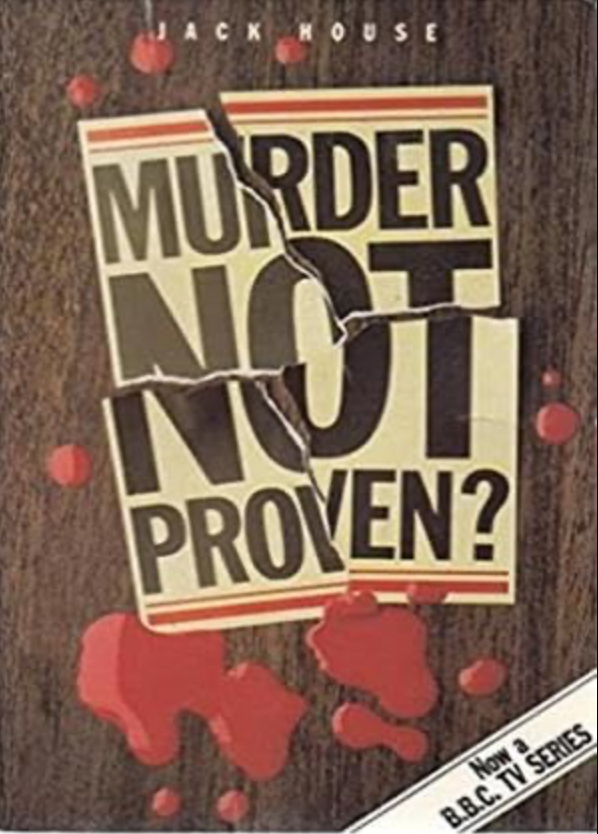
The undeniable fascination with the verdict even led to BBC Scotland broadcasting a short drama series of 3 episodes (between 17 And 31 May 1984) called Murder Not Proven? This series was based on the book of the same name by the novelist and journalist, Jack House.
The episodes were:
- Open Season – HMA v Monson (1893) 21 R (J) 5
- Death on the Mountain – HMA v Laurie (1889) JC26/1889/203
- A Big Romping Boy – HMA v Merrett (1927) JC26/1927/18

The Long Road to Abolition
The Thomson Committee, in its Second Report on Criminal Procedure in Scotland (as far back as 1975) chaired by Lord Thomson, a Senator of the College of Justice, did consider abolition of the not proven verdict. Ultimately, the Committee felt that the verdict should be retained and even suggested that its removal could lead to an increase in guilty verdicts. More recently in 1999, the late Professor Peter Duff (formerly of the University of Aberdeen) took issue with this finding of the Thomson Committee in his paper, The Scottish Jury: a very peculiar institution.
A link to Professor Duff’s paper can be found below:
On 27 November 2013, Michael McMahon, a Labour Party MSP, introduced the Criminal Verdicts (Scotland) Bill, which had, as its main aim, the abolition of the not proven verdict. The Bill fell on 25 February 2016 due to a lack of support among MSPs and, consequently, the three verdicts remained in place in Scotland until this week.
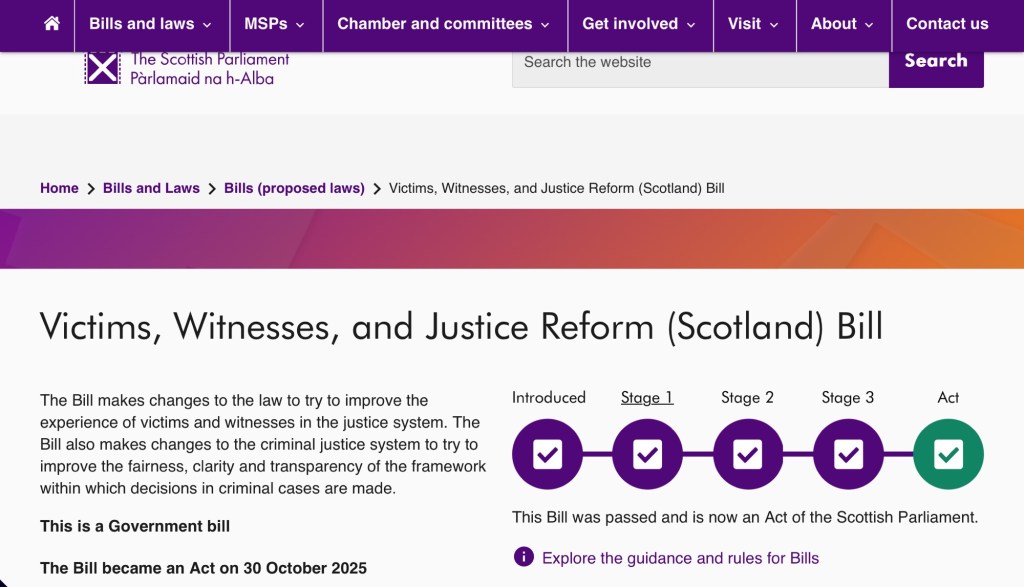
The abolition of the not proven verdict came about as a result of the introduction of the Victims, Witnesses, and Justice Reform (Scotland) Act 2025 which was passed by the Scottish Parliament (as can be seen in the diagram below).
Angela Constance MSP, Justice Secretary in the Scottish Government commented on the change to the law:
“Victims, families and support organisations campaigned long and hard for the abolition of the not proven verdict and I am pleased that this historic change will take effect for all new criminal trials from 1 January.
Not proven is a widely misunderstood verdict and one with no statutory definition. I have heard compelling evidence about the devastating impact that the not proven verdict can have on complainers because of its lack of clarity or lack of closure for them, and it can leave a lingering stigma for the accused. Such a verdict risks undermining public confidence, while the two opposing verdicts of guilty and not guilty are unambiguous and clear.”
Source: New year brings justice reforms in Scotland by Public Sector Executive (2025)
Available at:
Critics of Abolition
Doubtless, Professor Cusine would disagree with Ms Constance’s main assertion that the verdict is “widely misunderstood”. As the Professor points out, in his aforementioned article, we simply don’t know what jurors think because the Contempt of Court Act 1981 forbids us from asking these basic questions.
What goes on in the jurors’ room is shrouded in secrecy and no amount of reconstructions can guide us as to the group dynamics of the jury. In 2024, Channel 4 Television broadcast a programme called The Jury: Murder Trial which attempted to examine the dynamics of the jury (admittedly under the English criminal justice system). All very interesting, but how accurate or useful was this programme? I am not doubting the sincerity of the volunteers who took part in this experiment, but it’s a very different proposition when you are called to serve on a jury for real. Nonetheless, Channel 4 seem to have had a hit on its hands and a second series of the programme has been commissioned.
Ms Constance also undermines her position by claiming that the verdict does not have a “statutory definition”. Perhaps the Minister, who after all is responsible for justice and the legal system in Scotland, needs to learn that not all legal principles are grounded in statute?
Other notable opponents of abolition of the verdict were the Faculty of Advocates and the Law Society of Scotland. Stuart Munro, Chair of the Law Society’s Criminal Law Committee stated:
“We argued strongly for the not proven verdict to be retained as a proven and longstanding safeguard against miscarriages of justice in Scotland, and will be closely monitoring whether these new arrangements strike the right balance to achieve just outcomes.”
Source: Concerns remain as new era begins with not proven abolition – Law Society of Scotland
Available at:
Another significant reform
Interestingly, the Victims, Witnesses, and Justice Reform (Scotland) Act 2025 also brings into force a major change for jury (solemn) trials in Scotland. It will now be a requirement for at least two thirds of the members of a Scottish jury in a criminal trial to find the Accused guilty. Previously, a simple majority (8 jurors out 15) could return a guilty verdict. It is worth highlighting to our non-Scottish readers that, for the time being, juries in Scottish criminal trials comprise 15 members of the public – not 12 as in common law jurisdictions.
New Year, big changes for Scottish criminal procedure.
Copyright Seán J Crossan – 2 January 2026.

 Seán Crossan's Scots Law