In an earlier post published today (No more heartbreak hotel?), I discussed the work of regulatory bodies such as the Competition and Markets Authority.
Another body which does a lot of sterling work on behalf of the public is the Equality and Human Rights Commission. It is the body charged with the responsibility of enforcing the equality laws of the United Kingdom.
Recently, the Equality and Human Rights Commission has taken an interest in highlighting (and challenging) allegations of unlawful, less favourable treatment.
The Commission has made known its intention to investigate the British Broadcasting Corporation (in respect of sex discrimination involving pay) and the British Labour Party (for alleged anti-semitism).
Links to these stories can be found below:
‘Watchdog investigates BBC over ‘pay discrimination’’
In a previous post (Philosophical beliefs) published on 22 January 2019, I noted that a person’s beliefs can be problematic as to whether they should be regarded as a protected characteristic in terms of Sections 4 and 10 of the Equality Act 2010.
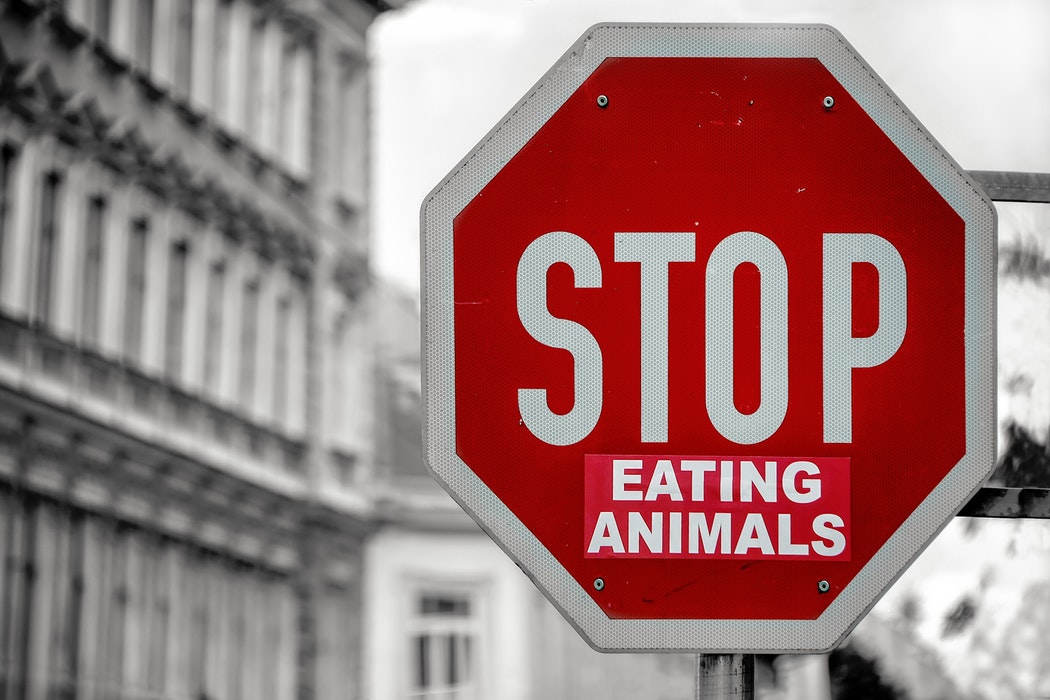
What about veganism? The Vegan Society defines its core beliefs in the following terms:
“Veganism is a way of living which seeks to exclude, as far as is possible and practicable, all forms of exploitation of, and cruelty to, animals for food, clothing and any other purpose, and by extension, promotes the development and use of animal-free alternatives for the benefit of humans, animals and the environment. In dietary terms it denotes the practice of dispensing with all products derived wholly or partly from animals.”
So, it was with interest that I read about a story on Sky News where a customer of NatWest had been insulted by a call handler in relation to vegan beliefs:
NatWest call handler told customer: ‘Vegans should be punched in the face’
What if the call handler had uttered a homophobic, racist or sexist remark to the customer? I don’t think we would hesitate to label such remarks as unlawful discrimination and claim confidently that they would be potentially actionable in the courts.
Regular readers of this blog will already be aware that there is a case, currently before the Central London Employment Tribunal, where a vegan (Jordi Casamitjana) is claiming that his beliefs should have the status of a protected characteristic in terms of Sections 4 and 10 of the Equality Act 2010. I am certainly awaiting the Tribunal’s decision with interest.
A link to an article in The Independent about Mr Casamitjana’s case can be found below:
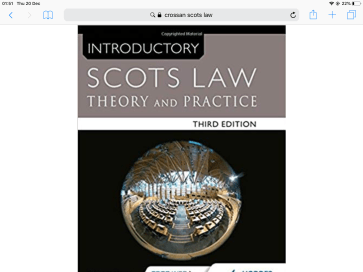
It will be recalled, that I discuss the concept of philosophical beliefs in Chapter 7 of Introductory Scots Law. The law relating to philosophical beliefs tends to be quite fluid and is often difficult to pin down. This means that disputes about whether or not beliefs are protected under the Equality Act 2010 will often be decided on a case by case basis.
Grainger plc v Nicholson [2010] IRLR 4 is a very important case for this reason.
Tim Nicholson brought a claim against his employer, Grainger plc, a company involved in the development of residential property. Nicholson, who was Head of Sustainability at Grainger plc, alleged that he had been unfairly selected for redundancy by his employer because of his belief in the dangers of global warming and climate change. Nicholson was particularly vocal in his concerns that a company like Grainger had to promote environmental concerns as part of its business activities. The company had published environmentally friendly policies, but its alleged willingness to permit its executives to use certain types of vehicles which contributed to an increase in global warming suggested that there was contradiction between the company’s statements about its commitment to environmental issues and their actual implementation. The beliefs of Nicholson and his willingness to state these openly appeared to clash with his employer’s business objectives and this led Nicholson to conclude that he had been unfairly selected for redundancy.
Grainger plc attempted to have Mr Nicholson’s claim struck out on the grounds that his belief in environmental concerns was not a philosophical belief which was protected by UK equality laws.
Held: by the Central London Employment Tribunal at a Preliminary Hearing, that Mr Nicholson’s belief in environmental issues did fall within the meaning of a philosophical belief. This, however, was a procedural victory (albeit an important one) for Mr Nicholson who would still be in the position of having to convince a full Hearing of the Employment Tribunal that he had suffered discrimination in respect of these beliefs. On 3 November 2009, the Employment Appeal Tribunal concurred with the Tribunal’s finding that climate change could be capable of being a philosophical belief. In order to succeed in his claim, Nicholson still had to prove that his belief was “a weighty and substantial aspect of human life and behaviour”. A belief which demonstrates “a certain level of cogency, seriousness, cohesion and importance” and this belief is ultimately “worthy of respect in a democratic society, [that it] be not incompatible with human dignity and not conflict with the fundamental rights of others”.
Following the Grainger decision, an amendment was made to the law (and now contained in the Equality Act 2010), that it is unlawful to subject individuals to less favourable treatment on the grounds of their philosophical beliefs and it is immaterial whether or not these beliefs are considered similar to a religious belief. This is a highly significant development which demonstrates quite clearly that the Equality Act is not just confined to the protection of religious beliefs.
Conclusion
As I have previously noted, the trouble with the Grainger decision (and others like it) is that it has opened up a new whole area of complexity (or a can of worms) in attempting to determine when a belief is a philosophical belief worthy of legal protection.
Whether veganism is a system of beliefs deserving of the protection of the law remains to be seen. In any event, perhaps Natwest should be looking at disciplining this particular employee for the reputational damage clearly done to its brand. Whatever people think about the merits of veganism as a protected characteristic or not, most of us would be pretty appalled by the alleged treatment given out to the customer.
For students of employment law, would such conduct amount to a potentially fair reason for dismissal? Discuss.
Unlike religious beliefs, which tend to be more easily recognised under the Equality Act 2010, a person’s philosophical beliefs can be something of a grey area This means that it can be very difficult for employers and service providers to identify when someone has a genuine belief which is protected by law.
Section 4 of the Equality Act 2010 recognises that a person can be subjectedto unlawful, less favourable treatment (discrimination) owing to certainbeliefs which they possess.
Section 10 of the Equality Act defines religion and beliefs:
(1) Religion means any religion and a reference to religion includes areference to a lack of religion.
(2) Belief means any religious or philosophical belief and a referenceto belief includes a reference to a lack of belief. (3) In relation to the protected characteristic of religion or belief—
(a) a reference to a person who has a particular protectedcharacteristic is a reference to a person of a particular religion or belief;
(b) a reference to persons who share a protected characteristic is a reference to persons who are of the same religion or belief.
In Lisk v Shield Guardian Co Ltd and others ET/3300873/11, anemployee was told that he was not permitted to wear a poppy while at work. Theemployee, an ex-serviceman, argued that by wearing the poppy he wascommemorating the sacrifices of those killed in armed conflicts. The EmploymentTribunal disagreed with the employee’s argument that his decision to wear apoppy while at work was a legitimate philosophical belief.
Yet, in earlier decision: Grainger plc v Nicholson (2010) IRLR 4the Employment Appeal Tribunal established that Nicholson’s belief in climate changecould constitute discrimination on the grounds of a philosophical belief.
Similarly, in Hashman v Milton Park (Dorset) Ltd (t/a Orchard Park) ET/3105555/2009 a prominent animal rights activist (Joe Hashman) was deemed to have been dismissed unfairly by his employer by reason of his philosophical beliefs i.e. his belief in the sanctity of all life, both human and animal.
Recently, some interesting cases have come before Employment Tribunalsdealing with the issue of philosophical beliefs.
In one case, Christopher McEleny an SNP Councillor won a pre-Hearing Review which established that a belief in Scottish independence could constitute a protected characteristic in terms of the Equality Act 2010.
Please see a link to the judgement of the Employment Tribunal:
In the second case, Jordi Casamitjana, has taken his former employer, the League Against Cruel Sports to an Employment Tribunal alleging that he had been subjected to discrimination on the grounds that he is a vegan. He alleged that he had been dismissed from his job because he had revealed that his employer had allegedly invested pension funds in organisations which carried out animal testing. At the time of writing (January 22, 2019), it remains to be seen whether Mr Casamitjana will be successful in his legal action.
Veganism, as a belief system which should be recognised and protected by law has divided opinion as the final BBC report demonstrates.
The company said his suggested series on “killing vegans one by one” had “gone too far”.
Conclusion
Mr McEleny’s case and Mr Casamitjana’s case clearly demonstrate the difficulties that employers will have when it comes to a person’s philosophical beliefs.



 Seán Crossan's Scots Law