Act of God?

Photo by Davide Cantelli on Unsplash

Throughout the ages, God tends to be blamed for a lot of unfortunate events (it isn’t just a late 20th/early 21st Century phenomenon).

In the Scots law of delict (and in the English law of tort), there is a potential defence to an action for negligence known as damnum fatale or an act of God. The essence of this defence so the defender (or respondent) asserts is that s/he could not prevented harm from occurring to the victim because it was a completely unforeseeable event.

When discussing this defence, the standard case in Scotland to which many commentators refer is Caledonian Railway Co v Greenock Corporation (1917). In this case, the House of Lords was far from impressed by the Greenock Corporation’s argument that freakishly heavy rainfall during summer should be treated as an unforeseeable occurrence – in other words, an act of God. The Corporation had diverted the course of a local burn (stream) in order to fill a swimming pool. Heavy rainfall occurred and the water from the pool overflowed and flooded neighbouring property which belong to the Caledonian Railway. The Greenock Corporation was found liable to the Railway for the damage caused. The amount of rainfall might be unusual for other places in Scotland, but certainly not for Greenock. Knowing Greenock well, I can attest to the amount of rain that falls there on a regular basis and I think an argument could easily be made to confer upon it the dubious accolade of the wettest town in Scotland.

The defence of damnum fatale arose recently (and briefly) in a case before Lord Glennie in the Outer House of the Court of Session (see Allen Woodhouse v Lochs and Glens (Transport) Ltd [2019] CSOH 105).

I will say, of course, from the outset that Lord Glennie sensibly rejected any possible part that this defence might have to play in proceedings:

‘But I am left with this concern. My finding on the evidence is that the weather conditions were unpleasant and the wind was strong – but there was nothing exceptional about the conditions, winds of that strength were foreseeable, and extreme turbulence, being a feature of the topography of that area, could also be foreseen. For that reason I would have rejected the defence of damnum fatale, had it been necessary to consider it.’

The facts of the case were as follows:

Mr Woodhouse was a tourist, who was on a 7 day Ceilidh Spring Break, staying at the Loch Awe Hotel. As part of the package, the defenders (Lochs and Glens (Transport)) took the tourist party on day trips using one of its buses. On one of the day trips, Mr Woodhouse and his fellow tourists had stopped near the top of the well known beauty spot, the Rest and Be Thankful. The weather was particularly foul that day and, understandably, most of the tourists did not take the opportunity to leave the bus and go out to the viewpoint.

This part of the excursion was all too brief and the bus driver decided to leave the viewpoint. Shortly after the bus had pulled away, the driver became aware that the passenger door was slightly open and she stopped the bus to close it. When this was done, she started the bus and headed down the Rest and Be Thankful on the Inveraray side. By this point, the force of the wind had increased dramatically and the bus was effectively heading directly into the path of a violent gale. To cut a long story short, the driver took (what she believed were) reasonable precautions and moderated her speed and driving technique. Nevertheless, despite these measures, the bus eventually went off the road due to a combination of unfortunate events i.e. the uneven slope just above Loch Restil; the lack of a safety barrier at the time of the accident; the high winds and the build up of mud on the vehicle’s wheels as it attempted to navigate the grass verge which affected the braking system.

As a result of the bus leaving the road, Mr Woodhouse suffered injuries and he brought an action for compensation (£15,000) against Lochs and Glens (Transport) for the alleged negligence of its employee. Although Mr Woodhouse’s claim was initially lodged in the Sheriff Court, it was later transferred to the Court of Session in recognition of the importance of some of the issues and consequences which it raised (there were 51 other passengers on the bus that day).

Due to the fact that control of the situation was the responsibility of the defenders and its driver, the burden of proof switched to the defenders to demonstrate that they were not liable in negligence to Mr Woodhouse. The merits of his claim would, therefore, stand or fall on the basis of Mr Woodhouse’s reliance on the legal principle known as the facts speak for themselves (res ipsa loquitur).

In dismissing Mr Woodhouse’s claim for damages, Lord Glennie noted that:

‘I am persuaded on the evidence that the defenders have discharged the burden on them of proving that the accident happened without their negligence. The evidence that the coach was well maintained and did not suffer from any relevant pre-existing defect was not challenged; indeed it was a matter of agreement in the Joint Minute lodged in process by the parties. The only challenge, the only suggestion of fault advanced by the pursuer, was in relation to the actions of the driver.’

Critically, his Lordship went on to say that, although the bus driver may have misjudged the actual speed at which she was driving the vehicle, she had not been driving dangerously.

Taken together, all of these factors demonstrated that neither the defenders nor the driver were liable in negligence to Mr Woodhouse.

A link to Lord Glennie’s Opinion can be found below:

https://www.scotcourts.gov.uk/docs/default-source/cos-general-docs/pdf-docs-for-opinions/2019csoh105.pdf?

Postscript

On Friday 21 February 2020, two women were injured in a Glasgow street when a shop sign was dislodged in high winds and landed on them. Were the high winds an act of God or did the store fail to safeguard against this type of incident? Read on …

Two women hit by falling M&S sign in Glasgow city centre

The pedestrians are taken to hospital after the sign landed on them outside the store in Argyle Street.

Related Blog articles dealing with defences to actions in delict:

https://seancrossansscotslaw.com/2019/01/26/volenti-non-fit-injuria-or-hell-mend-you/

https://seancrossansscotslaw.com/2019/12/09/howzat-or-volenti-again/

Copyright Seán J Crossan, 23 December 2019 & 21 February 2020

No smoke without fire …

Photo by Patrick Hendry on Unsplash

It would seem that Whirlpool, the domestic appliance manufacturer of Creda, Hotpoint, Indesit and Proline tumble dryers does not have its sorrows to seek as product defects (which could endanger the safety of the public) continue to plague the brand. The appliances have been nicknamed the ‘killer dryers’ because they may represent a fire risk.

Manufacturers of products have a duty of care to ensure that their products are free from defects which could cause damage to property or death or personal injury.

Related Blog article:

Help! The tumble dryer’s on fire!

https://seancrossansscotslaw.com/2019/06/14/help-the-tumble-dryers-on-fire/

Last week, the company admitted that nearly half a million of its appliances could have a serious manufacturing defect which could cause property damage and, more seriously, death or personal injury.

Whirlpool’s (civil) liability to victims is said to be strict in terms of a number of Acts of Parliament:

  • Sale of Goods Act 1979
  • Consumer Protection Act 1987
  • Consumer Rights Act 2015

There is also the issue of possible criminal liability for dangerous and defective products in terms of the Consumer Protection Act 1987.

Potentially, Whirlpool could be liable to a large group of people:

  • Business customers (retailers and traders) who purchased products from Whirlpool directly in terms of the Sale of Goods Act 1979; and
  • The ultimate consumer of the products i.e. any one who does not have a contract of sale with the retailer or manufacturer, but who may suffer property damage, injury or death as a result of exposure to the dangerous product (see Donoghue v Stevenson [1932] UKHL 100) in terms of the Consumer Protection Act 1987.

Those consumers who purchased dangerous item(s) directly from a retailer will, of course, have a contract of sale in terms of the Consumer Rights Act 2015 and they can take legal action against the retailer. The retailer can then pursue a claim against the manufacturer or supplier from whom they obtained the goods.

An excellent link to an article about the problems facing Whirlpool appliances can be found below by clicking on the link to the Which? website:

https://www.which.co.uk/news/2019/12/whirlpool-announces-recall-of-up-to-519000-indesit-and-hotpoint-fire-risk-washing-machines-in-the-uk/?utm_source=whichcouk&utm_medium=email&utm_campaign=whirlpoolrecall171219

A link to the story on the Sky News website can be found below:

http://news.sky.com/story/half-a-million-whirlpool-washing-machines-recalled-over-fire-risk-11889023

Copyright Seán J Crossan, 23 December 2019

Joint and several liability?

Photo by James Day on Unsplash

This week, purely by chance, I seem to be on a bit of a theme: discussing the legal implications of the Glasgow Bin Lorry Accident which occurred on 22 December 2019.

You can read about the events of that unfortunate incident by accessing the link below to my previous Blog:

https://seancrossansscotslaw.com/2019/12/10/post-traumatic-stress-or-psychiatric-injuries/

The previous Blog discussed claims for psychiatric injuries in relation to the tragedy in Glasgow, but another legal action at the Court of Session in Edinburgh, stemming from these events, has just been determined this very week.

The case in question is Glasgow City Council v First Glasgow (No 1) Ltd [2019] CSOH 101.

It will be recalled that it was Harry Clarke, the driver of the bin lorry or refuse collection truck, who had suffered a blackout while driving due to an undisclosed medical condition. He had lost control of the vehicle and this had caused the accident which resulted in the deaths of 6 people and injuries to 15 more in Glasgow City Centre.

Glasgow City Council, Clarke’s employer, was vicariously liable for his negligence. This is now a question of fact. What was in dispute, however, was whether Clarke’s former employer (First Glasgow), a bus company where he was employed as a driver, should also bear liability for his role in the tragedy?

Why – you may well ask?

As Lord Ericht, the trial judge, noted the argument advanced by Glasgow City Council amounted to the following:

The sole ground on which this case is pled is a narrow one. The case is pled solely on the basis of section 3 of the Law Reform (Miscellaneous Provisions) (Scotland) Act 1940.’

Section 3 of the above Act addresses a situation where two defenders or more could be held jointly and severally liable for wrongful or negligent acts or omissions.

Glasgow City Council had already paid out substantial damages to the families of the deceased and to those who suffered injury on 22 December 2014 (£860,000 together with expenses of £43,714.40). The Council was now seeking to recover these sums in ‘their entirety’ from Clarke’s former employer.

There two issues in the case were as follows:

1. Whether it is necessary for a claim under the 1940 Act that both the pursuers and defenders be under a duty of care to the injured person; and

2. If the answer to the first issue is yes, did the defenders in this case have a duty of care to the injured person?

Essentially, the Council’s argument rested on First Glasgow’s knowledge of Clarke’s medical condition and the potential dangers that this represented if he continued to drive for a living.

Reference was made by the Council to a previous incident that occurred in April 2010:

On 7 April 2010, Clarke lost consciousness whilst driving a bus when engaged in the course of his employment with the defenders [First Glasgow]. The type of episode from which he suffered was similar to that which was ultimately suffered by him during the events [of 22 December 2014]. The incident was investigated by the defenders and it was known by them that he could present a risk to passengers and others should there be a repetition of the event. In the course of the investigation by the defenders, Clarke changed his story about where and how he had suffered the fainting episode. Any reasonable investigation would have revealed that he was being dishonest to those trying to assess his ability to drive.

In fact, the Council had sought a reference about Clarke from First Glasgow as to his suitability for employment. It was claimed by the Council that the reference request would almost certainly have asked for information about Clarke’s general health and any issues in this regard which would have impaired his ability to carry out driving duties. Unfortunately, the reference was not produced by the Council on the grounds that it had either been lost or misplaced.

The Council pointed out in its submissions to the Court of Session that First Bus should have informed it (as Clarke’s new employer) about the danger he represented if he was given a driving job. Had the full extent of Clarke’s health problems been notified to the Council, he would not have been allowed to continue in his employment as a driver. The Council would have then (possibly) sought to redeploy him in a non-driving role.

In this sense, the Council was attempting to rely upon the principle of foreseeability alone as creating the basis for a duty care owed to it by First Glasgow. Lord Ericht expressly rejected this reasoning by focusing on the tripartite test laid down by Lord Bridge in Caparo Industries PLC v Dickman [1990] UKHL 2 (a judgement of the House of Lords) which emphasised the following factors which need to be present in order to establish a duty of care:

  • foreseeability;
  • proximity; and
  • fairness, justice and reasonableness.

Significantly, Lord Ericht highlighted the fact that First Glasgow had issued the reference about Clarke to Glasgow City Council. It was, therefore, issued for the new employer’s benefit alone. It was not meant to benefit members of the public (a very broad class of people) and, critically, the public was completely unaware of the existence of said reference and could not in any way be said to have relied upon it.

In arriving at his decision, Lord Ericht made the following statement:

In order to succeed in its claim under section 3, the pursuers will have to establish that the defenders were directly liable to the injured party in negligence in respect of a reference given by the defenders to the pursuers. The issue which came before me for debate was whether as a matter of law, in the circumstances of this case, a previous employer who gives a reference to a new employer can be liable in negligence to a third party who is injured by the employee during the course of his new employment.”

His Lordship went on to say:

In my opinion for the 1940 Act to apply both parties must be liable to the injured person. Section 3(2) operates in situations where both A and B are liable to C. It does not operate where only A is liable to C, but B is liable to A.

Reference was also made by Lord Ericht to the decision of the House of Lords in Spring v Guardian Royal Assurance PLC [1994] UKHL 7 where the claimant, an ex-employee of Guardian Royal Assurance, was prevented from gaining new employment in the insurance industry because Guardian Royal provided a prospective employer of the claimant with a negligent employment reference. The reference claimed that the claimant had committed fraud while he had been working for Guardian Royal. This was not true, the claimant had merely been incompetent in carrying out his duties for Guardian Royal.

Held: by the House of Lords that Guardian Royal owed the claimant a duty of care and it was foreseeable that he would suffer harm as a result of the negligent reference. Clearly, the claimant and Guardian Royal had a special relationship – that of employer and employee.

To the disappointment of Glasgow City Council, Lord Ericht chose to distinguish Spring from the present case before him:

The case of Spring v Guardian Assurance established that an employer giving an employment reference owes to the employee who is the subject of the reference a duty of care and would be liable to the employee in negligence if he failed to do so and the employee suffered economic damage. In the present case, the court is being asked to go further and find that there is a duty of care to a third party who is neither the employee nor the recipient of the reference. This is an exercise which must be approached with great care.”

Interestingly, one of the issues raised by Counsel for First Glasgow was that it was under no duty to disclose the incident of 7 April 2010 to the Council (when Clarke fainted while driving) because doctors who had examined him stated that it was extremely unlikely to happen again.

In this respect, First Glasgow did not owe a duty of care to Clarke’s victims. Therefore, the provisions of Section 3 of the Law Reform (Miscellaneous Provisions) Act 1940 did not apply to this situation and the Council’s claim for damages from First Glasgow was dismissed.

A link to Lord Ericht’s Opinion in the Outer House of the Court of Session can be found below:

https://www.scotcourts.gov.uk/docs/default-source/cos-general-docs/pdf-docs-for-opinions/2019csoh101.pdf?sfvrsn=0

A link to an article in The Scotsman About the case can be found below:

https://www.scotsman.com/news/glasgow-council-lose-legal-bid-to-avoid-paying-1m-compensation-to-bin-lorry-crash-victims-1-5060212

Copyright Seán J Crossan, 13 December 2019

Post-traumatic stress or psychiatric injuries

Photo by Thư Anh on Unsplash

Author’s note: Ms Weddle appealed to the Sheriff Civil Appeal Court where the original decision of the Sheriff (who ruled against her claim) was upheld. The decision was issued on 7 June 2021 and does not contain any surprises.

A link to the Appeal Court’s decision, Danielle Weddle v Glasgow City Council [2021] SAC (Civ) 17 PIC-PN2982-17, can be found below:

https://www.scotcourts.gov.uk/docs/default-source/cos-general-docs/pdf-docs-for-opinions/2021-sac-(civ)-017.pdf?sfvrsn=0

It’s hard to believe that, this month, it will be 5 years since the event infamously dubbed the Glasgow Bin Lorry Crash occurred.

To those readers unfamiliar with the events that happened on 22 December 2014, Harry Clarke, an employee of Glasgow City Council, was responsible for causing the deaths of 6 people and injuring 15 others. Mr Clarke was employed by the City Council as the driver of a bin lorry (garbage truck for our North American readers). He lost control of the vehicle while driving it in Glasgow City Centre. It later emerged that Mr Clarke had a history of illness which caused him to suffer from blackouts. He had not revealed this fact to his employer. Mr Clarke suffered one of those episodes on the day of the accident.

A link to an article which appeared in The Guardian the day after the accident can be found below:

https://www.theguardian.com/uk-news/2014/dec/23/glasgow-bin-lorry-crash-three-victims-family-named

Clearly, the Council was potentially (vicariously) liable for the actions of its employee to the primary victims in delict (tort), but what about bystanders who witnessed the tragic turn of events and who had no personal or family links with the primary victims (the dead and the injured)?

I’ll discuss this incident later in the Blog in relation to a recent decision of the All Scotland Personal Injury Sheriff Court.

The law of delict and PTSD

Scots law (and indeed the English law) recognises two kinds of victim who can develop psychiatric injuries as a result of the defender’s negligence in these types of situation:

  • Primary victims
  • Secondary victims

Primary victims are those individuals who have been directly involved in an accident caused by the defender’s negligence. They may have suffered both physical and psychiatric injuries or their injuries may be limited purely to psychiatric damage.

Secondary victims, on the other hand, are not directly involved in the initial accident that occurred as a result of the defender’s negligence. In fact, they may not have witnessed the occurrence of the accident at all.

This category of victim often appears on the scene during the aftermath of the accident as in Bourhill v Young [1943] AC 92 when the important events had already taken place. Alternatively, secondary victims might be related or connected to the primary victims and as such it would be reasonably foreseeable that they would suffer some sort of distress. Whether or not secondary victims can claim compensation for their psychiatric injuries is, however, not always a straightforward matter.

Primary victims have traditionally had a more straightforward task when it comes to convincing the courts that they should be awarded damages for the psychiatric injuries that they have suffered.

As we shall see, strict rules are now in place that will determine whether a secondary victim should succeed in her claim for damages against the defender.

The obstacles facing secondary victims

The ability of secondary victims to bring successful claims for psychiatric injury has been at the heart of some high profile judicial decisions over the last four decades.

In McLoughlin v O’Brian [1983] 1 AC 410, the pursuer’s husband and three children were all victims of a serious car accident which had been caused as a result of the defender’s negligence. One of the pursuer’s daughters was killed in the accident and the surviving family members were all seriously injured. It is important to realise that the pursuer was not physically present at the scene of the accident and she was not informed about the accident until several hours after it had occurred.

When the pursuer reached the hospital she saw for herself the graphic and serious nature of the injuries that her family had suffered. This all proved too much for the pursuer to deal with and she developed a long-running and serious psychiatric condition which she claimed had been caused by the defender’s negligence.

The difficulty for the pursuer was that she was clearly a secondary victim and the law relating to psychiatric injuries was quite clear – only primary victims could be granted compensation for the psychiatric injuries that they had suffered as a result of the defender’s negligence. The House of Lords, therefore, had to consider the issue of whether the pursuer was someone that the defender could reasonably foresee would suffer harm as a result of his negligence. Furthermore, some of the Law Lords felt reasonable foreseeability of harm was not enough and the strength of the pursuer’s relationship with the primary victims had to be examined.

Held: by the House of Lords that the psychiatric injuries suffered by the pursuer were reasonably foreseeable. The ties of love and affection were clearly a crucial feature of her relationship with the primary victims. She was, therefore, entitled to compensation from the defender.

McLoughlin v O’Brian was not without its critics and it did not entirely settle the question of whether secondary victims were entitled to sue for psychiatric injury. Lord Bridge suggested that reasonable foreseeability of the pursuer suffering harm should be enough to establish liability. Lords Wilberforce and Edmund-Davies felt that reasonable foreseeability was only one part of the story. The strength of the pursuer’s relationship with the primary victims was a very important factor in determining whether any claim for psychiatric injury should be allowed.

The decision of Alcock and Others v Chief Constable of the Yorkshire Police [1992] 1 AC 310 that the approach that Lords Wilberforce and Edmund-Davies had taken in McLoughlin was confirmed as correct. 

Alcock was regarded as a special case because the pursuers represented a group of individuals who had a broad range of relationships with the primary victims. The pursuers included parents, children, siblings, grandparents, in-laws, fiancés and friends. All these individuals were claiming that they had suffered psychiatric shock as a result of the harm that had been suffered by the primary victims to whom they were connected. The House of Lords was left with the task of deciding which of these secondary victims was entitled to claim compensation for psychiatric injuries.

The facts of Alcock and Others v Chief Constable of the Yorkshire Police [1992] are detailed below:

The events surrounding this case relate to the English FA Cup semi-final which was being contested by Liverpool and Nottingham Forest. The match was being played at the neutral venue of Hillsborough (the Sheffield Wednesday ground) and it was a sellout. The game was also being televised live on the BBC – although individuals who were caught up in the crush could not be identified from the live television pictures. The South Yorkshire Police force which was responsible for policing the match was accused of negligence for the way in which it operated its crowd control procedures. The game had to be stopped after six minutes of play because too many fans had been allowed into a section of the terraces and many of these individuals were crushed against the fencing which prevented access to the pitch.

Ninety-five people died as a result of the incident and at least another 400 had to be treated in hospital for the injuries that they received. The police paid compensation to the primary victims of the incident i.e. those had suffered physical and psychiatric injuries as a result of being directly involved in the accident. This compensation payment, however, did not settle the claims of a group of secondary victims, consisting mainly of relatives of the primary victims. These secondary victims, of course, had not been directly caught up in the incident. Many had, admittedly, been present at Hillsborough and had witnessed the terrible scenes from a distance. Others in the group of secondary victims had witnessed the incident on live television, had been told about the incident by third parties or had gone directly to the ground after hearing the information in order to search for family and friends who were missing presumed injured or dead.

The pursuers attempted to rely upon Lord Bridge’s test in McLoughlin v O’Brian that their psychiatric injuries were reasonably foreseeable and, therefore, they could claim compensation. The House of Lords felt that although the secondary victims had suffered as a result of the incident at Hillsborough, stricter rules had to apply to their claims than was the case with the primary victims. The starting point of any secondary victim’s claim for damages the psychiatric injuries must be reasonably foreseeable. This is only the first hurdle placed in the pursuer’s way. There are a further three tests that pursuers must satisfy:

  • Do they belong to a group of individuals that the courts should recognise are capable of suffering psychiatric injury as a result of the defender’s negligence?
  • How close to the accident was the pursuer in terms of time and space?
  • How was the psychiatric injury caused?

In practice, many pursuers (who are classified as secondary victims) will find the above tests very difficult to satisfy in order to succeed in their claims.

Held: by the House of Lords that all the pursuers failed to meet one of the three tests listed above and, therefore, the claims must fail.

Primary or secondary victim?

What happens, however, when the status of the victim is disputed: in other words, do they fall into the category of a primary or secondary victim?

This was precisely the issue with which the All Scotland Personal Injury Sheriff Court in Edinburgh had to grapple.

The case in question is that of Danielle Weddle v Glasgow City Council [2019] SC EDIN 42. Miss Weddle, a student, witnessed the events of the Bin Lorry Accident. She was present in the City’s George Square as Harry Clarke’s vehicle (the bin lorry) lost control colliding into pedestrians and damaging street furniture. Prior to the incident, Weddle had been standing on the pavement looking at her mobile phone. She looked up when she heard the noise of the collision and saw the damage caused.

When she left George Square shortly afterwards, Weddle came across a dead body (an earlier victim of Harry Clarke’s negligence). She thought that the victim’s intestines were hanging out of the abdomen. Needless to say, she was traumatised by this scene.

She tried to telephone her mother, but was unsuccessful at first. She managed to contact her father and told him she had seen a horrible accident.  Mr Weddle then contacted his wife and got her to phone their daughter; which she duly did. Mrs Weddle wanted her daughter to go to hospital. Weddle instead decided to go home by bus. When she got off the bus, she went into a pharmacy in the Cardonald area of Glasgow to seek some help. Mrs Wade, the pharmacist who attended to her, recognised that she was in deep shock. The pharmacist immediately arranged for a GP to come and see Weddle. She was ‘distraught’; given diazepam; and was eventually allowed to go home.

Weddle claimed that as a result of what she had witnessed, she was not able to return to university after the Christmas holidays; she suffered ‘nightmares’ and ‘psychological symptoms such as intrusive thoughts, flashbacks, anxiety and depression’. Her GP subsequently referred her to counselling and she had to take anti-depressants.

To this day, there is no doubt that Weddle has been affected by the events that she witnessed in Glasgow City Centre. She is a victim of post-traumatic stress as a result of what she experienced in Glasgow City Centre on 22 December 2019.

The key question before the All Scotland Personal Injury Sheriff Court was whether Weddle fell into the category of a primary or a secondary victim?

Held: by Sheriff Kenneth J McGowan ‘… that the defender’s employee (Harry Clarke) would not have reasonably foreseen that his driving at the relevant time would have given rise to the risk of physical injury to the pursuer (Weddle); and in any event, that the pursuer did not in fact suffer fear of physical injury to herself at the relevant time; that accordingly, the pursuer does not qualify as a primary victim and she cannot therefore obtain damages for any psychiatric injury suffered by her.

A link to Sheriff McGowan’s decision can be found below:

https://www.scotcourts.gov.uk/docs/default-source/cos-general-docs/pdf-docs-for-opinions/2019scedin42.pdf?sfvrsn=0

A link to a report on the BBC website about the outcome of the Weddle case can be found below:

Student refused damages over Glasgow bin lorry crash

The woman suffers from PTSD after witnessing part of the crash which resulted in the death of six people in December 2014.

Copyright Seán J Crossan, 10 December 2019
Howzat! (or Volenti again?)

alessandro-bogliari-oDs_AxeR5g4-unsplash (1)

Photo by Alessandro Bogliari on Unsplash

Volenti non fit injuria (or to one who is willing a wrongful act cannot be done) is one of the most common defences used to defeat a claim for negligence. I very often refer to this defence as hell mend you! You have knowingly and willingly placed yourself in harm’s way and you have no one to blame but yourself for anything bad that happens to you.

I always remember telling my students the cautionary tale of the unfortunate man who was visiting Mexico City Zoo. He accidentally dropped his mobile phone into the Lions’ Den. The beasts appeared to be sleeping, so our foolhardy friend jumped into the Den in an attempt to retrieve said phone. At that point, he received a call on his phone; one of the lions woke up; saw an intruder in its territory …

… I think you can guess the end of the story. Our hapless friend was taken out of the Den barely alive. Volenti non fit injuria anyone?

Recently, a number of stories have appeared in the media which made me think about this defence.

Both stories involve the sport of cricket. In the first incident, a player (Steve Smith) was injured during The Ashes Tournament and, in the second incident, an umpire (referee) died as the result of injuries sustained during a cricket match.

Links to these stories can be found below:

 http://news.sky.com/story/the-ashes-steve-smith-forced-off-field-after-being-struck-by-92mph-delivery-11787547

htthttp://news.sky.com/story/cricket-umpire-hit-by-ball-during-match-dies-in-hospital-11786256

A range of sports (cricket included) involve a certain amount of risk to the participants, referees and, on occasion, the spectators. It has not been unknown for players and referees to be injured because the sport is of the contact variety. Spectators of golf, football and tennis are also not immune from the occasional injury – especially if they are close to the action.

This is where the defence of volenti non fit injuria may be applicable to such situations. The essence of this defence is that the pursuer (or injured party) has, with full knowledge of the facts, voluntarily assumed and accepted the risk of injury and, in this way, has absolved the defender of the consequences of the defender’s breach of duty.

The defender still owes a duty of care but the chain of causation has been broken by the pursuer voluntarily undertaking the risk.

In sporting situations, of course, the participants must stay within the normal, ordinary rules of the game to benefit from this defence. Deliberate acts of aggression or violence or bad temper by a player which cause injury (up to and including death) would almost certainly not be covered by the defence.

In 1995, the British tennis player, Tim Henman (and his doubles partner) were disqualified from Wimbledon after Henman had hit a ball girl (they are still referred to using this description – apparently) with a tennis ball. This occurred in a moment of frustration when Henman hit the ball with his racket. The young woman received a blow to her ear when the ball made contact. In some respects, Henman was lucky to escape with disqualification alone:

The rules precisely state that a player must be in control of his actions on court, and in such cases there is no choice but to default automatically on the basis of unsportsmanlike conduct. The ball-girl, Caroline Hall, has been taken home and will undergo a thorough medical examination. Tim Henman is extremely upset about this freak accident, and although rare, the rules clearly state that default is the only course of action in cases of this nature.

Yes, the injured party may have accepted the risks associated with this type of employment at Wimbledon, but surely not totally reckless actions from a player who should have known and behaved in a better fashion.

A link to this story as reported by The Independent can be found below:

https://www.independent.co.uk/sport/henman-and-bates-are-disqualified-in-doubles-1588962.html

There are several well known cases dealing with the defence of volenti non fit injuria:

ICI v Shatwell [1965] AC 656 the pursuer and his brother were explosives experts who, contrary to instructions issued by their employer, agreed to test their detonators before returning to a safety shelter. There was an explosion and pursuer was injured while his brother was killed.

Held: by the House of Lords that the employer could successfully plead volenti as the pursuer and his brother had agreed to run the risk of injury by not returning to the safety shelter.

Morris v Murray [1991] 2 QB 6 the pursuer and defender had been consuming a large amount of alcohol throughout the course of the day. The defender, a qualified pilot, then made a suggestion to go for a ride in his light aircraft and the pursuer readily assented to this (in fact, he drove them both to the airfield). Both parties got into the plane and the pilot flew it away from the airfield. The plane later crashed, killing the pilot in the process and severely injuring the pursuer. A post mortem later established that the defender had drunk in the region of 17 whiskies. The pursuer raised an action in damages against the defender’s estate.

Held: by the English Court of Appeal that the pursuer’s action should fail because the legal representatives of the defender’s estate successfully pleaded the defence of volenti non fit injuria. Although the pursuer had been drunk, he was not insensible and he knew exactly what he was doing – he had voluntarily accepted the risks of getting into a plane with a drunk pilot. In fact, the pursuer had assisted the pilot to get the plane ready for take-off!

Related Blog article:

Volenti non fit injuria? (or hell mend you!)

https://seancrossansscotslaw.com/2019/01/26/volenti-non-fit-injuria-or-hell-mend-you/

Copyright Seán J Crossan, 9 December 2019

The £20k snip …


Photo by Piron Guillaume on Unsplash

You go in to hospital for a cystoscopy (a medical procedure involving the bladder) but you end up being circumcised. It sounds like a very, very bad joke, but sadly all too true as a recent report on Sky News confirms.

Medical negligence? Almost certainly. The victim receives £20,000 in compensation from the hospital in question.

This story has provided an opportunity to review the law on medical negligence.

Doctors and other medical practitioners are deemed to possess special skill, knowledge or expertise. When carrying out medical services, they owe a duty of care (see Donoghue v Stevenson [1932] SC (HL) 31) to their patients.

In cases of alleged medical negligence, the courts will judge a doctor according to the standard that is expected of a member of that profession, for example, a supposedly competent physician.

That said, however, in the area of medical negligence, particularly, the courts have accepted that members of the profession may have different opinions about how best to treat patients. One doctor may apply a particular procedure in order to treat a patient, whereas another doctor may rely on a completely different course of treatment. Both approaches to patient treatment are perfectly valid – so long as they are based on sound scientific and empirical evidence.

In Bolam v Friern Barnet Hospital Management Committee [1957] 1 WLR 582, the House of Lords decided to give doctors and by extension other professions a certain amount of leeway to determine their own professional rules. A doctor would not be negligent if he used a medical procedure which was accepted as being a proper procedure by a responsible body of doctors who are skilled in a particular field of medicine.

The rule in Bolam was slightly finessed by a later decision of the House of Lords in Bolitho v City & Hackney Health Authority [1997] 3 WLR 1151. Lord Wilberforce stated the Bolam test was still the correct one to apply. However, doctors could not expect to escape liability for negligence by pointing out that their decision was backed by accepted medical procedures. A court would have to be certain that these procedures and the opinions of medical experts were reasonable. However, the fact that many medical experts backed a particular procedure would often be taken to mean that the doctor had behaved reasonably by relying on the procedure in the question. Only rarely would a court be entitled to reject the views of a body of medical experts.

In Hunter v Hanley 1955 SC 200, one of the most famous medical negligence cases, the Inner House of the Court of Session had to consider whether a doctor had fallen below the requisite standard of care and was, therefore, liable for the injuries suffered by the pursuer (the claimant).

In that case, Lord President Clyde established the following test for medical negligence claims:

  1. The pursuer must show that there is a usual and normal [medical] practice;
  2. The pursuer must show that the defender failed to follow or adopt this practice; and
  3. The pursuer (most importantly) must show that the course of action taken by the doctor is not one which a professional person of ordinary skill would have followed if s/he had been acting with ordinary care.

When deciding whether a doctor has failed to meet the necessary standard of care, it is important not to use hindsight. Doctors can only be judged according to the knowledge that they actually possessed or could have gained access to at the time when the pursuer suffered loss or injury.

In Roe v Ministry of Health [1954] 2 QB 66, the English Court of Appeal decided that the pursuer’s personal injury claim should fail. Lord Denning famously stated that ‘we must not look at the 1947accident with 1954 spectacles’. This statement of Lord Denning could be also expressed in the following terms: hindsight is a wonderful thing.

Sometimes, of course, a doctor’s conduct may fall well below the accepted standard of the profession, but they will still manage to escape liability to a patient. This usually arises when they doctor can show that the negligence was not the primary cause (causa causans) of the injury, but rather merely a factor in the background of events (causa sine qua non).

In two well known cases – Barnet v Chelsea and Kensington Hospital Management Committee [1969] 1QB 248 and Kay’s Tutor v Ayrshire and Arran Health Board 1987 1 SLT 577, doctors who were accused of medical negligence were able to prove that their breach of the duty of care to the patients in question was not the primary cause of harm or injury and they were, therefore, able to escape liability.

That said the case reported by Sky News would appear to fall into that special category of res ipsa loquitur or the facts speak for themselves (see Cassidy v Ministry of Health [1951] 2 KB 343). In other words, the inference of medical negligence is so overwhelming that there really cannot be a a credible, alternative explanation for the injuries suffered by the patient in this rather bizarre case.

A link to the story on Sky News can be found below:

http://news.sky.com/story/man-circumcised-by-mistake-at-leicester-hospital-gets-16320000-compensation-11778098

Copyright Seán J Crossan, 5 August 2019

Don’t stop the music?

Photo by Radek Grzybowski on Unsplash

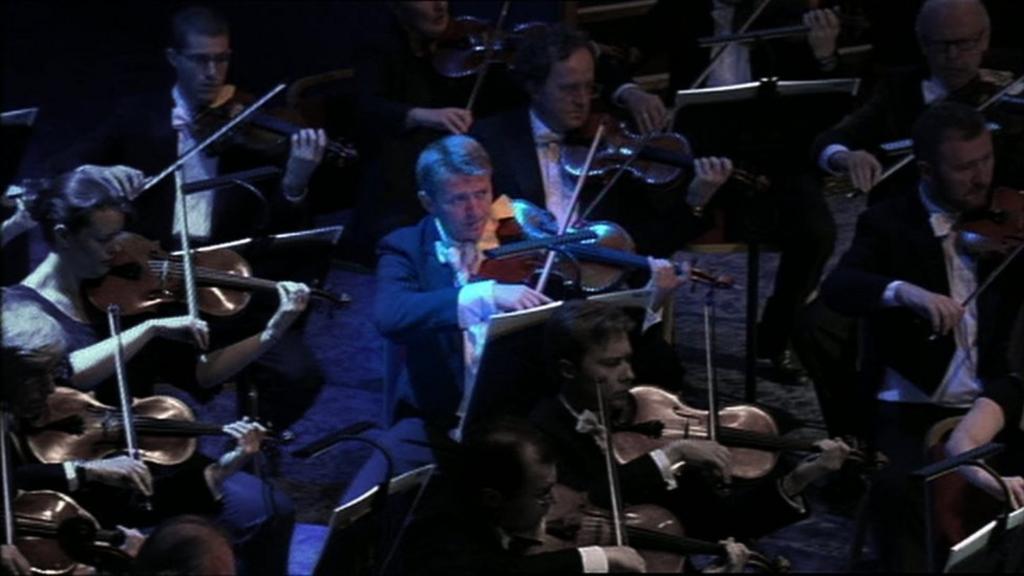
The English Court of Appeal has just ruled that an employer was liable for the hearing loss of one of its employees. Nothing unusual about that you might say. The case law dealing with an employer’s duty of care to safeguard the health and well being of employees is full of such examples of life changing injuries.

The relevant case, however, wasn’t about excessive levels of noise in factories or other industrial environments. The case involved a viola player (Christopher Goldscheider) who was employed by the Royal Opera House in London.

Mr Goldscheider alleged that his employer had failed to take reasonable precautions to prevent him from suffering hearing damage during a particularly noisy rehearsal of Richard Wagner’s Die Walküre. The Valkyrie overture can be a particular favourite of audiences, but it is very noisy. The American Director, Francis Ford Coppola made full use of its dramatic effect in his Vietnam war movie, Apocalypse Now.

At the time of the rehearsal of Die Walküre, the sound levels of the music reached a massive 132 decibels. Mr Goldscheider was sitting directly in front of the brass section of the orchestra and took the full force of the music. He later claimed that he had developed acoustic shock and had symptoms of tinnitus, hyperacusis and dizziness.

In its defence, the Royal Opera House claimed that Wagner’s music had artistic merit and that some musicians might foreseeably suffer hearing damage.

This argument was first rejected by the English High Court. The English Court of Appeal affirmed the decision of the High Court: the Royal Opera House had failed in its duty of care to Mr Goldscheider by not taking reasonable precautions to safeguard his hearing.

Don’t stop the music? Well, not exactly, but perhaps turn it down to safer levels might be the lesson to be learned here. Concert halls and opera houses (as well as other noisy entertainment venues) please take note.

Links to the judgements of the High Court and the English Court of Appeal respectively can be found below:

Goldscheider v The Royal Opera House Convent Garden Foundation & Ors [2018] EWHC 687 (QB)

https://www.judiciary.uk/wp-content/uploads/2018/03/goldscheider-v-roh-judgmentL.pdf

Goldscheider v The Royal Opera House Convent Garden Foundation & Ors [2019] EWCA Civ 711

https://www.judiciary.uk/wp-content/uploads/2019/04/goldscheider-v-roh-judgment.pdf

A link to how the case was reported on the BBC News App can be found below:

Royal Opera House loses appeal over viola player’s hearing

The Royal Opera House failed to protect a musician’s hearing during rehearsal, the Court of Appeal rules.

Copyright Seán J Crossan, 19 April 2019

Where there’s blame, there’s a claim?

Photo by Kevin Grieve on Unsplash

Where there’s blame, there’s a claim? Not if you try to fake an accident there isn’t, as one woman from West Yorkshire has found to her cost.

Trip and slip claims are very common types of delict actions (tort in England), but they have to be genuine if the pursuer (claimant) is to have any chance of success. In Chapter 3 of Introductory Scots Law, I discuss the most common type of delictual claim – negligence – and the fact that the pursuer generally must prove that the defender was at fault.

On 2 April 2019, the BBC reported that Farida Ashraf of West Yorkshire had been successfully convicted in a private prosecution, at Bradford Crown Court, brought by the insurance company, Aviva. Ms Ashraf had submitted a personal injury claim for £3,000 in relation to an alleged accident at a Bradford supermarket. This civil claim had been dismissed because it was basically fraudulent. Aviva then commenced a private prosecution against Ms Ashraf, which resulted in her receiving a 21 month prison sentence (suspended for 2 years).

As a point of comparison between Scotland and England, it’s interesting to note that this was a private prosecution brought by Aviva. Such an action would not have happened in Scotland because the Crown Office and Procurator Fiscal Service decide whether criminal proceedings should have been initiated – not a private party like Aviva. In Scotland, insurance companies can, of course, report their suspicions to the Police that a claim may be fraudulent. The Police can investigate and a report will then be submitted to the Procurator Fiscal.

The private prosecution brought against Ms Ashraf is thought to be one of the first successful types of such actions in England.

A link to the BBC article can be found below:

Woman staged fall at Bradford store to claim payment

Farida Ashraf tripped over a crate placed by accomplices and tried to claim £3,000 for injuries.

Copyright Seán J Crossan, 3 April 2019

Volenti non fit injuria? (or hell mend you!)

Photo by Davide Guglielmo on FreeImages

In Chapter 3 of Introductory Scots Law, I discuss the defences available to parties who have been accused of causing loss or injury by reason of them committing a negligent act.

One of the best known defences to an action for negligence is volenti non fit injuria. I often like to say to my students that, colloquially, this translates as the hell mend you defence! The pursuer has knowingly embarked on a reckless and dangerous course of action and has accepted the consequences of the risk. S/he has only himself to blame for the losses or injuries caused. For the defender in a civil action, volenti is a complete defence – unlike the concept of contributory negligence which is said to be a partial defence. 

The case law relating to this defence is well established and it’s probably worth mentioning some of the judgements where volenti has featured prominently:

ICI v Shatwell [1965] AC 656 two brothers were blown up while testing detonators before they had taken refuge in a safety shelter. The Shatwell brothers had acted in complete defiance of their employer’s instructions. The employer was able to rely on the defence of volenti and the claim for negligence was dismissed. 

McGlone v British Railways Board (1966) SC (HL) 1 – a 12 year old boy injured while climbing an electricity transformer on the defender’s property should have had the foresight and the presence of mind to know that he was engaging in a highly dangerous activity. The boy’s claim for damages was dismissed. 

Titchener v British Railways Board (1984) SLT 192, SC (HL) 34 – a 15 year old girl who was struck by a train while trespassing on the defender’s property could not rely on the defender’s negligence. She was old enough to know better i.e. she knew that the railway was a dangerous place. As in the previous two decisions, the girl’s claim for damages was dismissed. 

A recent case before the Sheriff Court’s All Scotland Personal Injury Court and the subsequent appeal to the Sheriff Appeal Court in Edinburgh illustrates whether it will be permitted to advance volenti as a legitimate defence to a breach of a duty of care.

Raybould v T N Gilmartin (Contractors) Ltd [2018] SAC (CIV) 31

Diane Raybould, a 59 year old woman with mobility problems, sustained injuries at her home in West Forth Street, Anstruther on 3 February 2015 while attempting to gain access to the property. The front door of the property led directly on to the pavement which, at the time of the accident, had been dug up by T N Gilmartin (the contractor). Fife Council had engaged the contractor to install street lighting. Mrs Raybould had been attempting to access her property via the front entrance. She was aware of the existence of the pavement works and there were barriers around the excavations. There were, however, no planks or boards laid down by the contractors to afford easier access to the property. In short: “The area was a mess.” The contractor argued that by attempting to navigate such an obviously dangerous obstruction, Mrs Raybould had voluntarily assumed the risk of harm or injury to herself. In other words, the contractor should have benefit from the defence of volenti non fit injuria.

The Hearing before the All Scotland Sheriff Personal Injury Court

At the Hearing in the Sheriff Court, Mrs Raybould’s claim for damages against the contractor was dismissed.

The Sheriff emphasised a number of issues which had clearly formed the basis of the judgement against Mrs Raybould:

  1. She was perfectly aware that there was no board or plank lying across the pavement excavations to assist her to access her home relatively safely;

2. She could not plausibly claim that she was unaware of the dangers of attempting to access her property via the front door;

3. She admitted that she felt a strong sense of apprehension or anxiety about any attempt to navigate the obstacles at her front door;

4. She had mobility problems and had to use a walking stick; and

5. She knew that pavement barriers had been placed by the contractors to deter people from using the footpath outside her home.

The Sheriff also found it compelling that Mrs Raybould could have chosen to enter her home via the property’s back door. In fact, there was no pressure of time on her to choose the front door and she never said that she was unable to use the back door to the property.

The Sheriff was strongly of the opinion that Mrs Raybould had been unable to demonstrate that the contractor’s acts or omissions had caused her to fall and sustain injury. Therefore, any alleged breach of the duty of care on the part contractor could not be said to be the proximate cause of the accident. If anything, the proximate cause of Mrs Raybould’s injuries was her decision to attempt a dangerous crossing of the pavement to gain access to her front door.

Interestingly, the Sheriff also entertained the possibility that, if the defence of volenti could not be relied upon by the contractor, the partial defence of contributory negligence would be appropriate in that Mrs Raybould would be 80% liable for her injuries.

(We shall return to the issue of contributory negligence later in this Blog when we discuss the findings of the Sheriff Appeal Court).

Taking all these factors into consideration, the Sheriff concluded that the contractor should be allowed to rely on the defence of volenti non fit injuria. Consequently, Mrs Raybould’s action for damages was dismissed and she was ordered to pay the costs of the contractor.

Mrs Raybould was, however, permitted to appeal to the Sheriff Appeal Court in Edinburgh on a point of law.

The Appeal

Sheriff Principal Stephen QC gave the opinion of the court which overturned the Sheriff’s original decision in favour of T N Gilmartin. In no way could it be said that Mrs Raybould had waived or released T N Gilmartin from its duty of care to her. The contractor was, therefore, liable in damages to Mrs Raybould. That said, however, it was clear that Mrs Raybould had contributed equally to the negligence by the contractor and, consequently, any damages payable should be reduced by 50% as per the Law Reform (Contributory Negligence) Act 1945.

The Sheriff had correctly stated that Mrs Raybould’s conduct was in some way to blame for her injuries, but he had also failed to assess the blameworthiness of the contractor (as per the guidelines laid down in the UK Supreme Court’s decision in Jackson v Murray [2015] UKSC 5). In Jackson, the UK Supreme Court stressed the importance of assessing the blameworthiness of all the relevant parties in situations where contributory negligence applied.

Sheriff Principal Stephen QC made the following remarks:

“Volenti, in effect, amounts to a waiver by the pursuer of the defenders’ liability to her in damages. There must be proof that the pursuer knew of the risk (sciens) and also that she accepted the risk or voluntarily assumed the risk (volens). In this case there is no suggestion that the pursuer either implicitly or explicitly gave any such waiver or that the circumstances would allow the court to infer that the pursuer has impliedly consented to take the risk. It is accepted on behalf of the defenders that the pursuer was not asked about “waiver” or whether she was prepared to absolve the contractors of any liability they may have towards her.”

The learned judge went on to observe that:

“It is a common place activity and foreseeable that a householder such as the pursuer [Mrs Raybould] would seek to enter her home by the front door. The pursuer asked for assistance before proceeding. She used her stick to assist her by providing another point of contact with the ground. … The sheriff’s conclusion that volenti applies permeates his reasoning. However, we have found that volenti does not and cannot apply to the facts of this case.”

Interestingly, Sheriff Principal Stephen QC observed that the contractor had not actually advocated the defence of volenti in its pleadings before the Sheriff at the original hearing. In point of fact, it was the Sheriff who took it upon himself to introduce the defence of volenti! This was clearly an example of the Sheriff “innovating”.

Conclusion

At both the original trial and the appeal hearing, Thomson* and Stewart* were quoted with approval in relation to volenti. These authorities had made the point that volenti had a “very restricted application” and could provide a complete defence to a breach of a duty of care. In circumstances, where the defence of volenti is applicable, the pursuer must actually be aware of the risk and consent to the consequences of the defender’s breach of duty.

*(Thomson on Delict (Chapter 8); and Stewart: Reparation: Liability for Delict (Chapter 30)).

The Sheriff should not have entertained the issue of volenti in the first place. As Sheriff Principal Stephen QC stated: ” volenti does not and cannot apply to the facts of this case.”

The correct approach to take was that of contributory negligence.

A link to the opinion of the Sheriff Appeal Court can be found below:

https://www.scotcourts.gov.uk/docs/default-source/cos-general-docs/pdf-docs-for-opinions/2018-sac-(civ)-31.pdf?sfvrsn=0

Copyright Seán J Crossan, 26 January 2019

The death of the independent contractor defence?

Photo by Martin Brosy on Unsplash

Traditionally, vicarious liability in employment law was primarily an issue for parties who had entered a contract of service. For many years, it was the general legal position that an independent contractor i.e. someone engaged under a contract for services who had committed a wrongful act or omission which harmed a third party was personally liable for the consequences of their behaviour. The person hiring the contractor would normally escape any such liability. Vicarious liability, however, is an area of the law which continues to develop – as we are about to see.

Worryingly, for organisations which use independent contractors (people working under a contract for services), an English Court of Appeal decision may mean that they could be liable for delicts and other wrongful acts/omissions e.g. assaults which were carried out by non-employees.

The English Court of Appeal has clearly come to its decision based on the logic of recent decisions of the UK Supreme Court: namely,
Mohamud v WM Morrison Supermarkets [2016] (which is discussed in Chapter 6 of Introductory Scots Law). It would seem likely, therefore, that the Scottish courts will follow this decision remains to be seen, but it is not a development which organisations are likely to welcome. A summary of the decision can be seen below:

Barclays Bank PLC v Various Claimants [2018] EWCA Civ 1670

Barclays Bank hired a doctor, Gordon Bates, to carry out medical examinations of members of its staff and applicants for employment at the Bank. These examinations were carried out by Bates at his consulting room located at his private address. The doctor was accused of sexually assaulting 126 people during examinations carried out between 1968 and 1984. These incidents did not come to light until much later. By this time, the doctor had died and there was no question of his professional indemnity insurance or his estate paying out compensation to his victims. Barclays Bank stated that the doctor was not an employee – he was an independent medical practitioner paid by the Bank to carry out a service as and when required. Barclays Bank argued that on these grounds they should not be held liable for the doctor’s wrongful actions. In fact, the victims themselves did not claim that Bates was an employee of Barclays, but significantly they did argue that its relationship with the doctor was “akin to employment” and that the delictual act was sufficiently closely connected to the employment or quasi-employment. Bates was under the control of Barclays Bank; by using the services of Bates, the Bank had created the risk of the victims being exposed to his wrongful acts; The medical examinations were carried out on behalf of the Bank; and the Bank had the resources to compensate the victims who now had no practical means of obtaining damages from Bates.

The case was first heard in the English High Court. The High Court decided that Barclays should be held liable for the doctor’s actions. They were benefiting from the service that he was providing and they had the financial resources to compensate the victims (this for organisations using independent contractors will be the really controversial and worrying part of the judgement). 

Barclays appealed to the English Court of Appeal, but the decision of the High Court was upheld. At paragraph 41 of the judgement, Lord Justice Irwin stated:

“The law of vicarious liability has been developed – has been “on the move” – in recent times, most notably in the five critical decisions of: E v English Province of Our Lady of Charity; the Catholic Child Welfare Society; Cox v Ministry of Justice; Mohamud v WM Morrison Supermarkets; and Armes v Nottinghamshire County Council.”

Significantly, Lord Justice Irwin goes on to say (at paragraph 45):

“Moreover, it seems clear to me that, adopting the approach of the Supreme Court, there will indeed be cases of independent contractors where vicarious liability will be established. Changes in the structures of employment, and of contracts for the provisions of services, are widespread. Operations intrinsic to a business enterprise are routinely performed by independent contractors, over long periods, accompanied by precise obligations and high levels of control. Such patterns are evident in widely different fields of enterprise, from construction, to manufacture, to the services sector.”

Conclusion

What are the consequences of the Barclays judgement? The logical conclusion is that any organisation engaging workers or independent contractors under a contract for services will have to be aware of this decision and its implications because it expands the area of vicarious liability considerably. If the English Court of Appeal’s decision is upheld and then followed in Scotland, it will be true to say that vicarious liability is no longer an exclusive feature of the contract of employment (contract of service). Essentially, it will be very difficult for a an organisation to mount a competent defence that it should not incur liability merely because the wrongful act or omission was committed by an independent contractor for services.

A link to the English Court of Appeal’s decision can be found below:

http://www.bailii.org/ew/cases/EWCA/Civ/2018/1670.html

Postscript

Barclays appealed against the decision of the Court of Appeal and the UK Supreme Court heard this appeal on 28 november 2019.

We await the decision of the Supreme Court with considerable interest.


Copyright Seán J Crossan, 25 January 2019 and 28 November 2019