(In)Equality in the EU?

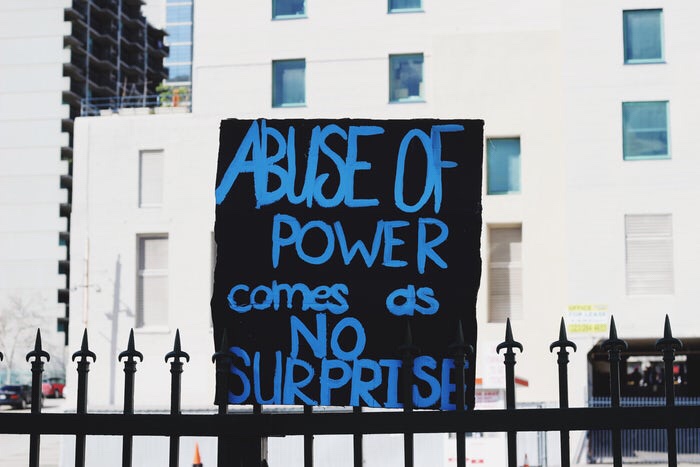
Photo by Markus Spiske on Unsplash

Have member states of the European Union made progress this last year in the protection of minority groups?

It would seem that the answer to this question is not particularly straightforward if you read the EU’s Fundamental Rights Report 2019.

Michael O’Flaherty, Director of the EU’s Fundamental Rights Agency presents a fairly gloomy picture across Europe:

Fundamental rights alarm bells are ringing across the EU as inequalities, harassment and prejudices continue to grow. … We need robust responses outlining how rights benefit us all and provide the answers to the inequalities that are holding us back from a fair and just society where everyone can prosper.”

Across the EU, there are Governments in power (Hungary and Italy particularly) which promote strongly anti-immigrant messages. Until recently, the far-right Freedom Party was part of the coalition government of former Federal Chancellor Sebastian Kurz in Austria. In France, Germany and Spain, we have witnessed rising levels of support for far right parties such as the Front National, AfD and Vox respectively.

Other European countries have witnessed similar trends and did well in the recent European Parliament elections in May 2019.

We are not immune from such trends in the UK with many people being suspicious of the motivations of the Brexit Party and UKIP (despite denials to the contrary by the leaderships of these organisations that they are not far right movements).

In essence, the conclusions of the Fundamental Rights Report 2019 are as follows:

  • The levels of racial discrimination and harassment across the EU remain stubbornly high e.g. Black, Jewish and Roma people continue to report discrimination and harassment in their daily lives;
  • A significant percentage of Europeans (40%) consider immigration to be a problem and these individuals over-estimate the levels of (actual or true) immigration to the EU;
  • The number of children in poverty has decreased, but at 25% this figure is a still a cause for concern with certain groups (Roma children) being particularly affected.

A link to the Fundamental Rights Report 2019 can be found below:

https://fra.europa.eu/en/publication/2019/fundamental-rights-2019

Copyright Seán J Crossan, 10 June 2019

Social media and dismissal

Photo by Alex Haney on Unsplash

Regular readers of this Blog will know that I have written several articles over the last few months about the legal consequences of social media (mis)use and the effects on relationships in the work place. Comments or images posted on social media by employees can have serious reputational consequences for their employers.

The Israel Folau case

In a blog published on 11 April 2019 (Social Media Misuse), I discussed the story about Israel Folau, the Australian rugby player who had posted homophobic comments on social media. Folau has now been dismissed by Australia for these remarks.

Please see a link to the story on the Sky News website:

Israel Folau: Australian rugby star sacked over anti-gay social media post
http://news.sky.com/story/israel-folau-australian-rugby-star-sacked-over-anti-gay-social-media-post-11721930

The employer must, of course, be able to prove reasonably that the employee’s misuse of social media will cause it to suffer reputational damage.

In Taylor Somerfield Stores Ltd ETS/107487/07 an employee was dismissed after posting a video on Youtube which involved a mock fight using Somerfield carrier bags in the work place. The video was uploaded to Youtube for a mere 3 days and only 8 people had viewed it – 3 of whom were managers conducting the disciplinary investigation. The Employment Tribunal was firmly of the view that the dismissal was unfair because the employer was not able to prove that it had suffered serious reputational damage.

As I have emphasised in previous blogs, employees will be very naive if they think that it is a competent defence to say that the social media posts occurred outside working hours. Employers are still very much entitled to treat such behaviour as an example of a breach of work place discipline. In serious cases of social media misuse, employers will be entitled to consider dismissal of employees on the grounds of misconduct (as per Section 98(4) of the Employment Rights Act 1996).

Admittedly, this area represents something of a tightrope for employers to walk: they will have to operate a clear and comprehensive social media policy and employees must be made aware of any restrictions or expectations.

In the unreported Employment Tribunal decision of Grant and Ross Mitie Property Services Ltd (2009), the employer had a policy which restricted employee internet access. Unfortunately, for the employer, the phrase which permitted employee’s personal use of the internet to times that were “outside core working hours”, was deemed by the Tribunal to be ‘vague’ and lacking in certainty. This meant that the employees who had been dismissed because the employer was of the view that they had breached its policy on internet use had been unfairly dismissed.

There is also the matter of the rights that employees reasonably have to privacy and freedom of expression (as per their Article 8 and 10 rights respectively to be found in the European Convention, the Human Rights Act 1998 and the Scotland Act 1998) (see Bărbulescu v Romania Application no. 61496/08 5 September 2017; and Smith v Trafford Housing Trust [2012] EWHC 3221 (Ch)).

I have also pointed out in previous blogs, the importance for employers in carrying out disciplinary proceedings which comply with current ACAS Guidance. Using the (current) ACAS Guidance is a critical risk management exercise for employers:

https://beta.acas.org.uk/investigations-for-discipline-and-grievance-step-by-step

Employers who act recklessly or swiftly and ignore proper procedures may well have cause to regret their actions down the road. As Sir Robert Megarry VC, the eminent English judge, remarked decades ago in John Rees [1970] 1 Ch 345:

When something is obvious, they may say, why force everyone to go through the tiresome waste of time involved in framing charges and giving an opportunity to be heard?As everybody who has anything to do with the law well knows, the path of the law is strewn with examples of open and shut cases which, somehow, were not; …

The above remarks are as valid in 2019 as they were in Sir Robert Megarry’s day.

Atherton v Bensons Vending Ltd ET/2411749/2018

This is a recent decision of the Manchester Employment Tribunal which raises some very interesting issues about employee use of social media specifically and the conduct of disciplinary proceedings more generally.

Darren Atherton (aged 55) worked for Bensons Vending Ltd, a small company. As a result of his employer making changes to its discretionary Christmas bonus scheme, Atherton made some very negative comments about the company’s Managing Director, Ken Haselden via a colleague’s Facebook page:

Comment 1

We’ve all just bought Ken a new dog with our Christmas bonus!!!”

Comment 2

“He spends a few grand on a new dog then we get told ‘no bonus this year’ but we can have a bottle!!! 

Comment 3

“Well, he can stick his bottle where the sun doesn’t shine because I refuse to be insulted in this way!!!

Atherton’s colleague, Simon Minshull had initially objected to the changes to the bonus scheme by posting comments on his Facebook page:

Comment 1

Just when you thought staff morale couldn’t get any worse, hey f***ing presto #insult #disgusted.”

Comment 2

The only difference between McDonalds and where I work is McDonalds has only one clown running the show.” (This second comment was accompanied by a picture of Ronald McDonald).

The changes to the bonus scheme were part of a cost cutting and efficiency savings exercise by the company and, from any reading of the above comments, Atherton and Minshull clearly disagreed with this new approach by their employer.

Negative remarks about the Managing Director were also made by Atherton and another colleague in the workplace. Several colleagues informed Haselden about these remarks stating that they had been very aggressive and vitriolic in nature.

Atherton’s colleague, Simon Minshull, was subsequently questioned about the posts on his Facebook account by Haselden. Minshull stated that he did not agree with them – they were Atherton’s opinions – and he apologised for any offence caused to Haselden. He was later suspended for the Facebook posts, but critically this suspension was lifted in the light of his swift apology to Haselden (and the fact that it was established that he had not made these comments). Minshull was permitted to return to work upon the conclusion of the disciplinary proceedings against him.

Atherton was called to a meeting with Mr Haselden in December 2017 to address the allegations which had been made against him and to investigate the social media posts. This was not a disciplinary meeting, but more in the way of an investigatory meeting. The actual disciplinary meeting took place in January 2018.

Dismissal without notice pay

The outcome of the disciplinary meeting was that Atherton should be dismissed without notice pay for gross misconduct in terms of Section 98(4) of the Employment Rights Act 1996. This was despite the fact that Atherton had a clean disciplinary record (until now) and had enjoyed a good relationship with his employer. Atherton’s comments on Facebook were “extremely derogatory” and Mr Haselden stated that he would find it “extremely difficult” to continue working with him. Atherton appealed against his dismissal, but the decision was upheld.

The fairness of the disciplinary proceedings

As part of his claim against the employer, Atherton challenged the fairness of the disciplinary proceedings taken against him. In particular, he objected to the fact that Haselden conducted the disciplinary meeting against him. Atherton’s contention was that he would not receive a fair hearing because Haselden was personally involved in the matter and, therefore, could not be relied upon to act objectively. This type of issue frequently arises where smaller employers are concerned. In an ideal world, a manager (such as Haselden) who has been involved personally in an issue involving alleged breaches of work place discipline should not be a participant in the disciplinary panel. This is, of course, easier in practice to ensure in larger organisations where there is a pool of experienced managers who will have had no personal involvement in the matter (or in other words: a particular axe to grind).

The appeals process

In situations involving smaller employers, this is where the appeals process takes on a critical significance. Appeals can often be used to cure actual or perceived defects in the conduct of the original disciplinary meeting. Although Haselden (with two others – an operations manager and a company engineer) had conducted the disciplinary meetings, he had not involved himself in the actual appeals hearing. This part of the company’s disciplinary procedure had been conducted by a Ms Pedley, a trained auditor and, as stated, above, Atherton’s dismissal was upheld.

At this point, Atherton also raised the difference in treatment between himself and Simon Minshull (who had kept his job after disciplinary proceedings against him had been concluded). Pedley refused to comment on individual cases on the grounds of confidentiality. She stated in her letter to Atherton upholding the dismissal that:

Length of service and clean disciplinary record are taken into consideration during all grievance procedures. However, given the
nature of the comment and the reluctance to remedy the grievance the
relationship between yourself and senior management has broken down
irretrievably”.

The Employment Tribunal’s decision

The Tribunal held that Atherton had been fairly dismissed in terms of Section 98(4) of the Employment Rights Act 1996.

He had made extremely derogatory comments via Facebook about Haselden. They were “personal” and they suggested “some impropriety” on Mr Haselden’s part (though more in the nature of “penny-pinching impropriety” suggesting Scrooge like behaviour rather than any financial misdeeds). Any member of the public who knew the company and reading Atherton’s comments on Simon Minshull’s Facebook site, would have a very negative view of Haselden. It was accepted by the Tribunal that Haselden would, therefore, potentially suffer reputational damage. It was also accepted that in a small company, it would be very difficult for Atherton and Haselden to work with one another again (the employment relationship had irretrievably broken down).

The Tribunal also addressed Atherton’s claim that the disciplinary procedure had been biased or lacking in objectivity because of Haselden’s involvement in the decision to dismiss him from employment. This indeed could have been a problem for the employer and may have prejudiced proceedings against Atherton. That said, however, the saving grace for the employer was the fact that Ms Pedley had been kept in reserve for an appeal hearing.

The Employment Tribunal Judge made the following observations about Pedley’s involvement in the appeal stage:

Ms Pedley is by profession an auditor and had clearly gone through the matters in great detail. Notes (page 95 and onwards) show how she dealt with the matter. … Because of that safeguard of the deployment of Ms Pedley, who I am satisfied went about her task objectively and exhaustively and independently, although regrettably for the claimant she came to the same conclusion, I am not satisfied that the determination by Mr Haselden at the dismissal stage rendered the dismissal unfair. The appeal was thorough, it was a re-hearing. Ms Pedley considered all the points that were being raised and came, I am satisfied, to an independent conclusion.”

As for the difference in outcomes between Atherton and Simon Minshull, a key justification for this was that Minshull had “apologised shortly after being challenged regarding his Facebook comments even though he had been suspended.” This was something that Atherton had failed to do – apologising only at the disciplinary meeting in January 2018. Furthermore, it was significant that the nature of Atherton’s comments were specifically directed against Haselden, whereas Minshull’s comments (although also negative) were much more generalised.

The failure to pay notice pay

This was an aspect of the employer’s decision that the Employment Tribunal disagreed with. Atherton, therefore, had a right to receive his entitlement to notice pay. In this sense, he had been wrongly dismissed by his employer. The Employment Tribunal judge stated very clearly that in order for an employee to lose his entitlement to notice pay there the employer must be able to demonstrate that the gross misconduct complained of crosses over a “very high hurdle”. In the judge’s opinion, the employer had not been able to overcome this hurdle and, therefore, Atherton was entitled to claim notice pay.

A link to the Employment Tribunal’s judgement in Atherton Bensons Vending Ltd can be found below:

https://assets.publishing.service.gov.uk/media/5c4712dfe5274a6e6b6716e1/Mr_D_Atherton_v_Bensons_Vending_Limited_-_2411749_2018_-_Reasons.pdf

Conclusion

What have we learned about the decision of the Employment Tribunal in Atherton Bensons Vending Ltd?

Quite a lot actually:

  1. Employees will have to be extremely careful when posting material or comments on social media platforms – irrespective of whether this is about the employers or not.
  2. The case is yet another good example that misconduct committed inside or outside the work place or working hours can have reputational consequences for the employer. It can also lead to relationships in the work place breaking down irretrievably (especially in smaller organisations).
  3. Employers do not have a free hand to police employee use of social media. There must be clear guidelines laid down by the employer as to what constitutes acceptable and appropriate behaviour. At the same, employees have reasonable expectations that their rights to privacy and expression (as per the European Convention on Human Rights) will be upheld.
  4. The conduct of disciplinary proceedings by the employer is a critical issue. We have noted that potential conflicts of interest can occur in smaller employers or organisations where a manager can be investigator, dismissing officer and appeals officer. How does the employer address these issues and ensure objectivity in the disciplinary process?
  5. As with Atherton and Minshull, the employer was entitled to treat them differently: Atherton was dismissed while Minshull retained his job. There was nothing inconsistent or inherently unfair about this when the personal circumstances and behaviour of the two employees was examined.
  6. Finally, even in situations where gross misconduct has been proved by the employer, and the dismissal is deemed to be fair (in terms of Section 98(4): Employment Rights Act 1996), it will not necessarily mean that the employee loses his or her right to notice pay. The employer will have to overcome an extremely high hurdle in order to be entitled to invoke such a disciplinary sanction. As we have seen in Atherton, the Tribunal was not convinced that the employer had been able to prove that this was an appropriate punishment: the dismissal was fair; the failure to pay notice was not.

Copyright Seán J Crossan, 20 May 2019

I’m a prisoner, I want to vote!

Photo by kyryll ushakov on Unsplash

In one of my first blogs (The problem with human rights … published on 1 February 2019), I discussed the problematic nature of this area – especially when individuals who have been less than law abiding, upright citizens are attempting to argue that they deserve to have their human rights respected.

In that previous blog, I focused on people such as John Hirst (convicted for manslaughter in England); Abu Qatada (a radical Islamic preacher who promoted Jihad); and Anders Brevik (the Norwegian mass murderer); who had all pursued legal actions in terms of the European Convention on Human Rights.

See:

  •  Hirst v United Kingdom (No. 2) (2005) ECHR 681
  •  Othman (Abu Qatada) vUK (Application No. 8139/09) 12 January 2012
  • Hansen (formerly known as Anders Breivik) v Norway (Application No. 48852/17) 26 June 2018)

As I often remark to my students, people such as those listed above are not ideal ‘poster boys’ if you were going to run a marketing campaign to promote greater awareness of human rights in Scotland.

This year (in Scotland) marks the twentieth anniversary of the implementation of the European Convention via the Scotland Act 1998 (in 2000, the Convention was further implemented across the UK as a result of the introduction of the Human Rights Act 1998).

I doubt very much that supporters of the system of human rights protection will wish to dwell too long on those difficult cases involving murderers, terrorists, paedophiles etc. It rather tends to undermine the whole basis of human rights or, in other words, it’s a very difficult sell.

Yet the difficult cases keep on coming and certainly make this area a constant source of fascinating debate and argument about the rights and wrongs of human rights. They also tend to drive home very forcefully the notion that human rights is a contested concept. Not everyone agrees what should be protected or who should be protected.

In 2000, the former Scottish judge, Lord McCluskey was highly critical of the introduction of human rights to the legal system. As far back as 1986, he had made the following remarks (in his Reith Lectures) about Canada implementing its Charter of Rights and Freedoms, which was based on the European Convention. In his opinion, this would lead to:

a field day for crackpots, a pain in the neck for judges and legislators, and a goldmine for lawyers.

His Lordship would make the point that the above remarks applied equally to the then Labour Government’s decision to implement the European Convention directly into the legal systems of the United Kingdom.

Whether Lord McCluskey came to regret making these remarks publicly, we can only speculate. They did, however, come back to haunt him when counsel for a number of appellants before the Appeal Court of the High Court of Justiciary argued that Lord McCluskey (and his fellow judges) should be removed from further participation in an appeal which relied very heavily on human rights arguments, in particular, the right to a fair trial under Article 6 of the Convention (see Hoekstra & Others v Her Majesty’s Advocate [2000] ScotHC 11).

John Hirst

When Andrew Neil, the well known journalist, questioned John Hirst about prisoners being given the right to vote in elections being held in the UK, he was less than subtle when he ran through Hirst’s charge sheet on the BBC’s Daily Politics Show in 2010.

Even instinctive supporters of human rights would have found it very difficult (emotionally speaking) to sympathise with Hirst’s position that the right to vote is a human right and this should be extended to those serving prison sentences.

If you want to be reminded of how awkward an interview this was, please click on the link below:

A persistent problem

The spark ignited by John Hirst smoulders on. Amazingly, we are still talking about the issue in 2019. Last month, the European Court of Human Rights (not to be confused with the EU’s Court of Justice), ruled against the UK for failure to implement its earlier decisions which came down firmly on the side of prisoners. Although the UK was found to be in breach of the European Convention, the European Court of Human Rights decided not to award compensation to those prisoners who brought the claim.

The case in question is Miller & Others v UK 11 April 2019 (Application No 70571/14) and the European Court of Human Rights is effectively declaring that UK electoral legislation does not comply with the European Convention.

Article 3 of Protocol No. 1 of the European Convention states that the signatories or High Contracting Parties (i.e. those countries, including the UK, which have signed the Convention):

… undertake to hold free elections at reasonable intervals by secret ballot, under conditions which will ensure the free expression of the opinion of the people in the choice of the legislature.”

All of the prisoners involved in this application were alleging that the UK was in breach of the above provision when they were denied the right to vote in one or more of the following elections: the European Parliament elections on 22 May 2014; the elections to the Scottish Parliament on 5 May 2016; and the UK General Election on 8 June 2017. 

Section 3 of the Representation of the People Act 1983 is the relevant legislation in this area. It states that:

A convicted person during the time that he is detained in a penal institution in pursuance of his sentence … is legally incapable of voting at any parliamentary or local government election.”

The above provision is known colloquially as the ‘blanket ban’ i.e. anyone convicted of a crime and imprisoned automatically loses (or forfeits) the right to vote. This is part of the convicted person’s punishment.

A link to the European Court’s judgement in Miller & Others v UK can be found below:

https://hudoc.echr.coe.int/tur#%22itemid%22:%5B%22001-192216%22%5D

As the supreme legislative body of the United Kingdom, it is up to the Westminster Parliament to rectify this situation – if it so chooses.

A political fudge

Since John Hirst won his case in 2005, successive UK Governments and Parliaments have fudged the issue. This whole area is a political hot potato because many politicians (irrespective of Party allegiance) are well aware of the dangers of standing up for the rights of prisoners. If advertising executives find it difficult to promote human rights using the inhabitants of UK prisons as exemplars, think how much more difficult it would be for politicians. They are extremely risk averse in these days of electoral volatility and they most certainly do not want to put their heads above the parapet to campaign for the rights of prisoners to be upheld. I suspect that many politicians would rather give a straight answer regarding their position raising taxes or cutting vital public services in order to avoid this particular, poisoned chalice.

Most politicians seeking re-election would not wish their opponents to level an accusation against them that they were soft on crime. Expect this story to keep on running.

Conclusion 

We have been well aware for some time that the so called blanket ban on serving prisoners being denied the right to vote is a breach of the European Convention. Put simply, this provision in the Representation of the People Act 1983 is incompatible with the UK’s obligation to uphold and protect human rights.

The consequences of declaring UK parliamentary legislation incompatible with the European Convention on Human Rights can be fully appreciated if we refer to the UK Supreme Court’s decision in R (Nicklinson) Ministry of Justice (CNK Alliance Ltd intervening) [2014] UKSC 38:

An essential element of the structure of the Human Rights Act 1998 is the call which Parliament has made on the courts to review the legislation which it passes in order to tell it whether the provisions contained in that legislation comply with the Convention. By responding to that call and sending the message to Parliament that a particular provision is incompatible with the Convention, the courts do not usurp the role of Parliament, much less offend the separation of powers. A declaration of incompatibility is merely an expression of the court’s conclusion as to whether, as enacted, a particular item of legislation cannot be considered compatible with a Convention right. In other words, the courts say to Parliament, ‘This particular piece of legislation is incompatible, now it is for you to decide what to do about it.’ And under the scheme of the Human Rights Act 1998 it is open to Parliament to decide to do nothing.”

Postscript

Significantly, on 2 August 2019, Michael Russell MSP, the Scottish Cabinet Secretary for Constitutional Affairs, passed what is known as a remedial order to allow prisoners whose domicile (or habitual residence) – when not in prison of course – is within the Scottish parliamentary constituency of Shetland.

Why?

A by-election is taking place because Tavish Scott, the Member of the Scottish Parliament for the Shetland constituency resigned his parliamentary seat. The remedial order is a temporary measure which will remove any accusation, for the time being, that the Scottish Government is in breach of human rights laws by depriving prisoners of the right to vote. This order by the Scottish Government is the prelude to a permanent change in the law.

Again, it’s worth emphasising that the Westminster Parliament and the UK Government can ignore declarations of incompatibility made by the courts in relation to laws which fail to comply with human rights obligations. The Scottish Government and Parliament are in a completely different legal position: all Scottish legislation and policies must comply with human rights laws.

A link to a story about the remedial order on the BBC website can be found below:

https://www.bbc.co.uk/news/uk-scotland-scotland-politics-49195360

Copyright Seán J Crossan, 1 May and 2 August 2019

Private Enterprise or Public Service?

Photo by Matthew Ansley on Unsplash

The provisions of the European Convention on Human Rights (as implemented by the Human Rights Act 1998 and the Scotland Act 1998) are only enforceable against the British State or its institutions and organisations that carry out public functions, for example, universities, care homes, colleges, hospitals, housing associations, schools and local authorities.

It should be noted that a public authority or emanation of the State can have a very wide meaning in law and may cover privatized utilities companies (see Case C-188/89 Foster v British Gas [1990] 3 ALL ER 897 and Griffin v South West Water Services Ltd [1995] IRLR 15) and other private contractors delivering public services.

A recent example of a private sector company falling foul of human rights legislation occurred in the following English High Court judgement: Between LW; Samantha Faulder; KT; MC v 1) Sodexho Limited and 2) Minister of Justice[2019] EWHC 367.

The facts of the case are as follows:

Her Majesty’s Prison Peterborough is run by Sodexho, a private company, but the UK Government’s Ministry of Justice is ultimately responsible for the running of the institution. The case arose because four inmates at the prison alleged that, in 2017, they had been subjected to strip searches which had breached their human rights, namely:

Article 3 – prohibition of torture and cruel and degrading treatment

Article 8 – the right to respect for private and family life

The English Court of Appeal had ruled in a previous decision – R (LD, RH and BK) v Secretary of State for Justice [2014] EWHC 3517 – that strip searches could represent breaches of Articles 3 and 8. In the present case, however, the High Court stated that there was no conclusive evidence that the strip searches represented a breach of Article 3. That said, the manner of the searches did represent a breach of Article 8.

Conclusion

This ruling is a salutary warning to private contractors carrying out public service contracts that they must be aware of human rights considerations. Companies such as Sodexho, Group 4 and Serco are and have all been involved in carrying out contracts in relation to the criminal justice system whether running prisons or transporting prisoners to and from court hearings. Ultimately, the (Scottish or the UK) Government will have responsibility for the manner in which operations are conducted by these companies because the contracts are deemed to benefit the public in the wider sense.

A link to the High Court’s judgement can be found below:

https://www.bailii.org/ew/cases/EWHC/Admin/2019/367.html

The case was widely reported in the UK media and a link to the story on the BBC website can be found below:

https://www.bbc.co.uk/news/uk-england-cambridgeshire-47334760

Copyright – Seán J Crossan, 1 March 2019

Love and marriage?

photo-1465495976277-4387d4b0b4c6.jpg

Photo by Drew Coffman on Unsplash

Love and marriage, love and marriage
They go together like a horse and carriage
This I tell you, brother
You can’t have one without the other

(Songwriters: James Van Heusen / Sammy Cahn
Love And Marriage lyrics © Warner/Chappell Music, Inc, Concord Music Publishing LLC)

So sang Frank Sinatra for the first time in 1955, but do love and marriage go together like a horse carriage? In 2019, some people (heterosexual couples) would beg to differ, instead preferring to opt for a civil partnership arrangement.

In Chapter 7 of Introductory Scots Law, it was noted that, according to Section 8 of the Equality Act 2010, a person has the protected characteristic of marriage and civil partnership if the person is married or is a civil partner.

In 2004, the UK Parliament passed the Civil Partnerships Act 2004, which came into force on 5 December 2005 and permitted same sex couples to enter into legally binding relationships. It should be recalled that the Scottish Parliament gave its consent to the Westminster Parliament to pass this Act for Scotland too.

This legislation also extended the same employment benefits that married couples already enjoyed to same sex couples who entered a civil partnership. In relation to the field of employment rights, the Act applies to employment and pension benefits e.g. a concessionary travel scheme and civil partners of an employee will be entitled to take advantage of these if existing provisions permit a heterosexual partner or spouse of an employee to claim these benefits.

In Bull and Another v Preddy and Another [2013] UKSC 73, UK Supreme Court Justice, Baroness Hale made the following remarks about civil partnerships:

“Civil partnership is not called marriage but in almost every other respect it is indistinguishable from the status of marriage in United Kingdom law. It was introduced so that same sex couples could voluntarily assume towards one another the same legal responsibilities, and enjoy the same legal rights, as married couples assume and enjoy. It is more than a contract. Like marriage, it is a status, in which some of the terms are prescribed by law, and which has consequences for people other than the couple themselves and for the state.”

Since the Supreme Court judgement in Bull and Another v Preddy and Another [2013], the debate has moved on and the UK Parliament passed the Marriage (Same Sex Couples) Act 2013 (which applies to England and Wales) and, in Scotland, the Scottish Parliament passed the Marriage and Civil Partnerships (Scotland) Act 2014.

Both pieces of legislation now permit same sex couples to enter civil i.e. non-religious marriages. Some Christian denominations, for example, the Church of Scotland, the Quakers (or the Society of Friends) and the Scottish Episcopal Church permit their ministers of religion to officiate at same sex marriage ceremonies, but some denominations do not (for instance, the Roman Catholic Church and the Orthodox Churches) which continue to emphasise the traditional view that a marriage is between a man and a woman.

Northern Ireland is the only region in the United Kingdom which currently does not permit same sex couples to enter marriages – although civil partnership is permitted. Readers of a previous blog entry (The ‘Gay Cake’ row) will be aware of this situation.

Heterosexual couples and civil partnerships

Interestingly, however, heterosexual couples were not permitted to enter civil partnerships as a more, modern alternative to marriage. Traditional marriage between a man and woman has been criticised on a number of grounds:

  • It’s seen as very patriarchal i.e. historically it unduly favours the male partner
  • It has religious associations which are not in keeping with the fact that the UK is (in 2019) a much more secular society
  • Some heterosexual couples are increasingly attracted to a more equitable and modern form of legal commitment i.e. civil partnership.

Despite these criticisms of traditional marriage, neither the UK or Scottish Governments have shown a desire to extend civil partnerships to heterosexual couples. That is until very recently and a UK Supreme Court decision has now made reform of the institution of marriage and civil partnership essential on the basis of a human rights challenge.

The case which started the ball rolling was Steinfeld and Keidan v Secretary of State for Education [2016].

In Steinfeld and Keidan, an unmarried, heterosexual couple brought a claim for unlawful less favourable treatment against the UK Government on the basis that the law (contained in the Civil Partnership Act 2004)  discriminated against them by forcing them to enter marriage as opposed to their preferred option of a civil partnership arrangement. The couple had strong “ideological objections” to marriage (irrespective of whether it took a religious or civil form) and argued, amongst other things, that the failure by the United Kingdom to give them the option of entering a civil partnership was a potential breach of their Article 8 rights (the right to privacy and family life) in terms of the European Convention on Human Rights.

Held: by the English High Court that the claim should be dismissed. Mrs Justice Andrews stated in very strong terms that:

“The alleged interference by the state with their right to private life by denying them the right to enter a civil partnership is even more tenuous. There is no evidence that they are subjected to humiliation, derogatory treatment, or any other lack of respect for their private lives on grounds of their heterosexual orientation by reason of the withholding of the status of civil partners from them.”

The UK and Scottish Governments had shown absolutely no inclination to extend the civil partnerships legislation to heterosexual couples. If anything both Governments had prioritised the extension of marriage to same sex couples and Mrs Justice Andrews then went on to observe that:

In my judgment the question whether maintaining the discrimination complained of is justified must depend upon the specific context. Here, the decision is to wait and see how the extension of marriage to same-sex partners affects civil partnerships before determining what to do about them. At present there is no clear evidence as to how civil partnerships are likely to be affected by extending marriage to same-sex couples and no clear social consensus on what their future should be (as the outcome of the two consultations demonstrates). However the figures that have emerged since March 2014 indicate that there has been a sharp decline in the number of civil partnerships formed in England and Wales compared to 2013, with a corresponding increase in the number of marriages of same-sex couples. In a consultation by the Scottish Government on Review of Civil Partnership dated September 2015, the statistics relating to jurisdictions where both marriage and civil partnerships are available to same sex and opposite sex couples (the Netherlands, New Zealand, and Hawaii) indicate that the vast majority of couples prefer marriage – in New Zealand in 2014 only 0.3% of the couples opted for civil partnership. In Scotland itself, after civil marriage was introduced for same-sex partners, there were only 8 civil partnerships registered in the second quarter of 2015, a decline of 94% from the previous year.”

The English Court of Appeal

This was not the end of the matter: Steinfeld and Keidan were permitted to appeal to the English Court of Appeal against Mr Justice Andrews’ decision (Steinfeld and Keidan v Secretary of State for Education [2017] EWCA Civ 81). The Court of Appeal strongly objected to and unanimously rejected the notion that the case did not involve a potential breach of Articles 8 of the European Convention (not to say a potential breach of Article 14: the prohibition against discrimination).

That said, however, Lord Beatson (in dismissing the couple’s claim) went on to state:

In my view, at present, the Secretary of State’s position is objectively justified. The future of the legal status of civil partnerships is an important matter of social policy that government is entitled to consider carefully. At the hearing the Secretary of State’s approach was described as a ‘wait and see’ approach, although it would be more accurate to describe it as a ‘wait and evaluate’ approach. Whatever term is used to describe the approach, it would not have been available to the Secretary of State prior to the enactment and coming into force of the 2013 Act. This is because it would not have been possible at that time to determine how many people would continue to enter into civil partnerships or want to do so because they share the appellants’ sincere objections to marriage. The relevant start date for consideration is thus 13 March 2014 when the provisions extending marriage to same sex couples came into force.”

His colleague, Lord Justice Briggs stated:

I can well understand the frustration which must be felt by the appellants and those different sex couples who share their view about marriage, about what they regard as the Government’s slow progress on this issue. Some couples in their position may suffer serious fiscal disadvantage if, for example, one of them dies before they can form a civil partnership. This is a factor in the proportionality balance, and because this is a case of differential treatment on the basis of sexual orientation, that balance must command anxious scrutiny. But against the background of a serious but unresolved difficulty which affects the public as a whole, and the practicable impossibility of some interim measure, such as temporarily opening civil partnership to different sex couples when the eventual decision may be to abolish it, I am unable to regard the Secretary of State’s current policy of ‘wait and evaluate’ as a disproportionate response.

The UK Supreme Court

As one might have expected, the UK Supreme Court was to have the final say in the matter.

On 27 June 2018, the Court issued its decision: R (on the application of Steinfeld and Keidan) (Appellants) v Secretary of State for International Development (in substitution for the Home Secretary and the Education Secretary) [2018] UKSC 32.

Lord Kerr gave the leading judgement (with which his fellow Justices concurred) and allowed Steinfeld and Keidan’s appeal:

“I would allow the appeal and make a declaration that sections 1 and 3 of CPA [Civil Partnership Act 2004] (to the extent that they preclude a different sex couple from entering into a civil partnership) are incompatible with article 14 of ECHR taken in conjunction with article 8 of the Convention.”

Conclusion

There we have it: excluding heterosexual couples from the possibility of entering civil partnerships when same sex couples are now legally entitled to enter both marriage and civil partnership represents a breach of Article 8 and Article 14 of the European Convention on Human Rights. This constituted interference with heterosexuals’ right to a private and family life and discrimination on grounds of sexual orientation.

That said, we have to be careful and Lord Kerr very wisely drew attention to the consequences of declaring UK parliamentary legislation incompatible with the European Convention on Human Rights by referring to the Supreme Court’s previous decision in R (Nicklinson) v Ministry of Justice (CNK Alliance Ltd intervening) [2014] UKSC 38:

An essential element of the structure of the Human Rights Act 1998 is the call which Parliament has made on the courts to review the legislation which it passes in order to tell it whether the provisions contained in that legislation comply with the Convention. By responding to that call and sending the message to Parliament that a particular provision is incompatible with the Convention, the courts do not usurp the role of Parliament, much less offend the separation of powers. A declaration of incompatibility is merely an expression of the court’s conclusion as to whether, as enacted, a particular item of legislation cannot be considered compatible with a Convention right. In other words, the courts say to Parliament, ‘This particular piece of legislation is incompatible, now it is for you to decide what to do about it.’ And under the scheme of the Human Rights Act 1998 it is open to Parliament to decide to do nothing.”

So what happens next?

In October 2018, Theresa May, the UK Prime Minister, announced that the Government would amend the Civil Partnership Act 2004 to permit heterosexual couples to enter into civil partnerships as a result of the Steinfield and Keidan decision:

Where does this leave Scotland?

It should, of course, be remembered that the Scottish Parliament (in terms of the Sewel Convention or Legislative Consent Motion) gave its permission to the UK Parliament to pass civil partnership legislation in 2004 for Scotland (the Civil Partnership Act 2004). Family law (including marriage and civil partnerships) is, of course, a devolved matter for the Scottish Parliament in terms of the Scotland Act 1998. The Scottish Parliament was criticised at the time for not legislating in this area of important social policy.

The rather awkward situation for the Scottish Parliament (and Government) is that the legislation which is currently in force in Scotland regulating civil partnerships is incompatible with human rights. As discussed, the UK Parliament can refuse to implement the Supreme Court’s judgement; the Scottish Parliament cannot.

If, post Steinfeld and Keidan, the Scottish Government continued to allow  civil partnership legislation to operate in its original form, there is a very real risk that the Scottish Ministers will be taken to court and challenged by heterosexual couples (using Steinfeld and Keidan [2018]) on human rights grounds.

The solution (for now)?

Letting the status quo prevail in Scotland is not an option because of the implications for human rights, so the Scottish Government announced a public consultation on civil partnerships in September 2018:

This consultation closed on 21 December 2018 and presented two options:

  • Abolishing the option of future civil partnerships for all; or
  • Permitting heterosexual couples to have the option of marriage or civil partnership.

A link to the Scottish Government’s consultation paper can be found below:

Will the solution follow the English/Welsh approach or will Scotland go down a different route?

We await with interest the Scottish Government’s conclusions on the matter. Watch this space.

Copyright Seán J Crossan, February 2019

It happened outside work … (or it’s my private life!)

photo-1432888622747-4eb9a8efeb07.png

Photo by William Iven on Unsplash

In Chapter 6 of Introductory Scots Law, I focus on the conduct of employees (or should I rephrase that and say misconduct?).

Misconduct – especially the most serious examples of bad behaviour in the workplace – might be grounds for a fair dismissal of the employee concerned.

Section 95 of the Employment Rights Act 1995 states that an employment contract could be terminated by the employer by reason of the employee’s conduct. Such a dismissal or termination of contract could be regarded as a fair dismissal (Section 98: ERA 1996).

If procedures are properly followed by the employer when contemplating dismissal as the ultimate disciplinary sanction, it will be very difficult for the employee to dispute this.

It’s very important for an employer to spell out to employees the type of conduct which could justify dismissal. This might usefully be done by having a section in the employee handbook which specifically addresses the issue of misconduct in the workplace. Additionally, a proper induction process for new employees might focus on the types of behaviour which the employer would almost certainly not condone. Regular refresher training for existing and longer term employees could also be very useful and, in bigger organisations, this would be an important function of the Human Resources or Personnel Department. The recent introduction of the EU’s General Data Protection Regulations (GDPR) in May 2018 is a case in point. Existing members of staff who handled personal or confidential data under the previous data regime would almost certainly be required to be brought up to speed about the more serious consequences of breaching the GDPR.

Misconduct outside the workplace

What about misconduct committed by employees outside working hours? There is an enduring myth amongst members of the public that what happens in your private life is no business of your employer’s. This is a very naive view to hold: employee misbehaviour – whether during working hours or outside work – can adversely affect the employment relationship. The employer will argue that misconduct committed outside working hours can have serious reputational consequences for the organisation.

As many individuals have found to their cost, extra curricular activities can lead to dismissal from employment or some other disciplinary sanction (see Pay v Lancashire Probation Service [2004] IRLR 129 where a probation officer who was part of a sado-masochistic circus act in his spare time was deemed to be fairly dismissed). On the other hand, the employer has to be careful and must not be heavy handed (see Redfearn UK [2012]  ECHR 1878 where the employee suffered unlawful discrimination when he was dismissed on the grounds of his political beliefs).

The case law is full of examples of employees getting themselves into trouble outside working hours as a result of alcohol and drugs misuse or committing criminal acts. Some examples can be seen below:

Richardson v City of Bradford Metropolitan Council[1975] IRLR 296 a senior meat inspector employed by the Council lost his claim for unfair dismissal in relation to misconduct committed outside work: he had stolen money from his local rugby club where he held the office of Treasurer. The Council argued successfully that this incident demonstrated a serious lack of integrity on the employee’s part and, thus, made him unsuitable for continuing employment.

Moore v C & A Modes [1981] IRLR 71 the employee in question was a section leader in a retail store. He had been caught shoplifting at another store and his employer decided to dismiss him. The dismissal was fair: the employee’s conduct had undermined his employer’s trust and confidence in him, not to mention the potential damage done to its reputation as a result of his criminal behaviour.

X v Y [2004] EWCA Civ 662 a charity support worker who worked with with young offenders was cautioned by police officers after committing an indecent act with another male in a public toilet at a motorway service station. He was also placed on the Sex Offenders’ Register as a result of receiving the Police caution. The employee had not been honest to the Police when asked questions about his job and, compounding this, he failed to inform his employer about the situation. The employer decided to dismiss this individual and the dismissal was deemed to be fair. The reputational damage which the employer suffered because of the employee’s failure to disclose what had happened was a significant factor here. The English Court of Appeal was of the view that the employee’s right to respect for a private life (on grounds of his sexual orientation) was not relevant here in terms of Article 8 ECHR as the indecent act in question was not of a private nature because it had been performed in a public toilet.

The right to privacy?

In particular, public sector employers or employers which discharge public functions will have to be aware of the consequences of Article 8 of the European Convention on Human Rights – the right to respect for a person’s private and family life. Unwarranted interference in a employee’s private life may cause the employer to find itself in a legal minefield. There can even be implications for free speech or freedom of expression (in terms of Article 10 ECHR) which could lead to an employee taking legal action against the employer (see Smith v Trafford Housing Trust [2012] EWHC 3221).

As a result of the Scotland Act 1998 and the Human Rights Act 1998, which implemented provisions of the ECHR directly into domestic law, the contract of employment is by no means immune from human rights considerations.

Private employers are also not exempt from the effects of the ECHR. They will be indirectly affected: the UK as a signatory to the Convention must ensure that human rights are adequately protected and this will extend to relationships between private individuals e.g. employers and employees.

The problem(s) with social media

In December 2018, Sky News reported that a Dundee United footballer, Jamie Robson had been subjected to disciplinary action for dressing in a racially offensive costume at a private party. Pictures of Mr Robson dressed in the offensive costume were posted on social media:

Dundee United defender Jamie Robson disciplined for blackface fancy dress
http://news.sky.com/story/dundee-united-defender-jamie-robson-disciplined-for-blackface-fancy-dress-11579477

With the explosion in the use of social media, there is now a much greater chance of employees being caught behaving in inappropriate ways or posting offensive comments online. In such an environment, employers will have legitimate concerns about the reputational damage done to their organisations as a result of employee misconduct which becomes widely publicised via social media platforms such as Facebook, Instagram or Whatsapp.

That said, however, we now live in a society where it is much easier for employees to be caught out in terms of misconduct committed outside of working hours. In Chapter 6 of Introductory Scots Law, I considered the implications of two Employment Tribunal judgements in relation to employee use of the popular social media platform, Facebook:

  • Stephens v Halfords plc ET Case No. 1700796/10 3rd November 2010 Torquay ET
  • Preece v JD Wetherspoons plc ET Case No. 2104806/10 18th January 2011 Liverpool ET

In Stephens, the employee was deemed to have been unfairly dismissed and was awarded compensation of over £11,350 (ouch!), whereas in Preece, the circumstances surrounding the employee’s use of social media did constitute grounds for a fair dismissal. Preece had signed the employer’s policy on the use of e-mail and social networking sites which contained the following warning that disciplinary action would be taken if comments were “….. found to lower the reputation of the organisation, staff or customers”.

In a more recent decision, Plant v API Microelectronics Ltd (ET Case No. 3401454/2016) 30th March 2016, the Norwich Employment Tribunal held that an employee’s claims that she had  been unfairly dismissed and wrongfully dismissed regarding “derogatory” remarks (which she had made on Facebook) about her employer had not been proved. Mrs Plant, the employee in question, had been with the company for 17 years and had a spotless disciplinary record.  In December 2015, the employer had introduced a very robust social media which listed the types of online behaviour which could be regarded as misconduct. In particular, employees were reminded that:

In particular, employees were reminded that:

The document also reminds employees that conversations between friends on Facebook are not truly private and can still have the potential to cause damage, reminding employees that comments can be copied forward onto others without the
permission, it stresses the need to not rely on privacy settings.

Furthermore, the Employment Tribunal noted that the new policy stated:

“… that any breach of this policy will be taken seriously and may lead to disciplinary action under the respondent’s disciplinary policy. Serious breaches will be regarded as
gross misconduct and may lead to summary dismissal under the respondent’s disciplinary procedure
.”

The Employment Judge Postle concluded that:

The Claimant [Mrs Plant] was aware of the Policy and one assumes she read it, she must have been aware what was and what was not allowed. The Claimant would have been aware of the consequences if she breached that policy despite this her profile referred to her position within respondents as an operator and dogsbody, it was clearly a description of her job with respondent clear to see it was derogatory and insulting if not to the respondents certainly to her colleagues occupying the same position. There is then that reference to that bloody place and the need to hurry up and sue them and pissing myself laughing. In the absence of an adequate explanation from the Claimant which was sadly lacking the respondents were entitled to believe that these comments were aimed at the respondent. …

I repeat that it might be that one would dismiss and another would not dismiss. It
may be seen as harsh but the respondents taking account of the Claimants long service and clear record nevertheless dismissed for a clear breach of the Policy and that would fall within the range of a reasonable response open to an employer. The dismissal was therefore not unfair and the dismissal was not wrongful
. [my emphasis]”

A link to the full Employment Tribunal judgement can be found below:

https://assets.publishing.service.gov.uk/media/5909db43e5274a06b30002d3/Mrs_E_Plant_v_API_Microelectronics_Limited_3401454.2016.pdf

Bullying and harassment via social media platforms

Social media can also be used by both managers and employees to bully and harass colleagues. In the wake of the #MeToo and Time’s Up movements, employers that ignore allegations of sexual harassment are almost playing with fire if they allow the workplace to become a degrading, humiliating or offensive environment.

Employers should have a clear policy on social media use both within and outwith working hours. Fortunately, organisations such as the Advisory Conciliation and Advice Service (ACAS) are on hand to provide useful guidelines as to employers can develop a coherent social media policy:

http://www.acas.org.uk/index.aspx?articleid=3375

Once the social media policy has been formulated, it will be the responsibility of the employer to ensure that employees are aware of its contents and that they understand the consequences of any breach of the rules contained therein.

It’s my private life!

Another issue for employers to grapple with is the personal use by employees of the internet or telecommunications equipment during working hours. Employers may have very good reasons for monitoring internet use e.g. to assess whether work is actually being done properly and to ensure that employees are not doing anything inappropriate during working hours. That said, there is a balance to be struck between the employer’s legitimate interests and the employee’s right to privacy.

In Chapter 6 of Introductory Scots Law, I discussed the implications of the European Court of Human Rights’ decision in  Bărbulescu v Romania [2016] (Application No 61496/08). It is worth restating the facts of the case:

Bărbulescuthe employee had his contract terminated by his employer because he had used his professional Yahoo Messenger email account to send messages to his brother and his fiancée. The email account had been set up for the express purpose of communication with clients of the employer. This account was not to be used for personal purposes as per the employer’s internal regulations. Furthermore, the employee was informed that communications with clients would be monitored by the employer. The employee argued that his right to privacy under Article 8 of the European Convention on Human Rights had been breached, but his legal action before the Romanian courts was dismissed. Eventually, he took his case to the European Court of Human Rights in Strasbourg.

The Fourth Chamber of the European Court of Human Rights considered the question as to whether Bărbulescu had a legitimate expectation of privacy in relation to use of the email account?: its conclusion was that he did not.

Bărbulescu’s situation was different from two previous decisions of the European Court – Halford v United Kingdom (1997) and Copland v United Kingdom (2007) – where the employers appeared to permit (to a certain extent) employee use of office telephones for personal purposes. A further question pondered by the Fourth Chamber of the Court was that although the employer had forbidden the use of work emails for personal use, did Bărbulescu still have a legitimate expectation that his account was not being monitored? The Fourth Chamber was of the opinion that employers had a legitimate right to check (during working hours) that their employees were fulfilling their job. The employer’s monitoring of Bărbulescu’s email account was far from excessive and satisfied the proportionality test.

Bărbulescu Round 2 (5 September 2017)

Since the Bărbulescu decision in 2016, the Grand Chamber of the European Court of Human Rights has overruled the judgement of the Fourth Chamber of the Court in September 2017.

At the time of the original Bărbulescu decision, I stated that it did not give employers free rein to read the private emails of employees which they had sent using company accounts as some of the British media were reporting (e.g. the BBC; The Telegraph; and The Mirror). The original judgement was not a snoopers’ charter and the moral to be taken from it was that employers had to be very clear as to how they expected employees to behave in relation to facilities like professional email accounts and company telephones (whether landlines or mobiles) and the fact that these may be monitored. An employer who failed to lay down clear guidelines could be running the risk of breaching the duty of trust and confidence and Article 8 (the right to privacy) of the European Convention.

Bărbulescu v Romania [2017] 5 September 2017 the Grand Chamber of the European Court of Human Rights held that the employer had violated Bărbulescu’s Article 8 rights.

What are the implications of the judgement for employees and employers in the UK?

Clearly, the Grand Chamber’s judgement will most obviously be welcomed by employees as bolstering the right to privacy in the workplace.

Contracting States to the European Convention on Human Rights have a positive obligation or duty to ensure that the necessary conditions exist to ensure that there is respect for the individual’s right to privacy in terms of Article 8:

“These obligations may involve the adoption of measures designed to secure respect for private life even in the sphere of the relations of individuals between themselves.” [my emphasis]

The European Court of Human Rights did, however, acknowledge that Contracting States to the Convention do enjoy a “wide” margin of appreciation (or discretion) “in assessing the need to establish a legal framework governing the conditions in which an employer may regulate electronic or other communications of a non-professional nature by its employees in the workplace”.

The Grand Chamber went on to note:

“… the Court [the Grand Chamber] is at best concerned with the protection of a core or minimum level of private life and correspondence in the workplace against interference by a private law employer.”

Conclusion

It remains something of an urban myth that employees cannot be disciplined for misconduct committed outside working hours. In extreme cases, the employer will even be entitled to use the nuclear option of dismissal. Each case will turn on its own facts and a key issue to explore will be the impact that the misconduct has on the employment relationship. If out of hours misconduct causes damage to the employer’s reputation e.g. derogatory posts on social media or downright criminal behaviour, these could, in themselves, be compelling reasons for disciplinary action (up to and including dismissal).

It is highly advisable for employers to develop a range of coherent policies which address the issue of misconduct in and outside the workplace and to ensure that employees are aware of these.

The notion that employees have an absolute right to a private life is also questionable. As we have seen, in the Bărbulescu decision, employers should be mindful of minimum rights to privacy, but this does not mean that employees will automatically be able to cry foul if they discover that their internet and telephone use is being monitored in the workplace. Again, employers should ensure that they have policies in place to address this issue clearly and that employees are aware of any rules.


Copyright Seán J Crossan, February 2019

The problem with human rights …

Photo by Samantha Sophia on Unsplash

It was perhaps appropriate this week that I began a number of lectures about human rights in Scotland. You might ask: why this is appropriate? Well, on Sunday 27 January 2019, we had the annual Holocaust Memorial Day. This important date commemorates the liberation of Auschwitz on 27 January 1945, the Nazi extermination camp, by the armed forces of the former Soviet Union (the Red Army).

It was at this point and with the final defeat of Nazi Germany in May 1945,that the real horrors of Hitler’s regime were fully exposed throughout Europe and the rest of the world.

The anniversary was especially important this week when several British media outlets (the BBC and The Guardian) highlighted a poll conducted on behalf of the Holocaust Memorial Day Trust* which revealed that 1 in 20 British people did not believe that the Holocaust had actually taken place; 8% of adults questioned believed that the extent of the killings had been exaggerated; and over 50% of respondents could not provide the correct figure for the number of Jews killed by the Nazis (6 million in case you didn’t know). As Harriet Sherwood in The Guardian pointed out: the findings of this research closely “echoes the findings of a survey** carried out in seven European countries in November [2018] (“One in 20 Britons does not believe that the Holocaust took place, poll finds” by Harriet Sherwood writing in The Guardian on 27 January 2019)

* The Holocaust Memorial Trust:

https://www.hmd.org.uk/news/we-release-research-to-mark-holocaust-memorial-day-2019/

** CNN (2018) A Shadow over Europe:

https://edition.cnn.com/interactive/2018/11/europe/antisemitism-poll-2018-intl/

From 1945 onwards, particularly amongst Western European nations and the USA and Canada, there was a renewed emphasis about protecting basic human rights and democratic freedoms. The Superpower standoff (‘The Cold War’) between the USA and the USSR was also portrayed (in the West anyway) about a greater struggle to protect freedom and democracy. The United Nations’ Universal Declaration of Human Rights (1948) and the European Convention on Human Rights (1950) demonstrated a renewed desire on the part of the international community to protect human rights.

The UK, Scotland and Human Rights

Human rights legislation is now a major source of law in Scotland and the UK. In 1999, the Scotland Act 1998 came into force and the new Scottish Parliament was obligated to pass laws which complied with international human rights standards. A year later, in October 2000, the Human Rights Act 1998 came into operation further reinforcing the United Kingdom’s commitment to the protection of human rights.

In 1950, the UK became one of the first signatories to the European Convention on Human Rights, but it chose not to implement this Treaty directly into UK domestic legislation. The Westminster Parliament could have passed an Act to enshrine human rights protection at the heart of the British constitutional and legal framework, but chose not to do this. It was not until the election of the Labour Government of Tony Blair in May 1997, that there was a clear commitment to pass legislation in this regard.

This meant that, for the first time, ordinary people could enforce the European Convention in the courts of the United Kingdom against the British State and its institutions. Prior to the Scotland Act 1998 and the Human Rights Act 1998, people in the United Kingdom had to go the European Court of Human Rights (based in the French City of Strasbourg) if they wanted to enforce their human rights.

Since 1966, the UK had accepted the compulsory jurisdiction of the European Court of Human Rights, but individuals who used the services of this Court could often expect to wait for 5 years (on average) to have their cases heard and determined. The Government of Prime Minister Tony Blair equated the direct implementation of aspects of the European Convention into domestic law as an example of bringing human rights home.

In Scotland, we’re approaching the twentieth anniversary of the European Convention becoming part of Scots Law and we often take things for granted.

 Why are human rights so problematic?

Controversy No 1

Should human rights be universal i.e. should everyone benefit from them?

I often pose the following scenario to students:

What if Adolf Hitler had been captured by the Russians when Berlin fell in 1945, do you think he should have been put on trial like the other top Nazis at Nuremberg?

Did Hitler have a right to a fair trial?

I remember reading Professor Richard Overy’s superb book “Interrogations: the Nazi Elite in Allied Hands, 1945” (Allen Lane: 2000), which highlighted the disagreement between the Allied Powers about how best to deal with Nazi war criminals. The then UK Prime Minister, Winston Churchill would have summarily executed captured Nazi leaders (and lower ranking functionaries) arguing that the law of the outlaw should prevail (or at the very least Parliament would pass an act of Attainder). These individuals, by behaving atrociously towards their fellow human beings, had given up any claim to civilised treatment themselves. Franklin D Roosevelt, the then US President and Josef Stalin, then Chairman of the Communist Party of the USSR argued successfully for the creation of an international judicial tribunal to prosecute those accused of war crimes.

In this respect, the Nuremberg War Crimes Tribunal (as it became popularly known) was the forerunner of the modern International Criminal Court.

Something else that is worthy of consideration: in 1961-62, the State of Israel put Adolf Eichmann, one of the principal architects of the Holocaust, on trial for crimes against humanity.

Many of the first citizens of the State of Israel were Holocaust survivors or had family members who perished at the hands of the Nazis.

Yet … the Israelis still felt it was important to put this man on trial publicly so that the whole world would learn about the true extent of the evil nature of Hitler’s Third Reich.

Eichmann was captured by Mossad agents (the Israeli Foreign Intelligence Service) in Argentina (where he had fled, by way of Austria, after the Second World War) and he was taken back to Israel to face trial.

It might be argued that it would have been easier and more convenient for Mossad to assassinate Eichmann in Argentina or simply make him ‘disappear’

Do “monsters” have human rights? Hannah Arendt, the German Jewish Political Theorist, referred to Eichmann not as a “monster” but as someone who represented the “banality of evil” (Eichmann in Jerusalem: A Report on the Banality of Evil published by Viking, 1963)).

Some footage of the Eichamann Trial from Youtube can be viewed by accessing the following link:

http://www.bing.com/videos/search?q=adolf+eichmann&FORM=HDRSC3#view=detail&mid=AAFFED8CDB8ED628A674AAFFED8CDB8ED628A674

Even to this day, the controversy of who should benefit from human rights persists: many of the cases dealing with alleged human rights abuses involve murderers, paedophiles, terrorists and rapists.

  • Should the law whereby prisoners serving sentences in UK jails forfeit the right to vote in British elections be abolished? (see Hirst v United Kingdom (No. 2) (2005) ECHR 681).
  • Should a murderer who dismembered his victim have the right to complain about the prison authorities opening his private correspondence with his legal advisers? (see Beggs v The Scottish Ministers [2007] UKHL 3)
  • Should prisoners have the right to claim damages from the Scottish Government for failure to provide modern and hygienic toilet facilities? (see Napier v The Scottish Ministers [2005] CSIH16)
  • Should a radical Islamic preacher promoting or condoning Jihad be deported from the UK on the basis of information obtained from terrorist suspects who were tortured? (see Othman (Abu Qatada) v UK (Application No. 8139/09) 12 January 2012)
  • Should a mass murderer responsible for the deaths of over 70 people in Norway be entitled to complain about the inhumane and degrading conditions of his solitary confinement? (see Hansen (formerly known as Anders Breivik) v Norway (Application No. 48852/17) 26 June 2018)

Opponents of the European Convention will, of course, highlight cases such as the above to attack the principle that human rights should and must have universal application.  Why should individuals who threaten the safety and security of the community benefit from the protection of human rights? In 2010, the journalist, Andrew Neill (on The Daily Politics Show) famously challenged John Hirst that he had shown no respect whatsoever for the human rights of the woman that he killed:

https://youtu.be/vjBEcLvPTAA

Supporters of human rights, on the other hand, will have to grit their teeth and argue that decent treatment of individuals such as William Beggs (the “limbs in the loch” murderer) and the Norwegian mass murderer, formerly known as Anders Breivik can and should be justified. They will make the argument that civilised treatment of vile individuals is a guarantee that those of us who are good and decent members of society will also be treated fairly by the State and its agents.

Controversy No 2

Another area which is often a source of discord in relation to the protection of human rights is that there is no universal definition of human rights.

Over the years, issues such as abortion, abolition of corporal punishment for children, access to IVF, euthanasia and same sex marriage have sharply divided opinion.

Advocates of greater abortion rights in Northern Ireland have, for example, argued (only partially successfully) that the Province’s more restrictive Abortion laws are a breach of human rights (see In the matter of an application by the Northern Ireland Human Rights Commission for Judicial Review (Northern Ireland)Reference by the Court of Appeal in Northern Ireland pursuant to Paragraph 33 of Schedule 10 to the Northern Ireland Act 1998 (Abortion) (Northern Ireland)[2018] UKSC 27).

This is not the end of the debate about Northern Ireland’s abortion law as the following BBC illustrates:

Abortion law: Abortion due to disability ‘prohibited’

Sarah Ewart is trying to change the law with a case based on her personal experience of abortion.

A question of balance?

Determining whether a person’s human rights have been breached can also involve a delicate balancing act as two judgements before the UK Supreme Court this week (week beginning 28 January 2019) have demonstrated:

Case 1

In the matter of an application by Lorraine Gallagher for Judicial Review (Northern Ireland) R (on the application of P, G and W) (Respondents) v Secretary of State for the Home Department and another (Appellants) R (on the application of P) (Appellant) v Secretary of State for the Home Department and others (Respondents) [2019] UKSC 3

Persons convicted of relatively minor criminal offences e.g. not wearing a seatbelt; committing a minor assault; stealing a sandwich; or stealing a book priced 99p should not have to declare these convictions to prospective employers and thus adversely affect their future employment. The current requirement in law for disclosure of relatively minor convictions was a breach of Article 8 of the European Convention on Human Rights (right to a private and family life). 

Case 2 

R (on the application of Hallam) v Secretary of State for Justice R (on the application of Nealon) v Secretary of State for Justice [2019] UKSC 2

Hallam and Nealon had been imprisoned (wrongly as it turned out) for 7 and 17 years respectively. Their convictions were quashed (set aside) by the English Court of Appeal. They both sought to claim compensation for wrongful imprisonment. They were refused compensation by the UK Secretary State of Justice who had made the decision (in terms of Section 133 of the Criminal Justice Act 1988) that the new evidence which had led to their release from prison did not demonstrate beyond reasonable doubt that they had not committed the offences. The new evidence made the men’s convictions merely unsafe. The UK Supreme Court by a majority of 5 to 2 decided that the failure of the Justice Secretary to grant compensation in terms of Section 133 of the Act did not breach the presumption of innocence in terms of Article 6 of the European Convention (the right to a fair trial). 

In a third case this week, the European Court of Human Rights stated that there was no breach of Article 8 of the European Convention in respect of a man who was being compelled to take a paternity test. His right to a private life had to be weighed against the rights of the other party who wished to clarify her family origins (see Mifsud v Malta 29 January 2019 (Application No. 62257/15)).

Controversy No. 3

Another bone of contention for opponents of human rights legislation is that it can give too much discretion to (unelected) judges to attack or strike down laws which are deemed not to comply with those parts of the European Convention which have been implemented by the UK. In the febrile atmosphere of Brexit, judges are now acutely aware that they can and will be accused of meddling in politics (see R (on the application of Miller and another) v Secretary of State for Exiting the European Union [2017] UKSC 5).

When viewing this argument through the prism of Westminster legislation it soon becomes apparent that this is factually incorrect because all that superior court judges can do is to issue a declaration of incompatibility if a particular law or legal provision is found not to comply with the Human Rights Act 1998. The declaration of incompatibility is like a football referee issuing a yellow card: foul play is being acknowledged, but the player remains on the field … for now. It will then be over to the Westminster Parliament (as the highest legal authority in the land) to bring in corrective measures to ensure that the law is changed, but this is Parliament’s decision alone: take note prisoners in UK jails who are still waiting to be given the vote – despite the decision in Hirst v United Kingdom (No 2) (2005) ECHR 681.

The Guardian newspaper did report (in December 2017) that the UK Government had reached a compromise with the Council of Europe which would allow a small number of prisoners to vote:

https://www.theguardian.com/politics/2017/dec/07/council-of-europe-accepts-uk-compromise-on-prisoner-voting-rights

Hardly, the resounding victory that John Hirst would have hoped for.

The consequences of declaring UK parliamentary legislation incompatible with the European Convention on Human Rights can be fully appreciated if we refer to the Supreme Court’s decision in R (Nicklinson) Ministry of Justice (CNK Alliance Ltd intervening) [2014] UKSC 38:

An essential element of the structure of the Human Rights Act 1998 is the call which Parliament has made on the courts to review the legislation which it passes in order to tell it whether the provisions contained in that legislation comply with the Convention. By responding to that call and sending the message to Parliament that a particular provision is incompatible with the Convention, the courts do not usurp the role of Parliament, much less offend the separation of powers. A declaration of incompatibility is merely an expression of the court’s conclusion as to whether, as enacted, a particular item of legislation cannot be considered compatible with a Convention right. In other words, the courts say to Parliament, ‘This particular piece of legislation is incompatible, now it is for you to decide what to do about it.’ And under the scheme of the Human Rights Act 1998 it is open to Parliament to decide to do nothing.”

Scottish Parliamentary Legislation

Admittedly, things are rather different with Scottish Parliamentary legislation which fails to comply with either the Scotland Act 1998 or the Human Rights Act 1998. As a legislature, which derives its authority from Westminster, all Scottish laws must usually be compliant with human rights. This is true for all legislative acts of the devolved institutions throughout the UK. 

In 2016, the Scottish Government experienced an embarrassing defeat in the UK Supreme Court when parts of its flagship Named Person scheme was found to breach Article 8 of the European Convention on Human Rights (Right to a privateand family life)(see The Christian Institute and others The Lord Advocate [2016] UKSC 51). The Named Person scheme had been introduced as part of the the Children and Young People (Scotland) Act 2014. After the UK Supreme Court’s decision, the scheme could not proceed as originally intended by the Scottish Government. 

Conclusion

Human rights are undoubtedly problematic for the reasons discussed. As a colleague of mine said: “When emotion comes into the debate it is very difficult to arrive at a balanced judgement.” Yet if we deny that human rights are universal i.e. that only certain people deserve them, are we not on the slippery moral slope?

It is worth recalling that Nazi Germany’s call for a boycott of Jewish owned businesses, the Law for the Restoration of the Professional Civil Service of 1933 and the Nuremberg Decrees of 1935 was a clear statement of intent that some people in Germany (the Jews) were less equal than others. The Jewish community in Germany was gradually marginalised and disenfranchised as a result of these measures.

As Pastor Martin Niemöller*, a prominent opponent of the Nazis wrote:

“First they came for the socialists, and I did not speak out—because I was not a socialist.

Then they came for the trade unionists, and I did not speak out— because I was not a trade unionist.

Then they came for the Jews, and I did not speak out—because I was not a Jew.

Then they came for me—and there was no one left to speak for me.

*Gerlach, Wolfgang – And the Witnesses were Silent: The Confessing Church and the Jews . Lincoln, Nebraska: University of Nebraska Press, 2000, p. 47.

These words might be worth remembering in this week of Holocaust Memorial Day 

We might also pause for a moment to look around the world and recognise the fact that we in the West enjoy rights that others can dream about:

‘Why I fled Saudi Arabia and sought asylum in the UK’

Two Saudis who sought asylum in the UK explain why they risked everything.

Saudi woman’s refugee campaign sparks online debate

After Rafah al-Qunun fled Saudi Arabia she turned to social media to campaign for asylum

Five things Saudi women still can’t do

So Saudi women can now drive and watch football, but as Megha Mohan reports, some things are still off limits.

Copyright Seán J Crossan, February 2019