
Photo by Andre Hunter on Unsplash
In Chapter 2 of Introductory Scots Law, I discuss termination of contractual agreements. One way in which a contract can come to an end – albeit in rather an abrupt or unexpected manner – will be when the agreement is said to be frustrated.
Frustration will often arise when unexpected events intervene. Since the formation of the contract, the circumstances surrounding the agreement may have changed dramatically. The contract may now be impossible to perform or the contract may have been rendered illegal by changes in the law.
Physical destruction of the subject-matter of the contract operates to frustrate the agreement (see Taylor v Caldwell (1863) EWHC QB J1 and Vitol SA v Esso Australia (1988) The Times, 1 February 1988).
Frustration as a practical issue came to mind a few months ago, when I was teaching contract law to two groups of students. Some of the more switched on members of the classes highlighted a story which had received a lot of media coverage.
This story involved the sale of a painting (Girl with Balloon) by the artist known as Banksy. In October 2018, the item was being auctioned at Sotheby’s in London. The successful bidder agreed to pay £860,000 – quite a coup for Sotheby’s. Unfortunately, for the bidder, the artist had other ideas. The frame contained a hidden device which partially shredded the painting.
https://news.sky.com/story/banksy-reveals-he-meant-to-shred-entire-1m-girl-with-balloon-painting-11528598
The artist made a film of the incident:
https://youtu.be/vxkwRNIZgdY
What would have been the legal position?
Would the contract have been capable of enforcement or was this an example of frustration my students wanted to know?
Banksy’s painting is a unique item i.e. it cannot be replaced with a similar item. Arguably, the bidder would have been entitled to use frustration as a means of withdrawing from the agreement. Clearly, the circumstances of the painting being partially destroyed made performance of the contract very different from that which the bidder originally anticipated.
Imagine, for instance, if two parties had agreed terms concerning the sale of a vintage car. What if the car was stolen before it could be delivered to the buyer? It is later found by the Police on waste ground, completely burnt out by the thieves/vandals. Would the buyer really consider herself to be bound by the terms of the agreement concluded with the seller or would it be reasonable to assume that the contract was terminated due to frustration?
Risk
This area of the law of contract involves risk. The issue of risk relates to any harm or damage caused to the goods and, more importantly, who will have to bear the loss should this happen i.e. the seller or the buyer?
In Chapter 4 of Introductory Scots Law, I discuss the implications for transactions involving the sale of physical/corporeal property and the application of risk.
The question to ask is what kind of category of sale does the transaction fall under?
- Consumer sale (B2C)?
- Business to business sale (B2B)?
- A sale between two private individuals (C2C)?
Section 29 of the Consumer Rights Act 2015 now addresses the issue of risk in relation to consumer contracts of sale before and after the physical possession of the goods has been transferred to the buyer (i.e. delivery has taken place). This is an area of the law which has been much simplified over the years in relation to consumer contracts for the sale of goods (the same cannot be said of business to business contracts of sale). The basic rule is that risk will lie with the trader until such time as s/he is able to transfer physical possession of the goods to the consumer or someone identified by her to take possession of the goods.
Presuming that sale of the vehicle was a consumer transaction, I think most reasonable people would opt for frustration of contract in this situation. Presumably, the seller of the car (the trader) has an insurance policy in place to cover such eventualities as theft and destruction.
In business to business sales and private sales, risk will pass from the seller to the buyer when the parties intend that it should pass or depending upon the classification of the goods (as per Section 18 of the Sale of Goods Act 1979 with its 5 rules).
In the strange environment of the international art world, the semi-destroyed Banksy painting became even more valuable and the bidder was happy to pay the purchase price. This, however, is not normal behaviour for most ordinary people.
Football: it’s a funny old game
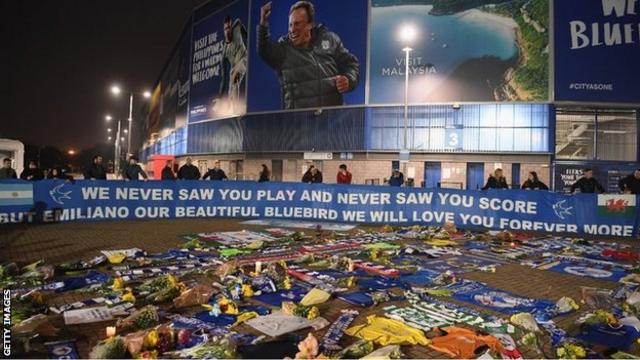
On a more tragic note, the issue of possible frustration of contract rose once more in relation to the death of the Argentinian footballer, Emiliano Sala who had completed a transfer agreement to leave the French club, FC Nantes and go to Cardiff City, the English Premier League club.
Before he could play his first competitive game with his new club, Mr Sala was killed in a plane crash over the English Channel. This led to demands by Nantes for payment of the first part of the transfer fee of £15 million from Cardiff City FC.
Such a contract i.e. for personal services could conceivably be discharged by the death of the person who was to perform it. Additionally, the incapacity of a person who is to perform a personal contract may discharge it. However, temporary incapacity is not enough unless it affects the performance of the contract in a really serious way. If an employee is killed or permanently incapacitated, it may be very difficult to argue that the employment contract should be allowed to continue.
Sadly, in the Sala tragedy, it looks as if the lawyers will be the only winners here.
Links to media stories about the Sala dispute can be accessed below:
Nantes demand first slice of £15m Emiliano Sala fee from Cardiff
https://www.theguardian.com/football/2019/feb/06/nantes-demand-transfer-fee-from-cardiff-city-for-emiliano-sala
https://www.independent.co.uk/sport/football/premier-league/emiliano-sala-cardiff-city-nantes-transfer-points-deduction-plane-crash-epl-video-a8769076.html
Conclusion
Frustration can only be used to have the contract discharged in situations where neither party is to blame. When one party is to blame for the failure to perform his obligations under the agreement, this represents a breach of contract and the innocent party can raise the appropriate action.
Copyright Seán J Crossan, 10 February 2019
Related Blog article:
https://seancrossansscotslaw.com/2020/03/18/crazy-days-force-majeure-frustration/


 Seán Crossan's Scots Law