Indirect discrimination?

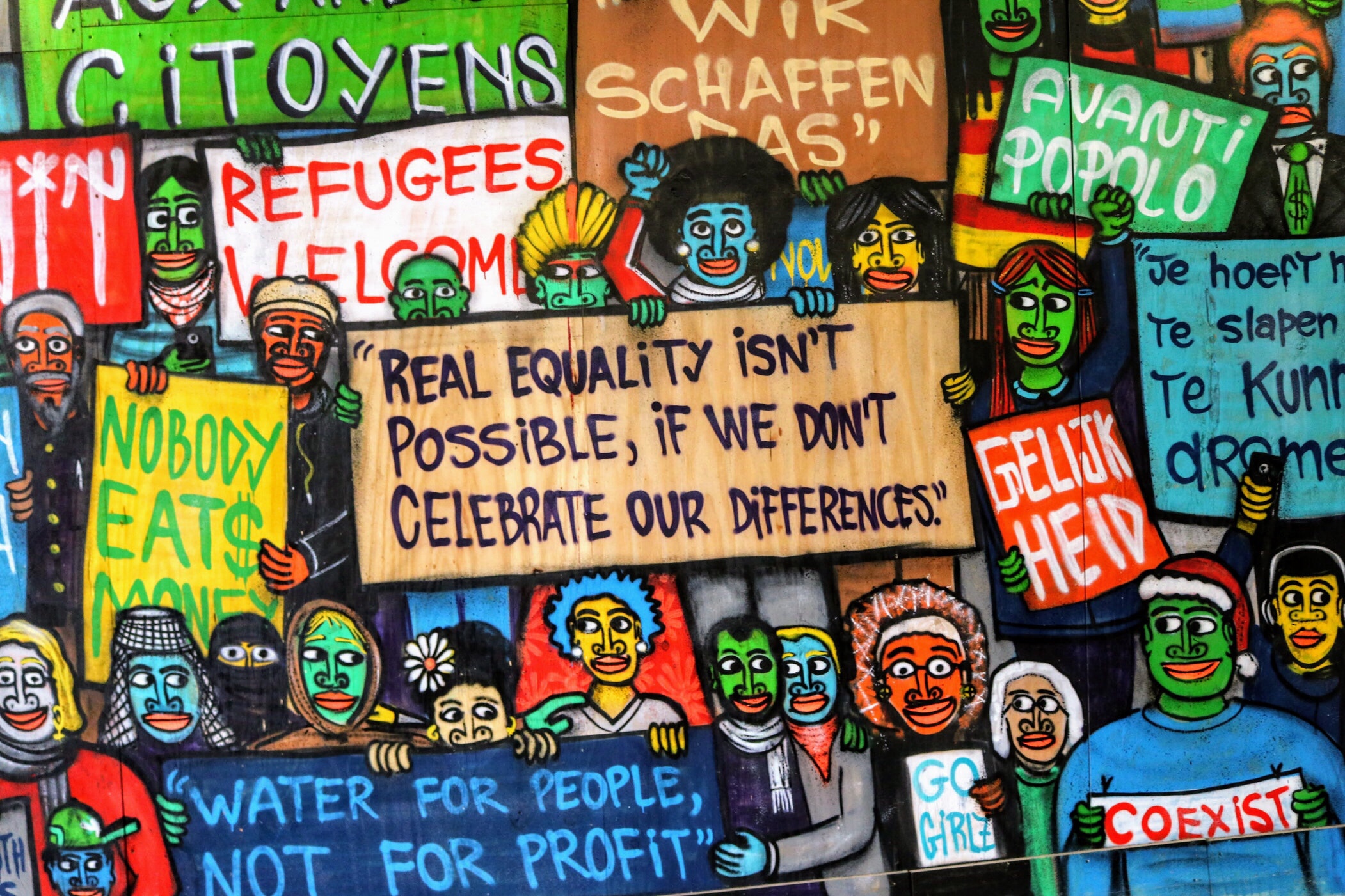
Photo by Eloise Ambursley on Unsplash

In Chapter 7 of Introductory Scots Law, I discuss the concept of indirect discrimination. It is often a difficult concept to grasp for both students and the lay person. Unlike direct discrimination, harassment or victimisation (which can feel very personal and immediate to the victim of unlawful, less favourable treatment), indirect discrimination can perhaps take more subtle forms and is harder to spot. Arguably, an individual who commits an act of indirect discrimination may not be aware that legal consequences arise as a result of their behaviour.

Section 19* of the Equality Act 2010 addresses the issue of indirect discrimination. 

Helpfully, the Equality and Human Rights Commission provides guidance on what constitutes indirect discrimination in its Statutory Code of Practice on Employment. Two examples can be found below:

Example 1

An employer has a ‘no headwear’ policy for its staff. Unless this policy can be objectively justified, this will be indirect discrimination against Sikh men who wear the turban, Muslim women who wear a headscarf and observant Jewish men who wear a skullcap as manifestations of their religion.

Example 2

Requiring a UK-based qualification, when equivalent qualifications obtained abroad would also meet the requirement for that particular level of knowledge or skill, may lead to indirect discrimination because of race, if the requirement cannot be objectively justified.

The concept of indirect discrimination in Section 19 applies to all of the protected characteristics with the exception of pregnancy and maternity which are specifically addressed elsewhere in the Equality Act 2010 (Sections 17 and 18).

New York, New York …

I got thinking about indirect discrimination again when reading an interesting article on the BBC’s website:

New York City bans hair discrimination to fight racism

The guidance gives black people the right to wear hairstyles previously deemed “unprofessional”.

Apparently, New York City’s Commission on Human Rights is advising employers and service providers that discrimination on the grounds of a person’s hairstyle could constitute unlawful, less favourable treatment.

It would seem that certain hairstyles which are associated with African Americans e.g. afros, cornrows and locs are at risk of being labelled “unprofessional” and some employers are actively discouraging employees from having these hairstyles.

In the BBC report, the words “disproportionately affected” reared up at me.

Why?

Any person who has experience of working in the area of discrimination and equality law here in the UK should immediately spot the relevance of this phrase because it should signal that there is a possibility of indirect discrimination.

Policy, Criterion or Practice (PCP)

Employers and service providers should, therefore, be particularly wary when they apply a provision, criterion or practice (a PCP) to the general workforce or the general population. It may be the case that, in applying a PCP, that an employer or service provider unwittingly treats certain individuals with a protected characteristic (e.g. women, the disabled, older people) less favourably when compared to other individuals who do not possess this characteristic. It is always open to an employer or service provider to show that although indirect discrimination has taken place, it can be objectively justified e.g. on national security grounds or health and safety reasons (e.g. Singh v Rowntree MacKintosh [1979] ICR 554).

I often say to students that, if they were giving advice to organisations on how best to avoid indirect discrimination (which cannot be legally or objectively justified), they should begin by looking at policies and practices with general application to the workforce or the public. I tell them to think about who do they think can more easily comply with these requirements and who do they think might have more difficulty. In particular, could the PCP have a really negative impact on, for example, women, the disabled or certain religious and ethnic groups?

When we talk about the negative impact of a PCP on a group with protected characteristics, we are not talking about minor inconvenience. We really mean that the PCP has a disproportionately adverse effect on the group in question:

  1. London Underground v Edwards (No 2) (1998) IRLR 364 – changing the shift patterns for all drivers on the London Underground had a disproportionately adverse effect on female employees with childcare responsibilities. This was indirect discrimination on the grounds of sex/gender which could not be objectively or legally justified.
  2. Network Rail Infrastructures Ltd v Gammie [2009] UKEAT 0044 – 08 – 0603 – the refusal by the employer to consider flexible arrangements had a disproportionately adverse effect on female employees with childcare responsibilities. Again, as in the Edwards (above), this was an example of indirect discrimination on grounds of a person’s sex or gender.

Equality Impact Assessments

It might be advisable for the organisation to carry out an equality impact assessment before introducing a PCP e.g. a change to the working day; or a commitment to carry out regular reviews of extant PCPs in order to ensure that they comply with UK equality laws.

A useful link to ACAS guidance on carrying out equality impact assessments can be found below:

http://www.acas.org.uk/media/pdf/s/n/Acas_managers_guide_to_equality_assessments.pdf

An organisation, in undertaking an equality impact assessment, might be well advised to conduct a detailed statistical analysis in order to calculate, for example, how many women or how many people of a particular colour, nationality, race, ethnic or national origin can comply in practice with the requirement imposed by the employer or service provider. If fewer Sikhs, for example, can comply with a PCP, it may be that the employer/service provider has indirectly discriminated against this group with the relevant protected characteristic.

Conclusion
At first glance, the condition or the requirement that the employer or service provider imposes on everyone looks completely harmless. Upon a closer inspection, however, it becomes apparent that, for example, more men than women can comply in practice with the employer’s condition or requirement or that more white people can comply with the requirement or condition than can people from an Afro-Caribbean background.
It is not just the fact that fewer people from a particular gender group or individuals of a particular colour or nationality can comply in practice with the requirement, they suffer an adverse impact because of it i.e. they suffer less favourable treatment.

What if, for example, the employer imposed a requirement that all job applicants had to be at least six feet in height?

Admittedly, there are many tall women, but realistically there are many more tall men than tall women who can comply with this requirement in practice. More women would, therefore, be prevented from applying for this job. In other words, women are denied employment opportunities because the employer has imposed a height restriction.

In situations where an employer imposes ‘desirable’ and ‘essential’ criteria in a job advertisement, the Employment Appeal Tribunal has stated these may be examples of indirect discrimination (see Falkirk Council v Whyte [1997] IRLR 560).

The lesson to be learned?: Monitor your organisation’s policies, criteria and practices carefully and regularly in order to avoid falling into the trap of indirect discrimination. An equality impact assessment is a vital tool to keep yourself on the right side of the law.

Postscript

In July 2019, California became the first US State to pass a law banning hairstyle discrimination.

Read more about this development by accessing information on the link below to the SkyNews website:

http://news.sky.com/story/california-passes-law-banning-hairstyle-discrimination-11756564

Footnote

The Equality Act 2010

* Section 19(1) indirect discrimination is defined as:

‘A person (A) discriminates against another (B) if A applies to B a provision, criterion or practice which is discriminatory in relation to a relevant protected characteristic of B’s.’

Section 19(2) makes it very clear what it is meant by a discriminatory provision, criterion or practice in relation to a relevant protected characteristic:

(a) A applies, or would apply, it to persons with whom B does not share the characteristic,

(b) it puts, or would put, persons with whom B shares the characteristic at a particular disadvantage when compared with persons with whom B does not share it,

(c) it puts, or would put, B at that disadvantage, and

(d) A cannot show it to be a proportionate means of achieving a legitimate aim.

Copyright Seán J Crossan, 21 February & 8 July 2019
Vegans should be punched in the face …

photo-1494331789569-f98601f1934f.jpg

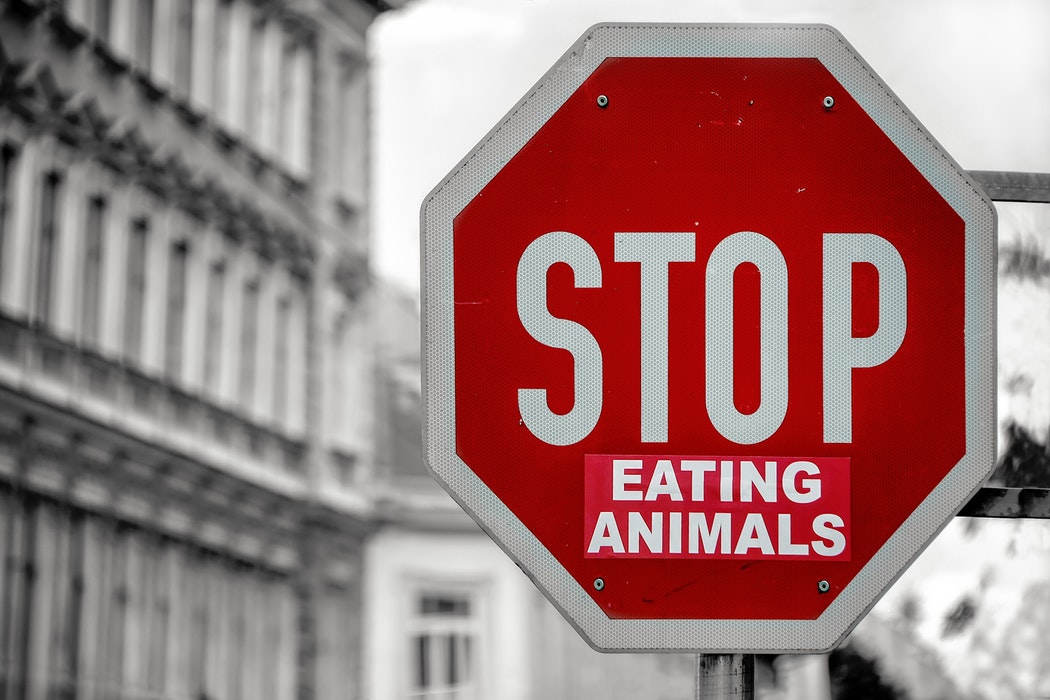
Photo by Simon Matzinger at Unsplash

In a previous post (Philosophical beliefs) published on 22 January 2019, I noted that a person’s beliefs can be problematic as to whether they should be regarded as a protected characteristic in terms of Sections 4 and 10 of the Equality Act 2010.

What about veganism? The Vegan Society defines its core beliefs in the following terms:

Veganism is a way of living which seeks to exclude, as far as is possible and practicable, all forms of exploitation of, and cruelty to, animals for food, clothing and any other purpose, and by extension, promotes the development and use of animal-free alternatives for the benefit of humans, animals and the environment. In dietary terms it denotes the practice of dispensing with all products derived wholly or partly from animals.”

Taken from: https://www.vegansociety.com/go-vegan/definition-veganism

So, it was with interest that I read about a story on Sky News where a customer of NatWest had been insulted by a call handler in relation to vegan beliefs:

NatWest call handler told customer: ‘Vegans should be punched in the face’

http://news.sky.com/story/natwest-call-handler-told-customer-vegans-should-be-punched-in-the-face-11641268

What if the call handler had uttered a homophobic, racist or sexist remark to the customer? I don’t think we would hesitate to label such remarks as unlawful discrimination and claim confidently that they would be potentially actionable in the courts.

Regular readers of this blog will already be aware that there is a case, currently before the Central London Employment Tribunal, where a vegan (Jordi Casamitjana) is claiming that his beliefs should have the status of a protected characteristic in terms of Sections 4 and 10 of the Equality Act 2010. I am certainly awaiting the Tribunal’s decision with interest.

A link to an article in The Independent about Mr Casamitjana’s case can be found below:

https://www.independent.co.uk/news/uk/home-news/vegans-discrimination-equality-act-case-tribunal-jordi-casamitjana-a8664551.html

Defining beliefs as a protected characteristic

It will be recalled, that I discuss the concept of philosophical beliefs in Chapter 7 of Introductory Scots Law. The law relating to philosophical beliefs tends to be quite fluid and is often difficult to pin down. This means that disputes about whether or not beliefs are protected under the Equality Act 2010 will often be decided on a case by case basis.

Grainger plc v Nicholson [2010] IRLR 4 is a very important case for this reason.

Tim Nicholson brought a claim against his employer, Grainger plc, a company involved in the development of residential property. Nicholson, who was Head of Sustainability at Grainger plc, alleged that he had been unfairly selected for redundancy by his employer because of his belief in the dangers of global warming and climate change. Nicholson was particularly vocal in his concerns that a company like Grainger had to promote environmental concerns as part of its business activities. The company had published environmentally friendly policies, but its alleged willingness to permit its executives to use certain types of vehicles which contributed to an increase in global warming suggested that there was contradiction between the company’s statements about its commitment to environmental issues and their actual implementation. The beliefs of Nicholson and his willingness to state these openly appeared to clash with his employer’s business objectives and this led Nicholson to conclude that he had been unfairly selected for redundancy.

Grainger plc attempted to have Mr Nicholson’s claim struck out on the grounds that his belief in environmental concerns was not a philosophical belief which was protected by UK equality laws.

Held: by the Central London Employment Tribunal at a Preliminary Hearing, that Mr Nicholson’s belief in environmental issues did fall within the meaning of a philosophical belief. This, however, was a procedural victory (albeit an important one) for Mr Nicholson who would still be in the position of having to convince a full Hearing of the Employment Tribunal that he had suffered discrimination in respect of these beliefs. On 3 November 2009, the Employment Appeal Tribunal concurred with the Tribunal’s finding that climate change could be capable of being a philosophical belief. In order to succeed in his claim, Nicholson still had to prove that his belief was “a weighty and substantial aspect of human life and behaviour”. A belief which demonstrates “a certain level of cogency, seriousness, cohesion and importance” and this belief is ultimately “worthy of respect in a democratic society, [that it] be not incompatible with human dignity and not conflict with the fundamental rights of others”.

Following the Grainger decision, an amendment was made to the law (and now contained in the Equality Act 2010), that it is unlawful to subject individuals to less favourable treatment on the grounds of their philosophical beliefs and it is immaterial whether or not these beliefs are considered similar to a religious belief. This is a highly significant development which demonstrates quite clearly that the Equality Act is not just confined to the protection of religious beliefs.

Conclusion

As I have previously noted, the trouble with the Grainger decision (and others like it) is that it has opened up a new whole area of complexity (or a can of worms) in attempting to determine when a belief is a philosophical belief worthy of legal protection.

Whether veganism is a system of beliefs deserving of the protection of the law remains to be seen. In any event, perhaps Natwest should be looking at disciplining this particular employee for the reputational damage clearly done to its brand. Whatever people think about the merits of veganism as a protected characteristic or not, most of us would be pretty appalled by the alleged treatment given out to the customer.

For students of employment law, would such conduct amount to a potentially fair reason for dismissal? Discuss.

Copyright Seán J Crossan, February 2019

Philosophical beliefs (or you’d better believe it!)

Photo by Ross Sneddon on Unsplash

Unlike religious beliefs, which tend to be more easily recognised under the Equality Act 2010, a person’s philosophical beliefs can be something of a grey area This means that it can be very difficult for employers and service providers to identify when someone has a genuine belief which is protected by law.  

Section 4 of the Equality Act 2010 recognises that a person can be subjectedto unlawful, less favourable treatment (discrimination) owing to certainbeliefs which they possess.

Section 10 of the Equality Act defines religion and beliefs:

(1) Religion means any religion and a reference to religion includes areference to a lack of religion.

(2) Belief means any religious or philosophical belief and a referenceto belief includes a reference to a lack of belief.
(3) In relation to the protected characteristic of religion or belief—

(a) a reference to a person who has a particular protectedcharacteristic is a reference to a person of a particular religion or belief;

(b) a reference to persons who share a protected characteristic is a reference to persons who are of the same religion or belief.

In Lisk v Shield Guardian Co Ltd and others ET/3300873/11, anemployee was told that he was not permitted to wear a poppy while at work. Theemployee, an ex-serviceman, argued that by wearing the poppy he wascommemorating the sacrifices of those killed in armed conflicts. The EmploymentTribunal disagreed with the employee’s argument that his decision to wear apoppy while at work was a legitimate philosophical belief.

Yet, in earlier decision: Grainger plc v Nicholson (2010) IRLR 4the Employment Appeal Tribunal established that Nicholson’s belief in climate changecould constitute discrimination on the grounds of a philosophical belief.

Similarly, in Hashman v Milton Park (Dorset) Ltd (t/a Orchard Park) ET/3105555/2009 a prominent animal rights activist (Joe Hashman) was deemed to have been dismissed unfairly by his employer by reason of his philosophical beliefs i.e. his belief in the sanctity of all life, both human and animal.

Recently, some interesting cases have come before Employment Tribunalsdealing with the issue of philosophical beliefs.

In one case, Christopher McEleny an SNP Councillor won a pre-Hearing Review which established that a belief in Scottish independence could constitute a protected characteristic in terms of the Equality Act 2010.

Please see a link to the judgement of the Employment Tribunal:

https://assets.publishing.service.gov.uk/media/5b6c8c5bed915d310f7fcd07/Mr_C_McEleny_v_Ministry_of_Defence_41053472017_OPH.pdf

In the second case, Jordi Casamitjana, has taken his former employer, the League Against Cruel Sports to an Employment Tribunal alleging that he had been subjected to discrimination on the grounds that he is a vegan. He alleged that he had been dismissed from his job because he had revealed that his employer had allegedly invested pension funds in organisations which carried out animal testing. At the time of writing (January 22, 2019), it remains to be seen whether Mr Casamitjana will be successful in his legal action.

Veganism, as a belief system which should be recognised and protected by law has divided opinion as the final BBC report demonstrates.

Independence views ‘protected by law’

https://www.bbc.co.uk/news/uk-scotland-scotland-politics-45075801

Support for Scottish nationalism should be protected by law, a tribunal judge rules against the Ministry of Defence.

Sacked vegan claims discrimination in landmark case:

https://www.bbc.co.uk/news/uk-46385597

Finally, the controversy over veganism as a belief system continues to attract headlines in the media as the BBC article (below) demonstrates:

Waitrose Food: Editor William Sitwell resigns over ‘killing vegans’ row

https://www.bbc.co.uk/news/uk-46042314

The company said his suggested series on “killing vegans one by one” had “gone too far”.

Conclusion

Mr McEleny’s case and Mr Casamitjana’s case clearly demonstrate the difficulties that employers will have when it comes to a person’s philosophical beliefs.

Copyright Seán J Crossan, 22 January 2019

Age discrimination?

Photo by Matteo Paganelli on Unsplash

Chapter 7 of Introductory Scots Law primarily focuses on the Equality Act 2010. Section 4 of the Act lists a number of protected characteristics:

  • age;
  • disability;
  • gender reassignment;
  • marriage and civil partnership;
  • pregnancy and maternity;
  • race;
  • religion or belief;
  • sex;
  • sexual orientation.

To treat someone less favourably as a result of their possessing any of the above characteristics could be an act of unlawful discrimination. The exception to this would be where the less favourable treatment might be objectively justified e.g. on the grounds of national security or health and safety.

The purpose of this post is to highlight potential age discrimination. Discrimination on the grounds of a person’s age became unlawful in 2006 when the UK Goverment passed the Employment Equality (Age) Regulations 2006. This measure implemented the European Union’s Equal Treatment Framework Directive (Council Directive 2000/78/EC). The relevant law is now, of course, to be found in the Equality Act 2010. Brexit aficionados might like to note that this EU inspired piece of legislation will survive the UK’s exit from the organisation until such time as the Westminster Parliament decides to amend or repeal the Equality Act 2010. This is just one example of how EU legislation is hardwired into the domestic legal framework of the United Kingdom and demonstrates how difficult it could be to disentangle ourselves from the European Union.

Anyway, legal technicalities aside: we often think of age discrimination being an issue which affects older people in society. An interesting example of how the issue can affect younger people was reported by the BBC on Saturday 19 January 2019.

The story concerns Xander McDade (aged 25) who was elected as a Councillor in the Perth and Kinross local authority. McDade claims that he has suffered persistent age discrimination from some of his colleagues on the Council. The Chief Executive of Perth and Kinross Council has publicly stated that the Council does not tolerate discrimination and anyone who thinks that they have been less favourably treated should come forward to make their concerns known.

Perth and Kinross councillor accuses colleagues of ageism

Since being elected to office at the age of 23, Xander McDade claims he has been the butt of ageist jokes.

Just as a point of contrast, please see a link to a story from the other side of the age gap which Sky News reported in November 2018:

Woman, 88, sues NHS for age discrimination after losing job as secretary
http://news.sky.com/story/woman-88-sues-nhs-for-age-discrimination-after-losing-job-as-secretary-11563098

Copyright Seán J Crossan, 21 January 2019