Corroboration

Photo by Dorian Hurst at Unsplash

Introduction

In Chapter 1 of Introductory Scots Law, I discuss the importance of corroboration.  In a criminal trial, the prosecutor must prove that the accused is guilty of a crime beyond  reasonable doubt. This is a very strict burden in that the prosecution must be able to corroborate its evidence against the accused. Corroboration means that there must be at least two independent sources of evidence such as witness testimony and the use of expert and forensic evidence. Reasonable doubt is a nagging doubt which would lead a reasonable person to the conclusion that it would be unsafe and unjust to find the accused guilty. The requirement of corroboration was most recently challenged by Lord Carloway, now Scotland’s Lord Justice General, when he was asked to undertake a Review of the Scottish criminal justice system at the request of the Scottish Government.

On 17 November 2011, Lord Carloway (then the Lord Justice Clerk) controversially suggested in his published Report that the requirement of corroboration be abolished. This proposal did not find universal favour and, although the Scottish Government did attempt to implement this reform by way of the Criminal Justice (Scotland) Bill in 2013, it was abandoned in the teeth of strong opposition and did not form part of the eventual Criminal Justice (Scotland) Act 2016. Notably, Police Scotland, the Crown Office and the Procurator Fiscal Service had all favoured the abolition of the requirement for corroboration.

Recently,  the Appeal Court of the High Court of Justiciary has considered the issue of corroboration. I shall now turn my attention to the Court’s opinion.

Jacqueline Shuttleton v Procurator Fiscal, Glasgow [2019] HCJAC 12 HCA/2019/20/XC

The question before the Appeal Court (regarding a reference from the Sheriff Appeal Court) was principally concerned with whether CCTV footage from the locus of the alleged offence could be regarded as sufficient corroboration to prove the charge against the accused.

The accused (Shuttleton) had been charged with the offence of careless driving under Section 3 of the Road Traffic Act 1988 (as amended). She had been involved in a collision with another motor vehicle. There were no independent witnesses to the incident. A Police officer, PC Birrell, who was part of a mobile unit, came across the aftermath  of the collision. He and his colleague were able to view the collision later on CCTV footage (which a City of Glasgow Council camera had captured). PC Birrell had found the vehicles of the accused and another driver blocking the road. He was soon after joined by his colleague, PC Russell, and by this time the vehicles had been moved to the side of the road.

Upon viewing the CCTV footage, the police officers noted that the accused had been driving her white VW Polo; she indicated to turn right, but then without warning she turned left; this caused a collision with a vehicle behind her.

At the trial in the Justice of the Peace Court, the accused was convicted of the Section 3 offence, but  her defence agent objected to the provenance or authenticity of the CCTV footage. The Justice dismissed this objection and concluded that the footage was real evidence which was then proof of fact.

That said, the Justice found that the case raised an issue of “novelty and complexity”:

Whether the evidence of the two police officers who attended after the collision and viewed the CCTV footage could amount to corroboration or whether it is no more than a descriptive piece of (uncorroborated) real evidence.

The accused was permitted to appeal to the Sheriff Appeal Court which then submitted a reference to the Appeal Court of the High Court of Justiciary.

The Appeal Court was asked to consider the following issues:

(i) In situations where the actus reus (wrongful act) was caught on CCTV footage and was the sole piece of evidence, could the evidence of the two police officers who attended the locus and later viewed the CCTV footage be enough to establish corroboration or should it be regarded as having the status of no more than a descriptive piece of real evidence?

(ii) In situations where the act reus is caught on CCTV footage; is the only evidence of said act; and its provenance has been established, can the footage alone be regarded as sufficient evidence of the actus reus of the offence?

(iii) If the actus reus is caught on CCTV footage; is the only evidence of said act; and its provenance has been established, is the fact finder entitled to establish that the act has taken place based upon his viewing of the footage?

In its submission, the Sheriff Appeal Court made reference to a previous case – Gubinas & Radavicius v HMA [2017] SCCR 463 – that it was “at least arguable that … a corroborated case can be established on the basis of a single piece of CCTV alone, where the provenance of the CCTV is properly established”.

The “Cluedo” Reference

Gubinas & Radavicius contained a very interesting statement (at paragraph 59) which became known as the “Cluedo” reference (after the well known murder mystery board game):

….once the provenance of the images is shown, they become real evidence in causa which the sheriff or jury can use to establish fact, irrespective of concurring or conflicting testimony. Even if all the witnesses say that the deceased was stabbed in the conservatory, if CCTV images show that he was shot in the library, then so be it.

On the basis of the “Cluedo” reference, could it now be interpreted that CCTV footage had some sort of special evidential status?

The Appeal Court Opinion

Lady Dorrian, the Lord Justice Clerk, sitting with Lords Drummond-Young and Turnbull gave the unanimous opinion of the Court.

She made a number of really helpful statements in relation to the use of CCTV footage:

In Gubinas the court made it clear (para 56) that the CCTV footage was but one source of evidence, comparable to a witness speaking to events seen or heard, making it equivalent simply to one source of evidence. This did not suggest that the evidence was available as corroborated proof of fact, rather that further, corroborative evidence was required for sufficiency of proof. That this was so could be seen in the discussion of the role such evidence played in the issue of identification.”

Very wisely, Lady Dorrian went on to make a comparison with the use of fingerprint or DNA evidence. She noted (often) that fingerprint or DNA evidence on their own would not be sufficient grounds for convicting an accused. They would certainly be relevant, but not conclusive for corroboration purposes.

With regard to CCTV images, the authenticity (or provenance) of the footage must be established and then a “further cross-check” must be carried out. In Shuttleton case, the Police officers were able to demonstrate that the events recorded in the footage (i.e. the collison) were accurate. In fact, a nearby shop had a CCTV camera and the officers were able to obtain its footage which had also captured the collision. Although the footage from the shop camera was not shown in evidence at the Justice of the Peace trial, Lady Dorrian stated that this would have provided the “necessary corroboration”.

She concluded by stating that:

Footage from two separate cameras would be sufficient, as long as
these were two systems separate from each other.”

Her Ladyship in response to the three questions posed in the appeal reference (above) arrived at the following conclusions:

(i) No, it was not possible for the evidence of two police officers who arrived at the locus after the actus reus had been committed to provide sufficient grounds for corroboration. The evidence of the officers should be regarded as descriptive only.

(ii) Yes, in the circumstances, the CCTV footage could establish grounds for proving that the actus reus had indeed taken place.

(iii) Yes, in these circumstances, the fact finder (i.e. the police officers) after viewing the CCTV footage would have sufficient grounds for believing that the actus reus had been committed.

Conclusion

The Sheriff Appeal Court was quite correct to refer the issue of the evidential status of CCTV footage to the High Court of Justiciary simply because this was a matter which was routinely raised at many trials.

The High Court was not saying that CCTV footage should have special status for corroboration purposes. Its authenticity or provenance must first be established. It will then be important to determine whether the footage alone can establish evidence of the actus reus; and, finally, it will be up to the fact finder viewing it to conclude that the actus reus has taken place.

Assuming that these requirements are met, CCTV footage will be a very powerful form of evidence which can be used to establish corroboration. The “Cluedo” reference in Gubinas & Radavicius (above) can now be fully understood in the light of the Shuttleton opinion.

A link to the Appeal Court’s judgement can be found below:

https://www.scotcourts.gov.uk/docs/default-source/default-document-library/2019hcjac12.pdf?sfvrsn=0&utm_source=Scottish+Legal+News&utm_campaign=0bf929637d-EMAIL_CAMPAIGN_2019_03_01_08_33&utm_medium=email&utm_term=0_07336e1dbf-0bf929637d-66775629

Copyright – Seán J Crossan, 1 March 2019

Private Enterprise or Public Service?

Photo by Matthew Ansley on Unsplash

The provisions of the European Convention on Human Rights (as implemented by the Human Rights Act 1998 and the Scotland Act 1998) are only enforceable against the British State or its institutions and organisations that carry out public functions, for example, universities, care homes, colleges, hospitals, housing associations, schools and local authorities.

It should be noted that a public authority or emanation of the State can have a very wide meaning in law and may cover privatized utilities companies (see Case C-188/89 Foster v British Gas [1990] 3 ALL ER 897 and Griffin v South West Water Services Ltd [1995] IRLR 15) and other private contractors delivering public services.

A recent example of a private sector company falling foul of human rights legislation occurred in the following English High Court judgement: Between LW; Samantha Faulder; KT; MC v 1) Sodexho Limited and 2) Minister of Justice[2019] EWHC 367.

The facts of the case are as follows:

Her Majesty’s Prison Peterborough is run by Sodexho, a private company, but the UK Government’s Ministry of Justice is ultimately responsible for the running of the institution. The case arose because four inmates at the prison alleged that, in 2017, they had been subjected to strip searches which had breached their human rights, namely:

Article 3 – prohibition of torture and cruel and degrading treatment

Article 8 – the right to respect for private and family life

The English Court of Appeal had ruled in a previous decision – R (LD, RH and BK) v Secretary of State for Justice [2014] EWHC 3517 – that strip searches could represent breaches of Articles 3 and 8. In the present case, however, the High Court stated that there was no conclusive evidence that the strip searches represented a breach of Article 3. That said, the manner of the searches did represent a breach of Article 8.

Conclusion

This ruling is a salutary warning to private contractors carrying out public service contracts that they must be aware of human rights considerations. Companies such as Sodexho, Group 4 and Serco are and have all been involved in carrying out contracts in relation to the criminal justice system whether running prisons or transporting prisoners to and from court hearings. Ultimately, the (Scottish or the UK) Government will have responsibility for the manner in which operations are conducted by these companies because the contracts are deemed to benefit the public in the wider sense.

A link to the High Court’s judgement can be found below:

https://www.bailii.org/ew/cases/EWHC/Admin/2019/367.html

The case was widely reported in the UK media and a link to the story on the BBC website can be found below:

https://www.bbc.co.uk/news/uk-england-cambridgeshire-47334760

Copyright – Seán J Crossan, 1 March 2019

The force is not with you …

Photo by King’s Church International at Unsplash

The peculiar case of Matthew Furlong

An employment law story, which was widely reported by the UK media last week (Saturday 23 February 2019), concerned the rejection of a candidate by Chesire Police. Nothing wrong with that or anything entirely newsworthy you could be forgiven for thinking. The candidate in question (Mathew Furlong) had excellent academic qualifications; is a UK white citizen; male; and heterosexual. Mr Furlong was rejected  by the interview panel despite being told “it was refreshing to meet someone as well prepared as yourself” and that he “could not have done any more”.

The problem with this situation was that other, less well qualified candidates with particular (or more desirable) characteristics were favoured over Mr Furlong, who was by far the best qualified candidate for the post. The case went to an Employment Tribunal which ruled that Mr Furlong had suffered direct discrimination (in terms of the Equality Act 2010) on the following grounds:

  • Race
  • Sex
  • Sexual orientation

Chesire Police argued that its decision to reject Mr Furlong could be objectively justified because it was attempting to increase diversity in the work-place. This argument was comprehensively rejected by the Employment Tribunal. Mr Furlong had been victim of positive action or discrimination. As we shall see, it can be legitimate for an employer to discriminate positively in favour of certain applicants in order to promote diversity. In the United Kingdom. this is, for practical purposes, an available option if you have a number of equally well qualified candidates and you choose one or several of them primarily because they possess a protected characteristic (e.g. age, disability race, religion, sex or sexual orientation) which is under-represented in your work-force.

Unfortunately, for Chesire Police, it could not even begin to pretend or argue that its recruitment strategy complied with this. Mr Furlong was the stand out candidate and should have been selected for the post.

A link to the judgement of the Employment Tribunal can be found below:

https://assets.publishing.service.gov.uk/media/5c66abfd40f0b61a1e93a27a/Mr_M_Furlong_v_The_Chief_Constable_of_Cheshire_Police_2405577.18_judgment_and_reasons.pdf

A link to the story on the BBC website can be found below:

Police force ‘discriminated against white heterosexual male’

An employment tribunal ruled Cheshire Police had used “positive action” against Matthew Furlong.

The American Experience

In the United States of America, of course, there is a completely different approach to increasing diversity in the work-place. The Americans are very keen on affirmative action (or positive discrimination) and often employers will speak of filling quotas i.e. recruiting a certain number of African Americans or Hispanic Americans. This practice of affirmative action or positive discrimination is an attempt by the Americans to overcome the problems of historic and entrenched racism in their society. In the UK and the European Union, we too have had our problems with under-representation of certain groups in the work-place, but any attempt to introduce positive discrimination has been much more limited in scope.

Positive discrimination

Discriminating in favour of one group of people over another (whether this is motivated by a good intention or not) will most likely be regarded as an example of direct discrimination which contravenes Section 13 of the Equality Act 2010.

The judgement of the House of Lords in James v Eastleigh Borough Council [1990] 2 AC 751 was particularly strong on this point and it was irrelevant that the Council was acting from motives of good faith i.e. to promote healthier lifestyles for female residents of the Borough. The simple fact was that the Borough Council was acting unlawfully when it charged men for entry to the swimming pool when women were not charged for access to this facility. It was an act of direct sex discrimination.

The Equality Act does, admittedly, permit what is referred to as ‘positive action’ in fairly limited circumstances and it has been observed that it does not really advance the law very much in this area.

Certainly, in terms of the public sector equality duty, organisations may be permitted to take specified forms positive action in the work-place to eradicate or minimise forms of discriminations e.g. ‘the need to tackle prejudice and promote understanding’ (see Section 149(5) of the Equality Act)

Section 158 of the Act permits an employer to take positive action to help individuals with a protected characteristic to overcome or minimise such a disadvantage. Such action on the part of the employer must, however, be a proportionate means of achieving this aim.

Section 159 also permits an employer to take positive action in recruitment and promotion in relation to people with protected characteristics. The employer will only really be able to utilise this provision if candidates for a job or a promoted post have the same or similar qualifications. In such situations, the employer will able to consider if candidates with protected characteristics are at a disadvantage or are under represented in matters of recruitment or promotion.

There is one important exception to the rules on positive action contained in the Act: it will not be illegal for an employer to treat a disabled person more favourably in comparison to a non-disabled person.

The provisions relating to positive action were introduced by the former UK Coalition Government in April 2011.

The European Union dimension and positive action

Limited positive action or discrimination has, for some time, been tolerated by the Court of Justice of the European Union where employers gave preference, as part of an equality policy, to female candidates over suitably qualified male candidates in order to address gender imbalances in the work-place (see Kalanke Freie Hansestadt Bremen (1995) C-450/93 and Badeck and Others (2000) C-158/97). Clearly, employers were not permitted to recruit or promote candidates with inferior qualifications or experience in order to achieve gender quotas in the work-place and positive discrimination or action was really only permitted in so called ‘tie-break’ situations where both male and female applicants had the same qualifications and experience, but as a matter of public policy, a female applicant was given preference in order to address historic gender imbalances in that particular work-place. It is unlikely that the UK Equality Act will do anything to overturn this legal position as European Union law  is a superior class of legal obligations (until Brexit doth us do part?). Chesire Police please take note.

The Sex Discrimination (Election Candidates) Act 2002

One area where positive action has been used (albeit controversially) is in the area of political life. The British Labour Party has long been an advocate of encouraging women to take up careers where there have been significant barriers placed in their way. Women have, historically, been woefully under-represented amongst the ranks of Westminster Members of Parliament. Admittedly, following on from the 1997 General Election, 101 female MPs from the Labour Party were elected and were quickly given the derisory and insulting moniker of “Blair’s Babes” after the then Prime Minister Tony Blair. In 1997, 120 female MPs were elected to serve at Westminster (in 1992, the figure was 60). The 1997 figure, although represented as a break through for women’s representation in politics, can be overstated when the following factors are taken into account:

  1.  It should be remembered that women make up more than 50% of the UK population;
  2. There are 650 MPs at Westminster; and
  3. In relatively recent terms, women have been permitted to participate in political life as a result of the extension of (limited) voting rights from 1918 onwards.

The causes of the relatively low numbers of women entering national politics has been speculated about endlessly by academics such as Sarah Childs in 2004 (New Labour’s Women MPs: Women Representing Women): the unsociable hours at Westminster and the macho culture within the House of Commons.

In 2002, the then Labour Government passed the Sex Discrimination (Election Candidates) Act which would permit all female short lists in relation to selection of candidates for parliamentary seats. Previously, such an attempt to promote positive action would have been illegal under the former Sex Discrimination Act 1975.  Some (male) Labour activists did, in fact, bring successful legal challenges under the former sex discrimination legislation on the grounds that they had been discriminated against because of their gender in being automatically disqualified from the parliamentary candidates’ selection process (Jepson and Dyas-Elliott v The Labour Party and Others [1996] IRLR 116).

The 2002 Act had to be introduced to prevent such challenges occurring in the future. Originally, the Act contained what is known as a ‘sunset clause’ i.e. it would operate until 2015 and then the legislation would expire. In 2010, however, the former Labour Government extended the life of the Act until 2030. This legislation has been credited with bringing more women into the Westminster Parliament. Other political parties (for example, the Conservatives and Liberal Democrats) have not always been in favour of this type of positive action and have tended to use other methods to promote the entry of women into political life. In terms of representatives in the Scottish Parliament, the 2016 Scottish General Election saw the same number of female MSPs (45) at Holyrood as there had been in 2011. In 2003, the number of women elected to serve at Holyrood was 51. This is not a satisfactory situation when two factors are considered: women make up 52% of the Scottish population and there are 129 seats at Holyrood.  Admittedly, in 2015, the Executive of the Scottish National Party voted in favour of all women short lists in the selection of its parliamentary candidates and the Scottish Green Party has used the policy of ‘zipping’ whereby male and female candidates are rotated or alternated, but there is still considerable progress to be made here.

The Police Service of Northern Ireland & positive discrimination

One of the most significant examples of positive discrimination in employment involved the creation of the Police Service of Northern Ireland (PSNI) in 2001 following the Belfast or Good Friday Agreement in 1998. The PSNI replaced the old Royal Ulster Constabulary (RUC) which was largely seen as a biased or sectarian police force by most Roman Catholics in Northern Ireland.

Chris Patten, a former Conservative Government Minister and Governor of Hong Kong, had been commissioned to carry out a review of policing in Northern Ireland (which was published in 1999). The Report noted that the RUC was overwhelming Protestant in composition (91.7% to 8.3% Roman Catholic).

One of the key recommendations of the Patten Report was that:

“An equal number of Protestants and Catholics should be drawn from the pool of qualified candidates.” [para. 15.10]

This was an explicit acknowledgement that the new Police Service must command the trust of both main communities in Northern Ireland. This was no less than a recommendation for positive discrimination or action which could be objectively justified in the context of the long history of the period known euphemistically as ‘The Troubles’ in Northern Ireland.

It was only in March 2011 that Owen Paterson MP, the then UK Secretary of State for Northern Ireland, allowed the 50/50 recruitment policy to expire – a decision which attracted a lot of criticism from Nationalist and Republican politicians:

https://www.bbc.co.uk/news/uk-northern-ireland-12876127

https://www.belfasttelegraph.co.uk/news/northern-ireland/politicians-divided-on-proposal-to-end-5050-recruiting-by-police-28570213.html

https://www.bbc.co.uk/news/uk-northern-ireland-11732911

By this point, over 29% of serving PSNI officers were from a Roman Catholic background – in stark contrast to the figure of just over 8% in 1999 when the Patten Report was released.

Mr Paterson justified his decision not to renew the recruitment policy by claiming that the objectives of the Patten Report had been achieved. Furthermore, like most positive discrimination policies in the UK, the 50/50 measure was always going to have a temporary or limited shelf life. Unionist politicians in Northern Ireland had always expressed uneasiness about the policy – or even outright hostility.

Postscript

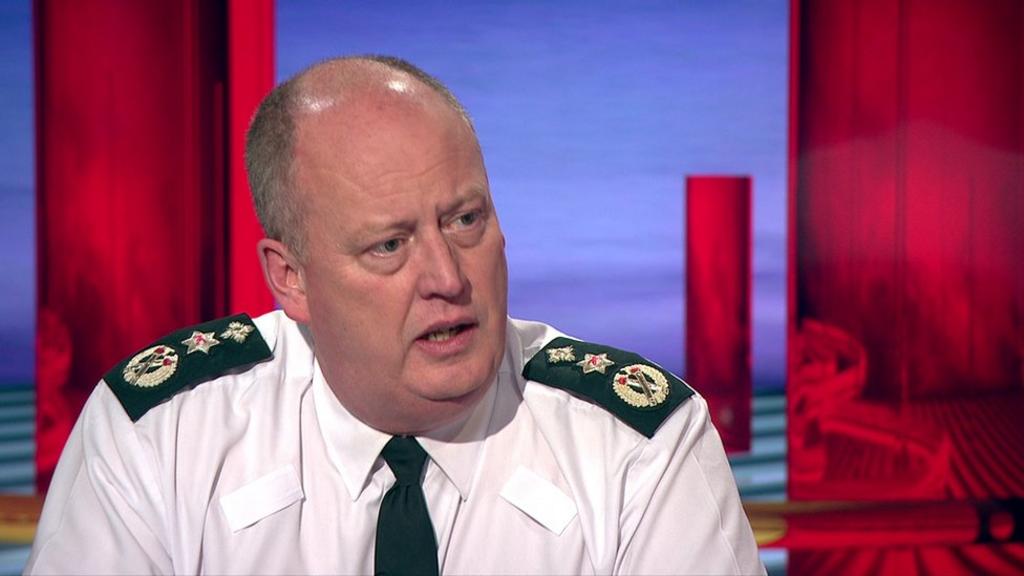
As of June 2019, the Police Service of Northern Ireland has 32% of serving officers who come from a Roman Catholic background. George Hamilton, the outgoing Chief Constable of the PSNI is worried that this figure will fall – especially after the end of the 50/50 recruitment policy.

A link to a BBC article about the PSNI can be found below:

Conclusion

In the UK, positive discrimination in recruitment can be lawful under very limited circumstances. In other words, it is a practice which, if objectively justified, can be used to overcome historical patterns of discrimination e.g. to address the woefully low numbers of female politicians or the under-representation of Roman Catholics in the Police Service in Northern Ireland.

Such arrangements permitting limited positive discrimination tend to be governed by ‘sunset clauses’ i.e. they have a built in expiry date, so they will not last forever. Furthermore, positive discrimination is really only legitimate  in so called ‘tie-break’ situations where several applicants have the same qualifications and experience, but as a matter of public policy, for example, a female or minority ethnic applicant is given preference in order to address historic diversity imbalances in that particular work-place.

Copyright Seán J Crossan, 28 February and 10 June 2019

Criminal responsibility

For many years, Scotland has had one of the lowest ages of criminal responsibility in the developed world i.e. a child must reach the age of 8 before they could be found guilty of a criminal offence. Although criminal responsibility begins at the age of 8, a child cannot be prosecuted until s/he reaches the age of 12.

Kenny McAskill the former MSP and Scottish Justice Secretary announced proposals (contained in the Criminal Justice and Licensing (Scotland) Bill) in March 2009 to increase the age of criminal responsibility to 12 in order to bring Scots criminal law into line with most of Europe.  Elish Angiolini QC, a former Lord Advocate, had supported this reform as she had previously criticised the current age of criminal responsibility as too low. That said, the eventual Criminal Justice and Licensing (Scotland) Act 2010 did not raise the age of criminal responsibility from 8 to 12. The 2010 Act reaffirmed the fact that criminal responsibility begins at the age of 8, but children should not be prosecuted until they were 12 years of age. In England and Wales, by comparison, the age of criminal responsibility continues to be set at 10.

The Scottish Government has now reviewed the age of criminal responsibility and changes will shortly be introduced.

The reason for this is the Age of Criminal Responsibility (Scotland) Bill currently making its way through the Scottish Parliament. This Bill was originally introduced to the Scottish Parliament on 18 March 2018 and has now passed Stage 2 as recently as 19 February 2019.

Barring any problems, the Bill should proceed to Stage 3 and then become law. When the eventual Act is passed, criminal responsibility in Scotland will be set at 12.

Watch this space.

Progress of the Bill can be tracked on the Scottish Parliament’s website:

https://www.parliament.scot/parliamentarybusiness/Bills/107986.aspx

Copyright Seán J Crossan, 27 February 2019

Jumping the gun?

In the first semester of this academic year, I was speaking to a group of students about disability discrimination in terms of the Equality Act 2010. Disability is a protected characteristic (Sections 4 and 6 of the Act).

We were discussing, in particular, an employer’s duty to make reasonable adjustments to a post in order to assist a disabled person to continue carrying out their duties. The employer is under a duty in terms of Section 20 of the Act to make reasonable adjustments to a disabled person’s post. A failure to comply with this duty would breach Section 21 of the Act.

According to the Equality and Human Rights Commission’s Statutory Code of Practice on Employment, an example of a reasonable adjustment made by an employer to assist a disabled person could amount to the following:

An employer has a policy that designated car parking spaces are only offered to senior managers. A worker who is not a manager, but has a mobility impairment and needs to park very close to the office, is given a designated car parking space. This is likely to be a reasonable adjustment to the employer’s car parking policy.

 What is reasonable when making adjustments?

This will be a key issue when determining whether to implement the requested adjustment. Each case will turn on its own facts and what is reasonable in one situation may be entirely unreasonable in different context. We can look at two contrasting cases to get a better understanding of this issue:

Cordell v Foreign & Commonwealth Office [2011] UKEAT 0016_11_0510 (5 October 2011) , the Employment Appeal Tribunal concluded that the adjustments requested by a senior diplomat were not reasonable in the sense that they would represent approximately five times the cost her annual salary.

Conversely, in Donnelly v Environment Agency [2013] UKEAT/0914/13 (18 October 2013), the Employment Appeal Tribunal stated that the refusal by the employer to consider providing the employee with a designated parking space was a failure to make reasonable adjustments.

Sharpshooting

So, returning to the discussion with my students, I related a story to them that had stuck in my memory about a disability claim. The story was reported  in the UK national media in 2015 and concerned a Police marksman or sniper who had served in an armed response team with the Sussex and Surrey Force.

Please see the link to the story on website of the Mail Online:

The Police officer in question, Bruce Shields, had a developed a problem with his hearing. This was an issue which rightly concerned his superior officers. There were legitimate questions about his ability to carry out his job – especially so given the potentially serious situations which he often found himself in when carrying out his duties. Hearing loss is, of course, a disability in terms of the Equality Act 2010.

PC Shields took his employer to an Employment Tribunal alleging disability discrimination under the Equality Act 2010. He won his case, which may seem surprising given that you would have thought that his employer had strong grounds for removing him from these types of duties on health and safety grounds. This could be potentially an objective justification for his removal from firearms duties.

That said, however, the Tribunal decided in favour of PC Shields because his employer failed to send him for the appropriate medical test which would have established his suitability for these types of duties. No pun intended, but perhaps the employer “jumped the gun” by acting too hastily before an objective medical assessment was carried out.

Conclusion

The experience of Bruce Shields shows the importance of the employer carrying out independent medical tests before removing a disabled person from a post. Perhaps, if the employer had acted differently and followed procedures, there may have been a different outcome i.e. a more favourable one for the employer.

Copyright Seán J Crossan, February 2019

Out of office: the work/life balance

alex-knight-192782-unsplash.jpg

Photo by Alex Knight on Unsplash

Continuity of employment is a very important legal concept.

What is it?

The period that an employee has worked for an employer without gaps which would be deemed in some way to break her service.

In Chapter 6 of Introductory Scots Law, I discuss how continuous employment gives employees access to legal rights (amongst other things):

  • Unfair dismissal protection
  • Redundancy rights and payment
  • Family friendly policies
  • Flexible working entitlement

It is important to note that, although employees will be in a much stronger position (legally speaking) than other workers or individuals in the labour market, entitlement to employment rights is not necessarily automatic. They must reach minimum periods of service (without breaks or gaps) in order to qualify.

There may be different lengths of continuous service required to access certain rights, for example:

  • 2 years for entitlement to unfair dismissal protection & payment of statutory redundancy pay
  • 26 weeks for entitlement to shared parental leave & flexible working arrangements.

Continuity of employment is not broken by the following:

  • Sickness absence
  • Holidays
  • Paternity/maternity leave
  • Adoption leave
  • TUPE i.e. transfers of undertakings
  • Temporary working abroad
  • Employer lock-outs (strikes)
  • Military service with the reserves
  • When a corporate body gets taken over by another because of a legal change
  • Time between unfair dismissal and an employee being reinstated
  • When an employee moves between associated employers
  • Temporary lay-offs

Individuals on zero hours contracts and other casual arrangements find it near to impossible to build up the necessary continuous service to gain access to these rights. They simply never work long enough for an employer for continuous periods.

For these individuals, there is also the issue of a lack of employment status which compounds their disadvantaged position in the labour market.

Proposals for reform

It was with interest that I noted that the Labour Party is intending to give new employees the right to request flexible working arrangements from the first day of employment (not from completion of 26 weeks of continuous service – the current legal position). The Labour Party must, of course, win power at the next General Election (whenever that is in these stormy Brexit climes) in order to introduce this reform.

One of the justifications given by the Labour Party for the reform is that it will benefit female employees particularly and will help close the gender pay gap. It’s certainly an interesting proposal.

Critically, the proposal would operate in a way that the employee was entitled to presume that her request would be granted. Currently, there is only a right to request flexible working arrangements – which the employer can refuse. That said, the employer must consider the employee’s request seriously.

Flexible working pattern could include annualised hours, flexi-time, job, sharing, shift working and term time working.

A link to an article about the Labour Party’s proposal can be found below:

Flexible working: Labour pledges new employee rights

http://www.bbc.co.uk/news/uk-politics-47337554

Copyright Seán J Crossan, 25 February 2019

The Jury

joel-jasmin-forestbird-595547-unsplash.jpg

Photo by Joel & Jasmin Førestbird on Unsplash

Juries in Scottish criminal trials

Being selected for to serve on a jury Scottish criminal case can be a daunting experience for members of the public.

With this in mind, the Scottish Courts and Tribunals Service (SCTS), the body which has day to day responsibility for the operation of the legal system, has produced some short, information films for prospective jurors.

A link to these films can be found below:

https://youtu.be/yBFweaa7tMM

https://youtu.be/9zLC1tWOG7Q

It should be recalled from Chapter 1 of Introductory Scots Law that jury or solemn trials take place in the Sheriff Court and High Court of Justiciary. Such trials deal with more serious types of crime. In a solemn trial, the jury is master of the facts and will determine the guilt or innocence of the accused. If the jury decides that the accused is indeed guilty, it is for the judge (the master of the law) to determine the appropriate punishment.

Overall, however, the vast majority of cases dealt with by the Scottish criminal courts are summary cases (non-jury trials). In such trials, the judge is both master of the facts and master of the law.

Civil juries

In practice, civil jury trials tend to be much more rare in practice than their criminal counterparts. A civil jury will consist of 12 individuals. Before 2017, civil jury trials were exclusively the preserve of the Court of Session. They tended to be used in some personal injury claims and defamation actions (see Thomas Sheridan v News Group Newspapers Ltd 2006).

Civil juries were abolished in the Sheriff Court in 1980. Now, with the creation of the All Scotland Sheriff Personal Injury Court (as per the Courts Reform (Scotland) Act 2014), it is possible to have a civil jury trial before this body.

In May 2017, the first jury trial before the All Scotland Personal Injury Court took place:

https://www.scotcourts.gov.uk/about-the-scottish-court-service/scs-news/2017/05/09/first-civil-jury-trial-for-all-scotland-sheriff-personal-injury-court

Postscript

In May 2019, Gordon Jackson QC, Dean of the Faculty of Advocates, stated that he wished to see reform of the Scottish criminal jury system. Primarily, Mr Jackson wishes to see the abolition of the current practice whereby an accused can be convicted by a majority decision of the jury i.e. eight jurors in favour of conviction while the other seven are for an acquittal verdict. It seems perverse to Mr Jackson that someone can receive a very long prison sentence in Scotland for say the offence of homicide on the basis of a simple majority of jurors.

You can read more about Mr Jackson’s thoughts about the jury system (and also about the not proven verdict) by accessing the link below:

https://www.scottishlegal.com/article/gordon-jackson-qc-backs-abolition-of-not-proven

Copyright Seán J Crossan, 25 February and 29 May 2019

Stress kills


Photo by Gabriel Matula on Unsplash

An employer’s liability for psychiatric injuries

In Chapters 3 and 6 of Introductory Scots Law, I discuss the issue of work-related stress.

An employer owes a duty to his employees not only to take reasonable care for their physical, but also their mental well-being. In modern times, more stressful working environments and practices have led to a dramatic increase in the number of employees suffering from psychiatric injuries.

It was, therefore, with a mixture of professional interest and genuine sorrow that I read about a tragic case of work related stress where a 48 year old university lecturer took his life because of the pressures that he was labouring under. The BBC reported the story and a link can be found below:

Lecturer’s widow hits out at Cardiff University workload

Dr Malcolm Anderson killed himself after complaining about mounting pressure at work.

The cost of stress

Mind, the mental health charity has stated that “Our research confirms that a culture of fear and silence around mental health is costly to employers:

  • More than one in five (21 per cent) agreed that they had called in sick to avoid work when asked how workplace stress had affected them
  • 14 per cent agreed that they had resigned and 42 per cent had considered resigning when asked how workplace stress had affected them
  • 30 per cent of staff disagreed with the statement ‘I would feel able to talk openly with my line manager if I was feeling stressed’
  • 56 per cent of employers said they would like to do more to improve staff wellbeing but don’t feel they have the right training or guidance”

“Taking care of your staff” – Mind. Available at:

https://www.mind.org.uk/workplace/mental-health-at-work/taking-care-of-your-staff/

Awareness of work related stress

An employer will usually start off from the understanding that the employee should be able to handle the normal pressures of the job unless he has knowledge that the employee has a particular problem or weakness that makes it much more likely that this person is more susceptible to the risk of developing psychiatric injuries as a result of a stressful working environment. Clearly, it is easier for an employee to put into place safety measures in the workplace that protect an employee’s physical well-being. Reducing the risk of psychiatric injuries to employees caused by work-related stress is much more of a challenge for employers. Very often, employers can only take what an employee tells them about their emotional and mental health at face value. To go further, would be perhaps a breach of the employee’s right to privacy.

The legal consequences of work related stress

The first really ground-breaking case was Walker v Northumberland County Council [1995] 1 ALL ER 737.

Walker worked in a particularly stressful social work post for the Council. He had already suffered a breakdown due to overwork and a lack of support from his employers. His employer gave assurances that safeguards would be put in place upon his return from sick leave in order to reduce the risks of stress. The pursuer returned to work, but suffered a second breakdown because the Council had failed to take reasonable care to prevent him suffering from psychiatric injuries. The pursuer brought a claim for damages against the Council.

Held: by the House of Lords that the pursuer should be treated as a primary victim who was entitled to claim damages as a result of the Council’s negligence. The Council had returned him to his previous (stressful) post and it was, therefore, reasonably foreseeable that if the pursuer was exposed to these stressful conditions it was likely that this would cause him to suffer psychiatric injury. If an employee is regarded as a secondary victim, he must satisfy the tests laid down in White and Others v Chief Constable of South Yorkshire Police [1998] 3 WLR 1509 which is also discussed in Chapter 3. White arose because Police officers who were on duty at the Sheffield Wednesday FC ground on the day of the Hillsborough Disaster in 1989 claimed that their employer had caused them to suffer psychiatric injuries as a result of its breach of the duty of care to them. All the officers’ claims failed.

In Hatton v Sutherland [2002] EWCA Civ 76, the English Court of Appeal stressed that the key question to be asked in situations where an employee raised an action for damages for work-related psychiatric injuries was whether the harm suffered by the pursuer was reasonably foreseeable. The pursuer had to prove that he had suffered an injury to his health which is quite different from occupational stress and this injury had been caused by stress at work and not other factors that could affect the pursuer’s health. Very importantly, the Court of Appeal stated that it was wrong to assume that some jobs are more dangerous than others. All jobs should be judged according to the same test.

Hatton involved four claims in total against different employers: Mrs Hatton and Mr Barber were teachers in public sector secondary schools, Mrs Jones was an administrative assistant at a local authority training centre and Mr Bishop was a raw materials operative in a factory. All four pursuers won their cases in the County Court. The Court of Appeal, however,  dismissed three of the employees’ claims and only narrowly approved the Mrs Jones’ claim.

It will still be very important for employers to show that they take reasonable care to prevent their employees from developing psychiatric injuries, especially if the employer is aware that the employee is particularly vulnerable in this regard. The approach taken by the Court of Appeal in Hatton was affirmed by the House of Lords in Barber v Somerset County Council [2004] UKHL 13.

In Dickens v O2 PLC [2008] EWCA Civ 1144, the English Court of Appeal effectively updated its guidelines in relation to stress related claims in the work place.

In this case, Dickens, a very hard-working and conscientious employee, had explained to her line manager that she “was palpably under extreme stress” and “about to crack up”. This disclosure effectively put the employer on notice about the risks to this employee’s health and it was reasonably foreseeable that she would develop a psychiatric injury. The employer’s response to Dicken’s disclosure about her psychiatric state was totally inappropriate and inadequate. When the disclosure was made, the employer owed a duty of care to Dickens and it had manifestly failed to implement this and was, therefore, liable for the psychiatric injuries caused. It should be appreciated that this decision significantly modifies the test of reasonable foreseeability for work related stress claims which was originally established in Walker v Northumberland County Council [1995]. In Walker, the risk to the employee of psychiatric injury only became reasonably foreseeable after the employee in question had suffered his first breakdown and was subsequently absent from work due to this condition. The decision in Dickens effectively places a greater burden of responsibility on employers for stress related claims in the work place.

Conclusion

Employers should be particularly mindful of stress suffered by employees and they should regularly update their knowledge of the effects of stress in the workplace. One of the ways in which they can monitor work related stress is by carrying out an audit of the workforce several times throughout the year. The data should then be analysed and acted upon to ensure that particularly vulnerable employees are not put at further risk. Such an audit can be relatively easy to carry out as the Health and Safety Executive has produced a Management Standards Risk Evalution Toolkit and questionnaire to help employers deal effectively with work related stress.

Links to the Management Standards Risk Evaluation Toolkit and questionnaire can be found below:

http://www.hse.gov.uk/stress/standards/index.htm

https://www.hslsurveydeliverysystem.com/snapwebhost/siam/surveylanding/interviewer.asp

An interesting article on whether an employer can be liable for the suicide of employees can be found below:

https://wilkinssafety.co.uk/2016/10/employers-liable-employee-commits-suicide/

Copyright Seán J Crossan, 22 February 2019

Sticks and stones may break my bones, but names will never hurt me?

Photo taken from The Guardian, Sunday 17 February 2019. Available at:

https://www.theguardian.com/uk-news/2019/feb/17/no-blacks-graffiti-painted-on-door-of-10-year-olds-salford-home

In a previous blog (Hurt feelings), I discussed the psychological and emotional damage of discrimination suffered by the victim.

A story that has been making headlines this week has been the racist graffiti that was daubed on the front door of a property in Salford, Greater Manchester.

To its great credit, The Guardian published the pictures of the graffiti on its front page in order to expose the true extent of racism in British society in 2019.

A 10 year old boy, David Yamba has spoken about how the offensive graffiti on the front door of his home has traumatised him:

‘Racist graffiti left me terrified’

Ten-year-old David Yamba’s new home was vandalised with the words “No Blacks” painted on the front door.

Copyright Seán J Crossan, February 2019

Indirect discrimination?

Photo by Eloise Ambursley on Unsplash

In Chapter 7 of Introductory Scots Law, I discuss the concept of indirect discrimination. It is often a difficult concept to grasp for both students and the lay person. Unlike direct discrimination, harassment or victimisation (which can feel very personal and immediate to the victim of unlawful, less favourable treatment), indirect discrimination can perhaps take more subtle forms and is harder to spot. Arguably, an individual who commits an act of indirect discrimination may not be aware that legal consequences arise as a result of their behaviour.

Section 19* of the Equality Act 2010 addresses the issue of indirect discrimination. 

Helpfully, the Equality and Human Rights Commission provides guidance on what constitutes indirect discrimination in its Statutory Code of Practice on Employment. Two examples can be found below:

Example 1

An employer has a ‘no headwear’ policy for its staff. Unless this policy can be objectively justified, this will be indirect discrimination against Sikh men who wear the turban, Muslim women who wear a headscarf and observant Jewish men who wear a skullcap as manifestations of their religion.

Example 2

Requiring a UK-based qualification, when equivalent qualifications obtained abroad would also meet the requirement for that particular level of knowledge or skill, may lead to indirect discrimination because of race, if the requirement cannot be objectively justified.

The concept of indirect discrimination in Section 19 applies to all of the protected characteristics with the exception of pregnancy and maternity which are specifically addressed elsewhere in the Equality Act 2010 (Sections 17 and 18).

New York, New York …

I got thinking about indirect discrimination again when reading an interesting article on the BBC’s website:

New York City bans hair discrimination to fight racism

The guidance gives black people the right to wear hairstyles previously deemed “unprofessional”.

Apparently, New York City’s Commission on Human Rights is advising employers and service providers that discrimination on the grounds of a person’s hairstyle could constitute unlawful, less favourable treatment.

It would seem that certain hairstyles which are associated with African Americans e.g. afros, cornrows and locs are at risk of being labelled “unprofessional” and some employers are actively discouraging employees from having these hairstyles.

In the BBC report, the words “disproportionately affected” reared up at me.

Why?

Any person who has experience of working in the area of discrimination and equality law here in the UK should immediately spot the relevance of this phrase because it should signal that there is a possibility of indirect discrimination.

Policy, Criterion or Practice (PCP)

Employers and service providers should, therefore, be particularly wary when they apply a provision, criterion or practice (a PCP) to the general workforce or the general population. It may be the case that, in applying a PCP, that an employer or service provider unwittingly treats certain individuals with a protected characteristic (e.g. women, the disabled, older people) less favourably when compared to other individuals who do not possess this characteristic. It is always open to an employer or service provider to show that although indirect discrimination has taken place, it can be objectively justified e.g. on national security grounds or health and safety reasons (e.g. Singh v Rowntree MacKintosh [1979] ICR 554).

I often say to students that, if they were giving advice to organisations on how best to avoid indirect discrimination (which cannot be legally or objectively justified), they should begin by looking at policies and practices with general application to the workforce or the public. I tell them to think about who do they think can more easily comply with these requirements and who do they think might have more difficulty. In particular, could the PCP have a really negative impact on, for example, women, the disabled or certain religious and ethnic groups?

When we talk about the negative impact of a PCP on a group with protected characteristics, we are not talking about minor inconvenience. We really mean that the PCP has a disproportionately adverse effect on the group in question:

  1. London Underground v Edwards (No 2) (1998) IRLR 364 – changing the shift patterns for all drivers on the London Underground had a disproportionately adverse effect on female employees with childcare responsibilities. This was indirect discrimination on the grounds of sex/gender which could not be objectively or legally justified.
  2. Network Rail Infrastructures Ltd v Gammie [2009] UKEAT 0044 – 08 – 0603 – the refusal by the employer to consider flexible arrangements had a disproportionately adverse effect on female employees with childcare responsibilities. Again, as in the Edwards (above), this was an example of indirect discrimination on grounds of a person’s sex or gender.

Equality Impact Assessments

It might be advisable for the organisation to carry out an equality impact assessment before introducing a PCP e.g. a change to the working day; or a commitment to carry out regular reviews of extant PCPs in order to ensure that they comply with UK equality laws.

A useful link to ACAS guidance on carrying out equality impact assessments can be found below:

http://www.acas.org.uk/media/pdf/s/n/Acas_managers_guide_to_equality_assessments.pdf

An organisation, in undertaking an equality impact assessment, might be well advised to conduct a detailed statistical analysis in order to calculate, for example, how many women or how many people of a particular colour, nationality, race, ethnic or national origin can comply in practice with the requirement imposed by the employer or service provider. If fewer Sikhs, for example, can comply with a PCP, it may be that the employer/service provider has indirectly discriminated against this group with the relevant protected characteristic.

Conclusion
At first glance, the condition or the requirement that the employer or service provider imposes on everyone looks completely harmless. Upon a closer inspection, however, it becomes apparent that, for example, more men than women can comply in practice with the employer’s condition or requirement or that more white people can comply with the requirement or condition than can people from an Afro-Caribbean background.
It is not just the fact that fewer people from a particular gender group or individuals of a particular colour or nationality can comply in practice with the requirement, they suffer an adverse impact because of it i.e. they suffer less favourable treatment.

What if, for example, the employer imposed a requirement that all job applicants had to be at least six feet in height?

Admittedly, there are many tall women, but realistically there are many more tall men than tall women who can comply with this requirement in practice. More women would, therefore, be prevented from applying for this job. In other words, women are denied employment opportunities because the employer has imposed a height restriction.

In situations where an employer imposes ‘desirable’ and ‘essential’ criteria in a job advertisement, the Employment Appeal Tribunal has stated these may be examples of indirect discrimination (see Falkirk Council v Whyte [1997] IRLR 560).

The lesson to be learned?: Monitor your organisation’s policies, criteria and practices carefully and regularly in order to avoid falling into the trap of indirect discrimination. An equality impact assessment is a vital tool to keep yourself on the right side of the law.

Postscript

In July 2019, California became the first US State to pass a law banning hairstyle discrimination.

Read more about this development by accessing information on the link below to the SkyNews website:

http://news.sky.com/story/california-passes-law-banning-hairstyle-discrimination-11756564

Footnote

The Equality Act 2010

* Section 19(1) indirect discrimination is defined as:

‘A person (A) discriminates against another (B) if A applies to B a provision, criterion or practice which is discriminatory in relation to a relevant protected characteristic of B’s.’

Section 19(2) makes it very clear what it is meant by a discriminatory provision, criterion or practice in relation to a relevant protected characteristic:

(a) A applies, or would apply, it to persons with whom B does not share the characteristic,

(b) it puts, or would put, persons with whom B shares the characteristic at a particular disadvantage when compared with persons with whom B does not share it,

(c) it puts, or would put, B at that disadvantage, and

(d) A cannot show it to be a proportionate means of achieving a legitimate aim.

Copyright Seán J Crossan, 21 February & 8 July 2019