Grindhouse Day (or Man with an International Travel Ban)

Photo by Nathan Wright on Unsplash 

An interesting story appeared in the Scottish and national UK media on Wednesday 26 February 2025 about a case at Wick Sheriff Court which has made legal history.

Chief Constable of Police Scotland v Kevin Booth [2025] SC WCK 8

A link to the judgement (issued by Sheriff Neil Wilson) on the British and Irish Legal Information Institute (BAILII) can be found below:

https://www.bailii.org/cgi-bin/format.cgi?doc=/scot/cases/ScotSC/2025/2025scwck008.html&query=(Chief)+AND+(Constable)+AND+(of)+AND+(Police)+AND+(Scotland)+AND+(v)+AND+(Kevin)+AND+(Booth)+AND+(.2025.)+AND+(SC)+AND+(WCK)+AND+(8)

When I heard the first account of this story on BBC’s Six ‘o’ Clock News and, immediately afterwards on BBC Reporting Scotland, I assumed that the Sheriff Court had issued its Order under its criminal jurisdiction. I was wrong, but more about that later.  

A word of warning to anyone contemplating reading Sheriff Wilson’s judgement, it contains graphic accounts of violence carried out by Booth against his victims. The judgement is not for the faint hearted.

Totally by coincidence, this story was reported around the time that a major Hollywood film, Heretic (starring Hugh Grant) had just been released; the plot of which featured a misogynist running a torture dungeon under his suburban home. Although the real life setting of Booth’s remote, baronial mansion in the Scottish Highlands definitely won out over Hollywood for its sheer spookiness factor.

A link to the BBC Scotland report can be found below:

https://www.bbc.co.uk/news/articles/cy9dld3jgx8o

The Man with an International Travel Ban

The case centred around Kevin Booth who had been accused of physically abusing women in a private dungeon located in the cellars of his Highland home. Adding to the Grindhouse Movie atmosphere of this story, Booth was in the habit of filming these encounters. It later transpired that many of Booth’s victims were employed by him as domestic servants at his Highland home. Many of these women were foreign nationals who had been lured to the UK by promises of well paid employment with Booth. They were highly vulnerable to abuse and exploitation. These women were to be bitterly disappointed: the golden future that Booth had painted was a deception and, little did they know it, but they were about to enter a nightmare.

At first, I thought, nothing unusual about this story as violence against and the abuse of women and girls is still shockingly and depressingly common in Scotland (and the rest of the UK). Just that week, The Metro had run a front page story detailing the fact that the incidence of the crime of upskirting on trains had rocketed across the UK (see the link below). 

Back to Mr Booth: he is a millionaire (apparently) who owns a remote Scottish Baronial mansion located at the end of a 10 mile private road in the Highlands. The Police, acting on complaints received from several women who had worked for Booth, gathered evidence against him of potential, criminal wrongdoing e.g. torture (referred to as punishment beatings) and human trafficking, but the Crown Office and Procurator Fiscal Service (COPFS) later abandoned criminal proceedings against Mr Booth. 

When the average person hears phrases like human trafficking and punishment beatings, you can’t blame them for arriving at the completely justifiable conclusion that this will involve breaches of the criminal law.  

From knowledgeable sources of mine, it has been speculated that the Crown abandoned proceedings against Booth because it was not in the public interest (yes amazingly); there may have been some level of ‘consent’ given by Booth’s victims; and there was not a sufficiently high chance of securing a conviction against him.

That said, there are limits placed upon physical abuse that an adult may agree to undergo as the House of Lords made very clear in its decision of R v Brown [1993] UKHL 19 [1994] 1 AC 212. This case made headlines at the time because of the types of physical abuse which went way beyond the types of sado-masochostic sexual practices that would be deemed legally permissible.  

At this point, it is worth restating that we have a system of public prosecution in Scotland (private prosecutions are extremely rare). It is the Crown Office and Procurator Fiscal Service (COPFS) which make decisions about whether an accused person will face trial in a criminal court.  Police Scotland can charge a person with a crime (in this case Mr Booth), but it will be up to COPFS to green light a prosecution.

As we have seen, a criminal prosecution against Booth was attempted, but was later abandoned. This development, however, did not deter Police Scotland from taking further civil action against Booth at Wick Sheriff Court by applying for a Trafficking and Exploitation Prevention Risk Order (TERO).

Mr Booth is now the subject of an international travel ban to last for a duration of 5 years. This Order is the first of its kind in Scottish legal history.  The ban or was made in terms of section 26 of the Human Trafficking and Exploitation (Scotland) Act 2015. The official name for this type of ban is a Trafficking and Exploitation Prevention Risk Order or TERO for short.

In relation to his activities, Booth, however, has not been convicted of any criminal acts and the travel ban was imposed by a civil court. The Police actively sought this civil order. There are other restrictions imposed on Booth by the Sheriff Court. He will, for instance, have to notify Police Scotland in advance if he proposes to employ women at his home. This Order is more about controlling Booth in the future as opposed to punishing him (in the criminal sense) for his past treatment of the victims in the story. 

It has to be said that Mr Booth has a rap sheet that would turn most people’s hair white: physical abuse of pupils at a school in Africa where he worked as a teacher; further physical abuse of young children of school age in the North East of England; and, more worryingly, allegations of rape of a woman in the Republic of Ireland. Clearly, Booth is not a nice person – to put it mildly.  

The Police have had significant involvement with Booth and have investigated him after a number of complaints were received from women who stated that they had been physically abused by him.

On BBC Scotland, the reporter likened the abuse to “punishment beatings”. Booth is still a free man for now – although the Police will continue to monitor his activities.  At the time of writing, Booth was the subject of a criminal trial at Wick Sheriff Court for allegedly making indecent communication s to a woman (please see link to article on the BBC website below).

https://www.bbc.co.uk/news/articles/cd7v27nnv9go

The question being asked is “Why is this man not in jail?”  

This is clearly a question for COPFS to answer because it is the relevant legal authority for determining whether a public prosecution of an accused should proceed.  

The decision not to proceed against Booth is going to be particularly controversial given high profile campaigns about violence against women and attempts by the authorities to reduce these types of incidents.  

What about the victims pursuing private prosecutions against Booth?  

Well, this Blog has previously discussed the problems associated with these types of legal action in Scotland. It is theoretically possible, but highly unlikely in practice as the victims would have to make an application to the High Court of Justiciary for a Bill for Criminal Letters which would permit them to initiate a private prosecution against Booth. It’s worth remembering that the last successful private prosecution in Scotland was over 40 years ago (X v Sweeney [1982] JC 70

A civil action, for the time being, might be the only effective remedy for the victims. 

That said, the Police and COPFS are monitoring the situation and, if significant new, evidence comes to light, Booth may well have to face his day in a criminal court. 

In conclusion, Sheriff Neil Wilson had this to say about Booth’s conduct (at paragraph 102 of his judgement):

… the evidence of Mr Booth’s egregious conduct, as presented in court, was, at times, utterly harrowing. The graphic video footage, combined with the context and background provided by supporting documentary evidence in various forms, was redolent of a level of cruelty and depravity which, whilst extreme, one can only hope is rare. It might be thought that the use of such value-laden language in a legal judgment is inappropriate. I would beg to differ, and make no apologies for including it. This judgment may be primarily concerned with the legal issues before the court, but it is important not to lose sight of the human suffering giving rise to this case.” 

Recent Update About Mr Booth

On 28 October 2025, at Wick Sheriff Court, Mr Booth was found guilty of making an indecent communication to a woman who had been employed by him. Booth will return to Court at a later date to be sentenced by the Sheriff.

A link to the story on the BBC website can be found below:

https://www.bbc.co.uk/news/articles/cwyp392jx2do

Explanatory Note About Grindhouse Movies

According to Wikipedia: A grindhouse or action house[1] is an American term for a theatre that mainly shows low-budget horror, splatter, and exploitation films for adults.

According to historian David Church, this theater type was named after the “grind policy”, a film-programming strategy dating back to the early 1920s that continuously showed films at cut-rate ticket prices that typically rose over the course of each day. This exhibition practice was markedly different from the era’s more common practice of fewer shows per day and graduated pricing for different seating sections in large urban theatres, which were typically studio-owned.

Copyright Seán J Crossan, 26 February 2025 and 28 October 2025

Trial without jury?

Screen capture by Seán J Crossan

I seem to be on a theme today due to COVID-19.

The latest legal development is the Scottish Government’s attempt to deal with the crisis by passing an emergency Bill through the Scottish Parliament in one day. The Coronavirus (Scotland) Bill undoubtedly contains welcome measures e.g. protection for tenants against eviction by their landlords throughout the duration of the crisis.

The relevant provisions of the Bill are contained in Section 11(1) and (4) respectively and are as follows:

“The Scottish Ministers may by regulations provide that trials on indictment are to be conducted by the court sitting without a jury.”

This would, in effect, create a situation where a Sheriff or a Lord Commissioner of Justiciary in a solemn trial was both Master of the Law and Master of fact.

Not everyone is welcoming the Bill in its entirety: the Scottish Criminal Bar Association has been extremely critical of proposals which would, in particular, permit the temporary abolition of trial by jury (solemn trials).

Prominent members of the Scottish National Party, such as Joanna Cherry QC MP, have stated their extremely strong opposition to the proposals (see Tweet below):

Ronnie Renucci QC, Chair of the Scottish Criminal Bar Association, issued the following statement attacking the Bill’s provisions in relation to jury trials:

The proposals in this bill include attacks on principles that have been built over 600 years and are at the very cornerstone of Scotland’s criminal justice system and democratic tradition. … Any changes, however temporary, should not erode important principles of our legal system which would have the effect of undermining or ignoring the citizen’s rights to justice. They should not at a stroke remove the fundamental principle of the right of those citizens charged with serious offences to a trial by a jury of their peers within a reasonable time. … The SCBA believes that these draconian measures seeking to bring about seismic changes to our system of justice are premature, disproportionate and ill-advised. They are at best a knee-jerk reaction to an as yet unquantified problem instigated by panic or at worst, something far more sinister.”

As Mr Renucci also points out in his statement, juries have been in existence in Scotland since the reign of King Alexander II (1214-49). Even during the Second World War, the practice of trial by jury continued – albeit restricted to 7 jurors as opposed to the usual number of 15.

I should, of course, point out that the vast majority of criminal trials (95%) in Scotland are conducted in the lower criminal courts – the Justice of the Peace and Sheriff Courts – under summary procedure. In England and Wales, the figures are similar. Yet, the emotional attachment to the right of trial by jury remains very strong in both jurisdictions.

We should not, however, ignore or downplay the value of solemn trials in that they permit someone who is accused of serious criminal offences (e.g. former Scottish First Minister, Alex Salmond) to be tried by a jury of his/her peers. A

There are unhappy precedents for restricting the right to trial by jury.

In Northern Ireland, during the period known euphemistically as ‘The Troubles‘, the Diplock Courts were established under the provisions of the Northern Ireland Act 1973. This legislation abolished the right to trial by jury for terrorism related offences. The rationale behind this development was to curb juror intimidation by paramilitary organisations such as the Provisional IRA and the Ulster Defence Association. These courts, where one judge presided, were highly controversial. They were only abolished comparatively recently as a result of the introduction of the Justice and Security (Northern Ireland) Act 2007.

During the first and second terms of the Blair Government (1997-2001 and 2001-2005 respectively), attempts were made to curtail the right to trial by jury in England and Wales. This would have applied to offences triable either way i.e. they could be tried under summary procedure or on indictment. In such situations, it is the choice of the accused (the defendant) to decide which sort of trial they should face – trial by magistrates or trial by jury. The Blair Government’s proposals were not welcomed and eventually sank beneath the waves of protest from a number of Mr Blair’s own MPs, members of the House of Lords, the Law Society and the Bar Council (to name but a few opponents).

https://www.theguardian.com/politics/2000/jan/21/jurytrials.law2

https://www.independent.co.uk/news/uk/politics/labour-rebels-to-ambush-blair-over-trial-by-jury-105088.html

Conclusion

Some 20 years ago, when Prime Minister Blair’s Government proposed restrictions on the right to trial by jury, the words of Lord Devlin, a former Law Lord, were often quoted. Lord Devlin’s remarks are worth repeating in the current context:

“…trial by jury is more than an instrument of Justice and more than one wheel of the constitution: it is the lamp that shows that freedom lives.”

Related Blog articles:

https://seancrossansscotslaw.com/2020/03/23/tholing-his-assize-alex-salmond-former-scottish-first-minister-acquitted-of-13-charges-of-sexual-offences-some-reflections-on-criminal-prosecutions-in-scotland-the-burden-of-proof-required-to-secu

https://seancrossansscotslaw.com/2020/02/15/oh-brother/

https://seancrossansscotslaw.com/2019/05/02/consent/

https://seancrossansscotslaw.com/2019/02/25/the-jury/

https://seancrossansscotslaw.com/2020/03/15/kaboom/

Copyright Seán J Crossan, 31 March 2020

Private Member’s Bills

Photo by Chris Flexen on Unsplash

One of the key advantages that individual Members of the Scottish Parliament have over their counterparts at Westminster is the ability to introduce and pass legislation. True, individual Westminster MPs can sponsor a Private Member’s Bill in the hope that it might became an Act of Parliament, but the vast majority of these types of Bills run out of parliamentary time or some other procedural hurdle. I shall return to the problems facing Private Member’s Bills at Westminster later in this blog.

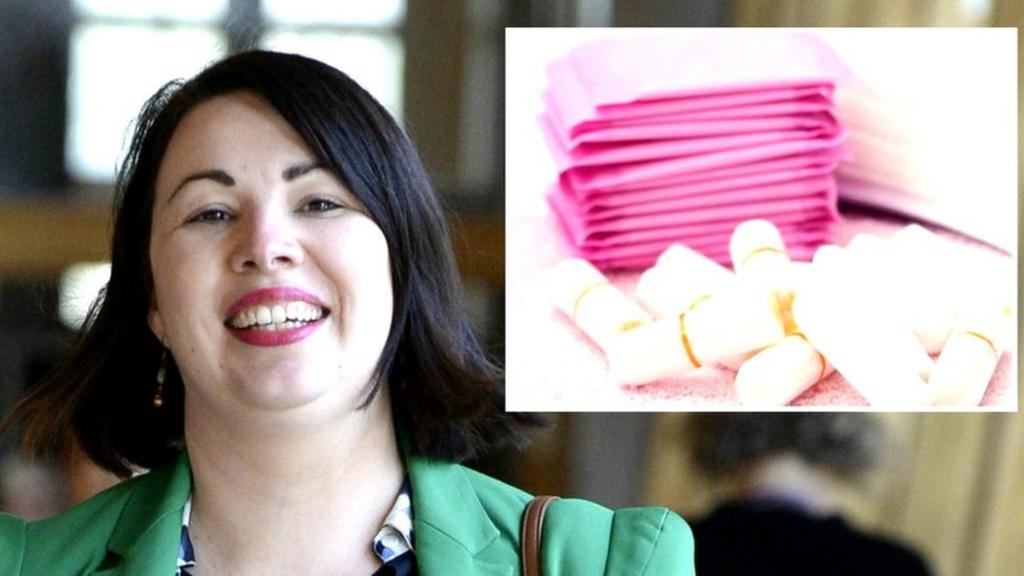
An interesting example of a Member’s Bill being introduced to the Scottish Parliament was reported last week. Monica Lennon, a Labour MSP, introduced the Period Products (Free Provision) (Scotland) Bill on 23 April 2019.

A link to how BBC Scotland covered the story can be found below:

Scotland’s ‘period poverty’ bill officially lodged at Holyrood

The aims and objectives of this Bill are set out in its accompanying Explanatory Notes:

“The aim of the Bill is to ensure that all who menstruate can have reasonably convenient
access to period products, free of charge, as and when they are required.”; and

“The Bill will:

• place a duty on Scottish Ministers to ensure that period products are made available
free of charge on a universal basis;
• require education providers to make period products available free of charge in on-site
toilets; and
• enable Scottish Ministers to place a duty on other specified public service bodies to provide free period products.”

This is a measure which commands popular support across the Chamber at Holyrood and amongst the wider Scottish public, so there is every chance that Ms Lennon’s Bill will eventually become an Act of the Scottish Parliament.

In common with Westminster, a draft law or Bill introduced in the Scottish Parliament must complete various procedures in order to become part of Scots law. It is likely that Ms Lennon’s Bill will undergo some amendments – this is typical for most draft legislation.

All Scottish Parliament Bills – no matter their origin – must be accompanied by Explanatory Notes and a Policy Memorandum detailing the rationale behind the draft legislative proposals and what impact these will have on a range of issues such as human rights and equal opportunities.

The Explanatory Notes will also contain a Financial Memorandum detailing the likely costs of the draft law on the Scottish Government and local authorities. Finally, there must be a statement from the Presiding Officer that the Bill is within the legislative competence of Parliament.

A statement of legislative competence is extremely important because Scottish legislation can be subject to challenge before national courts and European courts. An example of a successful legal challenge to the powers of the Scottish Parliament occurred as a result of the Scotch Whisky Association’s request for a judicial review (preliminary ruling) before the Court of Justice of the European Union in relation to the Alcohol (Minimum Unit Pricing) (Scotland) Act 2012.

A link to Ms Lennon’s Bill and its accompanying documents can be found by clicking on the link below:

https://www.parliament.scot/parliamentarybusiness/Bills/111383.aspx

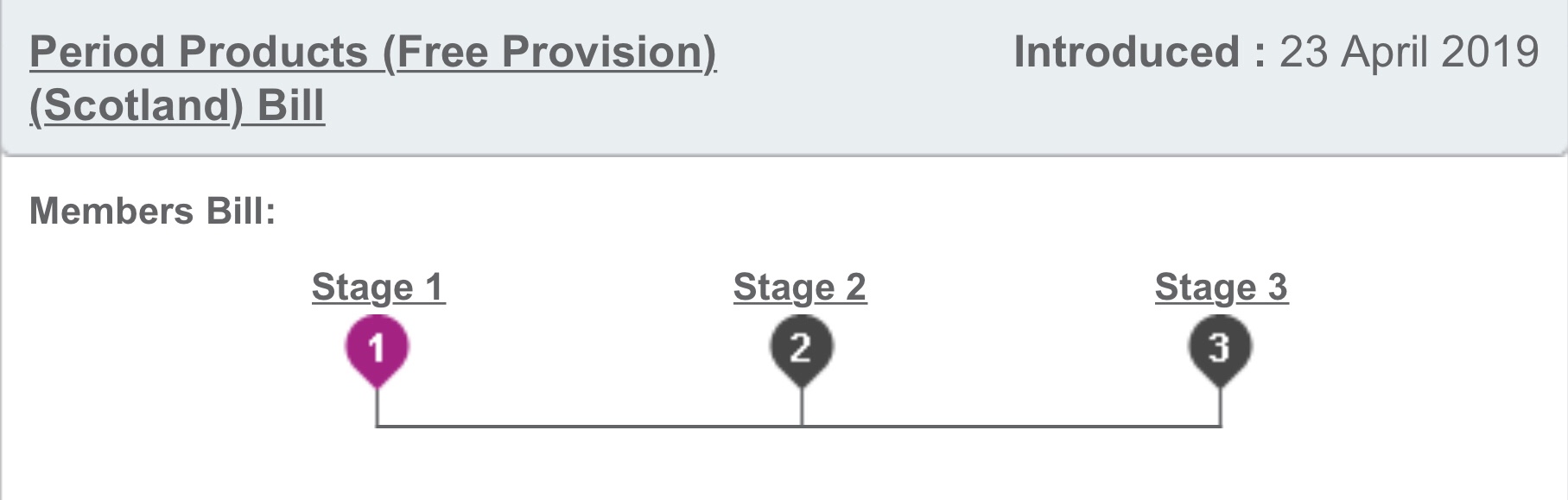
An infographic can be seen below which shows the current progress of the Bill:

The above infographic shows that the Bill is still at the first of the three legislative stages in the Scottish Parliament. Unless and until it successfully completes the other stages, it cannot become an Act of the Scottish Parliament.

Private Member’s Bills at Westminster

Although individual MPs can sponsor Bills in the House of Commons, this method of law making is fraught with difficulties – even if the proposed measure enjoys considerable support.

A recent example of a Private Member’s Bill falling foul of procedural technicalities in the House of Commons was the Voyeurism (Sexual Offences) Bill (introduced on 6 March 2018 by Wera Hobhouse, a Liberal Democrat MP). The text of the Bill can be read by accessing the link below:

Click to access 18174.pdf

This Bill aimed to make ‘upskirting’ a specific criminal offence in England and Wales (it was already a criminal offence in Scotland). This issue had received a lot of public support due to the efforts of Gina Martin, who had been the victim of ‘upskirting’ when attending a music festival in August 2017. When Ms Martin reported the matter to the Police, she was astonished to learn that there was no specific offence covering such behaviour under the criminal law of England and Wales.

A video covering Gina Martin’s campaign can be found below:

https://www.youtube.com/watch?v=4KoNwtQaQ-o

Unfortunately, the Bill was derailed by the efforts of Sir Christopher Chope (a Conservative MP sitting for the Christchurch constituency) who used a procedural mechanism to object to the Bill thus ensuring that it could not make any further progress in the House of Commons.

Following a public uproar, Sir Christopher later attempted to justify his intervention in an exclusive interview with the Bournemouth Echo newspaper:

https://www.bournemouthecho.co.uk/news/16296117.christchurch-mp-christopher-chope-i-do-support-upskirting-ban/

The UK Government recognising that such a Bill commanded considerable support both publicly and in Parliament, reintroduced the Bill as an Executive Bill and the measure was finally passed as the Voyeurism (Sexual Offences) Act 2019.

Despite formidable parliamentary obstacles at Westminster, Private Member’s Bills do become law occasionally – the Abortion Act 1967 and the Sexual Offences Act 1967 are often cited as the two most high profile examples of such Bills becoming Acts of the Westminster Parliament. That said, these measures received support from the UK (Labour led) Government of the day, otherwise there would have been little chance of legislative success.

At Westminster, the Executive (the UK Government) historically controls the parliamentary timetable in the House of Commons and the Prime Minister and other ministerial colleagues will prioritise the Bills which they wish to see passed into law. This can mean that there is very little time left over in the parliamentary business timetable for Private Member’s Bills – no matter how worthy they may be.

Since the General Election of May 2017, of course, the UK Conservative led Government has not enjoyed a majority in the House of Commons and has struggled accordingly to pass contentious legislation (Brexit Alert! anyone?).

Conclusion

I remember attending an event at the University of Strathclyde in 2014 when the Right Honourable John Bercow MP, the Speaker of the House of Commons addressed staff, students and invited guests. The audience was given the opportunity to put questions to Mr Bercow. One of the questions which I posed was that, given his reputation as a reforming Speaker of the Commons, could he learn anything from the practices of the Scottish Parliament? In particular, I wanted to know if he favoured greater involvement of individual MPs and parliamentary Committees in the legislative process at Westminster? He was clearly interested in looking at these matters and admitted that Westminster could learn from the practices of the devolved parliaments and assemblies in Northern Ireland, Scotland and Wales.

It remains the case, however, that it is much more likely that an individual MSP at Holyrood – such as Monica Lennon – has a far greater chance of sponsoring a Bill and seeing it to completion, thus, ensuring meaningful, legislative change. This is something that many of her counterparts at Westminster will simply not be able to achieve.

Postscript

The Independent reports that, as of 26 September 2019, 4 men have been convicted of ‘upskirting’ in England and Wales under the Voyeurism ((Sexual Offences) Act 2019.

A link to the story can be found below:

https://edition.independent.co.uk/editions/uk.co.independent.issue.260919/data/9120536/index.html

The BBC News website also carries a story about the fourth man to be convicted of this offence – a lawyer no less:
Copyright Seán J Crossan, 29 April & 26 September 2019