Beardy weirdy?

Photo by Nonsap Visuals on Unsplash

A common theme of this Blog over the last few weeks concerns banning certain forms of dress or appearance (Burka bans and horse racing in a hijab published on 1 August 2019).

Imposing a ban in relation to dress codes or appearance can be problematic legally speaking because such an approach could be tantamount to indirect discrimination in terms of Section 19 of the Equality Act 2010.

Several of my previous blogs have addressed the issue of indirect discrimination.

So it was with some interest that I read a story recently about Burger King’s plans to prevent male staff from wearing beards while working in its restaurants throughout the region of Catalunya/Catalonia in Spain. Immediately, I thought about the legal consequences of such a ban being introduced to UK Burger King outlets. The test for indirect discrimination is whether a provision, criterion or policy (PCP) imposed by an organisation is likely to have a disproportionately adverse effect on certain groups of individuals who possess a characteristic protected by law (in the UK, we are primarily talking about the Equality Act).

Unsurprisingly, this attempt to impose a blanket ban on Burger King’s male employees fell foul of the Spanish Constitution’s provisions on equality. I would be prepared to stick my neck out and argue that a similar result would almost certainly be replicated in the UK had Burger King attempted to introduce such a ban. I wasn’t really surprised by this outcome because Spain, as an EU member state, has very similar equality and discrimination laws to the UK. In fact, the current concept of indirect discrimination in the Equality Act 2010 is derived from EU Law.

So, who might be affected if an employer implements a blanket ban on the wearing of beards in the work place? Quite a lot of male employees as it turns out, for example, very religious and observant Jews, Muslims and Sikhs. Furthermore, members of the Russian and Greek Orthodox faith groups and Rastafarians may also face real issues complying with such a requirement imposed by the employer. In short order, such bans may infringe religious and cultural expression and may not only be a breach of the Equality Act, but could also represent a breach of human rights laws under the Human Rights Act 1998 and Article 9 of the European Convention on Human Rights.

It is always open to an organisation, of course, to argue that dress codes or enforcing strict rules about an individual’s personal appearance can be objectively justified. In the past, banning beards or regulating the length of hairstyles in the work place have been justified successfully by employers or organisations on health and safety grounds i.e. primarily concerning hygiene (see Singh v Rowntree Mackintosh (1979) ICR 554 and Panesar v Nestle Co Ltd [1980] IRLR 64 CA).

Each attempt to justify a provision, criterion or policy (PCP) will, of course, turn on its facts and it would be very foolish for organisations to think that there is some sort of magic bullet or get out of jail card which can be used in every situation to justify or excuse conduct which would otherwise amount to unlawful discrimination. Organisations should review policies on a regular basis and, if need be, this may necessitate the carrying out of an equality impact assessment.

Recently, the Royal Air Force (RAF) has significantly relaxed its total ban on male service personnel wearing beards (moustaches were permitted). This change of heart by the RAF has been motivated by the realisation that individuals from ethnic and religious minorities were being actively deterred from applying to join the service because of the ban on beards.

Even the argument that beards are unhygienic is being undermined with Professor Michael Moseley, presenter of the BBC programme “Trust Me I’m a Doctor“, highlighting recent, scientific evidence that clean shaven men represent a greater threat to hygiene than their bearded counterparts.

Links to the stories on Burger King’s attempt to ban the beard, the RAF’s change of policy and whether beards are actually unhygienic can be found below:

https://www.theguardian.com/world/2019/jul/31/burger-king-beard-ban-infringes-workers-rights-says-catalonia

https://www.bbc.co.uk/news/uk-49313406

https://www.bbc.co.uk/news/magazine-35350886

Copyright Seán J Crossan, 16 August 2019

Burka bans and horse racing in a Hijab

Photo by أخٌ في الله on Unsplash

I have just been reading two, contrasting stories about Islamic dress codes which appeared in today’s UK media.

The first story comes from our close neighbour and EU partner, the Netherlands which has decided to bring in a new law banning certain forms of Islamic dress – principally the Burka, Hijab and the Niqab – from being worn by female Muslims in hospitals and schools and while travelling by public transport. This ban imitates similar initiatives in other EU member states such as Austria, Denmark, France and Germany. Those individuals who ignore or flout the ban run the risk of being fined €150. Some Dutch politicians, for example, Geert Wilders of the far right Party for Freedom would like the law to be extended in order to ban Islamic headscarves.

The second story comes from the UK and couldn’t be more different in tone. The BBC reports that a female, Muslim jockey, who wears the Hijab, has made history by winning the Magnolia Cup at Glorious Goodwood.

Links to the two stories can be found below:

http://news.sky.com/story/netherlands-burka-ban-comes-into-force-in-schools-hospitals-and-on-buses-11774887

Khadijah Mellah: Hijab-wearing jockey triumphs on Haverland and makes history

These two stories made me think about the limits of tolerance in relation to the outward signs of religious belief in our communities. Under UK and EU laws, a person’s religion is a protected characteristic and s/he has the right not to be subjected to unlawful, less favourable treatment (discrimination).

The right to enjoy protection from religious discrimination was first introduced to the mainland UK as a result of the EU Directive 2000/78/EC on Equal Treatment in Employment and Occupation. The laws on religious discrimination were to be found in the Employment Equality (Religion or Belief) Regulations 2003. It should be noted that the scope of these Regulations was limited in that they applied only to the area of employment – not, for example, the provision of goods and services.

Previously, Northern Ireland was the only part of the UK which had laws on religious discrimination – for understandable reasons given the troubled history of that part of the world. The Regulations did not extend to Northern Ireland because it already had laws in place to deal with this issue.

The Regulations have now been superseded by the provisions of the Equality Act 2010 (primarily Section 10) which are much wider in scope in that they cover both religious discrimination in employment and the provision of goods and services.

Additionally, Article 22 of the EU’s Charter of Fundamental Rights recognises a person’s right to cultural and religious diversity.

Wearing Islamic dress is obviously a way in which very religious members of this community can express their religious beliefs. Reading both articles today, I found myself asking the question what would be the legal effects if a similar ban on Islamic dress was introduced in the UK?

The new UK Prime Minister, Boris Johnson, has made disparaging remarks about forms of Islamic dress, but admittedly he does not seem willing to introduce a ban.

Countries such as Austria, Denmark, France, Germany and now the Netherlands are just as much bound by laws such as Directive 2000/78/EC and the Charter of Fundamental Rights as the UK is at the time of writing, so how do they justify banning certain forms of Islamic dress?

Freedom of religion is not absolute and sometimes the State can decide that a person’s religious beliefs must take second place if they clash with other people’s human rights (e.g. sexual orientation) or general public safety goals. In the UK, discrimination less favourable treatment in connection with a person’s protected characteristics may be permitted under the Equality Act 2010 if it can be objectively justified i.e. it is a proportionate means of achieving a legitimate aim. Health and safety or concerns about terrorism are often grounds used by States across the EU to justify periodic crackdowns on the wearing of Islamic dress in public places.

Copyright Seán J Crossan, 1 August 2019

Good work?

Photo by Maarten van den Heuvel on Unsplash

One of the consistent themes of my blog has concerned an individual’s employment status in the work-place – or the very real difficulties associated with the lack of such status.

Section 230(1) of the Employment Rights Act 1996 defines who is an “employee” in the following terms:

“… an individual who has entered into or works under (or, where the employment has ceased, worked under) a contract of employment.”

As I have stated on more than one occasion, those who have a contract of service rather than a contract for services tend to be in a much stronger position legally speaking when it comes to a range of employment rights such as:

  • Paternity and maternity pay/leave
  • Statutory adoption pay/leave
  • Consultation rights in redundancy and TUPE situations
  • Entitlement to redundancy payments
  • Entitlement to sick pay
  • Minimum notice periods
  • Protection against unfair dismissal

The above are just some of the rights that people with employment status potentially can acquire depending on their length (or continuity) of service with their employer.

Those individuals with more insecure working patterns (e.g zero hours and/or casual workers) will almost never be in a situation to acquire such rights because it is almost always impossible for them to build up the necessary period of continuous service with the organisations to which they provide services. Typically, many of these workers are part of what has become known as the “gig economy” where the feature of employment contracts known as mutuality of obligation is absent.

Admittedly, the UK Government has attempted to begin to address the disadvantages facing “gig economy” workers by setting up the Taylor Review (which published its findings in July 2017). The final report made 53 recommendations concerning modern, employment practices:

https://www.gov.uk/government/publications/good-work-the-taylor-review-of-modern-working-practices

The UK Government’s official response to the Taylor Review was entitled “Good Work” and a link to this document can be found below:

https://assets.publishing.service.gov.uk/government/uploads/system/uploads/attachment_data/file/679767/180206_BEIS_Good_Work_Report__Accessible_A4_.pdf

The desire to extend workers’ rights seems to be something of a trend as, in April 2019, the European Union also ratified a new Directive with the working title Transparent and predictable working conditions in the European Union. This Directive (for the remaining EU 27 member states) will certainly give casual workers greater legal rights, but given the current uncertainty over the UK’s Brexit position, it remains to be seen if this measure will ever be implemented in this country (for more information, see my blog entitled “The gig economy” which was published on 19 April 2019).

One of the most significant new rights that the UK Government is proposing to extend to non-employees is the right to sick pay from day 1 of their service. It is calculated that this reform (if implemented) will benefit some 2 million workers.

A link to how the story was reported by The Independent can be found below:

https://edition.independent.co.uk/editions/uk.co.independent.issue.160719/data/9005291/index.html

Although employment law is a matter reserved to the Westminster Parliament, the Scottish Government has established its own Fair Work Convention with the express aim:

“… that, by 2025, people in Scotland will have a world-leading working life where fair work drives success, wellbeing and prosperity for individuals, businesses, organisations and society.”

A link to the Convention’s website can be found below:

https://www.fairworkconvention.scot

Copyright Seán J Crossan, 22 July 2019

A fishy tale …

Photo by chuttersnap on Unsplash

Alexander Boris de Pfeffel Johnson (or just Boris if you’re one of his legions of adoring followers) has been caught out yet (again) when pontificating about the UK’s unbalanced relationship with the European Union (see my previous blog “Private prosecutions” published on 29 May 2019).

The man most likely to be the next British Prime Minister May have thought that it was very clever (and theatrical no doubt) to brandish a kipper during a final hustings event of Conservative Party members in his pitch to win the Party’s leadership campaign.

By using the kipper, Mr Johnson wanted to make a broader point about the apparent interference of the EU in Britain’s laws. Now, I often teach students about the supremacy of EU law in the UK by dint of the fact that the Westminster Parliament passed the European Communities Act 1972, but if Mr Johnson had been one of my students he would have failed his EU Law exam.

Why?

Firstly, the kipper originated from the Isle of Man – which although a British Crown dependency – isn’t technically part of the UK and, therefore, not part of the EU.

Secondly, the food safety rules which govern items like kippers (which are deemed to be preserved rather than fresh fish) fall within the legislative competence of the UK – not the EU. Although the Isle of Man is not part of the UK, the UK Food Standards Agency would regulate the product since it is being sold in this country.

It would seem that Mr Johnson was either unaware of these facts or simply chose to ignore them.

Then again, Mr Johnson has a long track record of EU bashing from his time as a Brussels based journalist with The Daily Telegraph, so it would seem that he is doing what, for a long time, has just come naturally to him.

On a serious point, however, interventions by individuals such as Mr Johnson make it very difficult for the public to have an informed debate about the UK’s relationship with the EU. This is a state of affairs that we may come to regret given the predictions by the UK Office of Budget Responsibility of the grim consequences if this country crashes out of the EU without a proper and effective withdrawal agreement.

A link to the story on the Sky News website can be found below:

http://news.sky.com/story/eu-exposes-johnsons-kipper-red-tape-claim-as-nonsense-11765805

Copyright Seán J Crossan, 19 July 2019

Tickets for “people of colour” … or the problem with positive discrimination

Photo by Ehimetalor Unuabona on Unsplash

Tickets for “people of colour” …

In a previous blog (The force is not with you … published on 28 February and updated on 10 June 2019), I discussed the problems associated with policies of positive discrimination.

So, it is with some interest that I read an item on Sky News today about Afrofuture Fest a music festival which was to take place in the American City of Detroit. The festival organisers had offered tickets for sale to members of the public. Absolutely nothing unusual in that readers will undoubtedly respond, but what was unusual was the fact that the price to be paid in conjunction with an ‘early bird’ promotion was to be determined by the customer’s racial origins (tickets for “people of colour”).

If you were an African American applying for tickets, you would pay less than a White American wanting to go to the gig. I admit that I was intrigued by this marketing approach and I wanted to know what were the underlying motivations of the organisers? I confess: I’m coming from a different cultural perspective here in the UK and, generally, we’re not too keen on the widespread use of positive discrimination as a tool for promoting equality.

Well, it would seem that the pricing policy was motivated by a genuine determination to ensure that African Americans (who happen to be in the disproportionately lower income section of US society) were not deterred from attending the event by high prices. Furthermore, the organisers wanted a racially diverse group of music fans to attend the festival.

All well meaning, but the event has now become mired in controversy with the organisers receiving threats from white supremacist groups and artists deciding not to perform. The ticket policy has now been scrapped.

A link to how the story was reported on Sky News can be found below:

Festival scraps cheaper ‘people of colour’ tickets after ‘white supremacist threats’
http://news.sky.com/story/festival-scraps-cheaper-people-of-colour-tickets-after-white-supremacist-threats-11758953

Positive discrimination: the legal position

Discriminating in favour of one group of people over another (whether this is motivated by a good intention or not) will most likely be regarded as an example of direct discrimination which contravenes Section 13 of the Equality Act 2010.

The judgement of the House of Lords in James v Eastleigh Borough Council [1990] 2 AC 751 was particularly strong on this point and it was irrelevant that the Council was acting from motives of good faith i.e. to promote healthier lifestyles for female residents of the Borough. The simple fact was that the Borough Council was acting unlawfully (in breach of the then Sex Discrimination Act 1975) when it charged men for entry to the swimming pool when women were not charged for access to this facility. The Borough Council had committed an act of direct, sex discrimination.

Positive discrimination has only really been successful in the UK when the Westminster Parliament has given it the full backing of the law and, additionally, it complies with this country’s EU legal obligations.

One notable example of positive discrimination is the Sex Discrimination (Election Candidates) Act 2002 which aimed to encourage more women to enter Parliament by having all women short lists. Previously, such an attempt to promote positive action would have been illegal under the (now repealed) Sex Discrimination Act 1975.  Some (male) Labour activists did, in fact, bring successful legal challenges under the former sex discrimination legislation on the grounds that they had suffered discrimination because of their gender in being automatically disqualified from the parliamentary candidates’ selection process (Jepson and Dyas-Elliott v The Labour Party and Others [1996] IRLR 116).

The other example of positive discrimination involves the Police Service of Northern Ireland. The PSNI was created in 2001 following the Belfast or Good Friday Agreement in 1998. The PSNI replaced the old Royal Ulster Constabulary (RUC) which was largely seen as a biased or sectarian police force by most Roman Catholics in Northern Ireland.

According to figures produced by the official Patten Report, the RUC was overwhelming Protestant in composition (91.7% to 8.3% Roman Catholic).

One of the key recommendations of the Patten Report was that:

“An equal number of Protestants and Catholics should be drawn from the pool of qualified candidates.” [para. 15.10]

This led to a deliberate 50/50 recruitment policy in which half of the candidates recruited to the PSNI had to come from a Roman Catholic background.

That said, there was significant criticism of the 50/50 recruitment policy coming from the Unionist and Loyalist community in Northern Ireland – who were never going to be reconciled to the demise of the RUC in any case. The recruitment policy was only ended in 2011 by Owen Patterson MP, the then Conservative Secretary of State for Northern Ireland. Predictably, this development did not please the Nationalist and Republican community in Northern Ireland.

Affirmative or positive action

In the United States of America, of course, there is a completely different approach to the promotion of diversity and equality from what we would understand in the UK and the European Union. The Americans, for example, are very keen on affirmative action (or positive discrimination) and often employers will speak of filling quotas i.e. recruiting a certain number of African Americans or Hispanic Americans. This practice of affirmative action or positive discrimination is an attempt by the Americans to overcome the problems of historic and entrenched racism in their society. In the UK and the European Union, we too have had our problems with under-representation of certain groups in the work-place, but any attempt to introduce positive discrimination has been much more limited in scope.

Affirmative action has its limits: the ticket policy at Afrofuture Fest would, however, appear to be a breach of the Civil Rights Act 1964 (Title II) which states that:

“All persons shall be entitled to the full and equal enjoyment of the goods, services, facilities, privileges, advantages, and accommodations of any place of public accommodation, as defined in this section, without discrimination on the ground of race, color, religion, or national origin.

The UK and EU approaches to positive discrimination

Limited positive action or discrimination has, for some time, been tolerated by the Court of Justice of the European Union where employers gave preference, as part of an equality policy, to female candidates over suitably qualified male candidates in order to address gender imbalances in the work-place (see Kalanke Freie Hansestadt Bremen (1995) C-450/93 and Badeck and Others (2000) C-158/97).

The Equality Act 2010 does, admittedly, permit what is referred to as ‘positive action’ in fairly limited circumstances and it has been observed that it does not really advance the law very much in this area.

Certainly, in terms of the public sector equality duty, organisations may be permitted to take specified forms positive action in the work-place to eradicate or minimise forms of discriminations e.g. ‘the need to tackle prejudice and promote understanding’ (see Section 149(5) of the Equality Act)

Section 158 of the Act permits an employer to take positive action to help individuals with a protected characteristic to overcome or minimise such a disadvantage. Such action on the part of the employer must, however, be a proportionate means of achieving this aim.

Section 159 also permits an employer to take positive action in recruitment and promotion in relation to people with protected characteristics. The employer will only really be able to utilise this provision if candidates for a job or a promoted post have the same or similar qualifications. In such situations, the employer will able to consider if candidates with protected characteristics are at a disadvantage or are under represented in matters of recruitment or promotion.

There is one important exception to the rules on positive action contained in the Act: it will not be illegal for an employer to treat a disabled person more favourably in comparison to a non-disabled person.

Conclusion

In the UK, positive discrimination in recruitment can be lawful under very limited circumstances. In other words, it is a practice which, if objectively justified, can be used to overcome historical patterns of discrimination e.g. to address the woefully low numbers of female politicians or the under-representation of Roman Catholics in the Police Service in Northern Ireland.

Such arrangements permitting limited positive discrimination tend to be governed by ‘sunset clauses’ i.e. they have a built in expiry date, so they will not last forever. Furthermore, positive discrimination is really only legitimate  in so called ‘tie-break’ situations where several applicants have the same qualifications and experience, but as a matter of public policy, for example, a female or minority ethnic applicant is given preference in order to address historic diversity imbalances in that particular work-place.

The Americans, on the other hand, have tended to pursue a very explicit policy of positive discrimination or affirmative action by placing an emphasis on the filling of quotas – either, for example, in employment or education. Such an approach places a legal obligation on employers and service providers (colleges and universities) to ensure that certain minimum numbers of people from racial or ethnic minority backgrounds are given a job or a place in training or education.

As we have seen with the ticket policy for events such as Afrofuture Fest, positive discrimination can be controversial and potentially unlawful.

Copyright Seán J Crossan, 8 July 2019

EU Law marches on …

Photo by Martin Krchnacek on Unsplash

We’re now 3 months on from the UK’s Brexit Day (according to the European Union (Withdrawal) Act 2018 the date was scheduled for 31 March 2019).

Obviously, this didn’t happen as planned and our current Prime Minister, The Right Honourable Theresa May MP was sent (by the House of Commons) to an emergency summit in Brussels to seek an extension to Britain’s membership of the EU.

Without going into all the parliamentary shenanigans, the Prime Minister failed on 3 occasions to secure the necessary support of the House of Commons for the UK’s withdrawal agreement that she had negotiated with the other 27 EU member states.

As things stand currently, the UK will leave the EU on 31 October 2019, but expect reality to dawn in the mind of the new UK Prime Minister (whether it is Boris Johnson or Jeremy Hunt) before this deadline.

My previous blogs which have dealt with aspects of Brexit have emphasised the fact that, while the UK remains a member state of the EU, the European Communities Act 1972 remains in force. This legislation paved the way for the UK to enter the European Communities (the EEC, the Coal and Steel Community and Euratom).

A very good example of EU Law coming into force – despite the UK Government’s desire to leave the organisation – is a provision contained in Regulation (EU) No 540/2014 of the European Parliament and of the Council. This legal instrument was passed on 16 April 2014 and relates to the sound level of motor vehicles and of replacement silencing systems (amending Directive 2007/46/EC and repealing Directive 70/157/EEC).

The provision means that, from 1 July 2019, any new electric car that is produced or sold in the EU will have to be equipped with a device which emits a certain noise level. This is to address public safety concerns that such vehicles are too quiet and represent a potential hazard to pedestrians.

So, with Brexit postponed for now, EU Law is definitely marching on in the UK.

A link to the story as reported by the BBC can be found below:

Electric cars: New vehicles to emit noise to aid safety

The EU rule for new models follows concerns cars put pedestrians at risk because they are too quiet.

Copyright Seán J Crossan, 1 July 2019

(In)Equality in the EU?

Photo by Markus Spiske on Unsplash

Have member states of the European Union made progress this last year in the protection of minority groups?

It would seem that the answer to this question is not particularly straightforward if you read the EU’s Fundamental Rights Report 2019.

Michael O’Flaherty, Director of the EU’s Fundamental Rights Agency presents a fairly gloomy picture across Europe:

Fundamental rights alarm bells are ringing across the EU as inequalities, harassment and prejudices continue to grow. … We need robust responses outlining how rights benefit us all and provide the answers to the inequalities that are holding us back from a fair and just society where everyone can prosper.”

Across the EU, there are Governments in power (Hungary and Italy particularly) which promote strongly anti-immigrant messages. Until recently, the far-right Freedom Party was part of the coalition government of former Federal Chancellor Sebastian Kurz in Austria. In France, Germany and Spain, we have witnessed rising levels of support for far right parties such as the Front National, AfD and Vox respectively.

Other European countries have witnessed similar trends and did well in the recent European Parliament elections in May 2019.

We are not immune from such trends in the UK with many people being suspicious of the motivations of the Brexit Party and UKIP (despite denials to the contrary by the leaderships of these organisations that they are not far right movements).

In essence, the conclusions of the Fundamental Rights Report 2019 are as follows:

  • The levels of racial discrimination and harassment across the EU remain stubbornly high e.g. Black, Jewish and Roma people continue to report discrimination and harassment in their daily lives;
  • A significant percentage of Europeans (40%) consider immigration to be a problem and these individuals over-estimate the levels of (actual or true) immigration to the EU;
  • The number of children in poverty has decreased, but at 25% this figure is a still a cause for concern with certain groups (Roma children) being particularly affected.

A link to the Fundamental Rights Report 2019 can be found below:

https://fra.europa.eu/en/publication/2019/fundamental-rights-2019

Copyright Seán J Crossan, 10 June 2019

No vote for you if you’re from the EU!

Photo by Element5 Digital on Unsplash

On 23 June 2016, the British electorate voted to leave the European Union. Almost 3 years later, the UK remains a member state of this organisation – despite the fact that 31 March 2019 was supposed to be “Brexit Day” as laid down in the European Union (Withdrawal) Act 2018.

This date has now been pushed back to 31 October 2019 by agreement with the other 27 member states.

As I have stated in previous blogs, while the UK remains an EU member state it must continue to comply with its membership obligations.

This has meant that the UK had to hold European Parliamentary elections on Thursday 23 May 2019 – something which the British Government had hoped to avoid.

This was not the only controversy which dogged this election: a large number of European citizens reported that they had been denied the right to vote last Thursday. Was this a case of the conspiracy or cock-up theory? Probably the latter, but it has meant that a lot of people who should have been allowed to exercise their democratic right were prevented from doing so last Thursday. A number of reasons for this chaos have been suggested: lack of preparation by electoral officials; incomplete paperwork; and a lack of clarity from the UK Government.

The Maastricht Treaty 1992 (official title: the Treaty on European Union) established the concept of a common European citizenship. Part of this would entail the right of European citizens living in another member state to participate in certain elections.

EU citizens ordinarily resident in the UK, and in Scotland particularly, are entitled to vote in council, Scottish Parliament and European Parliament elections. In 2014, the Scottish Government also permitted EU citizens to participate in the Scottish Independence Referendum.

In order for these rights to be implemented, the Representation of the People Act 1983 had to be amended by the Westminster Parliament in order to comply with our European legal obligations. As a point of interest, all the other member states would have had to amend their domestic legislation governing elections to implement the rights given to European citizens by the Maastricht Treaty.

Extending the right to vote in national, general elections was opposed by many member state governments at the time of the negotiations which led to the Maastricht Treaty. It has always been the case that EU citizens living in the UK have not been allowed to cast a vote in a British General Election. This was taking the concept of shared European citizenship just a little too far – even back in the heady days of the Maastricht Treaty when Brexit seemed unthinkable.

Admittedly, the UK and the Republic of Ireland have, for a very long time, permitted their citizens to vote in each state’s elections. Ironically, this arrangement will continue to function even after Brexit has been achieved.

The failure to ensure that European citizens were able to vote in last Thursday’s elections might also represent a potential breach of Article 18 of the Treaty on the Functioning of the European Union i.e. no discrimination on the grounds of a person’s nationality. If this is the case, expect the European Commission to initiate enforcement proceedings, in terms of Article 267 TFEU, against the UK for failure to uphold the civil and political rights of European citizens living in this country.

A link to a report about EU citizens being denied their right to vote in the European Parliamentary elections can be found below:

EU citizens in UK complain of being denied vote in European elections
http://news.sky.com/story/eu-citizens-in-uk-complain-of-being-denied-vote-in-european-elections-11727020

Copyright Seán J Crossan, 25 May 2019

Don’t do it!

george-pagan-iii-624417-unsplash.jpg

Don’t do what? Get pregnant, it would seem if you’re a female athlete who receives sponsorship from one of the planet’s most visible sporting brands.

Just this week, allegations have been made by a number of female athletes that Nike withdrew sponsorship after they discovered that they were pregnant.

Now, if the allegations are true, this would certainly represent an example of unlawful, less favourable treatment. Pregnancy and maternity discrimination are prohibited in terms of Sections 17 (non-work cases) and 18 (work cases) of the Equality Act 2010. They are very specific forms of sex discrimination (a person’s sex or gender is a protected characteristic in terms of Section 11 of the Act).

In 2019, you might have been forgiven for thinking that pregnancy discrimination was a thing of the past…

The Sex Discrimination Act 1975

The (now repealed) Sex Discrimination Act 1975, which was held up as a significant advance for woman’s equality, was fundamentally flawed when it addressed the issue of pregnancy and maternity discrimination.

When the Act of 1975 was first introduced, cases involving alleged discrimination connected to a woman’s pregnancy encountered an unexpected problem, which the Parliamentary draftsmen had not taken into account: how could it be valid to attempt a comparison between that of a pregnant woman’s situation with that of a man? A strict application of the legislation meant that this was not a valid comparison and, therefore, many of the earliest sex discrimination claims failed because some judges applied the literal approach to the interpretation of the Act – even if this made the law something of an ass and, more seriously, led to blatant injustice.

This Act made it very clear that central to the success of any claim was the complainant’s ability to compare his or her allegedly less favourable treatment to an actual or hypothetical male/female comparator. If he or she could not do this, the claim would fail. A woman claiming that she had suffered discrimination on the grounds of her sex must have been able to carry out a like with like comparison.

The woman’s circumstances and those of her male comparator must have been broadly the same (they should not have been materially different) otherwise a meaningful comparison could not be made.

The European Union

This situation really continued into the 1990s and, it was only when the Court of Justice of the European Union resolved the matter in Dekker v Stichting Vormingscentrum voor Jonge Volwassen Plus (1991), that things started to improve. Dekker clearly established that there was no requirement for pregnant women to identify a male comparator when they were alleging that they had experienced unlawful, less favourable treatment.

The Equality Act 2010 now, in theory, affords pregnant women and mothers much stronger legal protection than the Sex Discrimination Act 1975 ever did, but yet examples of pregnancy and maternity discrimination still arise.

It was as recently as 2016 that the Equalities and Women Committee of the House of Commons exposed the shocking extent of pregnancy and maternity discrimination in the UK. Maria Miller MP, chair of the Committee stated:

Our 2016 report laid bare the significant discrimination and poor treatment faced by 54,000 pregnant women and mothers at work each year.”

A link to the Committee’s Report can be found below:

https://www.parliament.uk/business/committees/committees-a-z/commons-select/women-and-equalities-committee/news-parliament-2017/pregnancy-maternity-discrimination-2-statement-17-19/

Just do it?

Being deadly serious, the above slogan (of Nike) will hardly sit well with those female athletes in receipt of sponsorship from the company. That said, should we really be surprised that stories of this nature emerge when read against the Report of the Women and Equalities Committee?

A link to the article about alleged pregnancy discrimination as reported by Sky News can be found below:

Pregnant athletes ‘punished’ by Nike, says champion British runner Jo Pavey
http://news.sky.com/story/pregnant-athletes-punished-by-nike-says-champion-british-runner-jo-pavey-11721817

In 2018, Nike was praised for endorsing Colin Kaepernick, the former African American Football star who had actively campaigned to raise awareness of racial inequality. Now with these sex discrimination allegations, is it a case of one step forward, ten steps back for Nike?

Postscript

On 26 May 2019, The Independent reported that Nike had promised not to impose financial penalties on those female athletes who became pregnant and who were in receipt of sponsorship from the corporation. This was undoubtedly due to the considerable, adverse publicity which the story had generated around the world.

A link to the article in The Independent can be found below:


https://edition.independent.co.uk/editions/uk.co.independent.issue.260519/data/8930341/index.html

On 17 August 2019, the BBC reported that Nike had removed the offensive clause from its contracts with female athletes.

A link to the story can be found below:

Allyson Felix: Nike changes policy for pregnant athletes

Six-time Olympic gold medallist Allyson Felix says female athletes will “no longer be financially penalised for having a child” after Nike changed its sponsorship contracts.

Copyright Seán J Crossan, 17 & 26 May and 17 August 2019

How dare you mention my age!

Photo by Elena Saharova on Unsplash

The above picture may conjure up blissful images of a well deserved retirement, but the reality can be very different for many older employees and workers. Financial necessity and a higher state pension age may mean that many individuals will have to remain in work for much longer than they would like.

In October 2011, the UK Parliament issued a PostNote entitled “An Ageing Workforce” which made the following observations in its introduction:

Over the next decade, the changing age profile of the workforce will be the most significant development in the UK labour market, as a third
of workers will be over 50 by 2020Employers will be expected to respond to this demographic shift by making work more attractive and feasible for older workers, enabling them to work up to and beyond State Pension Age (SPA) if they are capable.”  

Significantly, this PostNote went on to state:

Within 20 years, nearly a quarter of the UK population will be aged 65 or over. People are now spending an average of 7 years longer in retirement than in the 1970s …

A link to this PostNote can be found below:

Click to access postpn391_Ageing-Workforce.pdf

Not much has changed for the better it would seem. Some 7 years later, the above conclusions would also be mirrored by a Report issued by the Women and Equalities Committee of the House of Commons on 17 July 2018 which stated:

“The talents of more than a million people aged over 50 who want to work are being wasted because of discrimination, bias and outdated employment practices. … Government and the Equality and Human Rights Commission (EHRC) are failing to enforce the law on age discrimination and must be clearer that prejudice, unconscious bias and casual ageism in the workplace are all unlawful under the Equality Act 2010.”

A link to the Committee’s Report can be found be found below:

https://www.parliament.uk/business/committees/committees-a-z/commons-select/women-and-equalities-committee/news-parliament-2017/older-people-employment-report-published-17-19/

It’s all very well going on about the need for people to work beyond state pension age, but what if older employees and workers find themselves being actively discriminated against by employers? What rights (if any) do they have? Admittedly, age discrimination is not just problem for older people; younger people can often find themselves victims of this type of discrimination (see Hutter v Technische Universität Graz (2009)). 

Age discrimination in the news

I was thinking about unlawful age discrimination this week after reading a story on BBC Northern Ireland’s website. It was reported that the Arts Council of Northern Ireland had been sued by its former Chief Executive, Roisin McDonough who was alleging age discrimination. Ms McDonough has now settled her claim with the Arts Council for £12,000. It was alleged by Ms McDonough that the issue centred around the failure by the Arts Council to consider giving her the option of flexible retirement arrangements. She had requested that she be allowed to work 4 days instead of 5 from 1 April 2017. Apparently, this request was never dealt with properly and Ms McDonough was subsequently asked to name a date when she intended to leave her employment. 

A link to the BBC Northern Ireland article can be found below: 

Age discrimination: Arts chief Roisin McDonough awarded £12,000
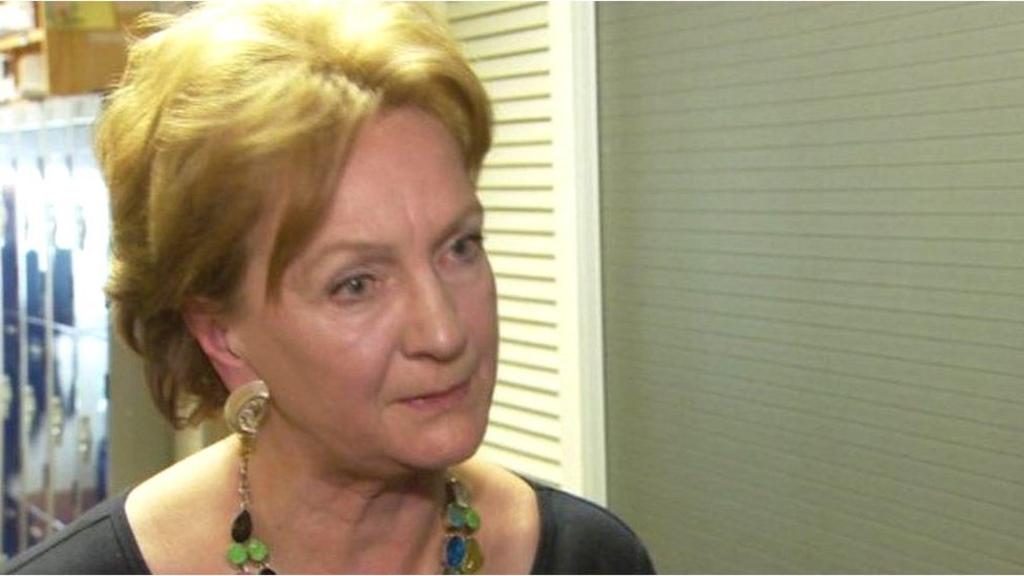
Roisin McDonough claimed the Arts Council had discriminated against her because of her age.


The Equality Act 2010

It was only with the introduction of the Employment Equality (Age) Regulations 2006 that unjustified age discrimination became illegal across the UK. Please note that I have deliberately used the word ‘unjustified’ in my first sentence because there can be situations where discrimination on the grounds of a person’s age can be be quite lawful (more about that later in this blog). 

The 2006 Regulations have now been replaced by the Equality Act 2010. For dedicated Brexit followers, these Regulations were introduced because, in 2000, the European Union passed Council Directive 2000/78/EC of 27 November 2000 which established a general framework for equal treatment in employment and occupation. Interestingly, this Directive also spawned new legal protection in relation to a person’s sexual orientation and religion and belief. Admittedly, the scope of the Directive was limited to the area of employment. It did not cover these types of discrimination in relation to the provision of goods and services. 

We have since moved on and many of the key principles of the Directive are now to be found in the Equality Act 2010. 

Section 5 of the Equality Act states that in relation to the protected characteristic of age:

(1) (a) a reference to a person who has a particular protected characteristic is a reference to a person of a particular age group;

(b) a reference to persons who share a protected characteristic is a reference to persons of the same age group.

(2) A reference to an age group is a reference to a group of persons defined by reference to age, whether by reference to a particular age or to a range of ages.

It is, therefore, unlawful for employers and service providers to discriminate against an individual on the grounds of that person’s age. Employers must be particularly careful in relation to recruitment policies and procedures, terms and conditions of employment, promotion and training opportunities and termination of the employment relationship. Practically speaking, this will mean that employers will have to be especially careful when recruiting workers to their organisations.

Any advertisements or recruitment criteria which seem to suggest a preference for one age category over another should be discouraged – unless there is a sound legal reason for this. It’s probably very unwise for recruiters to use phrases like ‘Mature person sought for post’; ‘Dynamic individual preferred’ or ‘Youthful enthusiasm’ or ‘Are you still hungry enough to succeed?’ (see Canadian Imperial Bank of Commerce v Beck 2010; McCoy v James McGregor and Sons Limited and others 2007; and Hutter v Technische Universität Graz (2009)).

That said, there are situations where the law will permit differences in treatment based on a person’s age. The National Minimum Wage Act 1998 and the associated Statutory Regulations, for example, continue to operate meaning that workers can be paid different minimum and living wage rates depending on their age. In situations involving redundancy, those employees with 2 or more years’ continuous service will be entitled to receive a statutory redundancy payment. It is very likely that older employees may have longer service than their younger colleagues and will, therefore, be better off financially under the employer’s redundancy arrangements.

A case where an employer attempted unsuccessfully to justify direct age discrimination occurred in O’Reilly v (1) BBC & (2) Bristol Magazines Ltd (2010) Miriam O’Reilly, a very experienced and well regarded radio and television journalist, lost her job as one of the main presenters of the BBC’s popular Countryfile television programme (which has been broadcasting since 1989 until the present day). Ms O’Reilly was then 51 years of age. This was part of a strategy by the BBC to appeal to a much younger audience. The new presenters who had been recruited to work on the programme were all in their 30s. 

Held: by the Employment Tribunal (unanimously) that O’Reilly had been subjected by the BBC to direct age discrimination and that the BBC and Bristol Magazines Ltd had subjected her to age victimisation. Claims for sex discrimination were not proved. The Tribunal was strongly of the opinion that had O’Reilly been 10 or 15 years younger, she had would have been in a strong position to retain her presenting post on the programme. In fact, it was heard during the evidence that the BBC had considered offering Michaela Strachan (a well known television presenter who had guest presented on the show) a permanent presenting job. Strachan was then aged 42 as opposed to O’Reilly who was 51. 

Health and safety considerations might seem like a fairly straightforward way of justifying age discrimination in relation to certain jobs which rely on the person displaying a high level of technical competence e.g. an airline pilot, but employers will have to be very careful here that they do not use this issue as a blunt instrument as the Court of Justice of the EU decided in Case C-447/09 Prigge and Others v Lufthansa [2011].

In Prigge, Lufthansa, the German national airline operated a compulsory retirement age of 60 for its pilots. Prigge and a number of other pilots who had either reached or were approaching this age, objected to the policy on the grounds that it was an example of age discrimination. Lufthansa, amongst other things, argued that the policy could be objectively justified on the grounds of health and safety.

Held: by the Court of Justice that Lufthansa’s mandatory retirement age of 60 could not be objectively justified and was not a proportionate means of achieving a legitimate aim. The airline had committed unlawful discrimination on the grounds of age by operating the compulsory retirement age.

For many years, the UK in common with many other EU member states permitted employers to operate compulsory retirement ages. Until 2011, the default UK retirement age for both men and women was 65. This has now been abolished and people have the right to request that they permitted to work on. 

As a consequence of major demographic change i.e. a rapidly ageing population in this country, it will be necessary for people to work for longer than previous generations. A person’s entitlement to receive a state and/or occupational pension scheme has been raised to 66 years of age if you intend to retire by October 2020 (and then to age 67 between 2026 and 2028). These projections may still be overly optimistic given the UK’s demographic time bomb and, in 2016, the Independent Review of Retirement Income, chaired by Professor David Blake of Cass Business School, submitted that people would have to work into their seventies in order to avoid hardship and poverty in their old age. This research was also supported by a study by Royal London which suggested a retirement age of 77!  

The Court of Justice of the European Union gave cautious approval to the UK’s then default or mandatory retirement age of 65 (see Incorporated Trustees of the National Council on Ageing (Age Concern England) v Secretary of State for Business, Enterprise and Regulatory Reform (2009)). Compulsory retirement ages set by EU member states were essentially a proportionate means of achieving a legitimate aim i.e. the orderly management of a country’s labour market and the opening up of employment opportunities for younger people.

Having said that, with the abolition of the UK’s default retirement age, employers will still have to be careful how they handle the issue of older employees. Requests to continue working by those individuals in the older age demographic will have to be considered seriously by employers. Employers may be justified in refusing to continue employment if they can demonstrate that an older employee falls short of a basic (objective) standard of mental or physical abilities required to perform the job; or in situations where the law lays down the retirement age. Finally, we should also be aware that younger people can also be the victims of age discrimination. 

ACAS Guidance on Age Discrimination

In March 2019, ACAS helpfully produced new guidance on how to prevent age discrimination in the workplace.

Some of the ACAS examples can be found below:

Example 1 – Ordinary direct discrimination (Section 13: Equality Act 2010)

Manager Louise is looking to fill a role which will require the successful applicant to then complete difficult training. She instructs her HR manager to discount her team’s younger members, presuming they will not want the hard work. She also tells HR to discount older members, thinking they will not adapt to the change. Instead she shortlists Bruce and Mikel, believing people in their mid-thirties are more likely to have the necessary blend of ambition and sense of responsibility. Her actions are likely to be discriminatory.

Example 2 – Direct discrimination by association (Section 13: Equality Act 2010)

Senior manager Jurgen decides not to invite employee Sarah and her partner Claude to a business party because Claude is much older than her. Jurgen feels Claude would not fit in with the party mood. This is likely to be discriminatory.

Example 3 – Direct discrimination by perception (Section 13: Equality Act 2010)

Siobhan is turned down for a supervisor’s job because her bosses decide she does not look mature enough for the role. They think she looks about 20. In fact, she is 30. Her bosses’ decision is likely to be discriminatory.

Example 4 – Indirect discrimination (Section 19: Equality Act 2010)

City centre gym manager Esme tells employees she needs two more staff to work on reception. She adds that anyone interested needs to look ‘fit and enthusiastic’ as the gym is trying to encourage more young people to join. Her requirement may indirectly discriminate against older staff unless it can be objectively justified.

Example 5 – Harassment (Section 26: Equality Act 2010)

Sixty-year-old Margaret feels humiliated and undermined at the store where she works because of her age. Despite her extensive experience in retailing and recently gaining a qualification as a visual merchandiser, her manager Darren regularly tells her in front of other staff that she is ‘out of touch’ and that the store needs ‘fresh blood’. Darren’s behaviour is likely to be harassment.

Example 6 – Victimisation (Section 27: Equality Act 2010)

Manager Alan tells apprentice Reyansh he is happy with his progress and performance. Reyansh then feels confident enough to tell Alan that some of the older employees regularly make fun of him because of his age and play pranks such as leaving toys where he’s working. Reyansh wants this to stop. Alan tells Reyansh to toughen up and that the firm has no time for complainers. Some weeks later Alan punishes Reyansh for complaining by cancelling his training course. This is likely to be victimisation.

The ACAS Guidance can be accessed using the link below:

Click to access Age_discrimination_key_points_for_the_workplace.pdf

Copyright Seán J Crossan, 9 May 2019