Grindhouse Day (or Man with an International Travel Ban)

Photo by Nathan Wright on Unsplash 

An interesting story appeared in the Scottish and national UK media on Wednesday 26 February 2025 about a case at Wick Sheriff Court which has made legal history.

Chief Constable of Police Scotland v Kevin Booth [2025] SC WCK 8

A link to the judgement (issued by Sheriff Neil Wilson) on the British and Irish Legal Information Institute (BAILII) can be found below:

https://www.bailii.org/cgi-bin/format.cgi?doc=/scot/cases/ScotSC/2025/2025scwck008.html&query=(Chief)+AND+(Constable)+AND+(of)+AND+(Police)+AND+(Scotland)+AND+(v)+AND+(Kevin)+AND+(Booth)+AND+(.2025.)+AND+(SC)+AND+(WCK)+AND+(8)

When I heard the first account of this story on BBC’s Six ‘o’ Clock News and, immediately afterwards on BBC Reporting Scotland, I assumed that the Sheriff Court had issued its Order under its criminal jurisdiction. I was wrong, but more about that later.  

A word of warning to anyone contemplating reading Sheriff Wilson’s judgement, it contains graphic accounts of violence carried out by Booth against his victims. The judgement is not for the faint hearted.

Totally by coincidence, this story was reported around the time that a major Hollywood film, Heretic (starring Hugh Grant) had just been released; the plot of which featured a misogynist running a torture dungeon under his suburban home. Although the real life setting of Booth’s remote, baronial mansion in the Scottish Highlands definitely won out over Hollywood for its sheer spookiness factor.

A link to the BBC Scotland report can be found below:

https://www.bbc.co.uk/news/articles/cy9dld3jgx8o

The Man with an International Travel Ban

The case centred around Kevin Booth who had been accused of physically abusing women in a private dungeon located in the cellars of his Highland home. Adding to the Grindhouse Movie atmosphere of this story, Booth was in the habit of filming these encounters. It later transpired that many of Booth’s victims were employed by him as domestic servants at his Highland home. Many of these women were foreign nationals who had been lured to the UK by promises of well paid employment with Booth. They were highly vulnerable to abuse and exploitation. These women were to be bitterly disappointed: the golden future that Booth had painted was a deception and, little did they know it, but they were about to enter a nightmare.

At first, I thought, nothing unusual about this story as violence against and the abuse of women and girls is still shockingly and depressingly common in Scotland (and the rest of the UK). Just that week, The Metro had run a front page story detailing the fact that the incidence of the crime of upskirting on trains had rocketed across the UK (see the link below). 

Back to Mr Booth: he is a millionaire (apparently) who owns a remote Scottish Baronial mansion located at the end of a 10 mile private road in the Highlands. The Police, acting on complaints received from several women who had worked for Booth, gathered evidence against him of potential, criminal wrongdoing e.g. torture (referred to as punishment beatings) and human trafficking, but the Crown Office and Procurator Fiscal Service (COPFS) later abandoned criminal proceedings against Mr Booth. 

When the average person hears phrases like human trafficking and punishment beatings, you can’t blame them for arriving at the completely justifiable conclusion that this will involve breaches of the criminal law.  

From knowledgeable sources of mine, it has been speculated that the Crown abandoned proceedings against Booth because it was not in the public interest (yes amazingly); there may have been some level of ‘consent’ given by Booth’s victims; and there was not a sufficiently high chance of securing a conviction against him.

That said, there are limits placed upon physical abuse that an adult may agree to undergo as the House of Lords made very clear in its decision of R v Brown [1993] UKHL 19 [1994] 1 AC 212. This case made headlines at the time because of the types of physical abuse which went way beyond the types of sado-masochostic sexual practices that would be deemed legally permissible.  

At this point, it is worth restating that we have a system of public prosecution in Scotland (private prosecutions are extremely rare). It is the Crown Office and Procurator Fiscal Service (COPFS) which make decisions about whether an accused person will face trial in a criminal court.  Police Scotland can charge a person with a crime (in this case Mr Booth), but it will be up to COPFS to green light a prosecution.

As we have seen, a criminal prosecution against Booth was attempted, but was later abandoned. This development, however, did not deter Police Scotland from taking further civil action against Booth at Wick Sheriff Court by applying for a Trafficking and Exploitation Prevention Risk Order (TERO).

Mr Booth is now the subject of an international travel ban to last for a duration of 5 years. This Order is the first of its kind in Scottish legal history.  The ban or was made in terms of section 26 of the Human Trafficking and Exploitation (Scotland) Act 2015. The official name for this type of ban is a Trafficking and Exploitation Prevention Risk Order or TERO for short.

In relation to his activities, Booth, however, has not been convicted of any criminal acts and the travel ban was imposed by a civil court. The Police actively sought this civil order. There are other restrictions imposed on Booth by the Sheriff Court. He will, for instance, have to notify Police Scotland in advance if he proposes to employ women at his home. This Order is more about controlling Booth in the future as opposed to punishing him (in the criminal sense) for his past treatment of the victims in the story. 

It has to be said that Mr Booth has a rap sheet that would turn most people’s hair white: physical abuse of pupils at a school in Africa where he worked as a teacher; further physical abuse of young children of school age in the North East of England; and, more worryingly, allegations of rape of a woman in the Republic of Ireland. Clearly, Booth is not a nice person – to put it mildly.  

The Police have had significant involvement with Booth and have investigated him after a number of complaints were received from women who stated that they had been physically abused by him.

On BBC Scotland, the reporter likened the abuse to “punishment beatings”. Booth is still a free man for now – although the Police will continue to monitor his activities.  At the time of writing, Booth was the subject of a criminal trial at Wick Sheriff Court for allegedly making indecent communication s to a woman (please see link to article on the BBC website below).

https://www.bbc.co.uk/news/articles/cd7v27nnv9go

The question being asked is “Why is this man not in jail?”  

This is clearly a question for COPFS to answer because it is the relevant legal authority for determining whether a public prosecution of an accused should proceed.  

The decision not to proceed against Booth is going to be particularly controversial given high profile campaigns about violence against women and attempts by the authorities to reduce these types of incidents.  

What about the victims pursuing private prosecutions against Booth?  

Well, this Blog has previously discussed the problems associated with these types of legal action in Scotland. It is theoretically possible, but highly unlikely in practice as the victims would have to make an application to the High Court of Justiciary for a Bill for Criminal Letters which would permit them to initiate a private prosecution against Booth. It’s worth remembering that the last successful private prosecution in Scotland was over 40 years ago (X v Sweeney [1982] JC 70

A civil action, for the time being, might be the only effective remedy for the victims. 

That said, the Police and COPFS are monitoring the situation and, if significant new, evidence comes to light, Booth may well have to face his day in a criminal court. 

In conclusion, Sheriff Neil Wilson had this to say about Booth’s conduct (at paragraph 102 of his judgement):

… the evidence of Mr Booth’s egregious conduct, as presented in court, was, at times, utterly harrowing. The graphic video footage, combined with the context and background provided by supporting documentary evidence in various forms, was redolent of a level of cruelty and depravity which, whilst extreme, one can only hope is rare. It might be thought that the use of such value-laden language in a legal judgment is inappropriate. I would beg to differ, and make no apologies for including it. This judgment may be primarily concerned with the legal issues before the court, but it is important not to lose sight of the human suffering giving rise to this case.” 

Recent Update About Mr Booth

On 28 October 2025, at Wick Sheriff Court, Mr Booth was found guilty of making an indecent communication to a woman who had been employed by him. Booth will return to Court at a later date to be sentenced by the Sheriff.

A link to the story on the BBC website can be found below:

https://www.bbc.co.uk/news/articles/cwyp392jx2do

Explanatory Note About Grindhouse Movies

According to Wikipedia: A grindhouse or action house[1] is an American term for a theatre that mainly shows low-budget horror, splatter, and exploitation films for adults.

According to historian David Church, this theater type was named after the “grind policy”, a film-programming strategy dating back to the early 1920s that continuously showed films at cut-rate ticket prices that typically rose over the course of each day. This exhibition practice was markedly different from the era’s more common practice of fewer shows per day and graduated pricing for different seating sections in large urban theatres, which were typically studio-owned.

Copyright Seán J Crossan, 26 February 2025 and 28 October 2025

Virtual appeal?

Photo taken from the First Edition of Introductory Scots Law: Theory & Practice (Hodder Gibson, 2004)

The above scene, taken some years ago in Edinburgh’s Court of Session, portrays a normality that has been sadly lost to us in the legal world over the last month or so. It’s very unlikely that our two Advocates (the English equivalent would be Barristers) will be having face to face discussions for the foreseeable future.

Yes, we’re back to the ramifications of the Coronavirus (again) and lawyers, like so many other professionals, are now having to learn to rely on technology in order to deliver services to the public.

It should not have come as a great surprise, therefore, to see that Scotland’s most senior civil court has decided to proceed with a virtual appeal hearing in respect of a high profile defamation claim.

Last year, the well known Scottish independence (not to say controversial) blogger, Stuart Campbell was unhappy with the decision of a Sheriff in his defamation claim against Kezia Dugdale, the former Scottish Labour Party Leader (Campbell v Dugdale [2019] SC EDIN 32).

Mr Campbell sought leave to appeal to the Inner House of the Court of Session – which was granted – but this was before the virus outbreak and life as we know it changing in ways that we could not have foreseen.

The old adage about justice delayed means justice denied is extremely appropriate to the times we are living in. Due to the viral outbreak, both civil and criminal proceedings in Scotland (as in so many other countries) have practically ground to a halt.

How do we deal with this?

Necessity is the mother of invention and a virtual Inner House has been created by the Scottish Courts and Tribunals Service (SCTS). Eric McQueen, SCTS Chief Executive, is confident that the three appeal judges, court staff and lawyers for both litigants will be able to work with these arrangements. Currently, this is a temporary arrangement and jury is still out as to whether virtual court hearings will become a permanent feature of the Scottish, legal landscape. The answer to this question will surely depend on how matters progress in this particular appeal.

Even our legislators in the Scottish and Westminster Parliaments are having to grapple with the opportunities (and disadvantages) that remote working represents. Yesterday, the first virtual session of the House of Commons took place at Westminster.

Strange times indeed, but needs must when the devil drives …

A link to the BBC News website about the virtual Inner House can be found below:

https://www.bbc.co.uk/news/uk-scotland-52358830

A link to the original decision of the Sheriff (Nigel Ross QC) can be found below:

https://www.scotcourts.gov.uk/docs/default-source/cos-general-docs/pdf-docs-for-opinions/2019scedin32.pdf?sfvrsn=0

Copyright Seán J Crossan, 23 April 2020

For those in peril on the sea

Photo by Lawrence Hookham on Unsplash

The avoidable death of Annang Neurtey

As someone who works more in the civil rather than the criminal legal tradition, I tend to focus more on the outcome of obtaining damages or compensation for the victim of an industrial or work-place accident.

It’s simply a matter of horses for courses i.e. you stick to what you know or what you’re trained to do. Admittedly, most of the victims of industrial accidents that I have represented are perhaps more focused on obtaining compensation for their injuries – especially if these are life changing. Any criminal liability that the employer may have is purely incidental i.e. something of a side issue. Then again, I suppose you could say that about most civil actions where the criminality of the pursuer remains firmly in the background (think dangerous and careless driving incidents).

The victim of a work-place delict (or tort) may get some satisfaction from their employer or its officers and managers appearing in the dock at a subsequent criminal trial, but this is unlikely to be satisfying in the long term. It will not allow them to get their lives back on track or to move on; payment of compensation is perhaps a more satisfactory conclusion to things. I make that last statement fully in the knowledge that no amount of money can truly give victims back what they have lost.

Yet, every so often, I come across a story or an incident which underlines the importance of criminal law regarding industrial or work-place accidents.

In 2015, one such incident occurred onboard Aquarius, a fishing trawler which operated out of the North East Scottish fishing port of Banff. Serious failings in the operation of the vessel led to the death of a crewman. The victim, 47 year old, Annang Neurtey from Ghana, was swept overboard: his body has never been recovered – adding immensely to the grief of his family.

Anyone who has read Sebastian Junger’s 1997 novel, The Perfect Storm (or viewed the film adaptation of 2000) will be readily familiar with the dangers that fishing folk face at sea. That said, the tragedy which befell Annang Neurtey was entirely avoidable. If the skipper of the Aquarius had properly supervised the crew and followed basic safety procedures, the accident would not have occurred.

Following Mr Neurtey’s death, MB Aquarius Ltd of Buckie, the company which owned and operated the vessel, was investigated by Police Scotland and the Marine and Coastguard Agency. The conclusions reached by investigators were that basic risk assessments had not been properly carried out and that the employer had failed to put a safe system of working in place.

At a subsequent criminal prosecution against Mr Neurtey’s employer for health and safety breaches at Aberdeen Sheriff Court, the company pleaded guilty to breaches of marine safety laws, namely, Regulation 5(1) of the Merchant Shipping and Fishing Vessels (Health and Safety at Work) Regulations 1997 and Sections 85 and 86 of the Merchant Shipping Act 1995.

A fine of £50,000 was imposed on the employer – it would have been £75,000 had an early plea of guilty not been entered by the company.

Mr Neurtey’s family will doubtless be contemplating a civil action for recovery of damages – unless of course his employer does the decent thing and quickly settles such a claim.

A link to the Marine and Coastguard Agency’s Report of its findings concerning Mr Neurtey’s death can be found below:

https://assets.publishing.service.gov.uk/media/57f3c2d7ed915d06fa000030/MAIBInvReport18_2016.pdf

A link to an article in the The Press & Journal about the trial can be found below:

https://www.pressandjournal.co.uk/fp/news/aberdeen/2011786/buckie-based-fishing-company-fined-50000-following-death-of-crew-member/

Those dark satanic mills …

Have concerns about health and safety gone mad? The former British Prime Minister, David Cameron certainly thought so when his Coalition Government (2010-15) introduced the Enterprise and Regulatory Reform Act 2013 (in particular, Section 69 of the said legislation) which removed the right to bring a civil claim for breaches of the Health and Safety at Work Act 1974.

It does not mean that employees can no longer bring a civil claim if an employer breaches its duty of care, but significantly claimants will no longer benefit from the presumption of strict liability previously imposed on organisations. Since this reform, it will be essential for claimants to prove negligence on the part of their employers for breaches of health and safety.

We would, however, do well to remember our history: concerns about health and safety were often ignored in the not so distant past.

The phrase “dark satanic mills” comes from the poem, And did those feet in ancient time by William Blake. The phrase has been interpreted as a searing indictment of the wickedness and exploitative practices of 19th Century British industrialists who most certainly put profit before people. This is why rare individuals such as the Welsh born industrialist, Robert Owen and his New Lanark Mills we’re regarded as truly radical and progressive employers.

The words of Blake’s poem were later put to music by the composer, Hubert Parry, and is better known as Jerusalem – an alternative English National Anthem for many because of its rallying call for social justice for the poor and the oppressed.

Over time, admittedly, the UK Parliament did intervene by bringing in legislation to curb some of the frankly dangerous and disreputable practices which had been tolerated in British factories, shipyards and mines. With the industrial revolution, Britain did indeed become the ‘workshop of the world’, but this accolade disguised the terrible human cost which could be measured in countless deaths, terrible injuries and overwhelmingly misery.

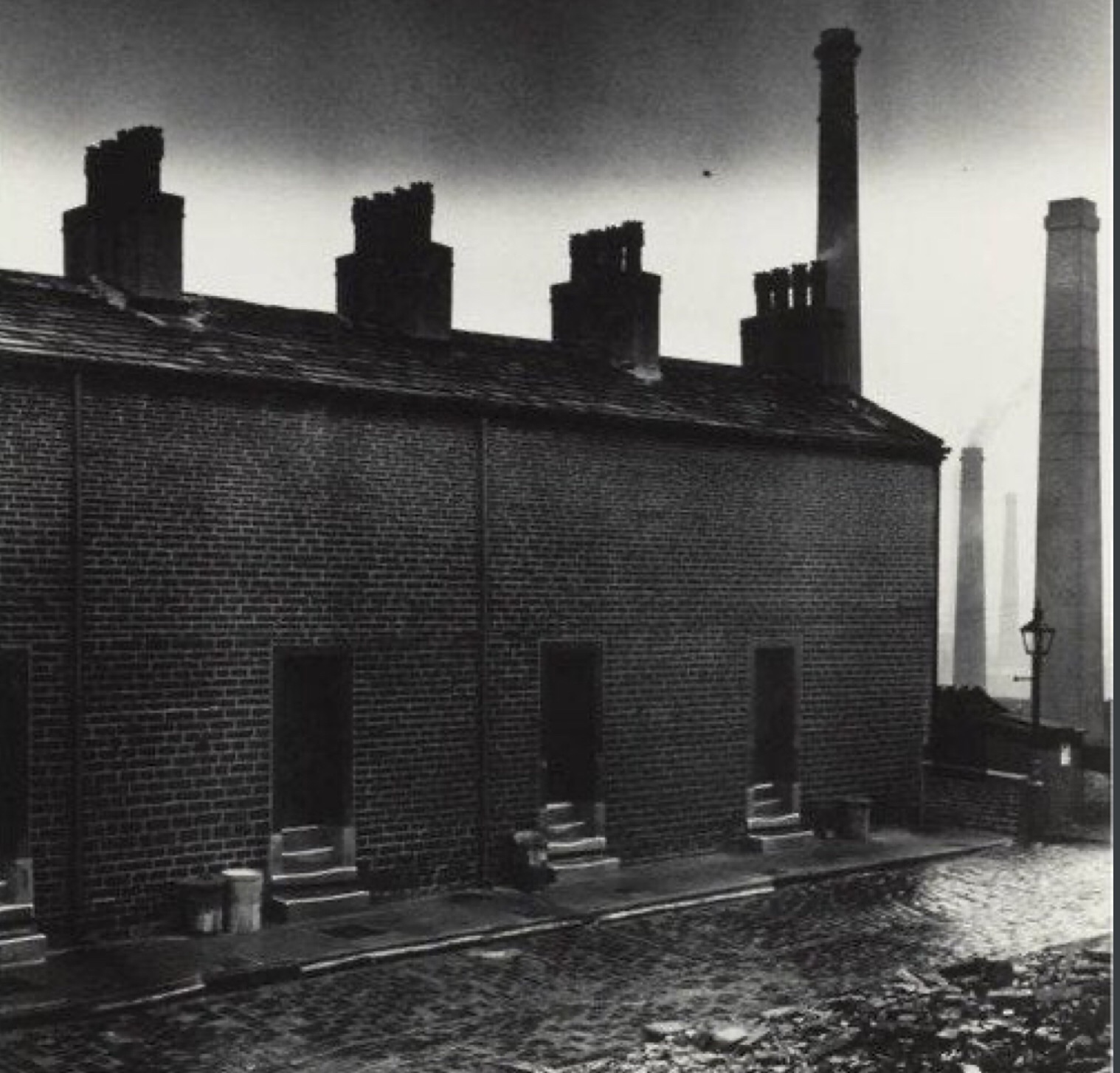
Some months ago, I saw a photograph by Bill Brandt in The Independent’s Saturday Magazine which documented life in an East Durham mining community. I was pretty shocked by what I saw: the houses of the miners had no windows. Think of it: these workers spent their days down the pit in almost total darkness. More shocking, was the fact that Brandt had taken the photograph as recently as 1937.

Photograph by Bill Brandt (1937)

Yet surely, the bad old days are long gone? The British work-place has become a much safer place? Undoubtedly, as we shall see, employers have become much more aware of their responsibilities to their employees and workers in respect of the issue of health and safety.

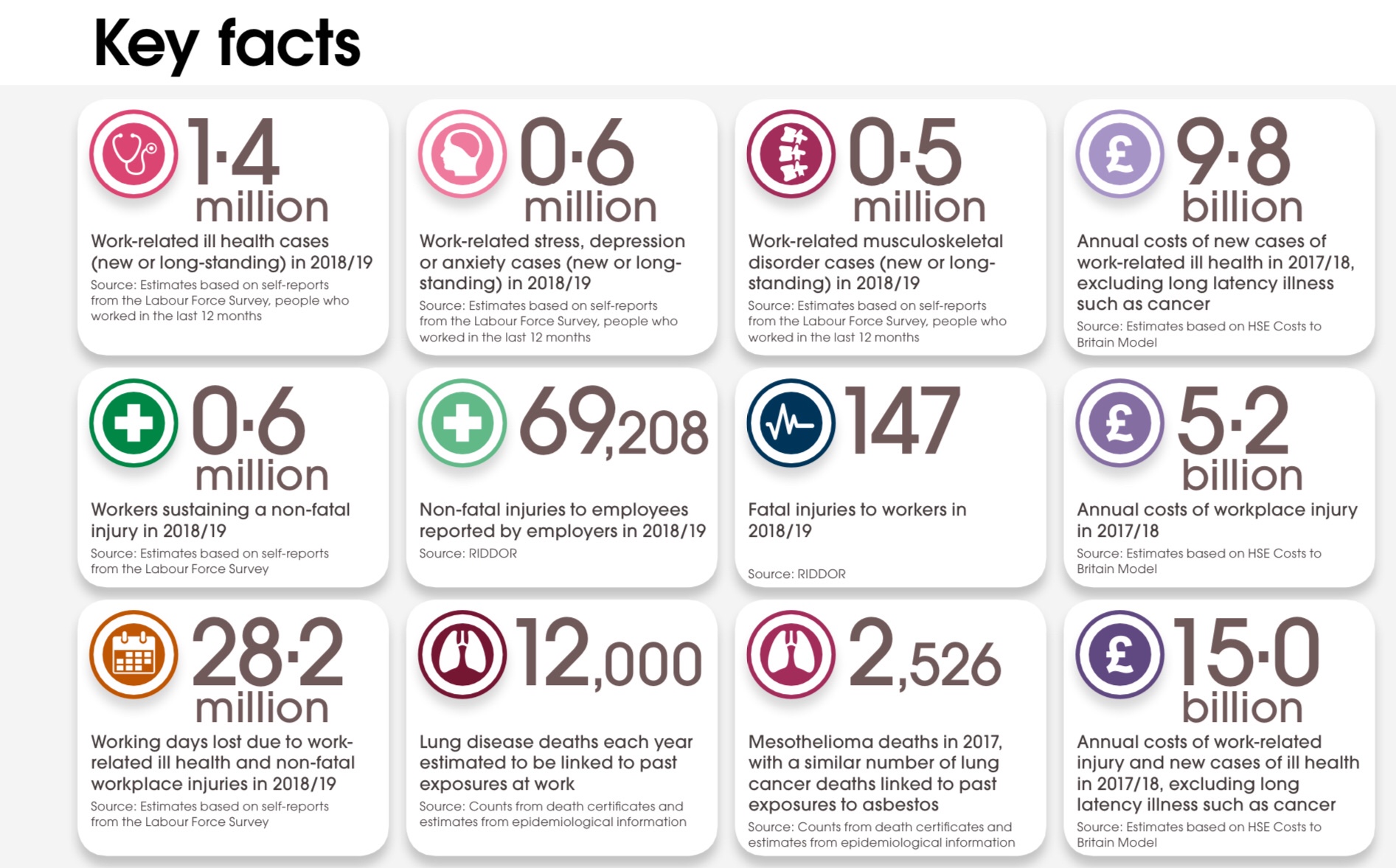
That said, if you look at the info graphic produced below from the UK Health and Safety Executive, poor conditions and practices in British work-places still result in unacceptably high levels of injuries and illness – in 2019!

Key facts for Great Britain 2019
Source: http://www.hse.gov.uk/statistics/

Recently, Amazon, the global internet retailer, received very unwelcome media attention about the number of industrial injuries which have occurred in its UK premises. It’s probably fair to say that Amazon UK does not enjoy a particularly good reputation amongst trade unions regarding its employment practices and the recent media stories only compound this state of affairs.

Links to stories about Amazon UK on Sky News and Channel 4 News can be found below:

http://news.sky.com/story/hellish-conditions-at-amazon-warehouses-seriously-hurt-hundreds-11936881

https://youtu.be/gYUJjpIxkCU

Health and Safety at Work Act 1974

It is worth noting that the employer’s common law duties which aim to protect the health and safety of employees establishes a regime of civil liability. In other words, should the employer breach these duties, he will most likely face a civil action by the injured employee who will be attempting to recover compensation.

The Health and Safety at Work Act 1974, on the other hand, makes an employers criminally liable if they fail to take reasonably practicable steps to protect the health and safety of their employees. An employer will, therefore, face penalties in a criminal court for breaches of the Act.

The Health and Safety (Offences) Act 2008

The provisions of this Act came into force on 16 January 2009 and apply to offences committed after this date by employers. Scottish criminal courts will now have the power to impose maximum fines of £20,000 on employers who breach health and safety rules. In the most serious cases where health and safety rules have been breached or ignored, the courts may also have the right to imprison those responsible.

The Criminal Justice and Licensing (Scotland) Act 2010

Sections 65-68 of the Criminal Justice and Licensing (Scotland) Act 2010 should make it easier for organisations to face prosecution in Scotland in relation to allegations of criminal wrongdoing. According to Section 65, the term “organisation” applies to any of the following bodies:

  • a body corporate;
  • an unincorporated association;
  • a partnership;
  • a body of trustees;
  • a government department;
  • a part of the Scottish Administration;
  • any other entity which is not an individual

Such proceedings against organisations may be on indictment (Section 66) or on complaint (Section 67).

For a long time, it has been argued that an organisational culture which promotes lax practices or downright dangerous behaviour can lead to the commission of criminal offences. This an attempt to make organisations more accountable under the criminal law for conduct which causes harm to members of the public.

Overall, this means that an employer could face both a criminal action and a civil action for damages where he has neglected to obey the criminal law and the common law in respect of the employee’s health and safety.

Conclusion

If only we need reminding that health and safety remains a major issue in the work-place, we need only look to a story from Scotland which appeared in national media outlets just this week.

Workers at the Mossmorran and Ineos chemical plants took unauthorised industrial action (wildcat strikes) which was motivated by serious concerns about the lack of health and safety in the work-place. Happily, the employers seem to be listening to the concerns and the employees are now back at work.

Failure by employers to take health and safety issues seriously can leave themselves open to both civil and criminal liability. During Britain’s Industrial Revolution (from the 18th to the early 20th Centuries), it’s true to say that there was no such thing as a culture of health and safety in the work-place. Industrialists like Robert Owen were remarkable because they broke with the paradigm of British industrial practice i.e. workers were resources to be used up and tossed aside when no longer needed.

The growth of the trade union movement and the emergence of the British Labour Party (itself a creation of the union movement) led to pressure for change and tangible improvements were made to working practices. Despite these advances, cases such as the death of Annang Neurtey and the figures from the Health and Safety Executive surely caution us against complacency.

Links to reports on the BBC Scotland website about the industrial action can be found below:

Union GMB said the workers had “continuously raised their concerns about conditions and safety on-site”.

Mossmorran: Walkout at chemical plant over working conditions

Union officials said that concerns over health and safety and pay had been resolved following talks.

Mossmorran: Workers to return after wildcat strike in Fife

Related Blog Articles:

https://seancrossansscotslaw.com/2019/10/23/a-hard-days-night/

https://seancrossansscotslaw.com/2019/04/19/dont-stop-the-music/

https://seancrossansscotslaw.com/2019/02/22/stress-kills/

Copyright Seán J Crossan, 21 February 2020

Oh brother!

Photo by Seán J Crossan (Card design by M&S)

Apparently, the Chinese have a proverb which translates something along the following lines: the Devil gives you your family; thank all Gods that you can choose your friends!

Quite an apt statement to lead me into my next blog. Families can be great; they can also be problematic. This point is emphasised by reference to a recent decision of the Appeal Court of the High Court of Justiciary in Edinburgh.

In Michael Scott Ritchie v Her Majesty’s Advocate [2020] HCJAC 7 HCA2019/327/X, the Appeal Court had to consider whether a Sheriff sitting at Elgin had misdirected the jury and, consequently, a miscarriage of justice had occurred.

The convicted person or appellant, Michael Ritchie, certainly thought so. He had appeared at Elgin Sheriff Court in 2019, charged on indictment in respect of the following matters:

on 11 or 12 May 2018 you … did break into the dwelling house owned by [JR] … at Strathville, South Street, Forres, Moray and steal a quantity of jewellery, medals, coins and a box;

You … did commit this offence while on bail, having been granted bail on 15 June 2017 at Elgin Sheriff Court.

He was convicted of the offences libelled above after the conclusion of a solemn (jury) trial and sentenced to 21 months in prison (3 months of which were for the bail violation).

Part of the evidence put forward to convict Ritchie by the Depute Procurator Fiscal (the prosecutor for the benefit of our non-Scottish readers) was a small black torch which was found at the locus of the crime. The item was not a possession of the householder. The torch contained traces of Ritchie’s DNA and he admitted that the item belonged to him. ‘Ritchie further admitted that he had been about 150 yards from the vicinity of the crime scene, but he strongly asserted that he was not guilty of any offence.

DNA – infallible evidence?

This is where the case gets quite interesting: Ritchie stated that although his DNA was on the torch, he had not committed the crime of house-breaking (or burglary as our friends from common law jurisdictions would say). He was not responsible for leaving it at the locus.

In other words, Ritchie was contending that, merely because his DNA happened to be on the torch found at the crime scene, this in itself was not conclusive evidence of his guilt. Ritchie, of course, was using a special defence available in Scots Law known as incrimination – he was claiming that someone else [his brother] had committed the offence. Interestingly, Ritchie’s brother had previous convictions for theft, but these had involved commercial premises.

He further asserted that he may have loaned a torch to his brother in the last month or so. He contended that the torch given to his brother was a black rubber one. Unfortunately, for Ritchie the torch found at the locus was a black metallic item.

When speaking to students about the issue of corroboration in criminal law, I often ask them which sources of evidence might be used by a prosecutor to help secure a conviction? DNA evidence will almost always feature in the range of answers that I am given.

… but I should urge caution: it’s not an infallible source of evidence. It has to be put in context and the onus (or burden) about what the DNA tells the Court i.e. whether it can point the way to the accused being guilty beyond reasonable doubt remains very much the responsibility of the prosecution (or Crown).

The role of the Sheriff and the jury

In a solemn trial, there is a strict division of responsibility: the jury is regarded as Master of the facts; whereas the Sheriff is Master of the law.

The jury will, therefore, determine the guilt or innocence of the accused based upon the evaluation of the evidence presented during the trial. The burden of proof rests with the prosecutor (representing the Crown or the State) in that s/he must convince the jury that the accused is guilty of the charge(s) contained in the indictment.

When summarising the evidence that has been presented to the court, the Sheriff must do so in a way that avoids the introduction of bias. The jury must be able to come to its own determination of the facts.

If guilt is established, it is then the task of the Sheriff to impose the appropriate sentence – usually at a subsequent hearing (for which there is no need for the jury to be present).

The Appeal

The main thrust of Ritchie’s appeal to the High Court in Edinburgh was that the Sheriff had misdirected the jury which led to him being wrongly convicted.

Sadly, for Ritchie, the Appeal Court did not agree.

Statements by the Procurator Fiscal Depute concerning the veracity of Ritchie’s responses during a Police interview did not suggest that the onus was now placed on the defence to prove his innocence. An accused in a Scottish criminal trial is under no obligation to prove his/her innocence. Innocence is, after all, presumed and it remains the task for the prosecution to prove guilt.

Lord Carloway, the Lord Justice General, giving the opinion of the Appeal Court noted:

‘… that the sheriff made it clear that the onus remained on the Crown and that there was no such onus on the defence. The sheriff’s reference to hypothetical situations was merited in the circumstances. Anything said by the PFD [Procurator Fiscal Depute] was adequately covered by the sheriff in her general directions on onus; the sheriff being in the best position to determine what was required in order to correct any misconception that the jury might have had from what the PFD had said.

Regarding the presence of the torch (belonging to the accused) at the locus, this was in itself a ‘highly incriminatory’ fact. Significantly, Ritchie had not identified the item when presented during his trial as being the torch that he claimed to have previously supplied to his brother.

In reviewing the testimony of the expert witnesses who spoke to the DNA evidence at the trial, Lord Carloway had the following to say:

Expert evidence about the deposit of DNA was led by both the Crown and the defence. There were various scenarios put to the experts about how DNA can be deposited, how long it could remain, how it could be transferred and whether it was primary or secondary. The sheriff described all of this evidence as essentially common sense. There was, however, a disagreement between the experts in relation to four peaks, which had been identified from the DNA print-out upon testing.

The four peaks could either be artefacts (the Crown) or DNA belonging to an unknown person or persons (the defence).

The Crown submitted in its argument to the Appeal Court that the Sheriff had correctly emphasised to the jury “to scrutinise the evidence with care and be satisfied that there was an evidential basis for the submissions which had been made to them.”

Taking all of the above matters into consideration, there was no evidence to suggest that Michael Ritchie had suffered a miscarriage of justice and his appeal was refused.

A link to the judgement of the Appeal Court can be found below:

https://www.scotcourts.gov.uk/docs/default-source/cos-general-docs/pdf-docs-for-opinions/2020hcjac7.pdf?sfvrsn=0

Related Blog Articles:

https://seancrossansscotslaw.com/2020/01/09/down-with-corroboration-i-say/

https://seancrossansscotslaw.com/2020/01/02/presumption-of-innocence/

https://seancrossansscotslaw.com/2019/04/22/scrap-corroboration/

https://seancrossansscotslaw.com/2019/12/28/alexa-theres-been-a-murder/

https://seancrossansscotslaw.com/2019/03/01/corroboration/

https://seancrossansscotslaw.com/2017/04/04/scottish-criminal-appeals/

Copyright Seán J Crossan, 15 February 2020