A fishy tale …

Photo by chuttersnap on Unsplash

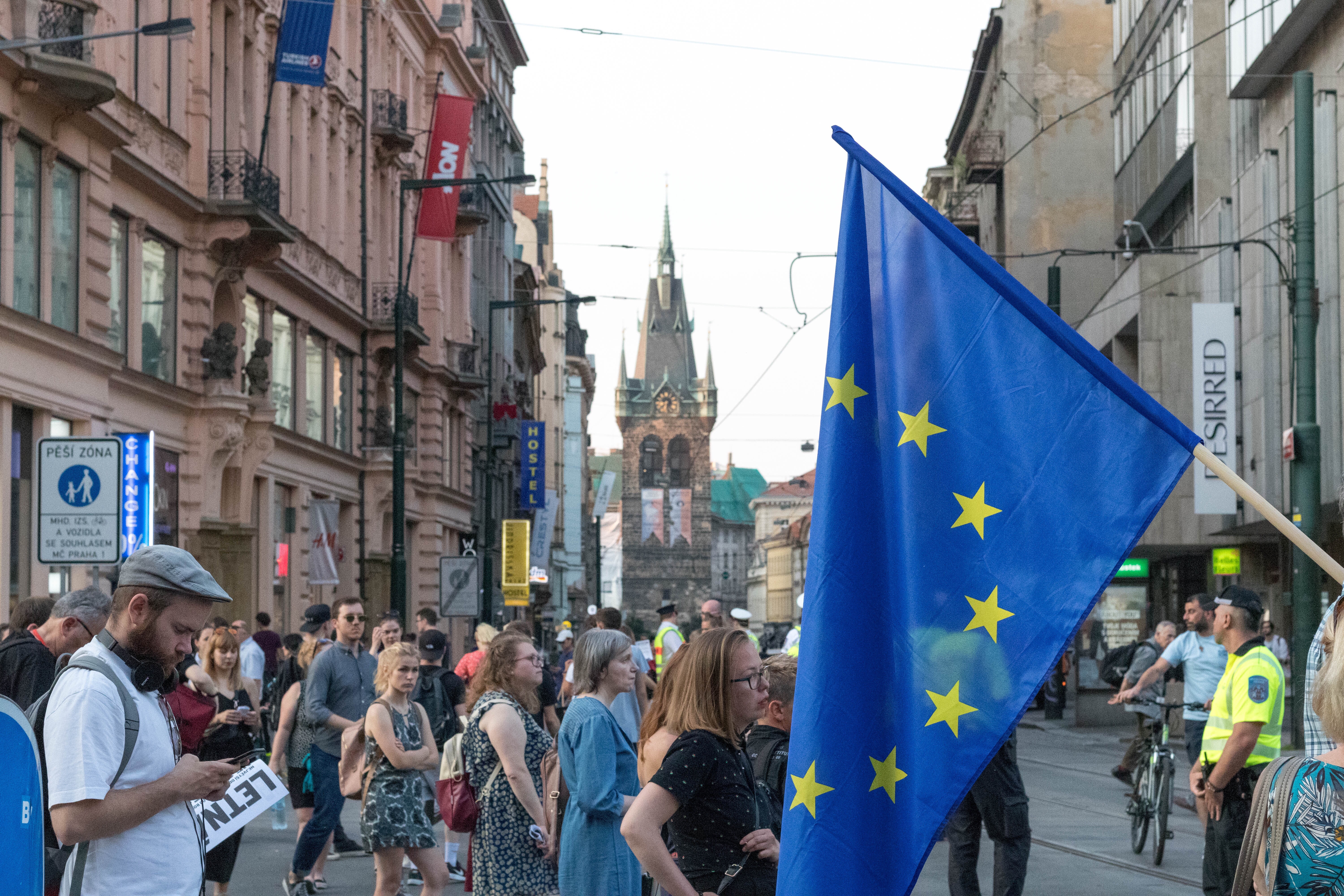
Alexander Boris de Pfeffel Johnson (or just Boris if you’re one of his legions of adoring followers) has been caught out yet (again) when pontificating about the UK’s unbalanced relationship with the European Union (see my previous blog “Private prosecutions” published on 29 May 2019).

The man most likely to be the next British Prime Minister May have thought that it was very clever (and theatrical no doubt) to brandish a kipper during a final hustings event of Conservative Party members in his pitch to win the Party’s leadership campaign.

By using the kipper, Mr Johnson wanted to make a broader point about the apparent interference of the EU in Britain’s laws. Now, I often teach students about the supremacy of EU law in the UK by dint of the fact that the Westminster Parliament passed the European Communities Act 1972, but if Mr Johnson had been one of my students he would have failed his EU Law exam.

Why?

Firstly, the kipper originated from the Isle of Man – which although a British Crown dependency – isn’t technically part of the UK and, therefore, not part of the EU.

Secondly, the food safety rules which govern items like kippers (which are deemed to be preserved rather than fresh fish) fall within the legislative competence of the UK – not the EU. Although the Isle of Man is not part of the UK, the UK Food Standards Agency would regulate the product since it is being sold in this country.

It would seem that Mr Johnson was either unaware of these facts or simply chose to ignore them.

Then again, Mr Johnson has a long track record of EU bashing from his time as a Brussels based journalist with The Daily Telegraph, so it would seem that he is doing what, for a long time, has just come naturally to him.

On a serious point, however, interventions by individuals such as Mr Johnson make it very difficult for the public to have an informed debate about the UK’s relationship with the EU. This is a state of affairs that we may come to regret given the predictions by the UK Office of Budget Responsibility of the grim consequences if this country crashes out of the EU without a proper and effective withdrawal agreement.

A link to the story on the Sky News website can be found below:

http://news.sky.com/story/eu-exposes-johnsons-kipper-red-tape-claim-as-nonsense-11765805

Copyright Seán J Crossan, 19 July 2019

Who’s the daddy?

Photo by Sandy Millar on Unsplash

Coming on the back of one of my recent blogs about gender reassignment (Gender Neutral? published on 25 June 2019), I spotted an interesting story appeared on Sky News today.

It concerns a legal action taken by Freddy McConnell, a multimedia journalist with The Guardian newspaper, to have himself declared the father of a child. There would seem to be nothing particularly significant about this. Mr McConnell is a transgender man and he gave birth to the child in 2018 after he had undergone gender reassignment and was no longer legally recognised as female. During the process of gender reassignment, Mr McConnell chose not to have a hysterectomy.

When he attempted to register himself as the child’s father, the registrar refused to do this – hence the lodging of the legal action before the English High Court’s Family Division.

In terms of Section 7 of the Equality Act 2010, a person who has undergone or who is contemplating gender reassignment can bring a legal action under the Act if they believe that they have been subjected to unlawful, less favourable treatment (prohibited conduct).

The story has now hit the headlines because Mr McConnell had enjoyed anonymity while the action is still to be decided. He has now lost this anonymity because he participated in a documentary (partly produced by his employer) about his struggle to be named as his child’s father rather than its mother.

Other media outlets, such as The Telegraph, challenged the anonymity order as they argued that it infringed the right of journalists to comment freely on a matter of legitimate, public interest.

Human rights

Interestingly, the story then became not merely about transgender rights, but also one of human rights (in terms of the Human Rights Act 1998). There was a conflict between Mr McConnell’s right to privacy and a family life and the right of freedom of expression of journalists (Articles 8 and 10 respectively of the European Convention on Human Rights). On this particular matter, Mr McConnell has lost his attempt to remain anonymous as Sir Andrew McFarlane, President of the High Court’s Family Division has found in favour of The Telegraph et al.

It remains to be seen whether Mr McConnell will win his legal action to be named as his child’s father on the birth certificate.

A link to the story on the Sky News website can be found below:

http://news.sky.com/story/man-who-gave-birth-loses-anonymity-in-his-bid-to-be-registered-as-father-on-birth-certificate-11764821

A link to Sir Andrew McFarlane’s judgement can be found below:

TT v YY [2019] EWHC 1823 (Fam) Case No: FD18F00035

https://www.judiciary.uk/wp-content/uploads/2019/07/TT-anonymity-judgment-150719.pdf

Copyright Seán J Crossan, 17 July 2019

Bad medicine

Photo by Kendal James on Unsplash

A story which caught my eye over the last few days comes from the fair Canadian City of Toronto and involves misconduct dismissals. For a change, the dismissals do not involve social media misuse, but rather good old fashioned fraud.

150 members of staff working at a Toronto hospital were sacked for involvement in a sophisticated prescription fraud which was reportedly in the region of £3 million over an 8 year period. Defrauding your employer is, of course, an extremely serious breach of trust which materially undermines the contract of employment.

Interestingly, at this point, the Police in Toronto have not charged any individual with the crime of fraud – yet – but clearly the employer feels that it has sufficient grounds to go ahead with the dismissals.

I often to say to students that the employer merely has to have a reasonable suspicion that the employee has committed an act of misconduct. There is no need for the employer to demonstrate that the allegation(s) of misconduct meets the criminal standard of proof.

A link to the story on the Sky News website can be found below:

http://news.sky.com/story/150-toronto-hospital-staff-fired-over-prescription-scam-11760982

Had this story occurred in the UK, we would be talking about the matter in the context of Section 98(4) of the Employment Rights Act 1996. If employers can show that the reason for the dismissal of employees is justified i.e. on the grounds of misconduct (fraud), it will be a fair dismissal. As a point of good disciplinary policy, of course, employers should always follow the proper procedures when deciding to dismiss employees on the grounds of dismissal.

Copyright Seán J Crossan, 13 July 2019

Boxing clever?

Photo by Ryan Tang on Unsplash

In a previous blog (Indirect discrimination? published on 21 February 2019 and updated on 8 July 2019), I discussed the form of prohibited conduct known as indirect discrimination in terms of the Equality Act 2010.

Section 19 of the Equality Act 2010 defines indirect discrimination:

‘A person (A) discriminates against another (B) if A applies to B a provision, criterion or practice which is discriminatory in relation to a relevant protected characteristic of B’s.’

Section 19(2) makes it very clear what it is meant by a discriminatory provision, criterion or practice in relation to a relevant protected characteristic:

(a) A applies, or would apply, it to persons with whom B does not share the characteristic,

(b) it puts, or would put, persons with whom B shares the characteristic at a particular disadvantage when compared with persons with whom B does not share it,

(c) it puts, or would put, B at that disadvantage, and

(d) A cannot show it to be a proportionate means of achieving a legitimate aim.

Employers and service providers (and other organisations) must be particularly wary when they apply a provision, criterion or practice (a PCP) to the general workforce or the general population. It may be the case that, in applying a PCP, that an employer or service provider unwittingly treats certain individuals with a protected characteristic (e.g. women, the disabled, older people, members of a faith group or people from certain racial or ethnic groups) less favourably when compared to other individuals who do not possess this characteristic. It is always open to an employer or service provider to show that although indirect discrimination has taken place, it can be objectively justified e.g. on national security grounds or health and safety reasons (e.g. Singh v Rowntree MacKintosh [1979] ICR 554).

So, bearing the above in mind, it was with some interest that I saw a story reported by the BBC about a policy imposed by the Welsh Amateur Boxing Authority that all boxers have to be clean shaven in order to participate in matches. This rule is being challenged by Aaron Singh, who is a member of the Sikh community. Singh is claiming that the rule prevents him from boxing. As outward manifestations of their race, religion and culture, many Sikh men will grow beards. Especially religious males in the Sikh community will also wear a Dastar, pagri or pagg (forms of headwear signifying religious and cultural observance). A Kirpan – a ceremonial dagger – will also be carried by many observant Sikh males. Both male and female Sikhs will also choose to wear iron bangles and bracelets (the Kara) which have both religious and cultural significance.

If you are unfamiliar with the Sikh religion, you can access the video below for more information:

You can also find a link to an article below about Sikhs which was originally published in The Independent:

https://www.indy100.com/article/sikhs-face-discrimination-get-mistaken-for-muslims-hardayal-singh-united-sikhs-8332796

Could this rule be an example of indirect discrimination which particularly impacts (in a very negative way) on members of the Sikh community? In terms of the Equality Act 2010, Sikhs are covered by Sections 9 (Race) and 10 (Religion). Some Sikhs may not be particularly religious (in other words non-practising), but they will be covered by the protected characteristic of Race (see Mandla v DowellLee [1982] UKHL 7).

Interestingly, as a point of reference, Judaism is also a protected characteristic in terms of Sections 9 and 10 of the Equality Act 2010.

In its defence the Welsh Amateur Boxing Association will be arguing the health and safety card as objective justification. Of the rule. In response, Singh is arguing that the English Amateur Boxing Association dropped its rule demanding that boxers be clean shaven.

It will be interesting to see how this dispute develops.

A link to the story on the BBC News website can be found below:

Boxing beard ban not fair says Cardiff University student

Cardiff student Aaron Singh says the rules in Wales are “not fair” and discriminatory.

The Equality and Human Rights Commission has also published guidance for employers and organisations about the Sikh community and its beliefs:

https://www.whatdotheyknow.com/request/288201/response/709901/attach/3/guidance%20on%20sikh%20articles%20of%20faith%20for%20scotland%20pdf.pdf

More links to stories about Sikhism and potential indirect discrimination can be found below:

https://www.telegraph.co.uk/news/religion/2469905/Sikh-teenagers-bangle-discrimination-win-will-impact-rules-on-uniforms.html

http://news.bbc.co.uk/1/hi/8500712.stm

Copyright Seán J Crossan, 8 July 2019

Update

In July 2019, the Welsh Amateur Boxing Association dropped the ban on beards.

Please see link to this story:

https://www.bbc.co.uk/news/uk-wales-49007583

Tickets for “people of colour” … or the problem with positive discrimination

Photo by Ehimetalor Unuabona on Unsplash

Tickets for “people of colour” …

In a previous blog (The force is not with you … published on 28 February and updated on 10 June 2019), I discussed the problems associated with policies of positive discrimination.

So, it is with some interest that I read an item on Sky News today about Afrofuture Fest a music festival which was to take place in the American City of Detroit. The festival organisers had offered tickets for sale to members of the public. Absolutely nothing unusual in that readers will undoubtedly respond, but what was unusual was the fact that the price to be paid in conjunction with an ‘early bird’ promotion was to be determined by the customer’s racial origins (tickets for “people of colour”).

If you were an African American applying for tickets, you would pay less than a White American wanting to go to the gig. I admit that I was intrigued by this marketing approach and I wanted to know what were the underlying motivations of the organisers? I confess: I’m coming from a different cultural perspective here in the UK and, generally, we’re not too keen on the widespread use of positive discrimination as a tool for promoting equality.

Well, it would seem that the pricing policy was motivated by a genuine determination to ensure that African Americans (who happen to be in the disproportionately lower income section of US society) were not deterred from attending the event by high prices. Furthermore, the organisers wanted a racially diverse group of music fans to attend the festival.

All well meaning, but the event has now become mired in controversy with the organisers receiving threats from white supremacist groups and artists deciding not to perform. The ticket policy has now been scrapped.

A link to how the story was reported on Sky News can be found below:

Festival scraps cheaper ‘people of colour’ tickets after ‘white supremacist threats’
http://news.sky.com/story/festival-scraps-cheaper-people-of-colour-tickets-after-white-supremacist-threats-11758953

Positive discrimination: the legal position

Discriminating in favour of one group of people over another (whether this is motivated by a good intention or not) will most likely be regarded as an example of direct discrimination which contravenes Section 13 of the Equality Act 2010.

The judgement of the House of Lords in James v Eastleigh Borough Council [1990] 2 AC 751 was particularly strong on this point and it was irrelevant that the Council was acting from motives of good faith i.e. to promote healthier lifestyles for female residents of the Borough. The simple fact was that the Borough Council was acting unlawfully (in breach of the then Sex Discrimination Act 1975) when it charged men for entry to the swimming pool when women were not charged for access to this facility. The Borough Council had committed an act of direct, sex discrimination.

Positive discrimination has only really been successful in the UK when the Westminster Parliament has given it the full backing of the law and, additionally, it complies with this country’s EU legal obligations.

One notable example of positive discrimination is the Sex Discrimination (Election Candidates) Act 2002 which aimed to encourage more women to enter Parliament by having all women short lists. Previously, such an attempt to promote positive action would have been illegal under the (now repealed) Sex Discrimination Act 1975.  Some (male) Labour activists did, in fact, bring successful legal challenges under the former sex discrimination legislation on the grounds that they had suffered discrimination because of their gender in being automatically disqualified from the parliamentary candidates’ selection process (Jepson and Dyas-Elliott v The Labour Party and Others [1996] IRLR 116).

The other example of positive discrimination involves the Police Service of Northern Ireland. The PSNI was created in 2001 following the Belfast or Good Friday Agreement in 1998. The PSNI replaced the old Royal Ulster Constabulary (RUC) which was largely seen as a biased or sectarian police force by most Roman Catholics in Northern Ireland.

According to figures produced by the official Patten Report, the RUC was overwhelming Protestant in composition (91.7% to 8.3% Roman Catholic).

One of the key recommendations of the Patten Report was that:

“An equal number of Protestants and Catholics should be drawn from the pool of qualified candidates.” [para. 15.10]

This led to a deliberate 50/50 recruitment policy in which half of the candidates recruited to the PSNI had to come from a Roman Catholic background.

That said, there was significant criticism of the 50/50 recruitment policy coming from the Unionist and Loyalist community in Northern Ireland – who were never going to be reconciled to the demise of the RUC in any case. The recruitment policy was only ended in 2011 by Owen Patterson MP, the then Conservative Secretary of State for Northern Ireland. Predictably, this development did not please the Nationalist and Republican community in Northern Ireland.

Affirmative or positive action

In the United States of America, of course, there is a completely different approach to the promotion of diversity and equality from what we would understand in the UK and the European Union. The Americans, for example, are very keen on affirmative action (or positive discrimination) and often employers will speak of filling quotas i.e. recruiting a certain number of African Americans or Hispanic Americans. This practice of affirmative action or positive discrimination is an attempt by the Americans to overcome the problems of historic and entrenched racism in their society. In the UK and the European Union, we too have had our problems with under-representation of certain groups in the work-place, but any attempt to introduce positive discrimination has been much more limited in scope.

Affirmative action has its limits: the ticket policy at Afrofuture Fest would, however, appear to be a breach of the Civil Rights Act 1964 (Title II) which states that:

“All persons shall be entitled to the full and equal enjoyment of the goods, services, facilities, privileges, advantages, and accommodations of any place of public accommodation, as defined in this section, without discrimination on the ground of race, color, religion, or national origin.

The UK and EU approaches to positive discrimination

Limited positive action or discrimination has, for some time, been tolerated by the Court of Justice of the European Union where employers gave preference, as part of an equality policy, to female candidates over suitably qualified male candidates in order to address gender imbalances in the work-place (see Kalanke Freie Hansestadt Bremen (1995) C-450/93 and Badeck and Others (2000) C-158/97).

The Equality Act 2010 does, admittedly, permit what is referred to as ‘positive action’ in fairly limited circumstances and it has been observed that it does not really advance the law very much in this area.

Certainly, in terms of the public sector equality duty, organisations may be permitted to take specified forms positive action in the work-place to eradicate or minimise forms of discriminations e.g. ‘the need to tackle prejudice and promote understanding’ (see Section 149(5) of the Equality Act)

Section 158 of the Act permits an employer to take positive action to help individuals with a protected characteristic to overcome or minimise such a disadvantage. Such action on the part of the employer must, however, be a proportionate means of achieving this aim.

Section 159 also permits an employer to take positive action in recruitment and promotion in relation to people with protected characteristics. The employer will only really be able to utilise this provision if candidates for a job or a promoted post have the same or similar qualifications. In such situations, the employer will able to consider if candidates with protected characteristics are at a disadvantage or are under represented in matters of recruitment or promotion.

There is one important exception to the rules on positive action contained in the Act: it will not be illegal for an employer to treat a disabled person more favourably in comparison to a non-disabled person.

Conclusion

In the UK, positive discrimination in recruitment can be lawful under very limited circumstances. In other words, it is a practice which, if objectively justified, can be used to overcome historical patterns of discrimination e.g. to address the woefully low numbers of female politicians or the under-representation of Roman Catholics in the Police Service in Northern Ireland.

Such arrangements permitting limited positive discrimination tend to be governed by ‘sunset clauses’ i.e. they have a built in expiry date, so they will not last forever. Furthermore, positive discrimination is really only legitimate  in so called ‘tie-break’ situations where several applicants have the same qualifications and experience, but as a matter of public policy, for example, a female or minority ethnic applicant is given preference in order to address historic diversity imbalances in that particular work-place.

The Americans, on the other hand, have tended to pursue a very explicit policy of positive discrimination or affirmative action by placing an emphasis on the filling of quotas – either, for example, in employment or education. Such an approach places a legal obligation on employers and service providers (colleges and universities) to ensure that certain minimum numbers of people from racial or ethnic minority backgrounds are given a job or a place in training or education.

As we have seen with the ticket policy for events such as Afrofuture Fest, positive discrimination can be controversial and potentially unlawful.

Copyright Seán J Crossan, 8 July 2019

Surf’s up?

Photo by Emiliano Cicero on Unsplash

We seem to be on a theme dealing with mishaps concerning products – this blog and the previous one.

In the previous blog (Just blew it! (Again!)), I examined accusations of racism and anti-semitism surrounding the launch of Nike’s latest version of the Airmax trainer.

Now, we turn to Samsung which also has been in hot water in relation to its advertising campaigns in Australia. It would seem that Samsung is being accused of misrepresentation by the Australian consumer watchdog – the Australian Competition and Consumer Commission (ACCC) – concerning false claims that were made as part of the marketing campaign to sell the company’s Galaxy S10 mobile phones.

Apparently, consumers were told that they could safely go swimming and surfing with the phone on their person without the product suffering water damage. This statement does not appear to be accurate and Samsung now has to deal with a lot of very unhappy customers – as well as the ACCC.

In Australia, swimming and surfing are very popular past times and many mobile phone users will understandably want reassurance that they can use their phones without them being damaged while participating in such activities.

In contract law, there are three types of misrepresentation:

  • Innocent
  • Negligent
  • Fraudulent

A misrepresentation potentially renders a contract voidable and there may also be the potential to claim damages – although a claim for damages involving innocent misrepresentation in Scotland is not competent (unlike the situation in England and Wales).

In the UK, of course, false claims about products or services by a trader can fall foul of the common law of contract principles dealing with misrepresentation. At statutory level, we now have the Consumer Rights Act 2015 – principally Section 10 – which covers situations where the consumer relies on the trader’s expertise regarding the product’s fitness for a particular purpose.

A very important issue to consider in cases of alleged misrepresentation: the victim must demonstrate that s/he relied on the misrepresentation. It will not be enough to show that a misrepresentation or false statement of fact has been uttered by the trader (either expressly or by implication); it must have influenced the victim to enter a contract with the trader.

Section 10 of the UK Consumer Rights Act 2015 has been largely inherited from Section 14 of the Sale of Goods Act 1979 (which previously governed consumer transactions). Interestingly, Australia – as a former colony and then self-governing Dominion of the British Empire – has very similar consumer protection laws which are a direct result of its historical relationship with the United Kingdom.

Furthermore, in the UK, false claims about goods and services by a trader can also represent a potential breach of criminal law (as per the Consumer Protection from Unfair Trading Regulations 2008).

It will be interesting to see how this situation develops.

A link to the story on the BBC News website can be found below:

Samsung sued over water-resistant phone claims

Australia’s consumer watchdog alleges the company made false claims about using its phones while swimming.

Copyright Seán J Crossan, 8 July 2019

Just blew it? (Again!)

Photo by Jakob Owens on Unsplash

Over the last few months, controversy seems to be dogging global sportswear corporation, Nike.

In a previous blog, I wrote about Nike allegedly withdrawing sponsorship from athletes who became pregnant (Don’t do it! published on 17 May 2019).

The Corporation is again in trouble over its latest version of the Airmax trainer. This product was released to coincide with the USA’s Independence Day celebrations on 4 July.

Good marketing strategy? Alas no: the trainer had an American flag on it. What’s the problem? It was the Betsy Ross version of the Stars and Stripes – a version of the Star Spangled banner which was misappropriated by the the American Nazi Party.

Arguments that the Betsy Ross Flag represents the original British Thirteen Colonies which broke away to form the United States of America has cut little ice. Even Colin Kaepernick, the African American Football star (whom Nike backed in a previous ad campaign) has condemned the Corporation for promoting racism.

So, to add to problems over pregnancy discrimination, we now have Nike in the middle of accusations of racism and anti-semitism.

Just do it! More like just blew it!

A link to a story about Nike’s latest misstep on the Sky News website can be found below:

Offensive’ tennis shoes taken off shelves by Nike selling for £2,000
http://news.sky.com/story/offensive-tennis-shoes-taken-off-shelves-by-nike-selling-for-1632000-11755365

Copyright Seán J Crossan, 8 July 2019

EU Law marches on …

Photo by Martin Krchnacek on Unsplash

We’re now 3 months on from the UK’s Brexit Day (according to the European Union (Withdrawal) Act 2018 the date was scheduled for 31 March 2019).

Obviously, this didn’t happen as planned and our current Prime Minister, The Right Honourable Theresa May MP was sent (by the House of Commons) to an emergency summit in Brussels to seek an extension to Britain’s membership of the EU.

Without going into all the parliamentary shenanigans, the Prime Minister failed on 3 occasions to secure the necessary support of the House of Commons for the UK’s withdrawal agreement that she had negotiated with the other 27 EU member states.

As things stand currently, the UK will leave the EU on 31 October 2019, but expect reality to dawn in the mind of the new UK Prime Minister (whether it is Boris Johnson or Jeremy Hunt) before this deadline.

My previous blogs which have dealt with aspects of Brexit have emphasised the fact that, while the UK remains a member state of the EU, the European Communities Act 1972 remains in force. This legislation paved the way for the UK to enter the European Communities (the EEC, the Coal and Steel Community and Euratom).

A very good example of EU Law coming into force – despite the UK Government’s desire to leave the organisation – is a provision contained in Regulation (EU) No 540/2014 of the European Parliament and of the Council. This legal instrument was passed on 16 April 2014 and relates to the sound level of motor vehicles and of replacement silencing systems (amending Directive 2007/46/EC and repealing Directive 70/157/EEC).

The provision means that, from 1 July 2019, any new electric car that is produced or sold in the EU will have to be equipped with a device which emits a certain noise level. This is to address public safety concerns that such vehicles are too quiet and represent a potential hazard to pedestrians.

So, with Brexit postponed for now, EU Law is definitely marching on in the UK.

A link to the story as reported by the BBC can be found below:

Electric cars: New vehicles to emit noise to aid safety

The EU rule for new models follows concerns cars put pedestrians at risk because they are too quiet.

Copyright Seán J Crossan, 1 July 2019

Ouch!

Photo by Seán J Crossan

A salutary tale from Northern Ireland about the dangers of unequal pay for employers.

Margaret Mercer, a Belfast solicitor, has been awarded £273,000 in compensation by the Industrial Tribunal (yes, they still exist in Northern Ireland) after she won her equal pay claim against her employer, C&H Jefferson (a law firm).

The Tribunal concluded that Ms Mercer had been doing “like work” when a comparison was made with 4 other colleagues who held the rank of salaried partner in the firm. Three of these individuals were men.

It should be recalled that, under equal pay legislation in the UK, individuals can bring claims on a number of grounds:

  • They are engaged in like work with their comparator(s);
  • They are engaged in work of equal value with their comparator(s); or
  • They are engaged in work rated equivalent with their comparator(s).

C&H Jefferson has stated that it intends to appeal the Tribunal ruling.

More details about Ms Mercer’s claim can be found below in the BBC article:

Belfast solicitor wins £273k in equal pay case

Margaret Mercer found out she was not being paid the same as some colleagues at the law firm C&H Jefferson.

Copyright Seán J Crossan, 26 June 2019

Gender neutral?

Photo by Michael Prewett on Unsplash

On 20 June 2019, the Scottish Government stated that, following a consultation in 2018, it would be bringing forward a Gender Recognition Bill in order to reform the current Gender Recognition Act 2004. It remains unclear, however, when exactly the Government will introduce the draft legislation. Shirley-Anne Sommerville MSP, the Government Minister with responsibility for this issue has publicly admitted that there is still a need to build a “maximum consensus” before things become clearer. 

A link to information about the proposed Bill can be found below:

https://www.gov.scot/publications/review-of-gender-recognition-act-2004/

Gender reassignment (or even gender identity) seems to have become a particularly fraught issue recently as a number of diverse media articles demonstrates:

Father Ted co-creator Graham Linehan warned by police over ‘transphobia’ Twitter row

http://news.sky.com/story/father-ted-co-creator-graham-linehan-warned-by-police-over-transphobia-twitter-row-11520340

Transgender prison inmate who sexually assaulted women jailed for life

http://news.sky.com/story/transgender-prison-inmate-who-sexually-assaulted-women-jailed-for-life-11523584

First UK transgender prison unit to open

https://www.bbc.co.uk/news/uk-47434730

Sam Smith comes out as non-binary: ‘I’m not male or female’

http://www.bbc.co.uk/news/newsbeat-47612616

My passport gender should be non-binary

https://www.bbc.co.uk/news/uk-england-london-48126998

Retired naval chief criticises gender neutral ships

https://www.bbc.co.uk/news/uk-scotland-48037933

Jacqueline Wilson: Gender reassignment for children makes me very worried’

https://edition.independent.co.uk/editions/uk.co.independent.issue.240419/data/8882366/index.html

Munroe Bergdorf: NSPCC cuts ties with transgender activist

https://www.bbc.co.uk/news/uk-48572955

‘Race science’ is rearing its ugly head – again and black women are the target

https://www.independent.co.uk/voices/caster-semenya-race-science-guinea-pig-saartjie-baartman-a8971081.html

Political controversy

In 2018, the Labour Party became embroiled in difficulties concerning the issue of whether trans women should be included in all female short lists for the selection of parliamentary candidates. Senior members of the Party – Jeremy Corbyn, Dawn Butler, Harriet Harman and Angela Rayner are supportive of this initiative.

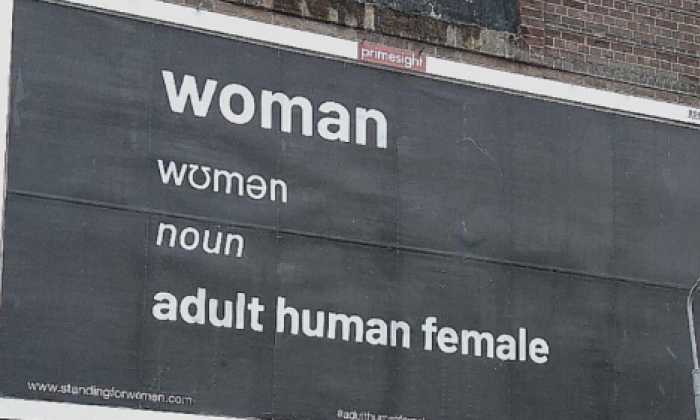
The Standing for Women Campaign ran a (fiercely debated) poster ad during the Labour Party’s Conference in Liverpool focusing on the definition of a woman. This poster caused something of a storm and was later removed by the billboard company amid accusations of hate speech and discrimination against transgender people:
This image has an empty alt attribute; its file name is women_poster-1.png

Kellie-Jay Keen-Minshull, one of the activists behind the poster was quoted in The Spectator (11 September 2018) saying:

I was a supporter of the Labour Party for years, but I can’t now in all good conscience support a political party that is hellbent on destroying women’s rights. But this is wider than just the Labour party. The word ‘woman’ matters. It means adult human female. If we expand that definition to say that ‘woman’ includes men who claim to feel like women, so as not to hurt their feelings, the word will become meaningless. As will the rights that generations of women before us fought for.’

Gender Identity Research & Education Society

Sporting controversies

It’s not merely the world of politics which witnessed passionate debates about gender reassignment. The sporting world has also seen some fierce clashes between female and transgender athletes. Former Olympic medalists, Kelly Holmes and Sharron Davies; and former Marathon champion, Paula Radcliffe have all expressed caution about permitting trans-women athletes to compete in women’s sporting events. Martina Navratilova, the former Tennis champion was even accused of being a “transphobe”  when she suggested that the inclusion of trans-women in sporting events could be viewed as tantamount to “cheating”.

Furthermore, the ongoing scrutiny concerning the gender of the South African athlete, Caster Semenya continues to divide many people in the sporting world.

The Gender Recognition Act 2004

In April 2005, the Gender Recognition Act 2004 came into force. This Act, which received the Royal Assent on 1 July 2004, currently provides people who have undergone gender reassignment procedures with legal recognition in relation to their newly acquired gender identity. The legislation applies across the United Kingdom and was passed by the Westminster Parliament.

Legal recognition of a person’s decision to reassign the sex or gender they have had from birth will follow from the issuing of a full gender recognition certificate by a Gender Recognition Panel. The individual applying for such a certificate must be able to satisfy certain criteria – the most important criterion will centre around the submission of medical evidence of physiological changes by the applicant.

Since the introduction of the Act, it has long been the case, therefore, that it will amount be unlawful discrimination to treat a person less favourably because s/he has undergone a a process of gender reassignment.

This now means that the decision by the House of Lords in Chief Constable of West Yorkshire Police v A (2004) which held that the police force could rightfully refuse to employ an individual who had undergone a sex change as a constable has been reversed. Such treatment would now be regarded as an example of unlawful discrimination.

That said, in addition to UK anti-discrimination and equality laws, the Court of Justice of the European Union (as long ago as the case of P v S & Cornwall County Council (1996))held that discriminatory treatment of people having undergone gender reassignment was a breach of the Equal Treatment Directive. The individual in question had been dismissed from employment because she undergone a gender reassignment operation.

In Richards v Secretary of State for Work and Pensions (2006) the Court of Justice of the European Union ruled that a person (Richards) who was born male and then underwent gender reassignment to become female was entitled to claim a pension that would have been payable to a woman at age 60.

The individual in question had suffered less favourable treatment and the UK Government’s insistence that it would only begin to pay a pension to the individual in question from her 65th birthday onwards was an example of discriminatory treatment. In other words, the pensions authority was continuing to treat Richards as a man and was not taking into account the fact that gender reassignment had taken place.

In any event, the Richards case (above) is really of historical interest as the legal situation has greatly improved for any person having undergone gender reassignment. Such a person will now be issued with an official gender recognition certificate (see below) which means that they will be entitled to receive a pension from the date that such a certificate was issued.

The Court of Justice of the European Union has long held that discriminatory treatment of people having undergone gender reassignment is a breach of the Equal Treatment Directive.

The Scottish Government’s proposed Gender Recognition Bill

The proposed Bill is controversial because some Scottish National Party MSPs and MPs (e.g. Joanna Cherry QC, Ash Denham, Kate Forbes and Lindsay Martin) are concerned about its main objective: that an individual who wishes to undergo gender reassignment will no longer have to provide medical evidence to the Gender Recognition Panel. The Panel currently determines the gender or sex of individuals who wish to undergo reassignment by issuing them with a certificate:

https://www.scottishlegal.com/article/joanna-cherry-qc-signs-letter-opposing-rush-to-reform-gender-law

https://www.bbc.co.uk/news/uk-scotland-scotland-politics-48037152

Under the Scottish Government’s proposals, an individual could effectively self-identify as a person of the opposite sex without having to undergo invasive medical procedures and provide the evidence of this fact in order to obtain recognition from the Panel.

What would be required of the individual in question under the proposed legislation are the following:

  • A statutory declaration to the effect that they have decided to change gender or sex;
  • The declaration will contain a statement that the individual has been living as a man or a woman for at a minimum of 3 months;
  • The individual will have to undertake a compulsory or mandatory period of 3 months to reflect on the decision to undergo gender reassignment (no gender recognition certificate will be issued until this period has been completed).

Two academics at the University of Edinburgh, Dr Kath Murray and Lucy Hunter Blackburn have also been extremely critical about the Scottish Government’s approach to transgender rights generally.

A link to an article in The Holyrood Magazine discussing the research conducted by the two academics can be found below:

https://www.holyrood.com/articles/news/scottish-trans-policy-detrimental-women-and-girls

The Equality Act 2010

Section 7 of the Equality Act 2010 addresses the issue of a person who has undergone gender reassignment in the following terms:

 (1) A person has the protected characteristic of gender reassignment if the person is proposing to undergo, is undergoing or has undergone a process (or part of a process) for the purpose of reassigning the person’s sex by changing physiological or other attributes of sex.

(2) A reference to a transsexual person is a reference to a person who has the protected characteristic of gender reassignment.

As we shall see, when discuss guidance from the Equality and Human Rights Commission (in the paragraph below), the Equality Act 2010 does not actually require a person to have undergone physical or physiological changes in order to be regarded as possessing the protected characteristic of gender reassignment.

Guidance from the Equality and Human Rights Commission

The Statutory Code on Employment issued by the Equality and Human Rights Commission contains a number of examples which demonstrate discrimination on the grounds of gender reassignment:

Example 1

A person who was born physically female decides to spend the rest of his life as a man. He starts and continues to live as a man. He decides not to seek medical advice as he successfully passes as a man without the need for any medical intervention. He would be protected as someone who has the protected characteristic of gender reassignment.

Example 2

A person born physically male lets her friends know that she intends to reassign her sex. She attends counselling sessions to start the process. However, she decides to go no further. She is protected under the law because she has undergone part of the process of reassigning her sex.

Example 3

Before a formal dinner organised by his employer, a worker tells his colleagues that he intends to come to the event dressed as a woman ‘for a laugh’. His manager tells him not to do this, as it would create a bad image of the company. Because the worker has no intention of undergoing gender reassignment, he would not have a claim for discrimination.

On the other hand, if the employer had said the same thing to a worker driven by their gender identity to cross-dress as a woman as part of the process of reassigning their sex, this could amount to direct discrimination because of gender reassignment.

It is worth noting in the above examples 1 and 2 that the individuals in question have not actually undergone the start of a physical transformation from one gender to another, but nonetheless both are protected in terms of Section 7 of the Equality Act.

Conclusion

A person who has undergone gender reassignment will have a protected characteristic in terms of the Equality Act 2010. Currently, the process by which an individual undergoes gender reassignment is laid down by the Gender Recognition Act 2004. This legislation was passed by the UK Parliament and applies across the country.

The Scottish Government has now announced that it intends to introduce a Gender Recognition Bill to reform the existing legislation. At the time of writing, it remains unclear when this will happen.

The purpose of the reforms is to move away from an emphasis on medical evidence to support the issuing of a gender recognition certificate to a system of self-declaration of gender (albeit under certain conditions being satisfied).

This subject has generated a lot of (often heated) debate and will probably continue to do so.

Postscript

The proposed Gender Recognition Bill continues to cause controversy – Wings over Scotland – the biggest pro-independence blog in Scotland edited by Stuart Campbell has found itself at the centre of the storm this week (4 July 2019). Campbell criticised the prominent nationalist MP, Mhairi Black for appearing on a YouTube channel where she appeared to attack those who were not in favour of the Gender Recognition proposals.

Needless to say this has generated a lot of comments by readers of the blog.

Links to Stuart Campbell’s blog entry and Mhairi Black’s Video can be found below:

https://wingsoverscotland.com/no-independence-day/#more-111060

https://youtu.be/9FlbIes2mlg

Copyright Seán J Crossan, 25 June, 5 & 29 July 2019