Another day in the toxic debate over proposals to liberalise the Gender Recognition Act 2004. Yesterday’s blog entry (Hate crime?) addressed the issue of limits on freedom of speech and expression in relation to extending transgender rights.
Today, the UK media is focusing on remarks made by Labour leadership contender, Rebecca Long-Bailey MP. In an interview with the BBC’s Andrew Marr, Ms Long-Bailey expressed her support for changes to the current Gender Recognition Act which would permit transgender women to gain access to institutions such as refuges for women who have experienced domestic violence at the hands of men.
As Mr Justice Knowles acknowledged in Miller v (1) The College of Policing (2) Chief Constable of Humberside [2020] EWHC 225 (Admin), the debate over transgender rights can be summarised as follows:
“On one side of the debate there are those who are concerned that such an approach will carry risks for women because, for instance, it might make it easier for trans women (ie, those born biologically male but who identify as female) to use single-sex spaces such as women’s prisons, women’s changing rooms and women’s refuges. On the other side, there are those who consider it of paramount importance for trans individuals to be able more easily to obtain formal legal recognition of the gender with which they identify.”
Knowles J went on to remark:
“Ishould make two things clear at the outset. Firstly, I am not concerned with the merits of the transgender debate. The issues are obviously complex. As I observed during the hearing, the legal status and rights of transgender people are a matter for Parliament and not the courts. Second, the nature of the debate is such that even the use of words such as ‘men’ and ‘women’ is difficult. Where those words, or related words, are used in this judgment, I am referring to individuals whose biological sex is as determined by their chromosomes, irrespective of the gender with which they identify. This use of language is not intended in any way to diminish the views and experience of those who identify as female notwithstanding that their biological sex is male (and vice versa), or to call their rights into question.”
A group within the British Labour Party, Labour Campaign for Trans Rights, has published a 12 point charter to push through changes to UK equality laws. Other women’s groups, such Women’s Place UK and the LGB Alliance, are bitterly opposed to this campaign.
Long-Bailey admitted that her position could set her at odds with many female members of the Labour Party who are deeply resistant to such developments. Many feminist opponents of reform to the current gender recognition rules have been given the acronym, TERF, or Trans- exclusionary radical feminists.
Gender reassignment is a protected characteristic in terms of the Equality Act 2010, but the legislation exempts women only refuges which currently exclude transgender women (i.e. those who were born male, but have undergone gender reassignment to become female). Although excluding transgender women would normally be regarded as an example of direct discrimination in terms of Section 13 of the Act, Parliament has provided the defence of objective justification. This means that permitting women only spaces in this instance – caring for the female victims of male domestic violence – is an example of a proportionate means of achieving a legitimate aim.
Conclusion
Much of the opposition to reform of the Gender Recognition Act 2004 appears to centre around proposals, in both England and Scotland, to permit individuals to self-identify in terms of their chosen gender without the need to go through physical changes. At the moment, anyone wishing to change gender must obtain a gender recognition certificate which will only be granted after the conclusion of the appropriate medical procedures.
It will, therefore, be for legislators in the UK and Scottish Parliaments to determine how far reforms to the Gender Recognition Act 2004 and, by extension the Equality Act 2010, will go. In the months to come, expect plenty of passionate arguments on both sides of the debate to be aired publicly.
A link to an article in The Independent discussing Ms Long-Bailey’s interview with Andrew Marr can be found below:
Last week I wrote a Blog about Stonewall’s list of 100 most inclusive UK employers for LGBTI people. The article summarised the advances in terms of the range of legal protection that the LGBTI communities now enjoy. From protection against discrimination in employment to same sex marriage, the turnaround in fortunes from a persecuted minority to part of the mainstream has been truly remarkable.
F. Scott Fitzgerald, the author of The GreatGatsby once remarked that “Switzerland is a country where very few things begin, but many things end.”
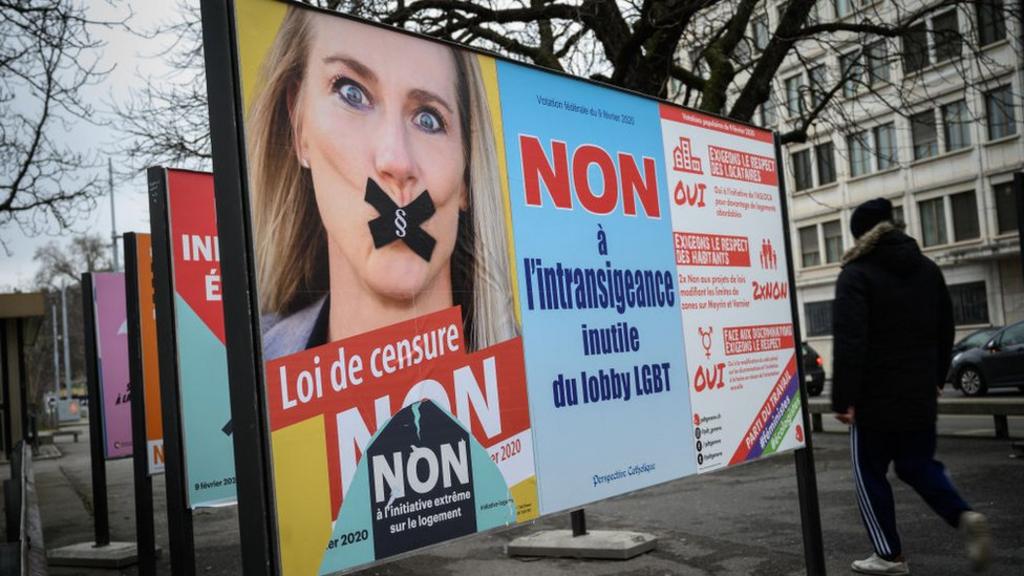
Today, the Swiss voted in a referendum to introduce laws which would extend protection from discrimination to LGBTI people. The proposal attracted support from 63% of Swiss voters and, finally, begins to bring the country into line with many of its neighbours who happen to EU member states. Switzerland is not part of the EU and, therefore, is not under any obligation to implement European laws which combat sexual orientation discrimination.
Critics of the Swiss proposal stated that the proposal was unnecessary because the country’s constitution already protected LGBTI individuals (and the country is a signatory to the European Convention on Human Rights). There were also concerns about what the proposal might mean for freedom of speech. Clearly, a majority of voters did not share these concerns.
Switzerland has a reputation for being a relatively conservative society (with a small ‘c’). After all, it was only in 1991 that the Swiss canton of Appenzell Innerrhoden finally permitted women to have the right to vote in cantonal elections. In federal (national) elections, woman had been given the right to vote since 1971.
We often forget this has been an incremental or gradual process in the UK and it did not happen overnight. Therefore, it is not advisable to be for British people to be smug or to have feelings of superiority about this issue. It was, after all, as recently as 2003 that the Employment Equality (Sexual Orientation) Regulations 2003 were implemented by the then Labour Government of Tony Blair. For the first time in UK employment law, LGBTI individuals were protected from discrimination in employment and training. This important law, critically, did not cover the provision of services and it was with the passage of the Equality Act 2010 that this area was eventually covered.
A link to an article on the BBC News app about the story can be found below:
It never ceases to amaze me that employers and service providers fall foul of arbitrary codes or policies which they impose on employees and service users. Regular readers of this Blog will be aware of previous articles covering discrimination or less favourable treatment which arises because employers or service providers issue generalised guidelines which discriminate against individuals because they happen to have certain hairstyles or wear beards or jewellery.
It is this lack of awareness that often leads to legal action in terms of the Equality Act 2010. By imposing a policy, criterion or practice (PCP) across the board, employers and other organisations could be setting themselves up for a fall specifically in relation to Section 19 of the Equality Act 2010. This part of the Act makes indirect discrimination unlawful i.e. it is an example of prohibited conduct by reason of a person or a group possessing a protected characteristic such as race or religion (Sections 9 and 10 respectively)
Since the introduction of the Race Relations Act 1976 (now repealed by the Equality Act 2010), we have seen a number of well known cases involving indirect discrimination being determined by Courts and Tribunals. So, you would think by now that employers and other organisations would have learned the lesson by now – apparently not as we shall see shortly.
In short order, such bans or generalised restrictions may infringe religious and cultural expression and may not only be a breach of the Equality Act, but could also represent a breach of human rights laws under the Human Rights Act 1998 and Article 9 of the European Convention on Human Rights.
Over the years, groups such as Jews, Muslims, Orthodox Christians, Sikhs and Rastafarians have brought successful legal actions for indirect discrimination on grounds of race and/or religion (see MandlavDowell–Lee [1982] UKHL 7). Being Jewish or Sikh can be both a religious and a racial identity.
Taking all of the above on board, I was really interested to read a story in The Independent this weekend which highlighted the problems of schools imposing dress codes on pupils. I thought: haven’t we been here before and why does no one seem to learn?
The story in question involves Ruby Williams who was “repeatedly sent home from Urswick School in Hackney, East London because she had Afro hair”. The school seems to have reacted with gross insensitivity to the youngster by informing her that her hairstyle was a breach of school uniform policy and that it could “block other pupils from seeing the whiteboard”.
Ruby and her family took legal action against the school (with the support of the Equality and Human Rights Commission) and she has since been awarded an out of court settlement of £8,500. The settlement figure clearly reflects the distress which she has suffered and the fact that all this trouble took place when she was studying for her GCSE exams (remember the Vento Guidelines anyone?). Ruby’s father is a Rastafarian and he has often stressed to his daughter the cultural, racial and religious significance of Afro hairstyles.
Apart from indirect discrimination which the school’s policy has caused to Ruby Williams, she may well also have had a claim in terms of Section 13 (direct discrimination) and Section 26 (harassment) of the Equality Act 2010 for being singled out in this way by the school authorities.
Perhaps the staff and Governors of the school might find it appropriate to undertake an equality awareness course at the next in-service day?
It is always open to an employer or service provider to show that although indirect discrimination has taken place, it can be objectively justified e.g. on national security grounds or health and safety reasons (e.g. Singh v Rowntree MacKintosh [1979] ICR 554 and Panesar v Nestle Co Ltd[1980] IRLR 64 CA).
Each attempt to justify a provision, criterion or policy (PCP) will, of course, turn on its facts and it would be very foolish for organisations to think that there is some sort of magic bullet or get out of jail card which can be used in every situation to justify or excuse conduct which would otherwise amount to unlawful discrimination. Organisations should review policies on a regular basis and, if need be, this may necessitate the carrying out of an equality impact assessment.
A link to the story on The Independent’s website can be found below:
The only gay in the village became a household phrase in the UK thanks to the long running Little Britain sitcom TV and radio series (which has been broadcast by the BBC since 2000).
Daffyd Thomas claimed to be the only gay person in a small, Welsh village (actually he wasn’t), but in some respects his catchphrase reflected the isolation that many people in the LGBTI communities experience – either in their personal or professional lives.
The reason that I mention this topic is because, last week, the LGBTI campaigning organisation, Stonewall, published research about the most inclusive LGBTI friendly employers in the UK (Newcastle City Council topped the list). That said, for many LGBTI employees, an inclusive work place is still a far off dream.
Please find a link to a story on the Sky News website about one employee’s decision to hide his LGBTI identity from his colleagues:
A person’s sexual orientation is, of course, a protected characteristic in terms of Section 12 of the Equality Act 2010. Such individuals should not be subjected to direct discrimination (Section 13); indirect discrimination (Section 19); harassment (Section 26); and victimisation (Section 27).
Many years ago, I remember teaching a group of students who were studying for a professional qualification. Many of them were employed by recruitment agencies and it was my task to highlight the relevant provisions of discrimination law at that time. One evening, we had a discussion about discrimination on the grounds of a person’s sexual orientation – particularly in the context of the ban on gay and lesbian people serving in the UK Armed Forces. This ban would eventually be lifted in 2000 – following the decision of the European Court of Human Rights in Smith and Grady v UK (1999) 29 EHRR 493.
One of the students asked me what protection existed for gay and lesbian people in employment law generally. Very little was my response. Before the introduction of the Scotland Act 1998 and the Human Rights Act 1998, the work place could be very hostile for LGBTI people (see Macdonald v Lord Advocate; Pearce v Governing Body of Mayfield School [2003] UKHL 34).
Yes, admittedly, the UK was (and still is in spite of Brexit) a signatory to the European Convention on Human Rights. In particular, Article 8 of the Convention recognises the right to family and private life. It was this Article which was used to overturn extremely restrictive laws on same sex relationships which existed in Scotland, Northern Ireland, the Isle of Man and the Channel Islands. Reinforcing Article 8 is Article 14 of the Convention is Article 14 which contains a general prohibition on discrimination.
The late 1960s are often referred to as the key period of the start of gay liberation in the UK with the passing of the Sexual Offences Act 1967 which decriminalised homosexual relationships between consenting adults (aged 21 or over) and as long as such conduct was in private. What is often overlooked is that the 1967 Act applied to England and Wales only. The picture was very different (and would remain so for over a decade – sometimes longer) in various parts of the British Isles.
Homosexual relationships were decriminalised in Scotland in 1980; in Northern Ireland in 1982; the UK Crown Dependency of Guernsey in 1983; the UK Crown Dependency of Jersey in 1990; and the UK Crown Dependency of the Isle of Man in 1994. The age of consent was set at 21 for all these parts of the British Isles. Things have since moved on and the age of consent was firstly reduced to 18 and then eventually to 16.
In the last 20 years, the influence of the European Union has been particularly profound regarding measures to combat sexual orientation discrimination.
In 1999, as a result of the Treaty of Amsterdam, the EU adopted two Directives which considerably expanded the scope of its anti-discrimination laws (the Racial Equality Directive (2000/43/EC) and the Employment Equality Directive (2000/78/EC). Of particular interest to this discussion is the Employment Equality Directive which made it unlawful to discriminate against a person on grounds of sexual orientation. Admittedly, this Directive was limited because it covered the areas of employment and vocational training only.
On 1 December 2003, the Employment Equality Directive would eventually become part of UK law in the form of the Employment Equality (Sexual Orientation) Regulations 2003. The Regulations were repealed and replaced by the relevant provisions of the Equality Act 2010 (which came into force on 1 October 2010).
It did not extend to the provision of goods and services, so had the case of Bull and Another v Hall and Another [2013] UKSC 73 occurred when the Directive was first transposed into UK domestic law, the same sex couple who were refused a double room at the guest house in Cornwall would not have been successful in their claim for sexual orientation discrimination. Luckily for them, the Equality Act had since come into force and covered unlawful less favourable treatment on grounds of a person’s sexual orientation with regard to the provision of goods and services.
The Treaty on the Functioning of the European Union (TFEU) is also worthy of comment. Article 19 prohibits discrimination by reason of a person’s sexual orientation and, notably, this provision is hardwired into UK law by way of the Equality Act 2010. Article 19 extended legal protection to gay and lesbian people more generally – over and above the limited areas of employment and vocational training which the Treaty of Amsterdam and the Employment Equality Directive had originally addressed.
The EU Charter of Fundamental Rights (although Poland and the UK had negotiated some opt-outs) contained significant provisions on equality and non-discrimination, namely, Article 20 (equality before the law) and Article 21 (the principle of non-discrimination).
Another massive step forward for the equality of the LGBTI community was the introduction of the Civil Partnerships Act 2004 which would give legal recognition (and protection) to gay and lesbian people who chose to enter such relationships. These rights would be further underpinned by permitting same sex couples to marry (in England and Wales in 2013 and in Scotland in 2014). Currently, Northern Ireland is the only part of the UK not to permit same sex marriage – although this will change from next week onwards (see link below):
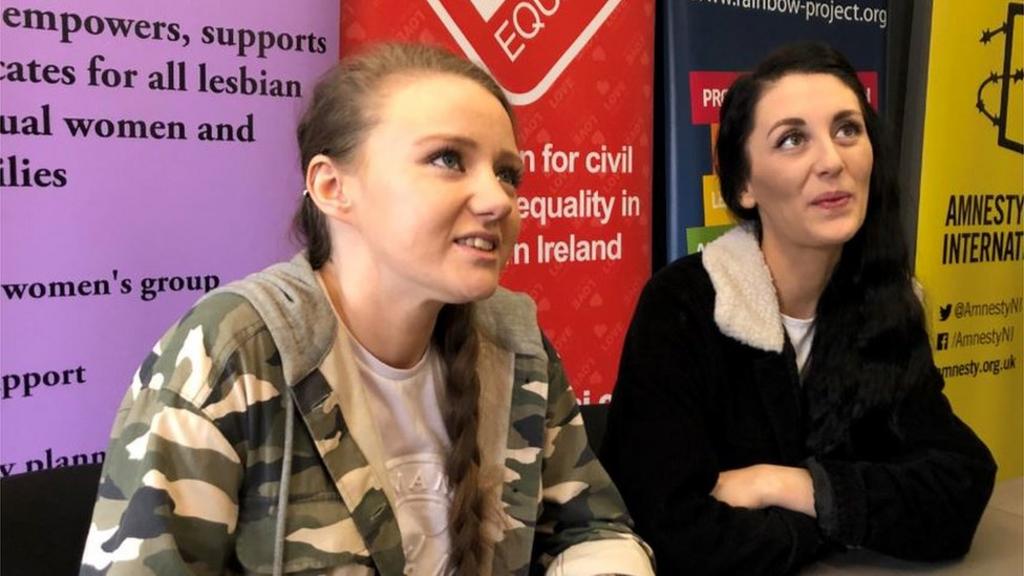
Robyn Peoples and Sharni Edwards will celebrate their wedding on Tuesday in Carrickfergus.
This change to the law has come about as a result of the introduction of the Northern Ireland (Executive Formation etc) Act 2019 passed by the UK Parliament (in the absence of of a functioning devolved government for nearly the last 3 years).
Finally, if employers want to do more to create an inclusive work place, they could start by using Stonewall’s inclusive toolkits (see link below):
As a society, the UK has certainly moved on from the overtly hostile attitudes towards members of the LGBTI communities over the last 50 years or so. The legal rights and protections which LGBTI people now enjoy would have seemed unthinkable in 1967 when a limited form of tolerance was ushered in as a result of the Sexual Offences Act (in England and Wales). More recently, the UK and Scottish Governments have issued pardons to those individuals who were convicted of criminal offences under the previous laws (in 2017: the Policing and Crime Act 2017 in England and Wales (known as Turing’s Law after Alan Turing, the Enigma Code Breaker) and, in 2018, the Scottish Parliament followed suit by passing the Historical Sexual Offences (Pardons and Disregards) (Scotland) Act 2018).
Postscript
On Friday 7 February 2020, Phillip Schofield, the British TV celebrity announced that he was gay at the age of 57. Mr Schofield is married with 2 children and had lived a heterosexual life – until now. He likened hiding his sexual orientation to being in prison and being consumed by it.
A link to the story on the Sky News website can be found below:
Today seems to be something of a red letter day for the Blog with regard to the issue of protected philosophical beliefs in terms of the Equality Act 2010.
We have already heard the news that Jordi Casamitjana has won the part of his Employment Tribunal claim that his ethical veganism is a philosophical belief in terms of Sections 4 and 10 of the 2010 Act (see Casamitjana v League Against Cruel Sports [2020]).
It was some interest that another news item popped up today concerning allegations that Amazon stands accused of threatening to dismiss those of its employees who become involved in climate protests. I would hazard a guess that Amazon is making a statement of intent that it may dismiss employees who perhaps break the law when they are involved in climate protests such as those organised by Extinction Rebellion and other similarly minded groups.
Criminal acts by employees committed outside the workplace could be regarded as gross misconduct in terms of Section 98 of the Employment Rights Act 1996. In other words, such behaviour by employees could result in the employer suffering reputational damage and, consequently, any dismissal for misconduct could be potentially fair. That said, employers should always carry out the proper disciplinary procedures when contemplating dismissal as the ultimate sanction for employee misbehaviour.
The real gripe – according to Amazon Employees for Climate Justice – is that the tech company allegedly objects to employees speaking critically about its failure to be more environmentally responsible.
Yet, there are potential dangers here for Amazon in the UK. In Grainger plc v Nicholson (2010) IRLR 4, the Employment Appeal Tribunal established that an employee’s belief in climate change could constitute discrimination on the grounds of a philosophical belief.
So, we could have situation where Amazon employees who are taking part in quite peaceful and lawful climate change protests end up being dismissed. This would open up the possibility that employees of Amazon UK might have the right to bring claims for direct discrimination (Section 13: Equality Act 2010) in respect of their philosophical beliefs (Sections 4 and 10 of the Act).
In the USA, there could be even more serious legal implications – infringing the right to free speech which is protected under the Constitution.
Perhaps Amazon needs to go back to the drawing board …
A link to an article on the BBC News App can be found below:
Disability is a protected characteristic in terms of Sections 4 and 6 of the Equality Act 2010. In terms of Sections 20 and 21 of the Act, employers and service providers have a legal duty to make reasonable adjustments to accommodate the needs of a disabled person.
What about a new prison inmate (a sex offender) who is visually impaired and wishes to bring his assistance (or guide) dog with him?
The prison authorities have said no to this request, it is simply against the rules.
Discrimination or less favourable treatment, of course, can be perfectly legal if it is objectively justified.
It would be very interesting to see if the prison authorities were potentially in breach of the Equality Act (direct or indirect discrimination).
A link to the story on the BBC News App can be found below:
Thanks to @tchickphoto for making this photo available freely on @unsplash 🎁
Scanning through the papers today for news worthy stories, I found myself looking across the sea (the Irish Sea to be precise) and it was there that I stumbled upon an interesting article in The Irish Times.
Regular readers of this Blog will be aware that I have a particular interest in the areas of discrimination and employment law and this story ticked both boxes.
A female supermarket delicatessen worker was repeatedly subjected to sexual harassment on an almost daily basis by one of her male co-workers. The dreadful treatment appears to have started less than a month after the woman commenced her employment (May 2018). Her manager (a man) was fully aware of the situation, but did nothing to put an end to her ordeal. In fact, he witnessed one of the brazen attempts by her tormentor and made a joke of it. This joke involved comments about people from Limerick. I have to say as someone who has Limerick ancestry, I felt pretty insulted when reading the manager’s gratuitous comment.
A link to the story in The Irish Times can be found below:
The woman complained about the situation, but she was not informed about the progress of this by her employer. Eventually, the woman felt that she had little choice but to resign from her employment. This could be viewed as the last straw – her employer’s conduct having led to a complete breakdown in their relationship. It might be said that the implied duty of trust and confidence on the part of the employer had been completely shattered.
In the UK, we would, of course, recognise this situation as one of constructive (unfair) dismissal in terms of the Employment Rights Act 1996 and the Equality Act 2010 (she was being subjected to discrimination/unlawful less favourable treatment on the grounds of her sex).
When the woman’s formal complaint was submitted, her employer did move her male colleague to a different location within the supermarket (the storeroom), but he went absent on sick leave shortly afterwards.
The whole experience was extremely distressing for the woman who has now been awarded €20,000 in compensation.
Again, readers in the UK will make the obvious comparison with our Vento scale (or bands) for compensation for victims of discrimination. The sum awarded to this woman would fall into the middle band in the UK (£8,800 to £26,300).
A link to an article about the current UK Vento scale or bands can be found below:
Anyone with a background in discrimination law who reads the article from The Irish Times about this story will immediately recognise the terminology used. The women alleged that her co-worker’s behaviour “was a violation of dignity in that it created an intimidating, hostile, degrading, humiliating and offensive environment for her.”
Such a statement reflects the language of the European Commission’s Code of Practice on Measures to combat sexual harassment. This Code was first formulated as far back as 1991 and has now been largely implemented into the legal systems of EU member states. The Republic of Ireland is, of course for the time being, one of our fellow EU member states and Irish anti-discrimination practitioners will be readily familiar with the terminology. For many years, Employment Tribunals and UK courts routinely used the Commission’s Code of Practice when dealing with cases which involve allegations of sexual harassment.
Current UK law on harassment in the workplace is contained primarily in the Equality Act 2010. More seriously, acts of harassment can also be a criminal offence.
A link to a guidance published by the UK Equality and Human Rights Commission concerning sexual harassment in the workplace can be found below:
The Conciliator appointed by Ireland’s Workplace Relations Commission, an independent statutory body created by Oireachtas – both Houses of the Irish Parliament, concluded that the woman’s employer had “failed to put appropriate measures in place to stop this harassment and sexual harassment from occurring or to reverse its effects”.
The Conciliator also noted that “the supermarket failed to conclude its investigation and make a decision is the most egregious flaw in the process.” The employer tried to justify this failure by saying that, as a matter of natural justice, it could not conclude the investigation because the male colleague had since left Ireland to return to his country of origin. The Conciliator stayed that the employer made this decision “at the expense of the complainant and closure for her of this appalling experience”.
Employers, please take note: failing to follow basic grievance procedures contained in the employment contract can have serious and expensive consequences. Such a failure on your part can contribute to the breakdown of the relationship with the employee and may very well open the door to claims for constructive dismissal against you.
As of today (31 December 2019), heterosexual couples in England and Wales will be able to enter civil partnerships as an alternative to marriage.
This change does not yet extend to Scotland: the Scottish Government has introduced its own Bill to introduce civil partnerships for heterosexual couples.
An info graphic showing the current progress of this Bill in the Scottish Parliament (Stage 1) can be seen below:
When the Labour Government of Prime Minister Tony Blair originally introduced civil partnerships across the UK (as a result of the Civil Partnerships Act 2004) such legal unions were open to gay and lesbian couples only.
It was the first time in the history of Scots and English family law that gay and lesbian couples were entitled to enter a legally recognised relationship.
Fast forward a decade or so and we now have same sex marriage in Scotland, England and Wales – but not yet Northern Ireland (although the clock may be ticking here on this issue). Admittedly, same sex couples can enter civil partnerships in Northern Ireland, but since the Republic of Ireland made same sex marriage legal in 2015, pressure has been mounting for change in the North.
The case which started the ball rolling was Steinfeld and Keidan v Secretary of State for Education[2016] EWHC 128 (Admin).
In Steinfeld and Keidan, an unmarried, heterosexual couple brought a claim for unlawful less favourable treatment against the UK Government on the basis that the law (contained in the Civil Partnership Act 2004) discriminated against them by forcing them to enter marriage as opposed to their preferred option of a civil partnership arrangement. The couple had strong “ideological objections” to marriage (irrespective of whether it took a religious or civil form) and argued, amongst other things, that the failure by the United Kingdom to give them the option of entering a civil partnership was a potential breach of their Article 8 rights (the right to privacy and family life) in terms of the European Convention on Human Rights. The ban on civil partnerships for heterosexual couples was also a potential breach of the Equality Act 2010 in the sense that it represented direct discrimination on grounds of a person’s sexual orientation.
Initially, the English High Court rejected the challenge brought by Steinfeld and Keidan, whereupon the case was allowed to proceed to the English Court of Appeal. Although expressing sympathy for Steinfeld and Keidan’s predicament, the Lord Justices of Appeal refused to overturn the ban (see Steinfeld and Keidan v Secretary of State for Education [2017] EWCA Civ 81).
The couple were then given leave to appeal to the UK Supreme Court.
On 27 June 2018, the Supreme Court issued its decision: R (on the application of Steinfeld and Keidan) (Appellants) v Secretary of State for International Development (in substitution for the Home Secretary and the Education Secretary) [2018] UKSC 32.
Lord Kerr gave the leading judgement (with which his fellow Justices concurred) and allowed Steinfeld and Keidan’s appeal:
“I would allow the appeal and make a declaration that sections 1 and 3 of CPA [Civil Partnership Act 2004] (to the extent that they preclude a different sex couple from entering into a civil partnership) are incompatible with article 14 of ECHR taken in conjunction with article 8 of the Convention.”
Following the Supreme Court’s decision, the UK Government of former Prime Minister Theresa May initiated steps to amend the Civil Partnership Act 2004 in respect of the law for England and Wales.
A link to an article about the change to the law in England and Wales on the Sky News website can be found below:
An interesting case which caught my attention recently seemed to raise many issues which I have been emphasising to my students who are preparing for their upcoming Discrimination Law exam this month.
The case (The Governing Body of Tywyn Primary Schoolv Aplin Case No 1600635/2016 [2019]) seemed to cover (almost) the whole syllabus of the Discrimination Law unit:
A discrimination dismissal of a high flying professional employee (a head teacher)
A large sum of compensation awarded to the employee for the dismissal (nearly £700,000)
Direct discrimination on the basis of a protected characteristic (the employee’s sexual orientation) in terms Sections 4, 12 and 13 of the Equality Act 2010
The real problems faced by the employee in attempting to mitigate his losses (which the amount of the compensation award reflects)
Breach of disciplinary procedures by the employer
Breach of human rights i.e. Article 8 of the European Convention on Human Rights (right to privacy and family life)
Alleged reputational damage caused to the employer as a result of the employee’s conduct
The reversal of the burden of proof
The use of hypothetical comparators
The facts
Matthew Aplin is an openly gay man who was the head teacher of Tywyn primary school in Wales. He has been a teacher for 19 years and has an excellent professional reputation. In 2015, allegations about Aplin’s private life came to the attention of his employer (the School’s Board of Governors). It was alleged that Aplin had engaged in consensual sexual relationships with two 17 year old males that he had met through Grindr, the well known dating app. Users of Grindr must be aged 18 or over and, significantly, Aplin did not suspect the true age of the two males.
Aplin believed that the two young men were over 18 and, in any case, users of Grindr have to be aged 18 or over.
Following these allegations of alleged misconduct, Aplin was suspended and the Board of Governors commenced a disciplinary investigation.
At the request of the Governors, an investigating officer (Mr Gordon) was appointed by the local council. Mr Gordon’s terms of reference in respect of Aplin’s behaviour were as follows:
(a) had this brought the reputation of the School into disrepute?
(b) had it impacted on his ability to undertake the role of Head Teacher?; and/or
(c) had it demonstrated so gross an error of judgment as to undermine the School’s confidence in him and, therefore, to call into question his continuation in the role?
Mr Gordon quickly concluded that Aplin should be dismissed from his post despite the fact that this employee did not represent a possible threat to children. Local Police officers were briefly involved in their own investigation, but significantly they later concluded that no crime had been committed by Aplin.
Despite this, Aplin was dismissed for gross misconduct by the School Governors.
He promptly appealed against his dismissal, but the Governors did not deal with this matter efficiently or properly. Angered at the perceived lack of fair treatment of his appeal, Aplin decided to resign from his employment and claim unfair (constructive) dismissal; discrimination by reason of his sexual orientation; and interference with his right to respect for private and family life.
The Employment Appeal Tribunal (which became involved to deal with technical aspects of the case) later noted:
“There were numerous procedural errors which amounted to a breach of the implied term of trust and confidence in the investigation and the disciplinary hearing.”
Ordinarily, the burden of proof lies upon the claimant (Aplin) to show that discrimination has taken place. In this case, there were enough factors present which meant that the burden of proof should shift to the respondent (the School Governors) who would now have to show that they had not discriminated against Aplin.
On the question of whether the burden of proof should be reversed, Judge Shanks in the Employment Appeal Tribunal had this to say:
“… in my view the thrust of it [the Tribunal’s reasoning] is clear and it provides a sufficient basis for the ET’s decision that the burden of proof had shifted on the question of whether Mr Aplin was treated unfavourably because of his sexual orientation.”
In arriving at this position, Judge Shanks was firmly of the view that:
“.. the Tribunal had rightly recognised that the background to the whole case was intimately connected with Mr Aplin’s sexuality; they then judge that the procedural failures by the School were so egregious that the inference could be drawn that there was more to it than simply the fact that he had had lawful sex with two 17 year olds; and they therefore considered that it would be possible, in the absence of any other explanation, properly to infer that he had been discriminated against because of his sexual orientation. That seems to me a perfectly acceptable line of reasoning.”
The decision of the Employment Tribunal
Aplin had been unfairly dismissed; and subjected to direct discrimination by reason of his sexual orientation.
As a point of interest, the case involved the use of hypothetical comparators to arrive at its decision, namely, would a heterosexual teacher (either male or female) who had sexual relations with two 17 year olds have been treated in the same way as Aplin? The Employment Tribunal concluded that such individuals would not have been treated any differently.
Interestingly, in its final judgement, the Tribunal found that, although a person’s sexual relationships are undoubtedly covered by Article 8 of the European Convention on Human Rights, it is not an absolute right. Such a right may be restricted or interfered with “where it is necessary for the protection of morals” in “a democratic society”:
“Thererefore, we consider that it is possible to conclude that in the circumstances of this case the claimant could have been disciplined for his admitted conduct within the qualification in Article 8(2). …
… However, a fair process would require the respondent to consider whether the claimant was aware that the individuals were 17 years of age. Further it would have to consider what the real risk of the issues becoming public were and therefore what the real potential for reputational damage was.”
The two 17 year olds were children in the eyes of the law and Aplin, as a Head Teacher, could be viewed as someone who was in a position of power and that position which could be abused by him.
As Aplin had admitted to his conduct (the relationships with the two males), the Employment Tribunal concluded that there was at least. 20% chance of him being dismissed successfully – had the proper disciplinary procedures been carried by the employer (which of course they were not). In this respect, Aplin suffered a 20% deduction in the overall compensation awarded to him as per the guidelines originally laid down in Polkey v AEDayton Services Ltd [1987] UKHL 8.
Links to the decisions of the Employment Tribunal and the Employment Appeal Tribunal can be found below:
It never feels to amaze me that by casually flicking through the weekend newspapers and news outlets you can discover stories about discrimination without really making much of an effort. I often say this to my students when I ask them to highlight a media story about an aspect of discrimination law at the beginning of each class. There’s really no excuse for saying that they couldn’t find anything to talk about.
And so it proved today – although I must give credit to my students who had alerted me to this story some weeks ago during one of their regular presentations.
The story concerns Mr and Mrs Mander who have just won their claim for unlawful direct discrimination on the grounds of their race. Race (including national origin and a person’s colour), of course, is one of the protected characteristics which is set out in terms of Sections 4 and 9 of the Equality Act 2010.
Section 13 of the Act contains the definition of direct discrimination.
The Manders are of Sikh and Indian heritage who were both born in the UK and are British citizens. Their parents all came to the UK when they were small children. The couple participate in ceremonies and events throughout the Sikh Holy Year, but otherwise they are not particularly religious.
In this respect, they are very similar to people from a White British or Irish background who attend Church, for example, at Christmas and Easter. The couple are both university educated professionals with senior positions in the IT industry and they are comfortably well off. Culturally, the Manders see themselves as British, but obviously they are rightly aware and proud of their heritage.
After numerous attempts to start a family, the Manders decided to investigate the possibility of adopting a child. For this purpose, the couple dealt with the Royal Borough of Windsor and Maidenhead and Adopt Berkshire. The experience would end in disappointment for the couple.
The Manders took a claim to Oxford County Court alleging direct race discrimination (and alternatively indirect discrimination in terms of Section 19 of the Act of 2010) against the Royal Borough of Windsor and Maidenhead and Adopt Berkshire (the defendants).
It should also be appreciated that Section 29 of the Equality Act makes it clear that individuals can experience unlawful discrimination in respect of the provision of a service – in this case that of adoption services.
The couple also alleged that they had suffered discrimination in respect of the European Convention on Human Rights in respect of the following:
Article 8 (the right to family and private life)
Article 12 (the right to marry and found a family)
Article 14 (the prohibition on discrimination)
In the event, at the trial, the Manders decided not to pursue claims in terms of Article 8 and Section 19.
Her Honour Judge Clarke summarised the essence of the Manders’ claim:
‘It is important to understand that Mr and Mrs Mander’s claim is not that they applied to be approved as adopters but were wrongly or unfairly rejected or discriminated against either during the process of consideration of their application for adoption, or when considering whether to match them to a child. Mr and Mrs Mander’s case is that the Defendants discriminated against them on the basis of their race before they made formal application to adopt, inter alia by refusing to progress them to the ROI/application stage.’
The Council and Adopt Berkshire did not at any time advance the argument that the Manders were in any way unsuitable as prospective, adoptive parents.
The justification given for the refusal to permit the Manders to proceed to the Registration of Interest/application stage was that it was unlikely that children from the same cultural background as the couple would become available for adoption in the short or longer term.
The couple were informed by letter from the Service Manager of Adopt Berkshire that:
‘In the last 17 months since Adopt Berkshire we have not had a single child of Indian or Pakistani heritage referred to us for placement …’
The letter went on to state:
‘… it is hard at the current time to advise you how best to proceed regarding adopting within the U.K.; however another option that you may wish to explore is the option of adopting from India – while this is likely to be a lengthy process and may be financially stretching, it may ultimately be more likely to enable you to achieve the placement of a young child whose cultural heritage is similar to your own.’
Eventually, the couple adopted a child from the United States of America, but at a considerable financial cost.
In evidence, the Manders were in no doubt that they had been treated differently by Adopt Berkshire:
‘There was no doubt in my mind that she [Mrs Popat, an employee of Adopt Berkshire] in fact made a judgment based on the colour of our skin. I was never treated like this before. I grew up in this country. My grandfather fought in the British Army – I was hurt and disappointed.’ (Mrs Manders)
‘Adopt Berkshire made me feel that the country where I grew up still saw me as different. It did not matter that I grew up here, as long as I was not white, I could not be British. I found this thought very disturbing – I had trouble sleeping at night because of how angry and helpless I felt.’ (Mr Manders)
Held: by the County Court that the Manders had suffered direct discrimination on the grounds of their race when their application was not progressed to the ROI/application stage of the adoption process.
Her Honour Judge Clarke did not, however, uphold the couple’s claim that their rights under Article 12 of the European Convention had been breached. As her Honour pointed out the right to adopt a child is not covered by the Convention, but rather is left to national law.
Judge Clarke also acknowledged that the discrimination suffered by the Manders was of a very serious nature:
‘I consider this to be a very serious case, which sits at the top of the middle, or bottom of the upper, range of the Vento bands …’
In this respect, the Manders were awarded both ordinary (£29,000) and special damages (£60,000).
The application of the Vento Bands was discussed in a previous Blog, Hurt feelings:
A link to the decision of the County Court in Reena and Sandeep Mander v (1) Royal Borough of Windsor and Berkshire and (2) Adopt Berkshire [2019] Case No: C01RG184 can be found below:











 Seán Crossan's Scots Law