While we await the judgement of the Employment Tribunal in relation to the case of Casamitjana v League Against Cruel Sports, it’s interesting to note that veganism as a lifestyle choice seems to be on the rise.
Whether the Employment Tribunal will recognise Jordi Casamitjana’s ethical standpoint as a philosophical belief in terms of Sections 4, 10 and 13 of the Equality Act 2010 remains to be seen. Watch this space.
In the meantime, the BBC has produced an interesting article on the rise of veganism which can be found on its News App:
Should the accused in a criminal trial enjoy the presumption of innocence?
This is a long established principle of criminal law in the Western World that I have taken for granted since my first days at university. I always remember Professor Kenny Miller (of Strathclyde University’s Law School) correcting students who spoke in error about the ‘guilty’ person in a Scottish criminal trial. They were quickly admonished and reminded of the maxim that everyone is innocent until proven guilty.
Indeed, Article 11 of the United Nations’ Universal Declaration of Human Rights takes the view that the presumption of innocence is a fundamental human right.
Furthermore, Article 6 of the European Convention on Human Rights establishes the right to a fair trial and this includes the presumption of innocence. In the United Kingdom, this very important right has been incorporated into Scots, English and Northern Irish law via the Human Rights Act 1998. In Scotland, we, of course, have an additional layer of protection with the Scotland Act 1998.
Article 48 of the EU Charter of Fundamental Rights also echoes Article 6 of the European Convention.
Going back to the historical record, the Byzantine or Roman Emperor Justinian I emphasised the presumption of innocence for the accused as part of codification of Roman Law between 529-534 CE. Admittedly, Justinian was building on previous Roman legal practice as the Emperor Antoninus Pius (he of the less well known Wall for our Scottish readers) had introduced the principle during his reign between 138 and 161 CE.
The Romans would say Ei incumbit probatio qui dicit, non qui negat; translated as Proof lies on him who asserts, not on him who denies.
Jewish and Islamic scholars have, historically, also placed huge importance on the presumption of innocence as a cornerstone of their legal practices. Both the Jewish Talmud and Islamic Hadiths (sayings or practices of the Prophet) testify to this.
The Carlos Ghosn Affair
So, why am I reflecting on this area this dull and rainy second day of the New Year?
The escape from Japan of Carlos Ghosn brought the principle forcibly to mind this New Year. Mr Ghosn is the former Chief Executive of Nissan who has been accused of defrauding his former employer.
Mr Ghosn was under effective house arrest in Japan until a few days ago. Allegedly, with the help of his wife, he escaped from that country to the Republic of Lebanon (of which he is a citizen) The escape reads like something from a Hollywood movie script (the Mission: Impossible series anyone?) with Mr Ghosn hiding in a musical instrument case (presumably not a violin case) in order to make good his unauthorised exit from Japan.
A link to an article about Mr Ghosn’s escape in The Independent can be found below:
What is Mr Ghosn’s motivation for leaving Japan in this dramatic way? He claims to have no faith in Japanese justice in that the legal system of that country presumes his guilt.
The Japanese criminal justice system
Not possessing a great deal of knowledge about Japanese criminal practice, I admit that I was somewhat intrigued by Mr Ghosn’s assertions.
I had also just finished reading Owen Matthew’s excellent biography* of Richard Sorge, probably the most successful spy in modern history (and a possible role model for James Bond). Sorge had been spying for the Soviet Union in Japan in the 1930s and 1940s until he was unmasked and arrested in 1941. The treatment of Sorge at the hands of the Japanese criminal justice authorities forms part of the climax to the book.
As Owen Matthews notes:
‘Japanese justice, surprisingly, for an authoritarian state, turned out to be both thorough and scrupulous. The three volumes of investigative documents prepared by the Tokko [the Japanese Police] are exhaustive, far more professional than the cursory evidence which the NKVD [the forerunner of the Soviet KGB] assembled to convict hundreds of thousands of suspected spies in the 1930s.’ [p345]
Does the Japanese criminal code presume the guilt of persons on trial, as opposed to their innocence?
I decided to investigate …
… what I discovered was something rather more subtle.
The Japanese legal system does recognise the right of the accused to be presumed innocent until proven otherwise – despite Mr Ghosn’s claims. The burden of proof rests on the prosecution to demonstrate the guilt of the accused (as in Scotland, England, the United States etc).
There are indeed criticisms of the Japanese legal system that could be made (but no legal system is immune from criticism). In particular, the practice of not allowing suspects to have access to a lawyer during Police interrogation has been highlighted as a weakness of the system.
Before Scots lawyers get too smug, we would do well to remember the Peter Cadder case which led to an overhaul of Scottish criminal practice (see Cadder v HMA [2010] UKSC 43).
Another criticism of the Japanese legal system seems to centre around the practice of prosecutors rearresting an accused when s/he has been acquitted by a lower court. The accused is then taken before a superior criminal court for a further trial and, possibly, conviction.
That said, in Scotland (and in England), we have abolished the double jeopardy rule, but this does not mean that prosecutors have free range to do what they like.
Finally, an accused who maintains his/her innocence under the Japanese legal system, is often not granted bail and can therefore be expected to undergo a lengthy period of detention until the case is brought to trial (Mr Ghosn was perhaps luckier than most being under house arrest). Critics of this aspect of the legal system have pointed out that it puts suspects under duress making them more likely to make an admission of guilt. Mr Ghosn had apparently spent 120 days in detention before bail (with very strict conditions) was granted last year.
Links to articles about the Japanese legal system from the local media can be found below:
The principle of presuming the innocence of the accused in a criminal trial until proven otherwise is a deeply rooted one in the Western World. It is a cornerstone of our justice systems. The United Nations regards it as a fundamental human right in terms of the Universal Declaration of Human Rights.
Yet, to assume that it is a Western concept alone, would be a monstrous conceit. Jewish and Islamic legal scholarship have both emphasised the importance of this principle.
Japan, as a member of the United Nations, also recognises the importance of the principle – which makes some of Mr Ghosn’s claims somewhat misjudged. Yes, the operation of the Japanese criminal justice system can and is the subject of criticism, but this observation also applies to every other legal system in the World.
* “AnImpeccable Spy – Richard Sorge – Stalin’s Master Agent” by Owen Matthews (Bloomsbury Publishing: 2019)
Thanks to @tchickphoto for making this photo available freely on @unsplash 🎁
Scanning through the papers today for news worthy stories, I found myself looking across the sea (the Irish Sea to be precise) and it was there that I stumbled upon an interesting article in The Irish Times.
Regular readers of this Blog will be aware that I have a particular interest in the areas of discrimination and employment law and this story ticked both boxes.
A female supermarket delicatessen worker was repeatedly subjected to sexual harassment on an almost daily basis by one of her male co-workers. The dreadful treatment appears to have started less than a month after the woman commenced her employment (May 2018). Her manager (a man) was fully aware of the situation, but did nothing to put an end to her ordeal. In fact, he witnessed one of the brazen attempts by her tormentor and made a joke of it. This joke involved comments about people from Limerick. I have to say as someone who has Limerick ancestry, I felt pretty insulted when reading the manager’s gratuitous comment.
A link to the story in The Irish Times can be found below:
The woman complained about the situation, but she was not informed about the progress of this by her employer. Eventually, the woman felt that she had little choice but to resign from her employment. This could be viewed as the last straw – her employer’s conduct having led to a complete breakdown in their relationship. It might be said that the implied duty of trust and confidence on the part of the employer had been completely shattered.
In the UK, we would, of course, recognise this situation as one of constructive (unfair) dismissal in terms of the Employment Rights Act 1996 and the Equality Act 2010 (she was being subjected to discrimination/unlawful less favourable treatment on the grounds of her sex).
When the woman’s formal complaint was submitted, her employer did move her male colleague to a different location within the supermarket (the storeroom), but he went absent on sick leave shortly afterwards.
The whole experience was extremely distressing for the woman who has now been awarded €20,000 in compensation.
Again, readers in the UK will make the obvious comparison with our Vento scale (or bands) for compensation for victims of discrimination. The sum awarded to this woman would fall into the middle band in the UK (£8,800 to £26,300).
A link to an article about the current UK Vento scale or bands can be found below:
Anyone with a background in discrimination law who reads the article from The Irish Times about this story will immediately recognise the terminology used. The women alleged that her co-worker’s behaviour “was a violation of dignity in that it created an intimidating, hostile, degrading, humiliating and offensive environment for her.”
Such a statement reflects the language of the European Commission’s Code of Practice on Measures to combat sexual harassment. This Code was first formulated as far back as 1991 and has now been largely implemented into the legal systems of EU member states. The Republic of Ireland is, of course for the time being, one of our fellow EU member states and Irish anti-discrimination practitioners will be readily familiar with the terminology. For many years, Employment Tribunals and UK courts routinely used the Commission’s Code of Practice when dealing with cases which involve allegations of sexual harassment.
Current UK law on harassment in the workplace is contained primarily in the Equality Act 2010. More seriously, acts of harassment can also be a criminal offence.
A link to a guidance published by the UK Equality and Human Rights Commission concerning sexual harassment in the workplace can be found below:
The Conciliator appointed by Ireland’s Workplace Relations Commission, an independent statutory body created by Oireachtas – both Houses of the Irish Parliament, concluded that the woman’s employer had “failed to put appropriate measures in place to stop this harassment and sexual harassment from occurring or to reverse its effects”.
The Conciliator also noted that “the supermarket failed to conclude its investigation and make a decision is the most egregious flaw in the process.” The employer tried to justify this failure by saying that, as a matter of natural justice, it could not conclude the investigation because the male colleague had since left Ireland to return to his country of origin. The Conciliator stayed that the employer made this decision “at the expense of the complainant and closure for her of this appalling experience”.
Employers, please take note: failing to follow basic grievance procedures contained in the employment contract can have serious and expensive consequences. Such a failure on your part can contribute to the breakdown of the relationship with the employee and may very well open the door to claims for constructive dismissal against you.
As of today (31 December 2019), heterosexual couples in England and Wales will be able to enter civil partnerships as an alternative to marriage.
This change does not yet extend to Scotland: the Scottish Government has introduced its own Bill to introduce civil partnerships for heterosexual couples.
An info graphic showing the current progress of this Bill in the Scottish Parliament (Stage 1) can be seen below:
When the Labour Government of Prime Minister Tony Blair originally introduced civil partnerships across the UK (as a result of the Civil Partnerships Act 2004) such legal unions were open to gay and lesbian couples only.
It was the first time in the history of Scots and English family law that gay and lesbian couples were entitled to enter a legally recognised relationship.
Fast forward a decade or so and we now have same sex marriage in Scotland, England and Wales – but not yet Northern Ireland (although the clock may be ticking here on this issue). Admittedly, same sex couples can enter civil partnerships in Northern Ireland, but since the Republic of Ireland made same sex marriage legal in 2015, pressure has been mounting for change in the North.
The case which started the ball rolling was Steinfeld and Keidan v Secretary of State for Education[2016] EWHC 128 (Admin).
In Steinfeld and Keidan, an unmarried, heterosexual couple brought a claim for unlawful less favourable treatment against the UK Government on the basis that the law (contained in the Civil Partnership Act 2004) discriminated against them by forcing them to enter marriage as opposed to their preferred option of a civil partnership arrangement. The couple had strong “ideological objections” to marriage (irrespective of whether it took a religious or civil form) and argued, amongst other things, that the failure by the United Kingdom to give them the option of entering a civil partnership was a potential breach of their Article 8 rights (the right to privacy and family life) in terms of the European Convention on Human Rights. The ban on civil partnerships for heterosexual couples was also a potential breach of the Equality Act 2010 in the sense that it represented direct discrimination on grounds of a person’s sexual orientation.
Initially, the English High Court rejected the challenge brought by Steinfeld and Keidan, whereupon the case was allowed to proceed to the English Court of Appeal. Although expressing sympathy for Steinfeld and Keidan’s predicament, the Lord Justices of Appeal refused to overturn the ban (see Steinfeld and Keidan v Secretary of State for Education [2017] EWCA Civ 81).
The couple were then given leave to appeal to the UK Supreme Court.
On 27 June 2018, the Supreme Court issued its decision: R (on the application of Steinfeld and Keidan) (Appellants) v Secretary of State for International Development (in substitution for the Home Secretary and the Education Secretary) [2018] UKSC 32.
Lord Kerr gave the leading judgement (with which his fellow Justices concurred) and allowed Steinfeld and Keidan’s appeal:
“I would allow the appeal and make a declaration that sections 1 and 3 of CPA [Civil Partnership Act 2004] (to the extent that they preclude a different sex couple from entering into a civil partnership) are incompatible with article 14 of ECHR taken in conjunction with article 8 of the Convention.”
Following the Supreme Court’s decision, the UK Government of former Prime Minister Theresa May initiated steps to amend the Civil Partnership Act 2004 in respect of the law for England and Wales.
A link to an article about the change to the law in England and Wales on the Sky News website can be found below:
Michael Howard, former UK Conservative Party Leader from 2003 until 2005 (and now, somewhat ironically, an unelected member of the House of Lords) certainly thinks so – and he hasn’t been afraid to make his views known on the subject during the last few days.
A link to an article in The Independent discussing Mr Howard’s remarks can be found below:
In an interview on the BBC’s Today programme, Mr Howard posited the question as to whether the law should be made by “elected, accountable politicians, answerable to their constituents and vulnerable to summary dismissal at election, or by unaccountable, unelected judges who can’t be removed”.
Sour grapes?
To some extent, we could accuse Mr Howard of sour grapes or dissatisfaction with a number of recent legal judgements which have gone against the express wishes of the previous UK Conservative Government (2017-19) which wished to prioritise the exit of the UK from the European Union (Brexit).
It is also worth remembering that Mr Howard’s tenure as British Home Secretary (the Minister of the Interior) from 1993 until 1997 was characterised by conflicts with judges who often ruled against Government policy when making decisions about applications for judicial review.
Brexit
As a long established Eurosceptic (and as one of the prime suspects for membership of the group of “3 b*stards” in former Prime Minister John Major’s cabinet (1992-97), you would not really have expected Mr Howard to be terribly happy about the lack of progress on Brexit (some three and a half years on from the Referendum of 23 June 2016).
In R (on the application of Miller and another) v Secretary of State for Exiting the European Union [2017] UKSC 5, the former Prime Minister, Theresa May was forced to concede that she personally could not trigger Article 50 of the Treaty on European Union in order to begin the process of the UK’s withdrawal from the European Union. Brexit wasn’t going to ‘get done’ without first having undergone a series of confirmatory votes in both Houses of the Westminster Parliament. The use of the Royal prerogative (the ancient powers of the Monarch) by the then Prime Minister to ignore Parliament was not an appropriate legal action in a modern democracy.
In Wightman and Others (Notification by a Member State of its intention to withdraw from the European Union – Judgment) [2018] EUECJ C-621/18 (10 December 2018), the Court of Justice of the European Union, in a preliminary ruling, stated that a member state which had initiated Article 50 proceedings to leave the EU could reverse its decision unilaterally without first seeking the consent of all the other member states.
The request for the preliminary ruling (in terms of terms of Article 267: Treaty on the Functioning of the European Union) had been submitted by the Inner House of the Court of Session; but critically the action had been initiated by a group of democratically elected politicians (in the main).
In R (on the application of Miller) (Appellant) v The Prime Minister (Respondent) Cherry and others (Respondents) v Advocate General for Scotland (Appellant) (Scotland) [2019] UKSC 41 (On appeals from: [2019] EWHC 2381 (QB) and [2019] CSIH 49), the proverbial really hit the fan when the UK Supreme Court ruled (unanimously) that the decision by current UK Prime Minister, Boris Johnson to suspend or prorogue the Westminster Parliament for 5 weeks was nothing less than unlawful.
As Baroness Hale, President of the Supreme Court, stated:
“It is impossible for us to conclude, on the evidence which has been put before us, that there was any reason – let alone a good reason – to advise Her Majesty to prorogue Parliament for five weeks, from 9th or 12th September until 14th October. We cannot speculate, in the absence of further evidence, upon what such reasons might have been. It follows that the decision was unlawful.”
The Human Rights Act 1998
The mask really slips from Mr Howard’s face (possibly revealing something of the night about him?) when he turns his ire upon the effect of the Human Rights Act 1998. He begins by acknowledging that the UK Parliament conferred powers on senior judges to determine whether UK legislation was human rights compliant and then blames the judges for this situation! As a former barrister, Mr Howard really should know better.
Opponents of human rights legislation have always beaten the drum that the discretion given to (unelected) judges to attack or strike down laws which are deemed not to comply with those parts of the European Convention are a threat to British democracy. In the febrile atmosphere of Brexit, judges are now acutely aware that they can and will be accused of meddling in politics.
As I have previously remarked, statements such as Mr Howard’s recent remarks are factually incorrect when viewed through the prism of Westminster legislation. It soon becomes apparent that his arguments are highly misleading because all that superior court judges can do is to issue a declaration of incompatibility if a particular law or legal provision is found not to comply with the Human Rights Act 1998.
The declaration of incompatibility is like a football referee issuing a yellow card: foul play is being acknowledged, but the player remains on the field … for now. It will then be over to the Westminster Parliament (as the highest legal authority in the land) to bring in corrective measures to ensure that the law is changed, but this is Parliament’s decision alone
The consequences of declaring UK parliamentary legislation incompatible with the European Convention on Human Rights can be fully appreciated if we refer to the Supreme Court’s decision in R (Nicklinson) v Ministry of Justice (CNK Alliance Ltd intervening)[2014] UKSC 38:
“An essential element of the structure of the Human Rights Act 1998 is the call which Parliament has made on the courts to review the legislation which it passes in order to tell it whether the provisions contained in that legislation comply with the Convention. By responding to that call and sending the message to Parliament that a particular provision is incompatible with the Convention, the courts do not usurp the role of Parliament, much less offend the separation of powers. A declaration of incompatibility is merely an expression of the court’s conclusion as to whether, as enacted, a particular item of legislation cannot be considered compatible with a Convention right. In other words, the courts say to Parliament, ‘This particular piece of legislation is incompatible, now it is for you to decide what to do about it.’ And under the scheme of the Human Rights Act 1998 it is open to Parliament to decide to do nothing.”
Judicial Review
It is also apparent that Mr Howard is not a big fan of judicial review: he obviously thinks that this area of the law has expanded. True, it has but this is because the role of Government across the UK has dramatically expanded since the Second World War. This is due to a large part with the expansion of the Welfare State. Government policies which affect education, employment, health, immigration, taxation etc can be challenged by members of the public via an application for judicial review before either the Court of Session (Scotland); the High Court (England and Wales); and the High Court (Northern Ireland).
Conclusion
The UK has an unwritten Constitution – unlike other countries which have written constitutions (France, Germany, Italy and the USA). In political systems with a written constitution, there are often very clear rules governing the conduct of elected politicians.
This does not mean that, in political systems with written constitutions, the courts have no role to play. Of course they do.
It is an accepted part of the political culture of these countries that a Supreme Court or a Constitutional Court will be the final arbiter of very thorny legal and political issues e.g. the role of the US Supreme Court in legalising abortion (Roe v Wade 410 U.S. 113 (1973)) or same sex marriage (Obergefell v Hodges 576 U.S. ___ (2015)). They may be controversial in nature and generate heated debate for decades to come, but very few US citizens would contest the right of the Supreme Court to make such judgements.
As a point of contrast, note the hysteria which was generated when judges of the English High Court permitted Gina Miller’s action to succeed in blocking former Prime Minister Theresa May’s attempt to trigger Article 50 of the Treaty on European Union without, first, securing UK parliamentary approval (see R (Miller) v Secretary of State for Exiting the European Union[2017] UKSC 5).
The UK tabloid newspaper, The Daily Mail ran an astonishing front page on 4 November 2016 branding the judges “enemies of the people”. More prosaically, the High Court’s judgement (later approved by the UK Supreme Court in early 2017) was merely clarifying the law surrounding the Prime Minister’s use of the Royal prerogative in foreign affairs. You would not have thought this from the media and political reaction in certain quarters.
Governments, just as much as individuals, should not think themselves to be above the law. The rule of law in a democratic society is a principle worth hanging on to.
One of the first articles which I wrote for this Blog concerned the liability of producers and suppliers for foreign or dangerous objects.
The article had been inspired by an incident at a Primark store where a member of the public had sensationally discovered part of a human finger bone in a pair of socks.
This gave me a very convenient opening to review the area of product liability. The leading case, of course, is Donoghue v Stevenson [1932] AC 562, [1932] SC (HL) 31, [1932] ScLT 317 or the ‘snail in the ginger beer bottle’. This decision of the House of Lords established the foundations of the modern law of negligence – in Scotland and in England.
Mrs Donoghue did not have a contract of sale with Mr Minchella, the seller of the lemonade bottle and, therefore, she could not bring a claim for damages in terms of the (then) Sale of Goods Act 1893. Even today, Mrs Donoghue would not have a remedy against the seller under the Consumer Rights Act 2015.
So, who could Mrs Donoghue bring a claim against? The manufacturer would seem to be the logical response to this question, but this is the application of hindsight in late 2019. Several years before the Donoghue case, a claim against a manufacturer for harm caused by a dangerous product had been comprehensively rejected by the Inner House of the Court of Session (see Mullen v A G Barr & Co Ltd [1929] SC 461). The House of Lords was, therefore, breaking new legal ground when it found in Mrs Donoghue’s favour against Stevenson, the manufacturer of the lemonade bottle. Stevenson owed a duty of care to the ultimate consumer of the product – irrespective of whether this individual had a contract of sale with the company.
Since Donoghue v Stevenson, this area of the law has developed considerably with the UK Parliament passing the Consumer Protection Act 1987. Part 1 of this Act established a regime of strict liability in relation to dangerous products. Previously, the claimant would be required to prove fault on the part of the manufacturer.
Theoretically, it’s now much easier for a consumer to win a claim against a manufacturer (or someone in the chain of supply) if s/he have suffered injury or damage to property as a result of exposure to dangerous products.
Returning to Primark, the company and the Police have conducted an investigation into the incident and they have not been able to establish responsibility, anywhere in the chain of supply, for the bone’s inclusion in the pair of socks.
It looks as if the affair will go down as one of life’s unsolved mysteries.
A link to the latest developments in the Primark case can be found below:
It has just been announced that the well known UK construction company Balfour Beatty has just had a contract terminated by one of its clients.
The client in question is MI6 or the UK Special Intelligence Service, the equivalent of the CIA and the employer of Britain’s best known (but fictional) spy – James Bond. The Service is based at Vauxhall Cross on the River Thames.
Termination of contract can be a pretty dry area, but mix it in with the world of secret intelligence services and you have a story that will be of interest to a potentially large audience.
Who cares?
The company’s shareholders will almost certainly care about this and a large part of the public will be keenly interested to know the facts behind this development.
What went wrong?
Balfour Beatty had been contracted to refurbish the HQ of MI6. In order to carry out the job, the company had in its possession floor plans of the building. Somehow these plans went missing – although they were later recovered – but too late the damage had been done.
Mindful of the mind boggling ramifications of this huge security breach, the UK Foreign Office, which has overall responsibility for the work of MI6, promptly removed Balfour Beatty from further involvement in the middle of the refurbishment project.
A link to the story as reported in The Financial Times can be found below:
I would assume that the Foreign Office is on pretty safe legal ground when it made the decision to terminate Balfour Beatty’s contract. The loss of highly confidential documents by the company could represent nothing less than a material breach of contract. This arises in situations where one of the parties acts in such a way that it completely undermines the contract. The breach, in other words, is so serious because it goes to the very roots of the contract.
The victim of the breach can then potentially use the remedy of rescission i.e. terminate the agreement. The remedy of damages is also available to the victim.
Rescission is actually a much more common remedy than you otherwise might think. In terms of both the Sale of Goods Act 1979 and the Consumer Rights Act 2015, a buyer may choose to terminate a contract of sale in situations where the trader supplies goods that fail to comply with, for example, the implied duty of satisfactory quality.
In employment contracts, an employer is entitled to dismiss an employee in circumstances where the individual commits an act of gross misconduct (theft, violence, gross negligence or failure to follow lawful orders). The Employment Rights Act 1996 recognises that there will be situations where the employer is entitled to terminate the contract of employment and there will be nothing unfair or wrongful about the dismissal (presuming, of course, that proper disciplinary procedures have been followed).
In the well known Scottish employment law decision of Macariv Celtic Football & Athletic Club [1999] IRLR 787 SC, a football manager had his contract terminated quite legally by his employer owing to the fact that he had repeatedly failed to follow lawful and reasonable orders. This failure by the employee to honour the terms of his contract was nothing less than a material breach of the agreement.
Conversely, an employee may choose to regard the employment contract as terminated in situations where the employer has breached the implied duty of trust and good faith. This could occur where the employee was subjected to bullying and harassment by colleagues and the employer (being aware of this) does nothing meaningful or concrete to deal with this. In the face of the employer’s indifference (or collusion), the employee could regard him/herself as constructively dismissed.
Particularly serious for the employer could be situations where the bullying or harassment are motivated by hostility towards an individual’s protected characteristic in terms of the Equality Act 2010 e.g. age, disability, gender reassignment, race, religion or belief, sex, sexual orientation.
Back to Balfour Beatty: it looks as the company has no one to blame for this mess, but themselves. MI6 or the Foreign Office obviously felt that the loss of sensitive (Top Secret?) documents was such a serious development that there was no choice to terminate the contract with immediate effect.
The law has always had to deal with technological advances and these developments are often presented in a way which shows the legal system all too often playing catch up. The chronic problem of identity fraud is a case in point.
What if, however, we look at things from a different angle? Could the law use technology to its advantage?
Alexa, there’s been a murder!
Recently, I was intrigued by a story from the American State of Florida. In November 2019, it was widely reported that the Police in Florida had been able to solve a murder. Nothing particularly unusual about that, but it was the circumstances surrounding the murder which I found striking.
Adam Reechard Crespo was accused of murdering his girlfriend, Silvia Galva when she sustained a knife wound to her chest. Broward County Sheriff Department led the investigation into Ms Galva’s death and Crespo was the prime suspect.
The Sheriff’s Department was particularly anxious to obtain access to Crespo’s Amazon Echo speaker (which is connected to Amazon Alexa). It was believed that the transcripts of the recordings would shed vital evidence on the circumstances of the crime and the relevant search warrants were duly obtained by the officers of the law.
Interestingly, Crespo’s defence lawyers were also keen to have access to the Alexa transcripts in the belief that they might establish his innocence.
A link to the story on the Sky News website can be found below:
Before we get carried away, it’s useful to remember that forward thinking legal professionals (the police; defence and prosecuting lawyers) have always been keen to use technological advances in support of their work.
Photographic evidence
Some years ago, I was reading an article in The Derry Journal from Northern Ireland which recounted the story of the first murder trial in British legal history where photographic evidence was used. The accused was Father James McFadden, a Roman Catholic priest who was suspected of involvement in a conspiracy to murder William Martin, a Royal Irish Constabulary Inspector, in Gweedore, County Donegal in February 1889 (the locality was still part of the United Kingdom of Great Britain and Ireland).
The murder took place against the backdrop to the so called Donegal Sheep Wars where wealthy landowners were driving their tenants off their estates in order to prioritise sheep farming. In this way, the situation was very similar to what happened in Scotland during the Highland Clearances. Father McFadden was a prominent supporter of the Irish Land League which was a political and social movement which campaigned against the actions of the landowners.
Anyway, back to Father McFadden’s fate: he was eventually acquitted of murder by the Court thanks, in no small part, to photographs which had been taken by the Glasgow born, James Glass (now residing in Derry). The priest’s defence lawyers had approached Glass to take a series of pictures of rural life in County Donegal. Their intention in doing so was to provide context to the case i.e. the harshness of day to day living for many people in that part of the world. Father McFadden eventually agreed to plead guilty to the far lesser charge of obstructing Police officers (for which he served 9 months in total in Derry Gaol).
A link to an article in The Irish News about Father McFadden’s trial can be found below:
Fingerprint evidence was first used in a criminal trial in the United Kingdom in 1902 where it was used to convict Harry Jackson who had been accused of the theft of billiard balls.
That said, in 1858, Sir William Herschel, a senior Magistrate in British ruled India was the first European who had allegedly compiled the first fingerprint register to assist him in his work.
A link to an article about the historical importance of fingerprint evidence can be found below:
In 1910, Dr Harvey Hawley Crippen was attempting to flee English justice. The doctor had murdered his wife and had taken passage on the liner, Montrose, which was sailing to Canada.
Crippen was travelling under a false name and had attempted to disguise himself. The Captain of the ship recognised Crippen and his lover (who was disguised as a boy in order to pass herself as the doctor’s ‘son’).
Captain Kendall ordered the ship’s telegraphist to send a message with this intelligence to Scotland Yard. This was fortunate because the ship had not yet left the telegraph range of the British Isles. Had the Captain made the discovery later, the story might have had a very different outcome.
Upon receiving this news, Chief Inspector Dew, who was leading the murder investigation, boarded a faster liner, SS Laurentic, which arrived in Canada before the Montrose. The good Chief Inspector boarded Montrose as it came into the St Lawrence River (he was disguised as a river pilot). The Captain of the Montrose had, by now good reason to believe that the fugitives would be caught. He invited the pair to meet the pilots as they were boarding the vessel. At that point, Chief Inspector Dew revealed his true identity. Dew was able to effect Crippen’s arrest because Canada was, at this time, still a Dominion of the British Empire.
Doctor Crippen was sent back across the Atlantic to England where, following his trial at the Old Bailey, he was executed by hanging at Pentonville Prison.
DNA samples
DNA evidence was first used in 1986 to convict Colin Pitchfork of the rape and murder of two girls (which had occurred 3 years earlier in the Leicestershire area of Narborough). Sir Alec Jeffreys, a genetic scientist, had made the fortuitous breakthrough that DNA could be used to solve crimes as part of his research. Crucially, the test which Jeffreys developed helped to clear the name of an other suspect in the investigation (Richard Buckland).
A link to an article in The Guardian reflecting on the 30th anniversary of this momentous effect of DNA profiling can be found below:
The contribution of DNA as corroborative evidence was powerfully brought home to me in a fairly recent Scottish murder trial and appeal before the High Court of Justiciary in which a 30 year old murder was finally solved (see Her Majesty’s Advocate v John Docherty [2014]; and John Docherty v Her Majesty’s Advocate [2016]HCJAC 49 HCA/2014/3517/XC).
I have to confess more than a slight interest in the case: my father was a member of the CID team which worked on it during the mid 1980s.
In 1986, Elaine Doyle aged 16, was found murdered near her home in Greenock. Despite an extensive Police investigation, the murderer was never caught. Hopes of a breakthrough to this unsolved murder seemed to dwindle as the years went by.
Until a breakthrough came unexpectedly (and somewhat sensationally) in 2012 when John Docherty was identified as a suspect.
As Lord Carloway, the Lord Justice General, noted crime scene officers at the time of the murder had collected DNA evidence – the value of which would only become apparent nearly 3 decades later:
‘The principal evidence against the appellant [John Docherty] came, first, from matches between the appellant’s DNA, ultimately obtained in 2012, and cells captured on tape applied to the body of the deceased as it lay in the lane shortly after its discovery.’
As Lord Carloway, the Lord Justice General also remarked in the murderer’s appeal against conviction and sentence (in 2016):
‘The protection of the crime scene in 1986 was not as it would be today. By coincidence, an early part of the investigation at the scene was video recorded, in what was then a pioneering experiment. This was in the days before DNA profiling had captured the imagination of criminal investigators; modern processes only having been developed two years later.’
It was during a review of the tape sample in 2008 (when the extraction of DNA from older samples had greatly improved) that the first steps towards a tentative breakthrough arose. In 2011 and 2012, a review of the index of names held by the Police led to John Docherty being traced. In 1986, a friend of Docherty’s had identified him as a person of interest in a statement to the Police. Regrettably, Docherty was never questioned. When this omission came to light during the cold case review in 2011/12, Docherty was asked to provide a voluntary sample of DNA to the Police – along with the hundreds of other local men who were viewed as potential suspects. Docherty actually provided two samples and these matched the cells captured on the piece of tape taken from the crime scene in 1986.
Docherty was finally brought to justice in June 2014 when, after a 52 day trial at the High Court of Justiciary in Edinburgh, he was convicted of the murder of Elaine Doyle. Sadly, Elaine’s father never lived to see this day.
Although Docherty’s defence team challenged the DNA evidence on the grounds that the 1986 sample could have been contaminated and was therefore unreliable, the jury (by majority verdict) clearly was of the opinion that the Crown’s evidence proved beyond reasonable doubt that he was the murderer.
A link to the judgement of the Appeal Court of the High Court of Justiciary can be found below:
Finally, CCTV evidence has been used successfully by the prosecution to obtain convictions. In earlier Blog (Corroboration published on 1 March 2019), I discussed the use of CCTV footage in relation to the appeal of Jacqueline Shuttleton against a conviction for careless driving in terms of the Road Traffic Act 1988 (see Jacqueline Shuttleton v Procurator Fiscal, Glasgow [2019] HCJAC 12 HCA/2019/20/XC).
In the Shuttleton appeal, reference was made to an earlier decision – Gubinas & Radavicius v HMA [2017] SCCR 463.
Gubinas & Radavicius contained a very interesting statement (at paragraph 59) which became known as the “Cluedo” reference (after the well known murder mystery board game):
“….once the provenance of the images is shown, they become real evidence in causa which the sheriff or jury can use to establish fact, irrespective of concurring or conflicting testimony. Even if all the witnesses say that the deceased was stabbed in the conservatory, if CCTV images show that he was shot in the library, then so be it.”
Although technology can often be portrayed as leaving the Police and the legal profession playing catch up, there can be no doubt that when the potential of these developments is appreciated they can be of great assistance to the cause of justice. In particular, advances in photographic and CCTV evidence and DNA and fingerprint samples have undoubtedly been of great service to criminal law – for both the prosecution and the defence.
The Scottish Parliament has been making laws for the people of Scotland for two decades now and quite an impressive output of legislation it is too.
Recently, however, I found myself asking the questions: how frequently and to what effect does the Scottish Parliament review its legislative work. I suppose the question that I’m really asking is whether our elected representatives give serious thought to the efficacy of the laws that they have passed in our name?
In political science, the mismatch between legislative intent and the effectiveness of laws or policies is often referred to as the implementation gap i.e. where the political rhetoric and reality fail to meet.
Two stories caught my eye these last 18 months or so. The first involved the repeal of the (much maligned) Offensive Behaviour at Football and Threatening Communications etc (Scotland) Act 2012. This law was passed with the intention of combating bigotry and sectarianism which is/was often expressed through the medium of football e.g. Glasgow Rangers v Glasgow Celtic; Heart of Midlothian v Hibernian; and Dundee v Dundee United.
The intention behind the legislation may very well have been a noble one, but it proved almost unworkable in practice. In 2013, Sheriff Richard Davidson (sitting at Dundee Sheriff Court) called the legislation “mince” (for our readers outside Scotland, this isn’t a legal term but rather one of derision). Unsurprisingly, the accused, one Dion McLeish was acquitted of all charges. Following Sheriff Davidson’s caustic remark, it really was all the way downhill for the Act. It was only a matter of time before the law was repealed (it was on on 19 April 2018 by a temporary coalition of Conservative, Greens, Labour and Liberal Democrat Members of Parliament). Much to the chagrin of the minority Scottish National Party led Government, the writing really was on the wall for this particular piece of legislation.
The Scottish Nationalists had always been accused of the worst type of virtue signalling by the opposition parties at Holyrood i.e. the practice of making superficial or grand gestures which are totally lacking in substance.
Does Scotland have a problem with bigotry and sectarianism? Almost certainly; but how do you tackle it effectively? That is the $64,000 question.
The second story involved the Control of Dogs (Scotland) Act 2010. This Act was introduced to promote greater responsibility for the control of dogs which could pose a danger to the public. Was this piece of legislation working effectively? Unfortunately not concluded the Scottish Parliament’s post legislative committee which stated there was still an “unacceptably high prevalence of dog attacks”.
Again, how do you address the issue effectively and ensure public safety? Good question and one which I’m only too happy to leave the politicians to sort out.
Links to the story about the criticism of the Control of Dogs (Scotland) Act 2010 can be found on the BBC website can be found below:
You get on the plane for a routine flight between Palma de Mallorca to Vienna and, next thing, you’re thinking about instructing lawyers to pursue a personal injury claim on your daughter’s behalf.
Like billions of air travellers before him, HM probably had no idea when asked by the flight attendant whether he wanted a coffee that it would lead to legal action before the Court of Justice of the European Union (CJEU) (see Case C532/18 Niki Luftfahrt).
When we think of accidents involving airlines, we often fear the worst consequences, but what about a coffee cup which spills over and scalds a 6 year old child?
This is precisely what happened on the flight from Palma to Vienna. The coffee had been served to the child’s father (HM) and placed on his folding table. For unknown reasons, the cup tipped over and injury occurred to the child (GN).
The young girl then sought compensation for her injuries from the Austrian airline Niki Luftfahrt GmbH (which had subsequently gone into liquidation), so father took action (on her behalf) against the administrator of the airline (ZU).
The question which then arose was whether such an incident was within the meaning of the definition of ‘accident’ which is to be found within the international agreement known as the Montreal Convention. International Conventions are entered into by States to lay down common legal principles and thus avoid the (serious) problem of competing legal jurisdictions e.g. between France and the United States of America. The Montreal Convention has been incorporated into EU Law since 28 June 2004.
The Supreme Court of Austria referred the matter to the CJEU for clarification under the preliminary ruling procedure in terms of Article 267 of the Treaty on the Functioning of the European Union (TFEU).
The CJEU noted that the liability of airlines for personal injuries under the Montreal Convention is strict (see paragraph 36 of the judgement). The Court made two other observations (at paragraphs 33 and 34 of its judgement):
‘In the present case, it is apparent from the wording of Article 17(1) of the Montreal Convention that, in order to engage the liability of the carrier, the event causing the death or bodily injury of the passenger must be classified as an ‘accident’ and that accident must take place on board the aircraft or in the course of any of the operations of embarking or disembarking. …
… Since the concept of ‘accident’ is not defined anywhere in the Montreal Convention, reference must be made to the ordinary meaning of that concept in its context, in the light of the object and purpose of that convention.’
So was the incident which occurred on the flight from Palma to Vienna an ‘accident’ within the meaning of the Convention?
The answer to this question was an emphatic yes from the CJEU. According to the Court, ‘the ordinary meaning given to the concept of ‘accident’ is that of an unforeseen, harmful and involuntary event.’
As the CJEU stated:
‘… the concept of ‘accident’ … covers all situations occurring on board an aircraft in which an object used when serving passengers has caused bodily injury to a passenger, without it being necessary to examine whether those situations stem from a hazard typically associated with aviation.’
Airlines can always escape liability if they can show that the injury was caused by the acts or omissions of the passenger, but in this case this was not an option.
A link to a press release summarising the details of the Court’s judgement can be found below:
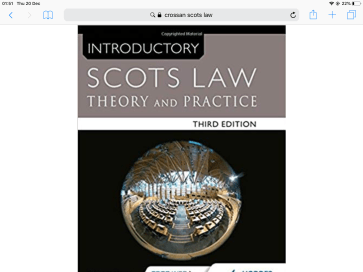













 Seán Crossan's Scots Law