Everyday experiences of racism

Photo by Markus Spiske on Unsplash

In several of my previous blogs (Stick and stones may break my bones, but names will never hurt me? published on 22 February 2019 and Hurt feelings published on 14 February 2019), I considered the psychological impact of racist behaviour on the victim.

A person’s race, of course, is a protected characteristic in terms of the Equality Act 2010.

Courts and Tribunals are permitted to factor into a compensation award an element for the injury to feelings that a victim of discrimination has suffered. This calculation is carried out by reference to a scale known as the Vento Guidelines.

Injury to feelings can encompass, amongst other things, sensations of isolation, exclusion, anxiety and depression, fear, loss of self-esteem and even post traumatic stress.

An interesting example of how black people can encounter racism on a daily occurrence was reported by the BBC today.

The writer, Derek Owusu talks about the fact that, very often, white people do not wish to sit beside him on public transport. Doubtless, these kinds of experiences have a very negative effect on the wellbeing of many individuals in Derek Owusu’s situation. What should otherwise be a routine commute can turn into a nerve-wracking experience.

A link to the article and a video on the BBC News site can be found below:

Derek Owusu: ‘There are always empty seats beside me’

Writer Derek Owusu says his commute on public transport reveals the everyday racist actions black men in particular are subjected to in the UK.

In UK academic circles, it would seem that less favourable treatment in relation to a person’s race is widespread with a looming ethnic pay gap as the story below demonstrates:

Ethnic minority academics earn less than white colleagues

BBC analysis shows a 26% ethnic pay gap at some of the UK’s best-known universities.

Copyright Seán J Crossan, 10 April 2019

Drunk and disorderly?

Photo by Bobby Rodriguezz on Unsplash

Misconduct

Several of my previous blogs have focussed on misconduct inside and outside the work place. In the most serious cases of (gross) misconduct, an employer could fairly dismiss an employee (Section 98(2)(b): Employment Rights Act 1996.

That said, employers are well advised to follow proper pre-dismissal procedures – usually in line with the latest ACAS Code of Practice on Discipline and Grievance at Work.

Summary (i.e. on the spot) dismissal can be an appropriate response to a breach of discipline by an employee, but I tend to caution employers against this. The eminent English judge, Sir Roger Megarry VC was quite correct to warn employers about the dangers of what they might perceive to be an open and shut case (see John v Rees & others [1969] 2AER 274, CD). It’s always better to be safe rather than sorry and by carrying out a procedure, the employer is minimising its exposure to risk i.e. the possibility of a successful unfair dismissal claim brought by the employee.

A typical disciplinary process usually consists of the following stages:

  • Stage 1: The investigation of the allegations
  • Stage 2: The disciplinary meeting
  • Stage 3: The appeal hearing

If the investigation uncovers clear evidence that the employee should be exonerated of all allegations of misconduct, the employer is legally bound to put a stop to the disciplinary process (see A v B [2003] IRLR 405; Salford Royal NHS Foundation Trust v Roldan [2010] EWCA Civ 522; Miller v William Hill Organisation Ltd UKEAT/0336/12/SM [2013])

It is also important to note that the employer must set out the disciplinary charges as clearly as possible so that the employee can prepare her case. The employer cannot, under any circumstances, play fast and loose with the disciplinary charges as this may undermine the integrity of the entire disciplinary procedure (see Strouthos v London Underground [2004] IRLR 636 CA and Celebi v Scolarest Compass Group UK & Ireland Ltd UKEAT/0032/10/LA [2010]).

If, however, matters proceed to a formal, disciplinary meeting, the allegations must be put to the employee and the evidence which supports them. The employee in turn has the right to present her case to the disciplinary panel or manager taking the proceedings. In terms of the Employment Relations Act 1999, the employee has a right to be accompanied by a colleague or a recognised trade union representative.

Should the disciplinary meeting arrive at a decision to dismiss the employee for misconduct, it is extremely important to allow an appeal (see West Midlands Co-operative Society v Tipton [1986] 1 ALL ER 513). An appeal can lead to the dismissal being upheld or overturned; and it can be used to cure any defects in the previous stages of the disciplinary proceedings.

Discipline at work

It’s very common (indeed essential) for employers to have detailed codes of practice or discipline which regulate the behaviour of employees inside and outside the work place. The content of disciplinary codes should be clearly communicated to employees. For new employees, this could be carried out as part of their induction process. For existing employees, a regular series of training seminars or development events could accommodate this aim. The urban myth that what happened outside the work place is no business of the employer is that exactly that: a dangerous myth. If staff misbehaviour outside working hours causes serious reputational damage to the business or the organisation, the employer is entitled to treat this as gross misconduct and to use the ultimate disciplinary sanction of dismissal.

Examples of gross misconduct might include any of the following:

  • Alcohol and drug abuse
  • Acts of bullying & harassment
  • Fraud
  • Negligent performance of duties
  • Theft
  • Persistent late-coming

The above list is by no means an exhaustive one, but it covers some of the most common examples of gross misconduct.

As I have discussed in a previous blog, It happened outside work (or it’s my private life!) (published on 7 February 2019), employers do not have an automatic right to meddle in employees’ private lives. The right to a private life is protected in terms of Article 8 of the European Convention on Human Rights (as implemented by the both the Scotland Act 1998 and the Human Rights Act 1998). Employers will have to walk a very fine line between what is a legitimate act to protect their business interests and what would otherwise be unwarranted interference in the private lives of employees.

Lloyd’s of London

So, bearing all of the above in mind, it was with some interest that I read today that Lloyd’s of London, the financial giant, was introducing a new code of conduct for employees. This is in the wake of some unpleasant allegations being disclosed about the business – sexual harassment claims and drunkenness and drug taking.

Traditionally, the serving of alcohol at business meetings in the City of London or long, boozy lunches were as much a fixture of the Square Mile as was St Paul’s Cathedral. Alcohol oiled the wheels of commerce it was thought, but it also encouraged people to behave recklessly within a work environment.

It would seem that, in other work places, employees seem to know that they can’t turn up for work under the influence of drugs or alcohol, but Lloyd’s obviously feels that it still has a problem with these issues and they need to be addressed. Admittedly, two years ago, the organisation did ban employees from drinking alcohol between 0900 and 1700 hours.

The new code of conduct at Lloyd’s will apply not only to its 800 employees, but also to any person who holds a pass to its London HQ (potentially such 40,000 individuals). Anyone attempting to enter Lloyd’s HQ who appears to be under the influence of drugs or alcohol (or both) will be denied admission to the premises.

A link to the BBC News article about the new code of conduct at Lloyd’s can be found below:

Lloyd’s of London insurance has a new code of conduct, but not everyone welcomes it.

Lloyd’s of London calls time on drink and drugs

Photo by Boris Stefanik on Unsplash

Conclusion

Misconduct by employees – both in and outwith the work place – can be used by employers as a potentially fair reason for dismissal in terms of Section 98 of the Employment Rights Act 1996. Employers must ensure that employees clearly understand what is expected of them in terms of their conduct. It is very important, however, that employers carry out proper procedures when contemplating dismissal as the ultimate sanction for breaches of the disciplinary code. By implementing a new code of conduct, Lloyd’s of London is carrying out a risk management exercise i.e. spelling out what is and isn’t acceptable behaviour in and outside the work place. This is very wise given the bad publicity which Lloyd’s has experienced in the past regarding allegations of employee misconduct.

Copyright Seán J Crossan, 9 April 2019
The trouble with veganism …

Photo by Kylli Kittus on Toimetaja tõlkebüroo: https://toimetaja.eu/

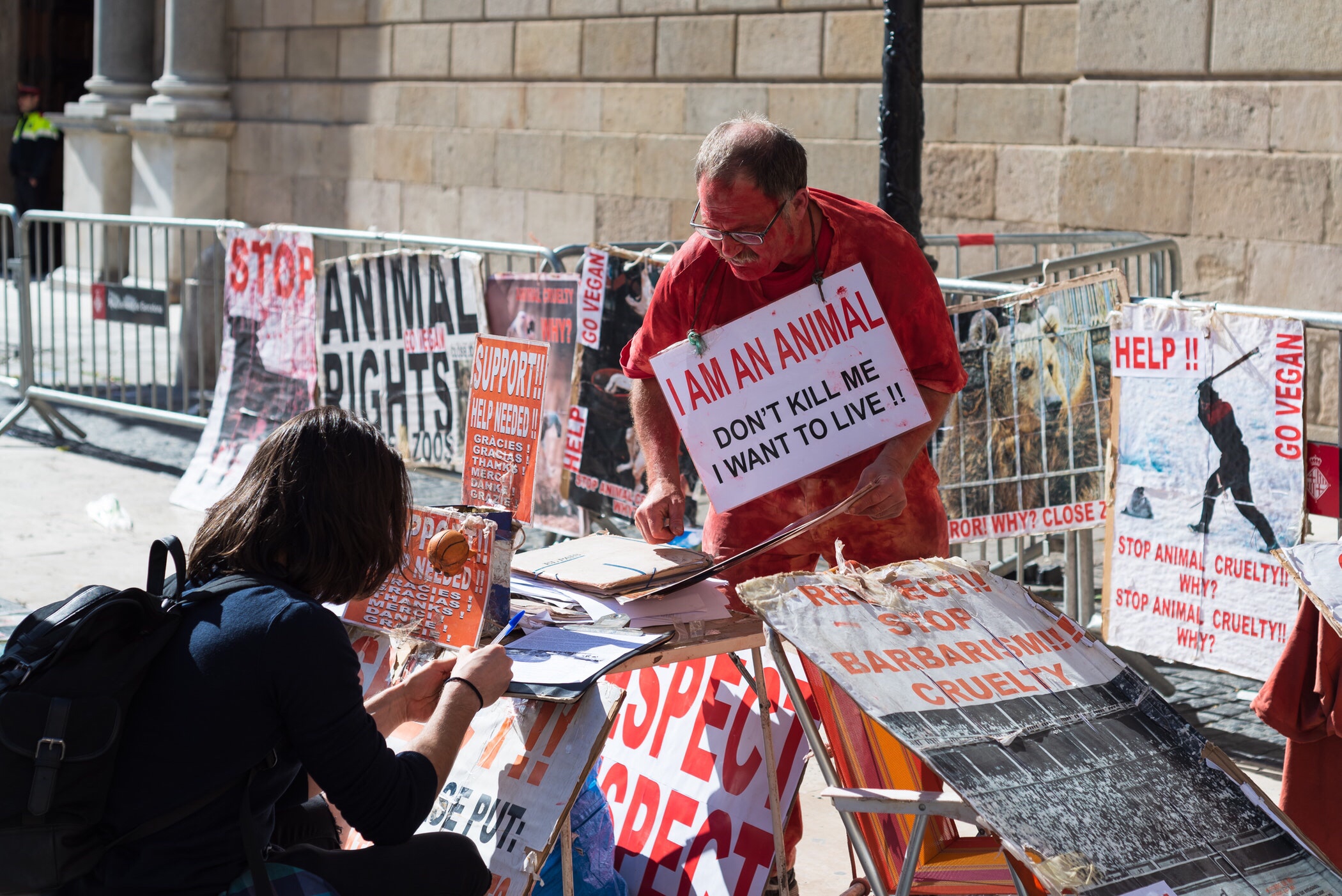
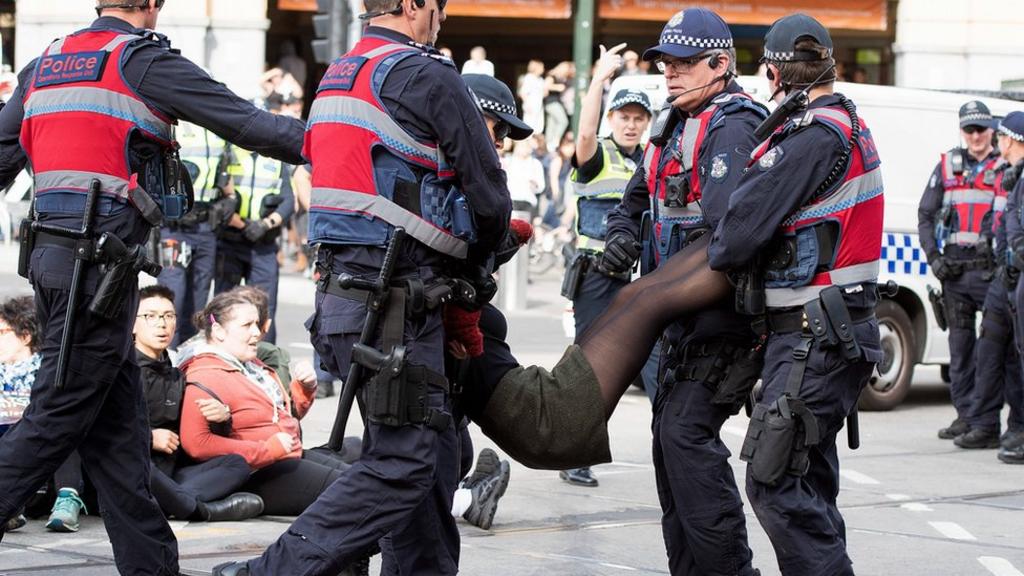
… is that it’s shameful and un-Australian according to Scott Morrison, Prime Minister of that country. The Australian Premier spoke as the country witnessed nationwide protests by vegans (Some of whom chained themselves to abattoirs, amongst other things). The protesters are, of course, attempting by their actions to highlight the issue of cruelty to animals.

Mr Morrision’s remarks are certainly two of the more interesting descriptions (criticisms) of veganism that I’ve heard uttered recently.

In a number of previous Blogs, I’ve discussed the possibility of veganism being regarded as a philosophical belief capable of being legally protected in terms of the Equality Act 2010. At the time of writing, we still await the decision of the London Employment Tribunal in the matter of Casamitjana v the League Against Cruel Sports (which was lodged in late 2018) as to whether veganism should be a legally protected, philosophical belief.

A link to the story from Australia can be found on the BBC News website:

Vegan protests: ‘Un-Australian’ activists arrested, PM Morrison says

Scott Morrison rebukes animal rights activists after dozens are arrested in nationwide protests.

A special report by Peter Egan for Sky News raises serious considerations about veganism.

Egan, a British actor who was well known to audiences in the 1970s and 1980s, is now a prominent animal rights activist and I think it can be fairly implied that he probably thinks veganism is an ethical choice which should be capable of respect in a democratic society. After all, in 2011, the Employment Tribunal decided that an animal rights activist who believed in the sanctity of all animal and human life held protected, philosophical beliefs (anti-fox hunting beliefs) and should not be discriminated as a consequence of them (see Hashman v Milton Park (Dorset) Ltd (t/a Orchard Park) ET/3105555/2009).

A link to Egan’s report for Sky News can be found below:

https://news.sky.com/story/i-visited-a-dog-meat-market-the-horror-keeps-me-awake-at-night-11684081?

A link to the Hashman judgement can be found below:

https://uk.practicallaw.thomsonreuters.com/Link/Document/Blob/I42aa7bb90c5511e498db8b09b4f043e0.pdf?targetType=PLC-multimedia&originationContext=document&transitionType=DocumentImage&uniqueId=27215574-54b1-4c5f-b839-6b11ecab733a&contextData=(sc.Default)

Copyright Seán J Crossan, 8 April 2019

The future will be here sooner than you think …

Photo by Fabian Blank on Unsplash

I often say to my students that it’s never too early to start saving for retirement. This sage advice usually causes some hilarity amongst a group of individuals who, typically, are still in their late teens.

The UK Parliament passed the Pensions Act 2008 which, eventually, would compel employers to enrol their qualifying employees in a recognised occupational pensions scheme.

Historically, many employees might work for an employer without paying into a proper occupational pension scheme. This meant that, when people retired, they were almost entirely dependent on the state pension (a not particularly generous welfare state benefit). The spectre of pension poverty became a worrying concern for many.

People who worked in the public sector (e.g. civil servants, teachers, lecturers, NHS employees) were often encouraged to join superannuation (pensions) schemes which the State had set up. Individuals working in the private sector might not be so lucky: when approaching their late 30s or early 40s, they might start to think about private pension arrangements. To their shock and horror, these individuals might be faced with the prohibitive costs of setting up a private pension. Had they be encouraged to do this in their late teens or early 20s, they would have paid a lot less towards the cost of their retirement (and a more secure financial future in their old age).

The ageing society

So, for some time now, we have been faced with the reality of an ageing population in the UK. The Government has raised the state pension age to 66 which means that many people will be working for much longer than their parents. There are plans to raise the state pension age to 67 between 2026 and 2028.

The written statement of the main terms of employment – which every employee must receive within 8 weeks of commencing work – must now contain information about an occupational pensions scheme (as per Section 1 of the Employment Rights Act 1996).

From this April (2019), changes to occupational pensions schemes will mean that qualifying employees must contribute more towards their retirement (up from 3 to 5%), but employers must also pay more towards the scheme. For employers, setting up an occupational pensions scheme is a legal duty – even if you employ one qualifying individual only. Employees who earn less than £10,000 per year are not automatically enrolled in an occupational pension scheme.

A link to an article about the imminent changes to occupational pensions can be found below:

Ten million people face higher pension payments

Photo by Fancycrave on Unsplash

A bigger chunk of wages will now be automatically diverted to a pension, but employers will put in more too.

A link to the UK Government’s pension regulator website providing more information on pensions for employees and employers can be found below:

https://www.workplacepensions.gov.uk

Copyright Seán J Crossan, 6 April 2019

The Gender Pay Gap (Part 2)

Photo by Sammie Vasquez on Unsplash

Yet more bad news this morning on the equal pay front (or should that be unequal pay?). This comes on the back of figures published earlier this week by the UK Government’s Equalities Office which revealed that the gender pay gap was particularly wide at many British universities (see my previous blog entitled The gender pay gap published on 30 March 2019).

The BBC reports that, according to its analysis of official figures, less than half of the largest UK employers have made positive efforts to narrow the gender pay gap in their organisations.

Clearly, many employers are not taking their legal responsibilities seriously enough in relation to the equal pay provisions of the Equality Act 2010 and EU Law (e.g. Article 157 of the Treaty on the Functioning of the European Union).

A link to the BBC report can be found below:

https://www.bbc.co.uk/news/business-47822291

The BBC has also produced some animated content about the gender pay gap:

https://www.bbc.co.uk/news/resources/idt-a524dd3a-c09c-4f09-bc03-c5006d75ef96

Alan Jones writing in The Independent about the issue quoted SNP MSP, Jenny Gilruth who stated:

Although Scotland has already taken great strides towards combating inequality between men and women, we still need to go further to achieve a truly equal society. The gender pay gap is smaller in Scotland than it is in the UK, but our economy could benefit by a further £15bn if we had the powers to fully eradicate that gap between male and female workers.

The evidence is clear: better opportunities for women to participate fully in our economy means improved performance overall. We have the opportunity to achieve more in Scotland when it comes to equality than the painfully slow progress Westminster has delivered.”

A link to the article in The Independent can be found below:

‘This is your second warning …mind the gender pay gap’

https://edition.independent.co.uk/editions/uk.co.independent.issue.050419/data/8855626/index.html

Copyright Seán J Crossan, 5 April 2019

Don’t fly with us …

Photo by Joel Barwick on Unsplash

Yet another story in the news today about the possibility of redundancies. UK airline Flybe has cancelled many flights because of the prospect of having to make staff redundant.

This has occurred because Flybe appears to be in serious financial difficulties.

As discussed in previous blogs, redundancy is a potentially fair reason for dismissal of employees if carried out correctly. The definition of redundancy appears in Section 139 of the Employment Rights Act 1996.

Flybe cancels flights amid redundancy talks

Flights from Belfast City Airport and from Birmingham are among the dozens of flights affected.

Copyright Seán J Crossan, 3 April 2019

The watchdog that didn’t bark ..

Photo by Paul Thomas on Unsplash

In Chapter 1 of Introductory Scots Law, I discuss the role of regulatory bodies. This was also a subject that I commented on in three previous blogs (Watchdogs published on 14 March 2019; No more heartbreak hotel? also published on 14 March 2019; and Stuck at Red published on 22 March 2019).

Regulatory bodies (usually established under statutory authority) can provide important safeguards for the public by ensuring that there is a system of effective oversight in place to police the activities of businesses. Traditionally, consumers are usually in a much weaker position (economically speaking) when it comes to their relationships with business organisations – especially bigger concerns. In essence, the regulators exist to uphold and fight for the public interest (e.g. to guarantee consumer choice) and to ensure free and fair competition in various market places e.g. the utilities market or the financial services market.

As we have seen, regulators such as the Competition and Markets Authority can crack down on all sorts of unfair and misleading commercial practices which have a negative impact on consumers (No more heartbreak hotel?).

What if the regulator fails?

Regulators aren’t always effective and can sometimes fail to carry out their duty of care. The now defunct Financial Services Authority (which was previously a major UK regulator) is accused of failing in its duty of care. This concerns the merger between the Co-op Bank and the Britannia Building Society. The charge against the Financial Services Authority is that the merger was given the green light despite serious misgivings about the wisdom of this tie-up between the two organisations being voiced. A major review of the merger in 2009 (chaired by Sir Christopher Kelly) has concluded that it should not have been allowed to proceed.

Please see links to the story which was reported by the BBC and Sky News last week:

Co-op Bank and Britannia merger ‘should never have happened’

The Co-operative Bank’s merger with the Britannia building society in 2009 should never have happened, a major review of the organisation has concluded.

Co-op Bank left ‘defenceless’ by regulator in ill-fated merger

https://news.sky.com/story/co-op-bank-left-defenceless-by-regulator-in-ill-fated-merger-11676710

Copyright Seán J Crossan, 3 April 2019

Where there’s blame, there’s a claim?

Photo by Kevin Grieve on Unsplash

Where there’s blame, there’s a claim? Not if you try to fake an accident there isn’t, as one woman from West Yorkshire has found to her cost.

Trip and slip claims are very common types of delict actions (tort in England), but they have to be genuine if the pursuer (claimant) is to have any chance of success. In Chapter 3 of Introductory Scots Law, I discuss the most common type of delictual claim – negligence – and the fact that the pursuer generally must prove that the defender was at fault.

On 2 April 2019, the BBC reported that Farida Ashraf of West Yorkshire had been successfully convicted in a private prosecution, at Bradford Crown Court, brought by the insurance company, Aviva. Ms Ashraf had submitted a personal injury claim for £3,000 in relation to an alleged accident at a Bradford supermarket. This civil claim had been dismissed because it was basically fraudulent. Aviva then commenced a private prosecution against Ms Ashraf, which resulted in her receiving a 21 month prison sentence (suspended for 2 years).

As a point of comparison between Scotland and England, it’s interesting to note that this was a private prosecution brought by Aviva. Such an action would not have happened in Scotland because the Crown Office and Procurator Fiscal Service decide whether criminal proceedings should have been initiated – not a private party like Aviva. In Scotland, insurance companies can, of course, report their suspicions to the Police that a claim may be fraudulent. The Police can investigate and a report will then be submitted to the Procurator Fiscal.

The private prosecution brought against Ms Ashraf is thought to be one of the first successful types of such actions in England.

A link to the BBC article can be found below:

Woman staged fall at Bradford store to claim payment

Farida Ashraf tripped over a crate placed by accomplices and tried to claim £3,000 for injuries.

Copyright Seán J Crossan, 3 April 2019

Hell on the High Street

Photo by kevin laminto on Unsplash

It’s been a tough time for many retailers on the UK high street over the last few years.

This has led to a succession of well known businesses going into liquidation (e.g. Maplins and Toys ‘R’ Us UK ) or being taken over by other companies (e.g. Evans Cycles and House of Fraser).

In February 2019, it was announced that the music chain HMV was being taken over by Sunrise Records, a Canadian company. Sunrise was willing to take over 100 former HMV and Fopp Records stores from the company administrators. As a result of this acquisition, nearly 1500 jobs were saved. Unfortunately, 27 stores had to close with the loss of 445 jobs. Many music and film fans will lament the loss of Fopp’s Byres Road store in Glasgow which was one of the outlets that ceased trading.

The lucky HMV and Fopp employees will have their employment transferred to Sunrise Records in terms of the Transfer of Undertakings (Protection of Employment) Regulations 2006. This protects them from dismissal and guarantees continuation of their core terms and conditions of employment.

As for the unlucky employees, they are being made redundant in terms of Section 139 of the Employment Rights Act 1996. Redundancy is a potentially fair reason for dismissal – so long as the procedure is carried out fairly and objectively.

A link to a BBC article about the takeover of HMV and Fopp by Sunrise Records can be found below:

HMV chain saved but some stores will close

The firm is to buy 100 stores out of administration, but 27 outlets will close, including the Oxford Street store

Copyright Seán J Crossan, 3 April 2019

More TUPE Stories

Photo by Jonas Svidras on Unsplash

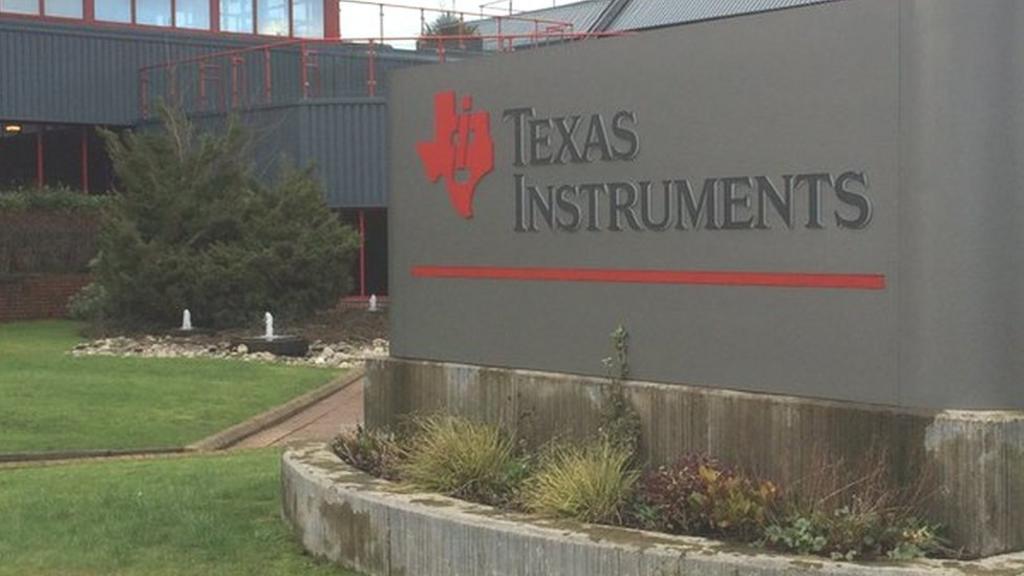
Back in February of this year, it was reported that the Texas Instruments semi-conductor plant in Greenock, Inverclyde had been saved from closure. The American company, Diodes had agreed to take over the ailing business.

This meant that over 300 employees of Texas Instruments had their employment transferred to Diodes. Such a situation – the transfer of an undertaking – is governed by the Transfer of Undertakings (Protection of Employment) Regulations 2006. The transfer means that this group of employees will have their employment, their continuity of service and their core terms and conditions of employment preserved and protected.

These individuals are now safe from the threat of dismissal due to redundancy (as defined by Section 139 of the Employment Rights Act 1996).

The take-over of Texas Instruments by Diodes was effectively completed as of today (2 April 2019).

A link to the story that the plant had been taken over by Diodes in February can be found below:

Copyright Seán J Crossan, 2 April 2019