Scottish Legal News reports today that the Scottish Civil Courts have seen a 10% increase in the volume of business in the year 2017/18, according to official statistics published on behalf of the Scottish Government.
Over 81,000 civil cases were commenced in either the Court of Session or the Sheriff Court. The Sheriff Personal Injury Court now dealing with approximately 33% of personal injury cases.
Interestingly, the figures show that, since 2015/16, the volume of cases handled by the Court of Session have seen a decrease of 48%. More cases are now being commenced in the Sheriff Court. This may seem staggering at first glance, but it was always the intention of the Gill Review (discussed in Chapter 1 of Introductory Scots Law) to reduce the workload of the Court of Session in this way.
The Courts Reform (Scotland) Act 2014 implemented many of the recommendations that Lord Gill promoted and this has led to a profound reorganisation of the jurisdiction of both the Court of Session and the Sheriff Court (also discussed in Chapter 1 of Introductory Scots Law).
The official statistics demonstrate that the following three types of civil action are the most common:
Debt recovery (bankruptcy and diligence)
Family actions
Evictions
The Scottish Legal News article can be viewed by clicking on the link below:
Crime is a hugely emotive issue – particularly so for the victims and their families. It is important to remember, however, that the primary purpose of the criminal justice system is to punish offenders who break the collective rules of society as a whole. It is the State which takes vengeance on behalf of the community or society. It is not about the individual rights of victims and, as such, we have a public system of prosecution in Scotland. As discussed in Chapter 1 of Introductory Scots Law, the State is extremely unwilling to allow private prosecutions to proceed and these remain very rare in practice.
In two previous Blogs (“Commit the crime, do the time” published on 4 March 2019; and “Life should mean life?” published on 22 March 2019), I discussed the issues of sentencing by the Scottish criminal courts and, specifically, what exactly a life sentence entails.
I now want to turn my attention to the matter of prisoners making an application to the Scottish Parole Board for release.
The Parole Board is a statutory Tribunal independent of the Scottish Ministers.
Should the victims of crime or their family members have a say in whether the Parole Board decides that a prisoner ought to be released?
This issue has received some media attention because, on 27 March 2019, the Scottish Government closed its Consultation into the Parole system (Transforming Parole in Scotland).
The Faculty of Advocates responded to the Consultation and agreed, with certain reservations, that the opinions of victims should be taken into account at parole hearings, but on a limited basis and within clear terms of reference.
Essentially, the Faculty believes that any input from victims in parole proceedings should be restricted to the submission of a Victim Personal Statement which would be considered by the Board. The Faculty had misgivings about allowing victims or their families to attend parole hearings and for the Board to release detailed reasons for its decisions.
As the Faculty noted, the primary purpose of the Board “is assessment of risk, and that should remain central in consideration of any reform.”
A link to the Faculty’s response to the Scottish Government’s Consultation can be found below:
The response by the Faculty of Advocates to the Government’s Consultation is unlikely to please everyone, but it does recognise that victims of crime and their families have a role to play (albeit a somewhat limited one). As the Faculty, critically, argues the role of the Parole Board is to assess the risk to the public of releasing a prisoner from incarceration. The opinions of the victims and their families must necessarily take second place here.
Readers of this Blog will be aware of several, previous entries discussing whether veganism could be considered as a philosophical belief capable of protection in terms of the Equality Act 2010.
The London Employment Tribunal will decide later this year if veganism as a belief system should be a legally protected characteristic (see CasamitjanavLeague Against Cruel Sports lodged in 2018).
What about an individual who has decided to become a vegan? Could this conflict directly with his occupation? BBC Scotland reported on such a story about a butcher who had a secret – he had become a vegan. It sounds like an April Fool joke, but apparently it’s completely true:
On 1 April 2019, many workers will see an increase in the National Minimum Wage rates (set by the Low Pay Commission and adopted by the UK Government).
As discussed in one of last Friday’s Blogs (The Living Wage), the National Minimum Wage rate for those aged 25 or over is not the same thing as the real Living Wage championed by the Living Wage Foundation, and adopted by many employers.
The word segregation has very negative associations and we often think of the American Deep South before the victory of the Civil Rights’ Movement in the 1960s. In more recent times, we think of Apartheid era South Africa and its official policy of segregating the different racial groups.
Segregation on racial grounds would constitute direct discrimination in terms of the Equality Act 2010.
In its code of practice, the Equality and Human Rights Commission has previously used the following example of segregation which would be unlawful:
Example
A British marketing company which employs predominantly British staff recruits Polish nationals and seats them in a separate room nicknamed ‘Little Poland’. The company argues that they have an unofficial policy of seating the Polish staff separately from British staff so that they can speak amongst themselves in their native language without disturbing the staff who speak English. This is segregation, as the company has a deliberate policy of separating staff because of race.
A story (first reported by The Guardian) focused on segregation at a housing development in England. The developers were not prepared to allow housing association tenants on the site to have access to the recreational facilities. Only those individuals who had purchased properties at the development were entitled to make use of them.
On the face of it, this may be another example of the (social) class divide in the UK and no amount of legislation has managed to eradicate this problem. That said, a deliberate policy of segregation as operated by the developers might be capable of legal challenge if it could be demonstrated that the policy was leading to indirect discrimination in connection with a person’s protected characteristics.
I can’t help wondering if the developer carried out an equality impact assessment study before implementing the policy? Indirect discrimination, of course, occurs when an individual or an organisation operates a policy, criterion or practice (PCP) which has a disproportionately adverse effect on a certain group of people.
In a previous Blog (Indirect Discrimination published on 21 February 2019), I discussed this form of discrimination in relation to a story from New York.
It may be the case that a higher proportion of people from minority ethnic groups or non-white British citizens or EU nationals may be tenants of the rented accommodation at the development. We could also have more single parent families living in the rented properties who are headed by a female.
Several of the tenants are looking into the possibility of raising a legal challenge. Although, by the time that the story had gained national publicity, the developer was reconsidering its position.
In July 2019, the UK Government announced plans to introduce legislation in England which would effectively put an end to the practice by developers of having separate entrances and facilities (in effect segregation) for private owners and public sector tenants livingin housing developments.
In Scotland, housing policy falls within the legislative powers of the Scottish Parliament.
A link to the story about the proposed legislation as reported by the BBC can be found below:
An interesting story by BBC Scotland about the demise of the well known Glasgow/Edinburgh law firm, Morisons Solicitors LLP. The story primarily concerns aspects of the transfer of an undertaking.
The majority of staff at Morisons are having their employment transferred: Blackadders Solicitors have agreed to take over the Glasgow operations and Thorntons will take over the Edinburgh side of the business.
The movement of former Morisons’ staff to their new employers will, of course, be governed by the Transfer of Undertakings (Protection of Employment) Regulations 2006. This means that the employees in question will have their employment and their core terms and conditions of employment protected by their new employers.
The prospect of staff being made for redundant, as a result of the collapse of Morisons, is not imminent for the time being.
According to data released by the UK Government’s Equalities Office, the gender pay gap is still depressingly wide in 2019. Yes, this is depressing given the fact that, nearly 50 years ago, the Equal Pay Act 1970 was passed into law (although it wasn’t brought into force until 1975). The law on equal pay is now, of course, contained in the Equality Act 2010. It is also an area which has also been heavily influenced by EU Law.
Saturday 30 March 2019 was the final date for public sector organisations (employing over 250 people) to submit data on their gender pay gap to the UK Government. Private companies have until 4 April 2019 to submit this information. Thousands of organisations have left this to the last minute or failed to submit the information at all.
The gender pay gap problem is particularly acute in the UK university sector as the BBC reported today:
The BBC article contains a useful link allowing employees to calculate the pay gap at their organisation.
On Friday 29 March 2019, The Guardian reported that the gender pay gap amongst male and female graduates is widening (so not a positive picture overall):
Graduate gender pay gap is widening, official figures reveal
Something really seismic was going to happen at 2300 hours today (Friday 29 March 2019). Brexit!
Major spoiler alert:
Just in case you weren’t aware about the worst kept secret in UK politics: Brexit (the UK’s withdrawal from the European Union) isn’t happening today.
Section 20 of the European Union (Withdrawal) Act 2018 states that “exit day” should be interpreted as meaning 29 March 2019 at 11.00 p.m. Section 1 of the Act explicitly repeals the European Communities Act 1972 which made this country a member state of the European Communities from 1 January 1973.
I have deliberately avoided writing about Brexit (except where it relates to incidental matters covered in earlier Blogs) because no one knows what is going to happen.
This Friday afternoon, Prime Minister Theresa May’s third attempt at holding a meaningful vote on part of the withdrawal agreement she negotiated with the EU has (once again) hit the buffers. The House of Commons has rejected the Prime Minister’s motion by 344 votes to 286.
The legal position
What does this situation actually mean?
The UK remains a member state of the EU (for how long who can say?).
From a legal point of view, the UK will continue to be subject to EU law and policy – as much as any other of the 27 member states.
We should be very clear: the withdrawal agreement, which is causing Prime Minister May all sorts of nightmares, is merely the terms of the divorce. The future (trading) relationship between the UK and the EU is still to be worked out. Good luck with that – although Liam Fox MP, the International Trade Secretary did assure us that this would be the easiest trade deal in history:
In any event, EU law, as a source of Scots Law, was never going to disappear overnight even if the UK Government had managed the process of Brexit successfully. The reason for this is that much of EU Law is hardwired into the Scottish and English legal system. Admittedly, the European Union (Withdrawal) Act 2018 did attempt to address this by carrying over existing EU Law into domestic legislation. The Scottish Parliament also introduced its own Continuity Bill to deal with Brexit (the UK Withdrawal from the European Union (Legal Continuity) (Scotland) Bill), but this has not received Royal Assent due to a successful legal challenge by the UK Government.
It would have been sheer stupidity for the UK to withdraw unilaterally from EU Law on Brexit Day. What would have been the law relating to such diverse areas such as consumer rights, employment rights, the environment and equality? Instead of legal certainty, there would have been chaos (well more chaos than is currently the case).
The continuity provisions of the EU (Withdrawal) Act 2018 deal with the problem of direct EU Law such as Regulations and Decisions (secondary legislation) which are already in force on Exit Day. These legislative acts will continue to form part of the legal terrain in the UK until such time as they were either retained (if so desirable) or repealed (if no longer desirable).
An example of this is Regulation (EU) 2016/679 of the European Parliament and of the Council of 27 April 2016(better known as the General Data Protection Regulation) which came into force in the UK on 25 May 2018. This very important legislative instrument will almost certainly survive Brexit for the time being.
The General Data Protection Regulation is also an interesting example of the well established legal principle of the supremacy of EU Law over domestic law in the UK (or any other member state for that matter). The Regulation was passed on the 27 April 2016 – nearly two months before the Referendum of 23 June 2016 – and implemented across the EU member states on 25 May 2016 – nearly two years after the Referendum.
Depending of course on the shape of the UK’s future relationship with the EU, it may be the case that, despite Brexit, EU Law may continue to have some influence in this country.
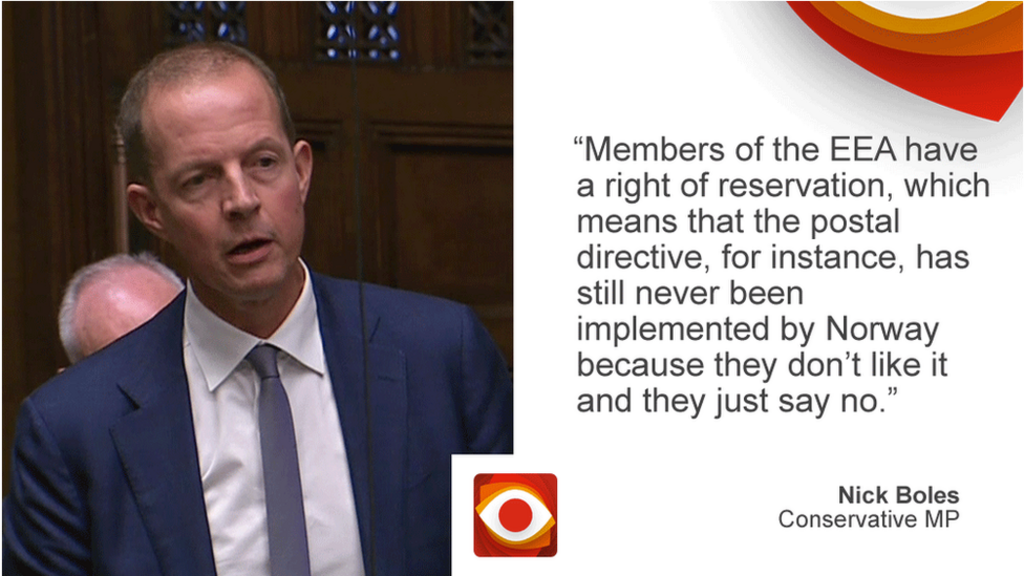
For an example of a country which is not an EU member state, but still has to implement certain EU Laws, please see a link to an article below:
Nick Boles MP says Norway refused to adopt an EU directive. Is he right?
EU Directives
Directives, on the other hand, present something of a more difficult problem.
The sheer task of dealing with the impact of EU Directives is truly staggering. According to the House of Commons Research Library, in 2016, there were 900 extant European Directives – the vast majority of which had been transposed into the legal systems of the UK:
These legal principles contained in these Directives (come Brexit) will not simply vanish into thin air. They have introduced to Scots Law primarily by way of Acts of Parliament and UK statutory instruments. The courts have also played a role in ensuring that Scots Law (and English/Welsh/Northern Irish Law) complies with the principles contained in Directives (think of Equal Pay cases from the 1980s).
The Equality Act 2010 is one such example. Its provisions cover the following matters:
Age discrimination
Pregnancy and maternity discrimination
Race discrimination
Religion and belief discrimination
Sexual orientation discrimination
The general prohibition concerning these types of discrimination were originally contained in European Directives and decisions of the Court of Justice of the European Union.
We also have very specific statutory instruments which implement the objectives of Directives:
The Working Time Regulations 1998
The Part-Time Workers (Prevention of Less Favourable Treatment) Regulations 2000
The Fixed-Term Temporary Employees (Prevention of Less Favourable Treatment) Regulations 2002
The Information and Consultation of Employees Regulations 2004
The Transfer of Undertakings (Protection of Employment) Regulations 2006
The Agency Workers Regulations 2010
In relation to consumer law, the following examples of legislation have been heavily influenced by EU Law:
The Consumer Credit Act 1974
The Consumer Protection Act 1987
The Consumer Protection from Unfair Trading Regulations 2008
The Consumer Contracts (Information, Cancellation and Additional Charges) Regulations 2013
The Consumer Rights Act 2015
Conclusion
This is not a pro or anti Brexit article. My point is that it will not be easy for any future UK Parliament to eradicate, depending on your political view) (the virus?) of EU Law from the Scottish legal bloodstream. Taking back control will involve a lot of legislative time being expended to this end. We only have to look at Brexit and its consequences have engulfed our law-makers since the Referendum was held on 23 June 2016.
Furthermore, for the last 46 years, Scots lawyers have become accustomed to the application of EU legal principles in the exercise of their professional duties. Quite simply, for many such individuals, they will have been dealing with EU legal rules for the entirety of their careers. I confess: I have never known anything else.
The transformative nature of EU Law was recognised as far back as 1974 by the famous English judge, Lord Denning MR in HP BulmerLtd and another vJ Bollinger SA and others[1974]2 ALL ER 1226.
“Butwhen we come to matters with a European element, the treaty is like an incoming tide. It flows into the estuaries and up the rivers. It cannot be held back. Parliament has decreed that the treaty is henceforward to be part of our law. It is equal in force to any statute. The governing provision is s 2(1) of the European Communities Act 1972. The statute …is expressed in forthright terms which are absolute and all-embracing. Any rights or obligations created by the treaty are to be given legal effect in England without more ado. Any remedies or procedures provided by the treaty are to be made available here without being open to question. In future, in transactions which cross the frontiers, we must no longer speak or think of English law as something on its own. We must speak and think of Community law, of Community rights and obligations, and we must give effect to them. This means a great effort for the lawyers. We have to learn a new system. The treaty, with the regulations and directives, covers many volumes. The case law is contained in hundreds of reported cases both in the European Court of Justice…We must get down to it.”
Postscript 🇪🇺🇬🇧
At a European Council meeting on 10 April 2019, the heads of government of the other 27 EU member states agreed to give the UK an extension to Article 50 until 31 October 2019.
A short video of Donald Tusk, the President of the European Council, announcing the Brexit extension can be found below:
A link to the EU’s response to Brexit can also be found below:
An interesting article appeared in today’s Independent about a campaign to encourage Waterstone’s, the well known high street book retailer, to pay staff the Living Wage.
As I often say to my students, when discussing the issue of pay, it is a hugely emotive issue – especially if you happen to be at the lower end of the wage scale and have difficulty getting your proper entitlement.
The idea of the employee or labourer being worthy of his or her hire is a deeply ingrained cultural norm in European and North American societies (largely underpinned by many scriptural references in both the Old and New Testaments of the Christian Bible e.g. Deuteronomy 24: 15 and Matthew 20: 8).
The employer, of course, has a contractual duty to pay her employees in return for them providing services.
“Paying the living wage also makes sense from a business perspective. The Living Wage Foundation said that 93 per cent who paid the wages had seen benefits in retention and motivation of staff, and company reputation.”
As the Living Wage Foundation emphasises the real Living Wage is £10.55 for those working in London and £9 for those working across the rest of the UK. As we shall see, the UK Government introduced its own version of the Living Wage in 2016, but this is less generous. This was effectively a higher National Minimum Wage rate for people aged over 25.
As the Foundation states:
“The real Living Wage rates are higher because they are independently-calculated based on what people need to get by. That’s why we encourage all employers that can afford to do so to ensure their employees earn a wage that meets the costs of living, not just the government minimum.”
A link to the website of the Living Wage Foundation can be found below:
The introduction of the National Minimum Wage Act 1998 ensured that workers must receive a basic hourly wage depending on their age.
One of the most important changes to the National Minimum Wage Scheme since February 2005 is the inclusion of young workers i.e. young persons aged 16 and 17 years old. Previously, these individuals were not covered by the National Minimum Wage Act 1998. The British Government, however, finally accepted the recommendation of the Low Pay Commission that the Scheme should be extended to young workers.
The Living Wage
In many respects, the debate about the National Minimum Wage has moved on from the late 1990s when organizations such as the Conservative Party, the Confederation of British Industry and the Institute of Directors were uniformly hostile to its introduction by the first Labour Government of Tony Blair (1997-2001) on the grounds that immense damage would be done to the British economy. These fears were not realized and the minimum wage has become an accepted feature of British employment rights. The debate concerns the introduction of the Living Wage.
The Living Wage Foundation actively calls on employers to pay an enhanced income ensuring a basic standard of living. The Labour Party had promised to introduce a Living Wage if elected to form the next UK Government in 2015 and it was thought that, with the Party’s defeat at the last General Election, the idea would be placed on ice during the next Parliamentary term. It was therefore somewhat surprising when George Osborne, the former Conservative Chancellor of Exchequer announced, during his 2015 Autumn Statement, that the Coalition Government intended to introduce a National Living Wage in April 2016.
From 1 April 2016, under the National Living Wage, employers had to pay workers over the age of 25 (and who are not in the first year of an apprenticeship), a minimum hourly rate of £7.20. These individuals must work 2 or more hours a day for 8 or more consecutive weeks of the year. There was no requirement to pay the National Living Wage to volunteers, interns and apprentices – as well as contractors on the supply side. Critics of the Coalition Government were quick to point out that the statutory rate was less than what was understood by the real Living Wage recommended by the Living Wage Foundation (i.e. £7.85 per hour or £9.15 inside London). The Coalition Government had stated that it was committed to raising the National Living Wage by 2020.
From 6 April 2019, the National Minimum Wage will rise from £7.83 per hour to £8.21. The real Living Wage for 2019-20, however, has been set at an hourly rate of £9 outside London and £10.55 inside London.
Employers who refuse to pay the National Living Wage will face enforcement action similar to that already carried out in relation to the National Minimum Wage.
There is no doubt that the Living Wage is an idea whose time has come. It is worth noting that many employers already pay their workers the real Living Wage on a voluntary basis and proudly publicise this fact.
The concept is not without its critics and the BBC reported on 1 April 2016 that the independent Office of Budget Responsibility had calculated that as many as 60,000 jobs could be lost as a result of its introduction. As we have discussed, similar claims in the late 1990s were made about the introduction of the national minimum wage and these proved to be largely groundless.
The positive impact of the National Living Wage seems to be supported by research carried out by the Ulster University Economic Policy Centre. In Northern Ireland alone from 2020 onwards, 128,000 people will benefit from a pay increase due to the National Living Wage being increased.
More than 128,000 in NI will get a pay rise by 2020 due to the National Living Wage, study suggests.
Postscript
The Low Wage Commission published research at the end of April 2019 showing that the number of workers who do not receive the national minimum wage increased in 2018. A link to the Commission’s report can be found below:
An interesting story appeared in today’s Independent newspaper about allegations of racism directed against the office of Tom Watson MP, the Deputy Leader of the UK Labour Party.
The allegations (and they are allegations I would stress at this point) concern claims by a former employee of Mr Watson’s that she was unfairly selected for redundancy. Sarah Goulbourne, the former employee in question is alleging that she lost her post because of her race and/or ethnicity (she is of Afro-Caribbean descent). A person’s race is, of course, a protected characteristic in terms of the Equality Act 2010 and s/he has a right not to be subjected to unlawful discrimination or less favourable treatment.
In terms of the Employment Rights Act 1996, redundancy can be a potentially fair reason for dismissing an employee – if handled correctly and fairly.
If, however, a person was selected for redundancy because they possessed a protected characteristic such as race, this would be extremely problematic for the employer. If racial discrimination could be proved by the ex-employee, the dismissal or termination of the contract on grounds of redundancy would almost certainly be automatically unfair.
Employers can access very useful advice about redundancy handling (and presumably how to get it right) from the ACAS website:














 Seán Crossan's Scots Law