Inequality in the UK

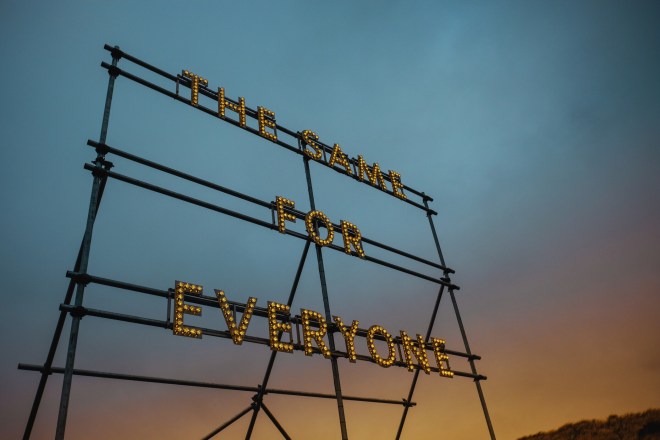
Photo by Søren Astrup Jørgensen on Unsplash

So much for equality of opportunity in 21st century Britain. It looks as if this country is becoming more unequal, if the latest research is to be believed.

True, we have legislation such as the Human Rights Act 1998; the Equality Act 2010; and EU legal principles such as (Article 157) of the Treaty on the Functioning of the European Union (TFEU) which embed anti-discrimination laws. Parliaments and the EU can pass all manner of laws, but this of itself does not guarantee the conditions of true equality to flourish. Equal pay laws have been in force since 1975 in the UK, but tell that to Glasgow City Council female employees who had to struggle every step of the way to win their battle for pay equality in January 2019.

Since the inception of the Scottish Parliament in 1999, Scottish Governments have introduced various initiatives to tackle the scourge of child poverty. The latest attempt can be found in the Child Poverty (Scotland) Act 2017 which aims to combat some of the causes of this problem by 2030. In a recent blog (Food for thought? published on 16 April 2019) I discussed the suggestion, in a report by the Scottish Human Rights Commission, that the right to food security should be recognised as a fundamental human right. This proposal was made against a background of increased use of food banks in Scotland.

Everywhere you go organisations proclaim their commitment to equality and diversity and, if you take things at face value, you might allow yourself to be fooled into thinking that great progress is being made.

We can have a plethora of events such as Black History Month; Disability Awareness Month; World AIDS Day; International Women’s Day; and Day Against Homophobia, Transphobia and Biphobia, but if they are to be judged in any way successful they must lead to real change.

And yet … something is clearly not working when the UK Government’s own Social Mobility Commission concludes (in its latest Report) that levels of inequality in this country remain stubbornly persistent.

Now, the Institute of Fiscal Studies has weighed in with its own take on the matter. Professor Sir Angus Deaton will chair a Review which will examine the causes of inequality in modern Britain. The Institute of Fiscal Studies, a leading UK Think Tank, has stated that rising levels of inequality and exclusion threaten the very foundations of democracy in this country.

In April 2010, Nick Clegg, then Leader of the Liberal Democrats, trumpeted his Party’s manifesto commitment which would ensure that fairness was ‘hardwired’ into British society. I wonder if, from the comfort of his executive office at Facebook HQ in Silicon Valley, Mr Clegg now sees his time as UK Deputy Prime Minister (2010-15) as a wasted opportunity?

In her column in last Saturday’s edition of The Independent, Janet Street Porter spoke of the lack of diversity at the BBC as a working class person

… who managed (against all the odds) to make a living out of working for the BBC, an organisation where (even in 2019) the over-educated and middle class dominate. We’re proof that in modern Britain, social mobility still moves at a glacial pace. …

… For all the BBC trumpets its ethnic, gay and gender-fluid presenters, one category is conspicuously absent on the radio and television – white working class people.”

This inequality can be traced from “birth to work” according to the Social Mobility Commission’s findings:

“In this our sixth State of the Nation report we lay bare the stark fact that social mobility has stagnated over the last four years at virtually all stages from birth to work. Being born privileged in Britain means that you are likely to remain privileged. Being born disadvantaged, however, means that you will have to overcome a series of barriers to ensure that you and your children are not stuck in the same trap.

At a time when our country needs to be highly productive and nimble we impede our own progress as a nation if we do not maximise the talent of all our citizens – especially those that start the furthest behind. We fail if we do not make it possible for every individual to have choices about where they go and what they do in life.

This report shows that more needs to be done to support the most vulnerable. Our analysis finds that, too often, well intentioned policies fail to reach those who would benefit most, while cuts to other provisions disproportionately impact the most vulnerable.

Clearly a lot still has to be done to make the UK a fairer society.

A link to the Social Mobility Commission’s Report can be found below:

https://assets.publishing.service.gov.uk/government/uploads/system/uploads/attachment_data/file/798404/SMC_State_of_the_Nation_Report_2018-19.pdf

A link to the Institute of Fiscal Studies’ website can be found below:

Home

Postscript

Another facet of inequality in the UK was revealed by Sky News on 2 July 2019. A survey revealed that LGBT workers were more likely to be paid less compared to their straight colleagues and were still afraid of revealing their sexual orientation in the work-place:

LGBT+ workers earn less and are still afraid to come out – survey
http://news.sky.com/story/lgbt-workers-earn-less-and-are-still-afraid-to-come-out-survey-11752927

Copyright Seán J Crossan, 13 May & 2 July 2019
Veganism = Discrimination?

Photo by Ivana Milakovic on Unsplash

Regular readers of this Blog will be aware that several of my previous articles have examined whether veganism could be a protected characteristic (a philosophical belief) in terms of Section 10 of the Equality Act 2010.

We still await the decision of the London Employment Tribunal in relation to the case of Jordi Casamitjana v League Against Cruel Sports (lodged in December 2018) which will give us a first indication as to whether veganism is capable of being a protected characteristic in terms of the Equality Act.

A link to an article on the BBC website about Mr Casamitjana’s claim can be found below:

Sacked vegan claims discrimination in landmark case

A landmark tribunal will decide whether veganism is a “philosophical belief” akin to a religion.

In the meantime, Crossland Solicitors (an Oxfordshire based law firm) have carried out some really interesting research concerning the issue of vegan beliefs and work-place discrimination.

Nearly 1,000 employees and 1,000 employers took part in the research. The conclusions from this exercise are that nearly 45% of employees are of the opinion that they have experienced less favourable treatment due to their beliefs and nearly a third of respondents felt that they had been actively victimised by their employers because of their veganism. It seems to be the case that a large number of employers take the view that veganism is a fashion trend or a fad as opposed to an ethical and philosophical set of views which guides people in their daily lives.

Hopefully, the London Employment Tribunal will issue it’s decision in the very near future about Mr Casamitjana’s claim in order to provide some needed clarity to this area of the law.

A link to the research on Crossland’s website can be found below

https://www.crosslandsolicitors.com/site/cases/nearly-half-of-vegans-feel-discriminated-against-at-work

Copyright Seán J Crossan, 12 May 2019

The Outsiders?

Photo by Tyler Nix on Unsplash

The USA is still a very racially divided society in 2019, despite the fact that it elected Barack Obama, an African American to serve as 44th US President (2009-17). Despite this, we’ve seen the growth of the Black Lives Matter campaign in response to numerous instances of Police violence towards African Americans.

Colin Kaepernick, the former San Francisco 49ers American Football player caused controversy in August 2016 when he refused to stand for the US National Anthem as a protest against racism.

Civil Rights Leader, Martin Luther King Jr’s dream that his four little children would live in a nation where they would be judged not by the colour of their skin, but by the content of their character seems more remote than ever.

Teenage years can be a difficult experience for many young people. An interesting perspective on the teenage experiences of a young African American woman was recently published by the BBC.

This young person talked about not fitting in at a school where most of the pupils are overwhelmingly white. Feelings of exclusion and not being accepted by the majority (white student) population are reported:

‘I’m either too black or not black enough’: One teenager’s experience

This is what it means to be black: one African-American teenager’s experience, in her own words.

Postscript

Feelings of isolation are not just confined to African Americans. In a short film for the BBC, four young Black British men talk about their experiences of racism:

Photo by Tamarcus Brown on Unsplash

‘We’re judged for being black’

Four young black men share their experiences of being stereotyped and judged for the colour of their skin.

Copyright Seán J Crossan, 23 April 2019

The Vegan Athlete

Photo by Miika Laaksonen on Unsplash

Over the last few months, articles about veganism have cropped up pretty regularly on this Blog. It’s certainly a way of life for many people, but we still await a legal ruling from the Employment Tribunal as to whether it can be a protected, philosophical belief in terms of the Equality Act 2010 (see Casamitjana v The League Against Cruel Sports lodged at the end of 2018).

In any event, there still seems to be a lot of reservations about veganism as a lifestyle (and a philosophical outlook).

An interesting article appeared on the BBC News website about an athlete who had chosen to become a vegan. Many people criticised this decision (could a vegan compete successfully at this level?), but here’s a young man (Ross Mackay) who bases some pretty important life decisions around his vegan beliefs. Mackay is certainly experiencing and having to overcome a lot of prejudice when many in sporting circles emphasise the importance of meat as a source of protein in order to aid performance.

‘You can succeed as a vegan athlete’

After playing international tennis in his teens, Ross Mackay says he really learned about food when he became vegan.
The vegetarian cyclist

It reminded me of the reaction of many in Europe when the American cyclist, Jonathan or ‘Jacques’ Boyer started to compete in big races. In 1981, he was the first US rider to take part in the Tour de France, taking part five times and his best ever finish was 12th in 1983). Boyer was famously (or infamously – depending on your point of view) a vegetarian. To the French, Boyer’s US nationality was slightly less controversial than his diet (He didn’t eat meat and ate a lot of nuts and berries). Even his own directeur sportif (manager or head coach) Cyrille Guimard spoke of Boyer in slightly disbelieving terms – un marginal i.e. French for a hippy, an outsider or something approximating these attributes. As Ross Mackay would attest, it seems that attitudes in sport haven’t changed a lot in the intervening years.

A link to a short YouTube video where Boyer talks about his experiences of racing in Europe can be found below (Spoiler alert: Boyer refers to Lance Armstrong before he was exposed as a cheat).

Photo by Simon Connellan on Unsplash

Even Peter Sagan, 3 time Tour de France green jersey winner and 3 time world champion keeps his veganism fairly quiet.

Copyright Seán J Crossan, 21 April 2019

Clean Chinese food???!!!

Photo by Alice on Unsplash

Two white American restaurateurs opened Lucky Lee’s, an establishment in Manhattan, New Your City where they advertised that they were serving “clean Chinese food”.

The accusations of racism and stealing from another ethnic group’s culture soon came thick and fast.

The word “clean” was actually being used to try and attract diners who dietary issues, but Chinese Americans saw this term rather differently: it reinforced harmful stereotypes.

A link to the story in the New York Times can be found below:

A white business owner advertised “clean” Chinese food. Chinese-Americans had something to say about it.

https://apple.news/A1q-z7kJgScaN

Postscript

It would seem that accusations of cultural appropriation or theft in the culinary world aren’t confined to just the USA: our very own celebrity chef, Gordon Ramsay, has got himself into hot water concerning the launch of one of his restaurants in London.

Please see the link to the story on Sky News below:

Gordon Ramsay hits back at ‘prejudice and insults’ after cultural appropriation claims

http://news.sky.com/story/gordon-ramsay-hits-back-at-prejudice-and-insults-after-cultural-appropriation-claims-11694567

Copyright Seán J Crossan, 14 and 15 April 2019

Stereotyping = unlawful discrimination?

Photo by Ken Treloar on Unsplash

We can all be guilty of pre-judging other people – sometimes we do this consciously and, at other times, we can do this unconsciously. In other words, we can reduce people to stereotypes.

This becomes a problem if our pre-conceptions about other people cause us to behave in a way that translates into unlawful, less favourable treatment. If we treat others less favourably due to a protected characteristic that they possess (e.g. age, disability, gender, race, sexual orientation etc) in terms of the Equality Act 2010.

Stereotyping or negative perceptions about individuals may well give rise to the victim (with the relevant protected characteristic) having a claim for direct discrimination in terms of Section 13 of the Equality Act 2010).

This recalled a story, from several years ago, in which the BBC reported the experiences of a gay man who was subjected to all sorts of less favourable treatment based on negative stereotyping of LGBTI people. The victim of this offensive behaviour took successful legal action against the individual in question.

A link to this story on the BBC News site can be found below:

Why ‘gay’ gestures are discrimination

Clive Coleman reports on the case of a gay man who has won the first compensation award for discrimination based entirely on homophobic gestures.
More recent examples of negative sterotyping

When glancing through various media stories over the last few days, stereotyping or negative perceptions of people came to mind.

In the first story, sufferers of Parkinson’s Disease spoke about the negative reactions they often experience when going about their daily lives. People with this very serious condition have reported that their symptoms are mistaken by members of the public as drunken behaviour or that they are acting under the influence of drugs. Individuals who suffer from Parkinson’s have a disability in terms of Section 6 of the Equality Act 2010.

A link to this story can be found below:

https://edition.independent.co.uk/editions/uk.co.independent.issue.110419/data/8863856/index.html

In the second story, a person with cerebral palsy (also a disability) speaks about the discrimination that he has suffered.

A link to this story can be found below:

‘My disability is mistaken for drunkenness’

Stuart Devlin, who has cerebral palsy, carries a card to show door staff after being refused entry to pubs.

In the third story, which hails from Russia, the Russian authorities have allowed prisoners to resume yoga exercises during the period of their incarceration.

Previously, the Russian Government had banned this form of exercise for prisoners because it was believed it was linked to homosexuality! In the UK, a person’s sexual orientation is a protected characteristic in terms of Section 12 of the Equality Act 2010.

A link to this story can be found below:

https://edition.independent.co.uk/editions/uk.co.independent.issue.110419/data/8863506/index.html

Photo by Annie Spratt on Unsplash

Copyright Seán J Crossan, 12 April 2019

Everyday experiences of racism

Photo by Markus Spiske on Unsplash

In several of my previous blogs (Stick and stones may break my bones, but names will never hurt me? published on 22 February 2019 and Hurt feelings published on 14 February 2019), I considered the psychological impact of racist behaviour on the victim.

A person’s race, of course, is a protected characteristic in terms of the Equality Act 2010.

Courts and Tribunals are permitted to factor into a compensation award an element for the injury to feelings that a victim of discrimination has suffered. This calculation is carried out by reference to a scale known as the Vento Guidelines.

Injury to feelings can encompass, amongst other things, sensations of isolation, exclusion, anxiety and depression, fear, loss of self-esteem and even post traumatic stress.

An interesting example of how black people can encounter racism on a daily occurrence was reported by the BBC today.

The writer, Derek Owusu talks about the fact that, very often, white people do not wish to sit beside him on public transport. Doubtless, these kinds of experiences have a very negative effect on the wellbeing of many individuals in Derek Owusu’s situation. What should otherwise be a routine commute can turn into a nerve-wracking experience.

A link to the article and a video on the BBC News site can be found below:

Derek Owusu: ‘There are always empty seats beside me’

Writer Derek Owusu says his commute on public transport reveals the everyday racist actions black men in particular are subjected to in the UK.

In UK academic circles, it would seem that less favourable treatment in relation to a person’s race is widespread with a looming ethnic pay gap as the story below demonstrates:

Ethnic minority academics earn less than white colleagues

BBC analysis shows a 26% ethnic pay gap at some of the UK’s best-known universities.

Copyright Seán J Crossan, 10 April 2019

The trouble with veganism …

Photo by Kylli Kittus on Toimetaja tõlkebüroo: https://toimetaja.eu/

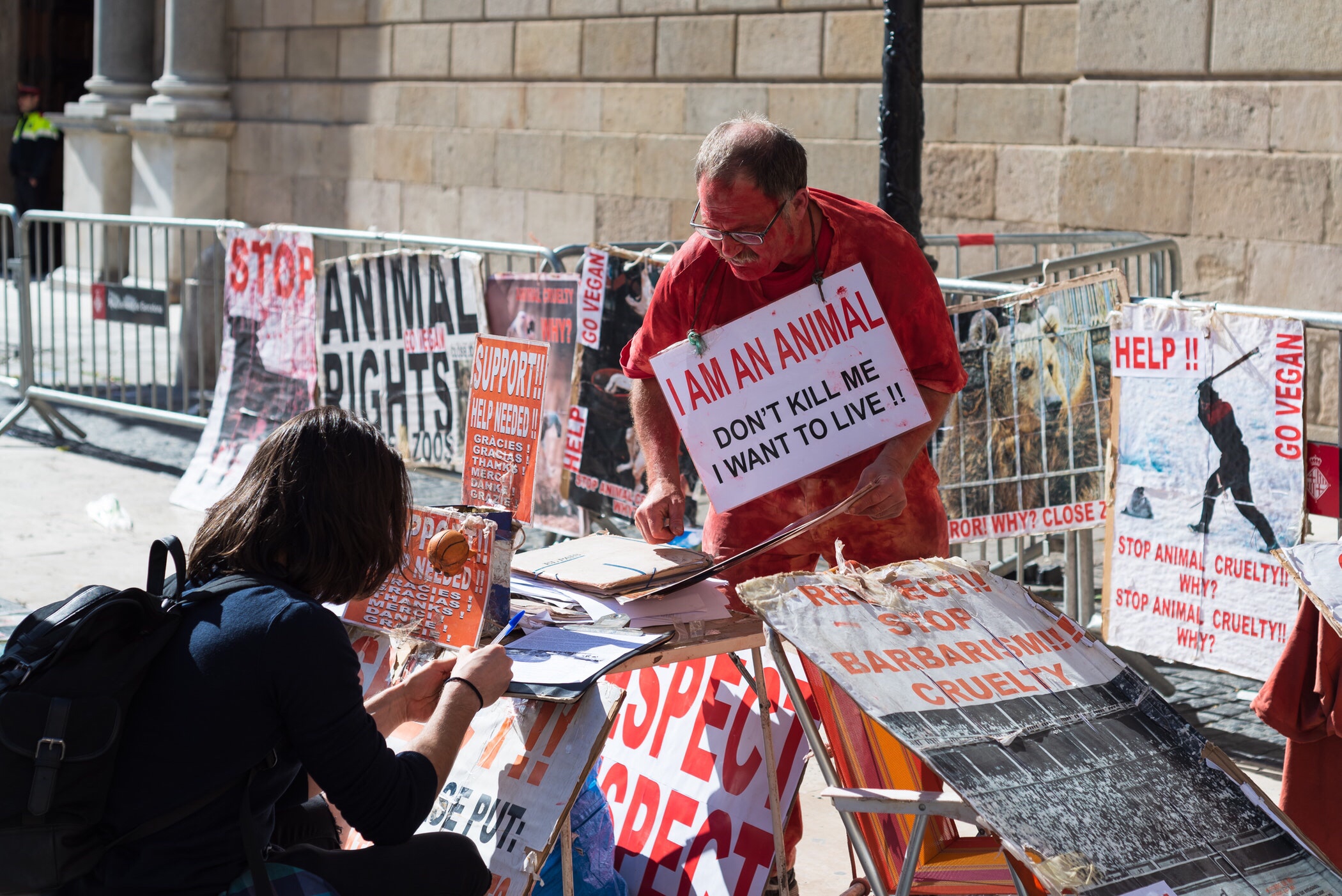
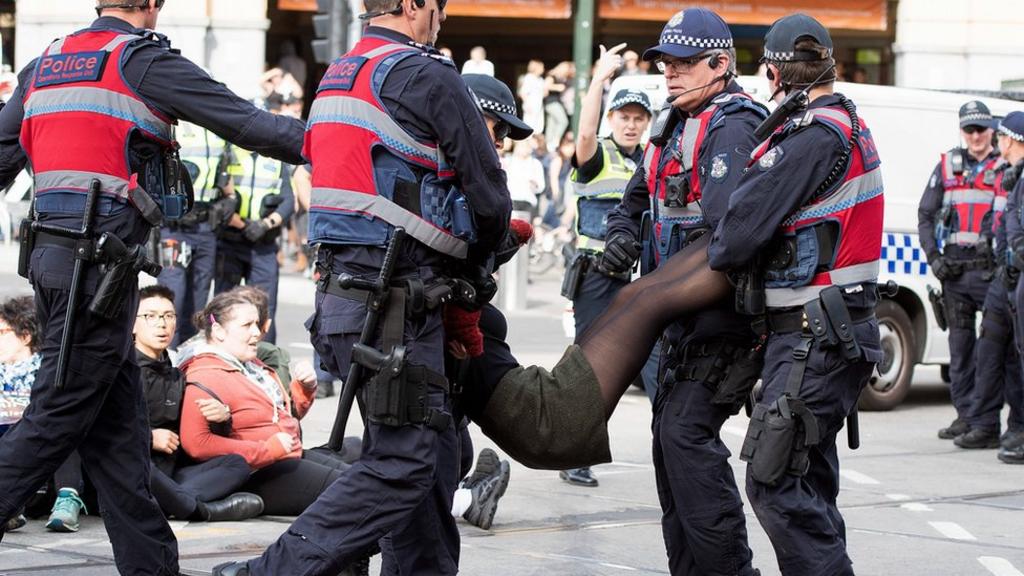
… is that it’s shameful and un-Australian according to Scott Morrison, Prime Minister of that country. The Australian Premier spoke as the country witnessed nationwide protests by vegans (Some of whom chained themselves to abattoirs, amongst other things). The protesters are, of course, attempting by their actions to highlight the issue of cruelty to animals.

Mr Morrision’s remarks are certainly two of the more interesting descriptions (criticisms) of veganism that I’ve heard uttered recently.

In a number of previous Blogs, I’ve discussed the possibility of veganism being regarded as a philosophical belief capable of being legally protected in terms of the Equality Act 2010. At the time of writing, we still await the decision of the London Employment Tribunal in the matter of Casamitjana v the League Against Cruel Sports (which was lodged in late 2018) as to whether veganism should be a legally protected, philosophical belief.

A link to the story from Australia can be found on the BBC News website:

Vegan protests: ‘Un-Australian’ activists arrested, PM Morrison says

Scott Morrison rebukes animal rights activists after dozens are arrested in nationwide protests.

A special report by Peter Egan for Sky News raises serious considerations about veganism.

Egan, a British actor who was well known to audiences in the 1970s and 1980s, is now a prominent animal rights activist and I think it can be fairly implied that he probably thinks veganism is an ethical choice which should be capable of respect in a democratic society. After all, in 2011, the Employment Tribunal decided that an animal rights activist who believed in the sanctity of all animal and human life held protected, philosophical beliefs (anti-fox hunting beliefs) and should not be discriminated as a consequence of them (see Hashman v Milton Park (Dorset) Ltd (t/a Orchard Park) ET/3105555/2009).

A link to Egan’s report for Sky News can be found below:

https://news.sky.com/story/i-visited-a-dog-meat-market-the-horror-keeps-me-awake-at-night-11684081?

A link to the Hashman judgement can be found below:

https://uk.practicallaw.thomsonreuters.com/Link/Document/Blob/I42aa7bb90c5511e498db8b09b4f043e0.pdf?targetType=PLC-multimedia&originationContext=document&transitionType=DocumentImage&uniqueId=27215574-54b1-4c5f-b839-6b11ecab733a&contextData=(sc.Default)

Copyright Seán J Crossan, 8 April 2019

The shameful secret: the vegan butcher

Photo by Max Delsid on Unsplash

Readers of this Blog will be aware of several, previous entries discussing whether veganism could be considered as a philosophical belief capable of protection in terms of the Equality Act 2010.

The London Employment Tribunal will decide later this year if veganism as a belief system should be a legally protected characteristic (see Casamitjana v League Against Cruel Sports lodged in 2018).

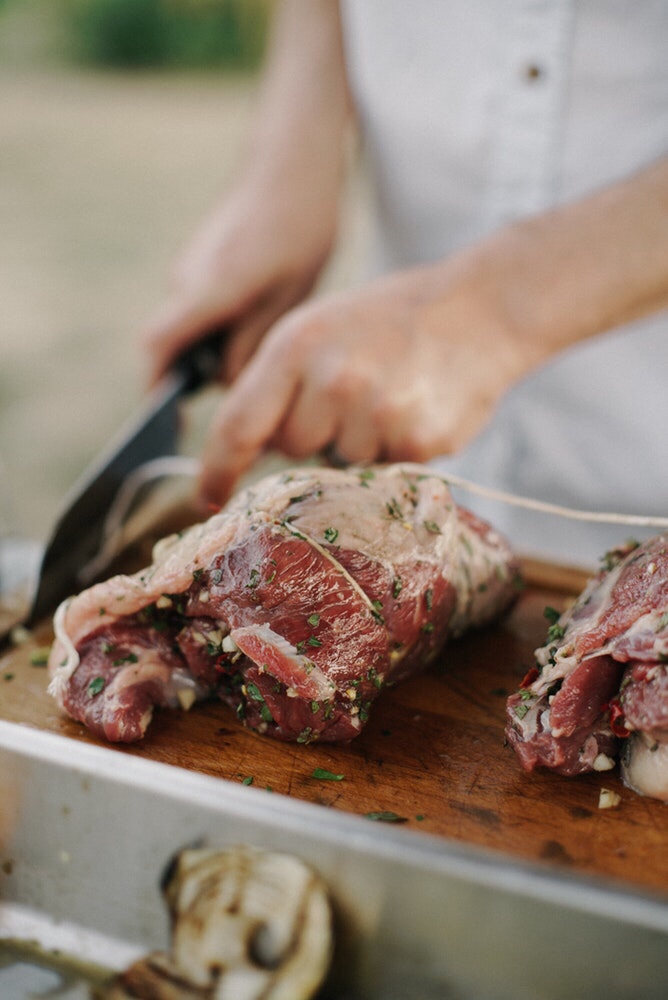
What about an individual who has decided to become a vegan? Could this conflict directly with his occupation? BBC Scotland reported on such a story about a butcher who had a secret – he had become a vegan. It sounds like an April Fool joke, but apparently it’s completely true:

The butcher who went vegan in secret

Brian Kavanagh worked in the meat industry for about 15 years before becoming vegan

Copyright Seán J Crossan, 1 April 2019

Veganism = human cruelty?

Photo by Jon Tyson on Unsplash

Regular readers of this blog will be aware of my interest in philosophical beliefs and whether these are capable of protection in terms of the Equality Act 2010. It seems to be an area of law which is being developed on a fairly regular basis – often with pretty surprising results.

The Employment Tribunal decided, for example, in Hashman v Milton Park (Dorset) Ltd t/a Orchard Park ET /3105555/2009 that a belief in the sanctity of both human and animal life could constitute a legally protected philosophical belief.

Several of my previous entries have looked at whether veganism could be a philosophical belief. This issue could soon be decided by the outcome of an Employment Tribunal case lodged at the end of 2018 (Casamitjana v League Against Cruel Sports).

What about anti-veganism? To be honest I’d never heard of this before, but a story on Sky News caught my attention:

Veganism is human cruelty’: Protester eats raw pig’s head outside vegan festival

http://news.sky.com/story/protester-eats-raw-pigs-head-outside-vegan-festival-11674741

A YouTuber going by the name of Sv3rige ate a pig’s head outside Vegfest, a vegan festival in Brighton to draw attention to his belief that “veganism is human cruelty”.

Sv3rige’s explained his motivation to Sky News:

We did it – it was eight of us – because veganism is malnutrition and you can’t get over 15 nutrients from plants and some of us are ex-vegans who got sick because of it.”

A crass publicity stunt or a genuine attempt to highlight someone’s deeply held beliefs?

Food for thought indeed!

Copyright Seán J Crossan, 26 March 2019