The Outsiders?

Photo by Tyler Nix on Unsplash

The USA is still a very racially divided society in 2019, despite the fact that it elected Barack Obama, an African American to serve as 44th US President (2009-17). Despite this, we’ve seen the growth of the Black Lives Matter campaign in response to numerous instances of Police violence towards African Americans.

Colin Kaepernick, the former San Francisco 49ers American Football player caused controversy in August 2016 when he refused to stand for the US National Anthem as a protest against racism.

Civil Rights Leader, Martin Luther King Jr’s dream that his four little children would live in a nation where they would be judged not by the colour of their skin, but by the content of their character seems more remote than ever.

Teenage years can be a difficult experience for many young people. An interesting perspective on the teenage experiences of a young African American woman was recently published by the BBC.

This young person talked about not fitting in at a school where most of the pupils are overwhelmingly white. Feelings of exclusion and not being accepted by the majority (white student) population are reported:

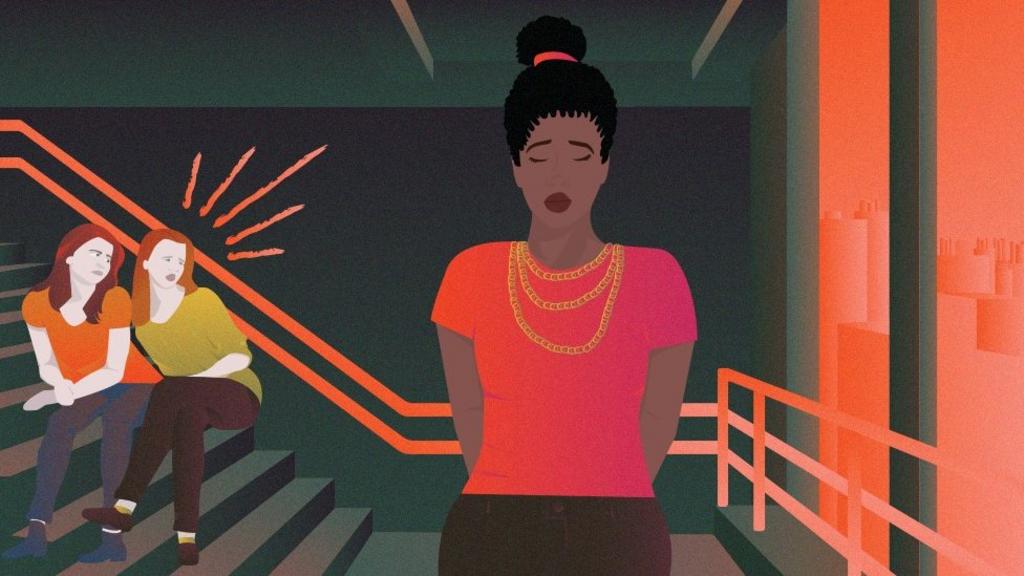
‘I’m either too black or not black enough’: One teenager’s experience

This is what it means to be black: one African-American teenager’s experience, in her own words.

Postscript

Feelings of isolation are not just confined to African Americans. In a short film for the BBC, four young Black British men talk about their experiences of racism:

Photo by Tamarcus Brown on Unsplash

‘We’re judged for being black’

Four young black men share their experiences of being stereotyped and judged for the colour of their skin.

Copyright Seán J Crossan, 23 April 2019

Scrap corroboration?

Photo by Matthew T Rader on Unsplash

Should we scrap the requirement of corroboration in Scots criminal law?

Well … BBC Scotland reported that Speak Out, a group of survivors of sexual abuse think that this is an area ripe for urgent reform. Victims of this type of crime doubtless feel that the requirement of corroboration (a unique feature of Scots criminal law) acts as a barrier or an obstacle to them achieving some sort of justice in the courts.

A link to the BBC Scotland report can be found below:

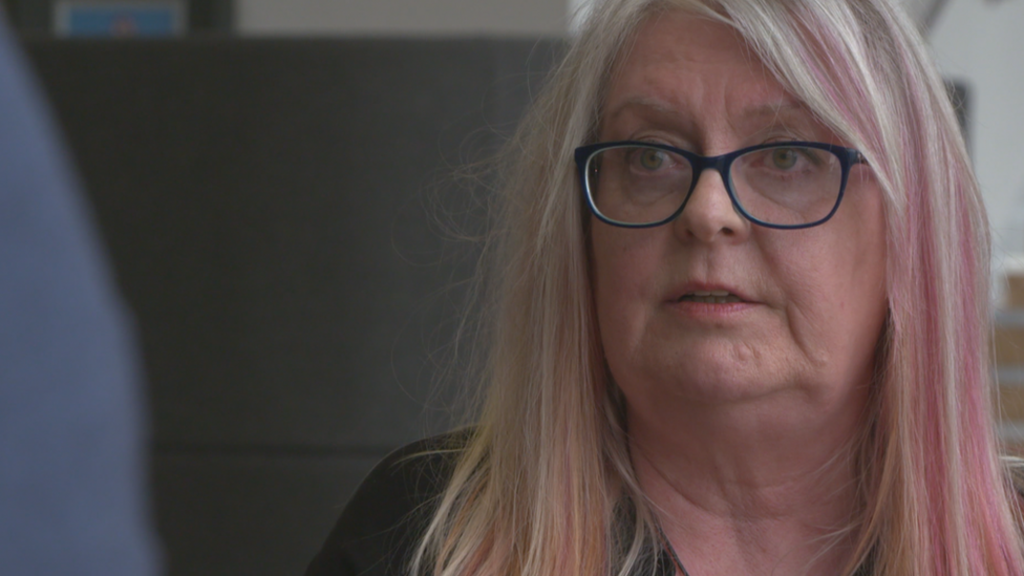
Abuse survivor calls for end to corroboration

Sex abuse survivors are campaigning for the need for two separate sources of evidence to be scrapped.


Petition to the Scottish Parliament

A Petition has also been submitted to the Scottish Parliament by Maryanne Pugsley (PE1717: Inquiry into the abuse of children in Scottish state schools) calling for a review of the current requirement of corroboration.

Ms Pugsley addressed a Scottish Parliamentary Committee this week about her experiences of abuse in the 1970s while she was at school and the fact that the requirement of corroboration meant that her abuser was never convicted.

A link to BBC Scotland’s website contains footage of Ms Pugsley addressing MSPs about her experiences:

‘The abuse I suffered in the 1970s affects me to this day’

A link to Ms Pugsley’s Petition can be found below:

https://www.parliament.scot/GettingInvolved/Petitions/PE01717

Prospects for reform?

The prospect of reform is something of a forlorn hope on the part of Speak Out and Ms Pugsley because the Scottish Government has, again, recently ruled out any changes to the law.

Additionally, Brian McConnochie QC, a senior member of the Faculty of Advocates has also gone on record (in the first link to the BBC Scotland website above) defending the current evidential requirement:

I know that some people consider that corroboration is something which we ought to abandon or abolish, and as often as not the argument is given that it should be abolished because nobody else has it. I’ve never been convinced by that argument. We went through a process where it was discussed at significant and considerable length, and at the end of that process the decision was taken that it should go no further.”

In a criminal trial, the prosecutor must prove that the accused is guilty of a crime beyond  reasonable doubt. This is a very strict evidential burden in that the prosecution must be able to corroborate its evidence against the accused.

Corroboration means that there must be at least two independent sources of evidence such as witness testimony and the use of expert and forensic evidence. Reasonable doubt is a nagging doubt which would lead a reasonable person to the conclusion that it would be unsafe and unjust to find the accused guilty.

In one of my previous blogs (Corroboration published on 1 March 2019), I examined some of the practical issues involved with corroboration by referring to a recent decision of the Appeal Court of the High Court of Justiciary (see Jacqueline Shuttleton v Procurator Fiscal, Glasgow [2019] HCJAC 12 HCA/2019/20/XC).

Mutual corroboration

Just this week, another decision of the Appeal Court of the High Court of Justiciary was reported – Khalid Jamal Her Majesty’s Advocate [2019] HCJAC 22; HCA/2018/330/XC – which concerned the principle of corroboration.

In this decision, which involved an appeal against conviction, the Appeal Court rejected the argument that an act of penetration (in a sexual assault case) does not have to be corroborated by scientific or medical evidence.

The act of sexual violence (rape) could be corroborated by reliance on other facts and circumstances. This approach is, of course, entirely in keeping with that famous Scottish criminal case – Moorov v HM Advocate 1930 JC 68 – which established the principle of mutual corroboration.

Moorov involved a shopkeeper who sexually assaulted at least 19 young women who worked for him over a period of 4 years. There were no witnesses to these incidents – except for the victims. The accused was successfully convicted because the testimony of the various victims was deemed adequate for the purposes of corroboration.

A link to Khalid Jamal’s appeal can be found below:

https://www.scotcourts.gov.uk/docs/default-source/cos-general-docs/pdf-docs-for-opinions/2019hcjac22.pdf?sfvrsn=0

Postscript
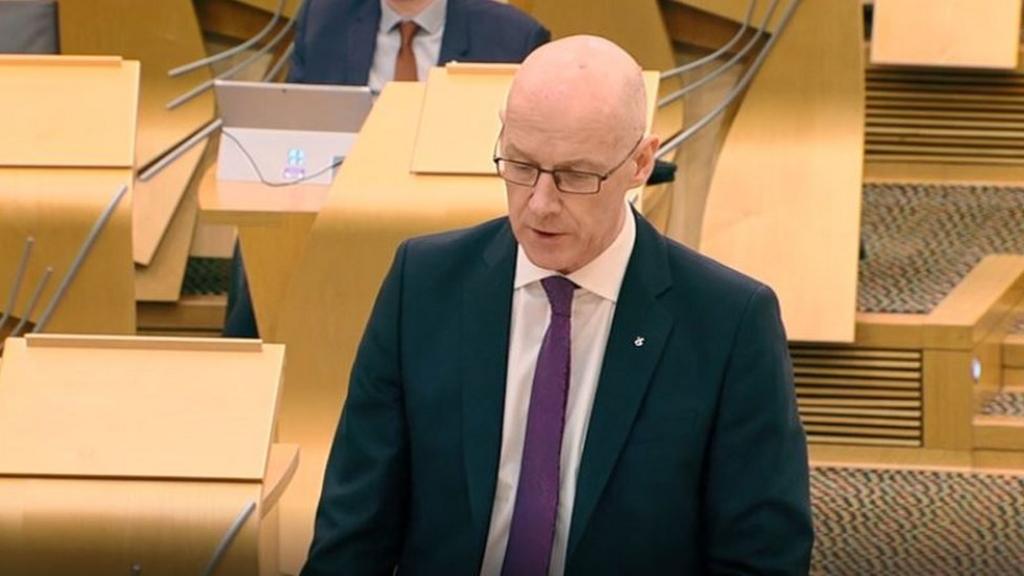
On a more positive note, on 25 April 2019, John Swinney MSP, Deputy First Minister announced in the Scottish Parliament that child abuse victims who are elderly or terminally ill can make an application for compensation.
This is a simplified scheme and involves completing a very straightforward application form.
Please see a link to the story below:

Advance payment scheme for abuse victims opens

Survivors of childhood abuse who are elderly or terminally ill can apply now for compensation payments.
Copyright Seán J Crossan, 22 & 26 April 2019

The Vegan Athlete

Photo by Miika Laaksonen on Unsplash

Over the last few months, articles about veganism have cropped up pretty regularly on this Blog. It’s certainly a way of life for many people, but we still await a legal ruling from the Employment Tribunal as to whether it can be a protected, philosophical belief in terms of the Equality Act 2010 (see Casamitjana v The League Against Cruel Sports lodged at the end of 2018).

In any event, there still seems to be a lot of reservations about veganism as a lifestyle (and a philosophical outlook).

An interesting article appeared on the BBC News website about an athlete who had chosen to become a vegan. Many people criticised this decision (could a vegan compete successfully at this level?), but here’s a young man (Ross Mackay) who bases some pretty important life decisions around his vegan beliefs. Mackay is certainly experiencing and having to overcome a lot of prejudice when many in sporting circles emphasise the importance of meat as a source of protein in order to aid performance.

‘You can succeed as a vegan athlete’

After playing international tennis in his teens, Ross Mackay says he really learned about food when he became vegan.
The vegetarian cyclist

It reminded me of the reaction of many in Europe when the American cyclist, Jonathan or ‘Jacques’ Boyer started to compete in big races. In 1981, he was the first US rider to take part in the Tour de France, taking part five times and his best ever finish was 12th in 1983). Boyer was famously (or infamously – depending on your point of view) a vegetarian. To the French, Boyer’s US nationality was slightly less controversial than his diet (He didn’t eat meat and ate a lot of nuts and berries). Even his own directeur sportif (manager or head coach) Cyrille Guimard spoke of Boyer in slightly disbelieving terms – un marginal i.e. French for a hippy, an outsider or something approximating these attributes. As Ross Mackay would attest, it seems that attitudes in sport haven’t changed a lot in the intervening years.

A link to a short YouTube video where Boyer talks about his experiences of racing in Europe can be found below (Spoiler alert: Boyer refers to Lance Armstrong before he was exposed as a cheat).

Photo by Simon Connellan on Unsplash

Even Peter Sagan, 3 time Tour de France green jersey winner and 3 time world champion keeps his veganism fairly quiet.

Copyright Seán J Crossan, 21 April 2019

Don’t stop the music?

Photo by Radek Grzybowski on Unsplash

The English Court of Appeal has just ruled that an employer was liable for the hearing loss of one of its employees. Nothing unusual about that you might say. The case law dealing with an employer’s duty of care to safeguard the health and well being of employees is full of such examples of life changing injuries.

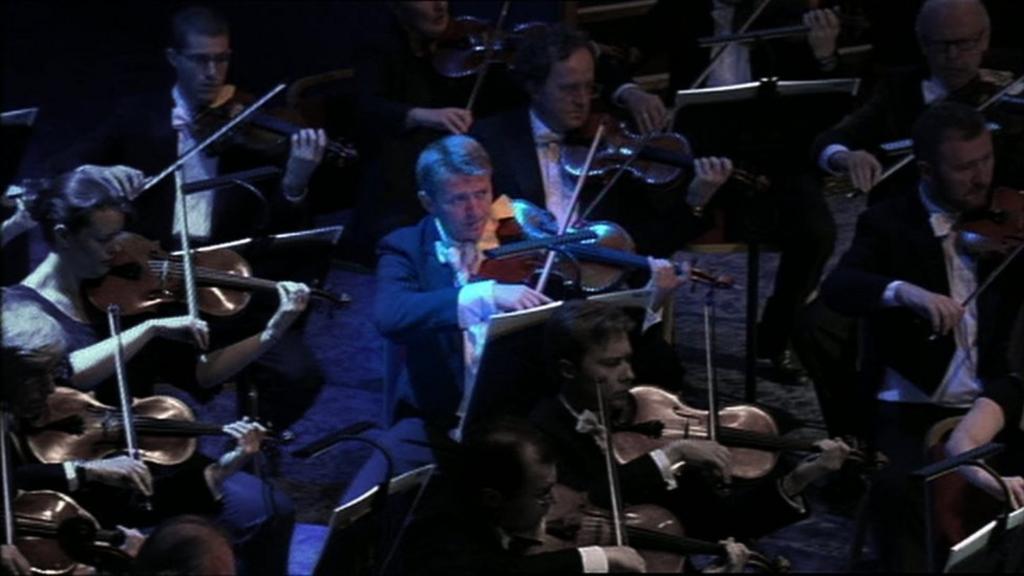
The relevant case, however, wasn’t about excessive levels of noise in factories or other industrial environments. The case involved a viola player (Christopher Goldscheider) who was employed by the Royal Opera House in London.

Mr Goldscheider alleged that his employer had failed to take reasonable precautions to prevent him from suffering hearing damage during a particularly noisy rehearsal of Richard Wagner’s Die Walküre. The Valkyrie overture can be a particular favourite of audiences, but it is very noisy. The American Director, Francis Ford Coppola made full use of its dramatic effect in his Vietnam war movie, Apocalypse Now.

At the time of the rehearsal of Die Walküre, the sound levels of the music reached a massive 132 decibels. Mr Goldscheider was sitting directly in front of the brass section of the orchestra and took the full force of the music. He later claimed that he had developed acoustic shock and had symptoms of tinnitus, hyperacusis and dizziness.

In its defence, the Royal Opera House claimed that Wagner’s music had artistic merit and that some musicians might foreseeably suffer hearing damage.

This argument was first rejected by the English High Court. The English Court of Appeal affirmed the decision of the High Court: the Royal Opera House had failed in its duty of care to Mr Goldscheider by not taking reasonable precautions to safeguard his hearing.

Don’t stop the music? Well, not exactly, but perhaps turn it down to safer levels might be the lesson to be learned here. Concert halls and opera houses (as well as other noisy entertainment venues) please take note.

Links to the judgements of the High Court and the English Court of Appeal respectively can be found below:

Goldscheider v The Royal Opera House Convent Garden Foundation & Ors [2018] EWHC 687 (QB)

https://www.judiciary.uk/wp-content/uploads/2018/03/goldscheider-v-roh-judgmentL.pdf

Goldscheider v The Royal Opera House Convent Garden Foundation & Ors [2019] EWCA Civ 711

https://www.judiciary.uk/wp-content/uploads/2019/04/goldscheider-v-roh-judgment.pdf

A link to how the case was reported on the BBC News App can be found below:

Royal Opera House loses appeal over viola player’s hearing

The Royal Opera House failed to protect a musician’s hearing during rehearsal, the Court of Appeal rules.

Copyright Seán J Crossan, 19 April 2019

The gig economy

Photo by Austin Distel on Unsplash

On 16 April 2019, the European Parliament adopted measures in a new European Union Directive that will give workers providing services in the so called gig economy greater legal protection. The Directive will not apply to those individuals who are genuinely self-employed (see previous Blog: “Hello, I’m Lorraine and I’m definitely self-employed” published on 22 March 2019).

The final text of the Directive was adopted with 466 votes to 145 and 37 abstentions. The EU Council of Ministers had already approved the measures.

The EU member states will have three years to put the rules into practice.

The new Directive has a working title of the Transparent and predictable working conditions in the European Union. The Directive will eventually repeal Council Directive 91/533/EEC and it has been introduced using the Ordinary Legislative Procedure of the EU (formerly the Co-decision procedure).

Council Directive 91/533/EEC of 14 October 1991 related to an employer’s obligation to inform employees of the conditions applicable to the contract or employment relationship. Note the wording of this Directive title: it contains the key term of ’employees’, so casual workers were most definitely not covered by its provisions.

Member states will have 3 years in which to implement the new Directive.

Typically, in the popular imagination, gig economy workers are personified by the likes of Uber taxi drivers and Deliveroo couriers. In comparison to employees, gig economy workers tend to lack job security and have far fewer employment rights. Unlike employees who have a contract of service, gig economy workers have a contract for services (a key distinction in employment law).

In a press release issued via the official EU website (Europa), the main objectives of the new Directive are listed:

  • Basic rights (i.e. a floor of rights) for workers in casual or short term employment
  • Working conditions must be clearly stated on Day 1 of employment, and no later than 7 days in permitted circumstances
  • Limiting probationary periods to a maximum of 6 months

A link to the EU press release can be found below:

http://www.europarl.europa.eu/news/en/press-room/20190410IPR37562/meps-approve-boost-to-workers-rights-in-the-gig-economy

A link to an infographic outlining the key objectives of the new Directive can be found below:

http://www.europarl.europa.eu/news/en/headlines/society/20190404STO35070/gig-economy-eu-law-to-improve-workers-rights-infographic

The Independent newspaper also reported the new Directive in its edition of 18 April 2019.

A link to the article can be found below:

https://edition.independent.co.uk/editions/uk.co.independent.issue.180419/data/8874676/index.html

The new Directive is firmly part of the EU’s Social Pillar which was itself adopted at Gothenburg, Sweden on 17 November 2017.

As European Commission President, Jean-Claude Juncker said at the time of the adoption of the Social Pillar:

“Today we commit ourselves to a set of 20 principles and rights. From the right to fair wages to the right to health care; from lifelong learning, a better work-life balance and gender equality to minimum income: with the European Pillar of Social Rights, the EU stands up for the rights of its citizens in a fast-changing world.”

 https://ec.europa.eu/commission/priorities/deeper-and-fairer-economic-and-monetary-union/european-pillar-social-rights_en

Brexit Alert!!!

At the moment, the UK has committed itself to leave the EU. The latest deadline for doing so is 31 October 2019. Will a future UK Parliament or Government choose to implement the provisions of the Directive if this country is an ex-member state of the EU? That really depends on the type of relationship that this country has with the EU 3 years from now. Any future trading agreement with the EU may contain provisions about minimum employment protection laws. We will just have to wait and see what happens. It seems rather sad that when the EU is passing a very progressive measure, the UK has decided to leave the organisation.

Copyright Seán J Crossan, 19 April 2019

Food for thought?

Photo by Nick Fewings on Unsplash

The area of human rights law is constantly developing. As I discussed in an earlier blog (The problem with human rights published on 1 February 2019), human rights can be a contested concept e.g. the ongoing, divisive debate over whether to grant greater access to abortion in Northern Ireland.

When I ask students what human rights are, some will reply that the right to food should be a legal entitlement in Scotland. Admittedly, Article 2 the European Convention on Human Rights (as incorporated via the Scotland Act 1998 and the Human Rights Act 1998) protects the right to life and it could be argued that this vital right and the right to food security are intimately connected.

This is a particularly sensitive issue: in April 2018, a report in The Scotsman newspaper stated that the use of foodbanks in Scotland had risen dramatically. A link to this article can be found below:

https://www.scotsman.com/news/politics/use-of-food-banks-in-scotland-hits-record-high-1-4729188

Interestingly, the Scottish Human Rights Commission has submitted a report to the Scottish Government making an argument for greater food security. The Commission wants Scots Law to grant people an explicit entitlement to food security and, in this way, Scotland will be well on the path to becoming a good food nation in accordance with principles laid down by the United Nations.

A link to the Commission’s Report can be found below:

http://www.scottishhumanrights.com/news/change-the-law-to-protect-the-right-to-food-for-all/

Food for thought indeed!

Copyright Seán J Crossan, 16 April 2019

Clean Chinese food???!!!

Photo by Alice on Unsplash

Two white American restaurateurs opened Lucky Lee’s, an establishment in Manhattan, New Your City where they advertised that they were serving “clean Chinese food”.

The accusations of racism and stealing from another ethnic group’s culture soon came thick and fast.

The word “clean” was actually being used to try and attract diners who dietary issues, but Chinese Americans saw this term rather differently: it reinforced harmful stereotypes.

A link to the story in the New York Times can be found below:

A white business owner advertised “clean” Chinese food. Chinese-Americans had something to say about it.

https://apple.news/A1q-z7kJgScaN

Postscript

It would seem that accusations of cultural appropriation or theft in the culinary world aren’t confined to just the USA: our very own celebrity chef, Gordon Ramsay, has got himself into hot water concerning the launch of one of his restaurants in London.

Please see the link to the story on Sky News below:

Gordon Ramsay hits back at ‘prejudice and insults’ after cultural appropriation claims

http://news.sky.com/story/gordon-ramsay-hits-back-at-prejudice-and-insults-after-cultural-appropriation-claims-11694567

Copyright Seán J Crossan, 14 and 15 April 2019

Stereotyping = unlawful discrimination?

Photo by Ken Treloar on Unsplash

We can all be guilty of pre-judging other people – sometimes we do this consciously and, at other times, we can do this unconsciously. In other words, we can reduce people to stereotypes.

This becomes a problem if our pre-conceptions about other people cause us to behave in a way that translates into unlawful, less favourable treatment. If we treat others less favourably due to a protected characteristic that they possess (e.g. age, disability, gender, race, sexual orientation etc) in terms of the Equality Act 2010.

Stereotyping or negative perceptions about individuals may well give rise to the victim (with the relevant protected characteristic) having a claim for direct discrimination in terms of Section 13 of the Equality Act 2010).

This recalled a story, from several years ago, in which the BBC reported the experiences of a gay man who was subjected to all sorts of less favourable treatment based on negative stereotyping of LGBTI people. The victim of this offensive behaviour took successful legal action against the individual in question.

A link to this story on the BBC News site can be found below:

Why ‘gay’ gestures are discrimination

Clive Coleman reports on the case of a gay man who has won the first compensation award for discrimination based entirely on homophobic gestures.
More recent examples of negative sterotyping

When glancing through various media stories over the last few days, stereotyping or negative perceptions of people came to mind.

In the first story, sufferers of Parkinson’s Disease spoke about the negative reactions they often experience when going about their daily lives. People with this very serious condition have reported that their symptoms are mistaken by members of the public as drunken behaviour or that they are acting under the influence of drugs. Individuals who suffer from Parkinson’s have a disability in terms of Section 6 of the Equality Act 2010.

A link to this story can be found below:

https://edition.independent.co.uk/editions/uk.co.independent.issue.110419/data/8863856/index.html

In the second story, a person with cerebral palsy (also a disability) speaks about the discrimination that he has suffered.

A link to this story can be found below:

‘My disability is mistaken for drunkenness’

Stuart Devlin, who has cerebral palsy, carries a card to show door staff after being refused entry to pubs.

In the third story, which hails from Russia, the Russian authorities have allowed prisoners to resume yoga exercises during the period of their incarceration.

Previously, the Russian Government had banned this form of exercise for prisoners because it was believed it was linked to homosexuality! In the UK, a person’s sexual orientation is a protected characteristic in terms of Section 12 of the Equality Act 2010.

A link to this story can be found below:

https://edition.independent.co.uk/editions/uk.co.independent.issue.110419/data/8863506/index.html

Photo by Annie Spratt on Unsplash

Copyright Seán J Crossan, 12 April 2019

Fatal Accident Inquiries (FAIs)

Photo by Jase Ess on Unsplash

There is no such thing as the office of coroner (or coroner’s court) in Scotland when it comes to the investigation of sudden deaths or fatal accidents.

In Scotland, we hold a Fatal Accident Inquiry (FAI) which is chaired by a Sheriff or a Sheriff Principal (the senior Sheriff in each of the six Scottish Sheriffdoms).

This week, the Fatal Accident Inquiry into the Clutha Bar disaster begins proceedings (although 8 preliminary hearings have already taken place).

The background to the Inquiry goes back to the events of the night of 29 November 2013 when a helicopter chartered by Police Scotland crash-landed on the roof of one of Glasgow’s most famous public houses, the Clutha Bar. Ten people died in the accident and others were injured.

Information about the tragedy can be accessed at a link on the BBC News website:

Clutha crash inquiry hears of helicopter’s final seconds

Ten people were killed when a police helicopter crashed into the roof of The Clutha bar in Glasgow on 29 November 2013.
The FAI

The Sheriff Principal of the Sheriffdom of Glasgow and Strathkelvin, Craig Turnbull QC is chairing the Inquiry.

In his opening remarks, Sheriff Principal Turnbull set out the remit of the FAI. He stated amongst other things that the FAI has two main objectives:

  • To consider the circumstances of the deaths; and
  • What steps, if many, might be taken to prevent deaths in similar circumstances in the future.

He then went on to explain the conduct of FAI proceedings:

  • They are inquisitorial, not adversarial; and
  • They are not about establishing civil or criminal liability

In total, the FAI will consider 31 separate matters and will hear from 14 different parties.

All of the parties who will appear at the FAI and the matters to be discussed can be found at the link below on the website of the Scottish Courts and Tribunals Service:

https://www.scotcourts.gov.uk/the-courts/court-locations/clutha-fai

A video link to Sheriff Principal Turnbull’s opening remarks at the FAI can be found below:

https://www.msn.com/en-gb/news/video/clutha-helicopter-crash-inquiry-opens/vi-BBVJ7VJ

Postscript

On 30 October 2019, Sheriff Principal Craig Turnbull QC published his conclusions in respect of the Clutha Fatal Accident Inquiry.

He concluded that the pilot of the helicopter had ignored 5 low fuel warnings and made a conscious decision to continue flying the aircraft. The actions of the pilot in this respect were the cause of the disaster.

A link to Sheriff Principal Turnbull’s findings can be found below:

https://www.scotcourts.gov.uk/docs/default-source/cos-general-docs/pdf-docs-for-opinions/2019fai46.pdf?sfvrsn=0

Links to BBC articles about the findings of the FAI can also be found below:

A sheriff says the crash happened because Captain David Traill ignored five low fuel warnings during the flight.

An inquiry into the helicopter crash was “very disappointing”, say the families of two PCs killed in the tragedy.

Copyright Seán J Crossan, 11 April & 29 November 2019

Social Media Misuse

Photo by Sara Kurfeß on Unsplash

In a previous Blog (It happened outside work (or it’s my private life!) published on 7 February 2019), I discussed the importance of employers drawing up a clearly defined social media policy to which employees must adhere. It’s of critical importance that employers make employees aware of the existence of such policies and the potential consequences of breach. Generally speaking, employers will be rightly concerned that the misuse of social media platforms by employees may lead to reputational damage.

An interesting example of the type of reputational damage which can be caused to an employer’s brand by malicious or careless or thoughtless social media use was reported by The Independent in November 2018. A company in the Irish Republic was forced to take down a video on its Facebook site where an employee had used racially offensive images to promote Black Friday:

https://edition.independent.co.uk/editions/uk.co.independent.issue.251118/data/8650006/index.html

Misuse of social media can potentially be regarded by employers as misconduct. In really serious cases, the situation might be regarded as gross misconduct – a potentially fair reason for dismissal of the employee in terms of Section 98(4) of the Employment Rights Act 1996.

Right on cue, two stories have appeared about social media misuse on the BBC website this afternoon.

In the first story, Rugby Australia has announced that it intends to dismiss, Israel Folau for making homophobic comments on Twitter. Folau had been warned last year about previous offensive tweets that he had made. Clearly, he hasn’t learned his lesson and Rugby Australia is legitimately concerned about the reputational damage that such remarks may do to its image as an inclusive sports organisation.

A link to the story on the BBC News website can be found below:

Israel Folau: Rugby Australia ‘intends’ to sack full-back after social media post

Rugby Australia says it intends to terminate Israel Folau’s contract following a social media post by the full-back in which he said “hell awaits” gay people.
In the second story, Shila Iqbal, an actress who appears in the long running ITV soap opera, Emmerdale has been dismissed due to offensive tweets that she made some 6 years ago.
A link to the story can be found below:

Shila Iqbal: Emmerdale actress fired over old tweets

Shila Iqbal says she’s “terribly sorry” for using offensive language online six years ago.

Trawling through the case law archives

Since the previous Blog was published, I have been browsing through the archives and discovered a number of Employment Tribunal cases which involved alleged social media misuse.

Weeks v Everything Everywhere Ltd ET/250301/2012

In this case, the dismissed employee posted comments on Facebook which likened his work place to Hell (or Dante’s Inferno for the more cultured readership). The employer had given the employee a warning about this kind of behaviour, but he continued to post these types of comments on Facebook. The employer regarded this type of behaviour as causing it to suffer reputational damage.

Held: by the Employment Tribunal that the employer was entitled to dismiss the employee in terms of Section 98 of the Employment Rights Act 1998.

A link to the full ET judgement in the Weeks’ case can be found below:

https://uk.practicallaw.thomsonreuters.com/Link/Document/Blob/I42aaca4f0c5511e498db8b09b4f043e0.pdf?targetType=PLC-multimedia&originationContext=document&transitionType=DocumentImage&uniqueId=e621efe4-fda9-4b65-9f21-67c5e720fbf0&contextData=%28sc.Default%29&comp=pluk

Game Retail Ltd v Laws Appeal No. UKEAT/0188/14DA

The employee, who worked for Game, had set up a personal Twitter account. This account was followed by colleagues at approximately 65 other Game stores. The settings on the Twitter account were public, meaning that any person could read them. The employee’s tweets typically consisted of a wide range of disparaging and derogatory remarks. The employer dismissed the employee on grounds of gross misconduct.

Held: by the Employment Appeal Tribunal that the dismissal was fair in terms of Section 98 of the Employment Rights Act 1996. These remarks were being publicly broadcasted via Twitter (despite the employee’s assertion that they were private remarks) and these could cause the employer to suffer damage in terms of its reputation.

A link to the full ET judgement in the Game Retail case can be found below:

https://assets.publishing.service.gov.uk/media/592d608ee5274a5e510000fa/Game_Retail_Ltd_v_Mr_C_Laws_UKEAT_0188_14_DA.pdf

Creighton v Together Housing Association Ltd ET/2400978/2016

The employee was a manager of 30 years’ service with the Association, but found himself dismissed for tweeting disparaging remarks about colleagues. These tweets were 2 or 3 years old, but they came to light when another colleague took a grievance against him.

Held: by the Employment Tribunal that the dismissal (on grounds of the employee’s conduct) was fair in terms of Section 98 of the Employment Rights Act 1996. This may seem a harsh decision given that the employee had 30 years of service with his employer, but the Tribunal was clearly of the view that the employer had acted fairly and dismissal was in the reasonable band of responses for such behaviour. In some respects, this case has similarities to another Tribunal decision, Plant v API Microelectronics Ltd (ET Case No. 3401454/2016) 30th March 2016 which was discussed in the blog entitled It happened outside work (or it’s my private life!, which was published on 7 February 2019

Conclusion

The above 3 cases, once again, demonstrate the dangers of social media misuse – whether in the work place or outside. Employers are very foolish if they fail to put a clear social media policy in place. From the employees’ perspective, it is of critical importance that they are (a) aware of the existence of such a policy; and (b) they have read and understood its contents.

It will also be highly advisable for employers to update social media policies on a regular basis (especially as new platforms and technologies will continue to be developed) and to ensure that social media awareness is part and parcel of induction and training regimes.

Admittedly, there are pitfalls for employers: unauthorised or unjustified surveillance of employees could be viewed as a breach of privacy.

Expect this area of employment relations, to continue to generate some interesting case law in the weeks, months and years to come.

Postscript

Following on from the tweets posted by the rugby player, Israel Folau, a second rugby star is embroiled in a further homophobic social media row:

Israel Folau: RFU to meet England’s Billy Vunipola after he defended Australian’s comments

The Rugby Football Union says it does not support Billy Vunipola’s views after the England forward defended Israel Folau’s social media post claiming “hell awaits” gay people.

Copyright Seán J Crossan, 11 April 2019