Another day in the toxic debate over proposals to liberalise the Gender Recognition Act 2004. Yesterday’s blog entry (Hate crime?) addressed the issue of limits on freedom of speech and expression in relation to extending transgender rights.
Today, the UK media is focusing on remarks made by Labour leadership contender, Rebecca Long-Bailey MP. In an interview with the BBC’s Andrew Marr, Ms Long-Bailey expressed her support for changes to the current Gender Recognition Act which would permit transgender women to gain access to institutions such as refuges for women who have experienced domestic violence at the hands of men.
As Mr Justice Knowles acknowledged in Miller v (1) The College of Policing (2) Chief Constable of Humberside [2020] EWHC 225 (Admin), the debate over transgender rights can be summarised as follows:
“On one side of the debate there are those who are concerned that such an approach will carry risks for women because, for instance, it might make it easier for trans women (ie, those born biologically male but who identify as female) to use single-sex spaces such as women’s prisons, women’s changing rooms and women’s refuges. On the other side, there are those who consider it of paramount importance for trans individuals to be able more easily to obtain formal legal recognition of the gender with which they identify.”
Knowles J went on to remark:
“Ishould make two things clear at the outset. Firstly, I am not concerned with the merits of the transgender debate. The issues are obviously complex. As I observed during the hearing, the legal status and rights of transgender people are a matter for Parliament and not the courts. Second, the nature of the debate is such that even the use of words such as ‘men’ and ‘women’ is difficult. Where those words, or related words, are used in this judgment, I am referring to individuals whose biological sex is as determined by their chromosomes, irrespective of the gender with which they identify. This use of language is not intended in any way to diminish the views and experience of those who identify as female notwithstanding that their biological sex is male (and vice versa), or to call their rights into question.”
A group within the British Labour Party, Labour Campaign for Trans Rights, has published a 12 point charter to push through changes to UK equality laws. Other women’s groups, such Women’s Place UK and the LGB Alliance, are bitterly opposed to this campaign.
Long-Bailey admitted that her position could set her at odds with many female members of the Labour Party who are deeply resistant to such developments. Many feminist opponents of reform to the current gender recognition rules have been given the acronym, TERF, or Trans- exclusionary radical feminists.
Gender reassignment is a protected characteristic in terms of the Equality Act 2010, but the legislation exempts women only refuges which currently exclude transgender women (i.e. those who were born male, but have undergone gender reassignment to become female). Although excluding transgender women would normally be regarded as an example of direct discrimination in terms of Section 13 of the Act, Parliament has provided the defence of objective justification. This means that permitting women only spaces in this instance – caring for the female victims of male domestic violence – is an example of a proportionate means of achieving a legitimate aim.
Conclusion
Much of the opposition to reform of the Gender Recognition Act 2004 appears to centre around proposals, in both England and Scotland, to permit individuals to self-identify in terms of their chosen gender without the need to go through physical changes. At the moment, anyone wishing to change gender must obtain a gender recognition certificate which will only be granted after the conclusion of the appropriate medical procedures.
It will, therefore, be for legislators in the UK and Scottish Parliaments to determine how far reforms to the Gender Recognition Act 2004 and, by extension the Equality Act 2010, will go. In the months to come, expect plenty of passionate arguments on both sides of the debate to be aired publicly.
A link to an article in The Independent discussing Ms Long-Bailey’s interview with Andrew Marr can be found below:
Email can be a wonderful form of communication. It can also be, quite frankly, something of a curse for many employees and workers. Essentially, you’re never too far away from the work-place and bosses/clients/service users expect to receive an instant reply.
The expectation by bosses and managers that employees and workers should be monitoring their emails (constantly) does tend to be a contributory factor in the rising number of cases of work-related stress. Employers: please note that you have a duty of care to provide a safe working environment and part of this obligation includes monitoring unacceptably high levels of stress in the work-place.
There is a perception (rightly or wrongly) that UK employees suffer from some of the longest working hours in Europe. In 2019, data from the EU’s Eurostat Agency seemed to support this contention but, interestingly, the Organisation for Economic Co-operation and Development (OECD) took a more sceptical approach by questioning the method of data collection (the old adage about lies, damned lies and statistics springs to mind here).
Links to a BBC article about this issue and the Eurostat figures (and OECD response) can be found below:
UK employees are, of course, entitled to receive a written statement of the main terms and particulars of their employment as per Section 1 of the Employment Rights Act 1996. This statement must contain a provision which addresses the employee’s normal weekly working hours.
Despite Brexit (which did occur on 31 January 2020 – in case you missed it), the UK is still following EU rules until the end of this year … One EU Law with particular relevance to this debate is the Working Time Directive ((2003/88/EC) which was transposed into UK employment law by way of the Working Time Regulations 1998.
In theory, the Directive and the Regulations cap the number of hours that employees (and workers) can work at 48 hours per week (technical point: this figure can be averaged out over a reference period – 17 weeks normally). Crucially, however, UK employees and workers can opt out of the 48 hour maximum by signing a declaration (opt-out) that they wish to do so. If they change their minds, they are entitled to do so by giving the employer a minimum seven days’ notice (or in certain cases – 3 months) of this intention.
The legal rules on working hours are all very well in theory, but what about the culture of organisations which may (at an informal level) promote the idea that long hours spent at work (or just working) are a sure fire way to get ahead in your career?
This is where the influence of email (and other instant messaging services) can be quite insidious (pernicious even?). Employees feel under pressure to deal with this work load at weekends, during holidays and evenings. Parents of young children and carers of elderly relatives, who may have negotiated flexible working arrangements, may be under acute pressure to deal with emails etc when they are outside the work-place. In this way, the work-place becomes like the Eagles’ song, Hotel California (‘You can check out any time you like, But you can never leave!‘).
Interestingly, in some of our ex-EU partner countries, there have been initiatives at both the organisational and legal level to curb the smothering influence of email outside the work-place.
There is a real danger here for employers that, by encouraging employee use of email outside working hours, it may constitute a policy, criterion or practice (PCP) – no matter how informal – which could open themselves up to accusations of indirect discrimination on grounds of sex (women are still the primary carers for children and elderly dependents) and disability (by reason of a person’s association with a disabled person) in terms of Section 19 of the Equality Act 2010.
Furthermore, employees might feel that they are under constant surveillance by the employer because it becomes easier to keep tabs on individuals when they are logging in and out of the company’s IT network. For employers, this could lead to legal challenges from employees who are concerned that the right to privacy and family life as enshrined in Article 8 of the European Convention on Human Rights has been violated.
Is there a better way of doing things? Yes, is the short answer.
In 2011, the German multinational car manufacturer, Volkswagen (VW) introduced major changes to its working practices by curbing the use of emails when employees were off duty. This agreement was negotiated by the company and trade union/labour organisations.
In France, in August 2016, they went further and passed the El Khomri Law (named after the French Government Minister for Labour who introduced the proposal). This law gave employees a right to disconnect from email. In one particular case which involved the French arm of the British company, Rentokil, an employee was awarded €60,000 because his right to disconnect from email had been breached.
Links to stories about the changes to VW’s working practices and the French El Khomri Law can be found below:
The debate about the right of employees to disconnect from email – whether this is negotiated via some sort of collective agreement or underpinned by law – now seems to have penetrated the British consciousness. Rebecca Long-Bailey MP, one of the leading contenders for leadership of the British Labour Party has thrown her hat into the ring by backing a trade union campaign to introduce a legal right to disconnect in the UK.
One small problem: the Labour Party lost the last British General Election on 12 December 2019 to the Conservatives and is, therefore, in no position to deliver. Over to you Prime Minister Johnson? (a man fond of the populist gesture).
A link to an article in The Independent about Rebecca Long Bailey’s support for the trade union campaign to introduce a law guaranteeing the right to disconnect can be found below:
Last week I wrote a Blog about Stonewall’s list of 100 most inclusive UK employers for LGBTI people. The article summarised the advances in terms of the range of legal protection that the LGBTI communities now enjoy. From protection against discrimination in employment to same sex marriage, the turnaround in fortunes from a persecuted minority to part of the mainstream has been truly remarkable.
F. Scott Fitzgerald, the author of The GreatGatsby once remarked that “Switzerland is a country where very few things begin, but many things end.”
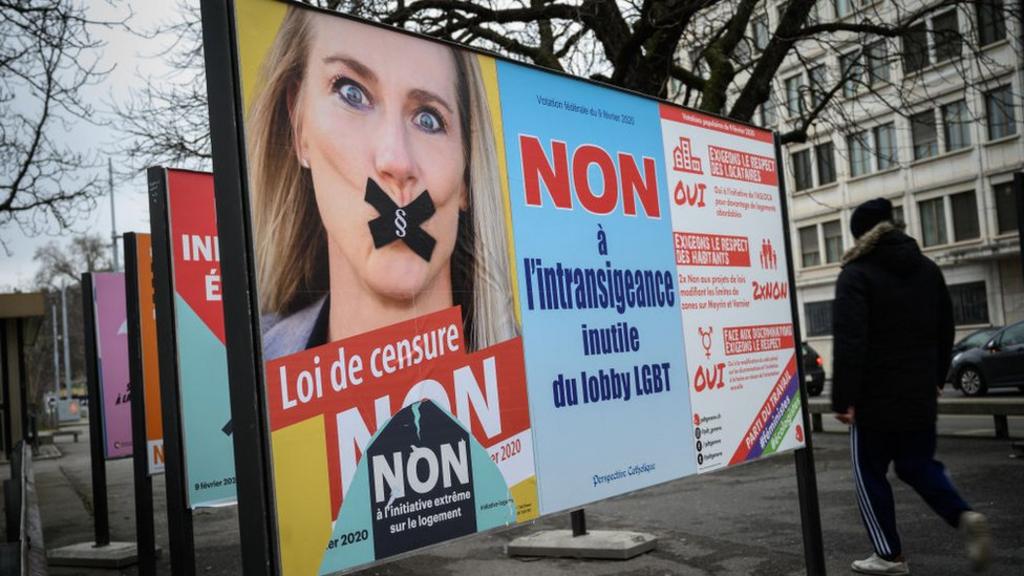
Today, the Swiss voted in a referendum to introduce laws which would extend protection from discrimination to LGBTI people. The proposal attracted support from 63% of Swiss voters and, finally, begins to bring the country into line with many of its neighbours who happen to EU member states. Switzerland is not part of the EU and, therefore, is not under any obligation to implement European laws which combat sexual orientation discrimination.
Critics of the Swiss proposal stated that the proposal was unnecessary because the country’s constitution already protected LGBTI individuals (and the country is a signatory to the European Convention on Human Rights). There were also concerns about what the proposal might mean for freedom of speech. Clearly, a majority of voters did not share these concerns.
Switzerland has a reputation for being a relatively conservative society (with a small ‘c’). After all, it was only in 1991 that the Swiss canton of Appenzell Innerrhoden finally permitted women to have the right to vote in cantonal elections. In federal (national) elections, woman had been given the right to vote since 1971.
We often forget this has been an incremental or gradual process in the UK and it did not happen overnight. Therefore, it is not advisable to be for British people to be smug or to have feelings of superiority about this issue. It was, after all, as recently as 2003 that the Employment Equality (Sexual Orientation) Regulations 2003 were implemented by the then Labour Government of Tony Blair. For the first time in UK employment law, LGBTI individuals were protected from discrimination in employment and training. This important law, critically, did not cover the provision of services and it was with the passage of the Equality Act 2010 that this area was eventually covered.
A link to an article on the BBC News app about the story can be found below:
It never ceases to amaze me that employers and service providers fall foul of arbitrary codes or policies which they impose on employees and service users. Regular readers of this Blog will be aware of previous articles covering discrimination or less favourable treatment which arises because employers or service providers issue generalised guidelines which discriminate against individuals because they happen to have certain hairstyles or wear beards or jewellery.
It is this lack of awareness that often leads to legal action in terms of the Equality Act 2010. By imposing a policy, criterion or practice (PCP) across the board, employers and other organisations could be setting themselves up for a fall specifically in relation to Section 19 of the Equality Act 2010. This part of the Act makes indirect discrimination unlawful i.e. it is an example of prohibited conduct by reason of a person or a group possessing a protected characteristic such as race or religion (Sections 9 and 10 respectively)
Since the introduction of the Race Relations Act 1976 (now repealed by the Equality Act 2010), we have seen a number of well known cases involving indirect discrimination being determined by Courts and Tribunals. So, you would think by now that employers and other organisations would have learned the lesson by now – apparently not as we shall see shortly.
In short order, such bans or generalised restrictions may infringe religious and cultural expression and may not only be a breach of the Equality Act, but could also represent a breach of human rights laws under the Human Rights Act 1998 and Article 9 of the European Convention on Human Rights.
Over the years, groups such as Jews, Muslims, Orthodox Christians, Sikhs and Rastafarians have brought successful legal actions for indirect discrimination on grounds of race and/or religion (see MandlavDowell–Lee [1982] UKHL 7). Being Jewish or Sikh can be both a religious and a racial identity.
Taking all of the above on board, I was really interested to read a story in The Independent this weekend which highlighted the problems of schools imposing dress codes on pupils. I thought: haven’t we been here before and why does no one seem to learn?
The story in question involves Ruby Williams who was “repeatedly sent home from Urswick School in Hackney, East London because she had Afro hair”. The school seems to have reacted with gross insensitivity to the youngster by informing her that her hairstyle was a breach of school uniform policy and that it could “block other pupils from seeing the whiteboard”.
Ruby and her family took legal action against the school (with the support of the Equality and Human Rights Commission) and she has since been awarded an out of court settlement of £8,500. The settlement figure clearly reflects the distress which she has suffered and the fact that all this trouble took place when she was studying for her GCSE exams (remember the Vento Guidelines anyone?). Ruby’s father is a Rastafarian and he has often stressed to his daughter the cultural, racial and religious significance of Afro hairstyles.
Apart from indirect discrimination which the school’s policy has caused to Ruby Williams, she may well also have had a claim in terms of Section 13 (direct discrimination) and Section 26 (harassment) of the Equality Act 2010 for being singled out in this way by the school authorities.
Perhaps the staff and Governors of the school might find it appropriate to undertake an equality awareness course at the next in-service day?
It is always open to an employer or service provider to show that although indirect discrimination has taken place, it can be objectively justified e.g. on national security grounds or health and safety reasons (e.g. Singh v Rowntree MacKintosh [1979] ICR 554 and Panesar v Nestle Co Ltd[1980] IRLR 64 CA).
Each attempt to justify a provision, criterion or policy (PCP) will, of course, turn on its facts and it would be very foolish for organisations to think that there is some sort of magic bullet or get out of jail card which can be used in every situation to justify or excuse conduct which would otherwise amount to unlawful discrimination. Organisations should review policies on a regular basis and, if need be, this may necessitate the carrying out of an equality impact assessment.
A link to the story on The Independent’s website can be found below:
The only gay in the village became a household phrase in the UK thanks to the long running Little Britain sitcom TV and radio series (which has been broadcast by the BBC since 2000).
Daffyd Thomas claimed to be the only gay person in a small, Welsh village (actually he wasn’t), but in some respects his catchphrase reflected the isolation that many people in the LGBTI communities experience – either in their personal or professional lives.
The reason that I mention this topic is because, last week, the LGBTI campaigning organisation, Stonewall, published research about the most inclusive LGBTI friendly employers in the UK (Newcastle City Council topped the list). That said, for many LGBTI employees, an inclusive work place is still a far off dream.
Please find a link to a story on the Sky News website about one employee’s decision to hide his LGBTI identity from his colleagues:
A person’s sexual orientation is, of course, a protected characteristic in terms of Section 12 of the Equality Act 2010. Such individuals should not be subjected to direct discrimination (Section 13); indirect discrimination (Section 19); harassment (Section 26); and victimisation (Section 27).
Many years ago, I remember teaching a group of students who were studying for a professional qualification. Many of them were employed by recruitment agencies and it was my task to highlight the relevant provisions of discrimination law at that time. One evening, we had a discussion about discrimination on the grounds of a person’s sexual orientation – particularly in the context of the ban on gay and lesbian people serving in the UK Armed Forces. This ban would eventually be lifted in 2000 – following the decision of the European Court of Human Rights in Smith and Grady v UK (1999) 29 EHRR 493.
One of the students asked me what protection existed for gay and lesbian people in employment law generally. Very little was my response. Before the introduction of the Scotland Act 1998 and the Human Rights Act 1998, the work place could be very hostile for LGBTI people (see Macdonald v Lord Advocate; Pearce v Governing Body of Mayfield School [2003] UKHL 34).
Yes, admittedly, the UK was (and still is in spite of Brexit) a signatory to the European Convention on Human Rights. In particular, Article 8 of the Convention recognises the right to family and private life. It was this Article which was used to overturn extremely restrictive laws on same sex relationships which existed in Scotland, Northern Ireland, the Isle of Man and the Channel Islands. Reinforcing Article 8 is Article 14 of the Convention is Article 14 which contains a general prohibition on discrimination.
The late 1960s are often referred to as the key period of the start of gay liberation in the UK with the passing of the Sexual Offences Act 1967 which decriminalised homosexual relationships between consenting adults (aged 21 or over) and as long as such conduct was in private. What is often overlooked is that the 1967 Act applied to England and Wales only. The picture was very different (and would remain so for over a decade – sometimes longer) in various parts of the British Isles.
Homosexual relationships were decriminalised in Scotland in 1980; in Northern Ireland in 1982; the UK Crown Dependency of Guernsey in 1983; the UK Crown Dependency of Jersey in 1990; and the UK Crown Dependency of the Isle of Man in 1994. The age of consent was set at 21 for all these parts of the British Isles. Things have since moved on and the age of consent was firstly reduced to 18 and then eventually to 16.
In the last 20 years, the influence of the European Union has been particularly profound regarding measures to combat sexual orientation discrimination.
In 1999, as a result of the Treaty of Amsterdam, the EU adopted two Directives which considerably expanded the scope of its anti-discrimination laws (the Racial Equality Directive (2000/43/EC) and the Employment Equality Directive (2000/78/EC). Of particular interest to this discussion is the Employment Equality Directive which made it unlawful to discriminate against a person on grounds of sexual orientation. Admittedly, this Directive was limited because it covered the areas of employment and vocational training only.
On 1 December 2003, the Employment Equality Directive would eventually become part of UK law in the form of the Employment Equality (Sexual Orientation) Regulations 2003. The Regulations were repealed and replaced by the relevant provisions of the Equality Act 2010 (which came into force on 1 October 2010).
It did not extend to the provision of goods and services, so had the case of Bull and Another v Hall and Another [2013] UKSC 73 occurred when the Directive was first transposed into UK domestic law, the same sex couple who were refused a double room at the guest house in Cornwall would not have been successful in their claim for sexual orientation discrimination. Luckily for them, the Equality Act had since come into force and covered unlawful less favourable treatment on grounds of a person’s sexual orientation with regard to the provision of goods and services.
The Treaty on the Functioning of the European Union (TFEU) is also worthy of comment. Article 19 prohibits discrimination by reason of a person’s sexual orientation and, notably, this provision is hardwired into UK law by way of the Equality Act 2010. Article 19 extended legal protection to gay and lesbian people more generally – over and above the limited areas of employment and vocational training which the Treaty of Amsterdam and the Employment Equality Directive had originally addressed.
The EU Charter of Fundamental Rights (although Poland and the UK had negotiated some opt-outs) contained significant provisions on equality and non-discrimination, namely, Article 20 (equality before the law) and Article 21 (the principle of non-discrimination).
Another massive step forward for the equality of the LGBTI community was the introduction of the Civil Partnerships Act 2004 which would give legal recognition (and protection) to gay and lesbian people who chose to enter such relationships. These rights would be further underpinned by permitting same sex couples to marry (in England and Wales in 2013 and in Scotland in 2014). Currently, Northern Ireland is the only part of the UK not to permit same sex marriage – although this will change from next week onwards (see link below):
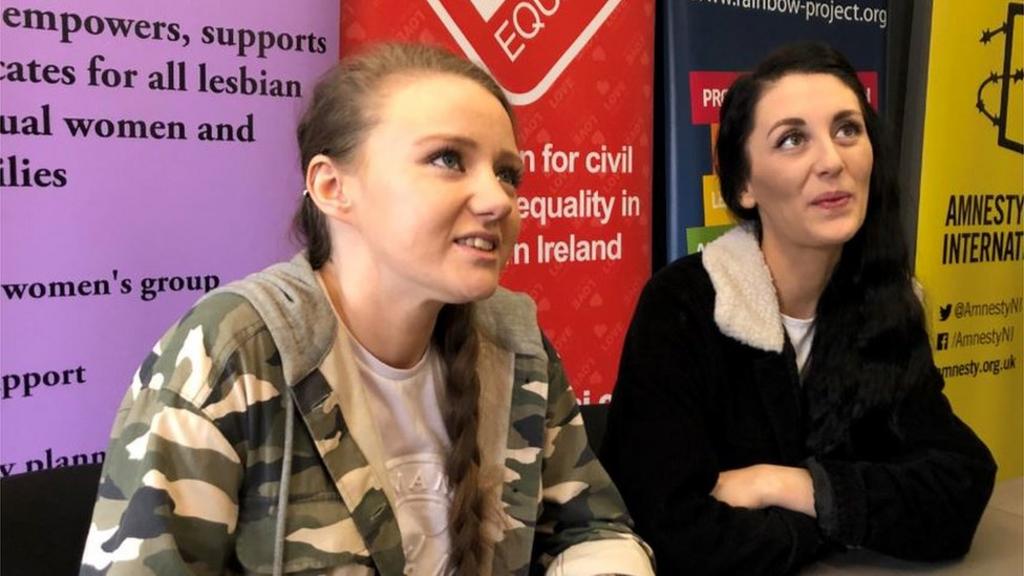
Robyn Peoples and Sharni Edwards will celebrate their wedding on Tuesday in Carrickfergus.
This change to the law has come about as a result of the introduction of the Northern Ireland (Executive Formation etc) Act 2019 passed by the UK Parliament (in the absence of of a functioning devolved government for nearly the last 3 years).
Finally, if employers want to do more to create an inclusive work place, they could start by using Stonewall’s inclusive toolkits (see link below):
As a society, the UK has certainly moved on from the overtly hostile attitudes towards members of the LGBTI communities over the last 50 years or so. The legal rights and protections which LGBTI people now enjoy would have seemed unthinkable in 1967 when a limited form of tolerance was ushered in as a result of the Sexual Offences Act (in England and Wales). More recently, the UK and Scottish Governments have issued pardons to those individuals who were convicted of criminal offences under the previous laws (in 2017: the Policing and Crime Act 2017 in England and Wales (known as Turing’s Law after Alan Turing, the Enigma Code Breaker) and, in 2018, the Scottish Parliament followed suit by passing the Historical Sexual Offences (Pardons and Disregards) (Scotland) Act 2018).
Postscript
On Friday 7 February 2020, Phillip Schofield, the British TV celebrity announced that he was gay at the age of 57. Mr Schofield is married with 2 children and had lived a heterosexual life – until now. He likened hiding his sexual orientation to being in prison and being consumed by it.
A link to the story on the Sky News website can be found below:
We’re barely into 2020 and we seem to be on something of a roll with stories about sex discrimination. Yesterday, I discussed the issue of equal pay.
Only this morning I was flicking through the newspaper and came across another story, this time, concerning pregnancy discrimination.
Helen Larkin was dismissed from her post with the Liz Earle Beauty Company on the grounds of her pregnancy. Her employer was restructuring the company and refused to consider Ms Larkin for two alternative posts within the organisation. This refusal to consider suitable, alternative employment appeared to be motivated by the fact that Ms Larkin would shortly be going off on her period of maternity leave.
This treatment amounted to unlawful direct discrimination in terms of Sections 13 and 18 of the Equality Act 2010. Her dismissal would also be automatically unfair in terms of the Employment Rights Act 1996.
Consequently, Ms Larkin was awarded over £17,000 in compensation. This sum, of course, reflects an element to injury to feelings (the so called Vento Bands or Guidelines). In fact, Ms Larkin was awarded £10,000 in compensation to reflect injury to feelings.
A link to the judgement of the Employment Tribunal can be found below:
A study carried out jointly by the UK Government Department (Business, Innovation and Skills) and the Equality and Human Rights Commission previously discovered that some 54,000 women per year in this country were forced out of their employment for reasons related to pregnancy and/or maternity.
A link to a summary of the research on the website of the Equality and Human Rights Commission can be found below:
Again, as I noted in yesterday’s Blog (New Year, same old story …), we have had anti-discrimination laws in the UK for nearly 45 years and yet we still regularly hear stories about pregnancy and maternity discrimination.
Readers might be interested to learn about the work of a pressure group (Pregnant then screwed) whichcampaigns to end the ‘motherhood penalty’:
Today seems to be something of a red letter day for the Blog with regard to the issue of protected philosophical beliefs in terms of the Equality Act 2010.
We have already heard the news that Jordi Casamitjana has won the part of his Employment Tribunal claim that his ethical veganism is a philosophical belief in terms of Sections 4 and 10 of the 2010 Act (see Casamitjana v League Against Cruel Sports [2020]).
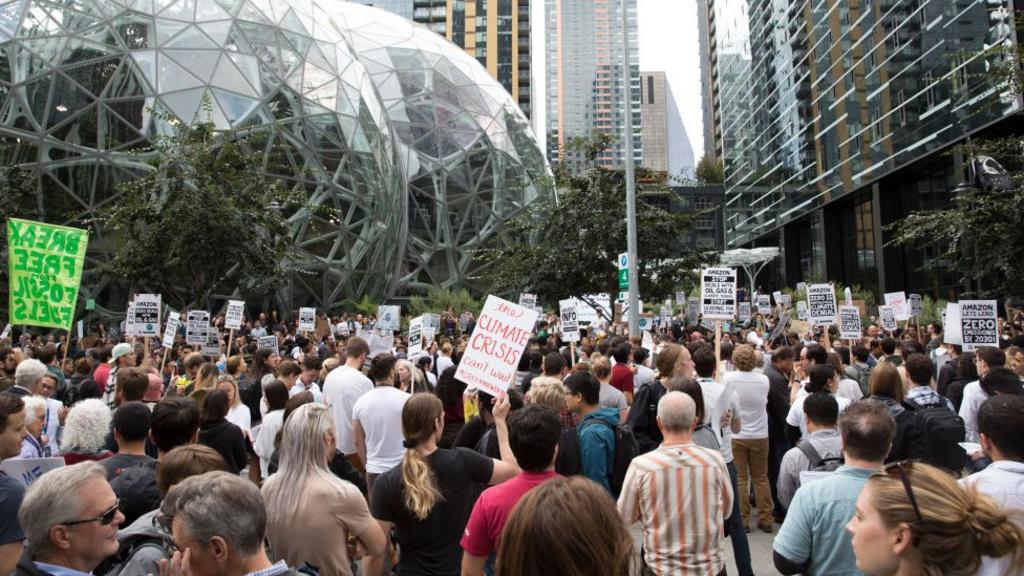
It was some interest that another news item popped up today concerning allegations that Amazon stands accused of threatening to dismiss those of its employees who become involved in climate protests. I would hazard a guess that Amazon is making a statement of intent that it may dismiss employees who perhaps break the law when they are involved in climate protests such as those organised by Extinction Rebellion and other similarly minded groups.
Criminal acts by employees committed outside the workplace could be regarded as gross misconduct in terms of Section 98 of the Employment Rights Act 1996. In other words, such behaviour by employees could result in the employer suffering reputational damage and, consequently, any dismissal for misconduct could be potentially fair. That said, employers should always carry out the proper disciplinary procedures when contemplating dismissal as the ultimate sanction for employee misbehaviour.
The real gripe – according to Amazon Employees for Climate Justice – is that the tech company allegedly objects to employees speaking critically about its failure to be more environmentally responsible.
Yet, there are potential dangers here for Amazon in the UK. In Grainger plc v Nicholson (2010) IRLR 4, the Employment Appeal Tribunal established that an employee’s belief in climate change could constitute discrimination on the grounds of a philosophical belief.
So, we could have situation where Amazon employees who are taking part in quite peaceful and lawful climate change protests end up being dismissed. This would open up the possibility that employees of Amazon UK might have the right to bring claims for direct discrimination (Section 13: Equality Act 2010) in respect of their philosophical beliefs (Sections 4 and 10 of the Act).
In the USA, there could be even more serious legal implications – infringing the right to free speech which is protected under the Constitution.
Perhaps Amazon needs to go back to the drawing board …
A link to an article on the BBC News App can be found below:
Ali G was (and still is) the memorable creation of the comedian, Sacha Baron Cohen. Ali G’s catchphrase was “Is it cos I is black?” and the comedian famously put this to a senior British police officer when he gatecrashed a political protest during a sketch for one of his TV shows on Channel 4.
Sacha Baron Cohen was making a very serious point when he wrote and planned such escapades: he was satirising the widespread racist sterotyping of Black and Minority Ethnic (BME) groups in the UK by their fellow White British citizens. When the character of Ali G first made appearances on Channel 4’s The 11 o’clock Show in 1999, it’s worth remembering that it was less than 6 years after the murder of the black teenager, Stephen Lawrence, in London.
Coincidentally, in 1999, Sir William Macpherson, a retired judge of the English High Court, had published his Report on the Stephen Lawrence murder and one of his most famous conclusions concerned the levels of “institutional racism” in the Metropolitan Police Service (paragraphs 4.45 – 6.63).
Several years ago, I attended an event for Black History Month and members of the panel were recounting their experiences of racism in the UK. Glasgow City Councillor, Graham Campbell told the story of his cousin who worked at Ford’s Dagenham car plant who constantly had his locker broken into and vandalised by his white, work colleagues. More often than not, his work tools were stolen from the locker. Eventually, this young man started to carry his tools to and from the Ford plant in order to avoid having to replace them. He was stopped and searched regularly by the same police officers who asked him each time if the tools were for burglaries. This was the kind of harassment that black people typically experienced in Britain of the 1970s.
Racial stereotyping which leads to people from certain ethnic groups suffering (unlawful) less favourable treatment is an example of direct discrimination in terms of Sections 9 and 13 of the Equality Act 2010. Repeated examples of harassment on grounds of race would also constitute breaches of Sections 9 and 26 of the Equality Act 2010.
So, it was with some interest that I read an article in The Independent on Saturday 15 June 2019 which recounted an incident which had taken place in Maidstone in Kent whereby a white police officer had assumed that a black man must be a criminal just because he happened to be in an area which was perceived to be ‘white’.
In England and Wales, you are much more likely to be stopped and searched by the police if you happen to come from the black community:
It doesn’t seem as if attitudes to race in certain sections of the police have moved on much from the 1970s.
A link to the story in The Independent can be found below:
Officer assumed black man was criminal in ‘white area’
Not much change in 2025 or that will be the Déjà vu
My article is now over 6 years’ old and it doesn’t appear that much has changed in the Metropolitan Police. True, the current Commissioner, Sir Mark Rowley has managed to dismiss 1400 officers who were the subject of misconduct allegations, but allegations of racism, Islamophobia and misogyny continue to dog the UK’s largest Police force.
On 7 November 2025, it was reported by the BBC and other media outlets that a review carried out by consultants, HR Rewired, had uncovered “systemic racism” in the Metropolitan Police and that anti-Black racism was “baked” into the force.
Readers will find a link to the BBC Article below:
This absolutely withering Review of London’s Police Service comes off the back of recent revelations by the BBC’s Panorama programme, where an undercover journalist exposed the discriminatory attitudes of many serving officers at London’s Charing Cross Police Station. Six of these officers have since been dismissed by the Met for misconduct and, surely, more dismissals must follow given the pressure that Sir Mark Rowley is under.
Links to articles on the BBC website about the Panorama programme and its aftermath can be found below:
Regarding Police Stop and Search powers, statistics from the House of Commons Library shows that people identifying as Black or Black British “were searched at a rate 3.7 times higher than those from a White ethnic group across England and Wales in the year to March 2024.”
A link to the figures from the House of Commons Library can be found below:
Don’t do what? Get pregnant, it would seem if you’re a female athlete who receives sponsorship from one of the planet’s most visible sporting brands.
Just this week, allegations have been made by a number of female athletes that Nike withdrew sponsorship after they discovered that they were pregnant.
Now, if the allegations are true, this would certainly represent an example of unlawful, less favourable treatment. Pregnancy and maternity discrimination are prohibited in terms of Sections 17 (non-work cases) and 18 (work cases) of the Equality Act 2010. They are very specific forms of sex discrimination (a person’s sex or gender is a protected characteristic in terms of Section 11 of the Act).
In 2019, you might have been forgiven for thinking that pregnancy discrimination was a thing of the past…
The Sex Discrimination Act 1975
The (now repealed) Sex Discrimination Act 1975, which was held up as a significant advance for woman’s equality, was fundamentally flawed when it addressed the issue of pregnancy and maternity discrimination.
When the Act of 1975 was first introduced, cases involving alleged discrimination connected to a woman’s pregnancy encountered an unexpected problem, which the Parliamentary draftsmen had not taken into account: how could it be valid to attempt a comparison between that of a pregnant woman’s situation with that of a man? A strict application of the legislation meant that this was not a valid comparison and, therefore, many of the earliest sex discrimination claims failed because some judges applied the literal approach to the interpretation of the Act – even if this made the law something of an ass and, more seriously, led to blatant injustice.
This Act made it very clear that central to the success of any claim was the complainant’s ability to compare his or her allegedly less favourable treatment to an actual or hypothetical male/female comparator. If he or she could not do this, the claim would fail. A woman claiming that she had suffered discrimination on the grounds of her sex must have been able to carry out a like with like comparison.
The woman’s circumstances and those of her male comparator must have been broadly the same (they should not have been materially different) otherwise a meaningful comparison could not be made.
The European Union
This situation really continued into the 1990s and, it was only when the Court of Justice of the European Union resolved the matter in Dekker v Stichting Vormingscentrum voor Jonge Volwassen Plus (1991), that things started to improve. Dekker clearly established that there was no requirement for pregnant women to identify a male comparator when they were alleging that they had experienced unlawful, less favourable treatment.
The Equality Act 2010 now, in theory, affords pregnant women and mothers much stronger legal protection than the Sex Discrimination Act 1975 ever did, but yet examples of pregnancy and maternity discrimination still arise.
It was as recently as 2016 that the Equalities and Women Committee of the House of Commons exposed the shocking extent of pregnancy and maternity discrimination in the UK. Maria Miller MP, chair of the Committee stated:
“Our 2016 report laid bare the significant discrimination and poor treatment faced by 54,000 pregnant women and mothers at work each year.”
A link to the Committee’s Report can be found below:
Being deadly serious, the above slogan (of Nike) will hardly sit well with those female athletes in receipt of sponsorship from the company. That said, should we really be surprised that stories of this nature emerge when read against the Report of the Women and Equalities Committee?
A link to the article about alleged pregnancy discrimination as reported by Sky News can be found below:
In 2018, Nike was praised for endorsing Colin Kaepernick, the former African American Football star who had actively campaigned to raise awareness of racial inequality. Now with these sex discrimination allegations, is it a case of one step forward, ten steps back for Nike?
Postscript
On 26 May 2019, The Independent reported that Nike had promised not to impose financial penalties on those female athletes who became pregnant and who were in receipt of sponsorship from the corporation. This was undoubtedly due to the considerable, adverse publicitywhich the story had generated around the world.
A link to the article in The Independent can be found below:
Six-time Olympic gold medallist Allyson Felix says female athletes will “no longer be financially penalised for having a child” after Nike changed its sponsorship contracts.
Copyright Seán J Crossan, 17 & 26 May and 17 August 2019
Unlike religious beliefs, which tend to be more easily recognised under the Equality Act 2010, a person’s philosophical beliefs can be something of a grey area This means that it can be very difficult for employers and service providers to identify when someone has a genuine belief which is protected by law.
Section 4 of the Equality Act 2010 recognises that a person can be subjectedto unlawful, less favourable treatment (discrimination) owing to certainbeliefs which they possess.
Section 10 of the Equality Act defines religion and beliefs:
(1) Religion means any religion and a reference to religion includes areference to a lack of religion.
(2) Belief means any religious or philosophical belief and a referenceto belief includes a reference to a lack of belief. (3) In relation to the protected characteristic of religion or belief—
(a) a reference to a person who has a particular protectedcharacteristic is a reference to a person of a particular religion or belief;
(b) a reference to persons who share a protected characteristic is a reference to persons who are of the same religion or belief.
In Lisk v Shield Guardian Co Ltd and others ET/3300873/11, anemployee was told that he was not permitted to wear a poppy while at work. Theemployee, an ex-serviceman, argued that by wearing the poppy he wascommemorating the sacrifices of those killed in armed conflicts. The EmploymentTribunal disagreed with the employee’s argument that his decision to wear apoppy while at work was a legitimate philosophical belief.
Yet, in earlier decision: Grainger plc v Nicholson (2010) IRLR 4the Employment Appeal Tribunal established that Nicholson’s belief in climate changecould constitute discrimination on the grounds of a philosophical belief.
Similarly, in Hashman v Milton Park (Dorset) Ltd (t/a Orchard Park) ET/3105555/2009 a prominent animal rights activist (Joe Hashman) was deemed to have been dismissed unfairly by his employer by reason of his philosophical beliefs i.e. his belief in the sanctity of all life, both human and animal.
Recently, some interesting cases have come before Employment Tribunalsdealing with the issue of philosophical beliefs.
In one case, Christopher McEleny an SNP Councillor won a pre-Hearing Review which established that a belief in Scottish independence could constitute a protected characteristic in terms of the Equality Act 2010.
Please see a link to the judgement of the Employment Tribunal:
In the second case, Jordi Casamitjana, has taken his former employer, the League Against Cruel Sports to an Employment Tribunal alleging that he had been subjected to discrimination on the grounds that he is a vegan. He alleged that he had been dismissed from his job because he had revealed that his employer had allegedly invested pension funds in organisations which carried out animal testing. At the time of writing (January 22, 2019), it remains to be seen whether Mr Casamitjana will be successful in his legal action.
Veganism, as a belief system which should be recognised and protected by law has divided opinion as the final BBC report demonstrates.
The company said his suggested series on “killing vegans one by one” had “gone too far”.
Conclusion
Mr McEleny’s case and Mr Casamitjana’s case clearly demonstrate the difficulties that employers will have when it comes to a person’s philosophical beliefs.













 Seán Crossan's Scots Law