It’s becoming depressingly predictable: the persistence of the gender pay gay in the United Kingdom.
This time last year, I was discussing with my students the struggle that City of Glasgow Council female employees were undertaking to win their claims for equal pay. After a period of industrial action, the women finally won their struggle:
We’ve just entered 2020 and it seems as if nothing much has changed in the wider world (more on this later).
Theoretically, the gender pay gap should be a thing of the past. We have had legislation in place for nearly 45 years in this country: the Equal Pay Act 1970 (which came into force in December 1975) and the current Equality Act 2010.
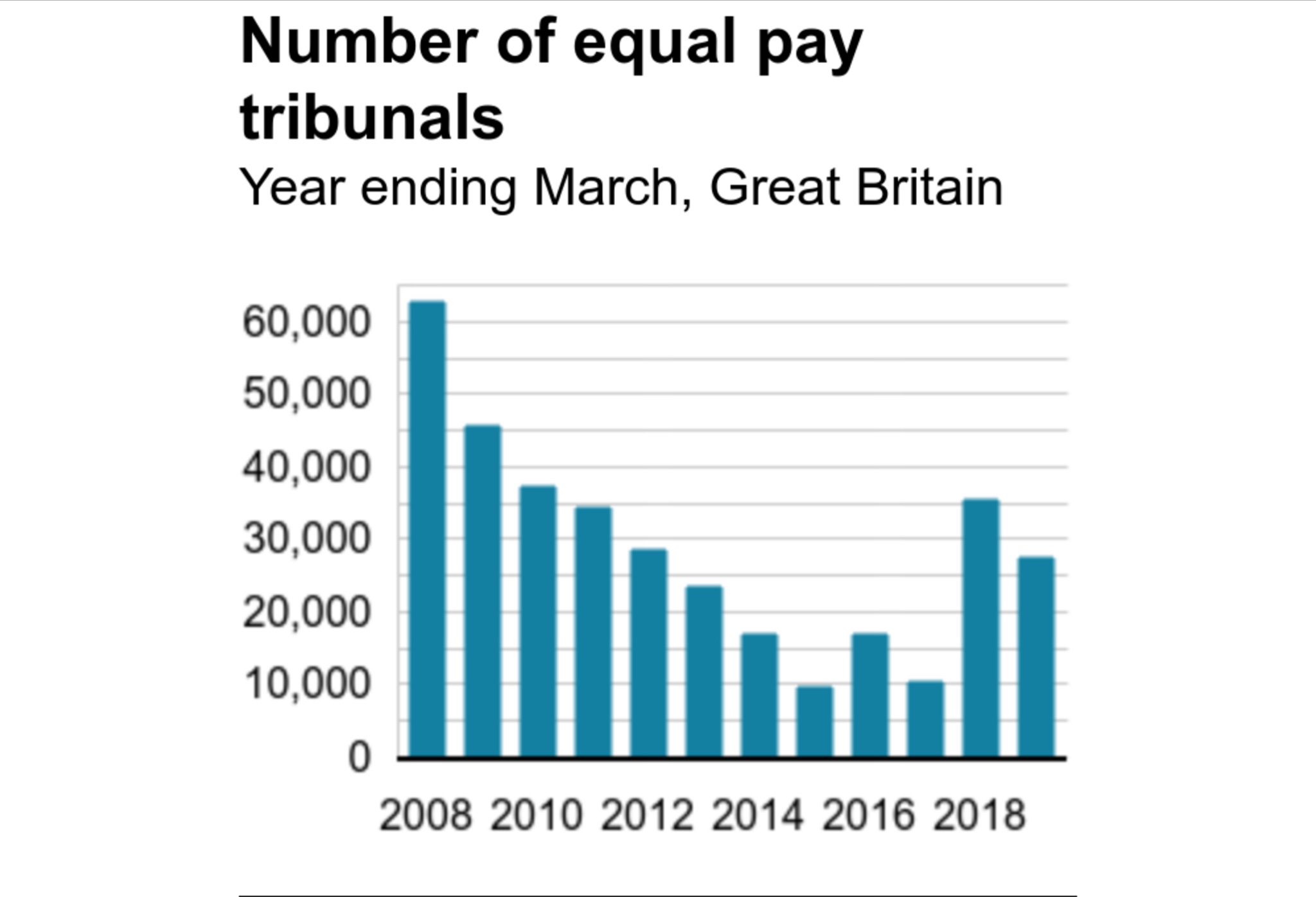
An info graphic which shows the number of Employment Tribunal cases in the UK involving equal pay claims (2008-2019) can be seen below:
Source: UK Ministry of Justice obtained from BBC News
True, the above figures show the number of equal pay claims in overall decline – effectively being halved (from a high of over 60,000 in 2008 to just over 30,000 in 2019); but my riposte to that would to say still too many.
In today’s edition of The Independent, new research, carried out by the Institute of Public Policy Research, indicates that female General Practitioners (physicians for our overseas readers) are paid up to £40,000 less than their male colleagues every year.
For each £1 that a male colleague earns, a woman earns 35 pence less. To reinforce this point, the article states that female GPs are effectively providing their services free of charge between September and December every year.
In language of the Equality Act 2010, the female GPs are carrying out ‘like work’ when comparing themselves to their male colleagues. There seems to be absolutely no lawful justification for this disparity in pay between the sexes.
A link to the article in The Independent can be found below:
The equal pay laws imply a sex or gender equality clause into every person’s contract of employment. Employers therefore have a legal duty to ensure gender equality in relation to terms and conditions of service.
It seems pretty simple, so why isn’t it happening in 2020?
An explanation for this situation in the medical profession has centred around the development of a ‘two tier’ system whereby more men are partners in GP surgeries whereas a large number of women take on the role of a salaried GP. Women tend to become salaried GPs because they feel that this allows them to work flexibly around their family commitments. So, again, what we appear to be seeing is women being penalised because they are trying to balance work and family (the so called ‘motherhood’ penalty).
Also on this day …
And purely by coincidence another equal pay story …
… Samira Ahmed, BBC journalist, wins her Employment Tribunal claim for equal pay (see below):
… read the following article in The Independent about discrimination in pay between male and female apprentices (guess what?; it’s not the men who are the victims):
A person’s protected characteristics in terms of the Equality Act 2010 seems to be the theme of the Blog today.
Sexual orientation is a protected characteristic in terms of Sections 4 and 12 of the Act. Most people these days are familiar with the following definitions in terms of an individual’s sexuality: e.g. heterosexual, homosexual (gay/lesbian) and bisexual.
What about a person who declares themselves to be pansexual?
According to Stonewall, the group which campaigns on behalf of the LGBTI community, this term refers to a person ‘whose romantic and/or sexual attraction towards others is not limited by sex or gender.’ Stonewall also makes the point that bisexual individuals can declare themselves to be pansexual.
An interesting story appeared in today’s British media about pansexuality. Layla Moran, Liberal Democrat MP and possible contender for the leadership of that Party, has declared herself to be pansexual. She is the first Member of the Westminster Parliament to define her sexual orientation in this way. Previously, she would have declared herself as heterosexual.
Andrew Adonis, Labour member of the House of Lords and former UK Government minister tweeted his reaction to the story:
The point that Adonis was trying to make is that it shouldn’t have been a story. As a society, the UK has supposedly become more tolerant and progressive towards people with different sexual orientations.
Ms Moran admitted herself that the decision to be open about her sexual orientation had caused friends and colleagues to worry that this might harm her career – and her aspiration to be the next or future leader of the Liberal Democrats. So much for a more tolerant and progressive society …
Explaining her reason for going public about her sexual orientation, Ms Moran stated that:
“… I feel now is the time to talk about it, because as an MP I spend a lot of my time defending our community [LGBTI] and talking about our community. I want people to know I am part of our community as well.”
A link to the story in Pink News can be found below:
Today seems to be something of a red letter day for the Blog with regard to the issue of protected philosophical beliefs in terms of the Equality Act 2010.
We have already heard the news that Jordi Casamitjana has won the part of his Employment Tribunal claim that his ethical veganism is a philosophical belief in terms of Sections 4 and 10 of the 2010 Act (see Casamitjana v League Against Cruel Sports [2020]).
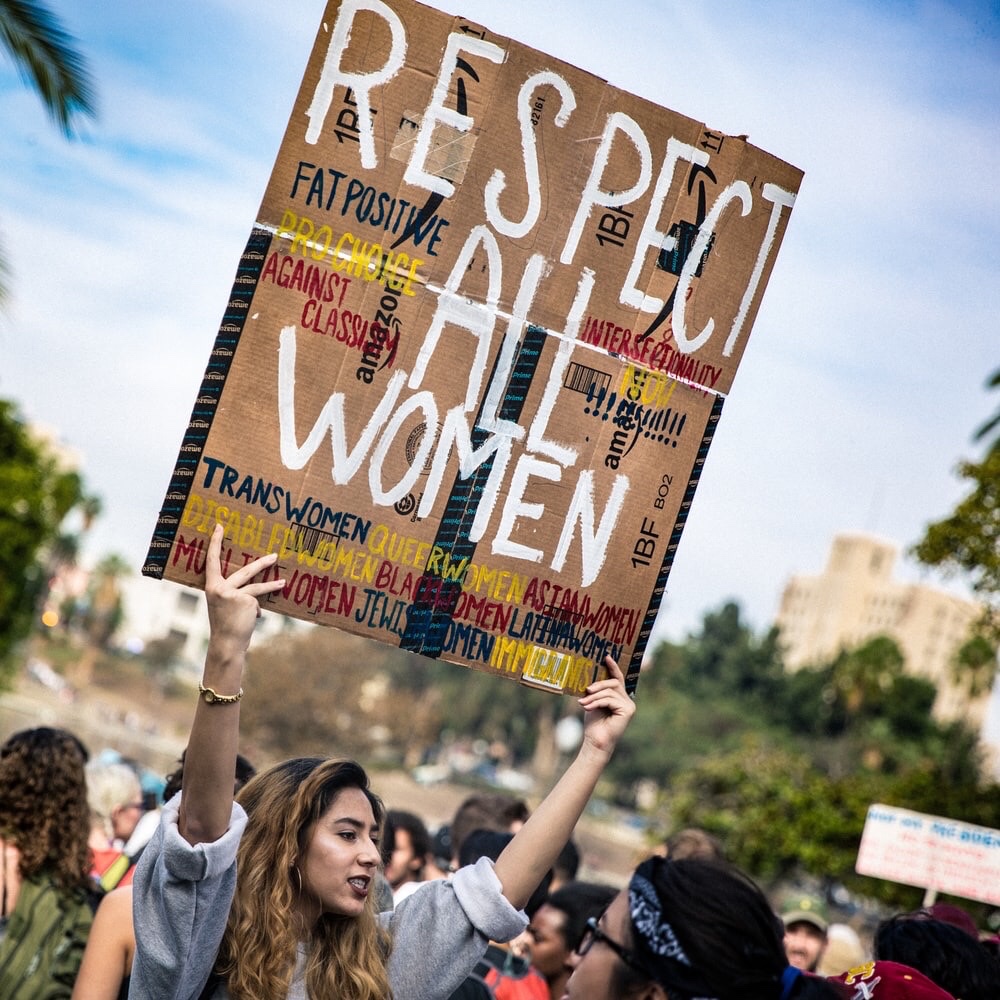
It was some interest that another news item popped up today concerning allegations that Amazon stands accused of threatening to dismiss those of its employees who become involved in climate protests. I would hazard a guess that Amazon is making a statement of intent that it may dismiss employees who perhaps break the law when they are involved in climate protests such as those organised by Extinction Rebellion and other similarly minded groups.
Criminal acts by employees committed outside the workplace could be regarded as gross misconduct in terms of Section 98 of the Employment Rights Act 1996. In other words, such behaviour by employees could result in the employer suffering reputational damage and, consequently, any dismissal for misconduct could be potentially fair. That said, employers should always carry out the proper disciplinary procedures when contemplating dismissal as the ultimate sanction for employee misbehaviour.
The real gripe – according to Amazon Employees for Climate Justice – is that the tech company allegedly objects to employees speaking critically about its failure to be more environmentally responsible.
Yet, there are potential dangers here for Amazon in the UK. In Grainger plc v Nicholson (2010) IRLR 4, the Employment Appeal Tribunal established that an employee’s belief in climate change could constitute discrimination on the grounds of a philosophical belief.
So, we could have situation where Amazon employees who are taking part in quite peaceful and lawful climate change protests end up being dismissed. This would open up the possibility that employees of Amazon UK might have the right to bring claims for direct discrimination (Section 13: Equality Act 2010) in respect of their philosophical beliefs (Sections 4 and 10 of the Act).
In the USA, there could be even more serious legal implications – infringing the right to free speech which is protected under the Constitution.
Perhaps Amazon needs to go back to the drawing board …
A link to an article on the BBC News App can be found below:
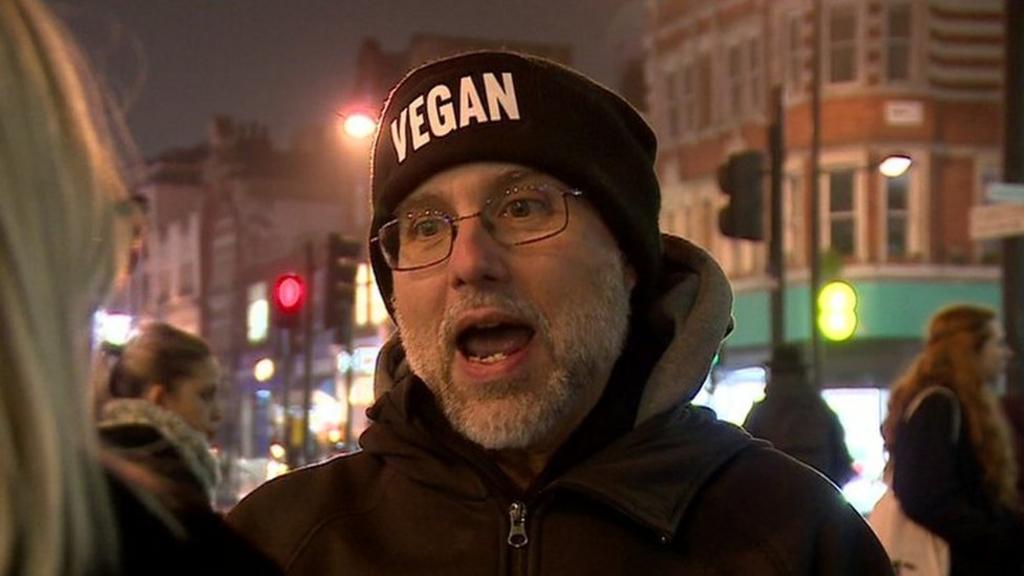
… well now Jordi Casamitjana can believe … officially. He has just won part of his Employment Tribunal case (Casamitjana v League Against Cruel Sports) which confirms that ethical veganism is a protected philosophical belief in terms of Sections 4 and 10 of the Equality Act 2010.
Please note, however, that the Employment Tribunal is yet to determine whether Mr Casamitjana was dismissed because of these protected beliefs – that is another matter.
A link can be found below to the Preliminary Judgement of the Employment Tribunal on the question of whether ethical veganism is a philosophical belief in terms of the Equality Act 2010:
Disability is a protected characteristic in terms of Sections 4 and 6 of the Equality Act 2010. In terms of Sections 20 and 21 of the Act, employers and service providers have a legal duty to make reasonable adjustments to accommodate the needs of a disabled person.
What about a new prison inmate (a sex offender) who is visually impaired and wishes to bring his assistance (or guide) dog with him?
The prison authorities have said no to this request, it is simply against the rules.
Discrimination or less favourable treatment, of course, can be perfectly legal if it is objectively justified.
It would be very interesting to see if the prison authorities were potentially in breach of the Equality Act (direct or indirect discrimination).
A link to the story on the BBC News App can be found below:
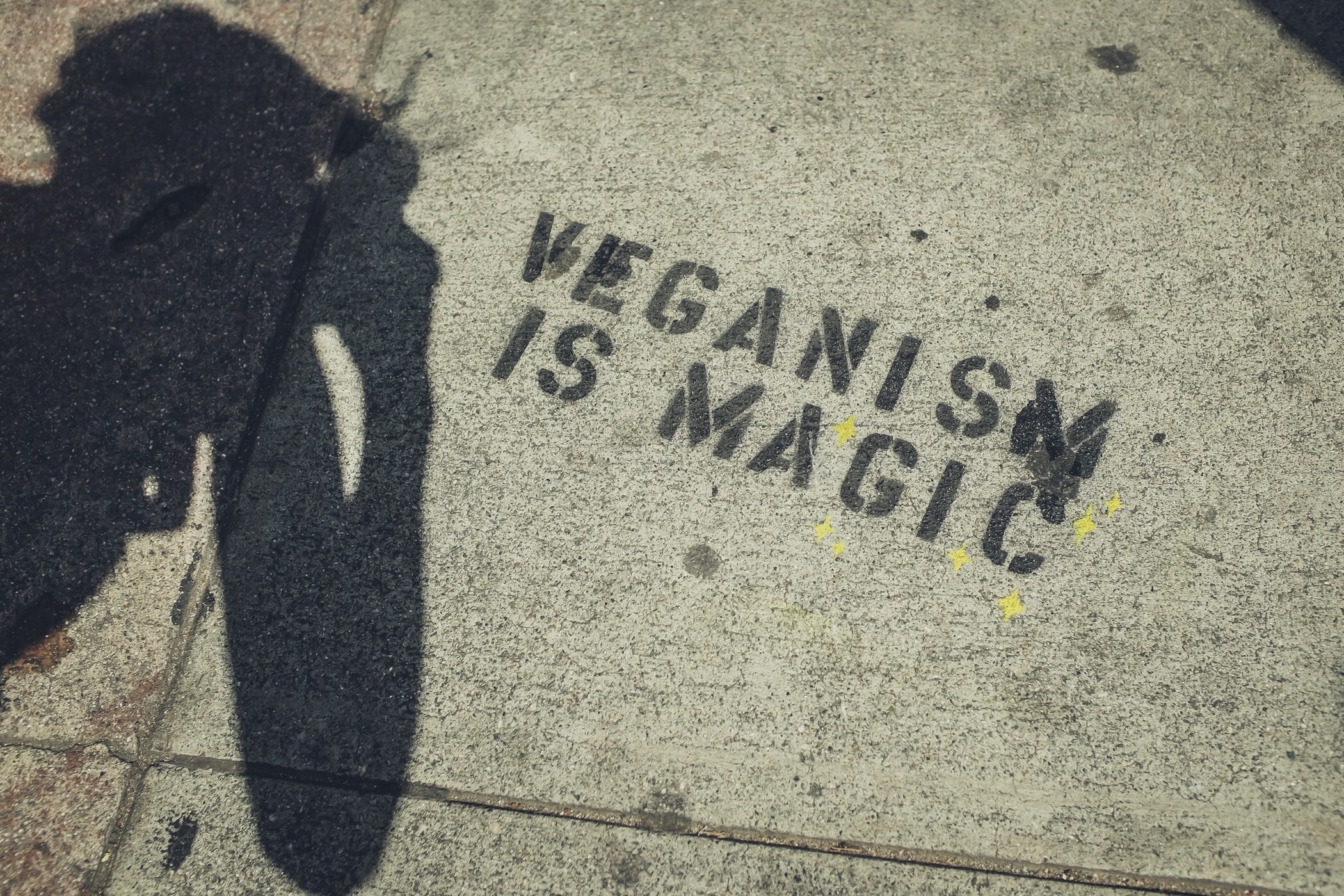
While we await the judgement of the Employment Tribunal in relation to the case of Casamitjana v League Against Cruel Sports, it’s interesting to note that veganism as a lifestyle choice seems to be on the rise.
Whether the Employment Tribunal will recognise Jordi Casamitjana’s ethical standpoint as a philosophical belief in terms of Sections 4, 10 and 13 of the Equality Act 2010 remains to be seen. Watch this space.
In the meantime, the BBC has produced an interesting article on the rise of veganism which can be found on its News App:
Thanks to @tchickphoto for making this photo available freely on @unsplash 🎁
Scanning through the papers today for news worthy stories, I found myself looking across the sea (the Irish Sea to be precise) and it was there that I stumbled upon an interesting article in The Irish Times.
Regular readers of this Blog will be aware that I have a particular interest in the areas of discrimination and employment law and this story ticked both boxes.
A female supermarket delicatessen worker was repeatedly subjected to sexual harassment on an almost daily basis by one of her male co-workers. The dreadful treatment appears to have started less than a month after the woman commenced her employment (May 2018). Her manager (a man) was fully aware of the situation, but did nothing to put an end to her ordeal. In fact, he witnessed one of the brazen attempts by her tormentor and made a joke of it. This joke involved comments about people from Limerick. I have to say as someone who has Limerick ancestry, I felt pretty insulted when reading the manager’s gratuitous comment.
A link to the story in The Irish Times can be found below:
The woman complained about the situation, but she was not informed about the progress of this by her employer. Eventually, the woman felt that she had little choice but to resign from her employment. This could be viewed as the last straw – her employer’s conduct having led to a complete breakdown in their relationship. It might be said that the implied duty of trust and confidence on the part of the employer had been completely shattered.
In the UK, we would, of course, recognise this situation as one of constructive (unfair) dismissal in terms of the Employment Rights Act 1996 and the Equality Act 2010 (she was being subjected to discrimination/unlawful less favourable treatment on the grounds of her sex).
When the woman’s formal complaint was submitted, her employer did move her male colleague to a different location within the supermarket (the storeroom), but he went absent on sick leave shortly afterwards.
The whole experience was extremely distressing for the woman who has now been awarded €20,000 in compensation.
Again, readers in the UK will make the obvious comparison with our Vento scale (or bands) for compensation for victims of discrimination. The sum awarded to this woman would fall into the middle band in the UK (£8,800 to £26,300).
A link to an article about the current UK Vento scale or bands can be found below:
Anyone with a background in discrimination law who reads the article from The Irish Times about this story will immediately recognise the terminology used. The women alleged that her co-worker’s behaviour “was a violation of dignity in that it created an intimidating, hostile, degrading, humiliating and offensive environment for her.”
Such a statement reflects the language of the European Commission’s Code of Practice on Measures to combat sexual harassment. This Code was first formulated as far back as 1991 and has now been largely implemented into the legal systems of EU member states. The Republic of Ireland is, of course for the time being, one of our fellow EU member states and Irish anti-discrimination practitioners will be readily familiar with the terminology. For many years, Employment Tribunals and UK courts routinely used the Commission’s Code of Practice when dealing with cases which involve allegations of sexual harassment.
Current UK law on harassment in the workplace is contained primarily in the Equality Act 2010. More seriously, acts of harassment can also be a criminal offence.
A link to a guidance published by the UK Equality and Human Rights Commission concerning sexual harassment in the workplace can be found below:
The Conciliator appointed by Ireland’s Workplace Relations Commission, an independent statutory body created by Oireachtas – both Houses of the Irish Parliament, concluded that the woman’s employer had “failed to put appropriate measures in place to stop this harassment and sexual harassment from occurring or to reverse its effects”.
The Conciliator also noted that “the supermarket failed to conclude its investigation and make a decision is the most egregious flaw in the process.” The employer tried to justify this failure by saying that, as a matter of natural justice, it could not conclude the investigation because the male colleague had since left Ireland to return to his country of origin. The Conciliator stayed that the employer made this decision “at the expense of the complainant and closure for her of this appalling experience”.
Employers, please take note: failing to follow basic grievance procedures contained in the employment contract can have serious and expensive consequences. Such a failure on your part can contribute to the breakdown of the relationship with the employee and may very well open the door to claims for constructive dismissal against you.
As of today (31 December 2019), heterosexual couples in England and Wales will be able to enter civil partnerships as an alternative to marriage.
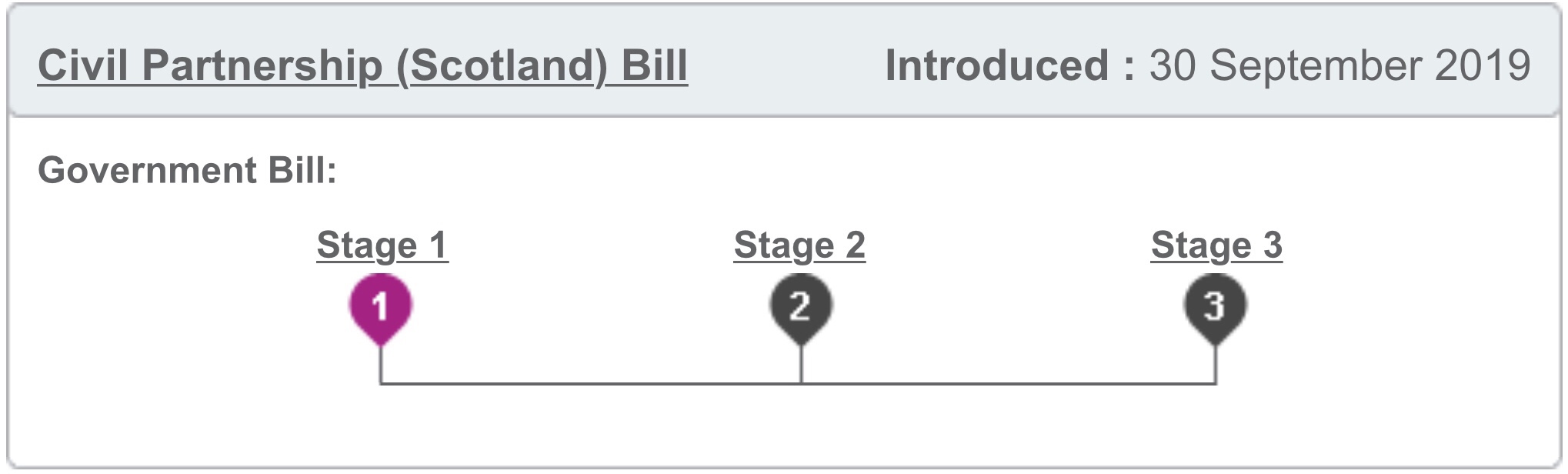
This change does not yet extend to Scotland: the Scottish Government has introduced its own Bill to introduce civil partnerships for heterosexual couples.
An info graphic showing the current progress of this Bill in the Scottish Parliament (Stage 1) can be seen below:
When the Labour Government of Prime Minister Tony Blair originally introduced civil partnerships across the UK (as a result of the Civil Partnerships Act 2004) such legal unions were open to gay and lesbian couples only.
It was the first time in the history of Scots and English family law that gay and lesbian couples were entitled to enter a legally recognised relationship.
Fast forward a decade or so and we now have same sex marriage in Scotland, England and Wales – but not yet Northern Ireland (although the clock may be ticking here on this issue). Admittedly, same sex couples can enter civil partnerships in Northern Ireland, but since the Republic of Ireland made same sex marriage legal in 2015, pressure has been mounting for change in the North.
The case which started the ball rolling was Steinfeld and Keidan v Secretary of State for Education[2016] EWHC 128 (Admin).
In Steinfeld and Keidan, an unmarried, heterosexual couple brought a claim for unlawful less favourable treatment against the UK Government on the basis that the law (contained in the Civil Partnership Act 2004) discriminated against them by forcing them to enter marriage as opposed to their preferred option of a civil partnership arrangement. The couple had strong “ideological objections” to marriage (irrespective of whether it took a religious or civil form) and argued, amongst other things, that the failure by the United Kingdom to give them the option of entering a civil partnership was a potential breach of their Article 8 rights (the right to privacy and family life) in terms of the European Convention on Human Rights. The ban on civil partnerships for heterosexual couples was also a potential breach of the Equality Act 2010 in the sense that it represented direct discrimination on grounds of a person’s sexual orientation.
Initially, the English High Court rejected the challenge brought by Steinfeld and Keidan, whereupon the case was allowed to proceed to the English Court of Appeal. Although expressing sympathy for Steinfeld and Keidan’s predicament, the Lord Justices of Appeal refused to overturn the ban (see Steinfeld and Keidan v Secretary of State for Education [2017] EWCA Civ 81).
The couple were then given leave to appeal to the UK Supreme Court.
On 27 June 2018, the Supreme Court issued its decision: R (on the application of Steinfeld and Keidan) (Appellants) v Secretary of State for International Development (in substitution for the Home Secretary and the Education Secretary) [2018] UKSC 32.
Lord Kerr gave the leading judgement (with which his fellow Justices concurred) and allowed Steinfeld and Keidan’s appeal:
“I would allow the appeal and make a declaration that sections 1 and 3 of CPA [Civil Partnership Act 2004] (to the extent that they preclude a different sex couple from entering into a civil partnership) are incompatible with article 14 of ECHR taken in conjunction with article 8 of the Convention.”
Following the Supreme Court’s decision, the UK Government of former Prime Minister Theresa May initiated steps to amend the Civil Partnership Act 2004 in respect of the law for England and Wales.
A link to an article about the change to the law in England and Wales on the Sky News website can be found below:
Love and marriage go together like a horse and carriage to paraphrase the words of the old song from the 1950s …
… but not for much longer in Scotland if the Scottish Government has its way. A new Bill lodged by the Government this week will potentially revolutionise legal unions for heterosexual couples who want commitment but not, critically, in the form of marriage.
The Civil Partnerships Act 2004 was originally passed by the UK Government of Prime Minister Tony Blair in order to permit same sex couples to enter a legally binding relationship. At the time, the Blair Government stressed that this type of legal arrangement was not open to heterosexual couples and should not be regarded as “gay marriage”.
This legislation also extended the same employment benefits that married couples already enjoyed to same sex couples who entered a civil partnership. In relation to the field of employment rights, the Act applies to employment and pension benefits e.g. a concessionary travel scheme and civil partners of an employee will be entitled to take advantage of these if existing provisions permit a heterosexual partner or spouse of an employee to claim these benefits.
In Bull and Another v Preddy and Another [2013] UKSC 73, UK Supreme Court Justice, Baroness Hale made the following remarks about civil partnerships:
“Civil partnership is not called marriage but in almost every other respect it is indistinguishable from the status of marriage in United Kingdom law. It was introduced so that same sex couples could voluntarily assume towards one another the same legal responsibilities, and enjoy the same legal rights, as married couples assume and enjoy. It is more than a contract. Like marriage, it is a status, in which some of the terms are prescribed by law, and which has consequences for people other than the couple themselves and for the state.”
Fast forward a decade or so and we now have same sex marriage in Scotland, England and Wales – but not yet Northern Ireland (although the clock may be ticking here on this issue). Admittedly, same sex couples can enter civil partnerships in Northern Ireland, but since the Republic of Ireland made same sex marriage legal in 2015, pressure has been mounting for change in the North.
This means that same sex couples have the option of entering into marriage or civil partnership. This choice is still denied to heterosexual couples – until now, hence the introduction of the Civil Partnership (Scotland) Bill.
Traditional marriage between a man and woman has been criticised on a number of grounds:
• It’s seen as very patriarchal i.e. historically it unduly favours the male partner
• It has religious associations which are not in keeping with the fact that the UK is (in 2019) a much more secular society
• Some heterosexual couples are increasingly attracted to a more equitable and modern form of legal commitment i.e. civil partnership.
Despite these criticisms of traditional marriage, until recently neither the UK or Scottish Governments had shown a desire to extend civil partnerships to heterosexual couples. That is until very recently and a UK Supreme Court decision has now made reform of the institution of marriage and civil partnership essential on the basis of a human rights challenge.
The case which started the ball rolling was Steinfeld and Keidan v Secretary of State for Education[2016].
In Steinfeld and Keidan, an unmarried, heterosexual couple brought a claim for unlawful less favourable treatment against the UK Government on the basis that the law (contained in the Civil Partnership Act 2004) discriminated against them by forcing them to enter marriage as opposed to their preferred option of a civil partnership arrangement. The couple had strong “ideological objections” to marriage (irrespective of whether it took a religious or civil form) and argued, amongst other things, that the failure by the United Kingdom to give them the option of entering a civil partnership was a potential breach of their Article 8 rights (the right to privacy and family life) in terms of the European Convention on Human Rights. The ban on civil partnerships for heterosexual couples was also a potential breach of the Equality Act 2010 in the sense that it represented direct discrimination on grounds of a person’s sexual orientation.
Initially, the English High Court rejected the challenge brought by Steinfeld and Keidan, whereupon the case was allowed to proceed to the English Court of Appeal. Although expressing sympathy for Steinfeld and Keidan’s predicament, the Lord Justices of Appeal refused to overturn the ban.
The couple were then given leave to appeal to the UK Supreme Court.
On 27 June 2018, the Court issued its decision: R (on the application of Steinfeld and Keidan) (Appellants) v Secretary of State for International Development (in substitution for the Home Secretary and the Education Secretary) [2018] UKSC 32.
Lord Kerr gave the leading judgement (with which his fellow Justices concurred) and allowed Steinfeld and Keidan’s appeal:
“I would allow the appeal and make a declaration that sections 1 and 3 of CPA [Civil Partnership Act 2004] (to the extent that they preclude a different sex couple from entering into a civil partnership) are incompatible with article 14 of ECHR taken in conjunction with article 8 of the Convention.”
If, post Steinfeld and Keidan, the Scottish Government continued to allow civil partnership legislation to operate in its original form, there was a very real risk that the Scottish Ministers would be taken to court and challenged by heterosexual couples (using Steinfeld and Keidan [2018]) on human rights grounds.
The solution?
Letting the status quo prevail in Scotland was not an option because of the implications for human rights, so the Scottish Government announced a public consultation on civil partnerships in September 2018:
On the back of this consultation, the Scottish Government has now introduced the Civil Partnership (Scotland) Bill in order to implement option 2.
As the Policy Memorandum accompanying this Bill clearly states:
“In Scotland, couples can marry or enter into a civil partnership, or choose to cohabit. Same sex and mixed sex couples can marry, and same sex and mixed sex couples can decide to cohabit. Civil partnership is currently available only to same sex couples, but this Bill will extend the relationship to mixed sex couples.”
It is more than likely that this Bill will command significant support in the Scottish Parliament and will soon become law.
An info graphic showing the current progress of this Bill can be seen below:
A link to BBC Scotland’s website about the introduction of the Bill can be found below:
The Equalities and Human Rights Committee of the Scottish Parliament is now seeking the views of the public about the future of civil partnerships and whether allowing heterosexual couples to enter into this type of legal arrangement is desirable.
Interested members of the public have until 31 January 2020 to submit their views to the Committee.
More information about the Committee’s work in this area can be found by accessing the press release at the link below:
In a previous blog (Who’s the daddy? published on 17 July 2019), I discussed the case of Freddy McConnell, a transgender man who wished to be named as his child’s father on the birth certificate.
Mr McConnell, it will be recalled, had been born female and decided to undergo gender reassignment. While undertaking this process, Mr McConnell discovered that he was pregnant. He eventually gave birth to the child and wished to be designated as the father or parent on the child’s birth certificate.
Sir Andrew McFarlane, President of the English High Court has now issued a ruling regarding this matter (SeeR (on the application of TTv The Registrar General for England and Wales and Others [2019]EWHC 2348 (Fam)).
As the summary of the High Court’s judgement states:
“The issue at the centre of this case can be simply stated: where a person, who was born female, but who has subsequently undergone gender transition and acquired full legal recognition as male, becomes pregnant and gives birth to a child, is that person to be registered as their child’s ‘mother’ or ‘father’?”
Well, the simple answer is that Mr McConnell will not be permitted to insist that he be designated (or named) as the child’s father on the birth certificate.
As Sir Andrew McFarlane clearly stated in his judgement (at paragraph 279):
“… there is a material difference between a person’s gender and their status as a parent. Being a ‘mother’, whilst hitherto always associated with being female, is the status afforded to a person who undergoes the physical and biological process of carrying a pregnancy and giving birth. It is now medically and legally possible for an individual, whose gender is recognised in law as male, to become pregnant and give birth to their child. Whilst that person’s gender is ‘male’, their parental status, which derives from their biological role in giving birth, is that of ‘mother’.”
Sir Andrew McFarlane also dismissed Mr McConnell’s secondary argument that, if the court decided he could not be designated the child’s mother under English law, then this would represent a breach of Article 8 of the European Convention on Human Rights i.e. the right to private and family life. English law is not incompatible with the European Convention regarding this matter.
Interestingly, however, Sir Andrew did state (at paragraph 125) that this is an area which the UK Government and Parliament may wish to address in the future:
“The issue which has most properly and bravely been raised by the Claimant [Mr McConnell]in this Claim is, at its core, a matter of public policy rather than law. It is an important matter of public interest and a proper cause for public debate. Whilst this judgment will seek to determine the issue by reference to the existing legislation and the extant domestic and ECHR caselaw, as these sources do not themselves directly engage with the central question there would seem to be a pressing need for Government and Parliament to address square-on the question of the status of a trans-male who has become pregnant and given birth to a child.”
Links to Sir Andrew McFarlane’s full judgement and the summary of this can be found below:
As Scotland is a separate legal jurisdiction from England and Wales, the registration of births is primarily governed by the Registration of Births, Deaths and Marriages (Scotland) Act 1965 (as amended).
In Scotland, transgender people can apply to have their birth certificate issued to reflect the fact that they have undergone a process of gender reassignment (as per the terms of the Gender Recognition Act 2004). There is, as yet, no provision in Scots Law for a transgender person who found themselves in Mr McConnell’s position to be designated as the father of a child to which they have physically given birth.
Although an English decision i.e. a persuasive rather than a binding precedent, R (on the application of TTv The Registrar General for England and Wales and Others [2019]EWHC 2348 (Fam) it could be argued that it is likely to be followed by the Scottish courts.
The Scottish Government is, of course, currently carrying out a consultation exercise on changes to the Gender Recognition Act 2004.
See the link to details about this consultation exercise:










 Seán Crossan's Scots Law