Crazy days! Force majeure & frustration!

Photo by Adam Azim on Unsplash

I never thought that the subject of impossibility and frustration in relation to contract would become such a popular topic of everyday conversation; but it has.

The phrase “force majeure” has also been making more of an appearance than is commonly the case.

Why?

The continuing fallout from Coronavirus or COVID-19 has led to all sorts of sporting and cultural events being cancelled or postponed. We are also about to enter the holiday season with the Spring Break and Easter Weekend just over the horizon. Many people will have booked getaways to foreign climes and events have now completely overtaken such plans.

Critically, thousands of people will have paid something up front for football season tickets and holidays and they will be anxious to know where they stand legally.

Hearts owner Ann Budge says she would consider legal action should her club be relegated from the Scottish Premiership with eight games left:

Coronavirus: Hearts would seek legal advice if relegated

So where do they stand legally?

There are two ways of dealing with an unexpected situation which affects contractual performance: being reactive or being farsighted.

At the moment, the scale of COVID-19 has completely taken Governments, societies, business, cultural, sporting organisations and individuals completely by surprise. So, in a sense, we are being forced to react to changing circumstances and rely upon established legal contractual principles which govern the termination of agreements i.e. frustration, impossibility and illegality. More about these matters shortly.

As lawyers, could we have pre-empted or foreseen that events (I’m speaking in the general sense here) might render contractual performance highly unlikely or well nigh impossible? Well, yes the concept of Force Majeure clauses is recognised in contract law – although the linguists amongst us may recognise that it’s not a native species of English or Scots law.

words ‘force majeure’ are not words which we generally find in an English contract. They are taken from the Code Napoleon and they were inserted by this Romanian gentleman or by his advisers, who were no doubt familiar with their use on the Continent.”

In the English case of Matsoukis v Priestman [1915] 1 KB 681 Bailhace J, sitting in English High Court was of the view that force majeure clauses could cover events such as industrial action, but certainly not bad weather or football or funerals:

“these are the usual incidents interrupting work, and the defendants, in making their contract, no doubt took them into account”.

Yet, in the later English High Court decision Lebeaupin v Richard Crispin [1920] 2 KB 714, force majeure clause was given a much broader meaning to include events such as war, bad weather, industrial action and, interestingly, epidemics. That said McCardie J was at pains to point out:

A force majeure clause should be construed in each case with a close attention to the words which precede or follow it, and with a due regard to the nature and general terms of the contract. The eect of the clause may vary with each instrument.

Essentially, such clauses are inserted into contracts to deal with the consequences of events outwith the control of the parties which may render performance of the contract impossible.

Ross Campbell of Brodies Solicitors who has pointed out that the rules of last year’s Rugby World Cup tournament in Japan contained a force majeure clause addressing the cancellation of matches due to extreme weather. The clause was not utilised and, therefore, not challenged, but it’s an interesting example of how parties to an agreement might attempt to address situations which can have serious consequences for contractual performance.

A link to Ross Campbell’s article can be found below:

https://brodies.com/blog/dispute-resolution/the-power-of-force-majeure-clauses/

The very phrase force majeure conjures up images of an unstoppable force that sweeps away the accepted rules or conventions – almost akin to the idea of damnum fatale or an act of God.

So whether, will the courts permit the application of a force majeure clause will turn on the wording of the clause.

Could anyone have predicted the situation that we are now in with COVID-19 and drafted an appropriate clause to address these unprecedented times? It’s extremely doubtful. I’m not pretending to be Nostradamus (or for our Scottish readers, the Brahan Seer or Thomas the Rhymer) when I predict that many lawyers and their clients will actively be looking at the usefulness of force majeure clauses.

Triggering a force majeure clause

For those parties wishing to rely upon force majeure clauses, drafting the term may be crucially important. It might be highly advisable to have a list of events or circumstances which trigger operation of the clause; and then have a catch-all provision or belt and braces term to cover things you might not have explicitly specified (as per McCardie J’s remarks in Lebeaupin v Richard Crispin [1920]. Be aware, however, that extremely wide catch-all provisions may be disallowed because they are not within the normal meaning of the term (see Tandrin Aviation Holdings Ltd v Aero Toy Store LLC [2010] EWHC 40 (Comm)).

Frustration, impossibility and illegality

Let’s now turn to situations where individuals have to react to unexpected events without having the benefit of a force majeure clause in the agreement.

Since the formation of a contract, circumstances affecting the agreement may have changed dramatically (i.e. the pandemic). The contract may now be impossible to perform or the contract may have been rendered illegal by changes in the law.

Physical destruction of the subject-matter of the contract can also frustrate contracts.

Perhaps one of the best known examples of frustration can be seen in the case below:

Taylor v Caldwell (1863) the Surrey Gardens and Music Hall was hired by the pursuers from the defenders for the purpose of holding four grand concerts and fêtes. Before the first concert on 17 June 1862 could took place, the hall was completely destroyed by fire. Neither party was responsible for this incident. The pursuers, however, brought an action for damages against the defenders for wasted advertising costs.

Held: By the English High Court that it was clearly impossible for the contract to be performed because it relied on the continuing existence of the venue. The pursuers claim for damages was dismissed on the grounds that the purpose of the contract had been frustrated.

In another case, Vitol SA v Esso Australia 1988 The Times 1 February 1988, a contract for the sale of petroleum was discharged on the grounds of frustration when both the ship and its cargo of petroleum were completely destroyed in a missile attack in the Persian Gulf during the Iran-Iraq War (1980-1988). The sellers had attempted to sue the buyers for the price of the goods, but this claim was dismissed.

The ‘coronationcases

Two famous cases which are particularly instructive are the ‘Coronation Cases’ because they concern the consequences of changing circumstances. Both cases arose due to the illness of King Edward VII. The new King was unable to participate or attend a variety of events to celebrate his accession to the British throne following the death of his mother, Queen Victoria.

The English Court of Appeal took different approaches in each of the cases:

Krell v Henry [1903] 2 KB 740 the pursuer was the owner of a flat in the central London district of Pall Mall. The pursuer’s flat was on the route of the proposed coronation procession of the new King, Edward VII, which was scheduled to take place on 26 and 27 June 1902. The pursuer had advertised his flat for rent during the daytime on 26 and 27 June for the purpose of viewing the procession. The defender, who was anxious to view the procession, responded to the advertisement and entered into an agreement to hire the flat on the days specified. An announcement was made on 24 June stating that the procession was to be cancelled owing to the King’s illness. The defender refused to pay the balance of the rent for the flat by reason that events had frustrated performance of the contract. The pursuer brought an action against the defender for payment of the balance of the rent.

Held: by the English Court of Appeal that the cancellation of the event frustrated the contract and discharged the parties from their obligations under it. The clinching argument in the defender’s favour was that both parties clearly entered into the contract with the same intention.

The reason behind the hire of the flat was, therefore, a material term of the contract. Had the defender failed to communicate his motivation for hiring the flat, then the contract would have remained capable of enforcement by the pursuer.

Lord Justice Vaughn-Williams was of the opinion that frustration of contract was not limited to either the destruction or non-existence of the subject matter of the contract. It was also important to identify the substance or the purpose of the agreement. In other words, did the parties share the same intentions?

The illness of King Edward resulted in a second legal action. This time, however, the English Court of Appeal took a completely different approach to the issue of frustration of contract.

Herne Bay Steamboat Co v Hutton [1903] 2 KB 683 the pursuers had entered into a contract to hire a steamship to the defender for two days. The Royal Navy was assembling at Spithead to take part in a naval review to celebrate King Edward’s coronation.

The King was to review the fleet personally. The defender wished to transport paying guests from Herne Bay to Spithead to see the naval review. Due to the King’s illness, an official announcement was made cancelling the review. It would still have been perfectly possible for the defender to take his passengers on a cruise to see the assembled fleet. The defender, however, refused to use the vessel claiming that the contract had been frustrated. The pursuers brought an action against the defender for the balance of the fee of £250 (a considerable sum in those times) owed by the defender who was refusing to pay for the hire of the boat.

Held: the contract was not discharged by reason of frustration. The main purpose of the contract could still be achieved i.e. to take paying guests for a cruise around the fleet.

Why the difference in approach?

In Krell v Henry [1903], Lord Justice Vaughn-Williams was of the opinion that frustration of contract was not limited to either the destruction or non-existence of the subject matter of the contract.

The difference in Herne Bay Steamboat Co v Hutton [1903] was that the contract was the main purpose of the contract could still be achieved i.e. to take paying guests for a cruise around the fleet – despite the fact that King Edward VII would not be personally reviewing the fleet due to his unexpected illness.

This difference in approach taken by the Court of Appeal in both cases is sometimes difficult to understand. In Krell v Henry, both parties had clearly intended that the purpose of the contract was to view the coronation procession (which was postponed). Reinforcing this fact, was the fact that the defender was only entitled to use the flat during the daytime.

In Herne Bay Steamboat Co v Hutton, the purpose of the defender in hiring the steamship was to see the naval review, but this was not the purpose of the owners who were not the slightest bit interested why the vessel had been hired.

Lord Justice Vaughn-Williams compared the situation in Herne Bay Steamboat Co to someone who hires a carriage to go and see the Epsom Derby, but the outbreak of some unforeseen epidemic means that the races are cancelled. This makes no difference to the owner of the carriage who will still expect to be paid for the hire of his vehicle.

It will, however, be important to identify the substance or the purpose of the agreement. The cancellation of an event can frustrate the performance of a contract where that event is an absolutely material term of the agreement.

The limits of frustration …

Frustration can only be used to have the contract discharged in situations where neither party is to blame. When one party is to blame for the failure to perform his obligations under the agreement, this represents a breach of contract and the innocent party can raise the appropriate action.

Tsakiroglou v Noblee Thorl GmbH [1961] 2 ALL ER 179 the sellers had agreed to transport Sudanese ground nuts from Port Sudan in the Red Sea to Hamburg in Germany. The ship was to take the fastest route to Europe through the Suez Canal. This proved to be impossible because the Canal was closed as a result of military hostilities following the Anglo-French-Israeli invasion of Egypt causing the Suez Crisis in late 1956. The sellers would have to ship the goods around the alternative route of the Cape of Good Hope in South Africa. This meant that the distance the ship had to travel from Port Sudan to Hamburg was greatly increased and this would also mean a dramatic increase in the costs of carriage in respect of the goods.

Held: by the House of Lords that a party will still have a duty to perform a contract even if this means that performance is more difficult or expensive than was originally intended by the parties. The closure of the Suez Canal did not mean that the sellers’ duties were discharged by reason of frustration of contract.

Contracts for personal services

Such a contract is discharged by the death of the person who was to perform it. The incapacity of a person who is to perform a contract may discharge it. However, temporary incapacity is not enough unless it affects the performance of the contract in a really serious way. If an employee is killed or permanently incapacitated, it will be very difficult to argue that the employment contract should be allowed to continue. Employees who have had a lengthy prison sentence imposed on them by a criminal court may find it very difficult to argue against the employer’s proposition that the contract of employment has been terminated by reason of frustration.

Some words of warning: the courts may be unwilling to use frustration as a means of terminating an employment contract if other ways of achieving this result are available. This could occur in situations where it is possible for the employer to dismiss the employee entirely fairly by reason of a lack of capability (e.g. on grounds of ill health) as per the Employment Relations Act 1996.

Notable cases on frustration in connection with employment contracts include the following:

  • Davis Contractors Ltd v Fareham UDC [1956] AC 696
  • Marshall v Harland & Wolff [1972] IRLR90
  • G F Sharp & Co Ltd v McMillan [1998] IRLR 632

The purpose of the contract becomes impossible to perform

As we have seen, a situation involving the physical destruction of the subject-matter of the contract will discharge the parties from performance of their duties by reason of frustration. However, frustration can also occur in situations where physical destruction of the subject-matter of the contract may not be the issue.

Jackson v Union Marine Insurance Co (1874) LR 10 CP 125 the pursuer owned a ship which had been chartered to go with all possible speed from Liverpool to Newport for the purpose of loading a cargo bound for San Francisco. The pursuer had insurance with the defenders to protect himself in the event that the charter might be prevented from being carried out. The vessel was stranded whilst on its way to Newport. It was not refloated for over a month and could not be properly repaired for some time. The charterers hired another ship and the pursuer turned to the insurers. They suggested that the pursuer should sue the charterer for breach.

Held: the fact that the ship was stranded effectively frustrated the agreement’s commercial purpose and, therefore, the charterers were free to go elsewhere. The pursuer had no remedy against the charterers and was in turn entitled to seek compensation under the insurance policy.

Illegality

We are seeing the introduction of emergency powers legislation across the World in response to COVID-19 and this will undoubtedly have a huge impact on a range of contractual obligations. Many European Union countries have reintroduced border controls and curbs on free movement of persons which would normally be a clear breach of European Treaties (e.g. the Treaty on the Functioning of the European Union; the Treaty on European Union; and the Schengen Agreement), but these are not normal times. These drastic measures can all be justified on grounds of public security and public health – legitimate derogations or grounds for withdrawal from key EU legal principles. Travel and tourism will obviously be disproportionately affected by these restrictions.

Contracts can become illegal because Parliament introduces legislation to this effect. After the murder of schoolchildren and a teacher at Dunblane Primary School in 1996 by Thomas Hamilton, the British government made it illegal to own particular models of firearms. Therefore, anyone who entered a contract to purchase firearms shortly before the legislation was introduced could not force the supplier to perform the contract. If the buyer insisted on performance of the contract by the seller, the seller would be complying with his contractual duty, but he would also be breaking the law as the contract would be illegal.

Events can also make further or future performance of contracts illegal e.g. the outbreak of war. Two House of Lords’ decisions are excellent authority for this proposition –

Stevenson & Sons Ltd v AG für Cartonnagen Industrie (1918) AC 239 an English company, Stevenson, was in partnership with a German company acting as a sole agent to sell the German company’s goods. By continuing to carry on business with an enemy during wartime (the First World War had broken out), Stevenson would be committing a criminal act and there was no alternative but to have the partnership dissolved (see also Cantiere San Rocco SA v Clyde Shipbuilding & Engineering Co Ltd (1923) SC (HL) 105 where, again, the First World War had a similar effect on a contract between a Scottish company and an Austrian buyer of a ship).

Conclusion

The Coronavirus or COVID-19 is not merely a health issue – it has also become something of a legal minefield for society. This is where knowledge of the circumstances of termination of contractual obligations and performance is vital. The doctrine of frustration, impossibility and supervening illegality are highly relevant to this debate.

Doubtless, the use of force majeure clauses will become more common – especially, if as predicted, we are going to be experiencing further waves of disruption due to this pandemic.

Related Blog Articles:

https://seancrossansscotslaw.com/2019/02/10/frustration-of-contract/

https://seancrossansscotslaw.com/2019/03/25/locking-horns-frustration-of-contract-part-2/

https://seancrossansscotslaw.com/2019/11/23/pay-up-or-frustration-of-contract-part-3/

https://seancrossansscotslaw.com/2019/08/28/stormy-weather-im-at-the-end-of-my-tether/

https://seancrossansscotslaw.com/2020/02/25/welcome-to-austria/

Copyright Seán J Crossan, 18 March 2020

Avoid!

Photo by Eiliv-Sonas Aceron on Unsplash

The above photograph conveys everything that is pleasant about staying in a nice hotel or boutique guesthouse.

Sadly, this was not the case for one couple, Mr and Mrs Jenkinson, who had booked into accommodation (the Broadway Hotel) in the English seaside resort of Blackpool in 2014. The couple were so disappointed by the lack of basic hygiene standards and facilities that they were motivated to leave a review on Tripadvisor – a very bad review, in fact, which did the establishment absolutely no favours.

How did the hotel respond?

Not in the way that you would think the management should have responded i.e. by issuing the couple with a grovelling apology and, possibly, a refund?

No, the couple were checking their credit card statement some days after their review had been posted and noticed that £100 had been charged to their account by the Broadway Hotel. Surely, this must have been some oversight or mistake? Following further enquiries by the couple, they discovered that the hotel had levied the charge because they had the nerve to leave a bad review on Tripadvisor about the very poor standards they had experienced while staying there.

When the couple objected to this, the establishment told them to check the small print in its booking documents – which Mrs Jenkinson had admittedly signed. True enough, buried somewhere in the small print was a statement to the effect:

Despite the fact that repeat customers and couples love our hotel, your friends and family may not. … For every bad review left on any website, the group organiser will be charged a maximum £100 per review.

Now, the Broadway Hotel was by no means luxury accommodation (the Jenkinsons had paid £36 for an overnight stay), but even budget hotels must meet basic standards such as adequate hygiene. The hotel failed miserably to meet these standards. More and more often, we do rely on the experiences of other people to guide us in our choices as consumers and the Jenkinsons were posting a fair comment review on Tripadvisor. The ability of businesses and traders to prevent consumers doing this would clearly be a retrograde development.

At the time, the story went viral and Mr and Mrs Jenkinson were invited on to the BBC Television’s Breakfast show to talk about their experiences. Needless to say, the hotel got more than it bargained for with the adverse media publicity and Blackpool Council’s Trading Standards Department taking a keen interest in its business practices.

A link to the story on the BBC website about the Jenkinsons’ experiences at the Broadway Hotel, Blackpool in 2014 can be found below:

https://www.bbc.co.uk/news/technology-30100973

Was this clause enforceable?

At the time of the story breaking, I fortuitously happened to be teaching Unfair Terms in Contract Law to two of my classes. I had never seen a clause like this before and informed my students that it was very unlikely to be capable of enforcement by the hotel given its blatant unfairness – let alone the implications for freedom of speech in the UK.

I’ve long wanted to write about the Jenkinsons’ experience and I was reminded of their story some weeks ago when teaching a group of students about unfair terms in contracts.

Normally, when I discuss this area of the law, I make students aware that businesses used to be extremely trigger happy when using all sorts of unfair terms in contracts in order to avoid their responsibilities to customers.

Prior to the introduction of the Unfair Contract Terms Act 1977 (about more later), businesses and other organisations could exclude or limit their liability for causing death and personal injury so long as adequate notice of the existence of the term was brought to the attention of the other party to the contract.

So, for example, if a garage owner wished to exclude his liability to a customer who put a vehicle in for repairs or a service, he could simply alert the customer to the existence of an exclusion or limitation clause in the contract. The customer leaves the car to have the brakes fixed; picks the car up later; the mechanic has been negligent and not carried out the work properly; the customer later suffers a terrible accident because the brakes haven’t been fixed. Hey presto, no need to worry because the garage owner could point to his standard terms of business which contained an exclusion clause. In effect, the exclusion clause was a get out of jail card.

Another tactic often deployed was where the business could argue that the customer had constructive notice of the existence of the unfair term e.g. the customer should have read the documents presented to him or her. Mrs Jenkinson had signed the booking documents presented to her by the Broadway Hotel. She later admitted that she did not read the terms because she did not have her spectacles with her.

On occasion, the courts might intervene and side with a party objecting to the enforcement of an unfair term under a number of judicial doctrines:

  • the repugnancy rule
  • fundamental breach
  • the contra proferentum rule

Despite judicial intervention, the odds were still stacked against parties who wished to challenge the inherent unfairness and abusive nature of attempts by traders and businesses to exclude or limit their liability.

Sensibly, the UK Parliament decided to tackle what was becoming the Wild West of contractual terms and passed the Unfair Contract Terms Act 1977 which made such attempts to evade liability automatically void.

Generally speaking, the Act made it much harder (but not impossible) for businesses to impose other unfair terms on consumers. Businesses, on the other hand, were still, advised to read the small print of any agreements that they were contemplating entering, although courts would be more sympathetic if a larger business tried to use its unequal bargaining power to impose unfair terms on a smaller business.

The European Union also passed legislation (European Council Directive 93/13 on Unfair Terms in Consumer Contracts and, for a while, the Unfair Terms in Consumer Contracts Regulations of 1994 and 1999 respectively were in force. These were later repealed and replaced by the Consumer Rights Act 2015, although the terms of the Directive live on in this legislation (remember: EU Law is hardwired into UK national laws).

Along the way, the Enterprise Act 2002 and the Consumer Protection from Unfair Trading Regulations 2008 severely restricted the ability of businesses and traders to impose very unfavourable terms on consumers.

The net effect of all of this legislation was that consumers were really protected against the imposition of unfair terms by traders and businesses. Consumers were often deemed to be the weaker party in a relationship with traders and businesses and, therefore, needed to be protected.

Returning to the Jenkinsons’ experience at the a Broadway Hotel, it is worth emphasising that the couple were being provided with accommodation services as consumers and, therefore, would have been entitled to the benefit of existing UK consumer protection laws on the statute books in 2014.

Had this incident occurred in 2020, the Jenkinsons would, of course, have been able to challenge the legality of the penalty clause primarily in terms of the Consumer Protection from Unfair Trading Regulations 2008 and the Consumer Rights Act 2015.

Conclusion

Happily, we have come a long way in consumer law where businesses could previously impose all sorts of unfair, not to say downright abusive, terms on customers.

We are now in a position, where UK consumers will be protected by legislative safeguards which should ensure that these types of terms will not be permitted to stand i.e. they will be automatically void or simply unenforceable. The penalty clause which the Jenkinsons experienced would doubtless have fallen foul of consumer protection legislation had the issue got anywhere near a court room. Nonetheless, it was an interesting example of the inventiveness of businesses regarding the creation of new types of unfair terms in contracts.

It remains the case, however, that in business to business contracts (or in private transactions), it will be highly advisable for parties to remain wary about the potential unfairness of contractual terms. Only the most outrageous and downright abusive terms (such as excluding or limiting liability for death or personal injury) will be automatically void – no matter how much notice of their existence has been given by the party seeking to rely on them. If a business is seeking to have a clause declared void or unenforceable, the debate to be had in terms of the Unfair Contract Terms Act 1977 will often centre around the perceived reasonableness (or otherwise) of the clause.

Copyright Seán J Crossan, 1 March 2020

California dreamin’?

Photo by Ross Sneddon on Unsplash

I’m currently in the fourth week of Semester 2 and I’m teaching Employment Law to a group of second year students. I usually begin this course by discussing the importance of an individual’s employment status.

In today’s world of work, the great divide very much rests upon whether a person has a contract of service OR a contract for services.

An employee is said to have a contract of service as defined by Section 230(1) of the Employment Rights Act 1996. Having this status potentially allows someone to acquire employment protection such as the right not to be unfairly dismissed; the right to a redundancy payment; the right to be the beneficiary of family friendly and flexible working practices.

After the first few lectures have been completed on employment status, I usually ask the students if they think this is an important issue?

Hopefully, if I have been doing my job properly and they have been listening to me, the penny will have dropped: it is more often better to be an employee than someone who works under a contract for services (e.g. zero hours workers, casual and atypical workers, freelancers and the genuinely self-employed).

There are notable exceptions (aren’t there always?): high earning British television celebrities (e.g. Lorraine Kelly) or a number of BBC news journalists have preferred to be treated as freelancers or self-employed persons. Why? They can then minimise their exposure to income tax liability in a way (often via the medium of personal service companies) that would not be possible because if they were employees they would almost certainly be taxed at source on a PAYE (pay as you earn) basis.

We have seen an explosion in the type of work that is often characterised or labelled as the ‘gig economy’. This work is often characterised by a distinct lack of employment rights; irregular working patterns; chronic insecurity; lack of long term career progression; and low pay. It is often impossible for such individuals to complete the necessary periods continuous service to acquire employment rights.

Companies such as Deliveroo, Lyft and Uber have become synonymous with the ‘gig economy’, as have whole sectors of the employment market e.g. catering, cleaning and hospitality services.

Admittedly, the UK Government of Prime Minister Theresa May (2016-19) did commission Matthew Taylor to review employment status. The main conclusion reached by the Taylor Review was that a minimum level of employment protection should be extended to workers – after all these individuals pay their National Insurance contributions too.

Links to the Taylor Report and the UK Government’s response can be found below:

https://assets.publishing.service.gov.uk/government/uploads/system/uploads/attachment_data/file/627671/good-work-taylor-review-modern-working-practices-rg.pdf

https://assets.publishing.service.gov.uk/government/uploads/system/uploads/attachment_data/file/679767/180206_BEIS_Good_Work_Report__Accessible_A4_.pdf

In Scotland, the devolved Government has also established a Fair Work Convention with the aim of promoting better and progressive employment practices by 2025 (see the link below):

https://www.fairworkconvention.scot

Admittedly, an employee does not gain these rights from day 1 of employment. They become entitled to claim certain rights as they build up their continuous service with the employer. So, for example, an employee (generally speaking) has the right not to be unfairly dismissed in terms of the Employment Rights Act 1996 if they have completed 2 years of continuous service with the employer.

Meanwhile, on the other side of the world …

… or California dreamin’

It’s not just in the UK that debates about employment status are currently playing out. At the tail end of 2019, it was with particular interest that I read about a story from the United States which highlighted many of the issues which I have just been discussing in this Blog.

A study, carried out in 2015/16 by economists (Professors Lawrence Katz and Alan Krueger at Harvard and Princeton Universities respectively) calculated that “12.5 million people were considered independent contractors, or 8.4% of the U.S. workforce.”

https://scholar.harvard.edu/files/lkatz/files/katz_krueger_cws_v3.pdf

Interestingly, in 2019, Professors Katz and Krueger appeared to disown or play down certain of their findings – especially in relation to the number of American gig economy jobs:

https://edition.cnn.com/2019/01/07/economy/gig-economy-katz-krueger/index.html

Assembly Bill 5

The US State of California has just enacted a law, Assembly Bill 5 2019 or AB5 (known more popularly as the gig economy law) giving those individuals working in the gig economy more employment rights. The law came into force on 1 January 2020.

A link to AB5 as enacted by the California State legislature can be found below:

https://leginfo.legislature.ca.gov/faces/billTextClient.xhtml?bill_id=201920200AB5

In theory, AB5 makes it much more difficult for employers to classify individuals as independent contractors for services meaning that many more people will be treated as employees with the right to claim the minimum wage and the right to receive sick pay.

The Supreme Court of California laid down very strict criteria for determining whether an individual was an employee or an independent contractor in what is being referred to as the ‘landmark’ decision of Dynamex Operations West, Inc v the Superior Court of Los Angeles County 30 April 2018 Opinion S222732.

The case establishes the ‘ABC Test’ which operates on the presumption that individuals hired by an organisation or business are employees unless the hirer can show otherwise. In this case, the Supreme Court moved away from the ‘seminal’ Borello Test which had been the standard way of determining a person’s employment status since the 1980s. Critically, AB5 reflects the Dynamex criteria.

Essentially, the hirer must satisfy all three parts of the ABC Test in order to prove that an individual is a genuine independent contractor.

The criteria in ABC Test (as contained in AB5) can be set out as follows:

(A) The person is free from the control and direction of the hiring entity in connection with the performance of the work, both under the contract for the performance of the work and in fact.

(B) The person performs work that is outside the usual course of the hiring entity’s business.

(C) The person is customarily engaged in an independently established trade, occupation, or business of the same nature as that involved in the work performed.

The Dynamex decision is regarded as a landmark judgement because it overturns the Borello Test which had been the leading precedent for determining employment status in California since the late 1980s (see S. G. Borello & Sons, Inc. v Department of Industrial Relations (1989) 48 Cal.3d 341).

In Dynamex, the Californian Supreme Court made the following statement:

Although in some circumstances classification as an independent contractor may be advantageous to workers as well as to businesses, the risk that workers who should be treated as employees may be improperly misclassified as independent contractors is significant in light of the potentially substantial economic incentives that a business may have in mischaracterizing some workers as independent contractors. Such incentives include the unfair competitive
advantage the business may obtain over competitors that properly classify similar workers as employees and that thereby assume the fiscal and other responsibilities and burdens that an employer owes to its employees.

The Court noted, moreover, that:

In recent years, the relevant regulatory agencies of both the federal and state governments have declared that the misclassification of workers as independent contractors rather than employees
is a very serious problem, depriving federal and state governments of billions of dollars in tax revenue and millions of workers of the labor law protections to which they are entitled
.”

A link to the Dynamex judgement can be found below:

https://scocal.stanford.edu/opinion/dynamex-operations-west-inc-v-superior-court-34584

Legislators in other US States (New Jersey and New York particularly) have expressed a desire to follow the Californian example and Democratic US presidential candidates, Bernie Sanders and Elizabeth Warren are strongly in favour of this type of law.

As you would expect in such a litigious society as the United States, AB5 has already been the subject of a legal challenge (which was unsuccessful). Predictably, Uber and another company, Postmates, were at the forefront of this action.

This legal challenge was hardly surprising, given that The Los Angeles Times reported in August 2019 that Uber and Lyft intended to establish a campaigning fund worth $60 million to fight AB5.

A link to the story can be found below:

https://www.latimes.com/business/technology/story/2019-08-29/ab5-uber-lyft-newsom-lorena-gonzalez-ballot-tony-west

Conclusion

So, even in the land of free enterprise, it would seem that not everyone wants to be their own boss and many people would, in fact, be more than happy to welcome the recognition of their status as employees.

That said, AB5 has, surprisingly, not met with the approval of every worker or potential employee. The California performing arts community has experienced problems with the new law, mainly because of its use of the term ‘fine artist’ which was not defined. Fine artists are exempt from the provisions of AB5, but who exactly is a fine artist? No one seems to be sure and The Los Angeles Times reported that one opera company had cancelled performances because they were unsure whether performers were to be classified as employees (with the additional costs that this would entail) or whether they were genuinely independent contractors.

Lorena Gonzalez, the Californian Assemblywoman who drafted AB5 said that a definition of the term was deliberately omitted from the law and that it the responsibility of the State’s Employment Development Department to clarify this issue.

Readers will find links below to media articles about AB5:

https://apple.news/A_pjrttPvTDSMSpV-VMet8w

https://www.bbc.co.uk/news/business-49659775

https://www.latimes.com/entertainment-arts/story/2020-01-29/ab5-independent-contractor-california-2020-arts

Related Blog Articles:

https://seancrossansscotslaw.com/2019/04/19/the-gig-economy/

https://seancrossansscotslaw.com/2019/07/22/good-work/

https://seancrossansscotslaw.com/2019/03/22/hello-im-lorraine-and-im-definitely-self-employed/

https://seancrossansscotslaw.com/2019/12/21/employee-or-not/

https://seancrossansscotslaw.com/2019/01/17/employment-status/

https://seancrossansscotslaw.com/2019/05/08/call-me-an-uber/

https://seancrossansscotslaw.com/2019/03/25/strippers-are-workers-too-discuss/

https://seancrossansscotslaw.com/2019/02/14/horses-for-courses-the-equine-flu-affair/

https://seancrossansscotslaw.com/2019/04/30/paternity-leave/

https://seancrossansscotslaw.com/2019/02/25/the-work-life-balance-or-utopia-reimagined/

Copyright Seán J Crossan, 13 February 2020

You’ve got (e)mail! … or will I ever get out of this place?!!!

Photo by Kon Karampelas on Unsplash

Email can be a wonderful form of communication. It can also be, quite frankly, something of a curse for many employees and workers. Essentially, you’re never too far away from the work-place and bosses/clients/service users expect to receive an instant reply.

The expectation by bosses and managers that employees and workers should be monitoring their emails (constantly) does tend to be a contributory factor in the rising number of cases of work-related stress. Employers: please note that you have a duty of care to provide a safe working environment and part of this obligation includes monitoring unacceptably high levels of stress in the work-place.

There is a perception (rightly or wrongly) that UK employees suffer from some of the longest working hours in Europe. In 2019, data from the EU’s Eurostat Agency seemed to support this contention but, interestingly, the Organisation for Economic Co-operation and Development (OECD) took a more sceptical approach by questioning the method of data collection (the old adage about lies, damned lies and statistics springs to mind here).

Links to a BBC article about this issue and the Eurostat figures (and OECD response) can be found below:

https://www.bbc.co.uk/news/uk-politics-49795179

https://ec.europa.eu/eurostat/databrowser/view/tps00071/default/table?lang=en

https://www.oecd-ilibrary.org/economics/international-productivity-gaps_5b43c728-en;jsessionid=c_2XYmRNoOJLRgHdT0TJPQqs.ip-10-240-5-115

UK employees are, of course, entitled to receive a written statement of the main terms and particulars of their employment as per Section 1 of the Employment Rights Act 1996. This statement must contain a provision which addresses the employee’s normal weekly working hours.

Despite Brexit (which did occur on 31 January 2020 – in case you missed it), the UK is still following EU rules until the end of this year … One EU Law with particular relevance to this debate is the Working Time Directive ((2003/88/EC) which was transposed into UK employment law by way of the Working Time Regulations 1998.

In theory, the Directive and the Regulations cap the number of hours that employees (and workers) can work at 48 hours per week (technical point: this figure can be averaged out over a reference period – 17 weeks normally). Crucially, however, UK employees and workers can opt out of the 48 hour maximum by signing a declaration (opt-out) that they wish to do so. If they change their minds, they are entitled to do so by giving the employer a minimum seven days’ notice (or in certain cases – 3 months) of this intention.

The legal rules on working hours are all very well in theory, but what about the culture of organisations which may (at an informal level) promote the idea that long hours spent at work (or just working) are a sure fire way to get ahead in your career?

This is where the influence of email (and other instant messaging services) can be quite insidious (pernicious even?). Employees feel under pressure to deal with this work load at weekends, during holidays and evenings. Parents of young children and carers of elderly relatives, who may have negotiated flexible working arrangements, may be under acute pressure to deal with emails etc when they are outside the work-place. In this way, the work-place becomes like the Eagles’ song, Hotel California (‘You can check out any time you like, But you can never leave!‘).

Interestingly, in some of our ex-EU partner countries, there have been initiatives at both the organisational and legal level to curb the smothering influence of email outside the work-place.

There is a real danger here for employers that, by encouraging employee use of email outside working hours, it may constitute a policy, criterion or practice (PCP) – no matter how informal – which could open themselves up to accusations of indirect discrimination on grounds of sex (women are still the primary carers for children and elderly dependents) and disability (by reason of a person’s association with a disabled person) in terms of Section 19 of the Equality Act 2010.

Furthermore, employees might feel that they are under constant surveillance by the employer because it becomes easier to keep tabs on individuals when they are logging in and out of the company’s IT network. For employers, this could lead to legal challenges from employees who are concerned that the right to privacy and family life as enshrined in Article 8 of the European Convention on Human Rights has been violated.

Is there a better way of doing things? Yes, is the short answer.

In 2011, the German multinational car manufacturer, Volkswagen (VW) introduced major changes to its working practices by curbing the use of emails when employees were off duty. This agreement was negotiated by the company and trade union/labour organisations.

In France, in August 2016, they went further and passed the El Khomri Law (named after the French Government Minister for Labour who introduced the proposal). This law gave employees a right to disconnect from email. In one particular case which involved the French arm of the British company, Rentokil, an employee was awarded €60,000 because his right to disconnect from email had been breached.

Links to stories about the changes to VW’s working practices and the French El Khomri Law can be found below:

https://www.telegraph.co.uk/news/2018/08/01/british-firm-ordered-pay-60000-french-court-breaching-employees/

The debate about the right of employees to disconnect from email – whether this is negotiated via some sort of collective agreement or underpinned by law – now seems to have penetrated the British consciousness. Rebecca Long-Bailey MP, one of the leading contenders for leadership of the British Labour Party has thrown her hat into the ring by backing a trade union campaign to introduce a legal right to disconnect in the UK.

One small problem: the Labour Party lost the last British General Election on 12 December 2019 to the Conservatives and is, therefore, in no position to deliver. Over to you Prime Minister Johnson? (a man fond of the populist gesture).

A link to an article in The Independent about Rebecca Long Bailey’s support for the trade union campaign to introduce a law guaranteeing the right to disconnect can be found below:

https://edition.independent.co.uk/editions/uk.co.independent.issue.110220/data/9327866/index.html

Related Blog Articles:

https://seancrossansscotslaw.com/2019/10/23/a-hard-days-night/

https://seancrossansscotslaw.com/2019/02/25/the-work-life-balance-or-utopia-reimagined/

https://seancrossansscotslaw.com/2019/02/22/stress-kills/

https://seancrossansscotslaw.com/2019/02/11/employment-contracts-read-them-or-weep/

Copyright Seán J Crossan, 11 February 2020

No gun to the head

Photo by Max Kleinen on Unsplash

A contract will seldom be formed as a result of actual violence but threats of violence are more probable. Violence or the threat of violence must be of such a nature that they are enough to overwhelm a mind of ordinary firmness. Colloquially, one might say that there should be no literal gun placed to the head of another person in order to get them to enter a contract. Force and fear will have the effect of making the putative contract void. Threats to take legitimate legal action against someone do not fall into the category of force and fear.

I was reminded of this area of contract law today when reading a report of the activities of the Sicilian Mafia which is responsible for a €10 million agricultural fraud involving European Union subsidies. The Mafia has become particularly adept at creaming off these subsidies over many decades.

One of the features of the most recent fraud to be exposed is the time honoured Mafia practices of extortion and intimidation: law abiding Sicilian landowners are pressurised to sell their land to criminal enterprises which then go on to ‘milk’ the seemingly bottomless pit of EU subsidies. In the parlance of The Godfather, these law abiding citizens are made an offer they can’t refuse and, in the absence of effective law enforcement combined with the traditional weakness of the Italian State, what else are they supposed to do? It would take an extremely brave person (perhaps foolhardy) to stand up to such threats.

A link to the story about the activities of the Sicilian Mafia as reported in The Independent can be found below:

https://edition.independent.co.uk/editions/uk.co.independent.issue.160120/data/9285206/index.html

When introducing students to the law of contract, one of the first Scottish cases that I discuss with them is several hundred years old – Earl of Orkney v Vinfra (1606) Mor 16481.

It tends to stick in their minds – possibly – because of its particularly lurid details. I often say to the students that the story reads like something from either The Godfather Trilogy or The Sopranos TV series.

Andrew Vinfra was summoned to the Earl’s castle. He was presented with a deed (a formal document) by the Earl, the feudal overlord of the Islands, and he was ordered to sign it. The document was an agreement that Vinfra was to pay the Earl the sum of 2,000 Merks. Vinfra had no intention of agreeing to this proposition, whereupon the Earl started to curse and swear at him. The Earl then bluntly declared to Vinfra that he would drive his whinger (dagger or dirk) into Vinfra’s skull. The terrified Vinfra’s resolve completely crumbled at this point and he signed the document. He was wise to do so: the Earl had a notorious reputation for thuggery and violence. Murder was well within his capabilities.

Later, when at a safe distance from the Earl, Vinfra took steps to have the contract declared void on the grounds that he had signed the document because the Earl had used force and fear. The Earl attempted to pass off the incident as high jinks, but Vinfra was able to prove that his fear of being murdered was genuine. The court declared that the agreement was void: it had not been entered into voluntarily by Vinfra. It could not be enforced by the Earl against Vinfra. It was treated as if it had never existed.

The students, of course, love the drama of Vinfra’s ordeal and they naively scoff that this situation wouldn’t happen today …

My riposte to that attitude is to remind them that there are places not too far from Scotland where organised crime is a feature of daily life. The latest report of events from Sicily tends to bear this out.

Further reading about the Italian Mafia organisations and its ‘business’ activities can be found below:

  • Mafia Business: The Mafia Ethic and the Spirit of Capitalism by Pino Arlacchi (1986: Verso Books)
  • Cosa Nostra: A History of the Sicilian Mafia by John Dickie (Hodder: 2007)
  • Mafia Republic: Italy’s Criminal Curse. Cosa Nostra, ‘Ndrangheta and Camorra from 1946 to the Present by John Dickie (Sceptre: 2014)
  • The Sicilian Mafia: the Business of Private Protection by Diego Gambetta (Harvard University Press: 1996)
  • Gomorrah: Italy’s Other Mafia by Roberto Saviano (Picador Classic: 2012)

Copyright Seán J Crossan, 17 January 2020

Termination of contract

Photo by Craig Whitehead on Unsplash

It has just been announced that the well known UK construction company Balfour Beatty has just had a contract terminated by one of its clients.

The client in question is MI6 or the UK Special Intelligence Service, the equivalent of the CIA and the employer of Britain’s best known (but fictional) spy – James Bond. The Service is based at Vauxhall Cross on the River Thames.

Termination of contract can be a pretty dry area, but mix it in with the world of secret intelligence services and you have a story that will be of interest to a potentially large audience.

Who cares?

The company’s shareholders will almost certainly care about this and a large part of the public will be keenly interested to know the facts behind this development.

What went wrong?

Balfour Beatty had been contracted to refurbish the HQ of MI6. In order to carry out the job, the company had in its possession floor plans of the building. Somehow these plans went missing – although they were later recovered – but too late the damage had been done.

Mindful of the mind boggling ramifications of this huge security breach, the UK Foreign Office, which has overall responsibility for the work of MI6, promptly removed Balfour Beatty from further involvement in the middle of the refurbishment project.

A link to the story as reported in The Financial Times can be found below:

https://www.ft.com/content/81d4ac8c-28d9-11ea-9a4f-963f0ec7e134

I would assume that the Foreign Office is on pretty safe legal ground when it made the decision to terminate Balfour Beatty’s contract. The loss of highly confidential documents by the company could represent nothing less than a material breach of contract. This arises in situations where one of the parties acts in such a way that it completely undermines the contract. The breach, in other words, is so serious because it goes to the very roots of the contract.

The victim of the breach can then potentially use the remedy of rescission i.e. terminate the agreement. The remedy of damages is also available to the victim.

Rescission is actually a much more common remedy than you otherwise might think. In terms of both the Sale of Goods Act 1979 and the Consumer Rights Act 2015, a buyer may choose to terminate a contract of sale in situations where the trader supplies goods that fail to comply with, for example, the implied duty of satisfactory quality.

In employment contracts, an employer is entitled to dismiss an employee in circumstances where the individual commits an act of gross misconduct (theft, violence, gross negligence or failure to follow lawful orders). The Employment Rights Act 1996 recognises that there will be situations where the employer is entitled to terminate the contract of employment and there will be nothing unfair or wrongful about the dismissal (presuming, of course, that proper disciplinary procedures have been followed).

In the well known Scottish employment law decision of Macari v Celtic Football & Athletic Club [1999] IRLR 787 SC, a football manager had his contract terminated quite legally by his employer owing to the fact that he had repeatedly failed to follow lawful and reasonable orders. This failure by the employee to honour the terms of his contract was nothing less than a material breach of the agreement.

Conversely, an employee may choose to regard the employment contract as terminated in situations where the employer has breached the implied duty of trust and good faith. This could occur where the employee was subjected to bullying and harassment by colleagues and the employer (being aware of this) does nothing meaningful or concrete to deal with this. In the face of the employer’s indifference (or collusion), the employee could regard him/herself as constructively dismissed.

Particularly serious for the employer could be situations where the bullying or harassment are motivated by hostility towards an individual’s protected characteristic in terms of the Equality Act 2010 e.g. age, disability, gender reassignment, race, religion or belief, sex, sexual orientation.

Back to Balfour Beatty: it looks as the company has no one to blame for this mess, but themselves. MI6 or the Foreign Office obviously felt that the loss of sensitive (Top Secret?) documents was such a serious development that there was no choice to terminate the contract with immediate effect.

Copyright – Seán J Crossan, 29 December 2019

Tis the season of special offers?

Photograph by Seán J Crossan

Don’t believe the hype …

If you were fooled by all the hype surrounding the retail extravaganza that has become Black Friday (and now extending to Cyber Monday), you might think that retailers (both on the High Street and on-line) have gone offer crazy …

… and that is where you would be wrong (very wrong).

Let’s begin by examining the photograph of the McDonald’s flyer at the top of this Blog. The word ‘offer’ helpfully appears in the flyer, but is this what it seems to be? I’ll return to this issue at the end of this Blog.

During the last fortnight, I’ve just started teaching a group of students about the basics of contract law.

I often begin these sessions by asking them to consider whether advertising material (or advertorial content these days – I must have missed this development) whether it is of the on-line variety; goods in shop windows or goods on the shelves or plain old fashioned advertisements constitutes an offer capable of acceptance by the customer?

My students seem quite surprised when I say to them that the vast majority of these so called offers are nothing more than an invitation to treat. Merely because the retailer calls a marketing device an offer doesn’t make it so.

I must admit that the first time that I heard the phrase ‘invitation to treat’ during one of my first contract law classes as an 18 year old university student I was pretty baffled.

What was this mysterious thing? It turned out to be quite simply a device used by a retailer or a trader to get potential customers interested in the goods and services that they could supply. A stimulus in other words. In fact, it was up to the customer to make the offer to purchase the goods and/or services and, most of the time, the retailer or the trader would accept this offer.

Obviously, a retailer might refuse to accept an offer if, for example, it someone under the age of 18 attempting to purchase alcohol or cigarettes.

In situations, where the customer wished to haggle over the price, the retailer might reject any offer which was lower than that wished they hoped to achieve. After all, price tickets are merely an indication of what the trader or retailer would like to achieve (although beware of a possible breach of a possible breach of the criminal law in terms of the Consumer Protection from Unfair Trading Regulations 2008).

Previously decided case law (or judicial precedent) in the United Kingdom is very clear about the differences between offers and invitations to treat, as we can see below:

  • Harvey v Facey [1893] AC 552
  • Jaeger Brothers Ltd v J & A McMorland (1902) 10 SLT 63
  • Fenwick v MacDonald Fraser & Co Ltd (1904) 6 F 850
  • Pharmaceutical Society of Great Britain v Boots Cash Chemists [1953] 1 QB 401
  • Fisher v Bell [1961] 3 ALL ER 731

As Lord Parker CJ remarked in Fisher v Bell (1961):

It is clear that, according to the ordinary law of contract, the display of an article with a price on it in a shop window is merely an invitation to treat. It is in no sense an offer for sale, the acceptance of which constitutes a contract.

Invitations to treat are, therefore, a form of marketing:

  • Advertisements
  • Goods on shelves
  • Goods in shop windows
  • Goods placed for sale at auction
  • Internet sites e.g. Amazon
  • Price indications/tickets
  • Quotes

You’ve got to admit the following statement blasted out across the public address system of a retail outlet or on a website doesn’t quite have the desired impact:

Hello shoppers! We have a great range of invitations to treat in store and on-line. Grab one while you can because they won’t last! When they’re gone, they definitely gone!

I suspect that most shoppers would find the above announcement most unhelpful.

That is not to say, however, that businesses themselves always get their marketing approach spot on. Two cautionary cases are worth mentioning:

  • the better known English decision, Carlill v Carbolic Smokeball Co Ltd [1893] 1 QB 256; and
  • the less celebrated Scottish decision, Hunter v General Accident Fire and Life Assurance Corporation Ltd (1909) SC (HL) 30; 1909 SC 344.

Both cases involved advertisements aimed at the general public. Individual members of the public (Mrs Carlill and Mr Hunter respectively) responded to the advertisements by purchasing the item or service (in Mrs Carlill’s case, a carbolic smokeball; and in Mr Hunter’s case, life insurance cover).

The legal status of both advertisements came under scrutiny when both customers tried to hold the traders to statements which appeared therein. The businesses fell back on the traditional argument that the advertisements were nothing more than invitations to treat. Unfortunately, this is not how the English and Scottish courts viewed matters. The advertisements contained a level of very specific detail which gave them status of offers which both Mrs Carlill and Mr Hunter had accepted. Both customers had, therefore, concluded a binding contract with the traders.

The lesson learned? Since these two cases, advertisers have gone to great lengths to avoid being caught out. The lack of concrete detail in advertisements is often astonishing when you examine them; or statements about goods and services are usually qualified by all sorts of exceptions.

I often say to my students to look out for the stock phrases in advertisements or other marketing material, such as:

  • Terms and conditions apply
  • While stocks last
  • For a limited period only
  • On selected products only
  • ‘Offer’ ends on or ‘offer’ valid until …
  • Subject to status
  • Subject to availability

If any of these appear in an advertisement, in all likelihood you’re looking at an invitation to treat – most definitely not an offer.

This, of course, takes me neatly back to our flyer from McDonalds: offer or invitation to treat?

Well, two smoking guns from me are the phrases: ‘Offer valid until 15 December 2019’ and ‘Not valid at restaurants with a drive thru’. Definitely, an invitation to treat. In any case, I live in area where all the McDonald’s outlets have a drive thru, so no use to me.

Related Blog Articles:

Special offers!

https://seancrossansscotslaw.com/2019/03/27/special-offers/

Too good to be true

https://seancrossansscotslaw.com/2019/03/14/too-good-to-be-true/

Copyright Seán J Crossan, 6 December 2019

Dieselgate (or truth through engineering or vorsprung durch teknik …)

Photo by Cesar Salazar on Unsplash

Readers may recall a previous blog – “If only everything in life was as reliable as a VW …” in which I discussed the legal problems the Audi/VW motor corporation was facing as a result of the emissions scandal which affected the corporation’s diesel vehicles:

https://seancrossansscotslaw.com/2019/03/16/if-only-everything-in-life-was-as-reliable-as-a-vw/

A link from the The Guardian’s website can be found below which discusses the background to the emissions scandal:

https://www.theguardian.com/business/ng-interactive/2015/sep/23/volkswagen-emissions-scandal-explained-diesel-cars

Misrepresentation?

Essentially, it is alleged that Audi/VW Group deliberately misrepresented data about the environmental impact of its vehicles (principally in relation to its diesel models) in a cynical attempt to increase sales. Environmentally minded consumers may well have been heavily influenced by the favourable presentation of emissions data when considering whether to purchase a new diesel vehicle.

The issue of misrepresentation is a factor which can invalidate a contractual agreement. The Audi/VW scandal is an excellent discussion point for this area of contract law as I often remark to my students.

If one party (e.g. a seller of goods) makes exaggerated or false claims (the misrepresentation) about a product in order to encourage or induce a buyer to enter the contract, the buyer may be decide to treat the agreement as voidable. This will mean that the buyer may have the right to the following remedies:

  • Rescission (or cancellation) of the contract; and/or
  • An award of damages

Critically, the innocent parties must be able to demonstrate to the courts that the misrepresentation actively encouraged them to enter contracts. It is not enough to say that a false statement has been made therefore the contract should be cancelled or there is an automatic entitlement to damages. The false statement must have influenced the decision of the innocent parties to enter into a legally enforceable agreement.

In Scotland, three types of misrepresentation have been recognised by the courts since the decision of the House of Lords in Hedley Byrne & Co Ltd Heller and Partners Ltd [1964] AC 365:

  • Innocent (no intention to deceive/an honest mistake)
  • Negligent (a statement carelessly made)
  • Fraudulent (a deliberate intention to deceive)

In the United States of America, the Group has had to pay out a huge amount of money in the form of fines to the regulatory authorities and compensation to consumers who bought the offending motor vehicles.

Well, Dieselgate (which is the moniker which seems to have stuck to this particular scandal) has at last come to the United Kingdom.

Class action

Today, in the English High Court in London, lawyers representing approximating 90,000 customers of Audi/VW have initiated the UK largest class action for damages against the Group.

Audi/VW are countering this action by stating that the claims are essentially misconceived because none of the litigants has suffered a loss.

Interestingly, the English High Court action presents me with the opportunity to highlight a key difference between Scotland and England in relation to misrepresentation. South of the border, the Misrepresentation Act 1967 applies and victims of a false statement (even one innocently made) are entitled to claim damages.

This is a case which is set to keep on running for the foreseeable future …

… we await developments with interest.

Links to the story from the BBC’s and The Guardian’s websites can be found below:

Volkswagen: UK drivers fight for ‘dieselgate’ compensation

Tens of thousands of UK car buyers start a compensation claim over the Volkswagen emissions scandal.

https://www.theguardian.com/business/2019/dec/02/vw-accused-of-using-innovative-defences-in-high-court-battle

Copyright Seán J Crossan, 2 December 2019

Pay up! (or Frustration of Contract Part 3)

Photo by Alex on Unsplash

In a number of previous blogs (Stormy Weather, I’m at the end of my tether! Locking Horns; and Frustration of Contract?), I discussed the issue of termination of contract when unforeseen factors outwith the control of the parties intervene.

It might be the destruction of the subject matter of the contract; death of one of the parties in an agreement involving the provision of personal services; or even particularly bad weather or unforeseen events.

Potentially, these factors may frustrate the contract in the sense that it can no longer be carried out or performed in the manner which the parties originally intended. In such cases of genuine frustration, the contract or agreement is terminated and the parties are discharged from their obligations.

There have been some famous cases over the years with frustration of contract at their heart:

  • Taylor v Caldwell [1863] EWHC QB J1; 122 ER 309;3 B. & S. 826
  • Krell v Henry [1903] 2 KB 740
  • Herne Bay Steam Boat v Hutton [1903] 2 KB 683
  • Vitol S.A. v Esso Australia Ltd. (The Wise) [1989] 1 Lloyd’s Rep. 451

A contract is not frustrated if it becomes more expensive or difficult to perform or if the alleged frustrating event could have been foreseen (and presumably dealt with) (see Davis Contractors Ltd v Fareham Urban District Council [1956] AC 696 and Tsakiroglou & Co Ltd v Noblee Thorl GmbH [1962] AC 93).

The Emiliano Sala Affair

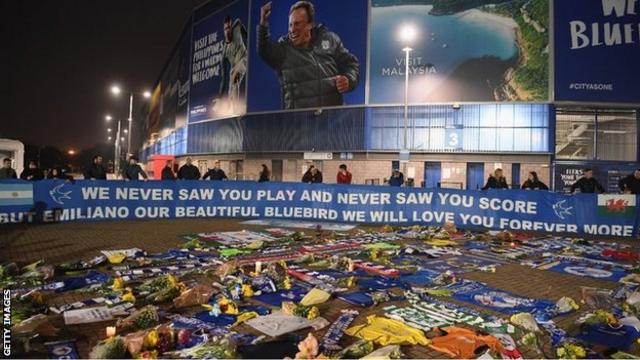
This leads me back to a story which I have been following with interest over the last few months: the tragic death of the Argentinian footballer, Emiliano Sala in a plane crash over the English Channel in January 2019.

It will be recalled that Sala’s former Football Club, the French side FC Nantes had just agreed to him transferring to the English Premier League side, Cardiff City FC. The transfer fee was £15 million, but shortly after the accident, Cardiff City claimed that the transfer had not gone through and it had no obligation to pay the first part of this figure. In other words, Sala was never an employee of Cardiff City according to this argument because the paperwork had not been finalised.

In normal circumstances, where a contract involves the provision of personal services (and a contract of employment certainly fits into this category), the death of a new or prospective employee would tend to terminate the agreement. Death is pretty much the ultimate frustrating factor – especially in cases involving unforeseen deaths.

The world of top flight football, however, would seem to be different and does not seem to be bound by the considerations that govern us mere mortals.

FIFA, the governing body, has now spoken and determined that Cardiff City will have to pay the first part of the transfer fee (£5 million in case you’re asking) to FC Nantes. Failure to do so may result in FIFA sanctions being imposed on Cardiff (a signing ban).

Please find a link below to the FIFA press release:

https://www.fifa.com/about-fifa/who-we-are/news/fifa-players-status-committee-renders-decision-on-transfer-of-late-emiliano-sala

It would seem that FIFA rules transcend events such as death which ordinarily would throw a spanner in the works in the context of an ordinary employment contract situation.

Cardiff City can appeal against the decision of FIFA by going to the Court of Arbitration for Sport and, in October 2019, the Club indicated that it would so:

https://www.theguardian.com/football/2019/oct/02/cardiff-appeal-cas-court-of-arbitration-sport-emiliano-sala-transfer-fee-fifa

Ultimately, whatever way this tragic story ends, I can’t help but wonder whether FC Nantes or Cardiff FC had the foresight to insure Sala’s life in the event of untimely and unforeseen death. Sadly, the fact that a young man with a promising future died in a horrible accident seems to have got lost along the way while Nantes and Cardiff polish up their legal arguments.

Links to the story can be found below:

Emiliano Sala: Fifa rules Cardiff must pay first instalment of £5.3m to Nantes

Cardiff City have been told to pay the first instalment of £5.3m to Nantes for striker Emiliano Sala, who died in a plane crash.

https://news.sky.com/story/cardiff-city-face-signing-ban-if-they-dont-pay-emiliano-sala-transfer-fee-11854081

Related Blog Articles:

https://seancrossansscotslaw.com/2019/02/10/frustration-of-contract/

https://seancrossansscotslaw.com/2019/03/25/locking-horns-frustration-of-contract-part-2/

https://seancrossansscotslaw.com/2019/08/28/stormy-weather-im-at-the-end-of-my-tether/

https://seancrossansscotslaw.com/2020/02/25/welcome-to-austria/

Copyright Seán J Crossan, 23 November 2019

Locking horns (Frustration of Contract Part 2)

Photo by Uriel Soberanes on Unsplash

In February, one of my blogs (Frustration of Contract) dealt with the circumstances surrounding the issue of frustration as a factor which could lead to termination of a contractual agreement.

One of the stories discussed in that particular blog was the dispute between Cardiff City FC and FC Nantes in respect of the tragic death of Emiliano Sala, the Argentinian footballer who had signed for the English Premiership club.

Despite Sala’s death, the French club was till demanding a portion of the transfer fee of £15 million. This led to speculation on my part as to whether frustration of contract could be an argument put forward by Cardiff.

The plot has since thickened an, today (25 March 2019), it has been reported that Cardiff City is now claiming that the transfer deal was never legally binding. The Premiership side asserts that the proper paperwork was not completed; the French side disputes this.

So, it looks as if the two clubs are going to be locking horns in what now seems to be an inevitable legal dispute.

A link to an article on the BBC website can be found below:

saw this on the BBC News App and thought you should see it:

Emiliano Sala: Cardiff set to claim transfer deal ‘not legally binding’

Cardiff City football are set to tell Fifa the deal to buy Emiliano Sala from Nantes for £15m was not legally binding.

Copyright Seán J Crossan, 25 March 2019

Related Blog Articles:

Locking horns (Frustration of Contract Part 2)

Pay up! (or Frustration of Contract Part 3)

Stormy weather, I’m at the end of my tether!

Welcome to Austria?

https://seancrossansscotslaw.com/2020/03/18/crazy-days-force-majeure-frustration/