
Banning smoking in the streets of Paris …

Photo by Paul Gaudriault on Unsplash

If anyone or anything wanted to ban smoking in the streets of Paris, you would think that (logically), this would be a matter for the French National Assembly or even Paris City Council (Conseil de Paris).

… And you would be quite correct.

You might be thinking what relevance does this have to Scots or indeed English law?

The supremacy of Parliament (or its limits)

The constitutional lawyers amongst the Blog readership, however, might guess where I’m going with the title. When studying the area of Westminster parliamentary sovereignty many, many years ago, I was struck by the words of Sir Ivor Jennings QC, a very famous British constitutional lawyer.

Jennings was explaining that the Westminster Parliament, as the supreme law making body in the UK, had the power to pass any law – even making it unlawful to smoke cigarettes or cigars in the streets of Paris. Now Jennings fully appreciated that this was a slightly absurdist statement; that wasn’t his point (to which I shall return shortly).

Would our French neighbours obey such an Act of the Westminster Parliament? They would not; quite rightly recognising that such a law lacked any legitimacy in their eyes.

So, what was Jennings driving at when he uttered his remark about the scope of the law making powers of the Westminster Parliament? He was recognising that Parliament could pass any law that it wished irrespective of how absurd it was or how unlikely it was to be obeyed in practice.

The English have placed great emphasis on the notion of parliamentary sovereignty. This principle, of course, can be challenged. The American colonists who participated in the protest popularly known as the Boston Tea Party in 1773 were directly challenging Westminster parliamentary supremacy. Several years later, with the successful conclusion of the American Revolution, it would be the new legal order of the United States of America that would supplant the British parliamentary tradition and thus make it a matter of history.

In 1919, Irish Republicans refused to send Members of Parliament to take their seats at Westminster following the UK General Election of 14 December 1918. Instead 27 Sinn Fein MPs chose to sit in Dáil Éireann (effectively an embryonic Irish National Assembly) in Dublin. Highly unconstitutional in British eyes; yes but it spelled the beginning of the end for Westminster parliamentary sovereignty in 26 of the 32 counties comprising the Island of Ireland.

More recently, in 1965, the White minority Government of the former British colony of Southern Rhodesia (under the leadership of Premier Ian Smith) declared independence unilaterally from the mother country. There was very little that the Westminster Parliament and British Government could do to prevent this situation. The Rhodesian Government would ultimately be brought crashing down to earth because of the armed struggle of the Black majority liberation movement. This would eventually lead to independence and majority rule for the territory (to be known as Zimbabwe).

Brexit

To return to Sir Ivor Jennings, his remarks about smoking in the streets of Paris were brought home to me today when reading about the remarks made by Simon Coveney, the Irish Deputy Prime Minister and Foreign Minister, about Brexit.

Mr Coveney was being asked about the implications of the European Union (Withdrawal Agreement) Bill – introduced in the House of Commons by UK Prime Minister Boris Johnson shortly after his Conservative Party won the General Election of 12 December 2019.

This Bill has just passed through the Commons and will now go on to the House of Lords (where it will pass) and receive the Royal Assent in the next week or two. The exit of the UK from the EU will happen by 31 January 2020.

Mr Coveney was not taking exception to this development. In fact, he was merely pointing out some hard realities for the British Prime Minister. The easy part of Brexit will have been completed, but the harder part remains: concluding a trade deal between the UK and the EU by the British Government’s self-imposed deadline of December 2020. Needless to say, this date has not been accepted by the remaining 27 EU member states.

Mr Coveney noted that a provision of the European Union (Withdrawal Agreement) Bill (currently Clause 33) prohibits the UK Government from extending negotiations with the EU 27 in order to obtain a trade agreement if one is not concluded before the end of 2020:

“I know that Prime Minister Johnson has set a very ambitious timetable to get this done. He has even put it into British law, but just because a British parliament decides that British laws say something doesn’t mean that that law applies to the other 27 countries of the European Union and so the European Union will approach this on the basis of getting the best deal possible – a fair and balanced deal to ensure the EU and the UK can interact as friends in the future. But the EU will not be rushed on this just because Britain passes law.”

Conclusion

When Sir Ivor Jennings made his oft quoted remark about parliamentary legislative powers, he was acknowledging the theoretical supremacy of Westminster. I also believe that he used the particular example of banning smoking in the streets of Paris to demonstrate the clear limits of Westminster supremacy i.e. practical and political realities will often combine to frustrate the will of Parliament.

In speaking today in the terms that he did, the Irish Deputy Prime Minister clearly recognises this reality.

Does the UK Government?

A link to an article on the Sky News website about Simon Coveney’s remarks can be found below:

http://news.sky.com/story/eu-will-not-be-rushed-in-post-brexit-talks-irish-deputy-simon-coveney-warns-11907060

Copyright Seán J Crossan, 12 January 2020

Pregnancy discrimination (or New Year, same old story … Part 2)

Photo by Sincerely Media on Unsplash

We’re barely into 2020 and we seem to be on something of a roll with stories about sex discrimination. Yesterday, I discussed the issue of equal pay.

Only this morning I was flicking through the newspaper and came across another story, this time, concerning pregnancy discrimination.

Helen Larkin was dismissed from her post with the Liz Earle Beauty Company on the grounds of her pregnancy. Her employer was restructuring the company and refused to consider Ms Larkin for two alternative posts within the organisation. This refusal to consider suitable, alternative employment appeared to be motivated by the fact that Ms Larkin would shortly be going off on her period of maternity leave.

This treatment amounted to unlawful direct discrimination in terms of Sections 13 and 18 of the Equality Act 2010. Her dismissal would also be automatically unfair in terms of the Employment Rights Act 1996.

Consequently, Ms Larkin was awarded over £17,000 in compensation. This sum, of course, reflects an element to injury to feelings (the so called Vento Bands or Guidelines). In fact, Ms Larkin was awarded £10,000 in compensation to reflect injury to feelings.

A link to the judgement of the Employment Tribunal can be found below:

https://assets.publishing.service.gov.uk/media/5e2f0300e5274a6c42dcd132/Mrs_H_Larkin_v_Liz_Earle_Beauty_Co._Ltd_-_1403400.2018.pdf

A study carried out jointly by the UK Government Department (Business, Innovation and Skills) and the Equality and Human Rights Commission previously discovered that some 54,000 women per year in this country were forced out of their employment for reasons related to pregnancy and/or maternity.

A link to a summary of the research on the website of the Equality and Human Rights Commission can be found below:

https://www.equalityhumanrights.com/en/managing-pregnancy-and-maternity-workplace/pregnancy-and-maternity-discrimination-research-findings

Again, as I noted in yesterday’s Blog (New Year, same old story …), we have had anti-discrimination laws in the UK for nearly 45 years and yet we still regularly hear stories about pregnancy and maternity discrimination.

Readers might be interested to learn about the work of a pressure group (Pregnant then screwed) which campaigns to end the ‘motherhood penalty’:

https://pregnantthenscrewed.com

A link to Helen Larkin’s story as reported in The Independent can be found below:

https://edition.independent.co.uk/editions/uk.co.independent.issue.110120/data/9278901/index.html

Related Blog articles:

https://seancrossansscotslaw.com/2020/01/10/new-year-same-old-story/

https://seancrossansscotslaw.com/2019/02/14/hurt-feelings/

https://seancrossansscotslaw.com/2019/02/22/sticks-and-stones-may-break-my-bones-but-names-will-never-hurt-me/

https://seancrossansscotslaw.com/2019/07/08/just-blew-it-again/

https://seancrossansscotslaw.com/2019/08/22/the-trouble-with-pregnancy/

https://seancrossansscotslaw.com/2019/09/10/barbaric/

Copyright Seán J Crossan, 11 January 2020

New Year, same old story …

Photo by Markus Spiske on Unsplash

It’s becoming depressingly predictable: the persistence of the gender pay gay in the United Kingdom.

This time last year, I was discussing with my students the struggle that City of Glasgow Council female employees were undertaking to win their claims for equal pay. After a period of industrial action, the women finally won their struggle:

https://www.theguardian.com/society/2019/jan/17/glasgow-council-women-workers-win-12-year-equal-pay-battle

We’ve just entered 2020 and it seems as if nothing much has changed in the wider world (more on this later).

Theoretically, the gender pay gap should be a thing of the past. We have had legislation in place for nearly 45 years in this country: the Equal Pay Act 1970 (which came into force in December 1975) and the current Equality Act 2010.

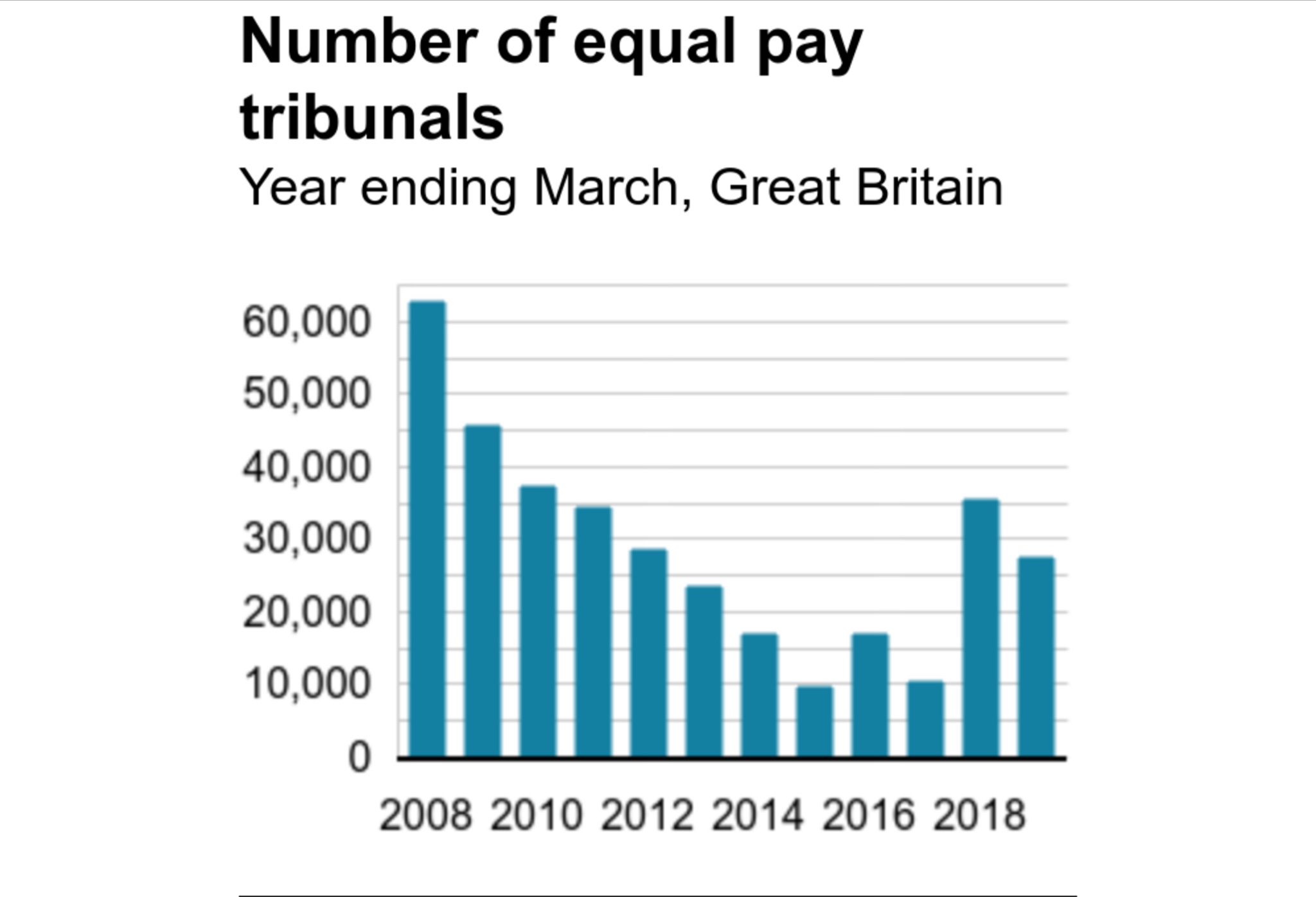
An info graphic which shows the number of Employment Tribunal cases in the UK involving equal pay claims (2008-2019) can be seen below:

Source: UK Ministry of Justice obtained from BBC News

True, the above figures show the number of equal pay claims in overall decline – effectively being halved (from a high of over 60,000 in 2008 to just over 30,000 in 2019); but my riposte to that would to say still too many.

In today’s edition of The Independent, new research, carried out by the Institute of Public Policy Research, indicates that female General Practitioners (physicians for our overseas readers) are paid up to £40,000 less than their male colleagues every year.

For each £1 that a male colleague earns, a woman earns 35 pence less. To reinforce this point, the article states that female GPs are effectively providing their services free of charge between September and December every year.

In language of the Equality Act 2010, the female GPs are carrying out ‘like work’ when comparing themselves to their male colleagues. There seems to be absolutely no lawful justification for this disparity in pay between the sexes.

A link to the article in The Independent can be found below:

https://edition.independent.co.uk/editions/uk.co.independent.issue.100120/data/9277336/index.html

The equal pay laws imply a sex or gender equality clause into every person’s contract of employment. Employers therefore have a legal duty to ensure gender equality in relation to terms and conditions of service.

It seems pretty simple, so why isn’t it happening in 2020?

An explanation for this situation in the medical profession has centred around the development of a ‘two tier’ system whereby more men are partners in GP surgeries whereas a large number of women take on the role of a salaried GP. Women tend to become salaried GPs because they feel that this allows them to work flexibly around their family commitments. So, again, what we appear to be seeing is women being penalised because they are trying to balance work and family (the so called ‘motherhood’ penalty).

Also on this day …

And purely by coincidence another equal pay story …

… Samira Ahmed, BBC journalist, wins her Employment Tribunal claim for equal pay (see below):

http://news.sky.com/story/samira-ahmed-tv-presenter-wins-sex-discrimination-equal-pay-claim-against-the-bbc-11905304

And if you’re still not convinced …

read the following article in The Independent about discrimination in pay between male and female apprentices (guess what?; it’s not the men who are the victims):

https://edition.independent.co.uk/editions/uk.co.independent.issue.150120/data/9283611/index.html

Copyright – Seán J Crossan, 10 and 15 January 2020

Down with corroboration (I say)!

Photo by Andy T on Unsplash

Who’s ‘I’? Amanda Pinto – that’s who, but more about her later.

In Scottish criminal procedure, we place a great deal of emphasis on the principle of corroboration. In a criminal trial, the prosecutor must prove that the accused is guilty of a crime beyond  reasonable doubt. This is a very strict burden and, in Scotland, the prosecution achieves this standard by corroborating its evidence against the accused. Corroboration means that there must be at least two independent sources of evidence such as witness testimony and the use of expert and forensic evidence. Reasonable doubt is a nagging doubt which would lead a reasonable person to the conclusion that it would be unsafe and unjust to find the accused guilty.

Not every legal system places such importance on the principle of corroboration: some of our English brethren seem (very) disinclined to follow us.

This week, distaste for corroboration has been voiced somewhat forcefully by Amanda Pinto QC, the incoming Chairperson of the Bar Council of England and Wales (the English equivalent of the Faculty of Advocates). Ms Pinto represents some 16,000 barristers and her views are therefore not to be dismissed easily.

Of particular concern to Ms Pinto seems to be UK Government proposals to introduce an element of corroboration into English criminal legal practice. Speaking to Jonathan Ames of The Times (of London), her main objection to the introduction of corroboration appears to be in relation to rape trials:

We’ve rightly come away from requiring corroboration [in England and Wales],” she says. “Because if you require corroboration in something that is typically between two people, then you restrict access for justice for some victims entirely.

Several years ago in Scotland, we also had a discussion on the merits of the continued use of corroboration in criminal proceedings. Lord Carloway (now the Lord Justice General), Police Scotland and the Crown Office and Procurator Fiscal Service were of the opinion that this requirement should be abolished. Significantly, the Faculty of Advocates and the Law Society of Scotland were opposed to this development. Warnings of possible miscarriages of justice were raised if this was allowed to happen. Corroboration was retained.

Nore recently (in 2019), groups representing survivors of sexual abuse made powerful and emotional submissions to the Scottish Parliament arguing that the requirement of corroboration be abolished. We still have the principle in place in Scotland.

Responding to these submissions by abuse survivors, Brian McConnochie QC, a senior member of the Faculty of Advocates went on record defending the current evidential requirement:

I know that some people consider that corroboration is something which we ought to abandon or abolish, and as often as not the argument is given that it should be abolished because nobody else has it. I’ve never been convinced by that argument. We went through a process where it was discussed at significant and considerable length, and at the end of that process the decision was taken that it should go no further.”

James Wolffe QC, the current Lord Advocate (head of the Scottish prosecution service) has openly stated that a review of corroboration could be on the cards, but Gordon Jackson QC, current Dean of the Faculty of Advocates has voiced the Faculty’s continuing opposition to such a development:

https://www.scottishlegal.com/article/lord-advocate-hints-at-renewed-attack-on-corroboration

Related Blog Articles:

Scrap corroboration?

Corroboration

Alexa, there’s been a murder!

Copyright – Seán J Crossan, 9 January 2020

Murder by decree?

Photo by محمدعلی دهاقین on Unsplash

Q: When is an assassination not considered to be murder?

A: When it is a legitimate instrument of State policy.

This is a particular issue I’ve been considering this weekend in relation to death of the senior Iranian military commander, Quassem Soleimani in Baghdad, Iraq on Friday 3 January 2020. Major General Soleimani was killed in a targeted drone strike on the orders of US President Donald Trump.

It may seem rather trite to say this, but was the assassination legal?

Many will doubtless welcome the death of Major General Soleimani (an extremely controversial figure in the Middle East) and regard his assassination as completely justified. That said, Governments will often justify actions in defence of their political goals, but this does not necessarily mean that they are protected by the law.

President Ronald Reagan (1981-89) passed an Executive Order (No 12333) in 1981, of which Articles 2.11 and 2.12 state:

No person employed by or acting on behalf of the United States Government shall engage in or conspire to engage in assassination. …

No element of the Intelligence Community shall participate in or request any person to undertake activities forbidden by this Order.”

Previously, Presidents Ford (1974-77) and Carter (1977-81) had issued Executive Orders (11905 and 12036 respectively) banning US involvement in political assassinations – whether directly or indirectly.

The USA authorities have, however, taken a more flexible approach to the restrictions that these Executive Orders appear to place on the intelligence agencies when it comes to the targeting of terrorist suspects. They did not prevent the US military deploying lethal force against Osama bin Laden (former head of Al Qaida) in 2011 and against Abu Bakr al-Baghdadi (former head of Islamic State) in 2019.

A useful link to the Heritage Society’s website which contains a discussion on the legal status of US Presidential Executive Orders can be found below:

https://www.heritage.org/political-process/heritage-explains/executive-orders

A link below to the University of California (Santa Barbara) website provides further information about these types of legislative instruments:

https://www.presidency.ucsb.edu/statistics/data/executive-orders

Supporters of Donald Trump’s action will no doubt point to the fact that Governments of the Islamic Republic of Iran have been involved in extra-judicial killings of their opponents since the overthrow of the pro-American Shah of Iran in 1979.

Nations are entitled to defend themselves from their enemies at home and abroad, but military action must be legally justified. There is, after all, the concept in international law of the ‘war crime’ going back in modern times to the Nuremberg and Tokyo Tribunals (in the post Second World War period). Following orders is not sufficient justification for members of the armed forces carrying out criminal acts.

In western democracies, lest we forget, Prime Ministers and Presidents are subject to the rule of the law – in theory at least.

When the military is sent into conflict on behalf of a democratic government, it is very important that the rules of engagement are followed. There are also international treaties which govern the conduct of war – perhaps the most famous being the Geneva Convention.

In 2013, Sergeant Alexander Blackman of the British Royal Marines was convicted of murder (later reduced to manslaughter on the grounds of diminished responsibility) for his actions while in combat in Afghanistan (in 2011). He became the first British service member to be convicted of such a crime since the Second World War.

There was considerable public sympathy for Sergeant Blackman because many in the UK recognised that he was fighting against a vicious, unyielding enemy in the Taliban (who had previously ruled Afghanistan). Yet, he himself recognised in the immediate aftermath of the incident (the killing of a wounded Taliban fighter) that he had broken the rules of engagement.

What do you do when the enemy doesn’t behave by the rules? That could certainly be said about the Taliban, ISIS and Major General Soleimani.

A link to a story in The Guardian (with footage) about the Blackman case can be found below:

https://www.theguardian.com/uk-news/2017/mar/15/alexander-blackman-royal-marine-a-judges-quash-murder-conviction

In Europe, we also have the European Convention on Human Rights which applies to the actions of the military. Many European states have also accepted the jurisdiction of the International Criminal Court – the USA has not.

The Imperial Presidency and the Vietnam war

The period when US presidential power was at its zenith (the so called ‘Imperial Presidency’) is long since over. In 1973, the US Congress passed the War Powers Resolution (or Act) which severely limited the power of future US Presidents to engage in lengthy military adventures. This legislation was very much a response to America’s ill fated involvement in the Vietnam conflict (officially between 1965 and 1975 – but actually lasting much longer).

In terms of Article II of the US Constitution, the President is Commander in Chief of the armed forces, but critically the power to declare war is a power reserved to Congress alone (Article I). The Vietnam war is always written with a small ‘w’ because Congress did not declare war on the Communist led Republic of North Vietnam.

A phrase which came to define American involvement in Vietnam was mission creep. Successive US Presidents started out by sending small groups of advisers to the country; before you knew it thousands of US service personnel were fighting in the biggest conflict since 1945.

The USA vainly supported the non-Communist Republic of South Vietnam until its collapse in April 1975 with the eventual victory of the North Vietnamese. American fatalities were in the order of 58,220 – we’ll never know how many Vietnamese were killed or wounded.

The Vietnam war really scarred American public opinion and, coupled with the uncovering of the Watergate Scandal which led to President Nixon’s resignation from office in 1972, there was an impetus on the part of Congress to rein in the President’s powers.

Admittedly, in August 1964, Congress had authorised President Lyndon B. Johnson to “take all necessary measures to repel any armed attack against the forces of the United States and to prevent further aggression” by the Communist government of North Vietnam. This measure was known popularly as the Gulf of Tonkin Resolution. Arguably, President Johnson had engineered a military confrontation with the North Vietnamese in order to put pressure on Congress to support his strategy in South East Asia. Johnson himself said later that the Resolution was “like Grandma’s nightshirt – it covered everything.” The Resolution has often been misunderstood as giving Johnson a blank cheque to pursue his military aims against the North Vietnamese. Congress insisted that the Resolution would be passed on the proviso that the President would seek further authorisation if he planned to go to war with North Vietnam.

Obtaining Congressional approval

When US President George H W Bush Senior (1989-1993) put together the coalition to repel Iraqi forces illegally occupying Kuwait, he did so with the legal protection of a declaration of war from Congress and a United Nations’ resolution (No 678).

In 2003, his son, George W Bush, (President from 2001 until 2009), also gained the approval of the US Congress to invade Iraq. In the aftermath of the Al Qaida attacks on the USA on September 11 2001, President Bush had been given congressional authorisation to invade Afghanistan. The country had hosted Osama Bin Laden, the Al Qaida leader and the Taliban Government was sympathetic to the terror group’s aims.

Conclusion

President Trump has justified the assassination on the grounds that Major General Soleimani represented a ‘clear and present danger’ to the USA. As we might say in the UK, the President is arguing that he was acting legitimately in defence of the realm.

That said, there is now mounting criticism of the President’s actions – particularly from his opponents in the Democratic Party. Senior Democrats such as Nancy Pelosi, the Speaker of the House, and Chuck Schumer, Minority Leader in the Senate, were not briefed about the mission.

The War Powers Resolution (or Act) 1973 places an obligation on a US President to inform Congress within 48 hoursof committing the armed forces to take military action. By his own admission this is something that President Trump did not do – justifying this omission on the grounds that the operation would have been compromised had he done so. Admittedly, other US Presidents have not consulted with Congress when authorising military action – such as Bill Clinton did in 1998, when Tomahawk Cruise Missiles were launched at targets in Sudan and Afghanistan, and, again in 1999, when he ordered the bombing of Yugoslavia.

It has to be said Congress is pretty forgiving of Presidents when the military action is successful or the American public expresses its approval, but if not …

… just remember Vietnam which did for the career (and reputation) of President Lyndon B. Johnson (1963-69).

In the already febrile atmosphere of Washington DC, Congress can always impeach the President for high crimes and misdemeanours. Wait a minute: hasn’t this process already begun?

A link to an article in the New York Times explaining the background to Soleimani’s death can be found below:

Postscript

On Thursday 13 February 2020, the US Senate voted in favour of a resolution to limit President Donald Trump’s ability to take military action against Iran without first having obtained Congressional approval.

This measure was passed because 8 Republican Senators crossed the floor to vote with the Democrats. Nancy Pelosi, Speaker of the House of Representatives has stated that a vote on the resolution will now be held in the House.

A link to a report about the Senate vote in The New York Times can be found below:

https://www.nytimes.com/2020/02/13/us/politics/iran-war-powers-trump.html

Copyright Seán J Crossan, 6 January & 13 February 2020

Pansexual

Photo by Sharon McCutcheon on Unsplash

A person’s protected characteristics in terms of the Equality Act 2010 seems to be the theme of the Blog today.

Sexual orientation is a protected characteristic in terms of Sections 4 and 12 of the Act. Most people these days are familiar with the following definitions in terms of an individual’s sexuality: e.g. heterosexual, homosexual (gay/lesbian) and bisexual.

What about a person who declares themselves to be pansexual?

According to Stonewall, the group which campaigns on behalf of the LGBTI community, this term refers to a person ‘whose romantic and/or sexual attraction towards others is not limited by sex or gender.’ Stonewall also makes the point that bisexual individuals can declare themselves to be pansexual.

An interesting story appeared in today’s British media about pansexuality. Layla Moran, Liberal Democrat MP and possible contender for the leadership of that Party, has declared herself to be pansexual. She is the first Member of the Westminster Parliament to define her sexual orientation in this way. Previously, she would have declared herself as heterosexual.

Andrew Adonis, Labour member of the House of Lords and former UK Government minister tweeted his reaction to the story:

https://twitter.com/Andrew_Adonis/status/1212872397394718720?s=19

The point that Adonis was trying to make is that it shouldn’t have been a story. As a society, the UK has supposedly become more tolerant and progressive towards people with different sexual orientations.

Ms Moran admitted herself that the decision to be open about her sexual orientation had caused friends and colleagues to worry that this might harm her career – and her aspiration to be the next or future leader of the Liberal Democrats. So much for a more tolerant and progressive society …

Explaining her reason for going public about her sexual orientation, Ms Moran stated that:

… I feel now is the time to talk about it, because as an MP I spend a lot of my time defending our community [LGBTI] and talking about our community. I want people to know I am part of our community as well.”

A link to the story in Pink News can be found below:

https://www.pinknews.co.uk/2020/01/02/layla-moran-liberal-democrats-mp-coming-our-pansexual-girlfriend-exclusive-interview/

You can also find below a link to the Sky News website where an individual discusses what pansexuality means to them:

https://news.sky.com/story/not-restricted-by-gender-or-sex-what-pansexuality-means-to-me-11900619

Copyright Seán J Crossan, 3 January 2020

I’m a climate activist, don’t fire me!

Photo by Stock Photography on Unsplash

Today seems to be something of a red letter day for the Blog with regard to the issue of protected philosophical beliefs in terms of the Equality Act 2010.

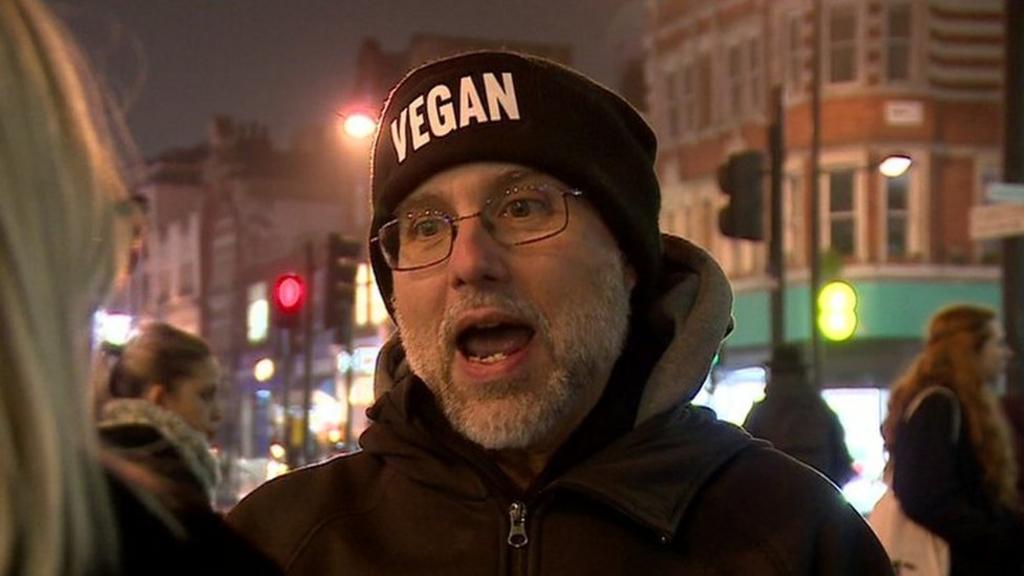
We have already heard the news that Jordi Casamitjana has won the part of his Employment Tribunal claim that his ethical veganism is a philosophical belief in terms of Sections 4 and 10 of the 2010 Act (see Casamitjana v League Against Cruel Sports [2020]).

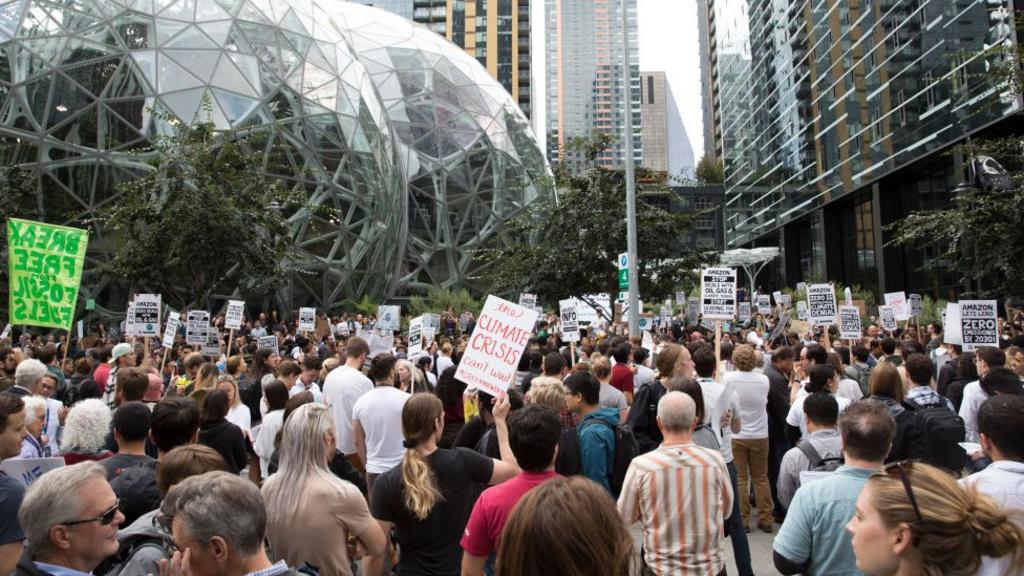
It was some interest that another news item popped up today concerning allegations that Amazon stands accused of threatening to dismiss those of its employees who become involved in climate protests. I would hazard a guess that Amazon is making a statement of intent that it may dismiss employees who perhaps break the law when they are involved in climate protests such as those organised by Extinction Rebellion and other similarly minded groups.

Criminal acts by employees committed outside the workplace could be regarded as gross misconduct in terms of Section 98 of the Employment Rights Act 1996. In other words, such behaviour by employees could result in the employer suffering reputational damage and, consequently, any dismissal for misconduct could be potentially fair. That said, employers should always carry out the proper disciplinary procedures when contemplating dismissal as the ultimate sanction for employee misbehaviour.

The real gripe – according to Amazon Employees for Climate Justice – is that the tech company allegedly objects to employees speaking critically about its failure to be more environmentally responsible.

Yet, there are potential dangers here for Amazon in the UK. In Grainger plc v Nicholson (2010) IRLR 4, the Employment Appeal Tribunal established that an employee’s belief in climate change could constitute discrimination on the grounds of a philosophical belief.

So, we could have situation where Amazon employees who are taking part in quite peaceful and lawful climate change protests end up being dismissed. This would open up the possibility that employees of Amazon UK might have the right to bring claims for direct discrimination (Section 13: Equality Act 2010) in respect of their philosophical beliefs (Sections 4 and 10 of the Act).

In the USA, there could be even more serious legal implications – infringing the right to free speech which is protected under the Constitution.

Perhaps Amazon needs to go back to the drawing board …

A link to an article on the BBC News App can be found below:

Amazon ‘threatens to fire’ climate change activists

The company said employees “may receive a notification” from HR if rules were “not being followed”.

Related Blog article:

https://seancrossansscotslaw.com/2019/06/05/im-a-political-activist-dont-sack-me/

Copyright Seán J Crossan, 3 January 2020

I want to believe …

Photo by Vegan Liftz on Unsplash

… well now Jordi Casamitjana can believe … officially. He has just won part of his Employment Tribunal case (Casamitjana v League Against Cruel Sports) which confirms that ethical veganism is a protected philosophical belief in terms of Sections 4 and 10 of the Equality Act 2010.

Please note, however, that the Employment Tribunal is yet to determine whether Mr Casamitjana was dismissed because of these protected beliefs – that is another matter.

A link can be found below to the Preliminary Judgement of the Employment Tribunal on the question of whether ethical veganism is a philosophical belief in terms of the Equality Act 2010:

https://assets.publishing.service.gov.uk/media/5e3419ece5274a08dc828fdd/Mr_J_Casamitjana_Costa_v_The_League_Against_Cruel_Sports_-_3331129-18_-_Open_Preliminary_Hearing_Judgment___Reasons.pdf

Please also find a link below to the BBC News App about Tribunal’s decision:

Ethical veganism is ‘philosophical belief’

Ethical veganism is a “philosophical belief” and therefore protected by law, employment tribunal rules.

Related Blog Articles:

https://seancrossansscotslaw.com/2020/01/02/going-mainstream/

https://seancrossansscotslaw.com/2019/05/12/veganism-discrimination/

https://seancrossansscotslaw.com/2019/04/08/the-trouble-with-veganism/

https://seancrossansscotslaw.com/2019/03/26/veganism-is-human-cruelty/

https://seancrossansscotslaw.com/2019/04/21/the-vegan-athlete/

https://seancrossansscotslaw.com/2019/04/01/the-shameful-secret-the-vegan-butcher/

https://seancrossansscotslaw.com/2019/02/19/vegans-should-be-punched-in-the-face/

https://seancrossansscotslaw.com/2019/01/22/philosophical-beliefs/

Copyright Seán J Crossan, 3 January and 14 February 2020

You’re never off duty …

Photo by thom masat on Unsplash

… certainly not when you’re a school teacher.

This is the lesson which a Scottish secondary teacher has learned to his cost. He was filmed by a pupil while drunk in the street wearing only his boxer shorts. Teacher Z (he remains anonymous) was charged with drunkenness and subjecting paramedics to abuse. Apparently, he did not inform his employer and, following a hearing before the General Teaching Council, he has been ruled unfit to continue practising as a teacher.

I often grimace when I hear someone trying to justify bad behaviour on the basis that it happened outside work. If I had a £20 note for each time I heard this remark …

Regular readers of this Blog will be well aware that employers are entitled to dismiss an employee who has committed an act of gross misconduct in terms of Section 98 of the Employment Rights Act 1996. Such behaviour could include misconduct committed outside working hours.

Provided the employer follows the correct disciplinary procedures, the dismissal will almost certainly be regarded as a fair by an Employment Tribunal.

A link to the story on the BBC News App can be found below:

Teacher struck off after pupil filmed him wearing just boxer shorts

Footage of the secondary teacher drunk in a public road was posted online and viewed by teachers and pupils.

Related Blog Articles:

https://seancrossansscotslaw.com/2019/12/08/different-standards/

https://seancrossansscotslaw.com/2019/12/03/the-limits-of-privacy/

https://seancrossansscotslaw.com/2019/09/03/facebook-folly/

https://seancrossansscotslaw.com/2019/06/05/im-a-political-activist-dont-sack-me/

https://seancrossansscotslaw.com/2019/05/20/social-media-and-dismissal/

https://seancrossansscotslaw.com/2019/04/11/social-media-misuse/

https://seancrossansscotslaw.com/2019/04/09/drunk-and-disorderly/

https://seancrossansscotslaw.com/2019/02/07/it-happened-outside-work-or-its-my-private-life/

Copyright Seán J Crossan, 2 January 2020

No guide dogs!

Photo by Viktor Forgacs on Unsplash

Disability is a protected characteristic in terms of Sections 4 and 6 of the Equality Act 2010. In terms of Sections 20 and 21 of the Act, employers and service providers have a legal duty to make reasonable adjustments to accommodate the needs of a disabled person.

What about a new prison inmate (a sex offender) who is visually impaired and wishes to bring his assistance (or guide) dog with him?

The prison authorities have said no to this request, it is simply against the rules.

Discrimination or less favourable treatment, of course, can be perfectly legal if it is objectively justified.

It would be very interesting to see if the prison authorities were potentially in breach of the Equality Act (direct or indirect discrimination).

A link to the story on the BBC News App can be found below:

Blind sex offender cannot take guide dog to prison

Neil Nellies arrived in court with his dog, but was told he must serve his sentence without the animal.

Related Blog Articles:

/https://seancrossansscotslaw.com/2019/06/21/sickness-absence/

https://seancrossansscotslaw.com/2019/02/26/jumping-the-gun/

Copyright Seán J Crossan, 2 January 2020