A companion blog to Introductory Scots Law (3rd Edition)
Author: sjcrossan1
A legal blog by the author of Introductory Scots Law: Theory & Practice (3rd Edition: 2017; Hodder Gibson)
Sean J. Crossan BA (Hons), LLB (Hons), MSc, TQFE
I have been teaching law in Higher and Further Education for nearly 25 years. I also worked as an employment law consultant in a Glasgow law firm for over a decade. I am also a trade union representative and continue to make full use of my legal background.
I am a graduate and postgraduate of the Universities of Dundee, London and Strathclyde.
Please note that this Blog provides a general commentary about issues in Scots Law.
It is not intended as a substitute for in-depth legal advice. If you have a specific legal problem, you should always consult a suitably qualified Scottish solicitor who will be able to provide you with the support that you require.
In June 2019, I wrote an article which has become one of my most viewed Blogs – ‘Is it cos I is Black?’ The title was taken from Sacha Baron Cohen’s comic creation Ali G whose catchphrase it is. In that article, there was nothing actually that funny. My purpose was to highlight the shockingly high levels of racism that people of Afro-Caribbean origin still continue to experience in contemporary Britain – in spite of all the legislation (such as the Equality Act 2010) which theoretically puts people on an equal footing.
Race is a protected characteristic in terms of Sections 4 and 9 of the Equality Act 2010 and it is unlawful if a person is subjected to prohibited conduct e.g. direct discrimination (Section 13); indirect discrimination (Section 19); harassment (Section 26); and victimisation (Section 27).
It will, therefore, be unlawful in the UK to subject a person to a detriment because of race in relation to employment, education, training and the provision of services generally.
Bearing all of this mind, I was startled to read about a story from Guangzhou, China where a McDonald’s outlet has been severely criticised due to its staff refusing entry to African Americans. No reason has been given for this behaviour.
McDonald’s is understandably very sensitive about this issue and has apologised for the behaviour of its staff.
Had this incident occurred in the UK, you would be correct to conclude that legal action in terms of Sections 9 and 13 of the Equality Act 2010 would have been threatened. To anyone who doubts that discrimination against Black people is a thing of the past, this story will serve as a timely wake up call. Who would have thought that such things would still be going on in 2020?
A link to the story on the Sky News website can be found below:
Outrage after black people banned from McDonald’s branch in China
The story from China reminded me of an incident in the American city of Philadelphia which involved racism against two African American men who were arrested in a Starbucks outlet. The men were waiting for a friend to join them in the store when a manager called the Police because they had not purchased anything. They were taken from the store in handcuffs by the Police. The incident went viral and The ensuing publicity did Starbucks no favours at all.
A link to this story as reported by The Independent can be found below:
The title of this Blog refers to the not so distant past when discrimination was an accepted feature of life in the United Kingdom. In the 1950s and 1960s, these types of signs were routinely displayed in the windows of hotels, boarding houses and guest houses in the United Kingdom. They were blatantly racist, but completely legal.
It wasn’t just an unwillingness by White British landlords to rent rooms or properties to Afro-Caribbean and Asian families especially, ethnic minorities were often actively discouraged from purchasing properties in White neighbourhoods.
In 1968, Mahesh Upadhyaya, a young Asian immigrant to the UK, mounted legal challenge in respect of a refusal by a white British builder to sell him a house. It was the first time that anyone could do this. Mr Upadhyaya was able to do this because the Race Relations Act 1968 had just come into force. Although Mr Upadhyaya’s claim was ultimately dismissed on a technicality, the action generated a lot of publicity and greater awareness of the existence of anti-discrimination legislation amongst the British public.
A link can be found below which provides more information about Mr Upadhyaya’s story:
Even in the 1970s, you could still have a popular television sitcom called Love Thy Neighbour which dealt with the trials and tribulations of an Afro-Caribbean family moving into a white neighbourhood. If you watch it today, you can only cringe at the racist attitudes and name calling on display (see below) – you have been warned!:
This was the post-War period when Britain was suffering from acute shortages of labour and the solution adopted by successive Governments was to encourage immigration from former colonies such as Bangladesh, India, Pakistan, Sri Lanka and the British Caribbean islands.
Today, with the Equality Act 2010 firmly in place, it’s unthinkable that this type of blatant discrimination in housing could or would still take place. From time to time, however, stories are reported in the British media which highlight blatant racial discrimination in housing, but most people would now recognise that this type of behaviour is completely unlawful (see link below):
With this historical background, it was with some interest that I read recently about a number of legal actions (which had resulted in out of court settlements) where landlords had refused to let properties to certain individuals. These refusals had nothing to do with the racial backgrounds of prospective tenants, but the cases usefully demonstrate that letting properties can still be something of a legal minefield for landlords.
If the prohibition regarding Asian, Black and Irish people was an example of direct race discrimination (now in terms of Sections 9 and 13 of the Equality Act 2010), what about a prohibition which states ‘No DSS’ tenants? This term refers to individuals who are in receipt of State benefits such as Universal Credit whereby their rent is effectively paid by the Government.
At first you might be forgiven for thinking how such a prohibition could infringe equality laws, but dig a little deeper and think things over. The prohibition is a provision, criterion or practice (PCP) imposed by the landlord. Admittedly, people receiving State benefits are a hugely varied group: they will encompass men and women; White and Black and Minority Ethnic individuals; disabled and non-disabled people; heterosexual and LGBTI individuals; and people with religious/ philosophical beliefs and those with none.
This is to miss the point: could such a PCP be an example of indirect discrimination by reason of a protected characteristic in terms of Section 19 of the Equality Act 2010?
The answer seems to be yes: it would seem that more women than men are adversely affected by the prohibition ‘No DSS’ tenants. In other words, the prohibition is an example of indirect sex discrimination. Indirect discrimination can be understood in basic terms as hidden barriers which lead to unlawful, less favourable treatment.
Landlords may argue that they are not intentionally discriminating against women, but this is precisely the effect of their unwillingness to let properties to people receiving State benefits.
In 2017, the UK Supreme Court clarified the meaning of indirect discrimination in Essop v Home Office; Naeem v Secretary of State for Justice [2017] UKSC 27:
There is no obligation for a complainant with the protected characteristic to explain why the PCP puts her at a disadvantage when compared to other groups;
Indirect discrimination does not (unlike direct discrimination) have to demonstrate necessarily a causal link between the less favourable treatment and the protected characteristic. All that is required is a causal link between the PCP and the disadvantage suffered by the complainant and her group.
Statistical evidence can be used to demonstrate a disadvantage suffered by a group, but a statistical correlation is not of itself enough to establish a causal link between the PCP and the disadvantage suffered;
The PCP may not necessarily be unlawful of itself, but it and the disadvantage suffered must be ‘but for’ causes of the disadvantage. Put simply, if the PCP was not there, the complainant and her group would not suffer the detriment.
The PCP itself does not have to disadvantage every member of the complainant’s group e.g. some women may be able to comply with it, but , critically, more women than men cannot.
The pool of individuals to be scrutinised to assess the impact of the disadvantage should include everyone to which the PCP applies e.g. all those receiving State benefits whether they are negatively affected or not.
A link to the Supreme Court’s judgement can be found below:
It looks as if the phrase ‘No DSS’ may be consigned to the history books along with the more notorious example of ‘No Blacks, No dogs, No Irish’. Speaking of dogs: a general ban on these animals might constitute another example of indirect discrimination as individuals who are visually impaired (a disability) may be less likely to be able to comply as they rely on their guide dogs.
Links to stories about the legal challenges to the PCP of ‘No DSS’ tenants can be found below on the BBC News App:
Two days on the trot and I find myself discussing dismissal in connection with former employees of the UK Government. Yesterday, I addressed the case of Sonia Khan, a former Special Adviser to two Chancellors of the Exchequer, who has a very strong case for unfair dismissal.
I now want to turn to the another prominent case of dismissal with which the UK Government has had to face recently. Last month, Sir Philip Rutnam who had been the Permanent Secretary at the UK Home Office (the Ministry of the Interior) took legal action against his former employer. The Permanent Secretary is the top civil service post in a Government Department and the post-holder would work very closely with the Secretary of State and her ministerial team.
The background to Sir Philip’s legal action against the Government is pretty sensational. He alleges that he was forced to resign from his post due to the unreasonable actions of his boss, Priti Patel MP, the Home Secretary. He is alleging that Ms Patel behaved in a bullying manner towards him and other civil servants in her Department. In short order, Sir Philip is claiming that he was constructively dismissed.
A link to the story as reported in The Guardian about Sir Philip’s legal action can be found below:
Constructive dismissal is usually described as an employee jumping ship before s/he can be pushed over the side by the employer. It is a resignation, but it is not treated as such if the employee has good grounds for terminating the contract of employment.
In terms of Section 95(1)(c) of the Employment Rights Act 1996, constructive dismissal is defined in the following terms:
‘the employee terminates the contract under which he is employed (with or without notice) in circumstances in which he is entitled to terminate it without notice by reason of the employer’s conduct.’
The key phrase here is ‘by reason of the employer’s conduct’ and this is the reason why the employee has chosen to end the employment relationship.
The employee’s right to claim constructive dismissal arises in situations where the employer’s conduct is to be regarded as a material breach of the employment contract and the employee is left with no alternative but to resign. Normally, a resignation would not be regarded as a dismissal: if an employee resigned in a fit of pique s/he would not be entitled to claim State benefits (Universal Credit).
The employer’s conduct must be so serious in order to justify the employee’s decision to resign. When an employee claims that he has been constructively dismissed, he is claiming that he was unfairly dismissed. The right of constructive dismissal would arise in situations where the employer made unauthorised deductions from wages; subjected to bullying and harassment; where the employer refused to follow the proper disciplinary or grievance procedures; or where the employee was ordered to use equipment that was clearly dangerous or sub-standard.
In the well known case of Sharp v Western Excavating Ltd [1978] All ER 713, [1978] ICR 221, Lord Denning laid down the essential conditions for constructive dismissal:
“An employee is entitled to treat himself as constructively dismissed if the employer is guilty of conduct which is a significant breach going to the root of the contract of employment, or which shows that the employer no longer intends to be bound by one or more of the essential terms of the contract, then the employee is entitled to treat himself as discharged from any further performance. If he does so, then he terminates the contract by reason of the employer’s conduct. He is then constructively dismissed. The employee is then entitled in those circumstances to leave at that instant without giving any notice at all or, alternatively, he may give notice and say that he is leaving at the end of the notice. But the conduct in either case must be sufficiently serious to entitle him to leave at once. …. the employee must make up his mind soon after the conduct of which he complains. If he continues for any length of time without leaving, he will be treated as having elected to affirm the contract and he will lose his right to treat himself as discharged.”
In Wishaw & District Housing Association v Moncrieff [2009] UKEAT0066/08, the Employment Appeal Tribunal in Scotland provided helpful guidelines for Employment Tribunals when dealing with claims for constructive dismissal.
According to Lady Smith, the President of the Employment Appeal Tribunal, an Employment Tribunal dealing with unfair constructive dismissal must have regard to the following issues:
1. The specific incident which led the employee to resign from employment (the so called last straw) must be pinpointed;
2. Once this incident has been pinpointed, the Tribunal must carry out an objective assessment to judge whether it can contribute to a chain of events which taken together convey the overall impression that the employer has breached its implied duty of trust and confidence; and
3. If the incident has the potential to be viewed as breach of the duty of trust and confidence does it in fact constitute the last straw in a chain of events which would permit the affected employee to treat himself as constructively dismissed?
Conclusion
In constructive dismissal claims, the employee is alleging that the employer’s behaviour has effectively destroyed the employment contract by committing a material breach. However, employees must be careful: the employer’s conduct must be so serious that it allows the employee to treat herself as dismissed.
Employees should take proper legal advice before taking such a step. It could be disastrous if they get it wrong. Get it right and employees can claim unfair dismissal. Stella English, 2010 winner of the BBC’s “The Apprentice” television programme knows all about getting it wrong. Ms English resigned from employment with Lord Sugar and claimed constructive dismissal. Her action failed (see Stella English v Amshold Group Ltd Case No 3200079/12).
In Nationwide Building Society v Niblett [2009] UKEAT/0524/08, was very clear that merely because an employer has behaved unreasonably towards an employee does not necessarily provide grounds for claiming constructive, unfair dismissal:
“It is not the law that an employee can resign without notice merely because an employer has behaved unreasonably in some respect. In the context of the implied term of trust and confidence, the employer’s conduct must be without proper and reasonable cause and must be calculated or likely to destroy or seriously damage the relationship of confidence and trust between employer and employee“.
In August 2019, a story which was widely reported in the British media, caught my attention: the abrupt dismissal of Sonia Khan as a special adviser (or ‘Spad’) with the UK Government. Ms Khan had worked for two previous Chancellors of the Exchequer (the UK Finance Minister). She was summoned to a meeting with Dominic Cummings, the UK Prime Minister’s top political adviser and sacked. Ms Khan was ordered to surrender her security passes and escorted from Downing Street by an armed Police Officer. All in all, it was a very undignified and humiliating exit for Ms Khan. Needless to say, Mr Cummings did not follow any disciplinary procedure when he made the decision to give Ms Khan her marching orders.
This decision was far from wise and Ms Khan has an extremely strong case for unfair dismissal in terms of the Employment Rights Act 1996 (she has the necessary continuous service of more than 2 years required to bring such a claim and no warnings were issued to her).
This affair led to me think about humiliating dismissals by employers and whether the affected employee could claim damages for the manner of their sacking? In other words, can the sacked employee claim that their feelings were injured as a result of the way in which they s/he was dismissed?
Links to articles about Sonia Khan’s dismissal can be found below:
When discussing discrimination claims in terms of the Equality Act 2010 (primarily), I often stress the issue of injury to feelings as an element that will be included in the calculation of a final award by an Employment Tribunal.
In several Blogs (please see the end of this article for the relevant links), I have discussed the importance of the Vento Guidelines or Scale.
In Vento v Chief Constable of West Yorkshire Police (No 2) [2003] EWCA Civ 1871 compensation limits of £15–25,000 were laid down in situations where injury to feelings was involved in cases involving sex and race discrimination. In Sturdy v Leeds Teaching Hospitals NHS Trust ET Case 1803960/2007 14th and 15th April 2009 the Employment Tribunal decided that, since Vento had been decided in 2003, a higher rate of inflation had to be considered hence the increased award made to a victim of age discrimination.
These awards for injury or hurt feelings have now become known as the Vento Guidelines and in Da’Bell v National Society for the Prevention of Cruelty to Children(2009)EAT/0227/09, the Employment Appeal Tribunal (sitting for England and Wales) brought them into line with inflation.
Since Da’Bell, the Vento guidelines are usually updated annually in line with inflation.
The current bands or scales (from 6 April 2020) are:
♦ £900 to £9,000 for the lower band
♦ £9,000 to £27,000 for the middle band
♦ £27,000 to £45,000 for the top band
What’s the situation with unfair dismissal claims?
In Dunnachie v Kingston upon Hull City Council [2004] EWCA Civ 84, the English Court of Appeal set the cat amongst the pigeons when it stated that a compensatory award for unfair dismissal could also include injury to an employee’s feelings. The Court of Appeal was clearly relying upon an obiter remark made by Lord Hoffman during the decision of the House of Lords in Johnson v Unisys [2001] UKHL 13.
As far back as the decision by the short lived National Industrial Relations Court (1971-1974) in Norton Tool Co Ltd v Tewson [1972]EW Misc 1, the position was quite clear: the compensatory award in unfair dismissal claims did not include injury to an employee’s feelings in connection with the manner of the dismissal suffered by him or her.
Lord Hoffman’s obiter statement and the decision by the Court of Appeal in Dunnachie appeared to place this principle in considerable jeopardy and opened the door to what could have been a potentially significant, new development in unfair dismissal case law. Clearly, it would be advantageous for the House of Lords to provide a definitive ruling on this matter.
Subsequently, Kingston upon Hull City Council appealed against the judgement of the Court of Appeal to the House of Lords.
On Thursday 15th July 2004, the House of Lords delivered its judgement in this case ([2004] UKHL 36). Their Lordships (Lord Hoffman amongst them – ironically) killed off any idea that an award for unfair dismissal could include injury to an employee’s feelings for the manner of the dismissal.
Compensation, therefore, in unfair dismissal claims will be concerned with the employee’s economic losses only.
Conclusion
The decision of the House of Lords in Dunnachie v Kingston upon Hull City Council [2004] UKHL 36 was and remains a clear restatement of the orthodox position as set down by Sir John Donaldson all those years ago in Norton Tool Co Ltd.
As Lord Steyn, one of the Law Lords, remarked in Dunnachie:
“On the other hand, the correctness of the Norton Tool decision was not an issue in Johnson v Unisys. It is true that there were references by both sides in the oral argument to Norton Tool. But the House heard no adversarial argument exploring the correctness or otherwise of that decision. In these circumstances a definitive overruling of a decision which had stood for nearly 30 years would have been a little surprising.”
In fact, Lord Hoffman’s observation (and it was nothing more than observation we are now assured) could in no way be interpreted as an attempt to overturn a long-standing and well-established legal principle. Lord Hoffman, in Johnson v Unisys [2001], was not “inviting the House to overrule a longstanding decision on a point of statutory construction that was not in issue and not explored in opposing arguments.” The statement by Lord Hoffman was clearly obiter dictum i.e. things said by the way which do not form part of the actual court’s judgement and that was the end of the matter.
The picture above tells a story: it is a throwback to the glory days of the Volkswagen Corporation. Like my father before me, I’m a big fan of VW cars having been the owner of quite a few of the Corporation’s models. They were all terrifically reliable cars and I have no axe to grind here. What I should say is that none of my cars had a diesel engine.
VW cars with diesel engines are significant here because, in recent times, the manufacturer deliberately marketed them as environmentally friendly. Consumers could, therefore, purchase diesel cars from VW with something amounting to a clear conscience because they were not as bad for the environment as some of the older models.
Several years ago, VW was exposed for deliberately falsifying its data about the impact of environmentally harmful emissions caused by its diesel engines. It was a huge scandal and regulatory authorities in the United States of America imposed huge fines on the Corporation. Consumers in the USA also decided to pursue class legal actions against VW on the grounds of these patently fraudulent misrepresentations.
The scandal somewhat predictably and unimaginatively gained the moniker ‘Dieselgate’ and its ramifications were soon felt in the United Kingdom (of which we shall touch upon shortly in this Blog).
Yes, Dieselgate is back in the news. The scandal of VW deliberately falsifying emissions data in respect of its diesel engine models was a topic of debate at a class action hearing before the English High Court yesterday.
In Anthony Joseph Champion Crossley & Ors v Volkswagen Aktiengesellschaft and Others [2019] EWHC 783(QB), Mr Justice Waksman has determined that VW did insert what has become known as a ‘defeat device’ in its diesel engines. This device was rigged to ensure that when emissions tests were being carried out, a lower reading would be recorded. This would allow VW to claim that such diesel engines were much more environmentally friendly.
This is only a first, but important step, nonetheless, for purchasers and users of VW vehicles. The crux of the matter will be whether the emissions data published by VW was a material factor behind the decision of drivers to choose the manufacturer’s products. Cars are purchased for a multitude of reasons and it will be of critical importance for the consumers in this class action to demonstrate that environmental factors were a major reason for their decision to choose vehicles manufactured by the VW group.
A link to Mr Justice Waksman’s judgement and link to a BBC article about it can be found below:
The High Court rules that the German firm installed ‘defeat devices’ in vehicles to cheat emissions tests.
Categories of misrepresentation
Misrepresentation comes in three sizes:
Innocent – the false statement is honestly made
Negligent – the false statement is carelessly made
Fraudulent – there is conscious dishonesty and the false statement is deliberately made.
If you are still in any doubt, VW’s claims about its diesel engines falls very much into the category of fraudulent misrepresentations.
This takes into the area of contract law known as misrepresentation i.e. where one party makes a false statement which induces or encourages the other party to enter a legally binding agreement. The false statement is the clinching factor in that it persuades or influences someone to enter a contract.
We have to be careful, however, because false statements of themselves do not necessarily affect the validity of contracts. A party might say something that is false, but it may have absolutely no bearing on the other person’s reasons for entering the contract.
The legal consequences of misrepresentation
A misrepresentation has the potential effect of making a contract voidable i.e. it may provide grounds for cancelling the agreement.
If an innocent party brings a successful claim for misrepresentation, she has a number of remedies:
Restitutio in integrum or rescission – where the parties are returned to their pre-contractual positions – if this is possible; and/or
Damages – in Scotland, this is only possible for negligent and fraudulent misrepresentations. Under English law, the Misrepresentation Act 1967 permits an innocent party to sue for damages in respect of an innocent misrepresentation.
There is nothing to prevent an innocent party upholding the flawed agreement and suing for damages (as in the well known Scottish case of Smith v Sim 1954 SC 357 where the new owner of a pub sued the previous owner for falsely inflating the turnover figures for the business, but critically he decided to keep the property).
When discussing the consequences of misrepresentation, I often highlight a number of cases where a false or misleading statement was made but, ultimately, this had little or no bearing on the other person’s decision to enter the contract.
In Attwood v Small (1838)6 Cl & Fin 232, the owner of a mine made deliberately fraudulent statements about its production capacity. The prospective purchaser of the mine was not in the least bit swayed or influenced by these misrepresentations. Why? He decided to bring in his own surveyor to evaluate the capacity of the mine. The surveyor’s conclusions were broadly in accordance with that of the mine owner. Critically, however, it was the surveyor’s conclusions which persuaded the purchaser to enter the contract – not the original misrepresentation. The contract was not voidable and would stand. The purchaser, of course, would have a potential claim against the surveyor for negligence.
In Smith v Chadwick (1884) 9 App Cas 187, an action was brought by Smith, a steel manufacturer, against Messrs Chadwick, Adamson and Collier, who were accountants and promoters of a company. Smith claimed an amount of money as losses caused as a result of his decision to buy shares in the company, which were worth much less than what he had originally paid. The basis of Smith’s claim was that the company prospectus issued by Messers Chadwick, Adamson and Collier had contained several instances of false information. Among the misrepresentations that Smith identified was the statement that a particular Member of Parliament was a director of the company. In fact, this particular individual had withdrawn from the company the day before the prospectus was issued.
Held: the statement about the Member of Parliament – though clearly false – was not material because Smith had never heard of this individual. His decision to buy shares in the company had not been influenced in any way by this piece of information. Consequently, his action for damages was dismissed by the court.
Conclusion
Yesterday’s decision of the English High Court in Anthony Joseph Champion Crossley & Ors v Volkswagen Aktiengesellschaft and Others [2019] EWHC 783(QB) is only a first, but important step for purchasers and users of VW vehicles in the UK.
The crux of the matter will be whether the emissions data published by VW was a material factor behind the decision of drivers to choose the manufacturer’s products. Cars are purchased for a multitude of reasons and it will be of critical importance for the consumers in this class action to demonstrate that environmental factors were a major reason for their decision to choose vehicles manufactured by the VW group.
Screen capture of an old style of written statement template by Seán J Crossan
In the UK, the beginning of April is always an important period for employment lawyers because the British Government and/or the Westminster Parliament typically introduce new laws which directly impact on people’s terms and conditions of employment.
There is no such thing as one document which contains all the terms of an employment contract – something that my students and members of the public have difficulty understanding at first. It is important to grasp from the outset that there are various sources of the employment contract which include, amongst other things:
The written statement of the main terms and conditions of the contract (as per Section 1 of the Employment Rights Act 1996)
Employee handbooks (e.g. available on employer’s intranet)
Employer’s policies and codes of conduct (e.g. disciplinary codes)
EU Laws, Acts of Parliament and statutory instruments (e.g. Employment Rights Act 1996, Equality Act 2010, TUPE Regulations 2006, Equal Treatment Directives)
Judicial precedent and the common law (e.g. Walker v Northumberland County Council 1 AER 737)
Today new rules come into force about the written statement of the main terms of employment. Previously, only employees were entitled to receive such a document which had to be issued by an employer within 8 weeks of the commencement of employment (as per Section 1 of the Employment Rights Act 1996). Now, an employer must issue a written statement to both employees and workers from or before day 1 of their employment or engagement. This is known as the principal statement and is a short summary of the most important parts of the employment contract.
A link to the UK Government’s website detailing these important changes can be found below:
A second statement – known as the wider statement – must be issued to the employee or worker within 8 weeks of the commencement of the contract of employment or engagement.
Together, both written statements will contain important information about the contract of employment, such as:
The employee’s name
The employer’s name
Date when employment commenced and period of continuous service
The rate of pay and how often the employee is paid
Working hours
Holiday entitlement
Sick pay entitlement
Pensionable service and details of employer’s pension scheme
Notice requirements
Job title or brief JOD description
Whether the job is permanent/temporary/fixed term
The location of the employee’s place of work
The existence of collective agreements and how they affect the contract
Arrangements for working outside the UK (if relevant)
Details of disciplinary and grievance procedures
Furthermore, as a result of today’s changes to the law, the written statement must also address the following matters:
The hours and days of the week that the employee/worker must work for the employer and whether they can be changed and the mechanism for doing so
Entitlement to any paid leave
Entitlement to contractual benefits which have not already been addressed in the written statement
Probationary periods (if relevant)
Training opportunities provided by the employer
The legal status of the written agreement
The written statement is not the contract of employment itself because no single document could possibly encompass all the terms of such an agreement. There is nothing to stop the parties adopting the statement as the contract of employment, but it is important to understand that it can be varied or altered as a result of legislative changes, court decisions and collective agreements.
As of today, entitlement to leave for bereaved parents is being introduced; increases to the National Minimum and Living Wages come into force; and increases to a range of statutory payments are also taking place. With all of this going on, it would be very difficult – if not impossible – for any written statement to express the totality of the employment contract in any meaningful sense.
Failure to issue a written statement
Section 38 of the Employment Act 2002 gives employees the right to pursue an Employment Tribunal claim against an employer for failure to issue a written statement. This type of claim would usually be brought by an employee as part of another claim against the employer e.g. dismissal or discrimination claims. In such an instance, the employee would state on the Tribunal application (the ‘ET1’) that the employer had failed to issue written terms. It is always worthwhile submitting this type of claim as part of the bigger picture of the employee’s grievance because an Employment Tribunal could issue an award worth up to 4 weeks’ wages.
Any employee who is dismissed by the employer for requesting their statutory right to receive a written statement will have the right to pursue a claim for unfair dismissal in terms of the Employment Rights Act 1996.
An example of an extract taken from an ET1 form can be seen below:
Fictional example of an Employment Tribunal claim by Seán J Crossan
Employment status
The right to receive a written statement was, previously, a very important indication of a person’s employment status i.e. whether they had a contract of service in terms of Section 230 of the Employment Rights Act 1996 – as opposed to a contract for services.
In the leading House of Lords’ decision – Carmichael v National Power plc [2000]IRLR 43, two women who were engaged on casual as required contracts as tour guides at the (now demolished) Blyth Power Plant in Northumberland were not entitled to receive written statements of employment because they were engaged under a contract for services. There was no mutuality of obligation between the parties in that National Power was not obliged to offer the women work and the two women, if offered work, were not obliged to accept it. With today’s changes to the Employment Rights Act 1996, the two women in Carmichael would now be entitled to receive a written statement because they were workers.
A link to the ACAS website which provides (free) access to blank templates for employers to generate their own written statement can be found below:
One of the most important common law duties that an employer has under the contract of employment is to pay wages to the employee.
This duty, of course, is contingent upon the employee carrying out his or her side of the bargain i.e. performing their contractual duties.
The right to be paid fully and on time is a basic right of any employee. Failure by employers to pay wages (wholly or partially) or to delay payment is a serious contractual breach.
Historically, employers could exploit employees by paying them in vouchers or other commodities. Often, these vouchers could be exchanged only in the factory shop. This led Parliament to pass the Truck Acts to prevent such abuses.
Sections 13-27 of the Employment Rights Act 1996 (which replaced the Wages Act 1986) give employees some very important rights as regards the payment of wages.
The National Minimum Wage Act 1998 (and the associated statutory instruments) and the Equality Act 2010also contain important provisions about wages and other contractual benefits.
There are a number of key issues regarding the payment of wages:
All employees are entitled to an individual written pay statement (whether a hard or electronic copy)
The written pay statement must contain certain information
Pay slips/statements must be given on or before the pay date
Fixed pay deductions must be shown with detailed amounts and reasons for the deductions e.g. Tax, pensions and national insurance
Part time workers must get same rate as full time workers (on a pro rata basis)
Most workers entitled to be paid the National Minimum Wage or the National Minimum Living Wage (if over age 25) (NMW)
Some workers under age 19 may be entitled to the apprentice rate
Most workers (please note not just employees) are entitled to receive the NMW i.e. over school leaving age. NMW rates are reviewed each year by the Low Pay Commission and changes are usually announced from 1 April each year.
It is a criminal offence not to pay workers the NMW and they can also take (civil) legal action before an Employment Tribunal (or Industrial Tribunal in Northern Ireland) in order to assert this important statutory right.
There are certain individuals who are not entitled to receive the NMW:
Members of the Armed Forces
Genuinely self-employed persons
Prisoners
Volunteers
Students doing work placements as part of their studies
Workers on certain training schemes
Members of religious communities
Share fishermen
Pay deductions?
Can be lawful when made by employers …
… but in certain, limited circumstances only.
When exactly are deductions from pay lawful?:
Required or authorised by legislation (e.g. income tax or national insurance deductions);
It is authorised by the worker’s contract – provided the worker has been given a written copy of the relevant terms or a written explanation of them before it is made;
The consent of the worker has been obtained in writing before deduction is made.
Extra protection exists for individuals working in the retail sector making it illegal for employers to deduct more than 10% from the gross amount of any payment of wages (except the final payment on termination of employment).
Employees can take a claim to an Employment Tribunal for unpaid wages or unauthorised deductions from wages. They must do so within 3 months (minus 1 day) from the date that wages should have been paid or, if the deduction is an ongoing one, the time limit runs from the date of the last relevant deduction.
An example of a claim for unpaid wages can be seen below:
Regular readers of the Blog will be aware of the provisions of the Equality Act 2010 in relation to pay and contractual benefits. It will amount to unlawful sex discrimination if an employer pays a female worker less than her male comparator if they are doing:
Like work
Work of equal value
Work rated equivalent
Sick Pay
Some employees may be entitled to receive pay from the employer while absent from work due to ill health e.g. 6 months’ full pay & then 6 months’ half pay. An example of this can be seen below:
Statutory Sick Pay (SSP)
This is relevant in situations where employees are not entitled to receive contractual sick pay. Pre (and probably post Coronavirus crisis) it was payable from the 4th day of sickness absence only. Since the outbreak of the virus, statutory sick pay can paid from the first day of absence for those who either are infected with the virus or are self-isolating.
Contractual sick pay is often much more generous than SSP
2020: £95.85 per week from 6 April (compared to £94.25 SSP in 2019) which is payable for up to 28 weeks.
To be eligible for SSP, the claimant must be an employee earning at least £120 (before tax) per week.
Employees wishing to claim SSP submit a claim in writing (if requested) to their employer who may set a deadline for claims. If the employee doesn’t qualify for SSP, s/he may be eligible for Employment and Support Allowance.
Holiday Pay
As per the Working Time Regulations 1998 (as amended), workers entitled to 5.6 weeks paid holiday entitlement (usually translates into 28 days) per year (Bank and public holidays can be included in this figure).
Some workers do far better in terms of holiday entitlement e.g. teachers and lecturers.
Part-time workers get holiday leave on a pro rata basis: a worker works 3 days a week will have their entitlement calculated by multiplying 3 by 5.6 which comes to 16.8 days of annual paid leave.
Employers usually nominate a date in the year when accrual of holiday pay/entitlement begins e.g. 1 September to 31st August each year. If employees leave during the holiday year, their accrued holiday pay will be part of any final payment they receive.
Holiday entitlement means that workers have the right to:
get paid for leave that they build up (‘accrue’) in respect of holiday entitlement during maternity, paternity and adoption leave
build up holiday entitlement while off work sick
choose to take holiday(s) instead of sick leave.
Guarantee payments
Lay-offs & short-time working
Employers can ask you to stay at home or take unpaid leave (lay-offs/short time working) if there’s not enough work for you as an alternative to making redundancies. There should be a clause in the contract of employment addressing such a contingency.
Employees are entitled to guarantee pay during lay-off or short-time working. The maximum which can be paid is £30 a day for 5 days in any 3-month period – so a maximum of £150 can be paid to the employee in question.
If the employee usually earn less than £30 a day, s/he will get their normal daily rate. Part-time employees will be paid on a pro rata basis.
How long can employees be laid-off/placed on short-time working?
There’s no limit for how long employees can be laid-off or put on short-time. They could apply for redundancy and claim redundancy pay if the lay-off/short-term working period has been:
4 weeks in a row
6 weeks in a 13-week period
Eligibility for statutory lay-off
pay
To be eligible, employees must:
have been employed continuously for 1 month (includes part-time workers)
reasonably make sure you’re available for work
not refuse any reasonable alternative work (including work not in the contract)
Not have been laid-off because of industrial action
Employer may have their own guarantee pay scheme
It can’t be less than the statutory arrangements.
If you get employer’s payments, you don’t get statutory pay in addition to this
Failure to receive guarantee payments can give rise to Employment Tribunal claims.
This is an extremely relevant issue with Coronavirus, but many employers are choosing to take advantage of the UK Government’s Furlough Scheme whereby the State meets 80% of the cost of an employee’s wages because the business is prevented from trading.
Redundancy payments
If an employee is being made redundant, s/he may be entitled to receive a statutory redundancy payment. To be eligible for such a payment, employees must have been employed continuously for more than 2 years.
The current weekly pay used to calculate redundancy payments is £525.
Employees will receive:
half a week’s pay for each full year that they were employed under 22 years old
one week’s pay for each full year they were employed between 22 and 40 years old
one and half week’s pay for each full year they were employed from age 41 or older
Redundancy payments are capped at £525 a week (£508 if you were made redundant before 6 April 2019).
Please find below a link which helps employees facing redundancy to calculate their redundancy payment:
What happens if the employer becomes insolvent and goes into liquidation?
Ultimately, the State will pay employees their wages, redundancy pay, holiday pay and unpaid commission that they would have been owed. This why the UK Government maintains a social security fund supported by national insurance contributions.
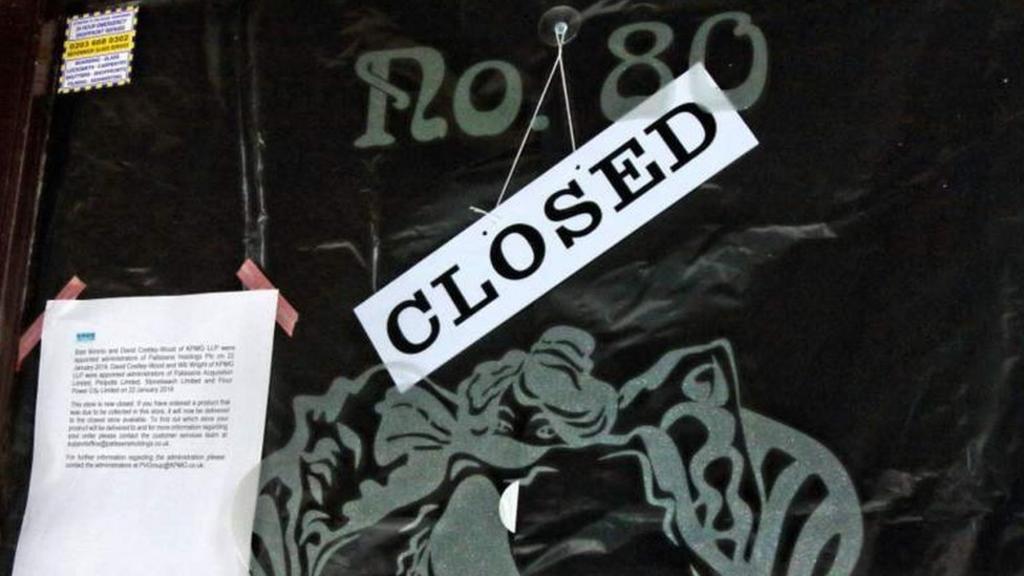
An example of a UK business forced into liquidation can be seen below:
Up to 900 workers lost their jobs when administrators closed 70 of the cafe chain’s outlets. Disclaimer:
Conclusion
Payment of wages is one of the most important duties that an employer must fulfil. It is also an area which is highly regulated by law, for example:
The common law
The Employment Rights Act 1996
The Working Time Regulations 1998
The National Minimum Wage Act 1998
The Equality Act 2010
Family friendly legislation e.g. adoption, bereavement, maternity, paternity
Failure by an employer to pay an employee (and workers) their wages and other entitlements can lead to the possibility of claims being submitted to an Employment Tribunal. The basic advice to employers is make sure you stay on top of this important area of employment law because it changes on a regular basis and ignorance of the law is no excuse.
It’s the first day of the Spring/Easter Holidays and most of us will probably be feeling a little underwhelmed at the prospect (we get to spend another two weeks at home).
We should, however, be grateful when we remember the countless numbers of our fellow workers who have to go into work in order to keep this country running – National Health Service and Emergency Service personnel, care staff, supermarket and grocery staff, delivery workers, the armed forces, utilities workers etc during the Coronavirus outbreak. I am sure that I will have overlooked someone or a group of essential workers and for that sincere apologies.
With all of the above people in mind, when do they get to take holidays? I am sure that, for many of them, holidays have been put firmly on the back burner.
This is why the UK Government has sensibly amended the Working Time Regulations 1998 by introducing the Working Time (Coronavirus) (Amendment) Regulations 2020 (WTCA Regulations). This will allow workers, who are continuing to serve the community in its hour of need, to carry over their holiday entitlement to the following year.
Ordinarily, the Working Time Regulations 1998 permits ‘workers’ (a category broader than employees) to take 28 days’ (or 5.6 weeks’) paid holiday per year. This is the basic, statutory entitlement and other workers may be more fortunate in that they receive longer periods of paid holiday entitlement e.g. teachers and lecturers.
Each organisation will designate the relevant period when holidays are to be taken by workers. The minimum or basic entitlement can include public or bank holidays such as Good Friday, Easter Monday, May Day, Christmas Day, New Year’s Day. This period of leave should be addressed in workers’ contracts.
The basic entitlement must normally be taken in the agreed leave year e.g. from 1 January to 31 December or 1st September to 31st August. I say normally because workers are not usually permitted to carry over holidays into the next leave year – they must take them in the current leave year. I suppose you could say rather crudely: use them or lose them, but thankfully not this year. This is the least we can do for people who are putting their health and, quite possibly, their lives on the line for us.
A link to an article in The Independent about the amendment to the Working Time Regulations can be found below:
Today, the UK Supreme Court has decided, in a unanimous judgement, that Barclays Bank PLC is not liable for the wrongful and criminal actions of an independent contractor (a medical doctor) that it engaged over a number of decades – see Barclays Bank PLC v Various Claimants [2020] UKSC 13. This judgement overturns the Court of Appeal’s judgement of 2018 (see Barclays Bank PLC v Various Claimants [2018] EWCA Civ 1670).
The facts of the case
Barclays Bank hired a doctor, Gordon Bates, to carry out medical examinations of members of its staff and applicants for employment at the Bank. These examinations were carried out by Bates at his consulting room located at his private address. The doctor was accused of sexually assaulting 126 people during examinations carried out between 1968 and 1984. These incidents did not come to light until much later.
By this time, the doctor had died and there was no question of his professional indemnity insurance or his estate paying out compensation to his victims. Barclays Bank stated that the doctor was not an employee – he was an independent medical practitioner paid by the Bank to carry out a service as and when required.
Barclays Bank argued that on these grounds they should not be held liable for the doctor’s wrongful actions. In fact, the victims themselves did not claim that Bates was an employee of Barclays, but significantly they did argue that its relationship with the doctor was “akin to employment” and that the delictual act was sufficiently closely connected to the employment or quasi-employment. Bates was under the control of Barclays Bank; by using the services of Bates, the Bank had created the risk of the victims being exposed to his wrongful acts; The medical examinations were carried out on behalf of the Bank; and the Bank had the resources to compensate the victims who now had no practical means of obtaining damages from Bates.
The Court of Appeal
The case was first heard in the English High Court. The High Court decided that Barclays should be held liable for the doctor’s actions. They were benefiting from the service that he was providing and they had the financial resources to compensate the victims (this for organisations using independent contractors will be the really controversial and worrying part of the judgement).
Barclays appealed to the English Court of Appeal, but the decision of the High Court was upheld.
At paragraph 41 of the judgement, Lord Justice Irwin stated:
“The law of vicarious liability has been developed – has been “on the move” – in recent times, most notably in the five critical decisions of: E v English Province of Our Lady of Charity; the Catholic Child Welfare Society; Cox v Ministry of Justice; Mohamud v WM Morrison Supermarkets; and Armes v Nottinghamshire County Council.”
Significantly, Lord Justice Irwin went on to say (at paragraph 45):
“Moreover, it seems clear to me that, adopting the approach of the Supreme Court, there will indeed be cases of independent contractors where vicarious liability will be established. Changes in the structures of employment, and of contracts for the provisions of services, are widespread. Operations intrinsic to a business enterprise are routinely performed by independent contractors, over long periods, accompanied by precise obligations and high levels of control. Such patterns are evident in widely different fields of enterprise, from construction, to manufacture, to the services sector.”
The UK Supreme Court
Baroness Hale, who gave the unanimous decision of the Court, noted that the doctrine of vicarious liability is “on the move” and “how far that move can take it.”
Baroness Hale summarised the position of Barclays Bank in the following terms:
‘As Lord Bridge of Harwich stated in D & F Estates Ltd v Church Comrs [1989] AC 177, 208 (echoing the words of Widgery LJ in Salsbury v Woodland [1970] 1 QB 324, 336), “It is trite law that the employer of an independent contractor is, in general, not liable for the negligence or other torts committed by the contractor in the course of the execution of the work”. The Bank argues that, although recent decisions have expanded the categories of relationship which can give rise to vicarious liability beyond a contract of employment, they have not so expanded it as to destroy this trite proposition of law, which has been with us since at least the decision of Baron Parke in Quarman v Burnett (1840) 6 M & W 499, 151 ER 509.’
Her ladyship went on to set out the legal argument of the victims of Doctor Bates’ wrongful actions:
‘The claimants, on the other hand, argue that the recent Supreme Court cases of Christian Brothers, Cox v Ministry of Justice [2016] UKSC 10; [2016] AC 660, and Armes v Nottinghamshire County Council [2017] UKSC 60; [2018] AC 355, have replaced that trite proposition with a more nuanced multi-factorial approach in which a range of incidents are considered in deciding whether it is “fair, just and reasonable” to impose vicarious liability upon this person for the torts of another person who is not his employee. That was the approach adopted both by the trial judge and the Court of Appeal in this case.’
In finding that Barclays Bank was not vicariously liable for Doctor Bates’ wrongful actions, Baroness Hale highlighted the following factors which had clearly influenced the Supreme Court:
Doctor Bates was never employed by Barclays
He was not paid a retainer by Barclays
He could refuse referrals from Barclays
He maintained his own medical practice and medical insurance (though whether his policy of indemnity would cover such wrongful acts was a moot point)
If he was an employee, he was employed by the local health authority on a part-time basis – and certainly not by Barclays
He was, therefore, an independent contractor in business on his own account as regards his relationship with Barclays
Barclays was just another client of Doctor Bates
Links to the judgement and the Court’s press release can be found below:
Balaclavas can be very useful things to have to hand – when the weather is very cold or you’re discussing the Crimean War (1853-1856) from where the term for the garment originates in the United Kingdom (circa 1881, according to the historian and cleric, Richard Rutt). During the Crimean War, British soldiers wore the garment to cope with the sub-zero temperatures that they experienced during the winter months of the Campaign.
Today, the garments are still incredibly popular with cyclists and winter sports’ enthusiasts (I confess: I have two for cycling during the winter months and they’re great!).
Despite, the historical associations with the British Army’s involvement in the Crimean War, it’s not always advisable to use the Balaclava as a teaching aid for History classes – especially DIY History classes.
McClean, an Irish footballer playing for the English Championship side, Stoke City FC, has recently found this out to his cost.
In a bizarre social media post (on Instagram), McClean put a picture of himself wearing a Balaclava as he was talking to two children. What was the point of this strange exercise? McClean claims that he was teaching the children about history, but others have seen this as an endorsement of paramilitary groups – particularly the Provisional IRA.
Today’s history lesson by James McClean
There was a public backlash and McClean was fined by this Club. The player is something of a controversial figure to many as he routinely refuses to have a poppy printed on his football jersey in the run-up to Remembrance Day commemorations each November in the United Kingdom.
McClean hails from the City of Derry in the North of Ireland which will be forever associated with the events of ‘Bloody Sunday’ on 30 January 1972. On that day, 13 innocent Civil Rights marchers were shot and killed without justification by members of the Parachute Regiment – as per the conclusions of Lord Saville’s Report (2010) which contradicted Lord Widgery’s findings published in April 1972. The Saville Inquiry took 12.5 years and cost the British taxpayer £191.5 million – the longest and most expensive inquiry ever in the United Kingdom (figures obtained from The Spectator).
The previous Widgery Report was seen by many in the Republican and Nationalist community as a cover-up and a whitewash in that it absolved the Parachute Regiment of any wrong-doing for the deaths. Inevitably, the Report fuelled a long lasting sense of grievance within this community. McClean grew up on Derry’s Creggan Estate – not far from St Mary’s Church where many of the funerals of the ‘Bloody Sunday’ victims took place.
We often forget that footballers can be employees i.e. have a contract of service with their Clubs as per Section 230 of the Employment Rights Act 1996. McClean is fortunate that he has retained his post; other, less famous employees might not have been so lucky.
Section 98(4) of the Employment Rights Act 1996 permits an employer to dismiss an employee (potentially) fairly by reason of his/her conduct (with the proviso, of course, that the employer follows proper procedures in line with current ACAS standards).
McClean might initially have protested that the social media post was done while he was outside working hours. Regular readers of this Blog will be well aware that this type of excuse is extremely naive at best. Yes, employees do have a right to privacy, in terms of the European Convention on Human Rights, but this is never absolute – especially if an employer can argue that the behaviour of an individual employed by him or her has caused reputational damage to the organisation.
Employers do have a part to play here: they have a duty to have clear and consistent guidelines on employee social media use within and outwith the work-place. It should go without saying (but I’ll say it anyway) that the employer should make sure that employees are aware of the existence of such guidelines and have actually read them.
The misbehaviour or misconduct of employees which takes place outside working hours can have a really serious reputational impact on your employer. Individuals, like McClean, with high profiles in the community should be aware of this. It won’t be the last time that we read about someone who is deemed to be a role model – a teacher or a sporting personality – who misbehaves outside work and pays the price for this type of behaviour.
A link to the story on the Sky News website can be found below:















 Seán Crossan's Scots Law