Pay day?

Photo by Jordan Rowland on Unsplash

One of the most important common law duties that an employer has under the contract of employment is to pay wages to the employee.

This duty, of course, is contingent upon the employee carrying out his or her side of the bargain i.e. performing their contractual duties.

The right to be paid fully and on time is a basic right of any employee. Failure by employers to pay wages (wholly or partially) or to delay payment is a serious contractual breach.

Historically, employers could exploit employees by paying them in vouchers or other commodities. Often, these vouchers could be exchanged only in the factory shop. This led Parliament to pass the Truck Acts to prevent such abuses.

Sections 13-27 of the Employment Rights Act 1996 (which replaced the Wages Act 1986) give employees some very important rights as regards the payment of wages.

The National Minimum Wage Act 1998 (and the associated statutory instruments) and the Equality Act 2010 also contain important provisions about wages and other contractual benefits.

There are a number of key issues regarding the payment of wages:

  • All employees are entitled to an individual written pay statement (whether a hard or electronic copy)
  • The written pay statement must contain certain information
  • Pay slips/statements must be given on or before the pay date
  • Fixed pay deductions must be shown with detailed amounts and reasons for the deductions e.g. Tax, pensions and national insurance
  • Part time workers must get same rate as full time workers (on a pro rata basis)
  • Most workers entitled to be paid the National Minimum Wage or the National Minimum Living Wage (if over age 25) (NMW)
  • Some workers under age 19 may be entitled to the apprentice rate

Most workers (please note not just employees) are entitled to receive the NMW i.e. over school leaving age. NMW rates are reviewed each year by the Low Pay Commission and changes are usually announced from 1 April each year.

It is a criminal offence not to pay workers the NMW and they can also take (civil) legal action before an Employment Tribunal (or Industrial Tribunal in Northern Ireland) in order to assert this important statutory right.

There are certain individuals who are not entitled to receive the NMW:

  • Members of the Armed Forces
  • Genuinely self-employed persons
  • Prisoners
  • Volunteers
  • Students doing work placements as part of their studies
  • Workers on certain training schemes
  • Members of religious communities
  • Share fishermen

Pay deductions?

Can be lawful when made by employers …

… but in certain, limited circumstances only.

When exactly are deductions from pay lawful?:

  • Required or authorised by legislation (e.g. income tax or national insurance deductions);
  • It is authorised by the worker’s contract – provided the worker has been given a written copy of the relevant terms or a written explanation of them before it is made;
  • The consent of the worker has been obtained in writing before deduction is made.

Extra protection exists for individuals working in the retail sector making it illegal for employers to deduct more than 10% from the gross amount of any payment of wages (except the final payment on termination of employment).

Employees can take a claim to an Employment Tribunal for unpaid wages or unauthorised deductions from wages. They must do so within 3 months (minus 1 day) from the date that wages should have been paid or, if the deduction is an ongoing one, the time limit runs from the date of the last relevant deduction.

An example of a claim for unpaid wages can be seen below:

Riyad Mahrez and wife ordered to pay former nanny

Equal Pay

Regular readers of the Blog will be aware of the provisions of the Equality Act 2010 in relation to pay and contractual benefits. It will amount to unlawful sex discrimination if an employer pays a female worker less than her male comparator if they are doing:

  • Like work
  • Work of equal value
  • Work rated equivalent

Sick Pay

Some employees may be entitled to receive pay from the employer while absent from work due to ill health e.g. 6 months’ full pay & then 6 months’ half pay. An example of this can be seen below:

Statutory Sick Pay (SSP)

This is relevant in situations where employees are not entitled to receive contractual sick pay. Pre (and probably post Coronavirus crisis) it was payable from the 4th day of sickness absence only. Since the outbreak of the virus, statutory sick pay can paid from the first day of absence for those who either are infected with the virus or are self-isolating.

Contractual sick pay is often much more generous than SSP

2020: £95.85 per week from 6 April (compared to £94.25 SSP in 2019) which is payable for up to 28 weeks.

To be eligible for SSP, the claimant must be an employee earning at least £120 (before tax) per week.

Employees wishing to claim SSP submit a claim in writing (if requested) to their employer who may set a deadline for claims. If the employee doesn’t qualify for SSP, s/he may be eligible for Employment and Support Allowance.

Holiday Pay

As per the Working Time Regulations 1998 (as amended), workers entitled to 5.6 weeks paid holiday entitlement (usually translates into 28 days) per year (Bank and public holidays can be included in this figure).

Some workers do far better in terms of holiday entitlement e.g. teachers and lecturers.

Part-time workers get holiday leave on a pro rata basis: a worker works 3 days a week will have their entitlement calculated by multiplying 3 by 5.6 which comes to 16.8 days of annual paid leave.

Employers usually nominate a date in the year when accrual of holiday pay/entitlement begins e.g. 1 September to 31st August each year. If employees leave during the holiday year, their accrued holiday pay will be part of any final payment they receive.

Holiday entitlement means that workers have the right to:

  • get paid for leave that they build up (‘accrue’) in respect of holiday entitlement during maternity, paternity and adoption leave
  • build up holiday entitlement while off work sick
  • choose to take holiday(s) instead of sick leave.

Guarantee payments

Lay-offs & short-time working

Employers can ask you to stay at home or take unpaid leave (lay-offs/short time working) if there’s not enough work for you as an alternative to making redundancies. There should be a clause in the contract of employment addressing such a contingency.

Employees are entitled to guarantee pay during lay-off or short-time working. The maximum which can be paid is £30 a day for 5 days in any 3-month period – so a maximum of £150 can be paid to the employee in question.

If the employee usually earn less than £30 a day, s/he will get their normal daily rate. Part-time employees will be paid on a pro rata basis.

How long can employees be laid-off/placed on short-time working?

There’s no limit for how long employees can be laid-off or put on short-time. They could apply for redundancy and claim redundancy pay if the lay-off/short-term working period has been:

  • 4 weeks in a row
  • 6 weeks in a 13-week period

Eligibility for statutory lay-off pay

To be eligible, employees must:

  • have been employed continuously for 1 month (includes part-time workers)
  • reasonably make sure you’re available for work
  • not refuse any reasonable alternative work (including work not in the contract)
  • Not have been laid-off because of industrial action
  • Employer may have their own guarantee pay scheme
  • It can’t be less than the statutory arrangements.
  • If you get employer’s payments, you don’t get statutory pay in addition to this
  • Failure to receive guarantee payments can give rise to Employment Tribunal claims.

This is an extremely relevant issue with Coronavirus, but many employers are choosing to take advantage of the UK Government’s Furlough Scheme whereby the State meets 80% of the cost of an employee’s wages because the business is prevented from trading.

Redundancy payments

If an employee is being made redundant, s/he may be entitled to receive a statutory redundancy payment. To be eligible for such a payment, employees must have been employed continuously for more than 2 years.

The current weekly pay used to calculate redundancy payments is £525.

Employees will receive:

  • half a week’s pay for each full year that they were employed under 22 years old
  • one week’s pay for each full year they were employed between 22 and 40 years old
  • one and half week’s pay for each full year they were employed from age 41 or older

Redundancy payments are capped at £525 a week (£508 if you were made redundant before 6 April 2019).

Please find below a link which helps employees facing redundancy to calculate their redundancy payment:

https://www.gov.uk/calculate-your-redundancy-pay

Family friendly payments

Employers also have to be mindful of the following issues:

  • Paternity pay
  • Maternity Pay
  • Shared Parental Pay
  • Maternity Allowance
  • Adoption Pay
  • Bereavement Pay

Employers can easily keep up to date with the statutory rates for family friendly payments by using the link below on the UK Government’s website:

https://www.gov.uk/maternity-paternity-calculator

What happens if the employer becomes insolvent and goes into liquidation?

Ultimately, the State will pay employees their wages, redundancy pay, holiday pay and unpaid commission that they would have been owed. This why the UK Government maintains a social security fund supported by national insurance contributions.

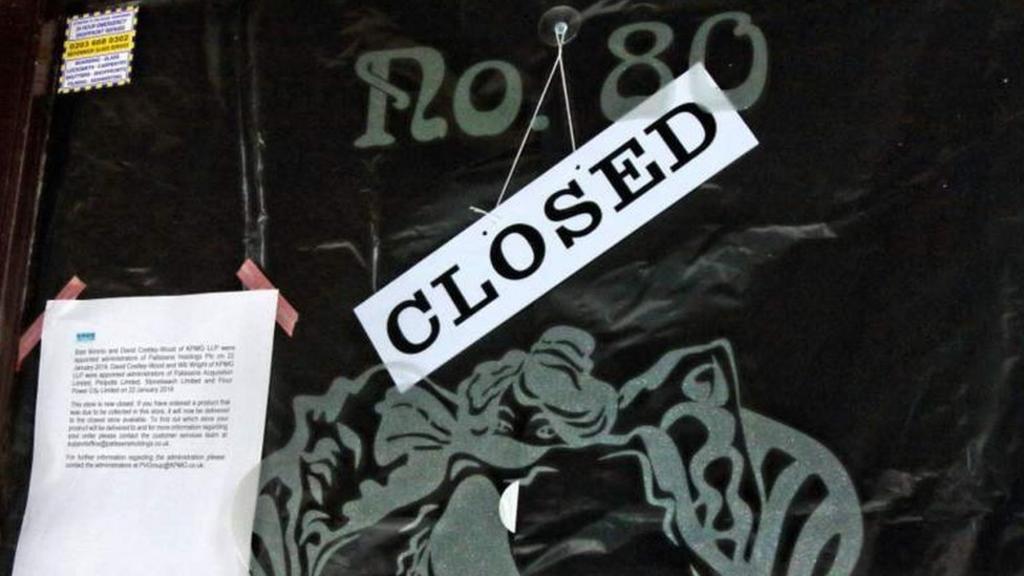
An example of a UK business forced into liquidation can be seen below:

Patisserie Valerie: Redundant staff ‘not receiving final pay’

Up to 900 workers lost their jobs when administrators closed 70 of the cafe chain’s outlets. Disclaimer:
Conclusion

Payment of wages is one of the most important duties that an employer must fulfil. It is also an area which is highly regulated by law, for example:

  • The common law
  • The Employment Rights Act 1996
  • The Working Time Regulations 1998
  • The National Minimum Wage Act 1998
  • The Equality Act 2010
  • Family friendly legislation e.g. adoption, bereavement, maternity, paternity

Failure by an employer to pay an employee (and workers) their wages and other entitlements can lead to the possibility of claims being submitted to an Employment Tribunal. The basic advice to employers is make sure you stay on top of this important area of employment law because it changes on a regular basis and ignorance of the law is no excuse.

Related Blog Articles:

https://seancrossansscotslaw.com/2020/01/30/2020-same-old-sexism-yes-equal-pay-again/

https://seancrossansscotslaw.com/2020/01/10/new-year-same-old-story/

https://seancrossansscotslaw.com/2019/05/13/inequality-in-the-uk/

https://seancrossansscotslaw.com/2019/03/31/the-gender-pay-gap/

https://seancrossansscotslaw.com/2019/04/05/the-gender-pay-gap-part-2/

https://seancrossansscotslaw.com/2019/06/26/ouch/

https://seancrossansscotslaw.com/2019/06/20/sexism-in-the-uk/

Thttps://seancrossansscotslaw.com/2019/04/30/paternity-leave/

Copyright Seán J Crossan, 5 April 2020

Sick Pay? (or the Coronavirus Conundrum)

Photo by Macau Photo Agency on Unsplash

Coronavirus (COVID-19) isn’t just a potential threat to your health; it could also mean that your earnings take a hit.

How so?

If you have to take time off from work (i.e. self-isolate yourself) because you have (or might have) been infected by the virus, will you be entitled to receive sick pay from the organisation that you are working for?

It depends very much on your employment status …

… if you are a zero hours worker or genuinely a self-employed person, the answer is an emphatic no.

If you are deemed to be an employee (an individual who works under a contract of service) within the meaning of Section 230 of the Employment Rights Act 1996, you may be fortunate in that you have an entitlement to receive either contractual sick pay or statutory sick pay.

Contractual sick pay

If a contractual sick pay scheme applies to your employment, you might receive, at its fullest extent, 6 months full pay and then 6 months at half pay. This generous arrangement, of course, will not apply from day 1 of the employment and employees will have to build up their continuous service in order to be eligible for the maximum level of contractual sick pay. It is probably the case that an employee with just over a year’s service would receive 1 month at full pay for sickness absence and then 1 month at half pay.

An example of entitlement to contractual sick pay arrangements taken from the Collective Agreement (the National Working Practices Agreement) between Scottish Further Education lecturers and their employers can be seen below:

Statutory sick pay

What about statutory sick pay or SSP? This is relevant in situations where employees are not entitled to receive contractual sick pay.

It’s also worth pointing out that contractual sick pay is often much more generous than SSP and, even then, not all employees will be entitled to receive this benefit because they fall outside the eligibility criteria. The current weekly rate of sickness pay (in March 2020) is £98.25 and could be paid by employers for a maximum of 28 weeks.

Ordinarily, it becomes payable only from 4th day of sickness absence, but as of Wednesday 4th March 2020, the UK Government has announced that employees who self-isolate themselves because of suspected Coronavirus infection, will be paid SSP from day 1 of their sickness absence.

This is a temporary measure which will apply only for the duration of the current COVID-19 emergency, but people who are off sick with a medical condition other than the virus will also be entitled to benefit from these changes.

See links below to articles on the BBC website about sickness pay entitlement and COVID-19:

https://www.bbc.co.uk/news/business-51628524

https://www.bbc.co.uk/news/uk-51738837

The change in Government policy will not be extended to the self-employed; and to zero hours workers (who will not be able to meet the threshold conditions for eligibility). Frances O’Grady, the General Secretary of the UK’s Trades Union Congress (TUC) has stated that as many as 2 million workers may not be eligible for SSP under the current system.

There has been some concern expressed that individuals in these categories may continue to go to work – if they have the virus or suspect as much – because they will not receive SSP during their absence.

Eligibility criteria for SSP

In 2019-20, in order to qualify for SSP you must be an employee earning at least £118 per week or £512 per month (before tax). This is known as the Lower Earnings Limit.

In April 2020, SSP will rise to £95.85 per week, but individuals’ earnings must fall within any of the following bands in order to qualify:

  • £120 per week
  • £520 per month
  • £6,240 per year

Again, this will mean that many zero hours contract workers will simply fail to qualify for SSP payments.

More problems …

There is also another complication concerning eligibility for sickness pay which the COVID-19 outbreak has raised:

Let’s assume that you do qualify for either contractual sick pay or SSP, but you have decided to take the precautionary measure of self-isolation so as not to expose your colleagues to potential risk.

It may be that you have recently returned from a destination such as China or Italy where the virus has been particularly prevalent and you decide to play it safe by not going into work. You contact your HR Department or employer to inform them of your decision; you are thanked for being extremely considerate and responsible; and then you are told that you are not entitled to receive sick pay because you haven’t actually been diagnosed with the virus.

Matt Hancock MP, UK Government Minister for Health, thinks that current legislation does cover such situations and individuals who take precautionary measures, as outlined above, should benefit from sick pay provisions.

With all due respect to Mr Hancock, what he thinks and what current legislation or a contract of employment states might be entirely different realities. That said, Mr Hancock does have the support of the highly regarded Advisory Conciliation and Arbitration Service (ACAS) which is recommending that employers pay self-isolating employees who have taken such a precautionary measure (see link below).

https://www.acas.org.uk/acas-publishes-new-advice-on-handling-coronavirus-at-work

Conclusion

Clearly, COVID-19 is presenting a number of challenges to traditional practices or orthodoxies in the field of employment law. This is a serious issue given that recent estimates are predicting that up to 20% of the UK workforce could be in danger of contracting the virus and, consequently, they will be absent from work.

In some respects, the UK Government has been caught napping on the issue of extending employment protection e.g. entitlement to sick pay to people who do not have a contract of service and the COVID-19 outbreak has really exposed this shortcoming.

As Jonathan Rennie of law firm, TLT, had noted (as recently as this week) the UK Government has failed to implement any of the recommendations of the Taylor Review which favoured extended employment protection to workers who did not have a contract of service. It is somewhat ironic that the virus outbreak has forced the Government to break cover and extend some employment protection rights.

A link to an article on the BBC website about the predicted impact of COVID-19 on the UK workforce can be found below:

https://www.bbc.co.uk/news/uk-51718917

Copyright Seán J Crossan, 4 March 2020

California dreamin’?

Photo by Ross Sneddon on Unsplash

I’m currently in the fourth week of Semester 2 and I’m teaching Employment Law to a group of second year students. I usually begin this course by discussing the importance of an individual’s employment status.

In today’s world of work, the great divide very much rests upon whether a person has a contract of service OR a contract for services.

An employee is said to have a contract of service as defined by Section 230(1) of the Employment Rights Act 1996. Having this status potentially allows someone to acquire employment protection such as the right not to be unfairly dismissed; the right to a redundancy payment; the right to be the beneficiary of family friendly and flexible working practices.

After the first few lectures have been completed on employment status, I usually ask the students if they think this is an important issue?

Hopefully, if I have been doing my job properly and they have been listening to me, the penny will have dropped: it is more often better to be an employee than someone who works under a contract for services (e.g. zero hours workers, casual and atypical workers, freelancers and the genuinely self-employed).

There are notable exceptions (aren’t there always?): high earning British television celebrities (e.g. Lorraine Kelly) or a number of BBC news journalists have preferred to be treated as freelancers or self-employed persons. Why? They can then minimise their exposure to income tax liability in a way (often via the medium of personal service companies) that would not be possible because if they were employees they would almost certainly be taxed at source on a PAYE (pay as you earn) basis.

We have seen an explosion in the type of work that is often characterised or labelled as the ‘gig economy’. This work is often characterised by a distinct lack of employment rights; irregular working patterns; chronic insecurity; lack of long term career progression; and low pay. It is often impossible for such individuals to complete the necessary periods continuous service to acquire employment rights.

Companies such as Deliveroo, Lyft and Uber have become synonymous with the ‘gig economy’, as have whole sectors of the employment market e.g. catering, cleaning and hospitality services.

Admittedly, the UK Government of Prime Minister Theresa May (2016-19) did commission Matthew Taylor to review employment status. The main conclusion reached by the Taylor Review was that a minimum level of employment protection should be extended to workers – after all these individuals pay their National Insurance contributions too.

Links to the Taylor Report and the UK Government’s response can be found below:

https://assets.publishing.service.gov.uk/government/uploads/system/uploads/attachment_data/file/627671/good-work-taylor-review-modern-working-practices-rg.pdf

https://assets.publishing.service.gov.uk/government/uploads/system/uploads/attachment_data/file/679767/180206_BEIS_Good_Work_Report__Accessible_A4_.pdf

In Scotland, the devolved Government has also established a Fair Work Convention with the aim of promoting better and progressive employment practices by 2025 (see the link below):

https://www.fairworkconvention.scot

Admittedly, an employee does not gain these rights from day 1 of employment. They become entitled to claim certain rights as they build up their continuous service with the employer. So, for example, an employee (generally speaking) has the right not to be unfairly dismissed in terms of the Employment Rights Act 1996 if they have completed 2 years of continuous service with the employer.

Meanwhile, on the other side of the world …

… or California dreamin’

It’s not just in the UK that debates about employment status are currently playing out. At the tail end of 2019, it was with particular interest that I read about a story from the United States which highlighted many of the issues which I have just been discussing in this Blog.

A study, carried out in 2015/16 by economists (Professors Lawrence Katz and Alan Krueger at Harvard and Princeton Universities respectively) calculated that “12.5 million people were considered independent contractors, or 8.4% of the U.S. workforce.”

https://scholar.harvard.edu/files/lkatz/files/katz_krueger_cws_v3.pdf

Interestingly, in 2019, Professors Katz and Krueger appeared to disown or play down certain of their findings – especially in relation to the number of American gig economy jobs:

https://edition.cnn.com/2019/01/07/economy/gig-economy-katz-krueger/index.html

Assembly Bill 5

The US State of California has just enacted a law, Assembly Bill 5 2019 or AB5 (known more popularly as the gig economy law) giving those individuals working in the gig economy more employment rights. The law came into force on 1 January 2020.

A link to AB5 as enacted by the California State legislature can be found below:

https://leginfo.legislature.ca.gov/faces/billTextClient.xhtml?bill_id=201920200AB5

In theory, AB5 makes it much more difficult for employers to classify individuals as independent contractors for services meaning that many more people will be treated as employees with the right to claim the minimum wage and the right to receive sick pay.

The Supreme Court of California laid down very strict criteria for determining whether an individual was an employee or an independent contractor in what is being referred to as the ‘landmark’ decision of Dynamex Operations West, Inc v the Superior Court of Los Angeles County 30 April 2018 Opinion S222732.

The case establishes the ‘ABC Test’ which operates on the presumption that individuals hired by an organisation or business are employees unless the hirer can show otherwise. In this case, the Supreme Court moved away from the ‘seminal’ Borello Test which had been the standard way of determining a person’s employment status since the 1980s. Critically, AB5 reflects the Dynamex criteria.

Essentially, the hirer must satisfy all three parts of the ABC Test in order to prove that an individual is a genuine independent contractor.

The criteria in ABC Test (as contained in AB5) can be set out as follows:

(A) The person is free from the control and direction of the hiring entity in connection with the performance of the work, both under the contract for the performance of the work and in fact.

(B) The person performs work that is outside the usual course of the hiring entity’s business.

(C) The person is customarily engaged in an independently established trade, occupation, or business of the same nature as that involved in the work performed.

The Dynamex decision is regarded as a landmark judgement because it overturns the Borello Test which had been the leading precedent for determining employment status in California since the late 1980s (see S. G. Borello & Sons, Inc. v Department of Industrial Relations (1989) 48 Cal.3d 341).

In Dynamex, the Californian Supreme Court made the following statement:

Although in some circumstances classification as an independent contractor may be advantageous to workers as well as to businesses, the risk that workers who should be treated as employees may be improperly misclassified as independent contractors is significant in light of the potentially substantial economic incentives that a business may have in mischaracterizing some workers as independent contractors. Such incentives include the unfair competitive
advantage the business may obtain over competitors that properly classify similar workers as employees and that thereby assume the fiscal and other responsibilities and burdens that an employer owes to its employees.

The Court noted, moreover, that:

In recent years, the relevant regulatory agencies of both the federal and state governments have declared that the misclassification of workers as independent contractors rather than employees
is a very serious problem, depriving federal and state governments of billions of dollars in tax revenue and millions of workers of the labor law protections to which they are entitled
.”

A link to the Dynamex judgement can be found below:

https://scocal.stanford.edu/opinion/dynamex-operations-west-inc-v-superior-court-34584

Legislators in other US States (New Jersey and New York particularly) have expressed a desire to follow the Californian example and Democratic US presidential candidates, Bernie Sanders and Elizabeth Warren are strongly in favour of this type of law.

As you would expect in such a litigious society as the United States, AB5 has already been the subject of a legal challenge (which was unsuccessful). Predictably, Uber and another company, Postmates, were at the forefront of this action.

This legal challenge was hardly surprising, given that The Los Angeles Times reported in August 2019 that Uber and Lyft intended to establish a campaigning fund worth $60 million to fight AB5.

A link to the story can be found below:

https://www.latimes.com/business/technology/story/2019-08-29/ab5-uber-lyft-newsom-lorena-gonzalez-ballot-tony-west

Conclusion

So, even in the land of free enterprise, it would seem that not everyone wants to be their own boss and many people would, in fact, be more than happy to welcome the recognition of their status as employees.

That said, AB5 has, surprisingly, not met with the approval of every worker or potential employee. The California performing arts community has experienced problems with the new law, mainly because of its use of the term ‘fine artist’ which was not defined. Fine artists are exempt from the provisions of AB5, but who exactly is a fine artist? No one seems to be sure and The Los Angeles Times reported that one opera company had cancelled performances because they were unsure whether performers were to be classified as employees (with the additional costs that this would entail) or whether they were genuinely independent contractors.

Lorena Gonzalez, the Californian Assemblywoman who drafted AB5 said that a definition of the term was deliberately omitted from the law and that it the responsibility of the State’s Employment Development Department to clarify this issue.

Readers will find links below to media articles about AB5:

https://apple.news/A_pjrttPvTDSMSpV-VMet8w

https://www.bbc.co.uk/news/business-49659775

https://www.latimes.com/entertainment-arts/story/2020-01-29/ab5-independent-contractor-california-2020-arts

Related Blog Articles:

https://seancrossansscotslaw.com/2019/04/19/the-gig-economy/

https://seancrossansscotslaw.com/2019/07/22/good-work/

https://seancrossansscotslaw.com/2019/03/22/hello-im-lorraine-and-im-definitely-self-employed/

https://seancrossansscotslaw.com/2019/12/21/employee-or-not/

https://seancrossansscotslaw.com/2019/01/17/employment-status/

https://seancrossansscotslaw.com/2019/05/08/call-me-an-uber/

https://seancrossansscotslaw.com/2019/03/25/strippers-are-workers-too-discuss/

https://seancrossansscotslaw.com/2019/02/14/horses-for-courses-the-equine-flu-affair/

https://seancrossansscotslaw.com/2019/04/30/paternity-leave/

https://seancrossansscotslaw.com/2019/02/25/the-work-life-balance-or-utopia-reimagined/

Copyright Seán J Crossan, 13 February 2020

You’ve got (e)mail! … or will I ever get out of this place?!!!

Photo by Kon Karampelas on Unsplash

Email can be a wonderful form of communication. It can also be, quite frankly, something of a curse for many employees and workers. Essentially, you’re never too far away from the work-place and bosses/clients/service users expect to receive an instant reply.

The expectation by bosses and managers that employees and workers should be monitoring their emails (constantly) does tend to be a contributory factor in the rising number of cases of work-related stress. Employers: please note that you have a duty of care to provide a safe working environment and part of this obligation includes monitoring unacceptably high levels of stress in the work-place.

There is a perception (rightly or wrongly) that UK employees suffer from some of the longest working hours in Europe. In 2019, data from the EU’s Eurostat Agency seemed to support this contention but, interestingly, the Organisation for Economic Co-operation and Development (OECD) took a more sceptical approach by questioning the method of data collection (the old adage about lies, damned lies and statistics springs to mind here).

Links to a BBC article about this issue and the Eurostat figures (and OECD response) can be found below:

https://www.bbc.co.uk/news/uk-politics-49795179

https://ec.europa.eu/eurostat/databrowser/view/tps00071/default/table?lang=en

https://www.oecd-ilibrary.org/economics/international-productivity-gaps_5b43c728-en;jsessionid=c_2XYmRNoOJLRgHdT0TJPQqs.ip-10-240-5-115

UK employees are, of course, entitled to receive a written statement of the main terms and particulars of their employment as per Section 1 of the Employment Rights Act 1996. This statement must contain a provision which addresses the employee’s normal weekly working hours.

Despite Brexit (which did occur on 31 January 2020 – in case you missed it), the UK is still following EU rules until the end of this year … One EU Law with particular relevance to this debate is the Working Time Directive ((2003/88/EC) which was transposed into UK employment law by way of the Working Time Regulations 1998.

In theory, the Directive and the Regulations cap the number of hours that employees (and workers) can work at 48 hours per week (technical point: this figure can be averaged out over a reference period – 17 weeks normally). Crucially, however, UK employees and workers can opt out of the 48 hour maximum by signing a declaration (opt-out) that they wish to do so. If they change their minds, they are entitled to do so by giving the employer a minimum seven days’ notice (or in certain cases – 3 months) of this intention.

The legal rules on working hours are all very well in theory, but what about the culture of organisations which may (at an informal level) promote the idea that long hours spent at work (or just working) are a sure fire way to get ahead in your career?

This is where the influence of email (and other instant messaging services) can be quite insidious (pernicious even?). Employees feel under pressure to deal with this work load at weekends, during holidays and evenings. Parents of young children and carers of elderly relatives, who may have negotiated flexible working arrangements, may be under acute pressure to deal with emails etc when they are outside the work-place. In this way, the work-place becomes like the Eagles’ song, Hotel California (‘You can check out any time you like, But you can never leave!‘).

Interestingly, in some of our ex-EU partner countries, there have been initiatives at both the organisational and legal level to curb the smothering influence of email outside the work-place.

There is a real danger here for employers that, by encouraging employee use of email outside working hours, it may constitute a policy, criterion or practice (PCP) – no matter how informal – which could open themselves up to accusations of indirect discrimination on grounds of sex (women are still the primary carers for children and elderly dependents) and disability (by reason of a person’s association with a disabled person) in terms of Section 19 of the Equality Act 2010.

Furthermore, employees might feel that they are under constant surveillance by the employer because it becomes easier to keep tabs on individuals when they are logging in and out of the company’s IT network. For employers, this could lead to legal challenges from employees who are concerned that the right to privacy and family life as enshrined in Article 8 of the European Convention on Human Rights has been violated.

Is there a better way of doing things? Yes, is the short answer.

In 2011, the German multinational car manufacturer, Volkswagen (VW) introduced major changes to its working practices by curbing the use of emails when employees were off duty. This agreement was negotiated by the company and trade union/labour organisations.

In France, in August 2016, they went further and passed the El Khomri Law (named after the French Government Minister for Labour who introduced the proposal). This law gave employees a right to disconnect from email. In one particular case which involved the French arm of the British company, Rentokil, an employee was awarded €60,000 because his right to disconnect from email had been breached.

Links to stories about the changes to VW’s working practices and the French El Khomri Law can be found below:

https://www.telegraph.co.uk/news/2018/08/01/british-firm-ordered-pay-60000-french-court-breaching-employees/

The debate about the right of employees to disconnect from email – whether this is negotiated via some sort of collective agreement or underpinned by law – now seems to have penetrated the British consciousness. Rebecca Long-Bailey MP, one of the leading contenders for leadership of the British Labour Party has thrown her hat into the ring by backing a trade union campaign to introduce a legal right to disconnect in the UK.

One small problem: the Labour Party lost the last British General Election on 12 December 2019 to the Conservatives and is, therefore, in no position to deliver. Over to you Prime Minister Johnson? (a man fond of the populist gesture).

A link to an article in The Independent about Rebecca Long Bailey’s support for the trade union campaign to introduce a law guaranteeing the right to disconnect can be found below:

https://edition.independent.co.uk/editions/uk.co.independent.issue.110220/data/9327866/index.html

Related Blog Articles:

https://seancrossansscotslaw.com/2019/10/23/a-hard-days-night/

https://seancrossansscotslaw.com/2019/02/25/the-work-life-balance-or-utopia-reimagined/

https://seancrossansscotslaw.com/2019/02/22/stress-kills/

https://seancrossansscotslaw.com/2019/02/11/employment-contracts-read-them-or-weep/

Copyright Seán J Crossan, 11 February 2020

I’m a climate activist, don’t fire me!

Photo by Stock Photography on Unsplash

Today seems to be something of a red letter day for the Blog with regard to the issue of protected philosophical beliefs in terms of the Equality Act 2010.

We have already heard the news that Jordi Casamitjana has won the part of his Employment Tribunal claim that his ethical veganism is a philosophical belief in terms of Sections 4 and 10 of the 2010 Act (see Casamitjana v League Against Cruel Sports [2020]).

It was some interest that another news item popped up today concerning allegations that Amazon stands accused of threatening to dismiss those of its employees who become involved in climate protests. I would hazard a guess that Amazon is making a statement of intent that it may dismiss employees who perhaps break the law when they are involved in climate protests such as those organised by Extinction Rebellion and other similarly minded groups.

Criminal acts by employees committed outside the workplace could be regarded as gross misconduct in terms of Section 98 of the Employment Rights Act 1996. In other words, such behaviour by employees could result in the employer suffering reputational damage and, consequently, any dismissal for misconduct could be potentially fair. That said, employers should always carry out the proper disciplinary procedures when contemplating dismissal as the ultimate sanction for employee misbehaviour.

The real gripe – according to Amazon Employees for Climate Justice – is that the tech company allegedly objects to employees speaking critically about its failure to be more environmentally responsible.

Yet, there are potential dangers here for Amazon in the UK. In Grainger plc v Nicholson (2010) IRLR 4, the Employment Appeal Tribunal established that an employee’s belief in climate change could constitute discrimination on the grounds of a philosophical belief.

So, we could have situation where Amazon employees who are taking part in quite peaceful and lawful climate change protests end up being dismissed. This would open up the possibility that employees of Amazon UK might have the right to bring claims for direct discrimination (Section 13: Equality Act 2010) in respect of their philosophical beliefs (Sections 4 and 10 of the Act).

In the USA, there could be even more serious legal implications – infringing the right to free speech which is protected under the Constitution.

Perhaps Amazon needs to go back to the drawing board …

A link to an article on the BBC News App can be found below:

Amazon ‘threatens to fire’ climate change activists

The company said employees “may receive a notification” from HR if rules were “not being followed”.

Related Blog article:

https://seancrossansscotslaw.com/2019/06/05/im-a-political-activist-dont-sack-me/

Copyright Seán J Crossan, 3 January 2020

Social media and dismissal

Photo by Alex Haney on Unsplash

Regular readers of this Blog will know that I have written several articles over the last few months about the legal consequences of social media (mis)use and the effects on relationships in the work place. Comments or images posted on social media by employees can have serious reputational consequences for their employers.

The Israel Folau case

In a blog published on 11 April 2019 (Social Media Misuse), I discussed the story about Israel Folau, the Australian rugby player who had posted homophobic comments on social media. Folau has now been dismissed by Australia for these remarks.

Please see a link to the story on the Sky News website:

Israel Folau: Australian rugby star sacked over anti-gay social media post
http://news.sky.com/story/israel-folau-australian-rugby-star-sacked-over-anti-gay-social-media-post-11721930

The employer must, of course, be able to prove reasonably that the employee’s misuse of social media will cause it to suffer reputational damage.

In Taylor Somerfield Stores Ltd ETS/107487/07 an employee was dismissed after posting a video on Youtube which involved a mock fight using Somerfield carrier bags in the work place. The video was uploaded to Youtube for a mere 3 days and only 8 people had viewed it – 3 of whom were managers conducting the disciplinary investigation. The Employment Tribunal was firmly of the view that the dismissal was unfair because the employer was not able to prove that it had suffered serious reputational damage.

As I have emphasised in previous blogs, employees will be very naive if they think that it is a competent defence to say that the social media posts occurred outside working hours. Employers are still very much entitled to treat such behaviour as an example of a breach of work place discipline. In serious cases of social media misuse, employers will be entitled to consider dismissal of employees on the grounds of misconduct (as per Section 98(4) of the Employment Rights Act 1996).

Admittedly, this area represents something of a tightrope for employers to walk: they will have to operate a clear and comprehensive social media policy and employees must be made aware of any restrictions or expectations.

In the unreported Employment Tribunal decision of Grant and Ross Mitie Property Services Ltd (2009), the employer had a policy which restricted employee internet access. Unfortunately, for the employer, the phrase which permitted employee’s personal use of the internet to times that were “outside core working hours”, was deemed by the Tribunal to be ‘vague’ and lacking in certainty. This meant that the employees who had been dismissed because the employer was of the view that they had breached its policy on internet use had been unfairly dismissed.

There is also the matter of the rights that employees reasonably have to privacy and freedom of expression (as per their Article 8 and 10 rights respectively to be found in the European Convention, the Human Rights Act 1998 and the Scotland Act 1998) (see Bărbulescu v Romania Application no. 61496/08 5 September 2017; and Smith v Trafford Housing Trust [2012] EWHC 3221 (Ch)).

I have also pointed out in previous blogs, the importance for employers in carrying out disciplinary proceedings which comply with current ACAS Guidance. Using the (current) ACAS Guidance is a critical risk management exercise for employers:

https://beta.acas.org.uk/investigations-for-discipline-and-grievance-step-by-step

Employers who act recklessly or swiftly and ignore proper procedures may well have cause to regret their actions down the road. As Sir Robert Megarry VC, the eminent English judge, remarked decades ago in John Rees [1970] 1 Ch 345:

When something is obvious, they may say, why force everyone to go through the tiresome waste of time involved in framing charges and giving an opportunity to be heard?As everybody who has anything to do with the law well knows, the path of the law is strewn with examples of open and shut cases which, somehow, were not; …

The above remarks are as valid in 2019 as they were in Sir Robert Megarry’s day.

Atherton v Bensons Vending Ltd ET/2411749/2018

This is a recent decision of the Manchester Employment Tribunal which raises some very interesting issues about employee use of social media specifically and the conduct of disciplinary proceedings more generally.

Darren Atherton (aged 55) worked for Bensons Vending Ltd, a small company. As a result of his employer making changes to its discretionary Christmas bonus scheme, Atherton made some very negative comments about the company’s Managing Director, Ken Haselden via a colleague’s Facebook page:

Comment 1

We’ve all just bought Ken a new dog with our Christmas bonus!!!”

Comment 2

“He spends a few grand on a new dog then we get told ‘no bonus this year’ but we can have a bottle!!! 

Comment 3

“Well, he can stick his bottle where the sun doesn’t shine because I refuse to be insulted in this way!!!

Atherton’s colleague, Simon Minshull had initially objected to the changes to the bonus scheme by posting comments on his Facebook page:

Comment 1

Just when you thought staff morale couldn’t get any worse, hey f***ing presto #insult #disgusted.”

Comment 2

The only difference between McDonalds and where I work is McDonalds has only one clown running the show.” (This second comment was accompanied by a picture of Ronald McDonald).

The changes to the bonus scheme were part of a cost cutting and efficiency savings exercise by the company and, from any reading of the above comments, Atherton and Minshull clearly disagreed with this new approach by their employer.

Negative remarks about the Managing Director were also made by Atherton and another colleague in the workplace. Several colleagues informed Haselden about these remarks stating that they had been very aggressive and vitriolic in nature.

Atherton’s colleague, Simon Minshull, was subsequently questioned about the posts on his Facebook account by Haselden. Minshull stated that he did not agree with them – they were Atherton’s opinions – and he apologised for any offence caused to Haselden. He was later suspended for the Facebook posts, but critically this suspension was lifted in the light of his swift apology to Haselden (and the fact that it was established that he had not made these comments). Minshull was permitted to return to work upon the conclusion of the disciplinary proceedings against him.

Atherton was called to a meeting with Mr Haselden in December 2017 to address the allegations which had been made against him and to investigate the social media posts. This was not a disciplinary meeting, but more in the way of an investigatory meeting. The actual disciplinary meeting took place in January 2018.

Dismissal without notice pay

The outcome of the disciplinary meeting was that Atherton should be dismissed without notice pay for gross misconduct in terms of Section 98(4) of the Employment Rights Act 1996. This was despite the fact that Atherton had a clean disciplinary record (until now) and had enjoyed a good relationship with his employer. Atherton’s comments on Facebook were “extremely derogatory” and Mr Haselden stated that he would find it “extremely difficult” to continue working with him. Atherton appealed against his dismissal, but the decision was upheld.

The fairness of the disciplinary proceedings

As part of his claim against the employer, Atherton challenged the fairness of the disciplinary proceedings taken against him. In particular, he objected to the fact that Haselden conducted the disciplinary meeting against him. Atherton’s contention was that he would not receive a fair hearing because Haselden was personally involved in the matter and, therefore, could not be relied upon to act objectively. This type of issue frequently arises where smaller employers are concerned. In an ideal world, a manager (such as Haselden) who has been involved personally in an issue involving alleged breaches of work place discipline should not be a participant in the disciplinary panel. This is, of course, easier in practice to ensure in larger organisations where there is a pool of experienced managers who will have had no personal involvement in the matter (or in other words: a particular axe to grind).

The appeals process

In situations involving smaller employers, this is where the appeals process takes on a critical significance. Appeals can often be used to cure actual or perceived defects in the conduct of the original disciplinary meeting. Although Haselden (with two others – an operations manager and a company engineer) had conducted the disciplinary meetings, he had not involved himself in the actual appeals hearing. This part of the company’s disciplinary procedure had been conducted by a Ms Pedley, a trained auditor and, as stated, above, Atherton’s dismissal was upheld.

At this point, Atherton also raised the difference in treatment between himself and Simon Minshull (who had kept his job after disciplinary proceedings against him had been concluded). Pedley refused to comment on individual cases on the grounds of confidentiality. She stated in her letter to Atherton upholding the dismissal that:

Length of service and clean disciplinary record are taken into consideration during all grievance procedures. However, given the
nature of the comment and the reluctance to remedy the grievance the
relationship between yourself and senior management has broken down
irretrievably”.

The Employment Tribunal’s decision

The Tribunal held that Atherton had been fairly dismissed in terms of Section 98(4) of the Employment Rights Act 1996.

He had made extremely derogatory comments via Facebook about Haselden. They were “personal” and they suggested “some impropriety” on Mr Haselden’s part (though more in the nature of “penny-pinching impropriety” suggesting Scrooge like behaviour rather than any financial misdeeds). Any member of the public who knew the company and reading Atherton’s comments on Simon Minshull’s Facebook site, would have a very negative view of Haselden. It was accepted by the Tribunal that Haselden would, therefore, potentially suffer reputational damage. It was also accepted that in a small company, it would be very difficult for Atherton and Haselden to work with one another again (the employment relationship had irretrievably broken down).

The Tribunal also addressed Atherton’s claim that the disciplinary procedure had been biased or lacking in objectivity because of Haselden’s involvement in the decision to dismiss him from employment. This indeed could have been a problem for the employer and may have prejudiced proceedings against Atherton. That said, however, the saving grace for the employer was the fact that Ms Pedley had been kept in reserve for an appeal hearing.

The Employment Tribunal Judge made the following observations about Pedley’s involvement in the appeal stage:

Ms Pedley is by profession an auditor and had clearly gone through the matters in great detail. Notes (page 95 and onwards) show how she dealt with the matter. … Because of that safeguard of the deployment of Ms Pedley, who I am satisfied went about her task objectively and exhaustively and independently, although regrettably for the claimant she came to the same conclusion, I am not satisfied that the determination by Mr Haselden at the dismissal stage rendered the dismissal unfair. The appeal was thorough, it was a re-hearing. Ms Pedley considered all the points that were being raised and came, I am satisfied, to an independent conclusion.”

As for the difference in outcomes between Atherton and Simon Minshull, a key justification for this was that Minshull had “apologised shortly after being challenged regarding his Facebook comments even though he had been suspended.” This was something that Atherton had failed to do – apologising only at the disciplinary meeting in January 2018. Furthermore, it was significant that the nature of Atherton’s comments were specifically directed against Haselden, whereas Minshull’s comments (although also negative) were much more generalised.

The failure to pay notice pay

This was an aspect of the employer’s decision that the Employment Tribunal disagreed with. Atherton, therefore, had a right to receive his entitlement to notice pay. In this sense, he had been wrongly dismissed by his employer. The Employment Tribunal judge stated very clearly that in order for an employee to lose his entitlement to notice pay there the employer must be able to demonstrate that the gross misconduct complained of crosses over a “very high hurdle”. In the judge’s opinion, the employer had not been able to overcome this hurdle and, therefore, Atherton was entitled to claim notice pay.

A link to the Employment Tribunal’s judgement in Atherton Bensons Vending Ltd can be found below:

https://assets.publishing.service.gov.uk/media/5c4712dfe5274a6e6b6716e1/Mr_D_Atherton_v_Bensons_Vending_Limited_-_2411749_2018_-_Reasons.pdf

Conclusion

What have we learned about the decision of the Employment Tribunal in Atherton Bensons Vending Ltd?

Quite a lot actually:

  1. Employees will have to be extremely careful when posting material or comments on social media platforms – irrespective of whether this is about the employers or not.
  2. The case is yet another good example that misconduct committed inside or outside the work place or working hours can have reputational consequences for the employer. It can also lead to relationships in the work place breaking down irretrievably (especially in smaller organisations).
  3. Employers do not have a free hand to police employee use of social media. There must be clear guidelines laid down by the employer as to what constitutes acceptable and appropriate behaviour. At the same, employees have reasonable expectations that their rights to privacy and expression (as per the European Convention on Human Rights) will be upheld.
  4. The conduct of disciplinary proceedings by the employer is a critical issue. We have noted that potential conflicts of interest can occur in smaller employers or organisations where a manager can be investigator, dismissing officer and appeals officer. How does the employer address these issues and ensure objectivity in the disciplinary process?
  5. As with Atherton and Minshull, the employer was entitled to treat them differently: Atherton was dismissed while Minshull retained his job. There was nothing inconsistent or inherently unfair about this when the personal circumstances and behaviour of the two employees was examined.
  6. Finally, even in situations where gross misconduct has been proved by the employer, and the dismissal is deemed to be fair (in terms of Section 98(4): Employment Rights Act 1996), it will not necessarily mean that the employee loses his or her right to notice pay. The employer will have to overcome an extremely high hurdle in order to be entitled to invoke such a disciplinary sanction. As we have seen in Atherton, the Tribunal was not convinced that the employer had been able to prove that this was an appropriate punishment: the dismissal was fair; the failure to pay notice was not.

Copyright Seán J Crossan, 20 May 2019

Get me an Uber!

Photo by Thought Catalog on Unsplash

An interesting story today about industrial action being taken by taxi drivers working for Uber. The action is taking place in the USA and in cities across the UK (including Glasgow). It is designed to draw attention to working practices within the company before it lists its shares on the New York Stock Exchange.

Quite a few of my previous blogs have looked at employment status and the steady increase in the number of individuals who provide services to organisations but, critically, not under the traditional employment contract model.

Section 230(1) of the Employment Rights Act 1996 contains the definition of who precisely is an employee i.e. someone who has a contract of service. If you don’t have this type of contractual arrangement (you’re not an employee), you may well be working under a contract for services. This is one of the most important distinctions in employment law in the United Kingdom.

Those individuals working under a contract for services – precisely because of their lack of employment status – are often denied access to the sorts of legal rights which employees routinely take for granted e.g. unfair dismissal protection, redundancy protection, family friendly rights, rights to information and consultation etc.

Admittedly, employees will not acquire these rights from day 1 of their employment, but the critical difference in relation to people working under a contract for services is that they have the potential to obtain employment rights (by completing the requisite period of continuous service e.g. 2 years’ continuous service for entitlement to protection against unfair dismissal and for entitlement to a redundancy payment.

There’s now a growing awareness on both the part of the UK Government (The Taylor Review) and the European Union (the forthcoming EU Directive on Transparent and predictable working conditions) that people on contracts for services deserve greater levels of work-place protection.

The industrial action being taken by Uber drivers today is principally an attempt by these types of workers to secure better contractual terms and conditions. The law does now appear to be recognising that individuals working for organisations such as Uber (and Lyft) are not genuinely self-employed persons. Rather they should be categorised as workers with an entitlement to a basic level of legal protection (see the English Court of Appeal’s decision in Uber BV & Ors v Aslam & Ors [2018] EWCA Civ 2748 on appeal from UKEAT/0056/17/DA).

A link to the Aslam judgement can be found below:

https://www.judiciary.uk/wp-content/uploads/2018/12/uber-bv-ors-v-aslam-ors-judgment-19.12.18.pdf

A link to an article on the BBC website about the industrial action can be found below:

https://www.bbc.co.uk/news/business-48190176

Copyright Seán J Crossan, 8 May 2019

Locking horns (Frustration of Contract Part 2)

Photo by Uriel Soberanes on Unsplash

In February, one of my blogs (Frustration of Contract) dealt with the circumstances surrounding the issue of frustration as a factor which could lead to termination of a contractual agreement.

One of the stories discussed in that particular blog was the dispute between Cardiff City FC and FC Nantes in respect of the tragic death of Emiliano Sala, the Argentinian footballer who had signed for the English Premiership club.

Despite Sala’s death, the French club was till demanding a portion of the transfer fee of £15 million. This led to speculation on my part as to whether frustration of contract could be an argument put forward by Cardiff.

The plot has since thickened an, today (25 March 2019), it has been reported that Cardiff City is now claiming that the transfer deal was never legally binding. The Premiership side asserts that the proper paperwork was not completed; the French side disputes this.

So, it looks as if the two clubs are going to be locking horns in what now seems to be an inevitable legal dispute.

A link to an article on the BBC website can be found below:

saw this on the BBC News App and thought you should see it:

Emiliano Sala: Cardiff set to claim transfer deal ‘not legally binding’

Cardiff City football are set to tell Fifa the deal to buy Emiliano Sala from Nantes for £15m was not legally binding.

Copyright Seán J Crossan, 25 March 2019

Related Blog Articles:

Locking horns (Frustration of Contract Part 2)

Pay up! (or Frustration of Contract Part 3)

Stormy weather, I’m at the end of my tether!

Welcome to Austria?

https://seancrossansscotslaw.com/2020/03/18/crazy-days-force-majeure-frustration/

It happened outside work … (or it’s my private life!)

photo-1432888622747-4eb9a8efeb07.png

Photo by William Iven on Unsplash

In Chapter 6 of Introductory Scots Law, I focus on the conduct of employees (or should I rephrase that and say misconduct?).

Misconduct – especially the most serious examples of bad behaviour in the workplace – might be grounds for a fair dismissal of the employee concerned.

Section 95 of the Employment Rights Act 1995 states that an employment contract could be terminated by the employer by reason of the employee’s conduct. Such a dismissal or termination of contract could be regarded as a fair dismissal (Section 98: ERA 1996).

If procedures are properly followed by the employer when contemplating dismissal as the ultimate disciplinary sanction, it will be very difficult for the employee to dispute this.

It’s very important for an employer to spell out to employees the type of conduct which could justify dismissal. This might usefully be done by having a section in the employee handbook which specifically addresses the issue of misconduct in the workplace. Additionally, a proper induction process for new employees might focus on the types of behaviour which the employer would almost certainly not condone. Regular refresher training for existing and longer term employees could also be very useful and, in bigger organisations, this would be an important function of the Human Resources or Personnel Department. The recent introduction of the EU’s General Data Protection Regulations (GDPR) in May 2018 is a case in point. Existing members of staff who handled personal or confidential data under the previous data regime would almost certainly be required to be brought up to speed about the more serious consequences of breaching the GDPR.

Misconduct outside the workplace

What about misconduct committed by employees outside working hours? There is an enduring myth amongst members of the public that what happens in your private life is no business of your employer’s. This is a very naive view to hold: employee misbehaviour – whether during working hours or outside work – can adversely affect the employment relationship. The employer will argue that misconduct committed outside working hours can have serious reputational consequences for the organisation.

As many individuals have found to their cost, extra curricular activities can lead to dismissal from employment or some other disciplinary sanction (see Pay v Lancashire Probation Service [2004] IRLR 129 where a probation officer who was part of a sado-masochistic circus act in his spare time was deemed to be fairly dismissed). On the other hand, the employer has to be careful and must not be heavy handed (see Redfearn UK [2012]  ECHR 1878 where the employee suffered unlawful discrimination when he was dismissed on the grounds of his political beliefs).

The case law is full of examples of employees getting themselves into trouble outside working hours as a result of alcohol and drugs misuse or committing criminal acts. Some examples can be seen below:

Richardson v City of Bradford Metropolitan Council[1975] IRLR 296 a senior meat inspector employed by the Council lost his claim for unfair dismissal in relation to misconduct committed outside work: he had stolen money from his local rugby club where he held the office of Treasurer. The Council argued successfully that this incident demonstrated a serious lack of integrity on the employee’s part and, thus, made him unsuitable for continuing employment.

Moore v C & A Modes [1981] IRLR 71 the employee in question was a section leader in a retail store. He had been caught shoplifting at another store and his employer decided to dismiss him. The dismissal was fair: the employee’s conduct had undermined his employer’s trust and confidence in him, not to mention the potential damage done to its reputation as a result of his criminal behaviour.

X v Y [2004] EWCA Civ 662 a charity support worker who worked with with young offenders was cautioned by police officers after committing an indecent act with another male in a public toilet at a motorway service station. He was also placed on the Sex Offenders’ Register as a result of receiving the Police caution. The employee had not been honest to the Police when asked questions about his job and, compounding this, he failed to inform his employer about the situation. The employer decided to dismiss this individual and the dismissal was deemed to be fair. The reputational damage which the employer suffered because of the employee’s failure to disclose what had happened was a significant factor here. The English Court of Appeal was of the view that the employee’s right to respect for a private life (on grounds of his sexual orientation) was not relevant here in terms of Article 8 ECHR as the indecent act in question was not of a private nature because it had been performed in a public toilet.

The right to privacy?

In particular, public sector employers or employers which discharge public functions will have to be aware of the consequences of Article 8 of the European Convention on Human Rights – the right to respect for a person’s private and family life. Unwarranted interference in a employee’s private life may cause the employer to find itself in a legal minefield. There can even be implications for free speech or freedom of expression (in terms of Article 10 ECHR) which could lead to an employee taking legal action against the employer (see Smith v Trafford Housing Trust [2012] EWHC 3221).

As a result of the Scotland Act 1998 and the Human Rights Act 1998, which implemented provisions of the ECHR directly into domestic law, the contract of employment is by no means immune from human rights considerations.

Private employers are also not exempt from the effects of the ECHR. They will be indirectly affected: the UK as a signatory to the Convention must ensure that human rights are adequately protected and this will extend to relationships between private individuals e.g. employers and employees.

The problem(s) with social media

In December 2018, Sky News reported that a Dundee United footballer, Jamie Robson had been subjected to disciplinary action for dressing in a racially offensive costume at a private party. Pictures of Mr Robson dressed in the offensive costume were posted on social media:

Dundee United defender Jamie Robson disciplined for blackface fancy dress
http://news.sky.com/story/dundee-united-defender-jamie-robson-disciplined-for-blackface-fancy-dress-11579477

With the explosion in the use of social media, there is now a much greater chance of employees being caught behaving in inappropriate ways or posting offensive comments online. In such an environment, employers will have legitimate concerns about the reputational damage done to their organisations as a result of employee misconduct which becomes widely publicised via social media platforms such as Facebook, Instagram or Whatsapp.

That said, however, we now live in a society where it is much easier for employees to be caught out in terms of misconduct committed outside of working hours. In Chapter 6 of Introductory Scots Law, I considered the implications of two Employment Tribunal judgements in relation to employee use of the popular social media platform, Facebook:

  • Stephens v Halfords plc ET Case No. 1700796/10 3rd November 2010 Torquay ET
  • Preece v JD Wetherspoons plc ET Case No. 2104806/10 18th January 2011 Liverpool ET

In Stephens, the employee was deemed to have been unfairly dismissed and was awarded compensation of over £11,350 (ouch!), whereas in Preece, the circumstances surrounding the employee’s use of social media did constitute grounds for a fair dismissal. Preece had signed the employer’s policy on the use of e-mail and social networking sites which contained the following warning that disciplinary action would be taken if comments were “….. found to lower the reputation of the organisation, staff or customers”.

In a more recent decision, Plant v API Microelectronics Ltd (ET Case No. 3401454/2016) 30th March 2016, the Norwich Employment Tribunal held that an employee’s claims that she had  been unfairly dismissed and wrongfully dismissed regarding “derogatory” remarks (which she had made on Facebook) about her employer had not been proved. Mrs Plant, the employee in question, had been with the company for 17 years and had a spotless disciplinary record.  In December 2015, the employer had introduced a very robust social media which listed the types of online behaviour which could be regarded as misconduct. In particular, employees were reminded that:

In particular, employees were reminded that:

The document also reminds employees that conversations between friends on Facebook are not truly private and can still have the potential to cause damage, reminding employees that comments can be copied forward onto others without the
permission, it stresses the need to not rely on privacy settings.

Furthermore, the Employment Tribunal noted that the new policy stated:

“… that any breach of this policy will be taken seriously and may lead to disciplinary action under the respondent’s disciplinary policy. Serious breaches will be regarded as
gross misconduct and may lead to summary dismissal under the respondent’s disciplinary procedure
.”

The Employment Judge Postle concluded that:

The Claimant [Mrs Plant] was aware of the Policy and one assumes she read it, she must have been aware what was and what was not allowed. The Claimant would have been aware of the consequences if she breached that policy despite this her profile referred to her position within respondents as an operator and dogsbody, it was clearly a description of her job with respondent clear to see it was derogatory and insulting if not to the respondents certainly to her colleagues occupying the same position. There is then that reference to that bloody place and the need to hurry up and sue them and pissing myself laughing. In the absence of an adequate explanation from the Claimant which was sadly lacking the respondents were entitled to believe that these comments were aimed at the respondent. …

I repeat that it might be that one would dismiss and another would not dismiss. It
may be seen as harsh but the respondents taking account of the Claimants long service and clear record nevertheless dismissed for a clear breach of the Policy and that would fall within the range of a reasonable response open to an employer. The dismissal was therefore not unfair and the dismissal was not wrongful
. [my emphasis]”

A link to the full Employment Tribunal judgement can be found below:

https://assets.publishing.service.gov.uk/media/5909db43e5274a06b30002d3/Mrs_E_Plant_v_API_Microelectronics_Limited_3401454.2016.pdf

Bullying and harassment via social media platforms

Social media can also be used by both managers and employees to bully and harass colleagues. In the wake of the #MeToo and Time’s Up movements, employers that ignore allegations of sexual harassment are almost playing with fire if they allow the workplace to become a degrading, humiliating or offensive environment.

Employers should have a clear policy on social media use both within and outwith working hours. Fortunately, organisations such as the Advisory Conciliation and Advice Service (ACAS) are on hand to provide useful guidelines as to employers can develop a coherent social media policy:

http://www.acas.org.uk/index.aspx?articleid=3375

Once the social media policy has been formulated, it will be the responsibility of the employer to ensure that employees are aware of its contents and that they understand the consequences of any breach of the rules contained therein.

It’s my private life!

Another issue for employers to grapple with is the personal use by employees of the internet or telecommunications equipment during working hours. Employers may have very good reasons for monitoring internet use e.g. to assess whether work is actually being done properly and to ensure that employees are not doing anything inappropriate during working hours. That said, there is a balance to be struck between the employer’s legitimate interests and the employee’s right to privacy.

In Chapter 6 of Introductory Scots Law, I discussed the implications of the European Court of Human Rights’ decision in  Bărbulescu v Romania [2016] (Application No 61496/08). It is worth restating the facts of the case:

Bărbulescuthe employee had his contract terminated by his employer because he had used his professional Yahoo Messenger email account to send messages to his brother and his fiancée. The email account had been set up for the express purpose of communication with clients of the employer. This account was not to be used for personal purposes as per the employer’s internal regulations. Furthermore, the employee was informed that communications with clients would be monitored by the employer. The employee argued that his right to privacy under Article 8 of the European Convention on Human Rights had been breached, but his legal action before the Romanian courts was dismissed. Eventually, he took his case to the European Court of Human Rights in Strasbourg.

The Fourth Chamber of the European Court of Human Rights considered the question as to whether Bărbulescu had a legitimate expectation of privacy in relation to use of the email account?: its conclusion was that he did not.

Bărbulescu’s situation was different from two previous decisions of the European Court – Halford v United Kingdom (1997) and Copland v United Kingdom (2007) – where the employers appeared to permit (to a certain extent) employee use of office telephones for personal purposes. A further question pondered by the Fourth Chamber of the Court was that although the employer had forbidden the use of work emails for personal use, did Bărbulescu still have a legitimate expectation that his account was not being monitored? The Fourth Chamber was of the opinion that employers had a legitimate right to check (during working hours) that their employees were fulfilling their job. The employer’s monitoring of Bărbulescu’s email account was far from excessive and satisfied the proportionality test.

Bărbulescu Round 2 (5 September 2017)

Since the Bărbulescu decision in 2016, the Grand Chamber of the European Court of Human Rights has overruled the judgement of the Fourth Chamber of the Court in September 2017.

At the time of the original Bărbulescu decision, I stated that it did not give employers free rein to read the private emails of employees which they had sent using company accounts as some of the British media were reporting (e.g. the BBC; The Telegraph; and The Mirror). The original judgement was not a snoopers’ charter and the moral to be taken from it was that employers had to be very clear as to how they expected employees to behave in relation to facilities like professional email accounts and company telephones (whether landlines or mobiles) and the fact that these may be monitored. An employer who failed to lay down clear guidelines could be running the risk of breaching the duty of trust and confidence and Article 8 (the right to privacy) of the European Convention.

Bărbulescu v Romania [2017] 5 September 2017 the Grand Chamber of the European Court of Human Rights held that the employer had violated Bărbulescu’s Article 8 rights.

What are the implications of the judgement for employees and employers in the UK?

Clearly, the Grand Chamber’s judgement will most obviously be welcomed by employees as bolstering the right to privacy in the workplace.

Contracting States to the European Convention on Human Rights have a positive obligation or duty to ensure that the necessary conditions exist to ensure that there is respect for the individual’s right to privacy in terms of Article 8:

“These obligations may involve the adoption of measures designed to secure respect for private life even in the sphere of the relations of individuals between themselves.” [my emphasis]

The European Court of Human Rights did, however, acknowledge that Contracting States to the Convention do enjoy a “wide” margin of appreciation (or discretion) “in assessing the need to establish a legal framework governing the conditions in which an employer may regulate electronic or other communications of a non-professional nature by its employees in the workplace”.

The Grand Chamber went on to note:

“… the Court [the Grand Chamber] is at best concerned with the protection of a core or minimum level of private life and correspondence in the workplace against interference by a private law employer.”

Conclusion

It remains something of an urban myth that employees cannot be disciplined for misconduct committed outside working hours. In extreme cases, the employer will even be entitled to use the nuclear option of dismissal. Each case will turn on its own facts and a key issue to explore will be the impact that the misconduct has on the employment relationship. If out of hours misconduct causes damage to the employer’s reputation e.g. derogatory posts on social media or downright criminal behaviour, these could, in themselves, be compelling reasons for disciplinary action (up to and including dismissal).

It is highly advisable for employers to develop a range of coherent policies which address the issue of misconduct in and outside the workplace and to ensure that employees are aware of these.

The notion that employees have an absolute right to a private life is also questionable. As we have seen, in the Bărbulescu decision, employers should be mindful of minimum rights to privacy, but this does not mean that employees will automatically be able to cry foul if they discover that their internet and telephone use is being monitored in the workplace. Again, employers should ensure that they have policies in place to address this issue clearly and that employees are aware of any rules.


Copyright Seán J Crossan, February 2019

Employment Status

I thought that I would begin by drawing readers to an employment law story. Those of you who are familiar with Introductory Scots Law will already know that Chapter 6 covers Employment Law. In this chapter, the topic of a person’s employment status is discussed. It’s often a difficult area for both lawyers and lay people to get their heads around. The key question can often be reduced to this: does the individual have a contract of service or a contract for services?

If you have a contract of service (or employment), you are often in much a stronger position legally speaking because you either have employment rights or the potential to access employment rights as you build up your continuity of service. Significantly, employees have the right (potentially) to claim unfair dismissal; claim a redundancy payment; be consulted about changes which their employer is going to make; access maternity and paternity rights. People working under more casual arrangements, for example, zero hours contracts or the genuinely self-employed will not be entitled to such employment rights.

The story which I wish to focus on concerns Jess Varnish, the ex-Team GB cyclist. Ms Varnish wished to pursue an Employment Tribunal claim for wrongful dismissal and sex discrimination against British Cycling and UK Sport. The legal action by Varnish has been dismissed by the Employment Tribunal on the basis that she was not an employee or even a worker of British Cycling or UK Sport. This decision, in common with many other cases over the years, demonstrates the ability of a person to claim certain legal rights depends very much on her employment status. Quite simply, Jess Varnish was never an employee and that is why her claim failed.

Please see below the link to the story on the BBC website:

Jess Varnish: Cyclist loses employment case at tribunal

Ex-GB cyclist Jess Varnish fails in her attempt to prove she was an employee of British Cycling and UK Sport at an employment tribunal.

Copyright Seán J Crossan, January 2019