No Blacks, No dogs, No Irish!

The title of this Blog refers to the not so distant past when discrimination was an accepted feature of life in the United Kingdom. In the 1950s and 1960s, these types of signs were routinely displayed in the windows of hotels, boarding houses and guest houses in the United Kingdom. They were blatantly racist, but completely legal.

It wasn’t just an unwillingness by White British landlords to rent rooms or properties to Afro-Caribbean and Asian families especially, ethnic minorities were often actively discouraged from purchasing properties in White neighbourhoods.

In 1968, Mahesh Upadhyaya, a young Asian immigrant to the UK, mounted legal challenge in respect of a refusal by a white British builder to sell him a house. It was the first time that anyone could do this. Mr Upadhyaya was able to do this because the Race Relations Act 1968 had just come into force. Although Mr Upadhyaya’s claim was ultimately dismissed on a technicality, the action generated a lot of publicity and greater awareness of the existence of anti-discrimination legislation amongst the British public.

A link can be found below which provides more information about Mr Upadhyaya’s story:

https://eachother.org.uk/racism-1960s-britain/

Even in the 1970s, you could still have a popular television sitcom called Love Thy Neighbour which dealt with the trials and tribulations of an Afro-Caribbean family moving into a white neighbourhood. If you watch it today, you can only cringe at the racist attitudes and name calling on display (see below) – you have been warned!:

https://youtu.be/mGesyvKfAOA

This was the post-War period when Britain was suffering from acute shortages of labour and the solution adopted by successive Governments was to encourage immigration from former colonies such as Bangladesh, India, Pakistan, Sri Lanka and the British Caribbean islands.

Today, with the Equality Act 2010 firmly in place, it’s unthinkable that this type of blatant discrimination in housing could or would still take place. From time to time, however, stories are reported in the British media which highlight blatant racial discrimination in housing, but most people would now recognise that this type of behaviour is completely unlawful (see link below):

https://www.theguardian.com/money/2017/nov/08/landlord-ban-coloured-tenants-unlawful-court-rules-equality-watchdog

‘No DSS’ tenants

With this historical background, it was with some interest that I read recently about a number of legal actions (which had resulted in out of court settlements) where landlords had refused to let properties to certain individuals. These refusals had nothing to do with the racial backgrounds of prospective tenants, but the cases usefully demonstrate that letting properties can still be something of a legal minefield for landlords.

If the prohibition regarding Asian, Black and Irish people was an example of direct race discrimination (now in terms of Sections 9 and 13 of the Equality Act 2010), what about a prohibition which states ‘No DSS’ tenants? This term refers to individuals who are in receipt of State benefits such as Universal Credit whereby their rent is effectively paid by the Government.

At first you might be forgiven for thinking how such a prohibition could infringe equality laws, but dig a little deeper and think things over. The prohibition is a provision, criterion or practice (PCP) imposed by the landlord. Admittedly, people receiving State benefits are a hugely varied group: they will encompass men and women; White and Black and Minority Ethnic individuals; disabled and non-disabled people; heterosexual and LGBTI individuals; and people with religious/ philosophical beliefs and those with none.

This is to miss the point: could such a PCP be an example of indirect discrimination by reason of a protected characteristic in terms of Section 19 of the Equality Act 2010?

The answer seems to be yes: it would seem that more women than men are adversely affected by the prohibition ‘No DSS’ tenants. In other words, the prohibition is an example of indirect sex discrimination. Indirect discrimination can be understood in basic terms as hidden barriers which lead to unlawful, less favourable treatment.

Landlords may argue that they are not intentionally discriminating against women, but this is precisely the effect of their unwillingness to let properties to people receiving State benefits.

In 2017, the UK Supreme Court clarified the meaning of indirect discrimination in Essop v Home Office; Naeem v Secretary of State for Justice [2017] UKSC 27:

  • There is no obligation for a complainant with the protected characteristic to explain why the PCP puts her at a disadvantage when compared to other groups;
  • Indirect discrimination does not (unlike direct discrimination) have to demonstrate necessarily a causal link between the less favourable treatment and the protected characteristic. All that is required is a causal link between the PCP and the disadvantage suffered by the complainant and her group.
  • Statistical evidence can be used to demonstrate a disadvantage suffered by a group, but a statistical correlation is not of itself enough to establish a causal link between the PCP and the disadvantage suffered;
  • The PCP may not necessarily be unlawful of itself, but it and the disadvantage suffered must be ‘but for’ causes of the disadvantage. Put simply, if the PCP was not there, the complainant and her group would not suffer the detriment.
  • The PCP itself does not have to disadvantage every member of the complainant’s group e.g. some women may be able to comply with it, but , critically, more women than men cannot.
  • The pool of individuals to be scrutinised to assess the impact of the disadvantage should include everyone to which the PCP applies e.g. all those receiving State benefits whether they are negatively affected or not.

A link to the Supreme Court’s judgement can be found below:

https://www.supremecourt.uk/cases/docs/uksc-2015-0161-judgment.pdf

Conclusion

It looks as if the phrase ‘No DSS’ may be consigned to the history books along with the more notorious example of ‘No Blacks, No dogs, No Irish’. Speaking of dogs: a general ban on these animals might constitute another example of indirect discrimination as individuals who are visually impaired (a disability) may be less likely to be able to comply as they rely on their guide dogs.

Links to stories about the legal challenges to the PCP of ‘No DSS’ tenants can be found below on the BBC News App:

Landlords who say ‘no DSS’ breaking equality laws

“No DSS” landlords who turn down housing benefit claimants risk breaching equality laws.

Legal victories over ‘No DSS’ letting agents

Two single mothers win out-of-court settlements against letting agents refusing benefit claimants.

Related Blog Articles:

https://seancrossansscotslaw.com/2019/03/04/there-aint-nothin-goin-on-but-the-rent/

https://seancrossansscotslaw.com/2019/07/09/boxing-clever/

https://seancrossansscotslaw.com/2019/06/21/sickness-absence/

https://seancrossansscotslaw.com/2019/08/20/beardy-weirdy/

https://seancrossansscotslaw.com/2019/02/21/indirect-discrimination/

Copyright Seán J Crossan, 13 April 2020
Undignified exit

Photo by Nick Kane on Unsplash

The dismissal of Sonia Khan

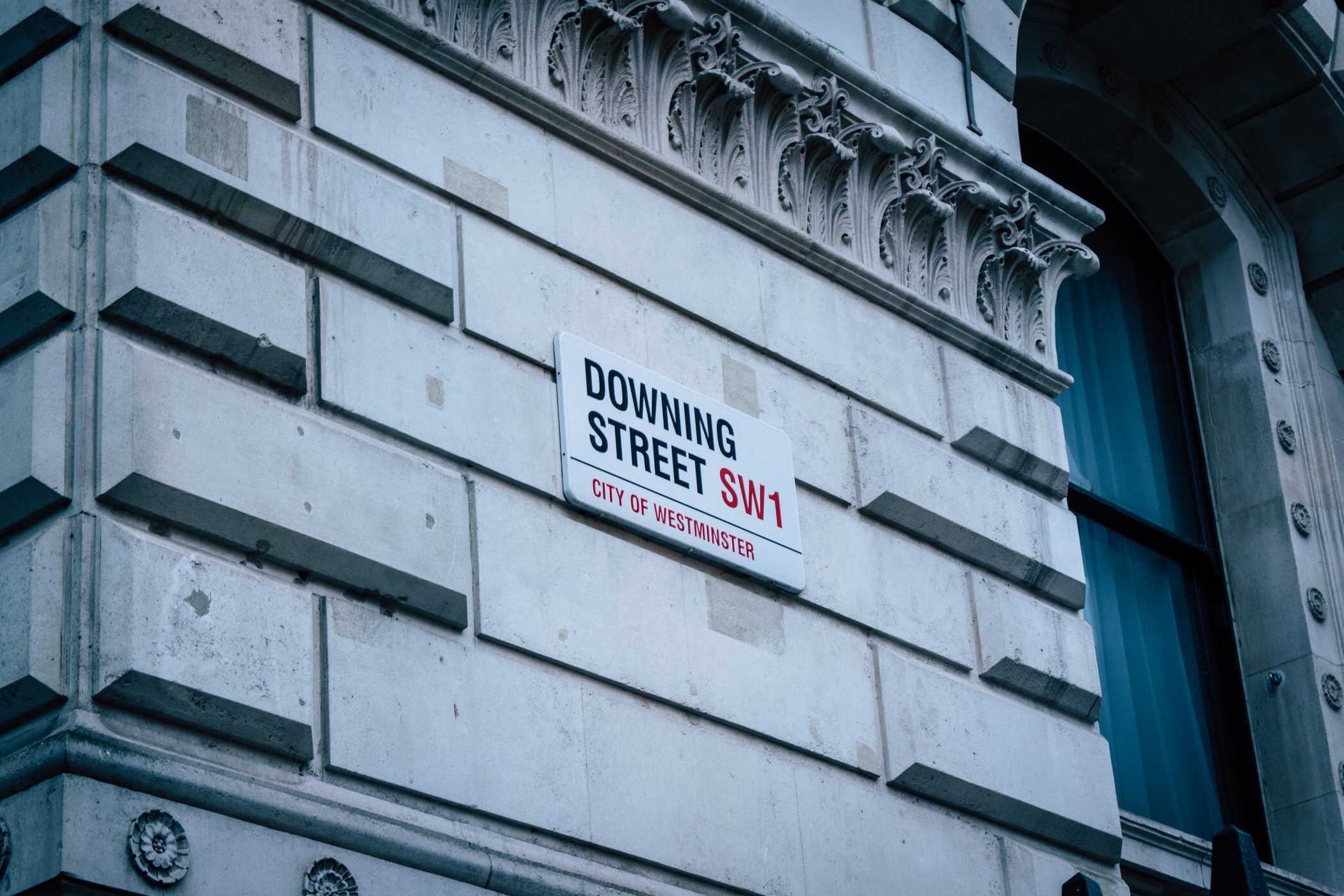
In August 2019, a story which was widely reported in the British media, caught my attention: the abrupt dismissal of Sonia Khan as a special adviser (or ‘Spad’) with the UK Government. Ms Khan had worked for two previous Chancellors of the Exchequer (the UK Finance Minister). She was summoned to a meeting with Dominic Cummings, the UK Prime Minister’s top political adviser and sacked. Ms Khan was ordered to surrender her security passes and escorted from Downing Street by an armed Police Officer. All in all, it was a very undignified and humiliating exit for Ms Khan. Needless to say, Mr Cummings did not follow any disciplinary procedure when he made the decision to give Ms Khan her marching orders.

This decision was far from wise and Ms Khan has an extremely strong case for unfair dismissal in terms of the Employment Rights Act 1996 (she has the necessary continuous service of more than 2 years required to bring such a claim and no warnings were issued to her).

This affair led to me think about humiliating dismissals by employers and whether the affected employee could claim damages for the manner of their sacking? In other words, can the sacked employee claim that their feelings were injured as a result of the way in which they s/he was dismissed?

Links to articles about Sonia Khan’s dismissal can be found below:

https://www.independent.co.uk/news/uk/politics/sajid-javid-dominic-cummings-fires-special-adviser-johnson-brexit-sonia-khan-a9085056.html

https://www.standard.co.uk/news/politics/no-10-must-pay-sajid-javids-fired-aide-tens-of-thousands-in-compensation-a4232216.html

Injury to feelings in discrimination claims

When discussing discrimination claims in terms of the Equality Act 2010 (primarily), I often stress the issue of injury to feelings as an element that will be included in the calculation of a final award by an Employment Tribunal.

In several Blogs (please see the end of this article for the relevant links), I have discussed the importance of the Vento Guidelines or Scale.

In Vento v Chief Constable of West Yorkshire Police (No 2) [2003] EWCA Civ 1871 compensation limits of £15–25,000 were laid down in situations where injury to feelings was involved in cases involving sex and race discrimination. In Sturdy v Leeds Teaching Hospitals NHS Trust ET Case 1803960/2007 14th and 15th April 2009 the Employment Tribunal decided that, since Vento had been decided in 2003, a higher rate of inflation had to be considered hence the increased award made to a victim of age discrimination.

These awards for injury or hurt feelings have now become known as the Vento Guidelines and in Da’Bell v National Society for the Prevention of Cruelty to Children (2009) EAT/0227/09, the Employment Appeal Tribunal (sitting for England and Wales) brought them into line with inflation.

Since Da’Bell, the Vento guidelines are usually updated annually in line with inflation.

The current bands or scales (from 6 April 2020) are:

♦ £900 to £9,000 for the lower band

♦ £9,000 to £27,000 for the middle band

♦ £27,000 to £45,000 for the top band

What’s the situation with unfair dismissal claims?

In Dunnachie v Kingston upon Hull City Council [2004] EWCA Civ 84, the English Court of Appeal set the cat amongst the pigeons when it stated that a compensatory award for unfair dismissal could also include injury to an employee’s feelings. The Court of Appeal was clearly relying upon an obiter remark made by Lord Hoffman during the decision of the House of Lords in Johnson v Unisys [2001] UKHL 13.

As far back as the decision by the short lived National Industrial Relations Court (1971-1974) in Norton Tool Co Ltd v Tewson [1972] EW Misc 1, the position was quite clear: the compensatory award in unfair dismissal claims did not include injury to an employee’s feelings in connection with the manner of the dismissal suffered by him or her.

Lord Hoffman’s obiter statement and the decision by the Court of Appeal in Dunnachie appeared to place this principle in considerable jeopardy and opened the door to what could have been a potentially significant, new development in unfair dismissal case law. Clearly, it would be advantageous for the House of Lords to provide a definitive ruling on this matter.

Subsequently, Kingston upon Hull City Council appealed against the judgement of the Court of Appeal to the House of Lords. 

On Thursday 15th July 2004, the House of Lords delivered its judgement in this case ([2004] UKHL 36). Their Lordships (Lord Hoffman amongst them – ironically) killed off any idea that an award for unfair dismissal could include injury to an employee’s feelings for the manner of the dismissal.

Compensation, therefore, in unfair dismissal claims will be concerned with the employee’s economic losses only.

Conclusion

The decision of the House of Lords in Dunnachie v Kingston upon Hull City Council [2004] UKHL 36 was and remains a clear restatement of the orthodox position as set down by Sir John Donaldson all those years ago in Norton Tool Co Ltd.

As Lord Steyn, one of the Law Lords, remarked in Dunnachie:

“On the other hand, the correctness of the Norton Tool decision was not an issue in Johnson v Unisys. It is true that there were references by both sides in the oral argument to Norton Tool. But the House heard no adversarial argument exploring the correctness or otherwise of that decision. In these circumstances a definitive overruling of a decision which had stood for nearly 30 years would have been a little surprising.”

In fact, Lord Hoffman’s observation (and it was nothing more than observation we are now assured) could in no way be interpreted as an attempt to overturn a long-standing and well-established legal principle. Lord Hoffman, in Johnson v Unisys [2001], was not “inviting the House to overrule a longstanding decision on a point of statutory construction that was not in issue and not explored in opposing arguments.” The statement by Lord Hoffman was clearly obiter dictum i.e. things said by the way which do not form part of the actual court’s judgement and that was the end of the matter.

Related Blog Articles:

https://seancrossansscotslaw.com/2019/02/14/hurt-feelings/

https://seancrossansscotslaw.com/2020/02/09/bad-hair-day/

https://seancrossansscotslaw.com/2019/04/23/exclusion/

https://seancrossansscotslaw.com/2019/04/10/everyday-experiences-of-racism/

https://seancrossansscotslaw.com/2019/02/22/sticks-and-stones-may-break-my-bones-but-names-will-never-hurt-me/

Copyright Seán J Crossan, 8 April 2020

Pay day?

Photo by Jordan Rowland on Unsplash

One of the most important common law duties that an employer has under the contract of employment is to pay wages to the employee.

This duty, of course, is contingent upon the employee carrying out his or her side of the bargain i.e. performing their contractual duties.

The right to be paid fully and on time is a basic right of any employee. Failure by employers to pay wages (wholly or partially) or to delay payment is a serious contractual breach.

Historically, employers could exploit employees by paying them in vouchers or other commodities. Often, these vouchers could be exchanged only in the factory shop. This led Parliament to pass the Truck Acts to prevent such abuses.

Sections 13-27 of the Employment Rights Act 1996 (which replaced the Wages Act 1986) give employees some very important rights as regards the payment of wages.

The National Minimum Wage Act 1998 (and the associated statutory instruments) and the Equality Act 2010 also contain important provisions about wages and other contractual benefits.

There are a number of key issues regarding the payment of wages:

  • All employees are entitled to an individual written pay statement (whether a hard or electronic copy)
  • The written pay statement must contain certain information
  • Pay slips/statements must be given on or before the pay date
  • Fixed pay deductions must be shown with detailed amounts and reasons for the deductions e.g. Tax, pensions and national insurance
  • Part time workers must get same rate as full time workers (on a pro rata basis)
  • Most workers entitled to be paid the National Minimum Wage or the National Minimum Living Wage (if over age 25) (NMW)
  • Some workers under age 19 may be entitled to the apprentice rate

Most workers (please note not just employees) are entitled to receive the NMW i.e. over school leaving age. NMW rates are reviewed each year by the Low Pay Commission and changes are usually announced from 1 April each year.

It is a criminal offence not to pay workers the NMW and they can also take (civil) legal action before an Employment Tribunal (or Industrial Tribunal in Northern Ireland) in order to assert this important statutory right.

There are certain individuals who are not entitled to receive the NMW:

  • Members of the Armed Forces
  • Genuinely self-employed persons
  • Prisoners
  • Volunteers
  • Students doing work placements as part of their studies
  • Workers on certain training schemes
  • Members of religious communities
  • Share fishermen

Pay deductions?

Can be lawful when made by employers …

… but in certain, limited circumstances only.

When exactly are deductions from pay lawful?:

  • Required or authorised by legislation (e.g. income tax or national insurance deductions);
  • It is authorised by the worker’s contract – provided the worker has been given a written copy of the relevant terms or a written explanation of them before it is made;
  • The consent of the worker has been obtained in writing before deduction is made.

Extra protection exists for individuals working in the retail sector making it illegal for employers to deduct more than 10% from the gross amount of any payment of wages (except the final payment on termination of employment).

Employees can take a claim to an Employment Tribunal for unpaid wages or unauthorised deductions from wages. They must do so within 3 months (minus 1 day) from the date that wages should have been paid or, if the deduction is an ongoing one, the time limit runs from the date of the last relevant deduction.

An example of a claim for unpaid wages can be seen below:

Riyad Mahrez and wife ordered to pay former nanny

Equal Pay

Regular readers of the Blog will be aware of the provisions of the Equality Act 2010 in relation to pay and contractual benefits. It will amount to unlawful sex discrimination if an employer pays a female worker less than her male comparator if they are doing:

  • Like work
  • Work of equal value
  • Work rated equivalent

Sick Pay

Some employees may be entitled to receive pay from the employer while absent from work due to ill health e.g. 6 months’ full pay & then 6 months’ half pay. An example of this can be seen below:

Statutory Sick Pay (SSP)

This is relevant in situations where employees are not entitled to receive contractual sick pay. Pre (and probably post Coronavirus crisis) it was payable from the 4th day of sickness absence only. Since the outbreak of the virus, statutory sick pay can paid from the first day of absence for those who either are infected with the virus or are self-isolating.

Contractual sick pay is often much more generous than SSP

2020: £95.85 per week from 6 April (compared to £94.25 SSP in 2019) which is payable for up to 28 weeks.

To be eligible for SSP, the claimant must be an employee earning at least £120 (before tax) per week.

Employees wishing to claim SSP submit a claim in writing (if requested) to their employer who may set a deadline for claims. If the employee doesn’t qualify for SSP, s/he may be eligible for Employment and Support Allowance.

Holiday Pay

As per the Working Time Regulations 1998 (as amended), workers entitled to 5.6 weeks paid holiday entitlement (usually translates into 28 days) per year (Bank and public holidays can be included in this figure).

Some workers do far better in terms of holiday entitlement e.g. teachers and lecturers.

Part-time workers get holiday leave on a pro rata basis: a worker works 3 days a week will have their entitlement calculated by multiplying 3 by 5.6 which comes to 16.8 days of annual paid leave.

Employers usually nominate a date in the year when accrual of holiday pay/entitlement begins e.g. 1 September to 31st August each year. If employees leave during the holiday year, their accrued holiday pay will be part of any final payment they receive.

Holiday entitlement means that workers have the right to:

  • get paid for leave that they build up (‘accrue’) in respect of holiday entitlement during maternity, paternity and adoption leave
  • build up holiday entitlement while off work sick
  • choose to take holiday(s) instead of sick leave.

Guarantee payments

Lay-offs & short-time working

Employers can ask you to stay at home or take unpaid leave (lay-offs/short time working) if there’s not enough work for you as an alternative to making redundancies. There should be a clause in the contract of employment addressing such a contingency.

Employees are entitled to guarantee pay during lay-off or short-time working. The maximum which can be paid is £30 a day for 5 days in any 3-month period – so a maximum of £150 can be paid to the employee in question.

If the employee usually earn less than £30 a day, s/he will get their normal daily rate. Part-time employees will be paid on a pro rata basis.

How long can employees be laid-off/placed on short-time working?

There’s no limit for how long employees can be laid-off or put on short-time. They could apply for redundancy and claim redundancy pay if the lay-off/short-term working period has been:

  • 4 weeks in a row
  • 6 weeks in a 13-week period

Eligibility for statutory lay-off pay

To be eligible, employees must:

  • have been employed continuously for 1 month (includes part-time workers)
  • reasonably make sure you’re available for work
  • not refuse any reasonable alternative work (including work not in the contract)
  • Not have been laid-off because of industrial action
  • Employer may have their own guarantee pay scheme
  • It can’t be less than the statutory arrangements.
  • If you get employer’s payments, you don’t get statutory pay in addition to this
  • Failure to receive guarantee payments can give rise to Employment Tribunal claims.

This is an extremely relevant issue with Coronavirus, but many employers are choosing to take advantage of the UK Government’s Furlough Scheme whereby the State meets 80% of the cost of an employee’s wages because the business is prevented from trading.

Redundancy payments

If an employee is being made redundant, s/he may be entitled to receive a statutory redundancy payment. To be eligible for such a payment, employees must have been employed continuously for more than 2 years.

The current weekly pay used to calculate redundancy payments is £525.

Employees will receive:

  • half a week’s pay for each full year that they were employed under 22 years old
  • one week’s pay for each full year they were employed between 22 and 40 years old
  • one and half week’s pay for each full year they were employed from age 41 or older

Redundancy payments are capped at £525 a week (£508 if you were made redundant before 6 April 2019).

Please find below a link which helps employees facing redundancy to calculate their redundancy payment:

https://www.gov.uk/calculate-your-redundancy-pay

Family friendly payments

Employers also have to be mindful of the following issues:

  • Paternity pay
  • Maternity Pay
  • Shared Parental Pay
  • Maternity Allowance
  • Adoption Pay
  • Bereavement Pay

Employers can easily keep up to date with the statutory rates for family friendly payments by using the link below on the UK Government’s website:

https://www.gov.uk/maternity-paternity-calculator

What happens if the employer becomes insolvent and goes into liquidation?

Ultimately, the State will pay employees their wages, redundancy pay, holiday pay and unpaid commission that they would have been owed. This why the UK Government maintains a social security fund supported by national insurance contributions.

An example of a UK business forced into liquidation can be seen below:

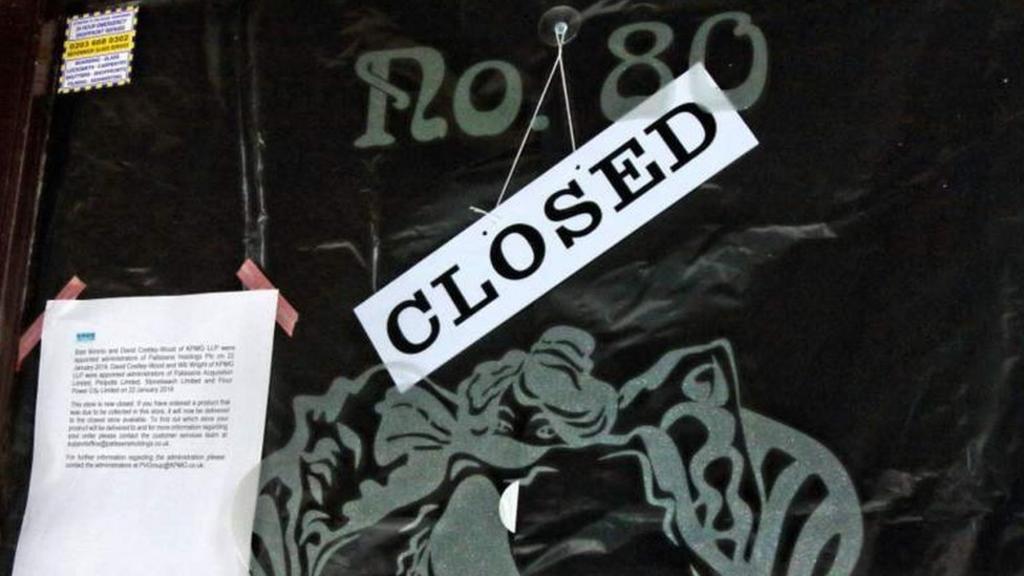
Patisserie Valerie: Redundant staff ‘not receiving final pay’

Up to 900 workers lost their jobs when administrators closed 70 of the cafe chain’s outlets. Disclaimer:

Conclusion

Payment of wages is one of the most important duties that an employer must fulfil. It is also an area which is highly regulated by law, for example:

  • The common law
  • The Employment Rights Act 1996
  • The Working Time Regulations 1998
  • The National Minimum Wage Act 1998
  • The Equality Act 2010
  • Family friendly legislation e.g. adoption, bereavement, maternity, paternity

Failure by an employer to pay an employee (and workers) their wages and other entitlements can lead to the possibility of claims being submitted to an Employment Tribunal. The basic advice to employers is make sure you stay on top of this important area of employment law because it changes on a regular basis and ignorance of the law is no excuse.

Related Blog Articles:

https://seancrossansscotslaw.com/2020/01/30/2020-same-old-sexism-yes-equal-pay-again/

https://seancrossansscotslaw.com/2020/01/10/new-year-same-old-story/

https://seancrossansscotslaw.com/2019/05/13/inequality-in-the-uk/

https://seancrossansscotslaw.com/2019/03/31/the-gender-pay-gap/

https://seancrossansscotslaw.com/2019/04/05/the-gender-pay-gap-part-2/

https://seancrossansscotslaw.com/2019/06/26/ouch/

https://seancrossansscotslaw.com/2019/06/20/sexism-in-the-uk/

Thttps://seancrossansscotslaw.com/2019/04/30/paternity-leave/

Copyright Seán J Crossan, 5 April 2020

Gender recognition reform postponed

Photo by Sharon McCutcheon on Unsplash

The Coronavirus continues to create chaos – legally speaking.

The latest casualty is the Scottish Government’s promised review of the Gender Recognition Act 2004. This exercise will now be postponed for the foreseeable future.

On 20 June 2019, the Scottish Government stated that, following a consultation in 2018, it would be bringing forward a Gender Recognition Bill in order to reform the current Gender Recognition Act 2004.

This exercise was always dogged by a lack of clarity on the Government’s part. Shirley-Anne Sommerville MSP, the Government Minister who had responsibility for this issue had publicly admitted that there was still a need to build a “maximum consensus” before things become clearer. Code for sorting out divisions over the issue within the ranks of the Scottish National Party.

A link to information about the proposed Bill can be found below:

https://www.gov.scot/publications/review-of-gender-recognition-act-2004/

The Gender Recognition Act 2004

In April 2005, the Gender Recognition Act 2004 came into force. This Act, which received the Royal Assent on 1 July 2004, currently provides people who have undergone gender reassignment procedures with legal recognition in relation to their newly acquired gender identity. The legislation applies across the United Kingdom and was passed by the Westminster Parliament.

Legal recognition of a person’s decision to reassign the sex or gender they have had from birth will follow from the issuing of a full gender recognition certificate by a Gender Recognition Panel. The individual applying for such a certificate must be able to satisfy certain criteria – the most important criterion will centre around the submission of medical evidence of physiological changes by the applicant.

Since the introduction of the Act, it has long been the case, therefore, that it will amount be unlawful discrimination to treat a person less favourably because s/he has undergone a a process of gender reassignment. The Equality Act 2010, of course, also bolsters legal protection for transgender people.

The Scottish Government’s proposed Gender Recognition Bill

The proposed Bill was controversial because some Scottish National Party MSPs and MPs (e.g. Joanna Cherry QC, Ash Denham, Kate Forbes and Lindsay Martin) are concerned about its main objective: that an individual who wishes to undergo gender reassignment will no longer have to provide medical evidence to the Gender Recognition Panel. The Panel currently determines the gender or sex of individuals who wish to undergo reassignment by issuing them with a certificate:

https://www.scottishlegal.com/article/joanna-cherry-qc-signs-letter-opposing-rush-to-reform-gender-law

https://www.bbc.co.uk/news/uk-scotland-scotland-politics-48037152

Under the Scottish Government’s proposals, an individual could effectively self-identify as a person of the opposite sex without having to undergo invasive medical procedures and provide the evidence of this fact in order to obtain recognition from the Panel.

Under the proposed legislation, an individual wishing to undergo gender reassignment would have to have met the following criteria:

  • A statutory declaration to the effect that they have decided to change gender or sex;
  • The declaration will contain a statement that the individual has been living as a man or a woman for at a minimum of 3 months;
  • The individual will have to undertake a compulsory or mandatory period of 3 months to reflect on the decision to undergo gender reassignment (no gender recognition certificate will be issued until this period has been completed).

Two academics at the University of Edinburgh, Dr Kath Murray and Lucy Hunter Blackburn have also been extremely critical about the Scottish Government’s approach to transgender rights generally.

A link to an article in The Holyrood Magazine discussing the research conducted by the two academics can be found below:

https://www.holyrood.com/articles/news/scottish-trans-policy-detrimental-women-and-girls

For the time being all of the above is going to be purely academic.

Related Blog articles:

https://seancrossansscotslaw.com/2019/07/17/whos-the-daddy/

https://seancrossansscotslaw.com/2019/09/26/im-not-your-daddy/

https://seancrossansscotslaw.com/2019/06/25/gender-neutral/

https://seancrossansscotslaw.com/2020/02/18/safe-spaces/

https://seancrossansscotslaw.com/2019/12/21/say-what-you-want/

https://seancrossansscotslaw.com/2020/02/16/say-what-you-want-continued/

Copyright Seán J Crossan, 1 April 2020

Right to refuse?

Thanks to @beamomatic9000 for making this photo available freely on @unsplash 🎁

The COVID-19 crisis continues to throw up some interesting legal questions e.g. employment rights, EU freedom of movement rights, frustration of contract etc.

One area which seems somewhat overlooked is in relation to the actions of many retailers – principally supermarkets and grocery stores – which have been restricting sales of particular items. The items in question include soap, hand gel and sanitiser, bleach, anti-septic wipes, paper towels and even toilet rolls.

The COVID-19 situation has led to panic buying of these essential hygiene items and supermarkets have imposed clear limits on their sale.

Can supermarkets and other retailers impose these sorts of restrictions?

This, of course, takes us back to the basic rules governing the formation of a contract. Retailers are especially guilty when applying the term ‘offer’ to the goods which they stock. It is no such thing: goods on the shelves; on display; or in shop windows are invitations to treat. It is the the customer who is being invited to make the offer (see Fisher v Bell [1961] 3 ALL ER 731 where the English Court of Appeal ruled that a knife displayed in a shop window was not being offered for sale, it was merely an invitation to treat. Lord Parker, the Chief Justice being particularly emphatic on this point).

In the seminal case of Pharmaceutical Society of Great Britain v Boots Cash Chemists [1953] 1 QB 401, the judges of the English Court of Appeal helpfully distinguished between an offer and an invitation to treat. The case arose as a result of a provision in the Pharmacy and Poisons Act 1933 which stipulated that the sale of certain medicines must take place in the presence of a registered pharmacist.

Boots Chemists operated a self service system whereby it’s customers were able to place the medicines which they wished to purchase in their shopping baskets. The key question was whether Boots was breaking the law by allowing customers to do this. In other words, was the sale completed when the customer placed the medicines in their baskets? Now, if goods on shelves were to be regarded as ‘offers’, Boots would indeed be breaking the law because customers would be deemed to be ‘accepting’ these ‘offers’ by placing the goods in question in their baskets.

If, on the other hand, the sale was concluded elsewhere i.e. at the cash register where there was always a registered pharmacist on duty, Boots would be fully complying with the Act.

The Court of Appeal concluded that it was the customer who made the offer by presenting the goods at the cash register. The sales assistant (properly supervised by the pharmacist) could conclude matters i.e. accept the offer by ringing the sale up on the cash register. Furthermore, it was always open to the assistant to refuse the customer’s offer. Goods on shelves were, therefore, merely an invitation to treat.

In more normal times, a customer’s offer would and should be refused by retailers because they are an underage person who is attempting to purchase e.g. alcohol, cigarettes or video games or DVDs which are age specific.

So, in this way, retailers are generally within their rights to impose strict limits on the numbers of certain items that customers wish to purchase. The customer can offer to buy 20 bottles of hand gel or sanitiser, but the store will have the right to refuse.

Presently, retailers are putting these sorts of restrictions into place in order to protect and promote public health by giving as many customers, as possible, reasonable access to basic hygiene products. If we co-opt the language of the Equality Act 2010, retailers are putting restrictions in place because these are a proportionate means of achieving a legitimate aim. So, hopefully, such restrictions – if fairly implemented and monitored – will not be subject to a legal challenge on grounds of discrimination.

Related Blog Articles:

https://seancrossansscotslaw.com/2019/12/06/tis-the-season-of-special-offers/

https://seancrossansscotslaw.com/2019/03/27/special-offers/

https://seancrossansscotslaw.com/2019/03/14/too-good-to-be-true/

Copyright Seán J Crossan, 26 March 2020

Welcome to Austria?

Photo by rashid khreiss on Unsplash

Willkomen (welcome) to Austria? Not if you’re Italian or someone travelling across the Austro-Italian frontier last weekend.

Why? The dramatic escalation of Coronavirus (COVID-19) outbreaks in Italy is the short answer.

The Austrian Government is very nervous about this and took emergency action by, arguably, suspending free movement provisions – if only briefly. On Sunday 23 February 2020, the Austrian authorities refused entry to its territory of a train coming from Italy for several hours. The Italian railway authorities had informed their Austrian counterparts that at least two of the passengers were exhibiting signs of a fever. The Austrians were taking no chances. The train was eventually permitted to cross the frontier.

The crisis is far from over with controls between Austria and Italy being currently considered by the Government in Vienna to deal with this public health issue.

A link to an article about this incident can be found below:

https://www.dw.com/en/coronavirus-austria-briefly-halts-trains-from-italy-over-covid-19-concerns/a-52493063

What are the legal implications of an EU member state suspending freedom of movement rules?

Italy and Austria are both member states of the European Union and free movement of persons is a key provision or fundamental freedom of the EU’s Single Market. Both countries are also part of the Schengen Agreement (from which the UK opted out whilst in the EU) which allows visa free travel between participating states. This Agreement has seen the abolition of frontier controls, to a a greater or larger extent, in many parts of Europe.

The imposition of frontier controls between EU member states is not a measure which is considered lightly.

Freedom of movement is a right which is fundamentally based on a person holding EU citizenship (or being related to a person who has citizenship). As Article 20 of the Treaty on the Functioning of the European Union (TFEU) which establishes the concept of citizenship states:

Citizenship of the Union is hereby established. Every person holding the nationality of a Member State shall be a citizen of the Union. Citizenship of the Union shall be additional to and not replace national citizenship.

Article 21 TFEU declares in the following terms:

Every citizen of the [European] Union shall have the right to move and reside freely within the territory of the Member States, subject to the limitations and conditions laid down in the Treaties and by the measures adopted to give them effect.”

These freedom of movement provisions would be meaningless and ineffective if EU citizens faced discrimination on the grounds of their nationality in the host member state. Article 18 of the TFEU prohibits discrimination on the grounds of nationality (see Case 197/84 Steinhauser v City of Biarritz).

According to Article 45(5) TFEU, the free movement provisions can be derogated from i.e. disregarded on the following grounds:

  • Public security
  • Public policy
  • Public health

For its part, the Italian Government has since publicly stated that it will not be reintroducing frontier controls as an emergency measure to combat the spread of the Coronavirus:

https://www.schengenvisainfo.com/news/italy-refuses-to-suspend-schengen-agreement-amid-coronavirus-outbreak/

Attempts by member states to derogate or withdraw from the free movement provisions will not be automatically approved and the affected individuals will always be able to challenge such restrictions in the national courts or, ultimately, before the Court of Justice of the European Union (CJEU) (see, for example, Cases 115-116/81 Adoui & Cornaille; Case 41/74 Van Duyn v Home Office; Case 36/75 Rutili v Minister of Interior).

In 2009, Geert Wilders, the far right Dutch politician was refused entry to the UK because the British Government argued that his presence in the country could undermine public safety by harming race and cross-community relationships. Wilders had made a short film, Fitna, which was highly critical of Islam. He had intended to present a showing of his film at the Westminster Parliament.

Please see a link below to an article in The Guardian about the incident involving Wilders’ attempted visit to the UK:

https://www.theguardian.com/world/2009/feb/12/far-right-dutch-mp-ban-islam

The freedom of movement as originally given to EU (EEC) citizens in the Treaty of Rome had an emphasis on permitting free movement of workers and other economically active individuals. This was perhaps understandable given the labour shortages in certain EU/EEC member states immediately after the Second World War. The postwar economies of France and Belgium, in particular, benefited from hundreds of thousands of economic migrants coming from their partner state, Italy.

Although the UK was not, at this point, a member state, it faced many of the same challenges as the Six EU/EEC Founding Members, but British recruitment of labour would centre on the former (and existing) colonies of its Empire e.g. from the Caribbean (the so called ‘Windrush Generation’).

Some of the most important decisions of the Court of Justice of the European Union (CJEU) about free movement were about removing the barriers which prevented foreign (EU/EEC) nationals working or providing services in another member state (see Case 59/85 Netherlands v Reed (workers); Case 2/74 Reyners v Belgium (services); & Case 246/89 Commission v UK (Nationality of Fishermen) (establishment)).

Under the original Treaty of Rome (now to be found in the TFEU), EU citizens could take advantage of the free movement provisions by going to other member states to receive services: education, health and tourism (see Case 286/82 Luisi v Ministero del Tesero) – and many did just that.

Later, the CJEU would cement these rights by permitting family members of workers to claim entitlement to the free movement provisions of the Treaty of Rome.

That said, the freedom of movement provisions really only began to take on the dimensions of European citizenship as recently as the early 1990s after the stormy passage of the Maastricht Treaty (or the Treaty on European Union).

Underpinning the rights of free movement for individuals which are contained in primary legislation (the European Treaties) and decisions of the CJEU is the Citizens’ Directive (Directive 2004/38). This Directive really spells out (in a concrete way) the rights which EU citizens enjoy, namely, entry, residency, exit and the right to pursue employment opportunities in other member states.

Directive 2004/38 (Articles 4-14) also updated the older Directive 1612/68 (Articles 1-5) which guaranteed equal treatment and non-discrimination in employment to EU nationals residing and working in another member state.

Conclusion

The EU’s freedom of movement rules for its citizens and their dependants is a part of its fundamental law. A member state which derogates or withdraws from these rights does not do so for flimsy or superficial reasons. The TFEU does permit member states to suspend free movement provisions, but such action is always subject to the threat of possible legal action by the affected individuals; fellow member states and enforcement action by the European Commission.

Copyright Seán J Crossan, 25 February 2020

Safe spaces?

Photo by Sanmeet Chahil on Unsplash

Another day in the toxic debate over proposals to liberalise the Gender Recognition Act 2004. Yesterday’s blog entry (Hate crime?) addressed the issue of limits on freedom of speech and expression in relation to extending transgender rights.

Today, the UK media is focusing on remarks made by Labour leadership contender, Rebecca Long-Bailey MP. In an interview with the BBC’s Andrew Marr, Ms Long-Bailey expressed her support for changes to the current Gender Recognition Act which would permit transgender women to gain access to institutions such as refuges for women who have experienced domestic violence at the hands of men.

As Mr Justice Knowles acknowledged in Miller v (1) The College of Policing (2) Chief Constable of Humberside [2020] EWHC 225 (Admin), the debate over transgender rights can be summarised as follows:

On one side of the debate there are those who are concerned that such an approach will carry risks for women because, for instance, it might make it easier for trans women (ie, those born biologically male but who identify as female) to use single-sex spaces such as women’s prisons, women’s changing rooms and women’s refuges. On the other side, there are those who consider it of paramount importance for trans individuals to be able more easily to obtain formal legal recognition of the gender with which they identify.

Knowles J went on to remark:

I should make two things clear at the outset. Firstly, I am not concerned with the merits of the transgender debate. The issues are obviously complex. As I observed during the hearing, the legal status and rights of transgender people are a matter for Parliament and not the courts. Second, the nature of the debate is such that even the use of words such as ‘men’ and ‘women’ is difficult. Where those words, or related words, are used in this judgment, I am referring to individuals whose biological sex is as determined by their chromosomes, irrespective of the gender with which they identify. This use of language is not intended in any way to diminish the views and experience of those who identify as female notwithstanding that their biological sex is male (and vice versa), or to call their rights into question.

A group within the British Labour Party, Labour Campaign for Trans Rights, has published a 12 point charter to push through changes to UK equality laws. Other women’s groups, such Women’s Place UK and the LGB Alliance, are bitterly opposed to this campaign.

Long-Bailey admitted that her position could set her at odds with many female members of the Labour Party who are deeply resistant to such developments. Many feminist opponents of reform to the current gender recognition rules have been given the acronym, TERF, or Trans- exclusionary radical feminists.

Gender reassignment is a protected characteristic in terms of the Equality Act 2010, but the legislation exempts women only refuges which currently exclude transgender women (i.e. those who were born male, but have undergone gender reassignment to become female). Although excluding transgender women would normally be regarded as an example of direct discrimination in terms of Section 13 of the Act, Parliament has provided the defence of objective justification. This means that permitting women only spaces in this instance – caring for the female victims of male domestic violence – is an example of a proportionate means of achieving a legitimate aim.

Conclusion

Much of the opposition to reform of the Gender Recognition Act 2004 appears to centre around proposals, in both England and Scotland, to permit individuals to self-identify in terms of their chosen gender without the need to go through physical changes. At the moment, anyone wishing to change gender must obtain a gender recognition certificate which will only be granted after the conclusion of the appropriate medical procedures.

It will, therefore, be for legislators in the UK and Scottish Parliaments to determine how far reforms to the Gender Recognition Act 2004 and, by extension the Equality Act 2010, will go. In the months to come, expect plenty of passionate arguments on both sides of the debate to be aired publicly.

A link to an article in The Independent discussing Ms Long-Bailey’s interview with Andrew Marr can be found below:

https://edition.independent.co.uk/editions/uk.co.independent.issue.170220/data/9338316/index.html

Related Blog Article:

https://seancrossansscotslaw.com/2020/02/16/say-what-you-want-continued/

Copyright Seán J Crossan, 17 February 2020

You’ve got (e)mail! … or will I ever get out of this place?!!!

Photo by Kon Karampelas on Unsplash

Email can be a wonderful form of communication. It can also be, quite frankly, something of a curse for many employees and workers. Essentially, you’re never too far away from the work-place and bosses/clients/service users expect to receive an instant reply.

The expectation by bosses and managers that employees and workers should be monitoring their emails (constantly) does tend to be a contributory factor in the rising number of cases of work-related stress. Employers: please note that you have a duty of care to provide a safe working environment and part of this obligation includes monitoring unacceptably high levels of stress in the work-place.

There is a perception (rightly or wrongly) that UK employees suffer from some of the longest working hours in Europe. In 2019, data from the EU’s Eurostat Agency seemed to support this contention but, interestingly, the Organisation for Economic Co-operation and Development (OECD) took a more sceptical approach by questioning the method of data collection (the old adage about lies, damned lies and statistics springs to mind here).

Links to a BBC article about this issue and the Eurostat figures (and OECD response) can be found below:

https://www.bbc.co.uk/news/uk-politics-49795179

https://ec.europa.eu/eurostat/databrowser/view/tps00071/default/table?lang=en

https://www.oecd-ilibrary.org/economics/international-productivity-gaps_5b43c728-en;jsessionid=c_2XYmRNoOJLRgHdT0TJPQqs.ip-10-240-5-115

UK employees are, of course, entitled to receive a written statement of the main terms and particulars of their employment as per Section 1 of the Employment Rights Act 1996. This statement must contain a provision which addresses the employee’s normal weekly working hours.

Despite Brexit (which did occur on 31 January 2020 – in case you missed it), the UK is still following EU rules until the end of this year … One EU Law with particular relevance to this debate is the Working Time Directive ((2003/88/EC) which was transposed into UK employment law by way of the Working Time Regulations 1998.

In theory, the Directive and the Regulations cap the number of hours that employees (and workers) can work at 48 hours per week (technical point: this figure can be averaged out over a reference period – 17 weeks normally). Crucially, however, UK employees and workers can opt out of the 48 hour maximum by signing a declaration (opt-out) that they wish to do so. If they change their minds, they are entitled to do so by giving the employer a minimum seven days’ notice (or in certain cases – 3 months) of this intention.

The legal rules on working hours are all very well in theory, but what about the culture of organisations which may (at an informal level) promote the idea that long hours spent at work (or just working) are a sure fire way to get ahead in your career?

This is where the influence of email (and other instant messaging services) can be quite insidious (pernicious even?). Employees feel under pressure to deal with this work load at weekends, during holidays and evenings. Parents of young children and carers of elderly relatives, who may have negotiated flexible working arrangements, may be under acute pressure to deal with emails etc when they are outside the work-place. In this way, the work-place becomes like the Eagles’ song, Hotel California (‘You can check out any time you like, But you can never leave!‘).

Interestingly, in some of our ex-EU partner countries, there have been initiatives at both the organisational and legal level to curb the smothering influence of email outside the work-place.

There is a real danger here for employers that, by encouraging employee use of email outside working hours, it may constitute a policy, criterion or practice (PCP) – no matter how informal – which could open themselves up to accusations of indirect discrimination on grounds of sex (women are still the primary carers for children and elderly dependents) and disability (by reason of a person’s association with a disabled person) in terms of Section 19 of the Equality Act 2010.

Furthermore, employees might feel that they are under constant surveillance by the employer because it becomes easier to keep tabs on individuals when they are logging in and out of the company’s IT network. For employers, this could lead to legal challenges from employees who are concerned that the right to privacy and family life as enshrined in Article 8 of the European Convention on Human Rights has been violated.

Is there a better way of doing things? Yes, is the short answer.

In 2011, the German multinational car manufacturer, Volkswagen (VW) introduced major changes to its working practices by curbing the use of emails when employees were off duty. This agreement was negotiated by the company and trade union/labour organisations.

In France, in August 2016, they went further and passed the El Khomri Law (named after the French Government Minister for Labour who introduced the proposal). This law gave employees a right to disconnect from email. In one particular case which involved the French arm of the British company, Rentokil, an employee was awarded €60,000 because his right to disconnect from email had been breached.

Links to stories about the changes to VW’s working practices and the French El Khomri Law can be found below:

https://www.telegraph.co.uk/news/2018/08/01/british-firm-ordered-pay-60000-french-court-breaching-employees/

The debate about the right of employees to disconnect from email – whether this is negotiated via some sort of collective agreement or underpinned by law – now seems to have penetrated the British consciousness. Rebecca Long-Bailey MP, one of the leading contenders for leadership of the British Labour Party has thrown her hat into the ring by backing a trade union campaign to introduce a legal right to disconnect in the UK.

One small problem: the Labour Party lost the last British General Election on 12 December 2019 to the Conservatives and is, therefore, in no position to deliver. Over to you Prime Minister Johnson? (a man fond of the populist gesture).

A link to an article in The Independent about Rebecca Long Bailey’s support for the trade union campaign to introduce a law guaranteeing the right to disconnect can be found below:

https://edition.independent.co.uk/editions/uk.co.independent.issue.110220/data/9327866/index.html

Related Blog Articles:

https://seancrossansscotslaw.com/2019/10/23/a-hard-days-night/

https://seancrossansscotslaw.com/2019/02/25/the-work-life-balance-or-utopia-reimagined/

https://seancrossansscotslaw.com/2019/02/22/stress-kills/

https://seancrossansscotslaw.com/2019/02/11/employment-contracts-read-them-or-weep/

Copyright Seán J Crossan, 11 February 2020

Swiss surprise?

Photo by Chris Johnson on Unsplash

Last week I wrote a Blog about Stonewall’s list of 100 most inclusive UK employers for LGBTI people. The article summarised the advances in terms of the range of legal protection that the LGBTI communities now enjoy. From protection against discrimination in employment to same sex marriage, the turnaround in fortunes from a persecuted minority to part of the mainstream has been truly remarkable.

F. Scott Fitzgerald, the author of The Great Gatsby once remarked that “Switzerland is a country where very few things begin, but many things end.”

Today, the Swiss voted in a referendum to introduce laws which would extend protection from discrimination to LGBTI people. The proposal attracted support from 63% of Swiss voters and, finally, begins to bring the country into line with many of its neighbours who happen to EU member states. Switzerland is not part of the EU and, therefore, is not under any obligation to implement European laws which combat sexual orientation discrimination.

Critics of the Swiss proposal stated that the proposal was unnecessary because the country’s constitution already protected LGBTI individuals (and the country is a signatory to the European Convention on Human Rights). There were also concerns about what the proposal might mean for freedom of speech. Clearly, a majority of voters did not share these concerns.

Switzerland has a reputation for being a relatively conservative society (with a small ‘c’). After all, it was only in 1991 that the Swiss canton of Appenzell Innerrhoden finally permitted women to have the right to vote in cantonal elections. In federal (national) elections, woman had been given the right to vote since 1971.

We often forget this has been an incremental or gradual process in the UK and it did not happen overnight. Therefore, it is not advisable to be for British people to be smug or to have feelings of superiority about this issue. It was, after all, as recently as 2003 that the Employment Equality (Sexual Orientation) Regulations 2003 were implemented by the then Labour Government of Tony Blair. For the first time in UK employment law, LGBTI individuals were protected from discrimination in employment and training. This important law, critically, did not cover the provision of services and it was with the passage of the Equality Act 2010 that this area was eventually covered.

A link to an article on the BBC News app about the story can be found below:

Switzerland votes in favour of LGBT protection bill

Related Blog Article:

https://seancrossansscotslaw.com/2020/02/02/the-only-gay-in-the-village/

Copyright Seán J Crossan, 9 February 2020

Bad hair day

Photo by Jessica Felicio on Unsplash

It never ceases to amaze me that employers and service providers fall foul of arbitrary codes or policies which they impose on employees and service users. Regular readers of this Blog will be aware of previous articles covering discrimination or less favourable treatment which arises because employers or service providers issue generalised guidelines which discriminate against individuals because they happen to have certain hairstyles or wear beards or jewellery.

It is this lack of awareness that often leads to legal action in terms of the Equality Act 2010. By imposing a policy, criterion or practice (PCP) across the board, employers and other organisations could be setting themselves up for a fall specifically in relation to Section 19 of the Equality Act 2010. This part of the Act makes indirect discrimination unlawful i.e. it is an example of prohibited conduct by reason of a person or a group possessing a protected characteristic such as race or religion (Sections 9 and 10 respectively)

Since the introduction of the Race Relations Act 1976 (now repealed by the Equality Act 2010), we have seen a number of well known cases involving indirect discrimination being determined by Courts and Tribunals. So, you would think by now that employers and other organisations would have learned the lesson by now – apparently not as we shall see shortly.

In short order, such bans or generalised restrictions may infringe religious and cultural expression and may not only be a breach of the Equality Act, but could also represent a breach of human rights laws under the Human Rights Act 1998 and Article 9 of the European Convention on Human Rights.

Over the years, groups such as Jews, Muslims, Orthodox Christians, Sikhs and Rastafarians have brought successful legal actions for indirect discrimination on grounds of race and/or religion (see Mandla v DowellLee [1982] UKHL 7). Being Jewish or Sikh can be both a religious and a racial identity.

Taking all of the above on board, I was really interested to read a story in The Independent this weekend which highlighted the problems of schools imposing dress codes on pupils. I thought: haven’t we been here before and why does no one seem to learn?

The story in question involves Ruby Williams who was “repeatedly sent home from Urswick School in Hackney, East London because she had Afro hair”. The school seems to have reacted with gross insensitivity to the youngster by informing her that her hairstyle was a breach of school uniform policy and that it could “block other pupils from seeing the whiteboard”.

Ruby and her family took legal action against the school (with the support of the Equality and Human Rights Commission) and she has since been awarded an out of court settlement of £8,500. The settlement figure clearly reflects the distress which she has suffered and the fact that all this trouble took place when she was studying for her GCSE exams (remember the Vento Guidelines anyone?). Ruby’s father is a Rastafarian and he has often stressed to his daughter the cultural, racial and religious significance of Afro hairstyles.

Apart from indirect discrimination which the school’s policy has caused to Ruby Williams, she may well also have had a claim in terms of Section 13 (direct discrimination) and Section 26 (harassment) of the Equality Act 2010 for being singled out in this way by the school authorities.

Perhaps the staff and Governors of the school might find it appropriate to undertake an equality awareness course at the next in-service day?

It is always open to an employer or service provider to show that although indirect discrimination has taken place, it can be objectively justified e.g. on national security grounds or health and safety reasons (e.g. Singh v Rowntree MacKintosh [1979] ICR 554 and Panesar v Nestle Co Ltd [1980] IRLR 64 CA).

Each attempt to justify a provision, criterion or policy (PCP) will, of course, turn on its facts and it would be very foolish for organisations to think that there is some sort of magic bullet or get out of jail card which can be used in every situation to justify or excuse conduct which would otherwise amount to unlawful discrimination. Organisations should review policies on a regular basis and, if need be, this may necessitate the carrying out of an equality impact assessment.

A link to the story on The Independent’s website can be found below:

https://edition.independent.co.uk/editions/uk.co.independent.issue.080220/data/9323781/index.html

Related Blog Articles:

https://seancrossansscotslaw.com/2019/07/09/boxing-clever/

https://seancrossansscotslaw.com/2019/08/20/beardy-weirdy/

https://seancrossansscotslaw.com/2019/02/21/indirect-discrimination/

https://seancrossansscotslaw.com/2019/04/10/everyday-experiences-of-racism/

https://seancrossansscotslaw.com/2019/02/14/hurt-feelings/

Copyright Seán J Crossan, 9 February 2020