Pay day?

Photo by Jordan Rowland on Unsplash

One of the most important common law duties that an employer has under the contract of employment is to pay wages to the employee.

This duty, of course, is contingent upon the employee carrying out his or her side of the bargain i.e. performing their contractual duties.

The right to be paid fully and on time is a basic right of any employee. Failure by employers to pay wages (wholly or partially) or to delay payment is a serious contractual breach.

Historically, employers could exploit employees by paying them in vouchers or other commodities. Often, these vouchers could be exchanged only in the factory shop. This led Parliament to pass the Truck Acts to prevent such abuses.

Sections 13-27 of the Employment Rights Act 1996 (which replaced the Wages Act 1986) give employees some very important rights as regards the payment of wages.

The National Minimum Wage Act 1998 (and the associated statutory instruments) and the Equality Act 2010 also contain important provisions about wages and other contractual benefits.

There are a number of key issues regarding the payment of wages:

  • All employees are entitled to an individual written pay statement (whether a hard or electronic copy)
  • The written pay statement must contain certain information
  • Pay slips/statements must be given on or before the pay date
  • Fixed pay deductions must be shown with detailed amounts and reasons for the deductions e.g. Tax, pensions and national insurance
  • Part time workers must get same rate as full time workers (on a pro rata basis)
  • Most workers entitled to be paid the National Minimum Wage or the National Minimum Living Wage (if over age 25) (NMW)
  • Some workers under age 19 may be entitled to the apprentice rate

Most workers (please note not just employees) are entitled to receive the NMW i.e. over school leaving age. NMW rates are reviewed each year by the Low Pay Commission and changes are usually announced from 1 April each year.

It is a criminal offence not to pay workers the NMW and they can also take (civil) legal action before an Employment Tribunal (or Industrial Tribunal in Northern Ireland) in order to assert this important statutory right.

There are certain individuals who are not entitled to receive the NMW:

  • Members of the Armed Forces
  • Genuinely self-employed persons
  • Prisoners
  • Volunteers
  • Students doing work placements as part of their studies
  • Workers on certain training schemes
  • Members of religious communities
  • Share fishermen

Pay deductions?

Can be lawful when made by employers …

… but in certain, limited circumstances only.

When exactly are deductions from pay lawful?:

  • Required or authorised by legislation (e.g. income tax or national insurance deductions);
  • It is authorised by the worker’s contract – provided the worker has been given a written copy of the relevant terms or a written explanation of them before it is made;
  • The consent of the worker has been obtained in writing before deduction is made.

Extra protection exists for individuals working in the retail sector making it illegal for employers to deduct more than 10% from the gross amount of any payment of wages (except the final payment on termination of employment).

Employees can take a claim to an Employment Tribunal for unpaid wages or unauthorised deductions from wages. They must do so within 3 months (minus 1 day) from the date that wages should have been paid or, if the deduction is an ongoing one, the time limit runs from the date of the last relevant deduction.

An example of a claim for unpaid wages can be seen below:

Riyad Mahrez and wife ordered to pay former nanny

Equal Pay

Regular readers of the Blog will be aware of the provisions of the Equality Act 2010 in relation to pay and contractual benefits. It will amount to unlawful sex discrimination if an employer pays a female worker less than her male comparator if they are doing:

  • Like work
  • Work of equal value
  • Work rated equivalent

Sick Pay

Some employees may be entitled to receive pay from the employer while absent from work due to ill health e.g. 6 months’ full pay & then 6 months’ half pay. An example of this can be seen below:

Statutory Sick Pay (SSP)

This is relevant in situations where employees are not entitled to receive contractual sick pay. Pre (and probably post Coronavirus crisis) it was payable from the 4th day of sickness absence only. Since the outbreak of the virus, statutory sick pay can paid from the first day of absence for those who either are infected with the virus or are self-isolating.

Contractual sick pay is often much more generous than SSP

2020: £95.85 per week from 6 April (compared to £94.25 SSP in 2019) which is payable for up to 28 weeks.

To be eligible for SSP, the claimant must be an employee earning at least £120 (before tax) per week.

Employees wishing to claim SSP submit a claim in writing (if requested) to their employer who may set a deadline for claims. If the employee doesn’t qualify for SSP, s/he may be eligible for Employment and Support Allowance.

Holiday Pay

As per the Working Time Regulations 1998 (as amended), workers entitled to 5.6 weeks paid holiday entitlement (usually translates into 28 days) per year (Bank and public holidays can be included in this figure).

Some workers do far better in terms of holiday entitlement e.g. teachers and lecturers.

Part-time workers get holiday leave on a pro rata basis: a worker works 3 days a week will have their entitlement calculated by multiplying 3 by 5.6 which comes to 16.8 days of annual paid leave.

Employers usually nominate a date in the year when accrual of holiday pay/entitlement begins e.g. 1 September to 31st August each year. If employees leave during the holiday year, their accrued holiday pay will be part of any final payment they receive.

Holiday entitlement means that workers have the right to:

  • get paid for leave that they build up (‘accrue’) in respect of holiday entitlement during maternity, paternity and adoption leave
  • build up holiday entitlement while off work sick
  • choose to take holiday(s) instead of sick leave.

Guarantee payments

Lay-offs & short-time working

Employers can ask you to stay at home or take unpaid leave (lay-offs/short time working) if there’s not enough work for you as an alternative to making redundancies. There should be a clause in the contract of employment addressing such a contingency.

Employees are entitled to guarantee pay during lay-off or short-time working. The maximum which can be paid is £30 a day for 5 days in any 3-month period – so a maximum of £150 can be paid to the employee in question.

If the employee usually earn less than £30 a day, s/he will get their normal daily rate. Part-time employees will be paid on a pro rata basis.

How long can employees be laid-off/placed on short-time working?

There’s no limit for how long employees can be laid-off or put on short-time. They could apply for redundancy and claim redundancy pay if the lay-off/short-term working period has been:

  • 4 weeks in a row
  • 6 weeks in a 13-week period

Eligibility for statutory lay-off pay

To be eligible, employees must:

  • have been employed continuously for 1 month (includes part-time workers)
  • reasonably make sure you’re available for work
  • not refuse any reasonable alternative work (including work not in the contract)
  • Not have been laid-off because of industrial action
  • Employer may have their own guarantee pay scheme
  • It can’t be less than the statutory arrangements.
  • If you get employer’s payments, you don’t get statutory pay in addition to this
  • Failure to receive guarantee payments can give rise to Employment Tribunal claims.

This is an extremely relevant issue with Coronavirus, but many employers are choosing to take advantage of the UK Government’s Furlough Scheme whereby the State meets 80% of the cost of an employee’s wages because the business is prevented from trading.

Redundancy payments

If an employee is being made redundant, s/he may be entitled to receive a statutory redundancy payment. To be eligible for such a payment, employees must have been employed continuously for more than 2 years.

The current weekly pay used to calculate redundancy payments is £525.

Employees will receive:

  • half a week’s pay for each full year that they were employed under 22 years old
  • one week’s pay for each full year they were employed between 22 and 40 years old
  • one and half week’s pay for each full year they were employed from age 41 or older

Redundancy payments are capped at £525 a week (£508 if you were made redundant before 6 April 2019).

Please find below a link which helps employees facing redundancy to calculate their redundancy payment:

https://www.gov.uk/calculate-your-redundancy-pay

Family friendly payments

Employers also have to be mindful of the following issues:

  • Paternity pay
  • Maternity Pay
  • Shared Parental Pay
  • Maternity Allowance
  • Adoption Pay
  • Bereavement Pay

Employers can easily keep up to date with the statutory rates for family friendly payments by using the link below on the UK Government’s website:

https://www.gov.uk/maternity-paternity-calculator

What happens if the employer becomes insolvent and goes into liquidation?

Ultimately, the State will pay employees their wages, redundancy pay, holiday pay and unpaid commission that they would have been owed. This why the UK Government maintains a social security fund supported by national insurance contributions.

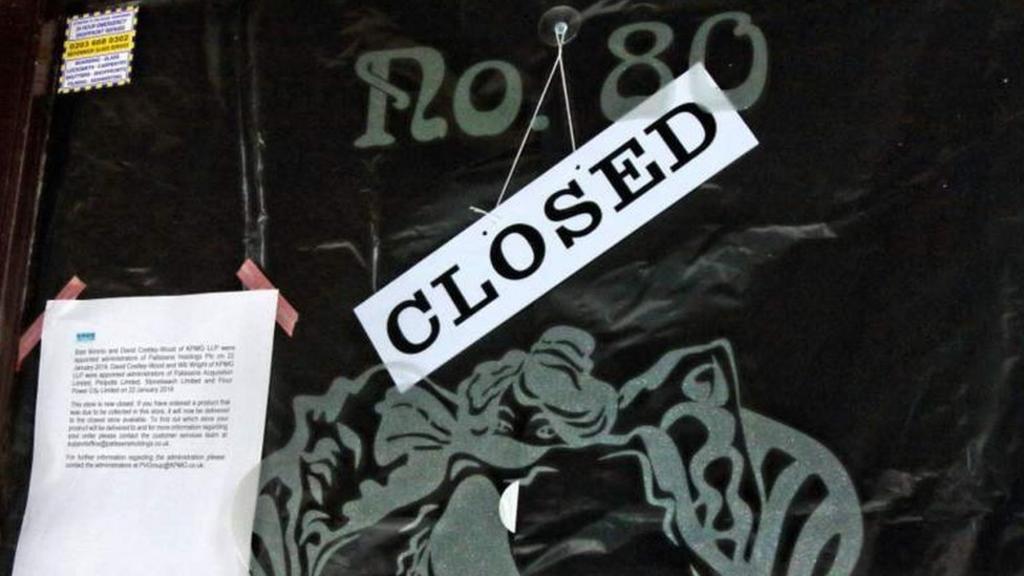
An example of a UK business forced into liquidation can be seen below:

Patisserie Valerie: Redundant staff ‘not receiving final pay’

Up to 900 workers lost their jobs when administrators closed 70 of the cafe chain’s outlets. Disclaimer:
Conclusion

Payment of wages is one of the most important duties that an employer must fulfil. It is also an area which is highly regulated by law, for example:

  • The common law
  • The Employment Rights Act 1996
  • The Working Time Regulations 1998
  • The National Minimum Wage Act 1998
  • The Equality Act 2010
  • Family friendly legislation e.g. adoption, bereavement, maternity, paternity

Failure by an employer to pay an employee (and workers) their wages and other entitlements can lead to the possibility of claims being submitted to an Employment Tribunal. The basic advice to employers is make sure you stay on top of this important area of employment law because it changes on a regular basis and ignorance of the law is no excuse.

Related Blog Articles:

https://seancrossansscotslaw.com/2020/01/30/2020-same-old-sexism-yes-equal-pay-again/

https://seancrossansscotslaw.com/2020/01/10/new-year-same-old-story/

https://seancrossansscotslaw.com/2019/05/13/inequality-in-the-uk/

https://seancrossansscotslaw.com/2019/03/31/the-gender-pay-gap/

https://seancrossansscotslaw.com/2019/04/05/the-gender-pay-gap-part-2/

https://seancrossansscotslaw.com/2019/06/26/ouch/

https://seancrossansscotslaw.com/2019/06/20/sexism-in-the-uk/

Thttps://seancrossansscotslaw.com/2019/04/30/paternity-leave/

Copyright Seán J Crossan, 5 April 2020

The Battle of Balaclava?

Photo by nick olson on Unsplash

Balaclavas can be very useful things to have to hand – when the weather is very cold or you’re discussing the Crimean War (1853-1856) from where the term for the garment originates in the United Kingdom (circa 1881, according to the historian and cleric, Richard Rutt). During the Crimean War, British soldiers wore the garment to cope with the sub-zero temperatures that they experienced during the winter months of the Campaign.

Today, the garments are still incredibly popular with cyclists and winter sports’ enthusiasts (I confess: I have two for cycling during the winter months and they’re great!).

Despite, the historical associations with the British Army’s involvement in the Crimean War, it’s not always advisable to use the Balaclava as a teaching aid for History classes – especially DIY History classes.

McClean, an Irish footballer playing for the English Championship side, Stoke City FC, has recently found this out to his cost.

In a bizarre social media post (on Instagram), McClean put a picture of himself wearing a Balaclava as he was talking to two children. What was the point of this strange exercise? McClean claims that he was teaching the children about history, but others have seen this as an endorsement of paramilitary groups – particularly the Provisional IRA.

Today’s history lesson by James McClean

There was a public backlash and McClean was fined by this Club. The player is something of a controversial figure to many as he routinely refuses to have a poppy printed on his football jersey in the run-up to Remembrance Day commemorations each November in the United Kingdom.

https://www.independent.co.uk/sport/football/premier-league/poppy-james-mcclean-matic-guardiola-klopp-remembrance-sunday-armistice-day-a9194266.html

McClean hails from the City of Derry in the North of Ireland which will be forever associated with the events of ‘Bloody Sunday’ on 30 January 1972. On that day, 13 innocent Civil Rights marchers were shot and killed without justification by members of the Parachute Regiment – as per the conclusions of Lord Saville’s Report (2010) which contradicted Lord Widgery’s findings published in April 1972. The Saville Inquiry took 12.5 years and cost the British taxpayer £191.5 million – the longest and most expensive inquiry ever in the United Kingdom (figures obtained from The Spectator).

The previous Widgery Report was seen by many in the Republican and Nationalist community as a cover-up and a whitewash in that it absolved the Parachute Regiment of any wrong-doing for the deaths. Inevitably, the Report fuelled a long lasting sense of grievance within this community. McClean grew up on Derry’s Creggan Estate – not far from St Mary’s Church where many of the funerals of the ‘Bloody Sunday’ victims took place.

We often forget that footballers can be employees i.e. have a contract of service with their Clubs as per Section 230 of the Employment Rights Act 1996. McClean is fortunate that he has retained his post; other, less famous employees might not have been so lucky.

Section 98(4) of the Employment Rights Act 1996 permits an employer to dismiss an employee (potentially) fairly by reason of his/her conduct (with the proviso, of course, that the employer follows proper procedures in line with current ACAS standards).

McClean might initially have protested that the social media post was done while he was outside working hours. Regular readers of this Blog will be well aware that this type of excuse is extremely naive at best. Yes, employees do have a right to privacy, in terms of the European Convention on Human Rights, but this is never absolute – especially if an employer can argue that the behaviour of an individual employed by him or her has caused reputational damage to the organisation.

Employers do have a part to play here: they have a duty to have clear and consistent guidelines on employee social media use within and outwith the work-place. It should go without saying (but I’ll say it anyway) that the employer should make sure that employees are aware of the existence of such guidelines and have actually read them.

The misbehaviour or misconduct of employees which takes place outside working hours can have a really serious reputational impact on your employer. Individuals, like McClean, with high profiles in the community should be aware of this. It won’t be the last time that we read about someone who is deemed to be a role model – a teacher or a sporting personality – who misbehaves outside work and pays the price for this type of behaviour.

A link to the story on the Sky News website can be found below:

https://news.sky.com/story/james-mcclean-irish-footballer-fined-for-balaclava-childrens-history-lesson-post-11964664

Related Blog Articles:

https://seancrossansscotslaw.com/2020/01/02/youre-never-off-duty/

https://seancrossansscotslaw.com/2019/12/08/different-standards/

https://seancrossansscotslaw.com/2019/12/03/the-limits-of-privacy/

https://seancrossansscotslaw.com/2019/09/03/facebook-folly/

https://seancrossansscotslaw.com/2019/06/05/im-a-political-activist-dont-sack-me/

https://seancrossansscotslaw.com/2019/05/20/social-media-and-dismissal/

https://seancrossansscotslaw.com/2019/04/11/social-media-misuse/

https://seancrossansscotslaw.com/2019/04/09/drunk-and-disorderly/

https://seancrossansscotslaw.com/2019/02/07/it-happened-outside-work-or-its-my-private-life/

Copyright Seán J Crossan, 2 April 2020

Crazy days! Force majeure & frustration!

Photo by Adam Azim on Unsplash

I never thought that the subject of impossibility and frustration in relation to contract would become such a popular topic of everyday conversation; but it has.

The phrase “force majeure” has also been making more of an appearance than is commonly the case.

Why?

The continuing fallout from Coronavirus or COVID-19 has led to all sorts of sporting and cultural events being cancelled or postponed. We are also about to enter the holiday season with the Spring Break and Easter Weekend just over the horizon. Many people will have booked getaways to foreign climes and events have now completely overtaken such plans.

Critically, thousands of people will have paid something up front for football season tickets and holidays and they will be anxious to know where they stand legally.

Hearts owner Ann Budge says she would consider legal action should her club be relegated from the Scottish Premiership with eight games left:

Coronavirus: Hearts would seek legal advice if relegated

So where do they stand legally?

There are two ways of dealing with an unexpected situation which affects contractual performance: being reactive or being farsighted.

At the moment, the scale of COVID-19 has completely taken Governments, societies, business, cultural, sporting organisations and individuals completely by surprise. So, in a sense, we are being forced to react to changing circumstances and rely upon established legal contractual principles which govern the termination of agreements i.e. frustration, impossibility and illegality. More about these matters shortly.

As lawyers, could we have pre-empted or foreseen that events (I’m speaking in the general sense here) might render contractual performance highly unlikely or well nigh impossible? Well, yes the concept of Force Majeure clauses is recognised in contract law – although the linguists amongst us may recognise that it’s not a native species of English or Scots law.

words ‘force majeure’ are not words which we generally find in an English contract. They are taken from the Code Napoleon and they were inserted by this Romanian gentleman or by his advisers, who were no doubt familiar with their use on the Continent.”

In the English case of Matsoukis v Priestman [1915] 1 KB 681 Bailhace J, sitting in English High Court was of the view that force majeure clauses could cover events such as industrial action, but certainly not bad weather or football or funerals:

“these are the usual incidents interrupting work, and the defendants, in making their contract, no doubt took them into account”.

Yet, in the later English High Court decision Lebeaupin v Richard Crispin [1920] 2 KB 714, force majeure clause was given a much broader meaning to include events such as war, bad weather, industrial action and, interestingly, epidemics. That said McCardie J was at pains to point out:

A force majeure clause should be construed in each case with a close attention to the words which precede or follow it, and with a due regard to the nature and general terms of the contract. The eect of the clause may vary with each instrument.

Essentially, such clauses are inserted into contracts to deal with the consequences of events outwith the control of the parties which may render performance of the contract impossible.

Ross Campbell of Brodies Solicitors who has pointed out that the rules of last year’s Rugby World Cup tournament in Japan contained a force majeure clause addressing the cancellation of matches due to extreme weather. The clause was not utilised and, therefore, not challenged, but it’s an interesting example of how parties to an agreement might attempt to address situations which can have serious consequences for contractual performance.

A link to Ross Campbell’s article can be found below:

https://brodies.com/blog/dispute-resolution/the-power-of-force-majeure-clauses/

The very phrase force majeure conjures up images of an unstoppable force that sweeps away the accepted rules or conventions – almost akin to the idea of damnum fatale or an act of God.

So whether, will the courts permit the application of a force majeure clause will turn on the wording of the clause.

Could anyone have predicted the situation that we are now in with COVID-19 and drafted an appropriate clause to address these unprecedented times? It’s extremely doubtful. I’m not pretending to be Nostradamus (or for our Scottish readers, the Brahan Seer or Thomas the Rhymer) when I predict that many lawyers and their clients will actively be looking at the usefulness of force majeure clauses.

Triggering a force majeure clause

For those parties wishing to rely upon force majeure clauses, drafting the term may be crucially important. It might be highly advisable to have a list of events or circumstances which trigger operation of the clause; and then have a catch-all provision or belt and braces term to cover things you might not have explicitly specified (as per McCardie J’s remarks in Lebeaupin v Richard Crispin [1920]. Be aware, however, that extremely wide catch-all provisions may be disallowed because they are not within the normal meaning of the term (see Tandrin Aviation Holdings Ltd v Aero Toy Store LLC [2010] EWHC 40 (Comm)).

Frustration, impossibility and illegality

Let’s now turn to situations where individuals have to react to unexpected events without having the benefit of a force majeure clause in the agreement.

Since the formation of a contract, circumstances affecting the agreement may have changed dramatically (i.e. the pandemic). The contract may now be impossible to perform or the contract may have been rendered illegal by changes in the law.

Physical destruction of the subject-matter of the contract can also frustrate contracts.

Perhaps one of the best known examples of frustration can be seen in the case below:

Taylor v Caldwell (1863) the Surrey Gardens and Music Hall was hired by the pursuers from the defenders for the purpose of holding four grand concerts and fêtes. Before the first concert on 17 June 1862 could took place, the hall was completely destroyed by fire. Neither party was responsible for this incident. The pursuers, however, brought an action for damages against the defenders for wasted advertising costs.

Held: By the English High Court that it was clearly impossible for the contract to be performed because it relied on the continuing existence of the venue. The pursuers claim for damages was dismissed on the grounds that the purpose of the contract had been frustrated.

In another case, Vitol SA v Esso Australia 1988 The Times 1 February 1988, a contract for the sale of petroleum was discharged on the grounds of frustration when both the ship and its cargo of petroleum were completely destroyed in a missile attack in the Persian Gulf during the Iran-Iraq War (1980-1988). The sellers had attempted to sue the buyers for the price of the goods, but this claim was dismissed.

The ‘coronationcases

Two famous cases which are particularly instructive are the ‘Coronation Cases’ because they concern the consequences of changing circumstances. Both cases arose due to the illness of King Edward VII. The new King was unable to participate or attend a variety of events to celebrate his accession to the British throne following the death of his mother, Queen Victoria.

The English Court of Appeal took different approaches in each of the cases:

Krell v Henry [1903] 2 KB 740 the pursuer was the owner of a flat in the central London district of Pall Mall. The pursuer’s flat was on the route of the proposed coronation procession of the new King, Edward VII, which was scheduled to take place on 26 and 27 June 1902. The pursuer had advertised his flat for rent during the daytime on 26 and 27 June for the purpose of viewing the procession. The defender, who was anxious to view the procession, responded to the advertisement and entered into an agreement to hire the flat on the days specified. An announcement was made on 24 June stating that the procession was to be cancelled owing to the King’s illness. The defender refused to pay the balance of the rent for the flat by reason that events had frustrated performance of the contract. The pursuer brought an action against the defender for payment of the balance of the rent.

Held: by the English Court of Appeal that the cancellation of the event frustrated the contract and discharged the parties from their obligations under it. The clinching argument in the defender’s favour was that both parties clearly entered into the contract with the same intention.

The reason behind the hire of the flat was, therefore, a material term of the contract. Had the defender failed to communicate his motivation for hiring the flat, then the contract would have remained capable of enforcement by the pursuer.

Lord Justice Vaughn-Williams was of the opinion that frustration of contract was not limited to either the destruction or non-existence of the subject matter of the contract. It was also important to identify the substance or the purpose of the agreement. In other words, did the parties share the same intentions?

The illness of King Edward resulted in a second legal action. This time, however, the English Court of Appeal took a completely different approach to the issue of frustration of contract.

Herne Bay Steamboat Co v Hutton [1903] 2 KB 683 the pursuers had entered into a contract to hire a steamship to the defender for two days. The Royal Navy was assembling at Spithead to take part in a naval review to celebrate King Edward’s coronation.

The King was to review the fleet personally. The defender wished to transport paying guests from Herne Bay to Spithead to see the naval review. Due to the King’s illness, an official announcement was made cancelling the review. It would still have been perfectly possible for the defender to take his passengers on a cruise to see the assembled fleet. The defender, however, refused to use the vessel claiming that the contract had been frustrated. The pursuers brought an action against the defender for the balance of the fee of £250 (a considerable sum in those times) owed by the defender who was refusing to pay for the hire of the boat.

Held: the contract was not discharged by reason of frustration. The main purpose of the contract could still be achieved i.e. to take paying guests for a cruise around the fleet.

Why the difference in approach?

In Krell v Henry [1903], Lord Justice Vaughn-Williams was of the opinion that frustration of contract was not limited to either the destruction or non-existence of the subject matter of the contract.

The difference in Herne Bay Steamboat Co v Hutton [1903] was that the contract was the main purpose of the contract could still be achieved i.e. to take paying guests for a cruise around the fleet – despite the fact that King Edward VII would not be personally reviewing the fleet due to his unexpected illness.

This difference in approach taken by the Court of Appeal in both cases is sometimes difficult to understand. In Krell v Henry, both parties had clearly intended that the purpose of the contract was to view the coronation procession (which was postponed). Reinforcing this fact, was the fact that the defender was only entitled to use the flat during the daytime.

In Herne Bay Steamboat Co v Hutton, the purpose of the defender in hiring the steamship was to see the naval review, but this was not the purpose of the owners who were not the slightest bit interested why the vessel had been hired.

Lord Justice Vaughn-Williams compared the situation in Herne Bay Steamboat Co to someone who hires a carriage to go and see the Epsom Derby, but the outbreak of some unforeseen epidemic means that the races are cancelled. This makes no difference to the owner of the carriage who will still expect to be paid for the hire of his vehicle.

It will, however, be important to identify the substance or the purpose of the agreement. The cancellation of an event can frustrate the performance of a contract where that event is an absolutely material term of the agreement.

The limits of frustration …

Frustration can only be used to have the contract discharged in situations where neither party is to blame. When one party is to blame for the failure to perform his obligations under the agreement, this represents a breach of contract and the innocent party can raise the appropriate action.

Tsakiroglou v Noblee Thorl GmbH [1961] 2 ALL ER 179 the sellers had agreed to transport Sudanese ground nuts from Port Sudan in the Red Sea to Hamburg in Germany. The ship was to take the fastest route to Europe through the Suez Canal. This proved to be impossible because the Canal was closed as a result of military hostilities following the Anglo-French-Israeli invasion of Egypt causing the Suez Crisis in late 1956. The sellers would have to ship the goods around the alternative route of the Cape of Good Hope in South Africa. This meant that the distance the ship had to travel from Port Sudan to Hamburg was greatly increased and this would also mean a dramatic increase in the costs of carriage in respect of the goods.

Held: by the House of Lords that a party will still have a duty to perform a contract even if this means that performance is more difficult or expensive than was originally intended by the parties. The closure of the Suez Canal did not mean that the sellers’ duties were discharged by reason of frustration of contract.

Contracts for personal services

Such a contract is discharged by the death of the person who was to perform it. The incapacity of a person who is to perform a contract may discharge it. However, temporary incapacity is not enough unless it affects the performance of the contract in a really serious way. If an employee is killed or permanently incapacitated, it will be very difficult to argue that the employment contract should be allowed to continue. Employees who have had a lengthy prison sentence imposed on them by a criminal court may find it very difficult to argue against the employer’s proposition that the contract of employment has been terminated by reason of frustration.

Some words of warning: the courts may be unwilling to use frustration as a means of terminating an employment contract if other ways of achieving this result are available. This could occur in situations where it is possible for the employer to dismiss the employee entirely fairly by reason of a lack of capability (e.g. on grounds of ill health) as per the Employment Relations Act 1996.

Notable cases on frustration in connection with employment contracts include the following:

  • Davis Contractors Ltd v Fareham UDC [1956] AC 696
  • Marshall v Harland & Wolff [1972] IRLR90
  • G F Sharp & Co Ltd v McMillan [1998] IRLR 632

The purpose of the contract becomes impossible to perform

As we have seen, a situation involving the physical destruction of the subject-matter of the contract will discharge the parties from performance of their duties by reason of frustration. However, frustration can also occur in situations where physical destruction of the subject-matter of the contract may not be the issue.

Jackson v Union Marine Insurance Co (1874) LR 10 CP 125 the pursuer owned a ship which had been chartered to go with all possible speed from Liverpool to Newport for the purpose of loading a cargo bound for San Francisco. The pursuer had insurance with the defenders to protect himself in the event that the charter might be prevented from being carried out. The vessel was stranded whilst on its way to Newport. It was not refloated for over a month and could not be properly repaired for some time. The charterers hired another ship and the pursuer turned to the insurers. They suggested that the pursuer should sue the charterer for breach.

Held: the fact that the ship was stranded effectively frustrated the agreement’s commercial purpose and, therefore, the charterers were free to go elsewhere. The pursuer had no remedy against the charterers and was in turn entitled to seek compensation under the insurance policy.

Illegality

We are seeing the introduction of emergency powers legislation across the World in response to COVID-19 and this will undoubtedly have a huge impact on a range of contractual obligations. Many European Union countries have reintroduced border controls and curbs on free movement of persons which would normally be a clear breach of European Treaties (e.g. the Treaty on the Functioning of the European Union; the Treaty on European Union; and the Schengen Agreement), but these are not normal times. These drastic measures can all be justified on grounds of public security and public health – legitimate derogations or grounds for withdrawal from key EU legal principles. Travel and tourism will obviously be disproportionately affected by these restrictions.

Contracts can become illegal because Parliament introduces legislation to this effect. After the murder of schoolchildren and a teacher at Dunblane Primary School in 1996 by Thomas Hamilton, the British government made it illegal to own particular models of firearms. Therefore, anyone who entered a contract to purchase firearms shortly before the legislation was introduced could not force the supplier to perform the contract. If the buyer insisted on performance of the contract by the seller, the seller would be complying with his contractual duty, but he would also be breaking the law as the contract would be illegal.

Events can also make further or future performance of contracts illegal e.g. the outbreak of war. Two House of Lords’ decisions are excellent authority for this proposition –

Stevenson & Sons Ltd v AG für Cartonnagen Industrie (1918) AC 239 an English company, Stevenson, was in partnership with a German company acting as a sole agent to sell the German company’s goods. By continuing to carry on business with an enemy during wartime (the First World War had broken out), Stevenson would be committing a criminal act and there was no alternative but to have the partnership dissolved (see also Cantiere San Rocco SA v Clyde Shipbuilding & Engineering Co Ltd (1923) SC (HL) 105 where, again, the First World War had a similar effect on a contract between a Scottish company and an Austrian buyer of a ship).

Conclusion

The Coronavirus or COVID-19 is not merely a health issue – it has also become something of a legal minefield for society. This is where knowledge of the circumstances of termination of contractual obligations and performance is vital. The doctrine of frustration, impossibility and supervening illegality are highly relevant to this debate.

Doubtless, the use of force majeure clauses will become more common – especially, if as predicted, we are going to be experiencing further waves of disruption due to this pandemic.

Related Blog Articles:

https://seancrossansscotslaw.com/2019/02/10/frustration-of-contract/

https://seancrossansscotslaw.com/2019/03/25/locking-horns-frustration-of-contract-part-2/

https://seancrossansscotslaw.com/2019/11/23/pay-up-or-frustration-of-contract-part-3/

https://seancrossansscotslaw.com/2019/08/28/stormy-weather-im-at-the-end-of-my-tether/

https://seancrossansscotslaw.com/2020/02/25/welcome-to-austria/

Copyright Seán J Crossan, 18 March 2020

International Women’s Day (What’s so great about it?)

Photo by Jen Theodore on Unsplash

Today is International Women’s Day, but is there much to celebrate in terms of concrete progress since I spoke about this topic last year?

The answer to the question is that progress women’s equality remains very much a mixed picture. If you look at figures produced for the European Gender Equality Institute, the UK is certainly in the top 5 of selected European countries. This is in stark contrast to Central and Eastern European nations (e.g. Bulgaria, Poland and Romania). Surprisingly, Germany does less well amongst its Western European neighbours, whereas Greece and Portugal are way down the index.

A link to a gender equality index for European countries can be found below:

https://edition.independent.co.uk/editions/uk.co.independent.issue.070320/data/9384076/index.html

These figures may not be entirely surprising to regular readers of this Blog: in the first few months of 2020, I have highlighted the continuing gender pay gap (which continues to be stubbornly difficult to close) and pregnancy discrimination.

Speaking of pregnancy discrimination, two recent employment cases have highlighted how much of a problem this continues to be.

In 2019, an Industrial Tribunal (yes, they still exist in Northern Ireland) ruled that McGranes Nurseries Ltd had discriminated against one of its pregnant employees, Laura Gruzdaite, who was unfairly dismissed when she took time off work to attend a scan as part of her ante natal care. Ms Gruzdaite had informed her employer that she was pregnant.

In Northern Ireland, slightly different equality legislation is relevant to cases like that of Ms Gruzdaite, but the general objective is very similar. Had the case occurred in Scotland or England, we would have been discussing the Employment Rights Act 1996 which, of course, gives pregnant women a legal entitlement to take time off work to attend these types of appointment. In Northern Ireland, the relevant legislation is the Employment Rights (Northern Ireland) Order 1996.

As for the actual pregnancy discrimination, we would have been referring to the Equality Act 2010, but in Northern Ireland, the Sex Discrimination (Northern Ireland) Order 1976 contains the relevant law.

Ms Gruzdaite was awarded £28,000 in compensation from her former employers – significantly, £20,000 of this award represented an injury to feelings element.

Interestingly, the employer also got Ms Gruzdaite to sign a blank contract of employment which did not specify whether she was a temporary or permanent employee. All very suspect and an obvious breach of our Employment Rights Act too (and I’m certain of the Northern Ireland Order of 1996), but that’s a different story for now.

A link to the Industrial Tribunal’s decision can be found below:

https://www.equalityni.org/ECNI/media/ECNI/Cases%20and%20Settlements/OITFET%20online%20decisions%20as%20pdfs/Gruzdaite-v-McGranes-Nurseries-Ltd-July19.pdf

Pregnant woman ‘unfairly dismissed’ rules industrial tribunal

In the second case, from England, Maya Georgiev was employed by Hanover Insolvency Ltd. She had not informed her employer that she was pregnant; she had been absent from work due to pregnancy related illnesses; and she was subsequently called to a disciplinary meeting. At this meeting, Ms Georgiev explained the reasons for her absence from work, but to no avail as her manager dismissed her. This was an unfair dismissal in terms of the Equality Act 2010 and the Employment Rights Act 1996.

Ironically, Ms Georgiev would have been better protected had she disclosed her pregnancy to her employer from the outset, but when the employer became aware of her situation it should have recognised that it had a duty not to discriminate against her by reason of her pregnancy. The Employment Tribunal will hold a Hearing on remedy later this year.

A link to the decision of the Employment Tribunal in this case can be found below:

https://assets.publishing.service.gov.uk/media/5e565151d3bf7f3947cf26a5/Miss_M_Georgiev_v_Hanover_Insolvency_Limited_-2400113_2019-_Judgment.pdf

A link to a story about Ms Georgiev’s experiences can be found below on the People Management website:

https://www.peoplemanagement.co.uk/news/articles/worker-discriminated-against-after-boss-unfairly-dismissed-her-for-pregnancy-related-absences

Even in areas where progress has undoubtedly been made family friendly policies such as maternity leave – the English Court of Appeal recently ruled in Ali v Capita Customer Management Ltd and Hextall v Chief Constable of Leicestershire Police (2019) EWCA Civ 900 that it is not discriminatory to offer more generous family friendly arrangements to female employees. This may seem quite progressive on the face of things, but it continues to place the emphasis on women being the primary carers of children. It doesn’t exactly encourage a cultural shift towards more men taking time off work to care for their children.

The worst case scenario

… And finally, a rather stark reminder that, although progress for women’s rights has undoubtedly occurred, the overall picture remains very uneven. In certain parts of the world, being female means that you are more likely to be murdered. A phenomenon so prevalent in the Central American countries of Honduras and El Salvador that they refer to it as femicide.

You can find a link to this story on the Sky News website below:

https://news.sky.com/story/the-most-dangerous-place-in-the-world-to-be-a-woman-11950981

Related Blog Articles:

https://seancrossansscotslaw.com/2020/01/30/2020-same-old-sexism-yes-equal-pay-again/

https://seancrossansscotslaw.com/2020/01/11/pregnancy-discrimination-or-new-year-same-old-story-part-2/

https://seancrossansscotslaw.com/2020/01/10/new-year-same-old-story/

https://seancrossansscotslaw.com/2019/03/11/born-leader/

Copyright Seán J Crossan, 8 March 2020

State of emergency

Photo by Markus Spiske on Unsplash

In a Blog published yesterday, I discussed the issue of entitlement to sick pay as a result of the Coronavirus or COVID-19 outbreak.

Related Blog article:

https://seancrossansscotslaw.com/2020/03/04/sick-pay-or-the-coronavirus-conundrum/

State of emergency

Governor Gavin Newsom of the US State of California declared a state wide emergency on Wednesday 4 March 2020 in order to counter the spread of the virus.

Please see a link below to an article in the Los Angeles’ Times concerning Governor Newsom’s announcement:

https://www.latimes.com/california/newsletter/2020-03-05/coronavirus-cruise-emergency-newsletter

How are the recent developments in California linked to events in the UK?

It should be recalled that Governor Newsom signed into law Assembly Bill 5 of 2019 in January of this year. You don’t remember this? Well, Assembly Bill 5 is better known as the Californian Gig Economy law which, in effect, gives thousands of workers employment status. Significantly, this means that many of these affected individuals will now benefit from greater levels of employment protection – including entitlement to sick pay.

Now, think about this: had the COVID-19 outbreak occurred last year, many Californian workers would have had absolutely no entitlement to receive sick pay if such individuals were forced to self-isolate or take time off because they had been infected. No doubt many of these workers turned employees will be breathing a huge sigh of relief that they are now covered by Assembly Bill 5.

Related Blog article:

https://seancrossansscotslaw.com/2020/02/13/california-dreamin/

The UK approach

Turning our attention to the UK, the British Government has taken a less generous approach to the issue of entitlement to sick pay. True, employees and other workers who already benefit from entitlement to statutory sick pay (SSP) should now be able to claim this from day 1 of sickness absence. It should be emphasised that this is a temporary measure justified on emergency grounds.

Previously, statutory sick pay was payable only from day 4 of the employee’s absence until Prime Minister Johnson’s announcement in the House of Commons on Tuesday 3 March 2020.

Jeremy Corbyn, Leader of the opposition Labour Party, immediately asked the PM if zero hours workers and self-employed individuals would have this benefit extended to them. The PM’s response to Mr Corbyn’s question will have disappointed many of these individuals. No entitlement to statutory sick pay for them. The problem for these individuals is that they do not meet the eligibility threshold where they earn £118 per week (the Lower Earnings Limit).

There is also the small fact that employment status (which is linked to entitlement to sick pay) is defined by the Employment Rights Act 1996. Section 230 of the Act defines an employee as an individual who has a contract of service. Many employment rights flow from this status and this means that many individuals who are engaged on a contract for services will simply not be eligible to claim statutory sick pay.

A link to an article in The Mirror newspaper about the exchanges in the House of Commons between PM Johnson and Mr Corbyn about SSP entitlement can be found below:

https://www.mirror.co.uk/news/politics/breaking-new-coronavirus-sick-pay-21629942

An evolving position?

… and yet, the UK Government’s thinking on this issue may be quickly evolving. On the BBC’s Question Time television programme broadcast on Thursday 5 March 2020, Matt Hancock MP, the UK Health Secretary said that people on zero hours contracts and self-employed persons should not be financially penalised for doing the right thing i.e. self-isolating themselves or being honest about having the virus.

It will be interesting to see how the story develops and what changes to UK employment law may follow as a result.

Copyright Seán J Crossan, 5 March 2020

California dreamin’?

Photo by Ross Sneddon on Unsplash

I’m currently in the fourth week of Semester 2 and I’m teaching Employment Law to a group of second year students. I usually begin this course by discussing the importance of an individual’s employment status.

In today’s world of work, the great divide very much rests upon whether a person has a contract of service OR a contract for services.

An employee is said to have a contract of service as defined by Section 230(1) of the Employment Rights Act 1996. Having this status potentially allows someone to acquire employment protection such as the right not to be unfairly dismissed; the right to a redundancy payment; the right to be the beneficiary of family friendly and flexible working practices.

After the first few lectures have been completed on employment status, I usually ask the students if they think this is an important issue?

Hopefully, if I have been doing my job properly and they have been listening to me, the penny will have dropped: it is more often better to be an employee than someone who works under a contract for services (e.g. zero hours workers, casual and atypical workers, freelancers and the genuinely self-employed).

There are notable exceptions (aren’t there always?): high earning British television celebrities (e.g. Lorraine Kelly) or a number of BBC news journalists have preferred to be treated as freelancers or self-employed persons. Why? They can then minimise their exposure to income tax liability in a way (often via the medium of personal service companies) that would not be possible because if they were employees they would almost certainly be taxed at source on a PAYE (pay as you earn) basis.

We have seen an explosion in the type of work that is often characterised or labelled as the ‘gig economy’. This work is often characterised by a distinct lack of employment rights; irregular working patterns; chronic insecurity; lack of long term career progression; and low pay. It is often impossible for such individuals to complete the necessary periods continuous service to acquire employment rights.

Companies such as Deliveroo, Lyft and Uber have become synonymous with the ‘gig economy’, as have whole sectors of the employment market e.g. catering, cleaning and hospitality services.

Admittedly, the UK Government of Prime Minister Theresa May (2016-19) did commission Matthew Taylor to review employment status. The main conclusion reached by the Taylor Review was that a minimum level of employment protection should be extended to workers – after all these individuals pay their National Insurance contributions too.

Links to the Taylor Report and the UK Government’s response can be found below:

https://assets.publishing.service.gov.uk/government/uploads/system/uploads/attachment_data/file/627671/good-work-taylor-review-modern-working-practices-rg.pdf

https://assets.publishing.service.gov.uk/government/uploads/system/uploads/attachment_data/file/679767/180206_BEIS_Good_Work_Report__Accessible_A4_.pdf

In Scotland, the devolved Government has also established a Fair Work Convention with the aim of promoting better and progressive employment practices by 2025 (see the link below):

https://www.fairworkconvention.scot

Admittedly, an employee does not gain these rights from day 1 of employment. They become entitled to claim certain rights as they build up their continuous service with the employer. So, for example, an employee (generally speaking) has the right not to be unfairly dismissed in terms of the Employment Rights Act 1996 if they have completed 2 years of continuous service with the employer.

Meanwhile, on the other side of the world …

… or California dreamin’

It’s not just in the UK that debates about employment status are currently playing out. At the tail end of 2019, it was with particular interest that I read about a story from the United States which highlighted many of the issues which I have just been discussing in this Blog.

A study, carried out in 2015/16 by economists (Professors Lawrence Katz and Alan Krueger at Harvard and Princeton Universities respectively) calculated that “12.5 million people were considered independent contractors, or 8.4% of the U.S. workforce.”

https://scholar.harvard.edu/files/lkatz/files/katz_krueger_cws_v3.pdf

Interestingly, in 2019, Professors Katz and Krueger appeared to disown or play down certain of their findings – especially in relation to the number of American gig economy jobs:

https://edition.cnn.com/2019/01/07/economy/gig-economy-katz-krueger/index.html

Assembly Bill 5

The US State of California has just enacted a law, Assembly Bill 5 2019 or AB5 (known more popularly as the gig economy law) giving those individuals working in the gig economy more employment rights. The law came into force on 1 January 2020.

A link to AB5 as enacted by the California State legislature can be found below:

https://leginfo.legislature.ca.gov/faces/billTextClient.xhtml?bill_id=201920200AB5

In theory, AB5 makes it much more difficult for employers to classify individuals as independent contractors for services meaning that many more people will be treated as employees with the right to claim the minimum wage and the right to receive sick pay.

The Supreme Court of California laid down very strict criteria for determining whether an individual was an employee or an independent contractor in what is being referred to as the ‘landmark’ decision of Dynamex Operations West, Inc v the Superior Court of Los Angeles County 30 April 2018 Opinion S222732.

The case establishes the ‘ABC Test’ which operates on the presumption that individuals hired by an organisation or business are employees unless the hirer can show otherwise. In this case, the Supreme Court moved away from the ‘seminal’ Borello Test which had been the standard way of determining a person’s employment status since the 1980s. Critically, AB5 reflects the Dynamex criteria.

Essentially, the hirer must satisfy all three parts of the ABC Test in order to prove that an individual is a genuine independent contractor.

The criteria in ABC Test (as contained in AB5) can be set out as follows:

(A) The person is free from the control and direction of the hiring entity in connection with the performance of the work, both under the contract for the performance of the work and in fact.

(B) The person performs work that is outside the usual course of the hiring entity’s business.

(C) The person is customarily engaged in an independently established trade, occupation, or business of the same nature as that involved in the work performed.

The Dynamex decision is regarded as a landmark judgement because it overturns the Borello Test which had been the leading precedent for determining employment status in California since the late 1980s (see S. G. Borello & Sons, Inc. v Department of Industrial Relations (1989) 48 Cal.3d 341).

In Dynamex, the Californian Supreme Court made the following statement:

Although in some circumstances classification as an independent contractor may be advantageous to workers as well as to businesses, the risk that workers who should be treated as employees may be improperly misclassified as independent contractors is significant in light of the potentially substantial economic incentives that a business may have in mischaracterizing some workers as independent contractors. Such incentives include the unfair competitive
advantage the business may obtain over competitors that properly classify similar workers as employees and that thereby assume the fiscal and other responsibilities and burdens that an employer owes to its employees.

The Court noted, moreover, that:

In recent years, the relevant regulatory agencies of both the federal and state governments have declared that the misclassification of workers as independent contractors rather than employees
is a very serious problem, depriving federal and state governments of billions of dollars in tax revenue and millions of workers of the labor law protections to which they are entitled
.”

A link to the Dynamex judgement can be found below:

https://scocal.stanford.edu/opinion/dynamex-operations-west-inc-v-superior-court-34584

Legislators in other US States (New Jersey and New York particularly) have expressed a desire to follow the Californian example and Democratic US presidential candidates, Bernie Sanders and Elizabeth Warren are strongly in favour of this type of law.

As you would expect in such a litigious society as the United States, AB5 has already been the subject of a legal challenge (which was unsuccessful). Predictably, Uber and another company, Postmates, were at the forefront of this action.

This legal challenge was hardly surprising, given that The Los Angeles Times reported in August 2019 that Uber and Lyft intended to establish a campaigning fund worth $60 million to fight AB5.

A link to the story can be found below:

https://www.latimes.com/business/technology/story/2019-08-29/ab5-uber-lyft-newsom-lorena-gonzalez-ballot-tony-west

Conclusion

So, even in the land of free enterprise, it would seem that not everyone wants to be their own boss and many people would, in fact, be more than happy to welcome the recognition of their status as employees.

That said, AB5 has, surprisingly, not met with the approval of every worker or potential employee. The California performing arts community has experienced problems with the new law, mainly because of its use of the term ‘fine artist’ which was not defined. Fine artists are exempt from the provisions of AB5, but who exactly is a fine artist? No one seems to be sure and The Los Angeles Times reported that one opera company had cancelled performances because they were unsure whether performers were to be classified as employees (with the additional costs that this would entail) or whether they were genuinely independent contractors.

Lorena Gonzalez, the Californian Assemblywoman who drafted AB5 said that a definition of the term was deliberately omitted from the law and that it the responsibility of the State’s Employment Development Department to clarify this issue.

Readers will find links below to media articles about AB5:

https://apple.news/A_pjrttPvTDSMSpV-VMet8w

https://www.bbc.co.uk/news/business-49659775

https://www.latimes.com/entertainment-arts/story/2020-01-29/ab5-independent-contractor-california-2020-arts

Related Blog Articles:

https://seancrossansscotslaw.com/2019/04/19/the-gig-economy/

https://seancrossansscotslaw.com/2019/07/22/good-work/

https://seancrossansscotslaw.com/2019/03/22/hello-im-lorraine-and-im-definitely-self-employed/

https://seancrossansscotslaw.com/2019/12/21/employee-or-not/

https://seancrossansscotslaw.com/2019/01/17/employment-status/

https://seancrossansscotslaw.com/2019/05/08/call-me-an-uber/

https://seancrossansscotslaw.com/2019/03/25/strippers-are-workers-too-discuss/

https://seancrossansscotslaw.com/2019/02/14/horses-for-courses-the-equine-flu-affair/

https://seancrossansscotslaw.com/2019/04/30/paternity-leave/

https://seancrossansscotslaw.com/2019/02/25/the-work-life-balance-or-utopia-reimagined/

Copyright Seán J Crossan, 13 February 2020

Locking horns (Frustration of Contract Part 2)

Photo by Uriel Soberanes on Unsplash

In February, one of my blogs (Frustration of Contract) dealt with the circumstances surrounding the issue of frustration as a factor which could lead to termination of a contractual agreement.

One of the stories discussed in that particular blog was the dispute between Cardiff City FC and FC Nantes in respect of the tragic death of Emiliano Sala, the Argentinian footballer who had signed for the English Premiership club.

Despite Sala’s death, the French club was till demanding a portion of the transfer fee of £15 million. This led to speculation on my part as to whether frustration of contract could be an argument put forward by Cardiff.

The plot has since thickened an, today (25 March 2019), it has been reported that Cardiff City is now claiming that the transfer deal was never legally binding. The Premiership side asserts that the proper paperwork was not completed; the French side disputes this.

So, it looks as if the two clubs are going to be locking horns in what now seems to be an inevitable legal dispute.

A link to an article on the BBC website can be found below:

saw this on the BBC News App and thought you should see it:

Emiliano Sala: Cardiff set to claim transfer deal ‘not legally binding’

Cardiff City football are set to tell Fifa the deal to buy Emiliano Sala from Nantes for £15m was not legally binding.

Copyright Seán J Crossan, 25 March 2019

Related Blog Articles:

Locking horns (Frustration of Contract Part 2)

Pay up! (or Frustration of Contract Part 3)

Stormy weather, I’m at the end of my tether!

Welcome to Austria?

https://seancrossansscotslaw.com/2020/03/18/crazy-days-force-majeure-frustration/