Balaclavas can be very useful things to have to hand – when the weather is very cold or you’re discussing the Crimean War (1853-1856) from where the term for the garment originates in the United Kingdom (circa 1881, according to the historian and cleric, Richard Rutt). During the Crimean War, British soldiers wore the garment to cope with the sub-zero temperatures that they experienced during the winter months of the Campaign.
Today, the garments are still incredibly popular with cyclists and winter sports’ enthusiasts (I confess: I have two for cycling during the winter months and they’re great!).
Despite, the historical associations with the British Army’s involvement in the Crimean War, it’s not always advisable to use the Balaclava as a teaching aid for History classes – especially DIY History classes.
McClean, an Irish footballer playing for the English Championship side, Stoke City FC, has recently found this out to his cost.
In a bizarre social media post (on Instagram), McClean put a picture of himself wearing a Balaclava as he was talking to two children. What was the point of this strange exercise? McClean claims that he was teaching the children about history, but others have seen this as an endorsement of paramilitary groups – particularly the Provisional IRA.
Today’s history lesson by James McClean
There was a public backlash and McClean was fined by this Club. The player is something of a controversial figure to many as he routinely refuses to have a poppy printed on his football jersey in the run-up to Remembrance Day commemorations each November in the United Kingdom.
McClean hails from the City of Derry in the North of Ireland which will be forever associated with the events of ‘Bloody Sunday’ on 30 January 1972. On that day, 13 innocent Civil Rights marchers were shot and killed without justification by members of the Parachute Regiment – as per the conclusions of Lord Saville’s Report (2010) which contradicted Lord Widgery’s findings published in April 1972. The Saville Inquiry took 12.5 years and cost the British taxpayer £191.5 million – the longest and most expensive inquiry ever in the United Kingdom (figures obtained from The Spectator).
The previous Widgery Report was seen by many in the Republican and Nationalist community as a cover-up and a whitewash in that it absolved the Parachute Regiment of any wrong-doing for the deaths. Inevitably, the Report fuelled a long lasting sense of grievance within this community. McClean grew up on Derry’s Creggan Estate – not far from St Mary’s Church where many of the funerals of the ‘Bloody Sunday’ victims took place.
We often forget that footballers can be employees i.e. have a contract of service with their Clubs as per Section 230 of the Employment Rights Act 1996. McClean is fortunate that he has retained his post; other, less famous employees might not have been so lucky.
Section 98(4) of the Employment Rights Act 1996 permits an employer to dismiss an employee (potentially) fairly by reason of his/her conduct (with the proviso, of course, that the employer follows proper procedures in line with current ACAS standards).
McClean might initially have protested that the social media post was done while he was outside working hours. Regular readers of this Blog will be well aware that this type of excuse is extremely naive at best. Yes, employees do have a right to privacy, in terms of the European Convention on Human Rights, but this is never absolute – especially if an employer can argue that the behaviour of an individual employed by him or her has caused reputational damage to the organisation.
Employers do have a part to play here: they have a duty to have clear and consistent guidelines on employee social media use within and outwith the work-place. It should go without saying (but I’ll say it anyway) that the employer should make sure that employees are aware of the existence of such guidelines and have actually read them.
The misbehaviour or misconduct of employees which takes place outside working hours can have a really serious reputational impact on your employer. Individuals, like McClean, with high profiles in the community should be aware of this. It won’t be the last time that we read about someone who is deemed to be a role model – a teacher or a sporting personality – who misbehaves outside work and pays the price for this type of behaviour.
A link to the story on the Sky News website can be found below:
Today is International Women’s Day, but is there much to celebrate in terms of concrete progress since I spoke about this topic last year?
The answer to the question is that progress women’s equality remains very much a mixed picture. If you look at figures produced for the European Gender Equality Institute, the UK is certainly in the top 5 of selected European countries. This is in stark contrast to Central and Eastern European nations (e.g. Bulgaria, Poland and Romania). Surprisingly, Germany does less well amongst its Western European neighbours, whereas Greece and Portugal are way down the index.
A link to a gender equality index for European countries can be found below:
These figures may not be entirely surprising to regular readers of this Blog: in the first few months of 2020, I have highlighted the continuing gender pay gap (which continues to be stubbornly difficult to close) and pregnancy discrimination.
Speaking of pregnancy discrimination, two recent employment cases have highlighted how much of a problem this continues to be.
In 2019, an Industrial Tribunal (yes, they still exist in Northern Ireland) ruled that McGranes Nurseries Ltd had discriminated against one of its pregnant employees, Laura Gruzdaite, who was unfairly dismissed when she took time off work to attend a scan as part of her ante natal care. Ms Gruzdaite had informed her employer that she was pregnant.
In Northern Ireland, slightly different equality legislation is relevant to cases like that of Ms Gruzdaite, but the general objective is very similar. Had the case occurred in Scotland or England, we would have been discussing the Employment Rights Act 1996 which, of course, gives pregnant women a legal entitlement to take time off work to attend these types of appointment. In Northern Ireland, the relevant legislation is the Employment Rights (Northern Ireland) Order 1996.
As for the actual pregnancy discrimination, we would have been referring to the Equality Act 2010, but in Northern Ireland, the Sex Discrimination (Northern Ireland) Order 1976 contains the relevant law.
Ms Gruzdaite was awarded £28,000 in compensation from her former employers – significantly, £20,000 of this award represented an injury to feelings element.
Interestingly, the employer also got Ms Gruzdaite to sign a blank contract of employment which did not specify whether she was a temporary or permanent employee. All very suspect and an obvious breach of our Employment Rights Act too (and I’m certain of the Northern Ireland Order of 1996), but that’s a different story for now.
A link to the Industrial Tribunal’s decision can be found below:
In the second case, from England, Maya Georgiev was employed by Hanover Insolvency Ltd. She had not informed her employer that she was pregnant; she had been absent from work due to pregnancy related illnesses; and she was subsequently called to a disciplinary meeting. At this meeting, Ms Georgiev explained the reasons for her absence from work, but to no avail as her manager dismissed her. This was an unfair dismissal in terms of the Equality Act 2010 and the Employment Rights Act 1996.
Ironically, Ms Georgiev would have been better protected had she disclosed her pregnancy to her employer from the outset, but when the employer became aware of her situation it should have recognised that it had a duty not to discriminate against her by reason of her pregnancy. The Employment Tribunal will hold a Hearing on remedy later this year.
A link to the decision of the Employment Tribunal in this case can be found below:
Even in areas where progress has undoubtedly been made family friendly policies such as maternity leave – the English Court of Appeal recently ruled in Ali v Capita Customer Management Ltd and Hextall v Chief Constable of Leicestershire Police (2019) EWCA Civ 900 that it is not discriminatory to offer more generous family friendly arrangements to female employees. This may seem quite progressive on the face of things, but it continues to place the emphasis on women being the primary carers of children. It doesn’t exactly encourage a cultural shift towards more men taking time off work to care for their children.
The worst case scenario
… And finally, a rather stark reminder that, although progress for women’s rights has undoubtedly occurred, the overall picture remains very uneven. In certain parts of the world, being female means that you are more likely to be murdered. A phenomenon so prevalent in the Central American countries of Honduras and El Salvador that they refer to it as femicide.
You can find a link to this story on the Sky News website below:
Governor Gavin Newsom of the US State of California declared a state wide emergency on Wednesday 4 March 2020 in order to counter the spread of the virus.
Please see a link below to an article in the Los Angeles’ Times concerning Governor Newsom’s announcement:
How are the recent developments in California linked to events in the UK?
It should be recalled that Governor Newsom signed into law Assembly Bill 5 of 2019 in January of this year. You don’t remember this? Well, Assembly Bill 5 is better known as the Californian Gig Economy law which, in effect, gives thousands of workers employment status. Significantly, this means that many of these affected individuals will now benefit from greater levels of employment protection – including entitlement to sick pay.
Now, think about this: had the COVID-19 outbreak occurred last year, many Californian workers would have had absolutely no entitlement to receive sick pay if such individuals were forced to self-isolate or take time off because they had been infected. No doubt many of these workers turned employees will be breathing a huge sigh of relief that they are now covered by Assembly Bill 5.
Turning our attention to the UK, the British Government has taken a less generous approach to the issue of entitlement to sick pay. True, employees and other workers who already benefit from entitlement to statutory sick pay (SSP) should now be able to claim this from day 1 of sickness absence. It should be emphasised that this is a temporary measure justified on emergency grounds.
Previously, statutory sick pay was payable only from day 4 of the employee’s absence until Prime Minister Johnson’s announcement in the House of Commons on Tuesday 3 March 2020.
Jeremy Corbyn, Leader of the opposition Labour Party, immediately asked the PM if zero hours workers and self-employed individuals would have this benefit extended to them. The PM’s response to Mr Corbyn’s question will have disappointed many of these individuals. No entitlement to statutory sick pay for them. The problem for these individuals is that they do not meet the eligibility threshold where they earn £118 per week (the Lower Earnings Limit).
There is also the small fact that employment status (which is linked to entitlement to sick pay) is defined by the Employment Rights Act 1996. Section 230 of the Act defines an employee as an individual who has a contract of service. Many employment rights flow from this status and this means that many individuals who are engaged on a contract for services will simply not be eligible to claim statutory sick pay.
A link to an article in The Mirror newspaper about the exchanges in the House of Commons between PM Johnson and Mr Corbyn about SSP entitlement can be found below:
… and yet, the UK Government’s thinking on this issue may be quickly evolving. On the BBC’s Question Time television programme broadcast on Thursday 5 March 2020, Matt Hancock MP, the UK Health Secretary said that people on zero hours contracts and self-employed persons should not be financially penalised for doing the right thing i.e. self-isolating themselves or being honest about having the virus.
It will be interesting to see how the story develops and what changes to UK employment law may follow as a result.
Coronavirus (COVID-19) isn’t just a potential threat to your health; it could also mean that your earnings take a hit.
How so?
If you have to take time off from work (i.e. self-isolate yourself) because you have (or might have) been infected by the virus, will you be entitled to receive sick pay from the organisation that you are working for?
It depends very much on your employment status …
… if you are a zero hours worker or genuinely a self-employed person, the answer is an emphatic no.
If you are deemed to be an employee (an individual who works under a contract of service) within the meaning of Section 230 of the Employment Rights Act 1996, you may be fortunate in that you have an entitlement to receive either contractual sick pay or statutory sick pay.
Contractual sick pay
If a contractual sick pay scheme applies to your employment, you might receive, at its fullest extent, 6 months full pay and then 6 months at half pay. This generous arrangement, of course, will not apply from day 1 of the employment and employees will have to build up their continuous service in order to be eligible for the maximum level of contractual sick pay. It is probably the case that an employee with just over a year’s service would receive 1 month at full pay for sickness absence and then 1 month at half pay.
An example of entitlement to contractual sick pay arrangements taken from the Collective Agreement (the National Working Practices Agreement) between Scottish Further Education lecturers and their employers can be seen below:
Statutory sick pay
What about statutory sick pay or SSP? This is relevant in situations where employees are not entitled to receive contractual sick pay.
It’s also worth pointing out that contractual sick pay is often much more generous than SSP and, even then, not all employees will be entitled to receive this benefit because they fall outside the eligibility criteria. The current weekly rate of sickness pay (in March 2020) is £98.25 and could be paid by employers for a maximum of 28 weeks.
Ordinarily, it becomes payable only from 4th day of sickness absence, but as of Wednesday 4th March 2020, the UK Government has announced that employees who self-isolate themselves because of suspected Coronavirus infection, will be paid SSP from day 1 of their sickness absence.
This is a temporary measure which will apply only for the duration of the current COVID-19 emergency, but people who are off sick with a medical condition other than the virus will also be entitled to benefit from these changes.
See links below to articles on the BBC website about sickness pay entitlement and COVID-19:
The change in Government policy will not be extended to the self-employed; and to zero hours workers (who will not be able to meet the threshold conditions for eligibility). Frances O’Grady, the General Secretary of the UK’s Trades Union Congress (TUC) has stated that as many as 2 million workers may not be eligible for SSP under the current system.
There has been some concern expressed that individuals in these categories may continue to go to work – if they have the virus or suspect as much – because they will not receive SSP during their absence.
Eligibility criteria for SSP
In 2019-20, in order to qualify for SSP you must be an employee earning at least £118 per week or £512 per month (before tax). This is known as the Lower Earnings Limit.
In April 2020, SSP will rise to £95.85 per week, but individuals’ earnings must fall within any of the following bands in order to qualify:
£120 per week
£520 per month
£6,240 per year
Again, this will mean that many zero hours contract workers will simply fail to qualify for SSP payments.
More problems …
There is also another complication concerning eligibility for sickness pay which the COVID-19 outbreak has raised:
Let’s assume that you do qualify for either contractual sick pay or SSP, but you have decided to take the precautionary measure of self-isolation so as not to expose your colleagues to potential risk.
It may be that you have recently returned from a destination such as China or Italy where the virus has been particularly prevalent and you decide to play it safe by not going into work. You contact your HR Department or employer to inform them of your decision; you are thanked for being extremely considerate and responsible; and then you are told that you are not entitled to receive sick pay because you haven’t actually been diagnosed with the virus.
Matt Hancock MP, UK Government Minister for Health, thinks that current legislation does cover such situations and individuals who take precautionary measures, as outlined above, should benefit from sick pay provisions.
With all due respect to Mr Hancock, what he thinks and what current legislation or a contract of employment states might be entirely different realities. That said, Mr Hancock does have the support of the highly regarded Advisory Conciliation and Arbitration Service (ACAS) which is recommending that employers pay self-isolating employees who have taken such a precautionary measure (see link below).
Clearly, COVID-19 is presenting a number of challenges to traditional practices or orthodoxies in the field of employment law. This is a serious issue given that recent estimates are predicting that up to 20% of the UK workforce could be in danger of contracting the virus and, consequently, they will be absent from work.
In some respects, the UK Government has been caught napping on the issue of extending employment protection e.g. entitlement to sick pay to people who do not have a contract of service and the COVID-19 outbreak has really exposed this shortcoming.
As Jonathan Rennie of law firm, TLT, had noted (as recently as this week) the UK Government has failed to implement any of the recommendations of the Taylor Review which favoured extended employment protection to workers who did not have a contract of service. It is somewhat ironic that the virus outbreak has forced the Government to break cover and extend some employment protection rights.
A link to an article on the BBC website about the predicted impact of COVID-19 on the UK workforce can be found below:
I’m currently in the fourth week of Semester 2 and I’m teaching Employment Law to a group of second year students. I usually begin this course by discussing the importance of an individual’s employment status.
In today’s world of work, the great divide very much rests upon whether a person has a contract of service OR a contract for services.
An employee is said to have a contract of service as defined by Section 230(1) of the Employment Rights Act 1996. Having this status potentially allows someone to acquire employment protection such as the right not to be unfairly dismissed; the right to a redundancy payment; the right to be the beneficiary of family friendly and flexible working practices.
After the first few lectures have been completed on employment status, I usually ask the students if they think this is an important issue?
Hopefully, if I have been doing my job properly and they have been listening to me, the penny will have dropped: it is more often better to be an employee than someone who works under a contract for services (e.g. zero hours workers, casual and atypical workers, freelancers and the genuinely self-employed).
There are notable exceptions (aren’t there always?): high earning British television celebrities (e.g. Lorraine Kelly) or a number of BBC news journalists have preferred to be treated as freelancers or self-employed persons. Why? They can then minimise their exposure to income tax liability in a way (often via the medium of personal service companies) that would not be possible because if they were employees they would almost certainly be taxed at source on a PAYE (pay as you earn) basis.
We have seen an explosion in the type of work that is often characterised or labelled as the ‘gig economy’. This work is often characterised by a distinct lack of employment rights; irregular working patterns; chronic insecurity; lack of long term career progression; and low pay. It is often impossible for such individuals to complete the necessary periods continuous service to acquire employment rights.
Companies such as Deliveroo, Lyft and Uber have become synonymous with the ‘gig economy’, as have whole sectors of the employment market e.g. catering, cleaning and hospitality services.
Admittedly, the UK Government of Prime Minister Theresa May (2016-19) did commission Matthew Taylor to review employment status. The main conclusion reached by the Taylor Review was that a minimum level of employment protection should be extended to workers – after all these individuals pay their National Insurance contributions too.
Links to the Taylor Report and the UK Government’s response can be found below:
In Scotland, the devolved Government has also established a Fair Work Convention with the aim of promoting better and progressive employment practices by 2025 (see the link below):
Admittedly, an employee does not gain these rights from day 1 of employment. They become entitled to claim certain rights as they build up their continuous service with the employer. So, for example, an employee (generally speaking) has the right not to be unfairly dismissed in terms of the Employment Rights Act 1996 if they have completed 2 years of continuous service with the employer.
Meanwhile, on the other side of the world …
… or California dreamin’
It’s not just in the UK that debates about employment status are currently playing out. At the tail end of 2019, it was with particular interest that I read about a story from the United States which highlighted many of the issues which I have just been discussing in this Blog.
A study, carried out in 2015/16 by economists (Professors Lawrence Katz and Alan Krueger at Harvard and Princeton Universities respectively) calculated that “12.5 million people were considered independent contractors, or 8.4% of the U.S. workforce.”
Interestingly, in 2019, Professors Katz and Krueger appeared to disown or play down certain of their findings – especially in relation to the number of American gig economy jobs:
The US State of California has just enacted a law, Assembly Bill 5 2019 or AB5 (known more popularly as the gig economy law) giving those individuals working in the gig economy more employment rights. The law came into force on 1 January 2020.
A link to AB5 as enacted by the California State legislature can be found below:
In theory, AB5 makes it much more difficult for employers to classify individuals as independent contractors for services meaning that many more people will be treated as employees with the right to claim the minimum wage and the right to receive sick pay.
The Supreme Court of California laid down very strict criteria for determining whether an individual was an employee or an independent contractor in what is being referred to as the ‘landmark’ decision of Dynamex Operations West, Inc v the Superior Court of Los Angeles County 30 April 2018 Opinion S222732.
The case establishes the ‘ABC Test’ which operates on the presumption that individuals hired by an organisation or business are employees unless the hirer can show otherwise. In this case, the Supreme Court moved away from the ‘seminal’ Borello Test which had been the standard way of determining a person’s employment status since the 1980s. Critically, AB5 reflects the Dynamex criteria.
Essentially, the hirer must satisfy all three parts of the ABC Test in order to prove that an individual is a genuine independent contractor.
The criteria in ABC Test (as contained in AB5) can be set out as follows:
(A) The person is free from the control and direction of the hiring entity in connection with the performance of the work, both under the contract for the performance of the work and in fact.
(B) The person performs work that is outside the usual course of the hiring entity’s business.
(C) The person is customarily engaged in an independently established trade, occupation, or business of the same nature as that involved in the work performed.
The Dynamex decision is regarded as a landmark judgement because it overturns the Borello Test which had been the leading precedent for determining employment status in California since the late 1980s (see S. G. Borello & Sons, Inc. v Department of Industrial Relations (1989) 48 Cal.3d 341).
In Dynamex, the Californian Supreme Court made the following statement:
“Although in some circumstances classification as an independent contractor may be advantageous to workers as well as to businesses, the risk that workers who should be treated as employees may be improperly misclassified as independent contractors is significant in light of the potentially substantial economic incentives that a business may have in mischaracterizing some workers as independent contractors. Such incentives include the unfair competitive advantage the business may obtain over competitors that properly classify similar workers as employees and that thereby assume the fiscal and other responsibilities and burdens that an employer owes to its employees.”
The Court noted, moreover, that:
“In recent years, the relevant regulatory agencies of both the federal and state governments have declared that the misclassification of workers as independent contractors rather than employees is a very serious problem, depriving federal and state governments of billions of dollars in tax revenue and millions of workers of the labor law protections to which they are entitled.”
A link to the Dynamex judgement can be found below:
Legislators in other US States (New Jersey and New York particularly) have expressed a desire to follow the Californian example and Democratic US presidential candidates, Bernie Sanders and Elizabeth Warren are strongly in favour of this type of law.
As you would expect in such a litigious society as the United States, AB5 has already been the subject of a legal challenge (which was unsuccessful). Predictably, Uber and another company, Postmates, were at the forefront of this action.
This legal challenge was hardly surprising, given that The Los Angeles Times reportedin August 2019 that Uber and Lyft intended to establish a campaigning fund worth $60 million to fight AB5.
So, even in the land of free enterprise, it would seem that not everyone wants to be their own boss and many people would, in fact, be more than happy to welcome the recognition of their status as employees.
That said, AB5 has, surprisingly, not met with the approval of every worker or potential employee. The California performing arts community has experienced problems with the new law, mainly because of its use of the term ‘fine artist’ which was not defined. Fine artists are exempt from the provisions of AB5, but who exactly is a fine artist? No one seems to be sure and The Los Angeles Times reported that one opera company had cancelled performances because they were unsure whether performers were to be classified as employees (with the additional costs that this would entail) or whether they were genuinely independent contractors.
Lorena Gonzalez, the Californian Assemblywoman who drafted AB5 said that a definition of the term was deliberately omitted from the law and that it the responsibility of the State’s Employment Development Department to clarify this issue.
Readers will find links below to media articles about AB5:
Email can be a wonderful form of communication. It can also be, quite frankly, something of a curse for many employees and workers. Essentially, you’re never too far away from the work-place and bosses/clients/service users expect to receive an instant reply.
The expectation by bosses and managers that employees and workers should be monitoring their emails (constantly) does tend to be a contributory factor in the rising number of cases of work-related stress. Employers: please note that you have a duty of care to provide a safe working environment and part of this obligation includes monitoring unacceptably high levels of stress in the work-place.
There is a perception (rightly or wrongly) that UK employees suffer from some of the longest working hours in Europe. In 2019, data from the EU’s Eurostat Agency seemed to support this contention but, interestingly, the Organisation for Economic Co-operation and Development (OECD) took a more sceptical approach by questioning the method of data collection (the old adage about lies, damned lies and statistics springs to mind here).
Links to a BBC article about this issue and the Eurostat figures (and OECD response) can be found below:
UK employees are, of course, entitled to receive a written statement of the main terms and particulars of their employment as per Section 1 of the Employment Rights Act 1996. This statement must contain a provision which addresses the employee’s normal weekly working hours.
Despite Brexit (which did occur on 31 January 2020 – in case you missed it), the UK is still following EU rules until the end of this year … One EU Law with particular relevance to this debate is the Working Time Directive ((2003/88/EC) which was transposed into UK employment law by way of the Working Time Regulations 1998.
In theory, the Directive and the Regulations cap the number of hours that employees (and workers) can work at 48 hours per week (technical point: this figure can be averaged out over a reference period – 17 weeks normally). Crucially, however, UK employees and workers can opt out of the 48 hour maximum by signing a declaration (opt-out) that they wish to do so. If they change their minds, they are entitled to do so by giving the employer a minimum seven days’ notice (or in certain cases – 3 months) of this intention.
The legal rules on working hours are all very well in theory, but what about the culture of organisations which may (at an informal level) promote the idea that long hours spent at work (or just working) are a sure fire way to get ahead in your career?
This is where the influence of email (and other instant messaging services) can be quite insidious (pernicious even?). Employees feel under pressure to deal with this work load at weekends, during holidays and evenings. Parents of young children and carers of elderly relatives, who may have negotiated flexible working arrangements, may be under acute pressure to deal with emails etc when they are outside the work-place. In this way, the work-place becomes like the Eagles’ song, Hotel California (‘You can check out any time you like, But you can never leave!‘).
Interestingly, in some of our ex-EU partner countries, there have been initiatives at both the organisational and legal level to curb the smothering influence of email outside the work-place.
There is a real danger here for employers that, by encouraging employee use of email outside working hours, it may constitute a policy, criterion or practice (PCP) – no matter how informal – which could open themselves up to accusations of indirect discrimination on grounds of sex (women are still the primary carers for children and elderly dependents) and disability (by reason of a person’s association with a disabled person) in terms of Section 19 of the Equality Act 2010.
Furthermore, employees might feel that they are under constant surveillance by the employer because it becomes easier to keep tabs on individuals when they are logging in and out of the company’s IT network. For employers, this could lead to legal challenges from employees who are concerned that the right to privacy and family life as enshrined in Article 8 of the European Convention on Human Rights has been violated.
Is there a better way of doing things? Yes, is the short answer.
In 2011, the German multinational car manufacturer, Volkswagen (VW) introduced major changes to its working practices by curbing the use of emails when employees were off duty. This agreement was negotiated by the company and trade union/labour organisations.
In France, in August 2016, they went further and passed the El Khomri Law (named after the French Government Minister for Labour who introduced the proposal). This law gave employees a right to disconnect from email. In one particular case which involved the French arm of the British company, Rentokil, an employee was awarded €60,000 because his right to disconnect from email had been breached.
Links to stories about the changes to VW’s working practices and the French El Khomri Law can be found below:
The debate about the right of employees to disconnect from email – whether this is negotiated via some sort of collective agreement or underpinned by law – now seems to have penetrated the British consciousness. Rebecca Long-Bailey MP, one of the leading contenders for leadership of the British Labour Party has thrown her hat into the ring by backing a trade union campaign to introduce a legal right to disconnect in the UK.
One small problem: the Labour Party lost the last British General Election on 12 December 2019 to the Conservatives and is, therefore, in no position to deliver. Over to you Prime Minister Johnson? (a man fond of the populist gesture).
A link to an article in The Independent about Rebecca Long Bailey’s support for the trade union campaign to introduce a law guaranteeing the right to disconnect can be found below:
We’re barely into 2020 and we seem to be on something of a roll with stories about sex discrimination. Yesterday, I discussed the issue of equal pay.
Only this morning I was flicking through the newspaper and came across another story, this time, concerning pregnancy discrimination.
Helen Larkin was dismissed from her post with the Liz Earle Beauty Company on the grounds of her pregnancy. Her employer was restructuring the company and refused to consider Ms Larkin for two alternative posts within the organisation. This refusal to consider suitable, alternative employment appeared to be motivated by the fact that Ms Larkin would shortly be going off on her period of maternity leave.
This treatment amounted to unlawful direct discrimination in terms of Sections 13 and 18 of the Equality Act 2010. Her dismissal would also be automatically unfair in terms of the Employment Rights Act 1996.
Consequently, Ms Larkin was awarded over £17,000 in compensation. This sum, of course, reflects an element to injury to feelings (the so called Vento Bands or Guidelines). In fact, Ms Larkin was awarded £10,000 in compensation to reflect injury to feelings.
A link to the judgement of the Employment Tribunal can be found below:
A study carried out jointly by the UK Government Department (Business, Innovation and Skills) and the Equality and Human Rights Commission previously discovered that some 54,000 women per year in this country were forced out of their employment for reasons related to pregnancy and/or maternity.
A link to a summary of the research on the website of the Equality and Human Rights Commission can be found below:
Again, as I noted in yesterday’s Blog (New Year, same old story …), we have had anti-discrimination laws in the UK for nearly 45 years and yet we still regularly hear stories about pregnancy and maternity discrimination.
Readers might be interested to learn about the work of a pressure group (Pregnant then screwed) whichcampaigns to end the ‘motherhood penalty’:
Today seems to be something of a red letter day for the Blog with regard to the issue of protected philosophical beliefs in terms of the Equality Act 2010.
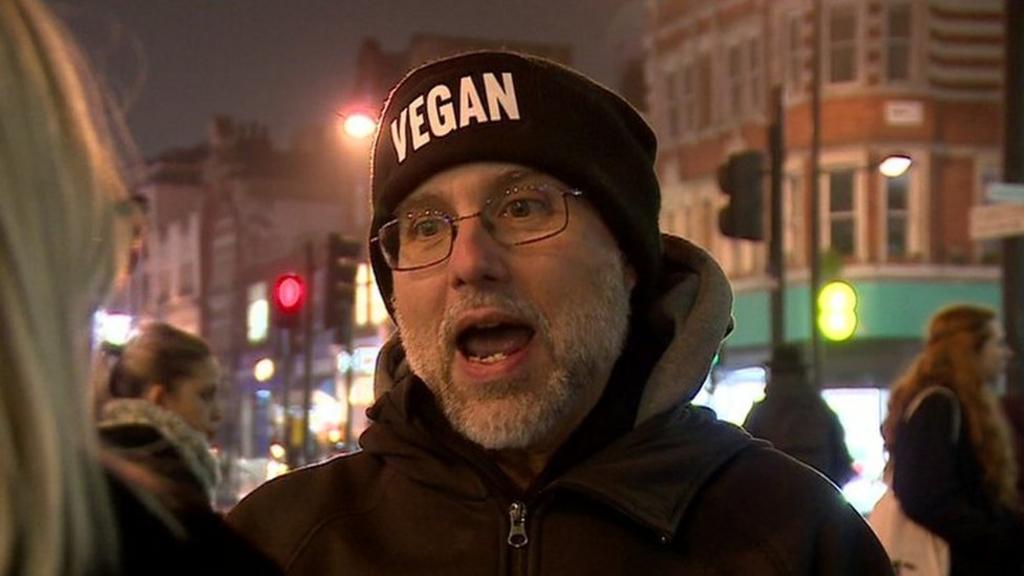
We have already heard the news that Jordi Casamitjana has won the part of his Employment Tribunal claim that his ethical veganism is a philosophical belief in terms of Sections 4 and 10 of the 2010 Act (see Casamitjana v League Against Cruel Sports [2020]).
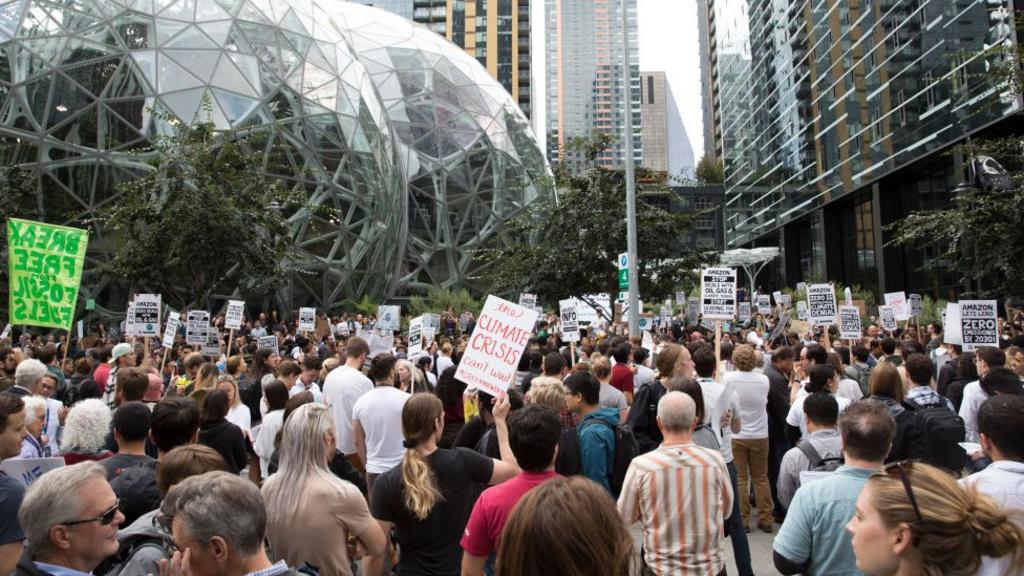
It was some interest that another news item popped up today concerning allegations that Amazon stands accused of threatening to dismiss those of its employees who become involved in climate protests. I would hazard a guess that Amazon is making a statement of intent that it may dismiss employees who perhaps break the law when they are involved in climate protests such as those organised by Extinction Rebellion and other similarly minded groups.
Criminal acts by employees committed outside the workplace could be regarded as gross misconduct in terms of Section 98 of the Employment Rights Act 1996. In other words, such behaviour by employees could result in the employer suffering reputational damage and, consequently, any dismissal for misconduct could be potentially fair. That said, employers should always carry out the proper disciplinary procedures when contemplating dismissal as the ultimate sanction for employee misbehaviour.
The real gripe – according to Amazon Employees for Climate Justice – is that the tech company allegedly objects to employees speaking critically about its failure to be more environmentally responsible.
Yet, there are potential dangers here for Amazon in the UK. In Grainger plc v Nicholson (2010) IRLR 4, the Employment Appeal Tribunal established that an employee’s belief in climate change could constitute discrimination on the grounds of a philosophical belief.
So, we could have situation where Amazon employees who are taking part in quite peaceful and lawful climate change protests end up being dismissed. This would open up the possibility that employees of Amazon UK might have the right to bring claims for direct discrimination (Section 13: Equality Act 2010) in respect of their philosophical beliefs (Sections 4 and 10 of the Act).
In the USA, there could be even more serious legal implications – infringing the right to free speech which is protected under the Constitution.
Perhaps Amazon needs to go back to the drawing board …
A link to an article on the BBC News App can be found below:
… well now Jordi Casamitjana can believe … officially. He has just won part of his Employment Tribunal case (Casamitjana v League Against Cruel Sports) which confirms that ethical veganism is a protected philosophical belief in terms of Sections 4 and 10 of the Equality Act 2010.
Please note, however, that the Employment Tribunal is yet to determine whether Mr Casamitjana was dismissed because of these protected beliefs – that is another matter.
A link can be found below to the Preliminary Judgement of the Employment Tribunal on the question of whether ethical veganism is a philosophical belief in terms of the Equality Act 2010:
This is the lesson which a Scottish secondary teacher has learned to his cost. He was filmed by a pupil while drunk in the street wearing only his boxer shorts. Teacher Z (he remains anonymous) was charged with drunkenness and subjecting paramedics to abuse. Apparently, he did not inform his employer and, following a hearing before the General Teaching Council, he has been ruled unfit to continue practising as a teacher.
I often grimace when I hear someone trying to justify bad behaviour on the basis that it happened outside work. If I had a £20 note for each time I heard this remark …
Regular readers of this Blog will be well aware that employers are entitled to dismiss an employee who has committed an act of gross misconduct in terms of Section 98 of the Employment Rights Act 1996. Such behaviour could include misconduct committed outside working hours.
Provided the employer follows the correct disciplinary procedures, the dismissal will almost certainly be regarded as a fair by an Employment Tribunal.
A link to the story on the BBC News App can be found below:












 Seán Crossan's Scots Law